Adhyaya 180
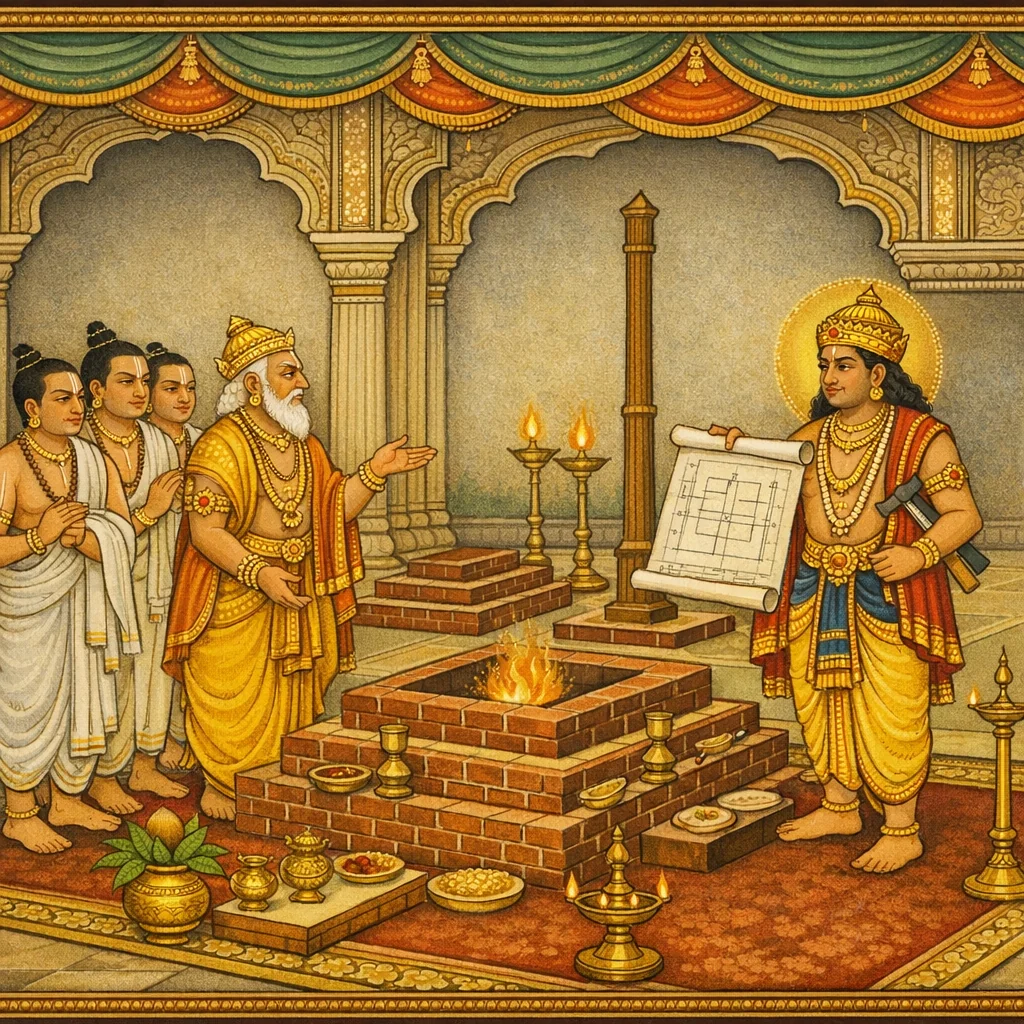
Chapter 180 (Nāgara Khaṇḍa) unfolds as a searching theological and ritual inquiry. The sages ask Sūta about the wondrous sacrifice Brahmā performed in a sacred field—who is worshiped, who fills each priestly office, what dakṣiṇā is bestowed, and how the adhvaryu and other functionaries are appointed. Sūta replies by describing the orderly arrangement of the rite. Indra and Śambhu (Śiva) arrive with their divine retinues to assist; Brahmā receives them with formal honor and assigns their duties. Viśvakarman is commanded to build the yajñamaṇḍapa and all its parts—the wife’s hall, the vedī (altar), fire-pits, vessels and cups, yūpa posts, cooking trenches, and vast brick formations—along with a golden effigy (hiraṇmaya puruṣa). Bṛhaspati is tasked with bringing qualified priests, fixed at sixteen, whom Brahmā personally examines and appoints. The chapter concludes with the list of the sixteen ṛtviks and their offices (hotṛ, adhvaryu, udgātṛ, agnīdhra, brahmā, and others), and with Brahmā’s reverent request for their support in dīkṣā (consecration) and the commencement of the sacrificial work.
Shlokas
Verse 1
ऋषय ऊचुः । अत्यद्भुतमिदं सूत यत्त्वया समुदाहृतम् । ब्रह्मणा यत्कृतो यज्ञस्तत्र क्षेत्रे महात्मना
The sages said: “O Sūta, most wondrous is what you have recounted—how the great-souled Brahmā performed a sacrifice there, in that sacred region.”
Verse 2
अग्निष्टोमादयो यज्ञा ये वर्तन्ते धरातले । यष्टव्यस्तेषु यज्ञेषु स एव हि सुरेश्वरः
Agniṣṭoma and the other sacrifices performed upon the earth—among those rites, it is surely that very Lord of the gods who should himself perform them.
Verse 3
तेनैव यजता तत्र को हीष्टः प्रब्रवीहि नः । ऋत्विजः के स्थितास्तत्र यैस्तत्कर्म मखोद्भवम् । तत्प्रत्यक्षे कृतं सर्वमेतन्नः कौतुकं परम्
When he himself was performing the sacrifice there, which deity was chiefly worshipped? Tell us. Which ṛtvij priests were present there, by whom that sacrificial work—born of the makha (yajña)—was carried out? All this was done before their very eyes; this is our greatest wonder.
Verse 4
का चैव दक्षिणा दत्ता तेन तेषां द्विजन्मनाम् । कोऽध्वर्युर्विहितस्तत्र येन तद्यजनं कृतम्
And what dakṣiṇā, the sacrificial fee, did he give to those twice-born priests? And who was appointed there as the Adhvaryu, by whom that sacrifice was duly performed?
Verse 5
को होता कश्च वाऽग्नीध्रः को ब्रह्मा तत्र संस्थितः । उद्गाता कः स्थितस्तत्र ह्याचार्यो यज्ञकर्मणि
Who was the Hotṛ, and who the Agnīdhra? Who sat there as the Brahmā, the supervising priest? And who stood there as the Udgātṛ—indeed, who was the ācārya in the sacrificial performance?
Verse 6
सूत उवाच । अहं वः कीर्तयिष्यामि सर्वं यज्ञस्य संभवम् । वृत्तांतं यच्च तत्रस्थ माश्चर्यं द्विजपुंगवाः
Sūta said: “O best of the twice-born, I shall recount to you the entire origin and unfolding of that sacrifice, and also the account of the wondrous event that occurred there.”
Verse 7
ये सदस्याः स्थितास्तत्र ऋत्विजश्च द्विजोत्तमाः । दक्षिणा याः प्रदत्ताश्च तेभ्यस्तेन महात्मना
To those members of the sacrificial assembly who stood there—the officiating priests and the foremost among the twice-born—the great-souled one bestowed the dakṣiṇā, the sacrificial gifts that had been granted.
Verse 8
यजता देवदेवेन ब्रह्मणाऽमिततेजसा । यज्ञकामं चतुर्वक्त्रं ज्ञात्वा देवः शतक्रतुः
As the God of gods, Brahmā of immeasurable splendor, was performing the yajña—knowing that the four-faced One longed to bring the sacrifice to fulfillment—Indra, lord of a hundred rites (Śatakratu), took heed and responded.
Verse 9
सर्वैः सुरगणैः सार्धं साहाय्यार्थमुपागतः । तथा च भगवाञ्छंभुः सर्वदेवगणैः सह
He arrived together with all the hosts of gods, for the sake of assistance. Likewise the Blessed Śambhu (Śiva) also came, accompanied by the entire company of deities.
Verse 10
तान्दृष्ट्वाऽभ्यागतान्ब्रह्मा मर्त्यधर्मसमाश्रितान् । प्रोवाच विनयोपेतः कृतांजलिपुटः स्थितः
Seeing them arrived, Brahmā—adopting the courteous conduct proper among mortals—spoke with humility, standing with hands joined in reverence.
Verse 11
स्वागतं वः सुरश्रेष्ठाः प्रसादः क्रियतां मम । निविश्यतां यथान्यायं स्थानेषु रुचिरेषु च
Welcome to you, O best among the gods; be gracious to me. Be seated, in proper order, in the delightful places prepared for you.
Verse 12
धन्योऽस्म्यनुगृहीतोऽस्मि यद्यूयं स्वयमागताः । मंत्राहूता यथा कृच्छ्रात्सर्वसत्रेषु गच्छथ
Blessed am I; graced am I, since you have come of your own accord. In other great sacrificial sessions, you go only when summoned by mantras—and even then with difficulty.
Verse 13
देवा ऊचुः । येन यच्चात्र कर्तव्यं तच्छीघ्रं वद पद्मज । यज्ञे तव महाभाग तस्य तत्त्वं समादिश
The gods said: “O Padmaja, Lotus-born, quickly tell us what must be done here, and by whom each duty is to be performed. O greatly fortunate one, instruct us in the true method and principle of your sacrifice.”
Verse 14
ब्रह्मोवाच । विश्वकर्मन्द्रुतं गच्छ यज्ञमण्डपसिद्धये । पत्नीशालां ततश्चैव यज्ञवेदीस्तथैव च
Brahmā said: “O Viśvakarman, go at once so that the sacrificial pavilion may be properly completed. Then fashion the hall for the sacrificer’s wife, and also the sacrificial altars.”
Verse 15
कुण्डानि चैव सर्वाणि यथास्थानेषु कारय । यज्ञपात्राणि सर्वाणि ग्रहाश्च चमसास्तथा
“Have all the fire-pits (kuṇḍas) made in their proper places. And prepare all the vessels of the sacrifice—also the grahas and the ladles (camasas).”
Verse 16
यूपाश्च यत्प्रमाणेन कर्तव्याः सचषालकाः । पचनार्थं तथा गर्ताः कर्तव्या यत्प्रमाणतः
“Let the sacrificial posts (yūpas) be made according to the prescribed measurements, together with their fittings. Likewise, pits for cooking should be made in accordance with the proper standards.”
Verse 17
इष्टिकानां सहस्राणि दश चाष्टशतानि च । कर्तव्यानि त्वया शीघ्रं चयनानीति सत्वरम्
Ten thousand bricks, and eight hundred more besides, must be made by you swiftly—prepare them at once for the laying of the sacrificial altar.
Verse 18
तथा हिरण्मयश्चापि पुरुषः कार्य एव हि । तथेत्युक्ता ततस्त्वष्टा शीघ्राच्छीघ्रतरं ययौ
And a golden effigy of a man must also be made. Thus addressed, Tvaṣṭṛ, the divine artisan, replied, “So be it,” and departed with utmost speed.
Verse 19
ततस्तु पद्मजः प्राह देवाचार्यं बृह स्पतिम् । बृहस्पते त्वमानीहि यज्ञार्हानृत्विजोऽखिलान्
Then the Lotus-born (Brahmā) spoke to Bṛhaspati, the preceptor of the gods: “O Bṛhaspati, bring here all the officiating priests (ṛtvij) who are fit for this sacrifice.”
Verse 20
यावत्षोडशसंख्याश्च नान्यस्यैतद्धि युज्यते । त्वया शक्र सदा कार्या शुश्रूषा च द्विजन्मनाम्
“They should be sixteen in number, for no other arrangement is proper. And you, O Śakra (Indra), must always render attentive service to the twice-born (the priests).”
Verse 21
हस्तपादावमर्द्दश्च श्रांतानां पृष्ठमर्द्दनम् । धनाध्यक्ष त्वया देया दक्षिणा कालसंभवा
“Massage their hands and feet, and rub the backs of those who are weary. And you, steward of wealth, must give the dakṣiṇā, the sacrificial honorarium, at the proper time.”
Verse 22
सुवस्त्राणि हिरण्यं च तथान्यद्वापि वांछितम् । त्वया विष्णो सदा कार्यं कृत्याकृत्यपरीक्षणम्
Provide fine garments and gold, and whatever else is desired. And you, O Viṣṇu, must continually discern what is to be done and what must not be done.
Verse 23
युक्तं कृतमथो नैव सावधानेन सर्वदा । लोकपालाश्च ये सर्वे रक्षंतु सकला दिशः । भूतप्रेतपिशाचानां प्रवेशं राक्षसोद्भवम्
Let nothing be done improperly; be vigilant at all times. May all the Lokapālas, guardians of the worlds, protect every direction, preventing the entry of bhūtas, pretas, and piśācas—those arising from rākṣasic forces.
Verse 24
यो यं कामयते कामं किंचिद्वस्त्रं धनं च वा । विचार्य तस्य तद्देयं सर्वयज्ञाधिपेन तु
Whatever desire any person seeks—be it some garment or wealth—after due consideration, that should indeed be granted to him by the Lord who presides over all sacrifices.
Verse 25
आदित्या वसवो रुद्रा विश्वेदेवा मरुद्गणाः । भवंतु परिवेष्टारो भोक्तुकामजनस्य च
May the Ādityas, Vasus, Rudras, the Viśvedevas, and the hosts of Maruts stand as attendants and servers for the people who have come desiring to partake in the sacred offering.
Verse 26
एतस्मिन्नंतरे प्राप्तो विश्वकर्मा त्वरान्वितः । अब्रवीत्पंकजभवं संसिद्धो यज्ञमण्डपः
Meanwhile, Viśvakarmā arrived in haste and said to the Lotus-born (Brahmā): “The sacrificial pavilion is fully prepared.”
Verse 27
सर्वमन्यत्समादिष्टं यत्त्वयोक्तं चतुर्मुख
All else as well, O Four-faced One, has been duly arranged according to what you instructed.
Verse 28
ततो बृहस्पतिः प्राह समभ्येत्य पितामहम् । समानीता मया देव ब्राह्मणा यज्ञकर्मणि
Then Bṛhaspati approached Pitāmaha (Brahmā) and said: “O Lord, I have brought the brāhmaṇas for the work of the sacrifice (yajña).”
Verse 29
विप्राः षोडशसंख्याश्च ऋत्विक्कर्मणि योजय । स्वयं परीक्ष्य देवेश यज्ञकर्मप्रसिद्धये
“Assign the brāhmaṇas—sixteen in number—to the duties of the ṛtvij priests; and after examining them yourself, O Lord of the gods, may the sacrificial work be brought to successful completion.”
Verse 30
ततो ब्रह्मा स्वयं दृष्ट्वा तान्परीक्ष्य प्रयत्नतः । ऋत्विक्त्वे च नियोज्याथ ततश्चक्रे तदर्हणम्
Then Brahmā himself beheld them and examined them with care; appointing them as ṛtvij priests, he thereafter performed the fitting rites of honor for them.
Verse 31
ऋषय ऊचुः । ऋत्विजां चैव सर्वेषां सूत नामानि कीर्तय । येन यो विहितस्तत्र पदार्थः सूत तं वद
The sages said: “O Sūta, recount the names of all the ṛtvij priests; and tell us, O Sūta, what role and specific duty was assigned there to each one.”
Verse 32
सूत उवाच । भृगुर्हौत्रे ततस्तेन वृतो ब्राह्मणसत्तमाः । मैत्रावरुणसंज्ञस्तु तथैव च्यवनो मुनिः
Sūta said: “For the office of Hotṛ, Bhṛgu was chosen—the foremost among brāhmaṇas. And for the Maitrāvaruṇa role, likewise, the sage Cyavana was appointed.”
Verse 33
अच्छावाको मरीचिश्च ग्रावस्तुद्गालवो मुनिः । पुलस्त्यश्च तथा ऽध्वर्युः प्रस्थातात्रिश्च संस्थितः
“Marīci served as the Acchāvāka; the sage Gālava as the Grāvastut; Pulastya as the Adhvaryu; and Atri was established as the Prasthātṛ.”
Verse 34
तत्र रैभ्यो मुनिर्नेष्टा तत्रोन्नेता सनातनः । ब्रह्मा च नारदो गर्गो ब्राह्मणाच्छंसिरेव च
There, the sage Raibhya served as the Neṣṭṛ priest; and there Sanātana acted as the Unnetṛ. Brahmā himself, along with Nārada and Garga, and also the Brāhmaṇācchaṃsin priest, were present and appointed.
Verse 35
आग्नीध्रश्च भरद्वाजो होता पाराशरस्तथा । तथैव तत्र क्षेत्रे च उद्गाता गोभिलो मुनिः
“Bharadvāja served as the Āgnīdhra; and likewise Pārāśara was the Hotṛ. In that same sacred field, the sage Gobhila became the Udgātṛ.”
Verse 36
तथैव कौथुमो जज्ञे प्रस्तौता यज्ञकर्मणि । शांडिल्यः प्रतिहर्त्ता च सुब्रह्मण्यस्तथांगिराः
“In the same manner, Kauthuma became the Prastotṛ in the sacrificial rite; Śāṇḍilya was the Pratihartṛ; and Aṅgiras served as the Subrahmaṇya priest as well.”
Verse 37
तस्य यज्ञस्य सिद्ध्यर्थमित्येते षोडशर्त्विजः । वस्त्राभरणशोभाढ्या विनयेन कृताश्च ते
For the successful completion of that yajña, these sixteen ṛtviks were duly appointed—resplendent in fine garments and ornaments, and endowed with disciplined humility.
Verse 38
ततः कृत्वा स्वयं ब्रह्मा सर्वेषामर्हणक्रियाम् । गृह्योक्तेन विधानेन ततः प्रोवाच सादरम्
Then Brahmā himself performed the rites of honoring for them all, according to the procedure taught in the Gṛhya tradition; and thereafter he spoke to them with respectful earnestness.
Verse 39
एषोऽह शरणं प्राप्तो युष्माकं द्विजसत्तमाः । अनुगृह्णीत मां सर्वे दीक्षायै यज्ञकर्मणः
“I have come seeking refuge in you, O best of the twice-born. Be gracious to me, all of you, so that I may receive dīkṣā—consecration for the work of this sacrifice.”
Verse 180
इति श्रीस्कांदे महापुराण एकाशीतिसाहस्र्यां संहितायां षष्ठे नागरखण्डे ब्रह्मयज्ञोपाख्याने यज्ञमण्ड पप्राप्तब्राह्मणसत्कारपूर्वकर्त्विगादिस्थानयोजनापूर्वकाध्वरकर्मारंभोनामाशीत्युत्तरशततमोऽध्यायः
Thus ends the one-hundred-and-eightieth chapter—within the Brahma-yajña episode of the Śrī Skanda Mahāpurāṇa, in the eighty-one-thousand-verse Saṃhitā, in the sixth book, the Nāgara Khaṇḍa—describing the honoring of brāhmaṇas who arrived at the sacrificial pavilion, the assignment of seats and offices for the ṛtviks and others, and the commencement of the sacrificial rite.