Adhyaya 179
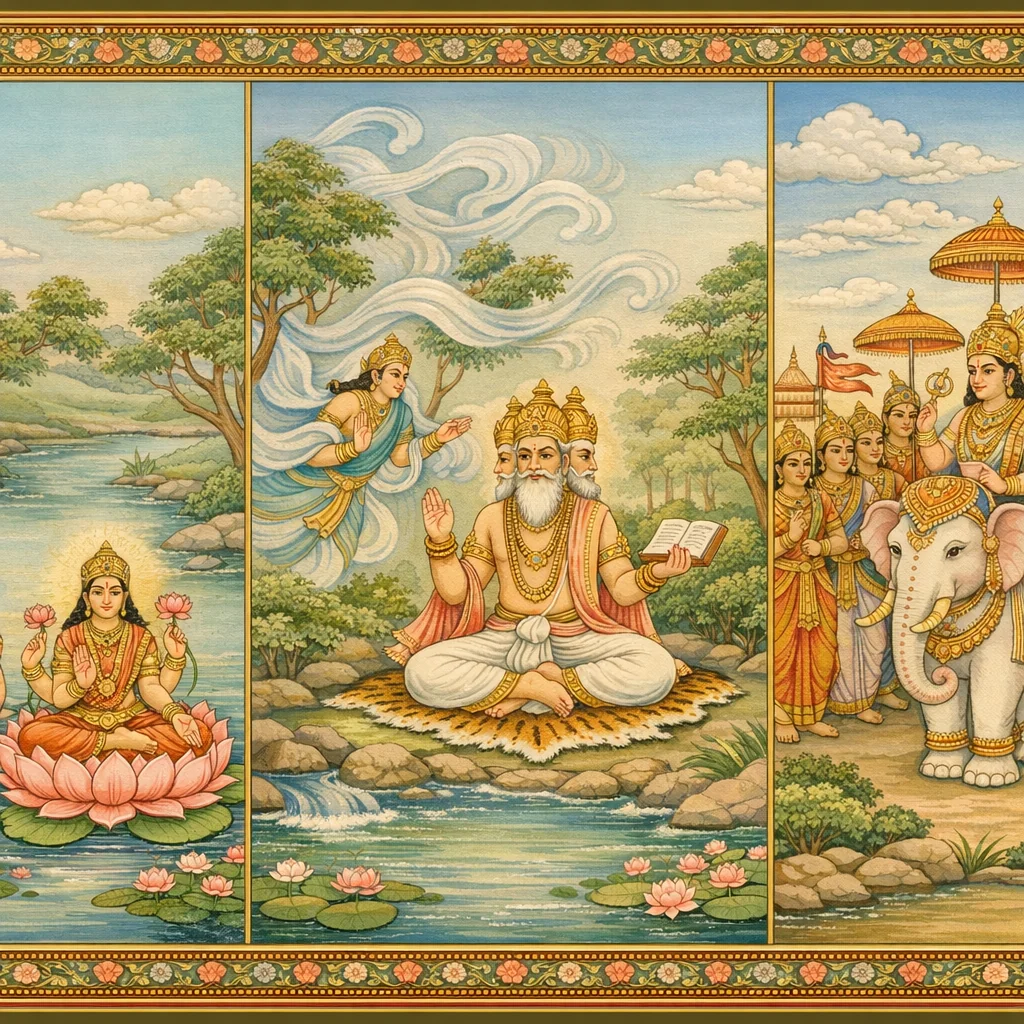
Chapter 179, narrated by Sūta, teaches of the «Puṣkara-traya»—the threefold Puṣkara tīrtha within Hāṭakeśvara-kṣetra—praised as a mighty purifier: by mere sight, touch, or recitation of its name, pāpa is dispelled like darkness before the sun. The ṛṣis ask how Puṣkara, famed as Brahmā’s tīrtha, came to abide in this place. Sūta recounts an inner dialogue: Nārada informs Brahmā of Kali-yuga’s moral and social decline—righteous rule waning and ritual integrity failing. Fearing Kali’s spread will harm Puṣkara, Brahmā resolves to relocate and stabilize the tīrtha where Kali is absent. He sends a lotus (padma) to fall upon the earth; it lands in the Hāṭakeśvara region, inhabited by disciplined, Veda-knowing brāhmaṇas and ascetics. The lotus shifts three times, forming three hollows (garta-traya) that fill with clear water, becoming the three Puṣkara basins—Jyeṣṭha, Madhya, and Kanīyaka. Brahmā arrives, praises the kṣetra, proclaims the fruits of bathing there and of Karttika śrāddha (equal in merit to Gayāśīrṣa), and begins the preparations for yajña. He commands Vāyu to summon Indra and other divine hosts; Indra brings the needed materials and qualified brāhmaṇas, and Brahmā performs the sacrifice in proper order, with complete dakṣiṇā.
Shlokas
Verse 1
सूत उवाच । तथान्यदपि तत्रास्ति पुष्करत्रितयं शुभम् । हाटकेश्वरजे क्षेत्रे सर्वपातकनाशनम्
Sūta said: “Moreover, there also exists there an auspicious triad of Puṣkara, sacred waters. In the region of Hāṭakeśvara, it destroys all sins.”
Verse 2
यस्मिन्दृष्टेऽथवा स्पृष्टे कीर्तिते वा द्विजोत्तमाः । पातकं नाशमायाति भास्करेण तमो यथा
O best of the twice-born: by merely seeing it, touching it, or even praising it, sin perishes—just as darkness is destroyed by the sun.
Verse 3
पुनंति सर्वतीर्थानि स्नानाद्दानादसंशयम् । पुष्करालोकनादेव सर्वपापैः प्रमुच्यते
All sacred fords certainly purify through bathing and charity; but by merely beholding Puṣkara one is released from all sins.
Verse 4
ऋषय ऊचुः । श्रूयते पुष्करंनाम तीर्थं त्रैलोक्यविश्रुतम् । ब्रह्मणा निर्मितं तत्र यच्च योजनमात्रकम्
The sages said: “We have heard of the tīrtha called Puṣkara, renowned throughout the three worlds—created by Brahmā—and its extent there is said to be a yojana in measure.”
Verse 5
उत्तरे चन्द्रभागाया नद्या यावत्सरस्वती । दक्षिणे करतोयायाः सीमेयं पुष्करत्रये
To the north extends the boundary from the river Candrabhāgā up to the Sarasvatī; to the south, from the Karatoyā—such is the sacred limit of the threefold Puṣkara.
Verse 6
अस्माकं तु पुरा सूत त्वयोक्तं वियति स्थितम् । एतन्नः कौतुकं सूत तत्कथं हाटकेश्वरे । तत्र क्षेत्रे समायातं तस्मात्त्वं वक्तुमर्हसि
Formerly, O Sūta, you told us it was situated in the sky. This is our curiosity, O Sūta: how did it come to be at Hāṭakeśvara, in that sacred field? Therefore, please explain it to us.
Verse 7
सूत उवाच । सत्यमेतन्महाभागा यद्भवद्भिरुदाहृतम् । तस्मिन्क्षेत्रे द्विजश्रेष्ठास्तच्छृणुध्वं समाहिताः
Sūta said: It is indeed true, O noble ones, as you have stated. Therefore, O best of the twice-born, listen with focused minds about that sacred region.
Verse 8
सर्वतो विस्तराद्वच्मि नमस्कृत्य स्वयं भुवम्
Having bowed in reverence to Svayaṃbhū (Brahmā), I shall recount it fully and in detail, from every side.
Verse 9
ब्रह्मलोके निवसतो ब्रह्मणोऽव्यक्तजन्मनः । देवर्षिर्नारदः प्राप्तो भ्रांत्वा लोकत्रयं मुनिः
As Brahmā—the Unmanifest-born—dwelt in Brahmaloka, the divine sage Nārada arrived there, having wandered through the three worlds.
Verse 10
स नत्वा शिरसा पादावुपविष्टस्त दग्रतः
He bowed his head at (Brahmā’s) feet and then sat down before him.
Verse 11
ब्रह्मोवाच । कस्माद्वत्स चिराद्दृष्टः कुतः प्राप्तोऽधुना भवान् । क्व भ्रांतस्त्वं समाचक्ष्व ब्रूहि वत्सात्र कारणम्
Brahmā said: My child, why are you seen after so long? From where have you come now? Where have you been wandering? Tell me, dear one—state the reason here.
Verse 12
नारद उवाच । मर्त्यलोकाद्विभो प्राप्तः सांप्रतं च त्वरान्वितः । तव पादप्रपूजार्थं सत्येनात्मानमालभे
Nārada said: O Lord, I have just come from the mortal world, and I have arrived in haste. For the sake of worshipping your feet, I speak truthfully and lay my very self before you in sincere submission.
Verse 13
ब्रह्मोवाच । किंवदन्तीं ममाचक्ष्व मर्त्यलोकसमुद्भवाम् । कीदृशाः पार्थिवास्तत्र कीदृशा द्विजसत्तमाः । कीदृशा व्यवहाराश्च वर्तन्ते तत्र सांप्रतम्
Brahmā said: Tell me the report that arises from the mortal world. What are the kings like there? What are the foremost among the twice-born like? And what kinds of social dealings and conduct prevail there at present?
Verse 14
नारद उवाच । मर्त्यलोके कलिर्जातः सांप्रतं सुरसत्तम
Nārada said: O best among the gods, Kali has now arisen in the mortal world.
Verse 15
राजानः सत्पथं त्यक्त्वा तथा लोभपरायणाः । पीडयंति च लोकांश्च अर्थहेतोः सुनिर्घृणाः
Kings, forsaking the righteous path and devoted to greed, oppress the people for the sake of wealth—utterly without compassion.
Verse 16
शौर्यभावपरित्यक्ताः परदारविमर्दकाः । पूजयन्ति न ते विप्रान्न देवान्न गुरूनपि
Having forsaken the spirit of valor and violating others’ wives, they do not honor Brahmins, nor the gods, nor even their teachers.
Verse 17
वेदविक्रय कर्तारो ब्राह्मणाः शौचवर्जिताः । पापप्रतिग्रहासक्ताः सन्ध्याहीनाः सुनिर्घृणाः
Brahmins become sellers of the Veda, devoid of purity, attached to accepting sinful gifts, bereft of the Sandhyā rites, and cruel.
Verse 18
कृषिकर्मरता नित्यं वैश्यवत्पशुपालकाः । वैश्याः सर्वे समुच्छेदं प्रयाता धरणीतले
Those engaged constantly in farming and cattle-tending live only as Vaiśyas; and on the earth the Vaiśya class, as such, has altogether dwindled away.
Verse 19
शूद्रा नित्यं धर्मकामाः शूद्राश्चैव तपस्विनः । लोकयात्राक्रियाः सर्वे प्रहसंति व्यपत्रपाः
Śūdras are ever desirous of dharma, and Śūdras indeed become ascetics; while the customary duties that sustain society are mocked by all—without shame.
Verse 20
यस्य चास्ति गृहे वित्तं तरुण्यश्च तथा स्त्रियः । तेनतेन समं सख्यं प्रकुर्वन्ति नरा भुवि
On earth, men form friendship on equal terms with whoever has wealth in his house, youth, and women at his disposal.
Verse 21
विधवानां व्रतस्थानां सर्वेषां लिंगिनां तथा । हृदि स्थितो महान्कामो व्रतचर्याबहिःस्थिताः
Even among widows devoted to vows, and among all who bear religious marks, a great desire remains seated in the heart; their vow-observance stands only outwardly, not within.
Verse 22
तीर्थानि विप्लवं यांतिपापलोकश्रितानि च । कलेभींतानि सर्वाणि प्रद्रवन्ति दिशो दश
In the age of Kali, the sacred ford-places (tīrthas) fall into disorder; and those frequented by sinful crowds are afflicted. Terrified by Kali, all the tīrthas seem to flee in every direction.
Verse 23
अहं तत्र स्थितो यस्मात्कलिकाले पितामह
O Grandfather (Brahmā), for in the Kali age I remain stationed there.
Verse 24
कलिकाले विशेषेण स्वैरिण्यो ललितस्पृहाः । भर्त्रा विवदमानाश्च स्त्रियः कार्मणतत्पराः । वृथा व्रतानि कुर्वंति त्यक्त्वा ताः स्वपतेः कथाम्
Especially in the Kali age, women become self-willed, longing for pleasures; quarreling with their husbands, intent on manipulative rites. Abandoning the rightful path of fidelity to their own husbands, they perform vows in vain.
Verse 26
स्वर्गे वा मस्तके चैव पाताले चाथ पादयोः । सांप्रतं मर्त्यलोके च मया दृष्टमनेकशः
Whether in heaven, upon the crown of the head, in Pātāla the netherworld, or at the feet—and now even in the realm of mortals—I have beheld it again and again, in many ways.
Verse 27
श्वश्रूणां च वधूनां च तथा जनकपुत्रयोः । बांधवानां विशेषेण तथा च स्वामिभृत्ययोः
Between mothers-in-law and daughters-in-law, between fathers and sons, and most of all among kin—and likewise between masters and servants—discord is seen.
Verse 28
चौराणां पार्थिवानां च दम्पत्योश्च विशेषतः । स्वल्पोदकास्तथा मेघाः स्वल्पसस्या च मेदिनी
Among thieves and kings, and most especially between husband and wife, strife prevails. Waters grow scant, clouds yield but little, and the earth bears only meagre crops.
Verse 29
कलिर्बलिष्ठः सुतरां वरदानेन ते कृतः । यदा मर्त्ये भवेद्युद्धं कंडूतिर्जायते हृदि
Kali has been made exceedingly powerful by the boon you granted. Whenever war arises among mortals, an itching restlessness is born within my heart.
Verse 30
अहं मर्त्ये परिभ्रांतश्चिरात्तेन समागतः । भूयो यास्यामि तत्रैव कण्डूतिर्महतीस्थिता
Long have I wandered in the world of mortals, and now I have met him. Yet once more I shall return to that very place, for a great restlessness has taken hold of me.
Verse 31
तच्छ्रुत्वा वचनं तस्य नारदस्य पितामहः । पुष्करस्य कृते जातश्चिन्ताव्याकु लतेंद्रियः
Hearing those words of Nārada, the Grandfather (Brahmā) grew anxious for Puṣkara; his senses were distressed and shaken by care.
Verse 32
मर्त्ये च मामकं तीर्थं पुष्करंनाम विश्रुतम् । नाशं यास्यति तन्नूनं कलिकालपरिप्लुतम्
And in the mortal world, my own renowned tīrtha called Puṣkara—overwhelmed by the age of Kali—will surely fall into ruin.
Verse 33
तस्मादन्यत्र नेष्यामि कलिर्यत्र न विद्यते । येन तत्र विमुंचामि निजं तीर्थं च पुष्करम्
Therefore I shall lead it to another place—where the age of Kali does not prevail—so that there I may establish my own sacred ford, Puṣkara.
Verse 34
कलिकाले च संप्राप्ते सर्वप्राणिभयंकरे । तत्र प्रयांतु तीर्थानि सर्वा ण्येव विशेषतः
When the time of Kali arrives—terrifying to all living beings—then indeed may all sacred tīrthas, especially, depart to that place where Kali is absent.
Verse 35
गते कलौ प्रयास्यंति निजस्थानमसंशयम्
When Kali has passed, they will return to their own abodes—without doubt.
Verse 36
एवं निश्चित्य मनसा हस्तस्थं कमलं ततः । प्रोवाच सादरं तच्च स्वयं ध्यात्वा पितामहः
Thus resolving in his mind, Pitāmaha (Brahmā), having meditated within himself, reverently addressed the lotus held in his hand.
Verse 37
पत त्वं पद्म भूपृष्ठे कलिर्यत्र न विद्यते । येनानयामि तत्रैव पुष्करं तीर्थमात्मनः
Fall, O lotus, upon the earth’s surface where Kali does not exist; by that sign I shall bring and establish there my own sacred tīrtha—Puṣkara.
Verse 38
ततस्तत्प्रेषितं तेन पद्मं भ्रांत्वा महीतले । समस्ते पतितं क्षेत्रे हाटकेश्वरसंभवे
Then the lotus, dispatched by him, wandered over the earth; and at last it fell upon the sacred field associated with Hāṭakeśvara.
Verse 39
दृष्ट्वा वेदविदो विप्रान्स्वाध्यायनिरताञ्छुचीन् । तेषां यज्ञक्रियाभिश्च यज्ञोपांतैः समंततः
There he saw brāhmaṇas who were knowers of the Vedas—pure and devoted to svādhyāya, self-recitation—while all around them were sacrificial rites and the ancillary observances of yajña.
Verse 40
यूपाद्यैः सर्वतो व्याप्ते सदिशे गगनांगणे । ऋग्यजुःसामघोषेण तथा चाथर्वजेन च
The sky-courtyard in every direction was filled with sacrificial posts (yūpa) and the like, resounding with the chants of the Ṛg, Yajus, and Sāma Vedas, and also with the Atharvan recitations.
Verse 41
दिग्मण्डले तथा व्याप्ते नान्यः संश्रूयते ध्वनिः । तथा च तार्किकाणां च विवादेषु महत्सु च
When the entire compass of directions was thus pervaded, no other sound was heard. Likewise, among the logicians too there arose great disputes and debates.
Verse 42
वेदांतानां समस्तानां व्याख्याने बहुधा कृते । दृश्यन्ते मुनयो यत्र संस्थिता नियमेषु च
Where the expositions of all the Vedāntas were delivered in many ways, sages were seen there—steadfast in disciplines and sacred observances.
Verse 43
एकाहारा निराहारा एकांतरकृताशनाः । त्रिरात्रोपोषिताश्चान्ये कृच्छ्रचांद्रायणे रताः
Some lived on a single meal each day; others ate nothing at all; some ate on alternate days. Others fasted for three nights, devoted to austere vows such as Kṛcchra and Cāndrāyaṇa.
Verse 44
महापाराकिणश्चान्ये तथा मासोपवासिनः । अश्मकुट्टाशिनश्चान्ये दन्तोलूखलिकास्तथा
Others practiced the great Pārāka austerity; others observed month-long fasts. Some ate only what was pounded upon stone, and others kept the “tooth-and-mortar” austerity, living on what they could grind with their own teeth.
Verse 45
शीर्णपर्णाशिनश्चैके फलाहारा महर्षयः । तद्दृष्ट्वा तादृशं क्षेत्रं संयुक्तं विविधैर्गुणैः
Some great sages lived on withered leaves; others lived on fruits alone. Seeing that sacred region, endowed with manifold excellences, they recognized its extraordinary sanctity.
Verse 46
ततस्तत्पतितं तत्र पुण्यं ज्ञात्वा महीतले । यत्र स्थानेऽपतत्पूर्वं तस्मादुच्चलितं पुनः
Then, realizing the sanctity of that spot on the earth where it had fallen, it rose up again from the very place where it had earlier descended.
Verse 47
अन्यस्मिंश्च ततः स्थाने द्वितीये द्विजसत्तमाः । तस्मादपि तृतीये तु तृतीयं पंकजं हितम्
And then, O best of the twice-born, it moved to another place—a second spot; and from there to a third, where a third auspicious lotus was established.
Verse 48
ततो गर्तात्रयं जातं तेषु स्थानेषु च त्रिषु । गर्तासु च जल जातं स्वच्छं स्फटिकसंनिभम्
Thereupon three hollows were formed at those three places; and in those hollows water arose—clear and pure, resembling crystal.
Verse 49
एतस्मिन्नंतरे प्राप्तः स्वयमेव पितामहः । तत्र स्थाने द्विजश्रेष्ठा यज्ञकर्मप्रसिद्धये
In the meantime Pitāmaha (Brahmā) himself arrived there, O best of Brahmins, at that very place for the successful accomplishment of sacrificial rites.
Verse 50
दृष्ट्वा समंततः क्षेत्रं हाटकेश्वरसंज्ञितम् । नानाविप्रैः समाकीर्णं वेदवेदांगपारगैः । तपस्विभिस्तथानेकैर्व्रतचर्यापरायणैः
Beholding on every side the sacred region known as Hāṭakeśvara, thronged with many Brahmins—masters of the Vedas and Vedāṅgas—and with numerous ascetics devoted to austerity and the disciplined practice of vows, (Brahmā was filled with admiration).
Verse 51
अहो क्षेत्रमहो क्षेत्रं पुण्यं रम्यं द्विजप्रियम् । तस्मायज्ञं करिष्यामि क्षेत्रेऽस्मिंश्च द्विजाश्रये
Ah, what a sacred kṣetra—truly a sacred region—holy, delightful, and beloved of the twice-born! Therefore I shall perform a yajña in this kṣetra, a refuge of Brahmins.
Verse 52
आनयिष्यामि तच्चापि पुष्करत्रितयं शुभम् । गर्तास्वेतासु पुण्यासु ज्येष्ठं मध्यं कनीयकम्
And I shall also bring here the auspicious triad of Puṣkaras—elder, middle, and younger—into these holy pits.
Verse 53
कलिकाले च संप्राप्ते येन लोपं न गच्छति । स्वयं निश्चित्य मनसा चोपविश्य धरातले
When the age of Kali had arrived, he pondered how this sacred tradition might not fall into decline. Resolving within his own mind, he then sat down upon the earth to meditate and determine the means of preservation.
Verse 54
ध्यात्वा च सुचिरं कालमानयामास तत्र च । पुष्करत्रितयं श्रेष्ठं ज्येष्ठमध्यकनीयकम्
After meditating for a very long time, he then brought there the supreme triad of Puṣkaras—namely the elder, the middle, and the younger (Puṣkara-tīrthas).
Verse 55
ततोऽब्रवीत्स हृष्टात्मा ह्येतद्धि पुष्कर त्रयम् । मया सम्यक्समानीतं कलिकालभयेन च
Then, rejoicing at heart, he declared: “Indeed, this very triad of Puṣkara has been properly brought and established by me—out of concern for the terrors of the Kali age.”
Verse 56
येऽत्र स्नानं करिष्यंति श्रद्धया परया युताः । ते यास्यंति परां सिद्धिमक्षयां मत्प्रसादतः
Whoever bathes here with supreme faith shall, by my grace, attain the highest, imperishable spiritual fulfillment.
Verse 57
ये च श्राद्धं करिष्यंति कार्तिक्यां सुसमाहिताः । करिष्यंति गयाशीर्षे तेषां पुण्यं महत्तमम्
And those who, with steady concentration, perform śrāddha in the month of Kārttika—performing it at Gayāśīrṣa—gain the greatest possible merit.
Verse 58
तत्राद्यात्पुष्करात्पुण्यं लभिष्यंति शताधिकम् । मया यज्ञः कृतस्तत्र कार्तिक्यां पूर्वपुष्करे
There, from the first (Ādya) Puṣkara, they shall obtain merit a hundredfold and more; for it was there—at the earlier Puṣkara, in the month of Kārttika—that I performed a sacrifice (yajña).
Verse 59
वैशाख्यां च करिष्यामि अत्राहं च द्वितीयके
And in Vaiśākha as well, I shall perform the rite here—at the second (Puṣkara).
Verse 60
एवमुक्त्वा ततो ब्रह्मा ह्यादिदेश सदागतिम् । ममादेशाद्द्रुतं वायो समानय पुरंदरम्
Having spoken thus, Brahmā then commanded Vāyu, swift in movement: “By my order, quickly bring Purandara (Indra).”}]}}
Verse 61
आदित्यैर्वसुभिः सार्धं रुद्रैश्चैव मरुद्गणैः । गंधर्वैर्लोकपालैश्च सिद्धैर्विद्याधरैस्तथा
Along with the Ādityas and the Vasus, with the Rudras and the hosts of Maruts—together with the Gandharvas, the Lokapālas, and likewise the Siddhas and Vidyādharas—let them all come.
Verse 62
येन मे स्यात्सहायत्वं समस्ते यज्ञकर्मणि । तच्छ्रुत्वा सकलं वायुर्गत्वा शक्रनिवेशनम् । कथयामास तत्सर्वं यदुक्तं परमेष्ठिना
“So that there may be assistance for me in the entirety of the sacrificial acts.” Hearing this, Vāyu went to Śakra’s abode and related in full everything that had been spoken by the Supreme Lord, Brahmā.
Verse 63
सत्वरं प्रययौ तत्र सर्वैर्देवगणैः सह । प्रणिपत्य ततस्तं स ब्रह्माणं वाक्यमब्रवीत्
Hastening there along with all the hosts of gods, he bowed down, and then addressed Brahmā with these words.
Verse 64
आदेशो दीयतां देव ह्यहमाकारितस्त्वया । यदर्थं तत्करिष्यामि तस्माच्छीघ्रं निवेदय
“O Lord, give your command—for I have been summoned by you. Tell me quickly the purpose, so that I may accomplish it.”
Verse 65
ब्रह्मोवाच । मया शक्रात्र चानीतं सुपुण्यं पुष्करत्रयम् । कलिकालभयाच्चैव करिष्ये तदहं स्थिरम्
Brahmā said: “O Śakra, I have brought here the exceedingly meritorious triad of Puṣkara; and out of fear of the Kali age, I shall establish it firmly.”
Verse 66
अग्निष्टोमत्रयं कृत्वा वैशाख्यां च यथार्चितम् । संभारमाहरस्वाशु तदर्थं सर्वमेव हि
Having performed the three Agniṣṭoma rites, and having duly worshipped in the month of Vaiśākha as prescribed—quickly bring all the materials required for that purpose.
Verse 67
ब्राह्मणांश्च तदर्हांश्च वेदवेदांगपारगान् । तच्छ्रुत्वा विनयाच्छक्रस्तथेत्युक्त्वा त्वरान्वितः । संभारानानयामास तदर्हांश्च द्विजोत्तमान्
(Bring) Brāhmaṇas worthy of that rite—those who have mastered the Vedas and their auxiliaries (Vedāṅgas). Hearing this, Śakra, with humility, said, “So be it,” and, in haste, brought the requisites and the excellent twice-born who were fit for the task.
Verse 68
ततश्चकार विधिवद्यज्ञं स प्रपितामहः । यथोक्तविधिना सर्वं तथा संपूर्णदक्षिणम्
Thereafter that Prāpitāmaha (Brahmā) performed the sacrifice in full accordance with rule—everything exactly as prescribed, and with the dakṣiṇā (sacrificial fees) completely fulfilled.
Verse 179
इति श्रीस्कांदे महापुराण एकाशीतिसाहस्र्यां संहितायां षष्ठे नागरखण्डे हाटकेश्वरक्षेत्रमाहात्म्ये पुष्करत्रयोत्पत्तिपूर्वकं यज्ञसमारंभार्थमुपकरणानयनब्राह्मणामन्त्रणादि प्रकारकथनंनामैकोनाशीत्युत्तरशततमोऽध्यायः
Thus, in the Śrī Skanda Mahāpurāṇa, in the eighty-one-thousand-verse Saṃhitā, in the sixth book—the Nāgara-khaṇḍa—within the Māhātmya of Hāṭakeśvara-kṣetra, concludes Chapter 179, entitled “An account of the various procedures—beginning with the arising of the triad of Pushkaras—such as bringing the requisites and inviting Brāhmaṇas for commencing the sacrifice.”