Adhyaya 177
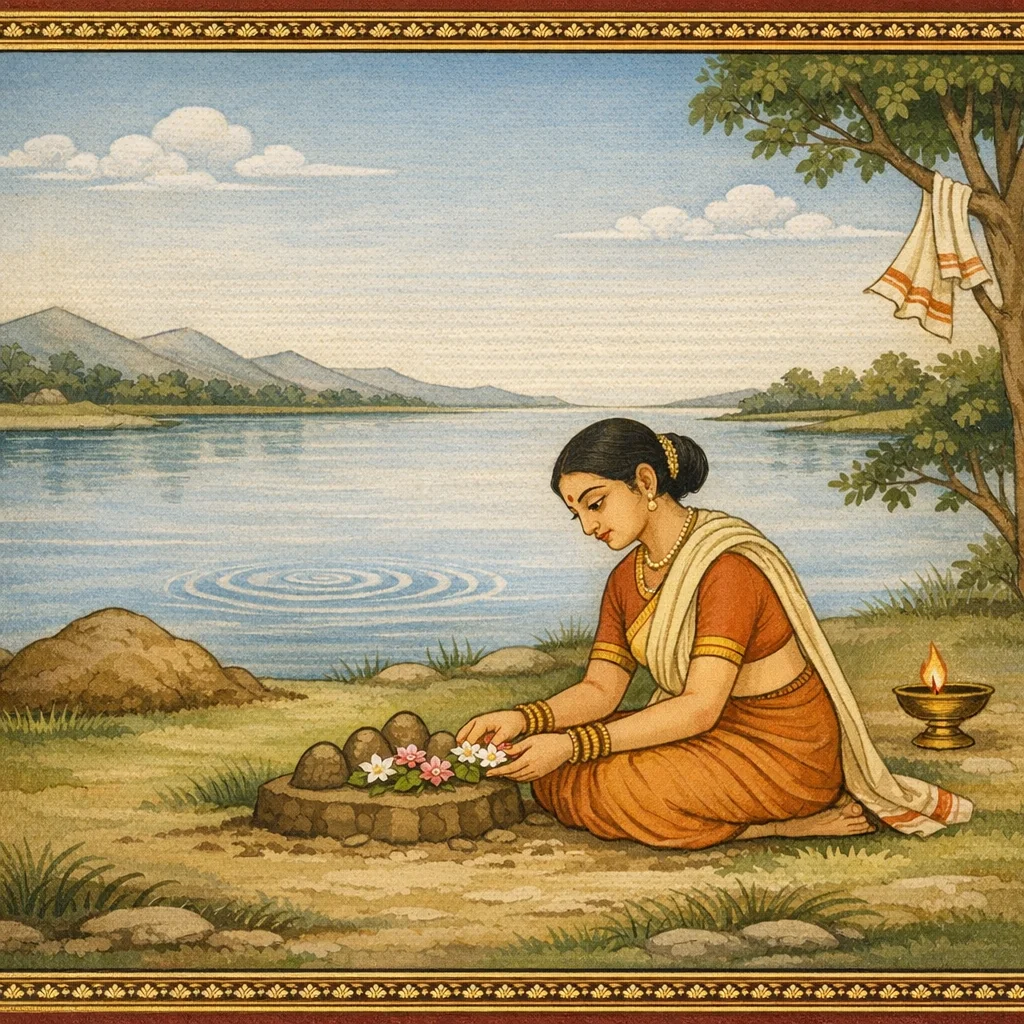
Chapter 177 is a dialogic discourse on tīrtha and ritual, narrated by Sūta to the ṛṣis. It introduces Gaurī as “Pañcapinḍikā,” linked to a women’s observance in which a water-device (jalayantra) is set above the Devī—especially in Jyeṣṭha, in the bright fortnight, when the sun is in Vṛṣa (Taurus). The rite is presented as a concentrated substitute for many arduous vows, with household auspiciousness (sau bhāgya) as its stated fruit. Asked about the theology of the “five lumps” (pañca-piṇḍa), Sūta explains the Goddess as the all-pervading supreme power who assumes a fivefold form connected with the five elements—earth, water, fire, wind, and space—for creation and protection; worship in this form is said to multiply merit. A narrative exemplum follows: Lakṣmī recounts an earlier story of a king of Kāśī and his favored queen Padmāvatī. Padmāvatī’s daily worship of a mud-formed Pañcapinḍikā at a water-site increases her auspicious status, prompting questions from co-wives; she reveals a transmitted “five-mantra” tied to the elements and tells of sand-based worship during a desert crisis that wins divine favor and later prosperity. The chapter concludes by stating the pañca-mantra (elemental salutations), describing Lakṣmī’s shrine-installation at Hāṭakeśvara-kṣetra, and affirming the phala that women who worship there become beloved to their husbands and freed from sins, as the text frames it.
Shlokas
Verse 1
सूत उवाच । तथान्यापि च तत्रास्ति गौरी वै पञ्चपिंडिका । लक्ष्म्या संस्थापिता चैव मानुषत्वंव्यवस्थया
Sūta said: There, indeed, another manifestation also exists—Gaurī known as Pañcapiṇḍikā. She was established by Lakṣmī herself, in accordance with an arrangement meant for the human condition (and its welfare).
Verse 2
तस्या दर्शनमात्रेण नारी सौभाग्यमामुयात् । ज्येष्ठे मासि सिते पक्षे वृषस्थे च दिवाकरे
By her mere sight, a woman attains auspicious fortune—especially in the month of Jyeṣṭha, during the bright fortnight, when the Sun is in Vṛṣabha (Taurus).
Verse 3
तस्या उपरि नारी या जलयन्त्रं दधाति वै । स्राव्यमाणं दिवानक्तं सौभाग्यं परमं लभेत्
That woman who places a water-device (jalayantra) above her, so that it drips by day and night, obtains the highest auspicious fortune.
Verse 4
यत्फलं लभते नारी समस्तैर्विहितैर्व्रतैः । गौरीसमुद्भवैश्चैव दानैर्दत्तैस्तदिष्टजैः । तत्फलं लभते सर्वं जलयन्त्रस्य कारणात्
Whatever fruit a woman gains from all duly prescribed vows, and from offerings and gifts connected with Gaurī and dear to her, she obtains that entire fruit through the very act of establishing the jalayantra.
Verse 5
तस्मात्सर्वप्रयत्नेन स्त्रीभिः सौभाग्यकारणात् । जलयन्त्रं विधातव्यं ज्येष्ठे गौर्याः प्रयत्नतः
Therefore, for the sake of auspicious fortune, women should, with every effort, arrange the jalayantra for Gaurī—particularly in the month of Jyeṣṭha—earnestly and with care.
Verse 6
किं व्रतैर्नियमैर्वापि स्त्रीणां ब्राह्मणसत्तमाः । जपैर्होमैः कृतैरन्यैर्बहुक्लेशकरैश्च तैः
O best of Brāhmaṇas, what need have women of vows and restraints, or of other acts such as japa and homa that are performed with much hardship?
Verse 7
स्त्रीणां ब्राह्मणशार्दूला जलेयन्त्रे धृते सति । गौर्या उपरि सद्भक्त्या वृषस्थे तीक्ष्णदीधितौ
O tiger among Brāhmaṇas, when the jalayantra has been set up with sincere devotion over Gaurī—at the time when the Sun of sharp rays is in Taurus—the fruit is assured for women.
Verse 8
नैवं संजायते वंध्या काकवन्ध्या न जायते । न दौर्भाग्यसमोपेता सप्तजन्मांतराणि सा
In this way, she does not become barren; nor does ‘kāka-barrenness’ arise. And she is not afflicted with misfortune—indeed, for seven lifetimes.
Verse 9
ऋषय ऊचुः । गौरी चतुर्भुजा प्रोक्ता दृश्यते परमेश्वरी । पञ्चपिंडा कथं जाता ह्येतं नः संशयं वद
The sages said: Gaurī, the Supreme Goddess, is declared to be four-armed and is indeed seen so. How then did the form called Pañcapiṇḍā arise? Tell us and dispel this doubt.
Verse 10
सूत उवाच । यदा च प्रलयो भावि तदा त्मानं करोत्यसौ । पश्चपिंडीमयं विप्राः कुरुते रूपमुत्तमम्
Sūta said: When the time of dissolution is about to come, then She transforms Herself, O Brāhmaṇas, and assumes an excellent form composed of five piṇḍas.
Verse 11
एषा सा परमा शक्तिः सर्वं व्याप्य सुरेश्वरी । तया सर्वमिदं व्याप्तं त्रैलोक्यं सचराचरम्
She indeed is the Supreme Power, the Goddess sovereign over the gods, pervading all. By Her this entire universe is permeated—the three worlds, with all that moves and all that is unmoving.
Verse 12
पृथिव्यापश्च तेजश्च वायुराकाशमेव च । सृष्ट्यर्थं रक्षयेदेषा ततः स्यात्पंचपिंडिका
Earth, water, fire, wind, and also ether—these five She safeguards for the sake of creation. Therefore She is known as Pañcapiṇḍikā, the Goddess embodied in five sacred piṇḍas.
Verse 13
यदस्यां पूजितायां तु प्रत्यक्षायां प्रजायते । सहस्रत्रिगुणं तच्च यत्र स्यात्पञ्चपिण्डिका
Whatever fruit arises from worshipping Her when She is manifest and present—at the place where She is Pañcapiṇḍikā—that merit is multiplied a thousandfold, and then threefold again.
Verse 14
ज्येष्ठे मासि विशेषेण जलयंत्रार्चनेन च । अत्र वः कीर्तयिष्यामि त्विति हासं पुरातनम्
Especially in the month of Jyeṣṭha, and also through worship with the water-device (jala-yantra), I shall recount to you here an ancient legend.
Verse 15
यद्वृत्तं काशिराजस्य भार्याया द्विजसत्तमाः । यच्च प्रोक्तं पुरा लक्ष्म्या विष्णवे परिपृष्टया
O best of the twice-born, I shall tell what happened concerning the wife of the King of Kāśī—and what Lakṣmī once spoke to Viṣṇu when questioned by him.
Verse 16
लक्ष्मी रुवाच । काशिराजः पुरा ह्यासीज्जयसेन इति श्रुतः । तस्य भार्यासहस्रं तु ह्यासीद्रूपसमन्वितम्
Lakṣmī said: Long ago there was a King of Kāśī, famed by the name Jayasena. He had a thousand wives, all endowed with beauty.
Verse 17
अथ चान्या प्रिया तेन लब्धा भार्या सुशोभना । मनुष्यत्वव्यवस्थाया मम चांशकला हि या । सुता मद्राधिराजस्य विष्वक्सेनस्य धीमतः
Then he obtained another beloved wife, radiant in beauty—she who, within the order of human life, was truly a partial portion of me. She was the daughter of the wise king of Madrā, Viṣvaksena.
Verse 18
सा गत्वा प्रातरुत्थाय शुभे गंगातटे तदा । पञ्चपिंडात्मिकां गौरीं कृत्वा कर्द्दमसंभवाम्
Rising early in the morning, she went then to the auspicious bank of the Gaṅgā. There she fashioned Gaurī in the form of Pañcapiṇḍātmikā—made from sacred mud.
Verse 19
ततः संपूजयामास मन्त्रैः पंचभिरेव च । ततो गन्धैः परैर्माल्यैर्धूपै र्वस्त्रैः सुशोभनैः
Then she worshipped the Goddess fully with five mantras. After that, she honored Devī with excellent perfumes, garlands, incense, and beautiful garments.
Verse 20
नैवेद्यैः परमान्नैश्च गीतैर्नृत्यैः प्रवादितैः । ततो विसृज्य तां देवीं तदुद्देशेन वै ततः
With food-offerings and choice dishes, and with song, dance, and instrumental music, she continued the worship. Then, having respectfully dismissed Devī, she proceeded thereafter in accordance with the vow/observance dedicated to Her.
Verse 21
दत्त्वा दानानि भूरीणि गौरिणीनां द्विजन्मनाम् । ततश्च गृहमभ्येति भूरिवादित्रनिःस्वनैः
After giving abundant gifts in charity to the venerable twice-born, she then returns home amid the resonant sounds of many musical instruments.
Verse 22
यथायथा च तां पूजां तस्या गौर्या करोति सा । तथातथा तु सौभाग्यं तस्याश्चाप्यधिकं भवेत्
In whatever measure she performs that worship of Gaurī, in that very measure her good fortune increases—indeed, it becomes ever greater.
Verse 23
सर्वासां च सपत्नीनां सौभाग्यं वाधिकं भवेत्
And among all the co-wives, her auspicious fortune becomes superior.
Verse 24
अथ तस्याः सपत्न्यो याः सर्वा दुःखसमन्विताः । दृष्ट्वा सौभाग्यवृद्धिं तां तस्या एव दिनेदिने
Now her co-wives, all weighed down with sorrow, saw that her good fortune was increasing day by day,
Verse 25
एकाः प्रोचुः कर्म चैतद्यदेषा कुरुते सदा । मृन्मयांश्च समादाय पूजयेत्पंचपिंडकान्
Some of them said, “This must be the rite she performs constantly: taking clay, she fashions earthen forms and worships five piṇḍas (clay offerings).”
Verse 26
अन्यास्तां मंत्रसंसिद्धां प्रवदंति महर्षयः । अन्या वदन्ति पुण्यानि ह्यस्याः पूर्वकृतानि च
Others declared that the great sages had pronounced her “perfected by mantra”; still others said, “Surely it is her merit—good deeds done in times past.”
Verse 27
एवं तासां सुदुःखानां महान्कालो जगाम ह । कस्यचित्त्वथ कालस्य सर्वाः संमंत्र्य ता मिथः
Thus, for those women steeped in sorrow, a long time passed. Then, at a certain time, they all consulted together among themselves.
Verse 28
तस्याः संनिधिमाजग्मुस्तस्मिन्नेव जलाशये । यत्र सा पूजयेद्गौरीं कृत्वा तां पञ्च पिंडिकाम्
They drew near to her at that very sacred water-reservoir, where she would worship Gaurī after fashioning five little clay piṇḍas.
Verse 29
ततः सर्वाः समालोक्य त्यक्त्वा गौरीप्रपूजनम् । संमुखी प्रययौ तूर्णं कृतांजलिपुटा स्थिता
Then, seeing them all, she paused her worship of Gaurī and quickly went to meet them face to face, standing with hands joined in reverent salutation.
Verse 30
स्वागतं वो महा भागा भूयः सुस्वागतं च वः । कृत्यं निवेद्यतां शीघ्रं येनाशु प्रकरोम्यहम्
She said: “Welcome to you, fortunate ladies—again, a warm welcome. Tell me quickly what must be done, so that I may accomplish it at once.”
Verse 31
सपत्न्य ऊचुः । वयं सर्वाः समायाताः कौतुके तवांतिकम् । दौर्भाग्यवह्निनिर्दग्धास्तव सौभाग्यजेनच
The co-wives said: “All of us have come to you out of curiosity. Burnt by the fire of our ill-fortune, we are drawn here by the radiance of your good fortune.”
Verse 32
तस्माद्वद महाभागे मृन्मयां पंचपिंडिकाम् । नित्यमर्चयसि त्वं किं सौभा ग्यस्य विवर्धनम्
“Therefore, O greatly fortunate lady, tell us: what is that earthen ‘pañcapiṇḍikā’—the five lumps—which you worship daily for the increase of auspicious married fortune?”
Verse 33
किं ते कारणमेतद्धि किं वा मन्त्रसमुद्भवः । प्रभावोऽयं महाभागेगुह्यं चेन्नो वदस्व नः
“What is the true cause of this? Or is this power born of a mantra? O fortunate one, if it is not to be kept secret, tell us.”
Verse 34
पद्मावत्युवाच । रहस्यं परमं गुह्यं यत्पृष्टास्मि शुभाननाः । अवक्तव्यं वदिष्यामि भवतीनां तथापि च
Padmāvatī said: “O fair-faced ladies, you have asked me of a supreme secret, most deeply concealed. Though it is not meant to be spoken, I shall tell it to you nevertheless.”
Verse 35
गौरीपूजनकाले तु यस्माच्चैव समागताः । सर्वा मम भगिन्यः स्थ ईर्ष्याधर्मो न मेऽस्ति च
“Since you have all gathered here at the time of Gaurī’s worship, you are all like sisters to me; the disposition of jealousy is not in me.”
Verse 36
अहमासं पुरा कन्या पुरे कुसुमसंज्ञिते । वीरसेनस्य शूद्रस्य वणिक्पुत्रस्य धीमतः । तेन दत्ताऽस्मि धर्मेण विवाहार्थं महात्मना
“Formerly I was a maiden in a city called Kusuma. By that noble man I was given in marriage, duly according to dharma, to the wise Vīrasena—born of a merchant’s line and of Śūdra status.”
Verse 37
ततो विवाहसमये मम दत्तानि वृद्धये । पंचाक्षराणि श्रेष्ठानि योषिता दीक्षया सह । गौरी पूजाकृते चैव प्रोक्ता चाहं ततः परम्
“Then, at the time of my marriage, for my flourishing, that woman bestowed upon me the excellent ‘five-syllabled’ formula together with initiation; and thereafter I was instructed further for the performance of Gaurī’s worship.”
Verse 38
यावत्पुत्रि त्वमात्मानमेतैः पूजयसेऽक्षरैः । जलपानं न कर्तव्यं तावच्चैव कथञ्चन
“Daughter, so long as you worship with these syllables, you must not drink water—by any means—until that worship is completed.”
Verse 39
येन संप्राप्स्यसेऽभीष्टं तत्प्रभावाद्यदीप्सितम् । तथेति च मया प्रोक्तं तस्याश्चैव वरानने
“By its power you shall obtain what you desire—your wished-for aim.” And I replied to her, “So be it,” O fair-faced one.
Verse 40
ततो विवाहे निर्वृत्ते गताऽहं पतिना सह । श्वशुर स्तिष्ठते यत्र श्वश्रूश्चैव सुदारुणा
After the wedding was completed, I went with my husband to the place where my father-in-law lived—and where my mother-in-law too was exceedingly harsh.
Verse 41
गौरीपूजाकृते मां च निवारयति सर्वदा । ततोऽहं भयसन्त्रस्ता गौरीभक्तिपरायणा । जलार्थं यत्र गच्छामि तस्मिंश्चैव जलाश्रये
Because of my worship of Gaurī, she always restrains me. Therefore, though frightened, I remain wholly devoted to Gaurī; whenever I go to seek water, I go to that very water-source.
Verse 42
ततः कर्द्दममादाय मन्त्रैः पंचभिरेवच । तैरेव पूजयाम्येव गौरीं भक्तिपरायणा
Then, taking clay (mud) and using only five mantras, I worship Gaurī with those very mantras, wholly intent on devotion.
Verse 43
प्रक्षिपामि तत स्तोये ततो गच्छामि मन्दिरम् । कस्यचित्त्वथ कालस्य भर्ता मे प्रस्थितः शुभः । देशांतरं वणिग्वृत्त्या सोऽपि मार्गं तमाश्रितः
Then I cast it into the water, and afterwards I went to the shrine. After some time, my auspicious husband set out; earning his living as a merchant, he went to another country, taking that route as well.
Verse 44
स गच्छन्मरुमार्गेण मां समादाय स्नेहतः । संप्राप्तो निर्जलं देशं सुरौद्रं मरुमंडलम्
As he journeyed by the desert path, he took me with him out of affection. He came to a waterless land—an exceedingly fierce expanse of desert.
Verse 45
तथा रौद्रतरे काले वृषस्थे दिवसाधिपे । ततः सार्थः समस्तश्च विश्रांतः स्थलमध्यगः
In that still more scorching time, when the Sun—the lord of the day—stood in Taurus, the entire caravan halted and rested in the middle of the plain.
Verse 46
कूपमेकं समाश्रित्य गम्भीरं जलदोपमम् । एतस्मिन्नेव काले तु मया दृष्टः समीपगः । तोयाकारो मरु द्देशस्तश्चित्ते विचिन्तितम्
Taking shelter by a certain well—deep, like a water-bearing cloud—at that very time I saw nearby a desert land that appeared as water, and I pondered it within my heart.
Verse 47
यत्तच्च दृश्यते तोयं समीपस्थं तथा बहु । अत्र स्नात्वा शुचिर्भूत्वा गौरीमभ्यर्च्य भक्तितः । पिबामि सलिलं पश्चात्सुस्वादु सरसीभवम्
And that water which is seen—near at hand and in abundance—here I bathe and become purified, worshipping Gaurī with devotion; only afterward do I drink the water, exceedingly sweet, as though born of a lake.
Verse 48
ततः संप्रस्थिता यावत्प्रगच्छामि पदात्पदम् । यावद्दूरतरं यामि तावत्सा मृगतृष्णिका
Then I set out and moved on step by step; the farther and farther I went, the more that mirage continued to persist.
Verse 49
एतस्मिन्न न्तरे प्राप्तो नभोमध्यं दिवाकरः । वृषस्थो येन दह्यामि ह्युपरिष्टाच्छुभानना
Meanwhile the Sun reached the middle of the sky; abiding in Taurus, it scorched me from above, O fair-faced one.
Verse 50
अधोभागे सुतप्ताभिर्वालुकाभिः समंततः । तृष्णार्ताऽहं ततस्तस्मिन्मरुदेशे समाकुला
Below, the sands were intensely heated on every side. Tormented by thirst, I became distressed and bewildered in that desert land.
Verse 51
ततश्च पतिता भूमौ विस्फोटकसमावृता । ततो मया स्मृता चित्ते कथा भारतसंभवा
Then I fell upon the ground, my body covered with eruptive sores. At that moment, a tale born of the Bhārata tradition arose in my mind, and I remembered it within my heart.
Verse 52
नृगेण तु यथा यज्ञो वालुकाभिर्विनिर्मितः । कूपान्तः क्षिप्यमाणेन तृणलोष्टांबुवर्जितम्
I recalled how, in the case of King Nṛga, a sacrifice was fashioned with mere sand—when he was being cast into the bottom of a well, deprived of grass, clods of earth, and even water.
Verse 53
भक्तिग्राह्यास्ततो देवास्तुष्टास्तस्य महात्मनः । तदहं वालुकाभिश्च पूजयामि हरप्रियाम्
The gods, who are won over by devotion, were pleased with that great-souled one. Therefore I too worship the Beloved of Hara with offerings of sand.
Verse 54
तेन तुष्टा तु सा देवी मम राज्यं प्रयच्छति । अद्य देहान्तरे प्राप्ते मनोभीष्टमनंतकम्
Pleased by that, the Goddess grants me sovereignty. Even now, having attained another body (a new birth), she bestows my heart’s desire—endless and unfailing.
Verse 55
ततस्तु पंचभिर्मन्त्रैस्तैरेव स्मृतिमागतैः । पंचभिर्मुष्टिभिर्देवी वालुकोत्थैः प्रपूजिता
Then, with those very five mantras that returned to my memory, I worshipped the Goddess fully, offering five handfuls of sand.
Verse 56
ततः पञ्चत्वमापन्ना तत्कालेऽहं वरांगनाः । दशार्णाधिपतेर्जाता सदने लोकविश्रुते
After that, when the time of death arrived, I passed away and was born again as a noble lady—born in the famed household of the lord of Daśārṇa.
Verse 57
जातिस्मरणसंयुक्ता तस्या देव्याः प्रसादतः । भवतीनां कनिष्ठास्मि ज्येष्ठा सौभाग्यतः स्थिता
By the grace of that Goddess, I possess remembrance of my former births. Though I am the youngest among you, I stand foremost in good fortune.
Verse 58
एत स्मात्कारणाद्गौरीं मुक्त्वैतान्पञ्चपिण्डकान् । कर्द्दमेन विधायाथ पूजयामि दिनेदिने
For this very reason, after setting aside these five lumps (of sand), I then fashion them with mud and worship Gaurī day after day.
Verse 59
एतद्गुह्यं मया ख्यातं भवतीनामसंशयम् । सत्येनानेन मे गौरी मनोभीष्टं प्रयच्छतु
This secret have I disclosed to you, without doubt. By the truth of this, may my Gaurī grant the desire of my heart.
Verse 61
प्रसादं कुरु चास्माकं दीयतां मन्त्रपंचकम् । तदेव येन ते देवी तुष्टा सा परमेश्वरी
Show favor to us as well; grant us the set of five mantras. For it is by that very mantra-pañcaka that the Goddess—the Supreme Lady—became pleased with you.
Verse 62
मया प्रोक्ताश्च ता सर्वाः प्रार्थयध्वं यथेच्छया । अहं सर्वं प्रदास्यामि तत्सत्यं वचनं मम
I have told you all of them; ask as you wish. I shall grant everything—this word of mine is true.
Verse 63
ततो देव मया प्रोक्तं तासां तन्मंत्रपंचकम् । शिष्यत्वं गमितानां च वाङ्मनःकायकर्मभिः
Then, O Lord, I taught them that set of five mantras. And I accepted them into discipleship—through speech, mind, and bodily action.
Verse 64
विष्णुरुवाच । ममापि वद देवेशि कीदृक्तन्मन्त्रपञ्चकम् । यत्त्वयाऽनुष्ठितं पूर्वं तया तासां निवेदि तम्
Viṣṇu said: “Tell me too, O Queen of the gods—what is that set of five mantras like? As you practiced it formerly, so describe it to them.”
Verse 65
लक्ष्मीरुवाच । नमः पृथिव्यै क्षांतीशि नम आपोमये शुभे । तेजस्विनि नमस्तुभ्यं नमस्ते वायुरूपिणि
Lakṣmī said: “Salutations to you as Earth, O Lady of forbearance. Salutations to you as Water, O auspicious One. Salutations to you, O radiant One; salutations to you who assume the form of Wind.”
Verse 66
आकाशरूपसंपन्ने पंचरूपे नमोनमः
“Salutations, salutations to you—endowed with the form of Space, and possessed of fivefold form.”
Verse 67
एभिर्मन्त्रैर्मया पूर्वं पूजिता परमेश्वरी । तेन राज्यं मया प्राप्तं सर्वस्त्रीणां सुदुर्लभम्
“Formerly, with these mantras, I worshipped the Supreme Goddess. By that, I attained sovereignty—something exceedingly rare for all women.”
Verse 68
ततश्च स्थापिता देवी कृत्वा रत्नमयी शुभा । हाटकेश्वरजे क्षेत्रे मया तत्र सुरेश्वर
“Then I installed the auspicious Goddess there, fashioning her as jewel-formed. In that sacred region of Hāṭakeśvara, O Lord of the gods, I established her.”
Verse 69
तां या पूजयते नारी सद्योऽपि पतिवल्लभा । जायते नात्र सन्देहः सर्वपापविवर्जिता
“Any woman who worships her becomes—immediately—beloved of her husband. Of this there is no doubt; she becomes free from all sins.”
Verse 177
इति श्रीस्कांदे महापुराण एकाशीतिसाहस्र्यां संहितायां षष्ठे नागरखण्डे हाटकेश्वरक्षेत्रमाहात्म्ये पञ्चपिंडिकोत्पत्ति माहात्म्य वर्णनं नाम सप्तसप्तत्युत्तरशततमोऽध्यायः
Thus, in the revered Skanda Mahāpurāṇa—within the Ekāśītisāhasrī Saṃhitā, in the sixth section, the Nāgara-khaṇḍa—within the Māhātmya of the sacred region of Hāṭakeśvara—concludes the one-hundred-and-seventy-seventh chapter, entitled “The Description of the Greatness of the Origin of the Five Piṇḍikās.”