Adhyaya 176
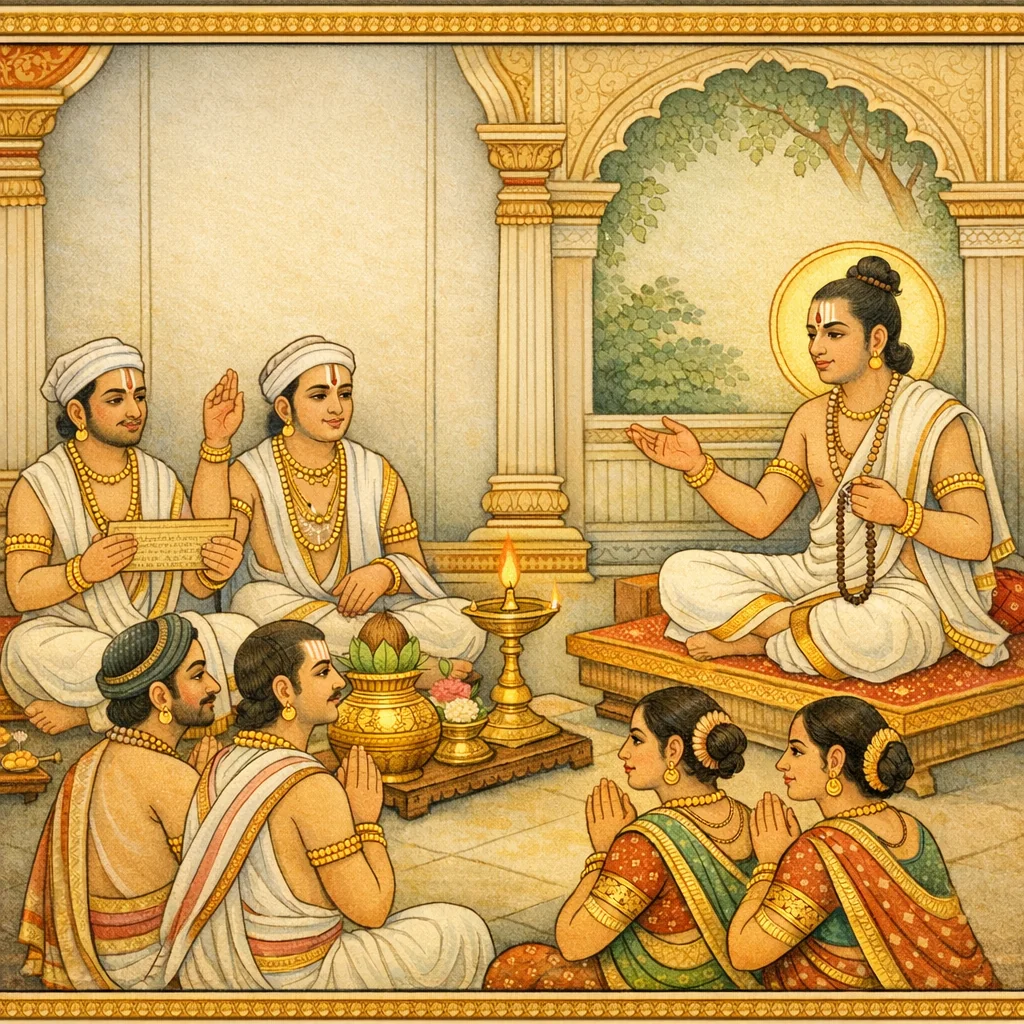
Sūta recounts the origin of a sacred shrine where a liṅga is established, linked with Yājñavalkya and the intention of purifying one’s mother. Pippalāda, acting as the chief agent, gathers learned brāhmaṇas skilled in śruti and yajña duties and announces that his mother Kaṃsārī has passed away; he has consecrated the liṅga in her memory and seeks authoritative public recognition through their counsel. Govardhana is instructed to lead the Nāgara community into regular worship, with an explicit social-theological claim: steady pūjā brings prosperity to a lineage, while neglect brings decline. The brāhmaṇas formally fix the deity’s name as “Kaṃsārīśvara.” The chapter then proclaims the fruits of reciting or hearing this account and of devotional practice before the Lord: bathing on the 8th and 14th lunar days, japa of Nīlarudra and related Rudra-mantras, and Atharvavedic recitation in the deity’s presence. Promised outcomes include mitigation of grave faults, protection amid political and natural crises, victory over enemies, timely rainfall, relief from afflictions, and the rise of righteous rule—phala grounded in Pippalāda’s assurance and the shrine’s sanctity.
Shlokas
Verse 1
सूत उवाच । दृष्ट्वा प्रतिष्ठितं लिंगं याज्ञवल्क्येन धीमता । स्वमातुः शुद्धिहेतोः स तन्नाम्ना लिंगमुत्तमम्
Sūta said: Seeing the liṅga established by the wise Yājñavalkya for the purification of his mother, he recognized and proclaimed that excellent liṅga by that very name.
Verse 3
स्थापयामास विप्रेंद्राः श्रद्धया परया युतः । ततश्चानीय विप्रेंद्रं मध्यगं नागरोद्भवम् । गर्तातीर्थसमुद्भूतमाहिताग्निं प्रयाजिनम् । यथैतन्नगरस्थानं तथा त्वमपि दीक्षितः
O best among brāhmaṇas, endowed with supreme faith, he established it. Then, bringing a foremost brāhmaṇa—central among the Nāgaras, arisen from the sacred Gartā-tīrtha, a keeper of the consecrated fires (āhitāgni) and a performer of sacrifices—it was declared: “As this is a city-seat, so you too are duly initiated (dīkṣita) to preside here.”
Verse 4
अष्टषष्टिषु गोत्राणां नायकत्वे व्यवस्थितः । तव वाक्येन सर्वाणि गोत्राणि द्विजसत्तम
You are established as leader over the sixty-eight gotras; by your word, O best among the twice-born, all the lineages shall be guided.
Verse 5
वर्तयिष्यंति कृत्येषु यावच्चन्द्रार्कतारकाः । गोवर्धन त्वया चिंता कार्या चास्य समुद्भवा
They shall continue in their prescribed duties as long as the moon, the sun, and the stars endure. And you, O Govardhana, should also take care to reflect upon and uphold this institution as it arises and grows.
Verse 6
लिंगस्य पूजनार्थाय प्रेरणीयाश्च नागराः । पूजया तस्य लिंगस्य वृद्धिं यास्यति तेऽन्वयः
And the Nāgaras should be urged to worship the liṅga. By the worship of that liṅga, your lineage shall attain increase and prosperity.
Verse 7
अपूजया विनाशं च यास्यत्यत्र न संशयः । तव वंशोद्भवा ये च पूजयित्वा प्रभक्तितः
By neglecting worship, one comes to ruin here—of this there is no doubt. But those born in your lineage who worship (this Liṅga) with deep devotion attain auspicious results.
Verse 8
एतल्लिंगं करिष्यंति कृत्यानि विविधानिच । तानि सिद्धिं प्रयास्यंति प्रसादादस्य दीक्षित
Initiates (dīkṣitas) will perform various sacred rites in relation to this Liṅga; by its grace, those rites will attain fulfillment and success.
Verse 9
गोवर्धन उवाच । अहमर्चां करिष्यामि लिंगस्यास्य सदा द्विज । भक्तिं च प्रकरिष्यामि हेतोरस्य हेतोरस्य कृते द्विज । पूजार्थं चैव ये चान्ये मम वंशसमुद्रवाः
Govardhana said: “O brāhmaṇa, I shall ever perform worship of this Liṅga. And I shall cultivate devotion (bhakti) for this very purpose, O brāhmaṇa. And for the sake of pūjā, others too from my lineage will also come forward.”
Verse 10
पिप्पलाद उवाच । गोवर्धन द्रुतं विप्रांस्तत्र चानय नागरान् । तेषां मतेन देवस्य नाममात्रं करोम्यहम्
Pippalāda said: “Govardhana, quickly bring learned brāhmaṇas there, and bring the townsmen as well. In accordance with their counsel, I shall establish the deity’s sacred name.”
Verse 11
ततश्चानाययामास विप्रांश्चैव विचक्षणान् । श्रुताध्ययनसंपन्नान्यज्ञकर्मपरायणान्
Then he brought learned and discerning brāhmaṇas—accomplished in hearing and study of the scriptures, and devoted to the duties of sacrifice and ritual.
Verse 12
तानब्रवीत्प्रणम्योच्चैः पिप्पलादो महामुनिः । मम माता मृता पूर्वं कंसारीति च नामतः
Having bowed, the great sage Pippalāda addressed them aloud: “My mother passed away earlier; her name was Kaṃsārī.”
Verse 13
तस्या उद्देशतो लिंगं मयैतत्संप्रतिष्ठितम् । युष्मद्वाक्यात्प्रसिद्धिं च प्रयातु द्विजसत्तमाः
“With her in mind as the dedicatee, I have consecrated this Liṅga. O best of brāhmaṇas, may it attain renown through your authoritative proclamation.”
Verse 14
अष्टम्यां च चतुर्दश्यां यश्चैतत्स्नापयिष्यति । याज्ञवल्क्येश्वरोत्थं च स वै श्रेयो ह्यवाप्स्यति
Whoever bathes and ritually lustrates this Liṅga on the eighth and on the fourteenth lunar day—and likewise honors what is connected with Yājñavalkyeśvara—surely attains the highest good.
Verse 15
सूत उवाच । अथ तैर्ब्राह्मणैः सर्वैस्तस्य नाम प्रतिष्ठितम् । कंसारीश्वर इत्येवं गौरवात्तस्य सन्मु नेः
Sūta said: Then all those brāhmaṇas established the deity’s name as “Kaṃsārīśvara”, out of reverence for that noble sage.
Verse 16
एतद्वः सर्वमाख्यातं यत्पृष्ठोऽस्मि द्विजोत्तमाः । कंसारीश्वरसंज्ञस्तु यथा जातस्तु पापहा । स्थापितः पिप्पलादेन स्वयं चैव महात्मना
“I have told you all that you asked, O best of brāhmaṇas—how the Lord came to be known as Kaṃsārīśvara, the remover of sins, and how he was established by Pippalāda himself, that great-souled one.”
Verse 17
यश्चैतत्पुण्यमाख्यानं तस्य देवस्य संनिधौ । संपठेच्छृणुयाद्वापि सम्यक्छक्तिसमन्वितः
Whoever, endowed with proper faith and spiritual capacity, recites this sacred and meritorious narrative—or even listens to it—in the very presence of that deity, gains its full holy fruit.
Verse 18
मनसा चिंतितं पापं परदारकृतं च यत् । तस्य तन्नाशमायाति पिप्पलाद वचो यथा
Even sin conceived in the mind, and the sin of violating another’s marriage, is destroyed for him—so declares the word of Pippalāda.
Verse 19
यस्तस्य पुरतो भक्त्या नीलरुद्रा न्सदा जपेत् । प्राणरुद्रान्विशेषेण भवरुद्रसमन्वितान्
Whoever, with devotion, always repeats the mantras of the Nīla-Rudras before him—especially the Prāṇa-Rudras, together with the Bhava-Rudra—receives the promised benefit.
Verse 20
ब्रह्महत्योद्भवं चैव अपि तस्य प्रणश्यति । परचक्रभये जाते ह्यना वृष्टिभये तथा
Even the taint born of brahmin-slaying is destroyed for him. And when fear arises from an enemy army, or when there is fear of drought, this practice brings relief.
Verse 21
अथर्ववेदे साद्यंते पठिते तस्य चाग्रतः । शत्रुर्विलयमभ्येति वृष्टिः सञ्जायते द्रुतम्
When the Atharvaveda’s protective rite is duly recited before him, the enemy dissolves away, and rain quickly arises.
Verse 22
राजदौःस्थ्ये समुत्पन्ने राजा भवति धार्मिकः । सर्वरोगविनिर्मुक्तः प्रजापालनतत्परः
When royal distress arises, the king becomes righteous—freed from all disease and devoted to the protection of his subjects.
Verse 23
उपसर्गभये जाते तस्य दोषः प्रशाम्यति । शनैः शनैरसंदिग्धं पिप्पलादवचो यथा
When fear of affliction or epidemic arises, his blemish is pacified—gradually and without doubt—so declares Pippalāda.
Verse 24
किं वा ते बहुनोक्तेन यत्किंचिद्व्यसनं महत् । तत्तस्य व्यसनं किंचिदथर्वणः प्रकी र्तनात्
Why say more? Whatever great calamity there may be, it becomes for him a mere trifle through the proclamation and recitation of Atharvan’s power.
Verse 25
अस्य देवस्य पुरतो याति नाशं च वै द्रुतम्
Before this deity, indeed, it swiftly goes to destruction.
Verse 176
इति श्रीस्कांदे महापुराण एकाशीतिसाहस्र्यां संहितायां षष्ठे नागरखण्डे हाटकेश्वरक्षेत्रमाहात्म्ये कंसारेश्वरोत्पत्तिमाहात्म्यवर्णनंनाम षट्सप्तत्युत्तरशततमोऽध्यायः
Thus ends the one-hundred-and-seventy-sixth chapter, called “The Description of the Greatness of the Origin of Kaṃsāreśvara,” in the Hāṭakeśvara-kṣetra Māhātmya of the sixth Nāgara Khaṇḍa, within the Śrī Skanda Mahāpurāṇa, in the Ekāśītisāhasrī Saṃhitā.