Adhyaya 175
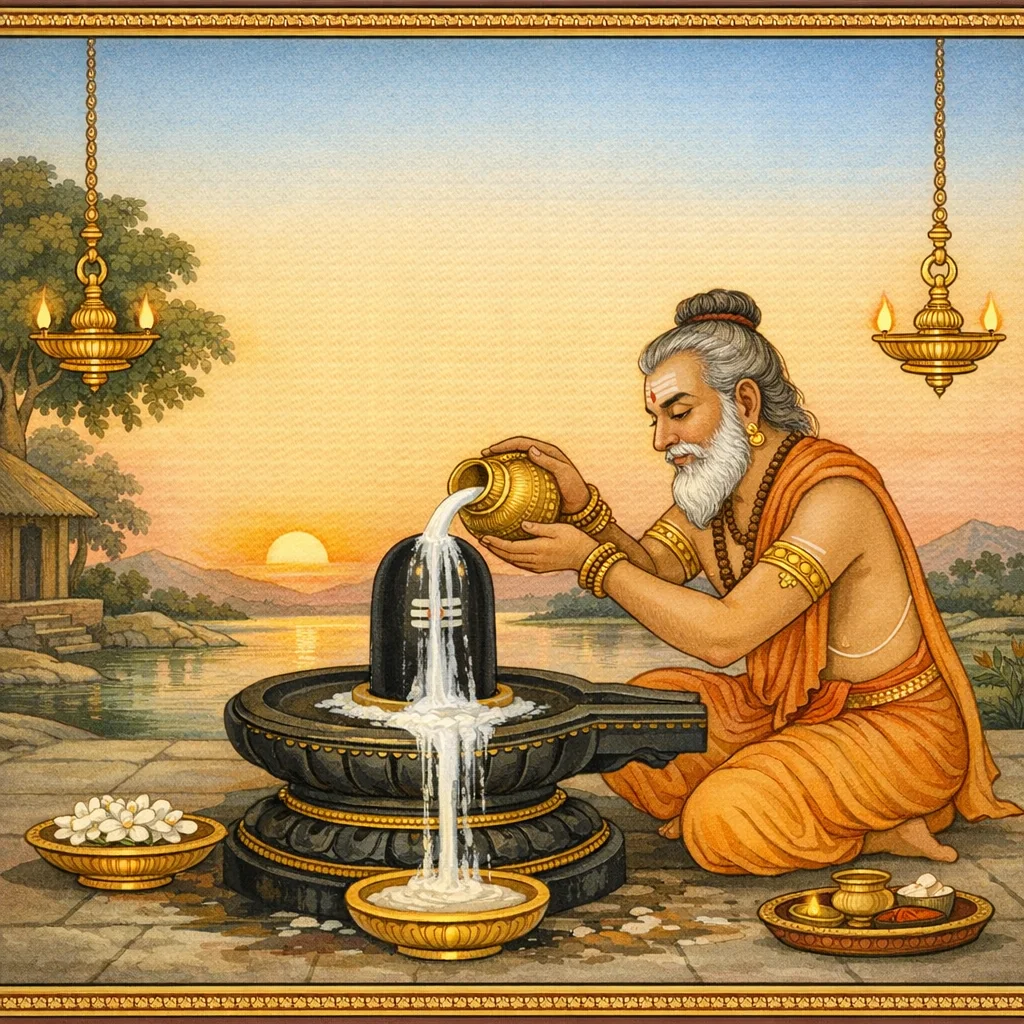
Framed by Sūta’s narration, this chapter presents a dialogue between Yājñavalkya and Brahmā. Troubled within, Yājñavalkya seeks heart-purification (citta-śuddhi) and asks for a fitting prāyaścitta that will grant spiritual clarity. Brahmā gives a concrete ritual-theological remedy: establish a Śiva-liṅga of Śūlin in the supremely meritorious Hāṭakeśvara-kṣetra, a sacred field said to purify and destroy accumulated wrongdoing. Whether faults arise from ignorance or from knowing transgression, the devout building of a Śiva-temple and liṅga-centered worship is taught to dispel moral darkness, as sunrise drives away night. The chapter also voices Kali-yuga anxiety—many tīrthas becoming “ineffective”—yet declares this kṣetra an exception. After Brahmā departs, Yājñavalkya installs the liṅga and proclaims an observance: with sincere devotion, perform abhiṣeka (snāpana) of the liṅga on Aṣṭamī and Caturdaśī; this cleanses faults and restores purity. The liṅga thus becomes renowned in Hāṭakeśvara as “Yājñavalkyeśvara.”
Shlokas
Verse 1
सूत उवाच । एवं संशोचते यावदात्मानं परिगर्हयन् । ततस्तु ब्रह्मणा प्रोक्तः स्वयमभ्येत्य भो द्विजाः
Sūta said: “As he thus grieved, reproaching himself, then Brahmā himself came near and spoke to him, O brāhmaṇas.”
Verse 2
त्वया शंका न कर्तव्या सुतस्यास्य कृते द्विज । अज्ञानादेव ते जातो दैवयोगेन बालकः
“O brāhmaṇa, you should not harbor doubt concerning this child as your son. Through ignorance indeed, and by the conjunction of fate, this boy has been born to you.”
Verse 3
याज्ञवल्क्य उवाच । तथापि देव मे शुद्धिर्हृदयस्य न जायते । तस्माद्वद सुरश्रेष्ठ प्रायश्चित्तं विशुद्धये
Yājñavalkya said: “Even so, O Deva, the purity of my heart does not arise. Therefore, O best of the gods, tell me the prāyaścitta—expiation for complete purification.”
Verse 4
ब्रह्मोवाच । यदि ते चित्तशुद्धिस्तु न कथंचित्प्रवर्तते । तत्स्थापय महाभाग लिंगं देवस्य शूलिनः
Brahmā said: “If, for you, purity of mind does not arise by any means, then, O fortunate one, establish the liṅga of the Lord Śūlin (Śiva, the trident-bearer).”
Verse 5
अज्ञानाज्ज्ञानतोवापि यत्पापं कुरुते नरः । ब्रह्महत्यादिकं चापि स्त्रीवधाद्वापि यद्भवेत्
Whether through ignorance or even knowingly, whatever sin a person commits—be it brahmin-slaying and the like, or even the killing of a woman—whatever such guilt may arise;
Verse 6
पंचेष्टिकामयं वापि यः कुर्याद्धरमन्दिरम् । तस्य तन्नाशमायाति तमः सूर्योदये यथा
Even if one builds a temple of Hara (Śiva) merely from the fivefold urges of desire, that very taint is destroyed for him—just as darkness vanishes at sunrise.
Verse 7
विशेषेण महाभाग हाटकेश्वरसंभवे । क्षेत्रे तत्र सुमेध्ये तु सर्वपातकनाशने
Especially, O greatly fortunate one, in that holy kṣetra connected with the manifestation of Hāṭakeśvara—exceedingly pure, the destroyer of all sins—
Verse 8
कलिकाले च संप्राप्ते यत्र पापं न विद्यते । अहमप्यत्र वांछामि यज्ञं कर्तुं द्विजोत्तम
When the age of Kali has arrived, in that place where sin is not found, I too desire to perform a yajña there, O best of the twice-born.
Verse 9
आनयिष्यामि तत्तीर्थं पुष्करं चात्मनः प्रियम् । कलिकालभयाच्चैतद्यावन्नो व्यर्थतां व्रजेत्
I shall bring that sacred tīrtha—Pushkara, dear to me—so that, out of fear of Kali-yuga, this holy merit may not become futile.
Verse 10
कलिकाले तु संप्राप्ते तीर्थानि सकलानि च । यास्यंति व्यर्थतां विप्र मुक्त्वेदं क्षेत्रमुत्तमम्
When Kali-yuga has arrived, all tīrthas will become ineffective, O brāhmaṇa—except for this supreme sacred kṣetra.
Verse 11
सूत उवाच । एवमुक्त्वा चतुर्वक्त्रस्ततश्चादर्शनं गतः । याज्ञवल्क्योऽपि तच्छ्रुत्वा पितामहवचोऽ खिलम्
Sūta said: Having spoken thus, the four-faced One (Brahmā) then vanished from sight. And Yājñavalkya too, having heard in full the words of the Grandsire (Pitāmaha),
Verse 12
लिंगं संस्थापयामास ज्ञात्वा क्षेत्रमनुत्तमम् । अब्रवीच्च ततो वाक्यं मेघगंभीरया गिरा
Recognizing the place as an unsurpassed sacred field (kṣetra), he established the liṅga. Then he spoke, his voice deep as thunderclouds.
Verse 13
अष्टम्यां च चतुर्दश्यां यो लिंगं मामकं त्विदम् । स्नापयिष्यति सद्भक्त्या तस्य पापं प्रयास्यति
Whoever, on the eighth or the fourteenth lunar day, bathes this liṅga of Mine with sincere devotion—his sin is driven away.
Verse 14
परदारकृतं यच्च मात्रापि च समं कृतम् । क्षालयिष्यति तत्पापं स्नापितं पूजितं परैः
Even the sin arising from adultery, and even that as grievous as wrongdoing toward one’s mother—when this (liṅga) is bathed and duly worshipped, that sin is washed away.
Verse 15
अस्मिन्नहनि संप्राप्ते तस्य पक्षसमुद्भवम् । प्रयास्यति कृतं पापं यदज्ञानाद्विनिर्मितम्
When this sacred day arrives, the sins accumulated over that fortnight depart—those wrongs that were committed out of ignorance are dissolved.
Verse 16
ततःप्रभृति विख्यातो याज्ञव ल्क्येश्वरः शुभः । तस्मिन्क्षेत्रे द्विजश्रेष्ठा हाटकेश्वरसंज्ञके
From that time onward, O best among the twice-born, in that sacred field called Hāṭakeśvara, the auspicious Lord known as Yājñavalkyeśvara became renowned.
Verse 175
इति श्रीस्कांदे महापुराण एकाशीतिसाहस्र्यां संहितायां षष्ठे नागरखण्डे हाटकेश्वरक्षेत्रमाहात्म्ये याज्ञवल्क्येश्वरोत्पत्तिमाहात्म्यवर्णनंनाम पंचसप्तत्युत्तरशततमोऽध्यायः
Thus ends, in the Śrī Skanda Mahāpurāṇa—within the Saṃhitā of eighty-one thousand verses, in the sixth Nāgara Khaṇḍa—within the Māhātmya of the sacred region of Hāṭakeśvara, the one-hundred-and-seventy-fifth chapter entitled “The Narrative of the Greatness of the Origin of Yājñavalkyeśvara.”