Adhyaya 174
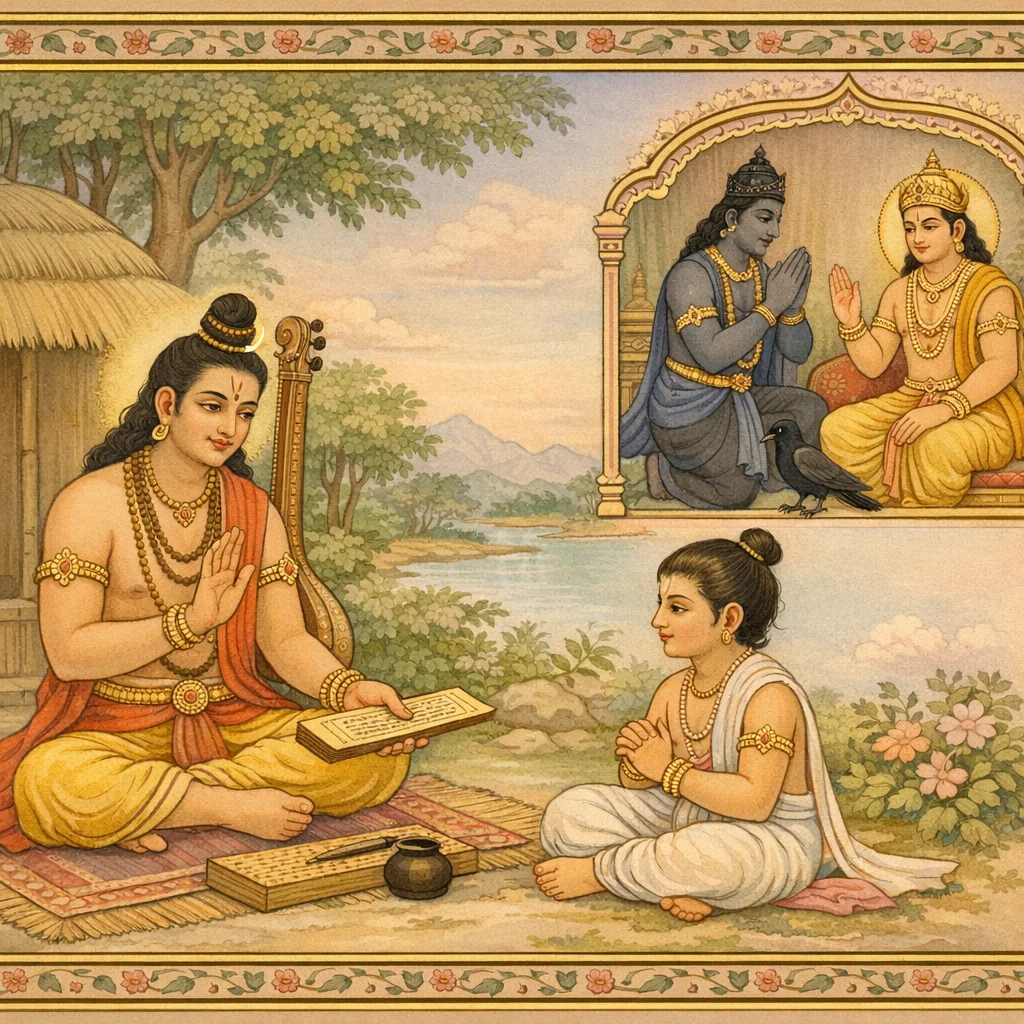
Within the Hāṭakeśvara-kṣetra māhātmya, Sūta narrates a question-led tīrtha account. He introduces a liṅga established by Pippalāda, called Kaṃsāreśvara, and proclaims graded merits of impurity-removal through darśana, namaskāra, and pūjā. The ṛṣis ask who Pippalāda is and why he installed this liṅga. Sūta then recounts the birth-cause: Kaṃsārī, sister of Yājñavalkya, becomes unintentionally pregnant after contact with semen-mixed water connected with Yājñavalkya’s garment. She gives birth in secret, leaves the child beneath an aśvattha (pippala) tree, and prays for protection. A divine voice reveals the child as an earthly descent linked to Bṛhaspati under Utathya’s curse, and foretells the name “Pippalāda,” since he is nourished by the pippala’s essence. Kaṃsārī dies of shame, while the boy grows up near the tree. Nārada meets the boy, discloses his origin, and sets him on an Atharva-vedic course of learning. The narrative turns to Śanaiścara (Śani): Pippalāda’s anger makes Śani fall; Nārada mediates, leading to a stotra and negotiated ethical-ritual stipulations—especially protections for children up to eight years, along with observances such as oil application, prescribed gifts, and modes of worship. Finally, Nārada brings Pippalāda to Camatkārapura and entrusts him to Yājñavalkya, weaving together lineage, place, and ritual consequence.
Shlokas
Verse 1
सूत उवाच । तथान्यदपि वो वच्मि लिंगं यत्तत्र संस्थितम् । स्थापितं पिप्पलादेन कंसारेश्वरमित्यहो
Sūta said: I shall also tell you of another liṅga established there—set up by Pippalāda—known indeed as Kaṃsāreśvara.
Verse 3
यस्मिन्दृष्टे तु लोकानां पापं याति दिनोद्भवम् । नते षाण्मासिकं चैव पूजिते वर्षसंभवम् । ऋषय ऊचुः । पिप्पलादेन यल्लिंगं स्थापितं सूतनन्दन । कंसारेश्वरमित्युक्तं कस्मात्तच्च ब्रवीहि नः
By merely seeing it, the daily-arising sins of people are destroyed; by bowing to it, the sins accumulated over six months are removed; and by worshipping it, the sins born of a whole year are dispelled. The sages said: O son of Sūta, tell us—why is the liṅga installed by Pippalāda called “Kaṃsāreśvara”?
Verse 4
क एष पिप्पलादस्तु कस्य पुत्रो वदस्व नः । किमर्थं स्थापितं लिंगं क्षेत्रे तत्र महात्मना
Who, indeed, is this Pippalāda, and whose son is he? Tell us—why did that great-souled one install the liṅga there, in that sacred kṣetra?
Verse 5
सूत उवाच । प्रश्नभारो महानेष भवद्भिः समुदाहृतः । तथापि कथयिष्यामि नमस्कृत्वा स्वयंभुवम्
Sūta said: Great is this burden of questions you have raised. Even so, I shall relate it—having first bowed to the Self-born Lord.
Verse 6
याज्ञवल्क्यस्यभगिनी कंसारीति च विश्रुता । कुमारब्रह्मचर्येण तप स्तेपे सुदारुणम्
Yājñavalkya’s sister, renowned by the name Kaṃsārī, undertook extremely severe austerities, observing brahmacarya from maidenhood.
Verse 7
याज्ञवल्क्याश्रमे पुण्ये बांधवेन समन्विता । कस्यचित्त्वथ कालस्य याज्ञवल्क्यस्य भो द्विजाः
O twice-born ones, after some time, in the sacred hermitage of Yājñavalkya, a certain woman—accompanied by a kinsman—came to Yājñavalkya.
Verse 8
चस्कन्द रेतः स्वप्नांते दृष्ट्वा कांचिद्वराप्सराम् । तारुण्यभावसंस्थस्य तपोयुक्तस्य सद्द्विजाः
O noble twice-born, when he beheld a certain excellent apsaras at the end of a dream, the semen of that ascetic—who was in the state of youth yet devoted to austerity—was emitted.
Verse 9
रेतसा तस्य महता परिधानं परिप्लुतम् । तच्च तेन परित्यक्तं प्रभाते समुपस्थिते
His garment became thoroughly soaked by that abundant semen; and when morning arrived, he abandoned that cloth.
Verse 10
कंसारिकाऽथ जग्राह स्नानार्थं वसनं च तत् । अमोघरेतसा क्लिन्नमजानन्ती द्विजोत्तमाः
Then Kaṃsārikā took that very cloth for bathing, O best of the twice-born, not knowing it had been wetted by the unfailing seed.
Verse 11
कुर्वन्त्या यजनं तस्या जलं वीर्यसमन्वितम् । प्रविष्टं भगमध्ये तु ऋतुकाल उपस्थिते
While she was performing her rite, the water—charged with seed—entered her womb, and it happened when her fertile season had come.
Verse 12
ततो गर्भः समभवत्तस्यास्तूदरमध्यगः । वृद्धिं चाप्यगमन्नित्यं शुक्लपक्षे यथोडुराट्
Then a pregnancy arose within her, lodged in the midst of her belly; and it grew day by day, like the moon waxing in the bright fortnight.
Verse 13
साऽपि तं गर्भमादाय स्वोदरस्थं तपस्विनी । दुःखेन महता युक्ता लज्जयाऽथ तदाऽवृता
That ascetic woman too bore the embryo within her own womb, afflicted by great sorrow and then covered over by shame.
Verse 14
चिन्तयामास सुचिरं विस्मयेन समन्विता । गोपायन्ती तदाऽत्मानं दर्शनं याति नो नृणाम्
For a long while she pondered in astonishment; guarding herself, she did not then go into the sight of people.
Verse 15
व्रतचर्यामिषं कृत्वा सदा रहसि संस्थिता । संप्राप्ते दशमे मासि निशीथे समुपस्थिते । तस्याः कुमारको जातो वालार्कसदृशद्युतिः
Observing the disciplines of her vow and ever abiding in secrecy, when the tenth month arrived and midnight had come, she gave birth to a boy whose radiance was like the rising sun.
Verse 16
अथ सा तं समा दाय सूक्ष्मवस्त्रेण वेष्टितम् । कृत्वा जगाम चारण्यं मनुष्यपरिवर्जितम् । अश्रुपूर्णेक्षणा दीना रुदन्ती गुप्तमेव च
Then she took the child, wrapped in a fine cloth, and went to a forest devoid of people—wretched, with eyes full of tears, weeping, and keeping it all hidden.
Verse 17
ततो गत्वा च साऽश्वत्थं विजने सुमहत्तरम् । तस्याधस्ताद्विमुच्याथ वाक्यमेतदुवाच ह
Then she went to a very great Aśvattha (sacred fig) standing in a lonely place. Releasing (the child) beneath it, she spoke these words.
Verse 18
अश्वत्थ विष्णुरूपोऽसि त्वं देवेषु प्रतिष्ठितः । तस्माद्रक्षस्व मे पुत्रं सर्वतस्त्वं वनस्पते
O Aśvattha, you are of the form of Viṣṇu, established among the gods. Therefore, O lord of trees, protect my son on every side.
Verse 19
एष ते शरणं प्राप्तो मम पुत्रस्तु बालकः । पापाया निर्दयायाश्च तस्माद्रक्षां समाचर
This little boy—my son—has come to you for refuge. Therefore, grant him protection from the sinful and the pitiless.
Verse 20
एवमुक्त्वा रुदित्वा च सुचिरं सा तपस्विनी । जगाम स्वाश्रमं पश्चाद्वाष्पव्याकुललोचना
Thus having spoken, and weeping for a long while, that ascetic woman afterward returned to her own hermitage, her eyes distressed and clouded with tears.
Verse 21
यावद्रोदिति सा माता तस्याधस्ताद्वनस्पतेः । तावदाकाशजा वाणी संजाता मेघनिःस्वना
As that mother wept beneath the lordly tree, a voice born of the sky arose, rumbling like the reverberation of clouds.
Verse 22
मा त्वं शोकं कुरुष्वास्य बालकस्य कृते शुभे । एष शापादुतथ्यस्य ज्येष्ठभ्रातुर्बृहस्पतिः । अवतीर्णो धरापृष्ठे योग्यतां समवाप्स्यति
O auspicious one, do not grieve for this child. He is Bṛhaspati, elder brother of Utathya; by the force of a curse he has descended upon the earth, and here he shall attain his destined fitness and excellence.
Verse 23
एष चाथर्वणं वेदं शतकल्पं सुविस्तरम् । शतभेदं च नवधा पंचकल्पं करिष्यति
He will also systematize the Atharva-Veda, expanding it vast and wide into a hundred kalpas; he will divide it into a hundred branches and arrange it in ninefold and fivefold classifications.
Verse 24
पिप्पलस्य तरोरेष रसं संभक्षयिष्यति । पिप्पलाद इति ख्यातस्ततो लोके भविष्यति
He will partake of the sap and essence of the pippala tree; therefore, in the world he shall become renowned by the name “Pippalāda”.
Verse 25
या त्वं विस्मयमापन्ना पुरुषेण विना शिशुः । संजातोऽयं मम प्रांशुस्ततस्तत्कारणं शृणु
Since you are amazed that this radiant child was born without a man, listen to the reason for it.
Verse 26
स्नानवस्त्रं च ते भ्रातू रेतसा यत्परिप्लुतम् । तत्त्वया ऋतुकाले तु परिधानं कृतं शुभे
The bathing garment of your brother, soaked with his seed, was worn by you during your fertile season, O auspicious one.
Verse 27
स्नानकाले तु तोयानि रेतोदकमथास्पृशन् । अमोघरेतसा तेन पुत्रोऽयं तव संस्थितः
At the time of bathing, the waters touched the fluid of the seed; by that unfailing virility, this son of yours was established.
Verse 28
एवं ज्ञात्वा महाभागे यद्युक्तं तत्समाचर
Knowing this thus, O greatly fortunate lady, do what is proper and fitting.
Verse 29
सूत उवाच । तच्छ्रुत्वा देवलोकस्यवज्रपातोपमं वचः । हाहाकारपरा भूत्वा निपपात धरातले
Sūta said: Hearing those words, which were like a thunderbolt striking the world of gods, she was overcome with wailing and fell to the ground.
Verse 30
छिन्नवृक्षलता यद्वत्पतिता सा तपस्विनी
That ascetic woman fell, like a creeper cut away from a tree.
Verse 31
चिरायन्त्यां तु तस्यां स याज्ञवल्क्यो महामुनिः । शून्यं तमाश्रमं दृष्ट्वा पप्रच्छान्यान्मुनीश्वरान्
When she was delayed for a long time, the great sage Yājñavalkya, seeing that hermitage empty, questioned the other lordly sages.
Verse 32
क्व च मे भगिनी याता कंसारी सुतपस्विनी । तया विनाऽद्य मे सर्वं शून्यमाश्रममंडलम्
‘Where has my sister gone—Kaṃsārī, the noble ascetic? Without her, today my entire hermitage-enclosure feels empty.’
Verse 33
आचख्यौ तापसः कश्चिद्भगिनी ते यवीयसी । निश्चेष्टा पतिता भूमावश्वत्थस्य समीपतः
A certain ascetic reported: ‘Your younger sister has fallen to the ground, motionless, near the aśvattha tree.’
Verse 34
मया दृष्टा मुनिश्रेष्ठ तां त्वं भावय मा चिरम् । अथासौ त्वरया युक्तः संभ्रांतस्तु प्रधावितः
‘I have seen her, O best of sages—attend to her at once, without delay.’ Then he, seized by haste and alarm, ran quickly.
Verse 35
यत्र सा कथिता तेन तापसेन तपस्विनी । वीक्षते यावत्तत्रस्था श्वसमाना व्यवस्थिता
Where that ascetic had said she was, the ascetic woman remained there—seen to be still breathing as she lay.
Verse 36
अथ तोयेन शीतेन सेचयित्वा मुहुर्मुहुः । दत्त्वा भूयोऽपि वातं च यावच्चक्रे सचेतनाम् । तावत्कात्यायनी प्राप्ता मैत्रेयी च ससंभ्रमम्
Then, sprinkling her again and again with cool water and fanning her with air once more, he brought her back to consciousness. Just then Kātyāyanī arrived, and Maitreyī too, in great agitation.
Verse 37
किमिदं किमिदं जातं ननांदर्वद मा चिरम्
“What is this—what has happened? Tell me quickly; do not delay.”
Verse 38
किं वा भूतगृहीताऽसि माहेंद्रेण ज्वरेण वा
“Or what is it—are you seized by a spirit, or afflicted by the Māhendra fever?”
Verse 39
अथ सा चेतनां लब्ध्वा याज्ञ वल्क्यं पुरः स्थितम् । भार्यया सहितं दृष्ट्वा व्रीडयाऽसून्मुमोच ह
Then she regained consciousness and saw Yājñavalkya standing before her together with his wife; and, overcome with shame, she gave up her life-breath.
Verse 40
अथ तां च मृतां दृष्ट्वा रुदित्वा च चिरं द्विजाः । याज्ञवल्क्यः सभार्यस्तु दत्त्वा वह्निं च शोकधृक् । जगाम स्वाश्रमं पश्चाद्दत्त्वा च सलिलाञ्जलिम्
Seeing her dead, the twice-born wept for a long time. Then Yājñavalkya, together with his wife, heavy with sorrow, performed the funeral rite by committing her to the sacred fire; and afterward, having offered a water-oblation, he returned to his own hermitage.
Verse 41
सोऽपि बालोऽथ ववृधे पिप्पलास्वादपुष्टिधृक् । अश्वत्थस्य तले तस्य वृद्धिं याति शनैःशनैः
That boy too grew up, nourished by tasting pippala fruits. Beneath that aśvattha tree, he steadily increased in stature, little by little.
Verse 42
कस्यचित्त्वथ कालस्य नारदो मुनिसत्तमः । तीर्थयात्राप्रसंगेन तेन मार्गेण चागतः
After some time, Nārada—the best of sages—came along that route, being engaged in a pilgrimage to the sacred tīrthas.
Verse 43
स दृष्ट्वा बालकं तत्र द्वादशार्कसमप्रभम् । एकाकिनं वने शून्ये पिप्पलास्वादतत्परम् । पप्रच्छ विस्मयाविष्ट एकाकी को भवानिह
Seeing there a boy radiant like twelve suns, alone in a desolate forest and intent on tasting pippala fruits, he asked in astonishment: “Who are you, all alone, here?”
Verse 44
वने शून्ये महारौद्रे सिंहव्याघ्रसमाकुले । क्व ते माता पिता चैव किमर्थं चेह तिष्ठसि
“In this empty, terribly fearsome forest, crowded with lions and tigers—where are your mother and father, and for what reason do you remain here?”
Verse 45
निवससि कथं चैव सर्वं मे विस्तराद्वद
“How do you dwell here? Tell me everything in full detail.”
Verse 46
पिप्पलाद उवाच । नाहं जानामि पितरं मातरं न च बांधवम् । नापि त्वां कोऽत्र चा यातो मम पार्श्वे तु सांप्रतम्
Pippalāda said: “I know neither my father nor my mother, nor any kinsman. Nor do I know you—who are you, who have just now come to my side?”
Verse 47
सूत उवाच । तस्य तद्वचनं श्रुत्वा चिरं ध्यात्वा मुनीश्वरः । ततस्तं प्रहसन्प्राह ज्ञात्वा दिव्येन चक्षुषा
Sūta said: Hearing his words, the noble sage pondered for a long while. Then, smiling—having discerned the matter with divine sight—he spoke to him.
Verse 48
नारद उवाच । मया ज्ञातोऽसि वत्स त्वं याज्ञवल्क्यस्य रेतसा । दैवयोगात्समुत्पन्नो भगिन्या उदरे ह्यृतौ
Nārada said: “I have recognized you, dear child—you were born from the seed of Yājñavalkya. By a divine conjunction, in the proper season, you arose within the womb of his sister.”
Verse 49
उतथ्यशापदोषेण देवाचार्यो बृहस्पतिः । देवकार्यस्य सिद्ध्यर्थं तस्मात्तच्छृणु कारणम्
Because of the fault arising from Utathya’s curse, Bṛhaspati—the preceptor of the gods—was hindered. Therefore, for the successful fulfillment of the gods’ purpose, listen to the reason for this.
Verse 51
नवशाखः पंचकल्पस्त्वया कार्यः सुखावहः
You should undertake the discipline called “Nine-Branches” and the “Five-Kalpas”—it will be a giver of well-being.
Verse 52
तव मात्रा महाभाग रेतसा च परिप्लुतम् । यद्वस्त्रं याज्ञवल्क्यस्य परिधानं कृतं च यत्
O fortunate one, the garment which your mother took up as Yājñavalkya’s clothing was drenched with his seed.
Verse 53
भगिन्या सुतपस्विन्या स्नानार्थं न च काम्यया । तद्रेतो जलमिश्रं तु भगमध्ये विनिर्गतम्
By the sister—of excellent austerity—(it was done) for bathing, not out of desire. That seed, mixed with water, then issued forth within the womb.
Verse 54
अमोघं तेन संभूतस्त्वमत्र जगतीतले । माता वै मृत्युमापन्ना ज्ञात्वैवं लज्जया तया
Thus you were born—your coming was not in vain—here upon the earth. But your mother, realizing what had occurred, was overcome by shame and met her death.
Verse 55
चमत्कारपुरे तुभ्यं मातुलो जनकस्तथा । संतिष्ठते महाभाग तत्पार्श्वे त्वमितो वज
In Camatkārapura your maternal uncle—Janaka—resides. O fortunate one, go from here and stay by his side.
Verse 56
सांप्रतं व्रतकालस्ते वर्षं चैवाष्टमं स्थितम् । तच्छ्रुत्वा वचनं तस्य लज्जयाऽधोमुखः स्थितः
Now the time for your vrata has arrived, and your eighth year too has come to completion. Hearing his words, he stood with face lowered, overcome by shame.
Verse 57
ततश्चिरेण दीनं स वाक्यमेतदुवाच तम् । किं मया पापमाख्याहि पूर्वदेहांतरे कृतम्
Then, after a long while, he sorrowfully spoke to him: “Tell me—what sin did I commit in a former body?”
Verse 58
येनेदं गर्हितं जन्म वियोगो मातृसंभवः । परित्यक्ष्यामि जीवं स्वं दुःखेनानेन सन्मुने
“By what cause has this blameworthy birth come upon me—born only through separation from my mother? O holy sage, tormented by this sorrow, I shall abandon even my life.”
Verse 59
नारद उवाच । न त्वया दुष्कृतं किंचित्पूर्वदेहांतरे कृतम् । परं येन सुसंजातं तवेदं व्यसनं शृणु
Nārada said: “You have committed no wrongdoing at all in a former embodiment. Rather, listen to the true reason by which this calamity has arisen for you.”
Verse 60
जन्मस्थेन भवाञ्जातः शनिना नाऽत्र संशयः । तेनावस्थामिमां प्राप्तो नान्यदस्ति हि कारणम्
“It is Śani—Saturn—positioned at your birth, who has brought you into this condition; there is no doubt. By that alone you have reached this state; indeed there is no other cause.”
Verse 61
तच्छ्रुत्वा वचनं तस्य कोपसंरक्तलोचनः । ऊर्ध्वमालोकयामास समुद्दिश्य शनैश्चरम्
Hearing his words, his eyes reddened with wrath, he looked upward—fixing his gaze upon Śanaiścara (Saturn).
Verse 62
तस्य दृष्टिनिपातेन न्यपतत्स तु तत्क्षणात् । विमानात्स्वाद्रवेः पुत्रो ययातिरिव नाहुषः
By the mere fall of his gaze, Śani dropped at that very instant from his celestial car—like Yayāti, the son of Nāhuṣa, falling down.
Verse 63
अधोवक्त्रो द्विजश्रेष्ठाः पितुरादेशमाश्रितः । बालभावेऽपि तेनैव दग्धौ पादौ तदा रवेः
“O best of the twice-born, he was downward-faced, acting under his father’s command; yet even in childhood, by that very act, the feet of Ravi (the Sun) were then scorched.”
Verse 64
अथ तं नारदः प्राह पतमानमधोमुखम् । बाल्यभावादनेन त्वं पातितोऽसि शनैश्चर
Then Nārada spoke to him as he was falling, face downward: “O Śanaiścara, because of this childish act, you have been cast down.”
Verse 65
तस्मान्मा वीक्षयस्वैनं भविष्यति प्रकोपभाक् । मा पतस्व तथा भूमौ बलान्मद्वाक्यसंभवात्
“Therefore, do not look at him; he will become seized by wrath. And do not fall in that manner to the ground—held back by the force born of my words.”
Verse 66
स्तंभयित्वा तथाप्येवं गगनस्थं शनैश्चरम् । ततः प्रोवाच तं बालं पिप्पलादं मुनीश्वरः
Even so, having restrained Śanaiścara as he remained in the sky, the great sage then spoke to the boy Pippalāda.
Verse 67
मा कोपं कुरु बाल त्वमेष सूर्यसुतो ग्रहः । देवानामपि पीडां च कुरुतेऽष्टमराशिगः
“Do not be angry, child. This is the planet-god, the son of the Sun. When he occupies the eighth sign, he brings affliction even upon the gods.”
Verse 68
जन्मस्थस्तु विशेषेण द्वितीयस्तु तथापरः । यद्येष कुपितस्त्वां तु वीक्षयिष्यति कर्हिचित्
One is stationed especially at the place of birth, and another likewise elsewhere. If this one, angered, should ever cast his glance upon you—
Verse 69
करिष्यति न संदेहो भस्मराशिं ममाग्रतः । अनेन वीक्षितौ पादौ जातमात्रेण सूर्यकौ
He will surely—without doubt—reduce me to a heap of ashes before your very eyes. By his glance, even those two feet became like the sun the moment he was born.
Verse 70
आयातस्य तु तुष्टस्य पुत्रदर्शनवाञ्छया । अन्तर्धानीकृते वस्त्रे ज्ञात्वा तं रौद्रचक्षुषम्
When he arrived, pleased and longing to see his son, and when the cloth had been made to vanish, he recognized him as one with fierce eyes.
Verse 71
ततो दग्धावुभौ चापि तिष्ठतश्चर्म वेष्टितौ । दृश्येतेऽद्यापि मूर्त्तौ तौ घटितायां धरातले
Then both were burned, even as they stood, wrapped in skin. Even today those two forms are seen, fixed upon the surface of the earth.
Verse 72
सूत उवाच । तच्छ्रुत्वा वचनं तस्य नारदस्य स बालकः । भयेन महता युक्तस्ततः पप्रच्छ तं मुनिम्
Sūta said: Hearing those words of Nārada, the boy—overcome with great fear—then questioned that sage.
Verse 73
कथं यास्यति मे तुष्टिं वदैष मम सन्मुने । अज्ञानात्पातितो व्योम्नः शक्तिं चास्याविजानता
Tell me, O noble sage—how will he become pleased with me? Through ignorance I struck him down from the sky, not knowing his power.
Verse 74
नारद उवाच । ग्रहा गावो नरेंद्राश्च ब्राह्मणाश्च विशेषतः । पूजिताः प्रतिपूज्यंते निर्दहंत्यपमानिताः
Nārada said: The planets, cows, kings, and—most especially—brāhmaṇas: when honored, they return honor; when insulted, they burn (the offender).
Verse 75
तस्मात्कुरु स्तुतिं चास्य स्वशक्त्या भास्करेः प्रभो । प्रसादं गच्छते येन कोपं त्यजति पातजम्
Therefore, O lord, offer him a hymn of praise to Bhāskara with whatever strength you have; by that he attains graciousness and abandons the anger born of the wrongdoing.
Verse 76
ततः कृतांजलिर्भूत्वा स्तुतिं चक्रे स बालकः । भयेन महता युक्तस्ततः संपृच्छ्य तं मुनिम्
Then the boy, joining his palms in añjali, uttered a hymn of praise; filled with great fear, he questioned that sage further.
Verse 77
पिप्पलादो द्विजश्रेष्ठाः प्रणिपत्य मुहुर्मुहुः । नमस्ते क्रोधसंस्थाय पिंगलाय नमोऽस्तु ते
Pippalāda said, bowing again and again: “O best among the twice-born, salutations to you who abide in wrath; salutations to you, O tawny-hued one.”
Verse 78
नमस्ते वसुरूपाय कृष्णाय च नमोऽस्तु ते । नमस्ते रौद्रदेहाय नमस्ते चांतकाय च
Salutations to you whose form is that of the Vasus; salutations to you, Kṛṣṇa, the Dark One. Salutations to you whose body is fierce, Rudra-like; salutations also to you, Antaka, the Ender—Death.
Verse 79
नमस्ते यमसंज्ञाय नमस्ते सौरये विभो । नमस्ते मन्दसंज्ञाय शनैश्चर नमोऽस्तु ते
Salutations to you who are known as Yama; salutations to you, O mighty son of Sūrya. Salutations to you who are called Manda; O Śanaiścara, salutations to you.
Verse 81
शनैश्चर उवाच । परितुष्टोऽस्मि ते वत्स स्तोत्रेणानेन सांप्रतम् । वरं वरय भद्रं ते येन यच्छामि सांप्रतम्
Śanaiścara said: “Dear child, I am now pleased with you by this hymn. Choose a boon—may auspiciousness be yours—so that I may grant it to you at once.”
Verse 82
पिप्पलाद उवाच । अद्यप्रभृति नो पीडा बालानां सूर्यनन्दन । त्वया कार्या महाभाग स्वकीया च कथंचन
Pippalāda said: “From this day onward, O son of Sūrya, you must not inflict any suffering upon children—neither mine nor those of others—in any way, O great and blessed one.”
Verse 83
यावद्वर्षाष्टमं जातं मम वाक्येन सूर्यज । स्तोत्रेणानेन योऽत्र त्वां स्तूयात्प्रातः समुत्थितः
O son of Sūrya, by my word: until the completion of the eighth year of age, whoever here, rising in the morning, praises you with this hymn—
Verse 84
तस्य पीडा न कर्तव्या त्वया भास्करनन्दन । तव वारे च संजाते तैलाभ्यंगं करोति यः
—you, O son of Bhāskara, must not afflict that person. And when your day (Saturday) arrives, whoever performs an anointing with oil—
Verse 85
दिनाष्टकं न कर्तव्या तस्य पीडा कथंचन । यस्त्वां लोहमयं कृत्वा तैलमध्ये ह्यधोमुखम्
In that person’s case, no affliction should be caused for eight days in any manner. And also, whoever makes an iron image of you and places it face-down in the midst of oil—
Verse 88
स्वशक्त्या राति नो तस्य पीडा कार्या त्वया विभो । कृष्णां गां यस्तु विप्राय तवोद्देशेन यच्छति
O Lord, one who gives according to his own capacity—do not cause him any affliction. And whoever, for your sake, gives a black cow to a brāhmaṇa—
Verse 90
तथा कृष्णतिलैश्चैव कृष्णपुष्पानुलेपनैः । पूजां करोति यस्तुभ्यं धूपं वै गुग्गुलं दहेत् । कृष्णवस्त्रेण संवेष्ट्य त्याज्या तस्य व्यथा त्वया
Likewise, whoever worships you with black sesame, with unguents of black flowers, and burns guggulu as incense; and, wrapped in black cloth—his pain should be cast away by you.
Verse 91
सूत उवाच । एवमुक्तः शनिस्तेन बाढमित्येव जल्प्य च । नारदं समनुज्ञाप्य जगाम निजसं श्रयम्
Sūta said: Thus addressed by him, Śani replied, “So be it,” and, having taken leave of Nārada, went to his own abode.
Verse 92
नारदोऽपि तमादाय वालकं कृपयान्वितः । चमत्कारपुरं गत्वा याज्ञवल्क्याय चार्पयत्
Moved by compassion, Nārada took the boy with him; going to Camatkārapura, he entrusted him to Yājñavalkya.
Verse 93
कथयामास वृत्तांतं तस्य संभूति संभवम् । यद्दृष्टं ज्ञानदीपेन तस्मै सर्वं न्यवेदयत्
He then recounted the full account of that child’s origin and circumstances; and whatever he had perceived by the lamp of spiritual knowledge, he disclosed entirely to him.
Verse 94
एष ते वीर्यसंभूतो बालको भगिनीसुतः । मयाऽश्वत्थतले लब्धः काननेऽश्वत्थसंनिधौ
“This boy—born of your own potency—is your sister’s son. I found him beneath an aśvattha tree, in the forest, near that very aśvattha.”
Verse 95
व्रतबंध कुरुष्वास्य सांप्रतं चाष्टवार्षिकः । नात्र दोषोस्ति विप्रेंद्र न भगिन्यास्तथा तव । तस्माद्गृहाण पुत्रं स्वं भागिनेयं विशेषतः
“Perform his rite of initiation (vrata-bandha) now, for he is eight years old. There is no fault here, O best of brāhmaṇas—neither on your part nor on your sister’s. Therefore, accept him as your own son, indeed as your nephew in particular.”
Verse 96
धारयेत्तेन तैलेन ततः स्नानं समाचरेत् । तस्य पीडा न कर्तव्या देयो लाभो महीभुजः
“He should anoint himself with that oil and then duly perform bathing. He must not be harassed; rather, O king, he should be granted his due gain (support/benefit).”
Verse 97
अध्यर्द्धाष्टमिकायोगे तावके संस्थिते नरः । तववारे तु संप्राप्ते यस्तिलांल्लोहसंयुतान्
“When the sacred conjunction of Adhyarddhāṣṭamikā occurs in your (observance/period), and when your own weekday arrives, the person who (then) offers sesame seeds mixed with iron …”
Verse 99
अध्यर्द्धाष्टमजा पीडा नाऽस्य कार्या त्वया विभो । शमी समिद्भिर्यो होमं तवोद्देशेन यच्छति
“O lord, you should not inflict upon him the affliction arising from Adhyarddhāṣṭamī. For the one who performs a fire-offering with śamī kindling, dedicating it in your name …”
Verse 174
इति श्रीस्कान्दे महापुराण एकाशीतिसाहस्या संहितायां षष्ठे नागरखंडे हाटकेश्वरक्षेत्रमाहात्म्ये पिप्पलादोत्पत्तिव र्णनंनाम चतुःसप्तत्युत्तरशततमोऽध्यायः
Thus, in the Śrī Skanda Mahāpurāṇa, in the collection of eighty-one thousand verses, in the sixth division, the Nāgara-khaṇḍa—within the Māhātmya of the Hāṭakeśvara sacred region—ends the chapter entitled “Description of the Origin of Pippalāda,” the one-hundred-and-seventy-fourth.