Adhyaya 171
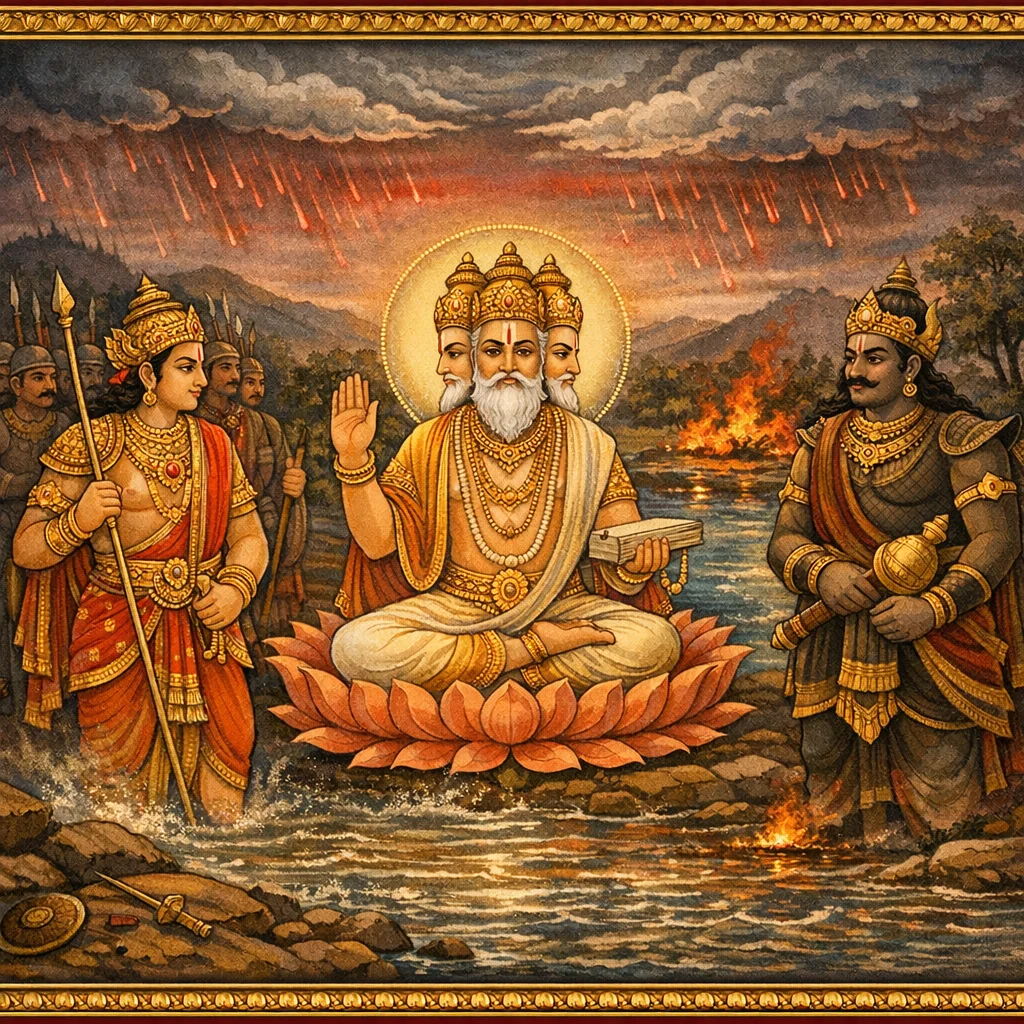
Sūta recounts the conflict between Vasiṣṭha and Viśvāmitra intensifying. When his power is rendered ineffective, Viśvāmitra, enraged, releases consecrated divine weapons, including the Brahmāstra, and ominous cosmic upheavals arise—meteor-like missiles, multiplying armaments, trembling oceans, shattered mountain peaks, and blood-like rain—taken as signs of pralaya. The gods appeal to Brahmā, who explains that the turmoil is the side-effect of divine-weapon combat and leads the devas to the battlefield to avert world-destruction. Brahmā urges cessation; Vasiṣṭha clarifies that he is not attacking out of vengeance, but defensively neutralizing the weapons through the efficacy of mantra. Brahmā commands Viśvāmitra to stop releasing weapons and seeks a resolution through right speech, addressing Vasiṣṭha as “brāhmaṇa” to de-escalate. Viśvāmitra insists his anger concerns recognition and status, while Vasiṣṭha refuses to confer the “brāhmaṇa” designation upon one he deems kṣatriya-born, declaring brahmic radiance superior to kṣatriya force. Brahmā then compels the abandonment of the divine weapons under threat of a curse; he departs, and the sages remain on the Sarasvatī’s bank, leaving a teaching on restraint, proper speech, and the containment of destructive power within sacred geography.
Shlokas
Verse 1
सूत उवाच । एतस्मिन्नेव काले तु विश्वामित्रो महामुनिः । तां शक्तिं व्यर्थतां प्राप्तां ज्ञात्वा कोपसमन्वितः
Sūta said: At that very time, the great sage Viśvāmitra—knowing that his power had come to naught—became filled with anger.
Verse 2
मुमोच तद्वधार्थाय ब्रह्मास्त्रं सोऽभिमंत्रितम् । तस्य संहितमात्रस्य प्रस्वनः समजायत
To accomplish that slaying, he released the Brahmāstra, empowered by mantra; and at the very moment of its invocation, a dreadful reverberating sound arose.
Verse 3
ततश्चोल्काः प्रभूताश्च प्रयांति च नभस्तलात् । ततः कुन्ताः शक्तयश्च तोमराः परिघास्तथा
Then many blazing meteors surged across the sky; thereafter spears, javelins, lances, and iron clubs likewise appeared in succession.
Verse 4
भिंडिपाला गदाश्चैव खड्गाश्चैव परश्वधाः । बाणाः प्रासाः शतघ्न्यश्च शतशोऽथ सहस्रशः
Clubs and maces, swords and axes—arrows, spears, and iron missiles (śataghnīs) as well—were hurled forth in hundreds, and then in thousands.
Verse 5
वसिष्ठोऽपि परिज्ञाय प्रेषितं गाधिसूनुना । ब्रह्मास्त्रं मृत्यवे तेन शुचिर्भूत्वा ततः परम्
Vasiṣṭha too, understanding that the Brahmā-weapon had been discharged by Gādhi’s son (Viśvāmitra) to bring death, first purified himself, and then proceeded further (to counter it).
Verse 6
इषीकां च समादाय ब्रह्मास्त्रं तत्र योजयन् । अब्रवीद्गाधिपुत्राय स्वस्त्यस्तु तव पार्श्वतः
Taking up a reed (iṣīkā) and fixing the Brahmā-weapon into it there, he said to Gādhi’s son: “May auspiciousness be by your side.”
Verse 7
हन्यतामस्त्रमेतद्धिमम वाक्यादसंशयम् । ततस्तेन हतं तच्च ब्रह्मास्त्रं तत्समुद्भवम्
“Let this weapon indeed be struck down—by my word, without doubt.” Then, by the power of that utterance, the Brahmā-weapon (Brahmāstra) and all that had arisen from it were destroyed.
Verse 8
वज्रास्त्रं च ततो मुक्तं वज्रास्त्रेण विनाशितम् । यद्यदस्त्रं क्षिपत्येष विश्वामित्रः प्रकोपितः
Then the Vajra-weapon (Vajrāstra) was released—and it was destroyed by the Vajra-weapon itself, countered by its like. Whatever weapon the enraged Viśvāmitra hurled forth,
Verse 9
तत्तद्धंति वसिष्ठस्तु मंत्रस्य च प्रभावतः । एतस्मिन्नेव काले तु क्षुभितो मकरालयः
Vasiṣṭha, by the sheer power of mantra, struck down each and every one of those weapons. At that very time, the ocean—abode of the makaras—was thrown into turmoil.
Verse 10
शीर्यंते गिरिशृंगाणि रक्तवृष्टिः परा स्थिता । प्रलयस्येव चिह्नानि संजातानि धरातले । किमकाले महानेष प्रलयः संभविष्यति
Mountain-peaks were crumbling; a dreadful rain of blood was falling. Signs as though of Pralaya, cosmic dissolution, had arisen upon the earth. “At what untimely hour will this great pralaya come to pass?”
Verse 11
ततः पितामहं जग्मुः सर्वे देवाः सवासवाः । प्रोचुः प्रलयचिह्नानि यानि संति धरातले
Then all the gods, along with Indra, went to the Grandfather, Brahmā, and reported the signs of dissolution that had appeared upon the earth.
Verse 12
ततो ब्रह्मा चिरं ध्यात्वा तानुवाच दिवौकसः । विश्वामित्र वसिष्ठाभ्यां युद्धमेतद्व्यवस्थितम्
Then Brahmā, having meditated for a long while, spoke to the dwellers of heaven: “This conflict has been set in motion between Viśvāmitra and Vasiṣṭha.”
Verse 13
दिव्यास्त्रसंभवं देवास्तेनैतद्व्याकुलं जगत्
O gods, because divine weapons have arisen, this whole world has been thrown into turmoil.
Verse 14
तस्माद्गच्छामहे तत्र यावन्नो जायते क्षयः । सर्वेषामेव भूतानां दिव्यास्त्राणां प्रभावतः
“Therefore let us go there at once, before destruction overtakes us—for by the power of those divine missiles, the ruin of all beings may arise.”
Verse 15
ततोऽभिगम्य ते देशं यत्र तौ मुनिसत्तमौ । विचामित्रवसिष्ठौ तौ युध्यमानौ परस्परम्
“Then they reached that region where those two foremost sages—Viśvāmitra and Vasiṣṭha—were battling one another.”
Verse 16
ततः प्रोवाच तौ ब्रह्मा साम्ना परमवल्गुना । निवर्त्यतामिदं युद्धमेतद्दिव्यास्त्रसंभवम् । यावन्न प्रलयो भावि समस्ते धरणीतले
“Then Brahmā addressed those two in exceedingly gentle words: ‘Let this war—born of divine missiles—be stopped, before a dissolution arises across the entire surface of the earth.’”
Verse 17
वसिष्ठ उवाच । नाहमस्त्रं प्रयुंजामि विश्वामित्रवधेच्छया । आत्मरक्षाकृते देव अस्त्रमस्त्रेण शामयन्
Vasiṣṭha said: “I do not wield weapons with the wish to slay Viśvāmitra. O Deva, I only quell weapon with weapon, for the sake of self-protection.”
Verse 18
अयं मम विनाशाय केवलं चास्त्रमोक्षणम् । कुरुते निर्दयो ब्रह्मंस्तं निवारय सांप्रतम्
“This merciless one releases weapons only for my destruction. O Brahmā, restrain him now—at once.”
Verse 19
ब्रह्मोवाच । विश्वामित्र मुनिश्रेष्ठ वसिष्ठं ब्राह्मणोत्तमम् । त्वं रक्ष मम वाक्येन तथा सर्वमिदं जगत्
Brahmā said: “O Viśvāmitra, best of sages, protect Vasiṣṭha, the foremost of brāhmaṇas; and by my command, protect this entire world as well.”
Verse 20
अस्त्रमोक्षविरामं त्वं ब्रह्मर्षे कुरु सत्वरम्
“O brahmarṣi, quickly bring the discharge of weapons to a halt.”
Verse 21
विश्वामित्र उवाच । न मामेष द्विजं ब्रूते कथंचित्प्रपितामह । तस्मादेष प्रकोपो मे संजातोऽस्य वधोपरि
Viśvāmitra said: “O Great-Grandfather, he does not acknowledge me in any way as a dvija, a twice-born. Therefore this anger has arisen in me, bent upon his death.”
Verse 22
तस्माद्वदतु देवेश मामेष ब्राह्मणं द्रुतम् । निवारयामि येनास्त्रं यदस्योपरि संधितम्
Therefore, O Lord of gods, let him quickly call me a brāhmaṇa; then I shall withdraw the weapon that has been aimed against him.
Verse 23
ब्रह्मोवाच । त्वं वसिष्ठाधुना ब्रूहि विश्वामित्रं ममाज्ञया । ब्राह्मणो जायते तेन तव जीवस्य रक्षणम्
Brahmā said: “Vasiṣṭha, now—by my command—declare Viśvāmitra to be a brāhmaṇa. By that, he becomes (recognized as) a brāhmaṇa, and your life will be protected.”
Verse 24
वसिष्ठ उवाच । नाहं क्षत्रियसंजातं ब्राह्मणं वच्मि पद्मज । न वधे मम शक्तोऽयं कथंचित्क्षत्रियोद्भवः
Vasiṣṭha said: “O Lotus-born (Brahmā), I do not call one who is born a Kṣatriya a Brāhmaṇa. This Kṣatriya-born man is in no way capable of slaying me.”
Verse 25
ब्राह्म्यं तेजो न क्षा त्त्रेण तेजसा संप्रणश्यति । एवं ज्ञात्वा चतुर्वक्त्र यद्युक्तं तत्समाचर
“Brahminical radiance is not destroyed by Kṣatriya power. Knowing this, O Four-faced One (Brahmā), do whatever is proper.”
Verse 26
ब्रह्मोवाच । विश्वामित्र द्विजश्रेष्ठ त्यक्त्वा दिव्यास्त्रसंभवम् । कुरु युद्धं वसिष्ठेन नो चेच्छप्स्यामहं च ते
Brahmā said: “O Viśvāmitra, best of the twice-born, abandon the resort to celestial weapons. Fight with Vasiṣṭha; otherwise I too shall curse you.”
Verse 27
विश्वामित्र उवाच । दिव्यास्त्राणि च संत्यज्य मया वध्यः सुदुर्मतिः । किंचिच्छिद्रं समासाद्य त्वं गच्छ निजसंश्रयम्
Viśvāmitra said: “Even if I lay aside the celestial weapons, that evil-minded one must be slain by me. Finding even the slightest opening, go to your own refuge.”
Verse 28
सूत उवाच । बाढमित्येवमुक्ता च ब्रह्मलोकं गतो विधिः । विश्वामित्रवसिष्ठौ च सरस्वत्यास्तटे स्थितौ
Sūta said: “Thus addressed, Brahmā, the Ordainer, replied, ‘So be it,’ and went to Brahmaloka. Viśvāmitra and Vasiṣṭha remained upon the bank of the Sarasvatī.”
Verse 171
इति श्रीस्कांदे महापुराण एकाशीतिसाहस्र्यां संहितायां षष्ठे नागरखण्डे हाटकेश्वरक्षेत्रमाहात्म्ये वसिष्ठविश्वामित्र युद्धे दिव्यास्त्रनिवर्तनवर्णनंनामैकसप्तत्युत्तरशततमोऽध्यायः
Thus, in the holy Skanda Mahāpurāṇa, in the Saṃhitā of eighty-one thousand verses, in the sixth book—Nāgara-khaṇḍa—within the Māhātmya of Hāṭakeśvara-kṣetra, concludes the one-hundred-and-seventy-first chapter, titled “The Account of the Withdrawal of Celestial Weapons in the Battle of Vasiṣṭha and Viśvāmitra.”