Adhyaya 169
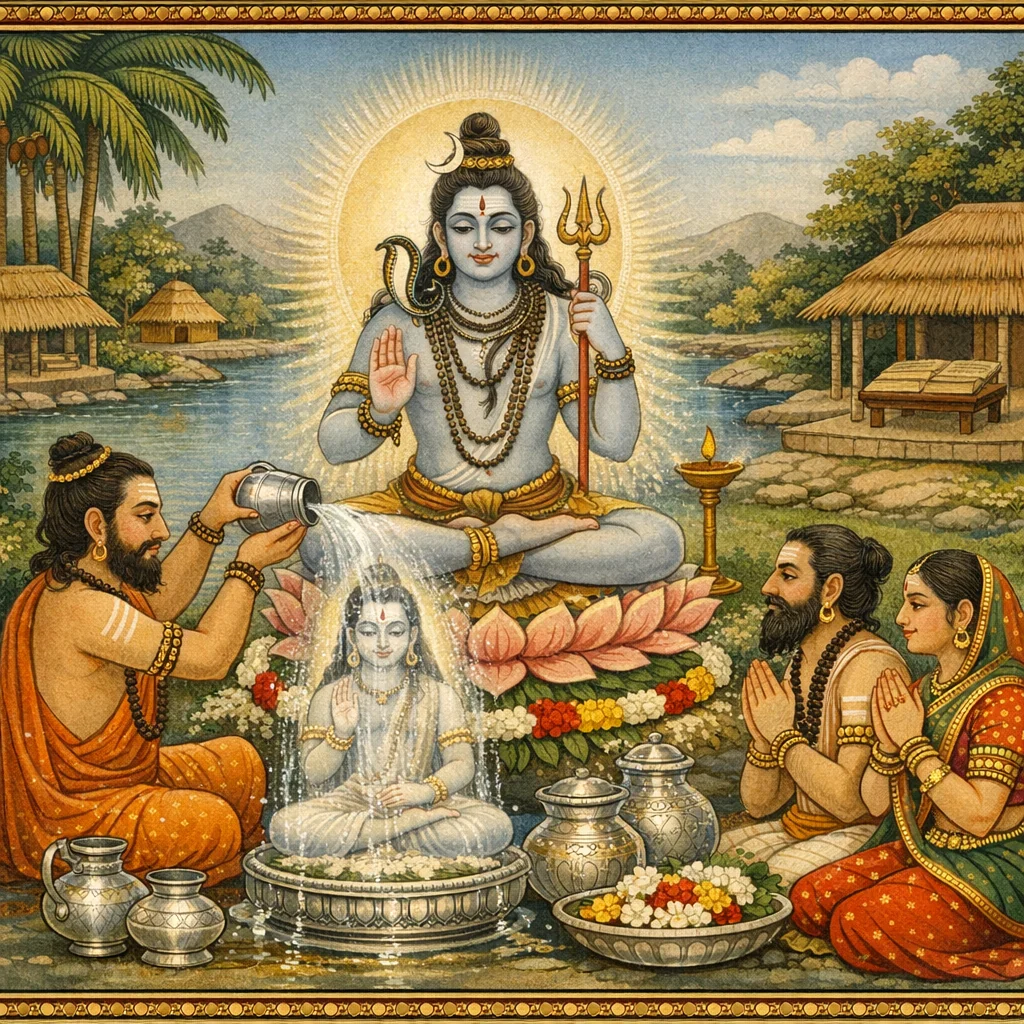
Sages ask why the satisfaction-bestowing power (Tuṣṭidā) is especially linked with the Nāgara community and why she is known on earth as “Dhārā.” Sūta relates that in Cāmatkārapura a Nāgarī brāhmaṇa woman named Dhārā befriended the ascetic Arundhatī. When Arundhatī arrives with Vasiṣṭha to bathe at Śaṅkhatīrtha, she finds Dhārā performing severe austerities and asks her identity and aim. Dhārā recounts her Nāgara lineage, her early widowhood, and her resolve to remain at the tīrtha in devotion to Śaṅkheśvara after hearing its greatness; Arundhatī invites her to dwell at her Sarasvatī-bank āśrama devoted to continual śāstra-discourse. The narrative then introduces a divine power connected with the conflict between Viśvāmitra and Vasiṣṭha, which Vasiṣṭha stabilizes and establishes as a protective goddess worthy of worship. Dhārā builds a jewel-adorned, palace-like shrine and recites a stotra praising the goddess as the cosmic support and as many divine functions—Lakṣmī, Śacī, Gaurī, Svāhā, Svadhā, Tuṣṭi, and Puṣṭi. After long daily worship, on Caitra Śukla Aṣṭamī the goddess is bathed and honored with offerings; she appears, grants boons, and accepts the name “Dhārā” in that shrine. A practice-charter is proclaimed: Nāgaras who perform three circumambulations, offer three fruits, and recite the stotra gain protection from disease for a year; women receive further promised benefits—offspring for the infertile, relief from misfortune, and restoration of health and wellbeing. The chapter ends with a phalaśruti declaring that reciting or hearing this origin account frees one from sins, urging devoted study, especially among Nāgaras.
Shlokas
Verse 1
ऋषय ऊचुः । कस्मात्सा तुष्टिदा प्रोक्ता नागराणां विशेषतः । धारानामेति विख्याता कस्मात्सा धरणीतले
The sages said: Why is she called ‘Tuṣṭidā’—the giver of contentment—especially for the Nāgaras? And why is she renowned on the earth by the name ‘Dhārā’?
Verse 2
सूत उवाच । चमत्कारपुरे पूर्वं धारानामेति विश्रुता । आसीत्तपस्विनी साध्वी नागरी ब्राह्मणोत्तमा । तस्याः सख्यमरुन्धत्या आसीत्पूर्वं सुमेधया
Sūta said: Formerly, in Camatkārapura, there was a Nāgarī Brahmin lady—an eminent and virtuous ascetic—well known by the name Dhārā. In earlier times she had a friendship with Arundhatī, a woman of excellent intelligence.
Verse 3
अरुन्धती यदा प्राप्ता चमत्कारपुरे शुभे । स्नानार्थं शंखतीर्थं तु वसिष्ठेन समागता
When Arundhatī reached the auspicious city of Camatkārapura, she came with Vasiṣṭha to Śaṅkha-tīrtha for the sacred bath.
Verse 4
तया दृष्टाथ सा तत्र अंगुष्ठाग्रेण संस्थिता । वायुभक्षा निराहारा दिव्येन वपुषान्विता
Then she was seen there—standing upon the tip of her thumb, living on air without food, endowed with a radiant, divine body.
Verse 5
तया पृष्टा च सा साध्वी का त्वं कस्य सुता शुभे । किमर्थं तु स्थिता चोग्रे तपसि ब्रूहि मे शुभे
Questioned by her, the virtuous woman replied: “O auspicious one, who are you, whose daughter are you? And for what reason do you remain established in this fierce austerity? Tell me, O blessed lady.”
Verse 6
धारोवाच । देवशर्माख्यविप्रस्य सुताहं नागरस्य च । बालत्वे वर्तमानाया वैधव्यं मे व्यवस्थितम्
Dhārā said: “I am the daughter of the Nāgara brāhmaṇa named Devaśarmā. While still in childhood, widowhood became my lot.”
Verse 7
शंखतीर्थस्य माहात्म्यं श्रुत्वा शंखेश्वरस्य च । ततोऽहं संस्थिता ह्यत्र तस्यैवाराधने स्थिता
“Having heard the greatness of Śaṅkha-tīrtha and of Śaṅkheśvara, I therefore settled here, remaining devoted to His worship alone.”
Verse 8
अरुन्धत्युवाच । तवोपरि महान्स्नेहो दर्शनात्ते व्यवस्थितः । तस्मादागच्छ गच्छावो ममाश्रमपदं शुभम्
Arundhatī said: “On seeing you, a great affection has arisen in me for you. Therefore, come—let us go to my auspicious hermitage-dwelling.”
Verse 9
सरस्वत्या स्तटे शुभ्रे सर्वपातकनाशने । शास्त्रगोष्ठीरता नित्यं तत्र तिष्ठ मया सह
“On the bright bank of the Sarasvatī, the destroyer of all sins, remain there with me—ever delighting in assemblies of sacred learning.”
Verse 10
ततः संप्रस्थिता सा तु तया सार्धं तपस्विनी । अनुज्ञाता स्वपित्रा तु जनन्या बांधवैस्तथा
Then that ascetic woman set out together with her—having received permission from her own father, her mother, and her relatives as well.
Verse 11
तस्याः सख्यं चिरं कालं तया सह बभूव ह । कस्यचित्त्वथ कालस्य सा शक्तिस्तत्र चागता
Her friendship with her endured for a long time. Then, after some time had passed, that Śakti arrived there as well.
Verse 12
विश्वामित्रेण संसृष्टा वसिष्ठस्य वधाय च । सा स्तंभिता वसिष्ठेन कृता देवीस्वरूपिणी । संपूज्या देवमर्त्यानां सर्वरक्षाप्रदा शुभा
Joined with Viśvāmitra for the slaying of Vasiṣṭha, she was checked by Vasiṣṭha and made into one who bears the form of the Goddess—worthy of worship by gods and mortals, auspicious, and bestowing protection of every kind.
Verse 13
ततस्तु धारया तस्याः कैलासशिखरोपमः । प्रासादो निर्मितो विप्रा नानारत्नविचित्रितः
Then, by the power of Dhārā, a palace was built for her—resembling the peak of Kailāsa, O brāhmaṇas—and adorned with many kinds of jewels.
Verse 14
चकाराथ ततः स्तोत्रं तस्याः सा च तपस्विनी
Then that ascetic woman composed a hymn of praise (stotra) to her.
Verse 15
नमस्ते परमे ब्राह्मि धारयोगे नमोनमः । अर्धमात्रे परे शून्ये तस्यार्धार्धे नमोस्तु ते
Salutations to you, O Supreme Brahmī; salutations again and again to you as the Yoga of sustaining power (Dhārā-yoga). Salutations to you as the transcendent half-syllable, as the supreme Void, and as the subtlest “half of the half” beyond all measure.
Verse 16
नमस्ते जगदाधारे नमस्ते भूतधारिणि । नमस्ते पद्मपत्राक्षि नमस्ते कांचनद्युते
Salutations to you, the support of the universe; salutations to you who upholds all beings. Salutations to you, lotus-leaf-eyed one; salutations to you whose radiance is like gold.
Verse 17
नमस्ते सिंहयानाढ्ये नमस्तेऽस्तुमहाभुजे । नमस्ते देवताभीष्टे नमस्ते दैत्यसूदिनि
Salutations to you who are adorned with a lion as your mount; salutations, O great-armed one. Salutations to you, beloved of the gods; salutations to you, slayer of the daityas (demons).
Verse 18
नमस्ते महिषाक्रांतशरीरच्छिन्नमस्तके । नमस्ते विंध्यनिरते सुरामांसबलिप्रिये
Salutations to You who crushed the buffalo-demon and severed his head. Salutations to You who delights in the Vindhya region and is pleased by offerings of liquor, meat, and sacrificial oblations.
Verse 19
त्वं लक्ष्मीस्त्वं शची गौरी त्वं सिद्धिस्त्वं विभावरी । त्वं स्वाहा त्वं स्वधा तुष्टिस्त्वं पुष्टिस्त्वं सुरेश्वरी
You are Lakṣmī; You are Śacī; You are Gaurī. You are Siddhi; You are the Night. You are Svāhā; You are Svadhā; You are Contentment; You are Nourishment; You are the Sovereign Goddess of the gods.
Verse 20
शक्तिरूपासि देवि त्वं सृष्टिसंहारका रिणी । त्वयि दृष्टमिदं सर्वं त्रैलोक्यं सचराचरम्
O Goddess, You are power itself—Śakti—who brings about creation and dissolution. In You this entire threefold world is seen, with all that moves and all that is unmoving.
Verse 21
यथा तिलेस्थितं तैलं दधिसंस्थं यथा घृतम् । हविर्भुजश्च काष्ठस्थः सुगुप्तं लभ्यते न हि
Just as oil lies hidden within sesame, and ghee remains within curd; and just as Fire, the eater of oblations, abides concealed within wood—so too what is deeply hidden is not obtained without bringing it forth.
Verse 22
तथा त्वमपि देवेशि सर्वगापि न लक्ष्यसे
So too, O Lady of the gods: though You pervade everywhere, You are not easily perceived.
Verse 23
सूत उवाच । एतेन स्तोत्रमुख्येन स्मृता सा परमेश्वरी । बहूनि वर्ष पूगानि पूजयंत्या दिनेदिने
Sūta said: By this foremost hymn, the Supreme Goddess was invoked and remembered—she who was worshipped day after day for many multitudes of years.
Verse 24
कस्यचित्त्वथ कालस्य चैत्रशुक्लाष्टमी सिता । तस्मिन्नहनि देवी सा नद्यां संस्नाप्य पूजिता
Then, at a certain time, on the bright eighth lunar day of Caitra, that Goddess was worshipped on that very day—after being bathed in the river.
Verse 25
बलि पूजां ततो दत्त्वा स्तोत्रेणानेन च स्तुता । ततः प्रत्यक्षतां गत्वा तामुवाच तपस्विनीम्
After offering the bali-oblation and performing worship, she praised the Goddess with this hymn. Then the Goddess became directly manifest and spoke to that ascetic woman.
Verse 26
पुत्रि तुष्टास्मि भद्रं ते स्तोत्रेणानेन चानघे । वरं वरय भद्रं ते तव दास्यामि वांछितम्
“Daughter, I am pleased with you—may auspiciousness be yours—by this hymn, O sinless one. Choose a boon; may auspiciousness be yours. I shall grant you what you desire.”
Verse 27
धारोवाच । यदि तुष्टासि मे देवि यदि देयो वरो मम । तन्मे नाम तवाप्यस्तु प्रासादेऽत्र हि केवलम्
Dhārā said: “If you are pleased with me, O Goddess, and if a boon is to be granted to me—then let my very name be joined with yours here in this temple alone.”
Verse 28
अपरं नागरो योऽत्र त्वस्मिन्नहनि संस्थिते । प्रदक्षिणात्रयं कृत्वा तव दत्त्वा फलत्रयम्
Further: any resident of Nāgara who, on this very day, comes and remains here—having performed three circumambulations and offered you three fruits—
Verse 29
स्तोत्रेणानेन भवतीं स्तुत्वा च कुरुते नतिम् । तस्य संवत्सरं यावद्रोगो रक्ष्यस्त्वयाऽखिलः
—and praises you with this hymn and bows in reverence: for that person, for as long as a year, all illness should be kept away by you.
Verse 30
या च वंध्या भवेन्नारी सा भूयात्पुत्रसंयुता । दुर्भगा च ससौभाग्या कुरूपा रूपसंभवा । रोगिणी रोगनिर्मुक्ता सर्वसौख्यसमन्विता
A woman who is barren becomes blessed with a son. An unfortunate woman becomes fortunate; one of ill form becomes endowed with beauty; a sick woman becomes freed from disease—attaining every kind of happiness.
Verse 31
देव्युवाच । अहं धारेति विख्याता प्रासादेऽत्र त्वया कृते । भविष्यामि न सन्देहस्तव कीर्तिकृते सदा
The Goddess said: “In this temple built by you, I shall indeed become renowned as ‘Dhārā’—there is no doubt—forever for the sake of your fame.”
Verse 32
अत्र यो नागरो भक्त्या समागत्य तपस्विनि । प्रदक्षिणात्रयं कुर्याद्दत्त्वा मम फलत्रयम्
Here, O ascetic woman: any Nāgara resident who comes with devotion and performs three circumambulations, offering me three fruits—
Verse 33
सोऽपि संवत्सरं यावद्भविता रोगवर्जितः । एवमुक्ता तु सा देवीततश्चादर्शनं गता
“That person too will remain free from disease for as long as a year.” Having spoken thus, the Goddess then disappeared from sight.
Verse 34
धारापि संस्थिता तत्र अरुन्धत्या समन्विता । अद्यापि दृश्यते व्योम्नि तस्याश्चापि समीपगा
Dhārā too remained established there, accompanied by Arundhatī. Even today she is seen in the sky, and Arundhatī is seen near her as well.
Verse 35
एतद्धारोद्भवं योऽत्र वृत्तांतं कीर्तयिष्यति । शृणुयाद्वा द्विजश्रेष्ठा मुच्येत्पापाद्दिनोद्भवात्
O best of the twice-born, whoever here recites this account of the origin of Dhārā—or even listens to it—becomes freed from sins that arise day after day.
Verse 36
तस्मात्सर्वप्रयत्नेन पठनीयं विशेषतः । श्रोतव्यं च प्रभक्त्येदं नागरैश्च विशेषतः
Therefore, with every effort this (māhātmya) should especially be read; and it should also be heard with devoted faith—most particularly by the people of Nāgara (this region).
Verse 169
इति श्रीस्कांदे महापुराण एकाशीति साहस्र्यां संहितायां षष्ठे नागरखण्डे हाटकेश्वरक्षेत्रमाहात्म्ये धारानामोत्पत्तिवृत्तांत धारादेवीमाहात्म्यवर्णनं नामैकोनसप्तत्युत्तरशततमोऽध्यायः
Thus, in the holy Skanda Mahāpurāṇa, in the Ekāśīti-sāhasrī Saṃhitā, in the sixth book—Nāgara Khaṇḍa—within the Māhātmya of the Hāṭakeśvara sacred region, ends the one-hundred-and-sixty-ninth chapter, entitled “The Account of the Origin of Dhārā and the Description of the Greatness of Dhārādevī.”