Adhyaya 167
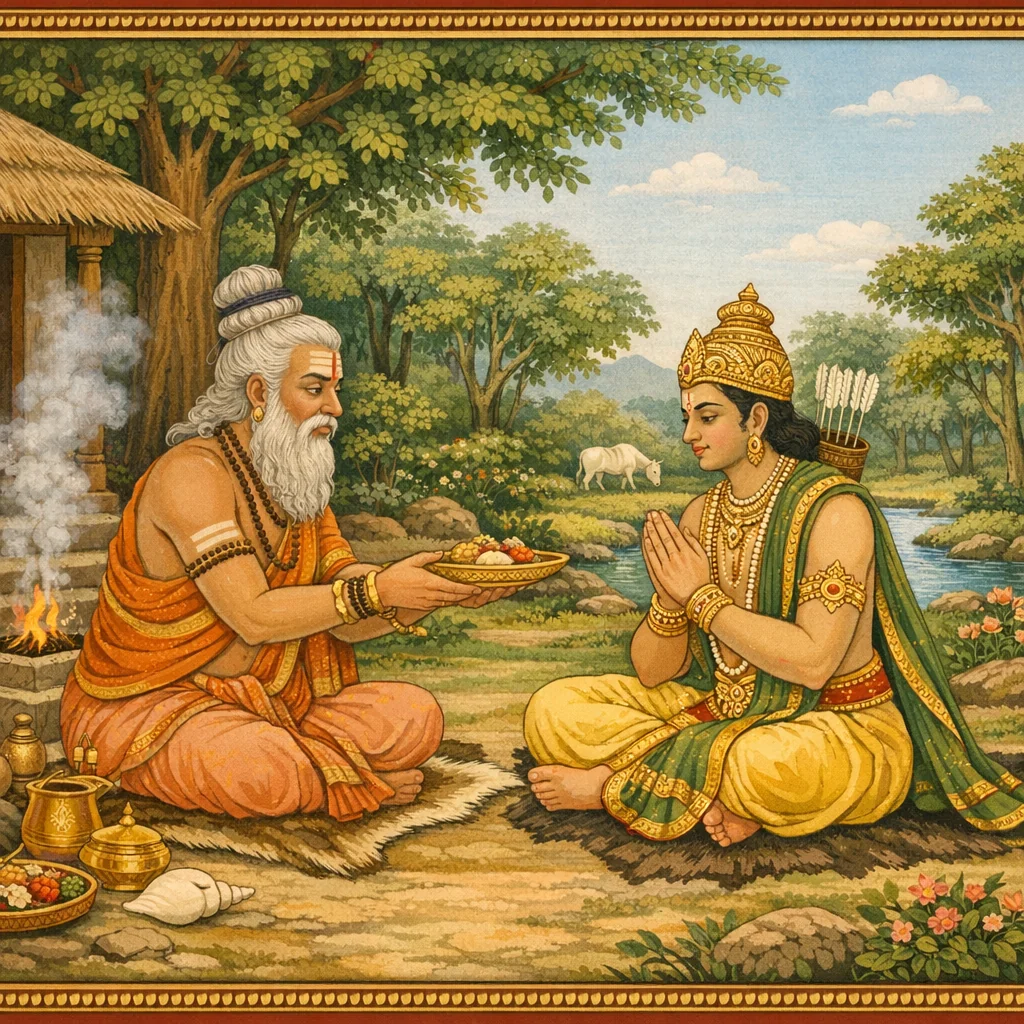
Sūta recounts the birth-setting and early shaping of Viśvāmitra in a royal line: his mother is portrayed as austere and devoted to pilgrimage, and the child grows into a renowned figure. Installed by his father Gādhi, Viśvāmitra rules while sustaining Vedic study and reverence for brāhmaṇas, yet in time he becomes engrossed in forest hunting. At midday, worn out by hunger and thirst, he reaches the holy āśrama of the Mahātmā Vasiṣṭha. Vasiṣṭha welcomes him with proper rites of hospitality (arghya, madhuparka) and invites him to rest and eat. The king worries for his hungry troops, but Vasiṣṭha offers to feed all through Nandinī, the kāmadhenu, who instantly brings forth abundant provisions for soldiers and animals. Amazed, Viśvāmitra seeks to obtain Nandinī—first by request, then by force—claiming royal entitlement. Vasiṣṭha refuses, citing dharma and smṛti: cows must not be treated as commodities, especially a wish-fulfilling dhenu. When the king’s men seize and strike Nandinī, she manifests armed hosts (śabaras, pulindas, mlecchas) that shatter the royal army. Vasiṣṭha restrains further harm, protects the king, and releases him from magical immobilization. Shamed, Viśvāmitra laments that kṣatriya power cannot match brahma-bala, resolves to renounce kingship, install his son Viśvasaha, and undertake great tapas to attain brahmanical spiritual power.
Shlokas
Verse 1
सूत उवाच । गाधेस्तु याऽथ पत्नी च प्राशनाच्चरु कस्य वै । सापि गर्भं दधे तत्र वासरे मन्त्रतः शुभा
Sūta said: Gādhi’s wife too—having eaten her portion of the consecrated oblation (caru)—conceived on that very day by the power of the mantra, O auspicious ones.
Verse 2
सा च गर्भसमोपेता यदा जाता द्विजोत्तमाः । तीर्थयात्रापरा साध्वी जाता व्रतपरायणा
And when she became pregnant, O best of the twice-born, that virtuous woman devoted herself to pilgrimages to tīrthas and became steadfast in sacred vows (vrata).
Verse 3
वेदध्वनिर्भवेद्यत्र तत्र हर्षसमन्विता । पुलकांचितसर्वांगी सा शुश्राव च सर्वदा । त्यक्त्वा राज्योचितान्सर्वानलंकारान्सुखानि च
Wherever the resonant sound of the Veda arose, she went there filled with joy; her whole body thrilled with rapture, and she listened constantly—having abandoned all royal ornaments and pleasures befitting sovereignty.
Verse 4
अथ सापि द्विजश्रेष्ठा दशमे मासि संस्थिते । सुषुवे सुप्रभं पुत्रं ब्राह्म्या लक्ष्म्या समावृतम्
Then, O best of the twice-born, when the tenth month had arrived, that noble lady gave birth to a radiant son, surrounded by brahminical splendor and auspicious fortune.
Verse 5
विश्वामित्रस्तथा ख्यातस्त्रैलोक्ये सचरा चरे । ववृधे स महाभागो नित्यमेवाधिकं नृणाम्
Thus Viśvāmitra became renowned throughout the three worlds, among all moving and unmoving beings; that greatly fortunate one continually grew ever more eminent among men.
Verse 6
शुक्लपक्षं समासाद्य तारापतिरिवांबरे । यदासौ यौवनोपेतः संजातो द्विजसत्तमाः
As the lord of stars—the moon—in the sky comes to the bright fortnight, so he too attained youth, O best among the twice-born.
Verse 7
राज्यक्षमस्तदा राज्ये गाधिना स नियोजितः । अनिच्छमानः स्वं राज्यं पितृपैतामहं महत्
Though fully capable of kingship, he was then appointed to the throne by Gādhi; yet he himself did not desire that great kingdom inherited from his father and forefathers.
Verse 8
वेदाध्ययनसंपन्नो नित्यं च पठते हि सः । ब्राह्मणोचितमार्गेण गच्छमानो दिवानिशम्
Endowed with Vedic study, he indeed recited daily, living day and night along the path proper to a brāhmaṇa.
Verse 9
संस्थाप्याथ सुतं राज्ये बभूव वनगोचरः । सकलत्रो महाभागो वानप्रस्थाश्रमे रतः
Then, having installed his son in the kingdom, that greatly fortunate one went to the forest; together with his wife, he became devoted to the āśrama of vānaprastha.
Verse 10
विश्वामित्रोऽपि राज्यस्थो द्विजसंपूजने रतः । द्विजैः सर्वैश्चचाराथ स्नानजाप्यपरायणः
Viśvāmitra too, even while established in the kingdom, delighted in honoring the twice-born; and accompanied by brāhmaṇas, he then moved about devoted to bathing rites and recitation (japa).
Verse 11
कस्यचित्त्वथ कालस्य पापर्द्धिं समुपागतः । प्रविवेश वनं रौद्रं नानामृगसमाकुलम्
But at a certain time, as sin increased within him, he entered a fierce forest thronged with beasts of many kinds.
Verse 12
जघान स वने तत्र वराहान्संबरान्गजान् । तरक्षांश्च रुरून्खड्गानारण्यान्महिषांस्तथा
There in that forest he slew boars, śambara deer, elephants, and also hyenas, antelopes, rhinoceroses, and wild buffaloes.
Verse 13
सिंहान्व्याघ्रान्महासर्पाञ्छरभांश्च द्विजोत्तमाः । मृगयासक्तचित्तः स भ्रममाणो महावने
O best of the twice-born, intent on the hunt, he wandered through the vast forest—amid lions, tigers, great serpents, and even fearsome śarabhas.
Verse 14
मध्याह्नसमये प्राप्ते वृषस्थे च दिवाकरे । क्षुत्पिपासापरिश्रांतो विश्वामित्रो द्विजोत्तमाः
When midday arrived, with the Sun stationed in Vṛṣabha (Taurus), Viśvāmitra—wearied by hunger and thirst—became exhausted, O best of the twice-born.
Verse 15
आससादाश्रमं पुण्यं वसिष्ठस्य महात्मनः । वसिष्ठोऽपि समालोक्य विश्वामित्रं नृपो त्तमम्
He reached the sacred hermitage of the great-souled Vasiṣṭha; and Vasiṣṭha too, seeing Viśvāmitra—the foremost of kings—
Verse 16
निजाश्रमे तु संप्राप्तं सानन्दं सम्मुखो ययौ । दत्त्वा तस्मै तदार्घ्यं च मधुपर्कं च भूभुजे
When he reached his own hermitage, Vasiṣṭha went forth with joy to greet him, and offered the king the proper arghya and the madhuparka of welcome.
Verse 17
अब्रवीच्च ततो वाक्यं स्वागतं ते महीपते । वद कृत्यं करोम्येव गृहायातस्य यच्च ते
Then he spoke these words: “Welcome to you, O king. Tell me what should be done—I shall indeed do it—for you who have come to my dwelling, whatever your need may be.”
Verse 18
विश्वामित्र उवाच । मृगयायां परिश्रांतः पिपासाव्याकुलेन्द्रियः । पानार्थमिह संप्राप्त आश्रमे ते मुनीश्वर
Viśvāmitra said: “Worn out from the hunt, my senses distressed by thirst, I have come here to your hermitage, O lord among sages, seeking water to drink.”
Verse 19
तत्पीतं शीतलं तोयं वितृष्णोऽहं व्यवस्थितः । अनुज्ञां देहि मे ब्रह्मन्येन गच्छामि मंदिरम्
“Having drunk that cool water, my thirst is now quenched and I am composed. Grant me leave, O Brahman, so that I may depart for my residence.”
Verse 20
वसिष्ठ उवाच । मध्याह्न समयो रौद्रः सूर्योऽतीव सुतापदः । तत्कृत्वा भोजनं राजन्नपराह्णे व्यवस्थिते । गन्तासि निजमावासं भुक्त्वान्नं मम चाश्रमे
Vasiṣṭha said: “The midday hour is fierce; the Sun burns intensely. Therefore, O king, take your meal. When the afternoon is settled, you shall go to your own abode—after eating food here in my hermitage.”
Verse 21
राजोवाच । चतुरंगेण सैन्येन मृगयामहमागतः
The king said: “I have come on a hunt, accompanied by my fourfold army.”
Verse 22
तवाश्रमस्य द्वारस्थं मम सैन्यं व्यवस्थितम् । बुभुक्षितेषु भृत्येषु यः स्वामी कुरुतेऽशनम्
“My army is stationed at the gate of your hermitage. When one’s servants are hungry, what master could take food alone?”
Verse 23
स याति नरकं घोरं त्यज्यते च गुणैर्द्रुतम् । तस्मादाज्ञापय क्षिप्रं मां मुने स्वगृहाय भोः
He who acts thus falls into a dreadful hell, and virtue swiftly abandons him. Therefore, O sage, command at once that I be taken to your own dwelling.
Verse 24
वसिष्ठ उवाच । यदि ते सेवकाः संति द्वारदेशे बुभुक्षिताः । सर्वानिहानय क्षिप्रं तृप्तिं नेष्याम्यहं परम्
Vasiṣṭha said: “If your attendants are standing at the gate, hungry, then bring them all here quickly; I shall lead them to complete satisfaction.”
Verse 25
अस्ति मे नन्दिनीनाम कामधेनुः सुशोभना । वांछितं यच्छते सर्वं तपसा पार्थिवोत्तम
I have a splendid wish-fulfilling cow named Nandinī. By the power of austerity, she grants everything that is desired, O best of kings.
Verse 26
तृप्तिं नेष्यति ते सर्वं सैन्यं पार्थिवसत्तम । तस्मादानीयतां क्षिप्रं पश्य मे धेनुजं फलम्
She will bring your entire army to fullness and satisfaction, O best of kings. Therefore bring her swiftly—behold the fruit born of my sacred cow.
Verse 27
तच्छ्रुत्वा चानयामास सर्वं सैन्यं महीपतिः । स्नातश्च कृतजप्यश्च सन्तर्प्य पितृदेवताः
Hearing this, the king brought his entire army. Having bathed, completed his japa recitations, and offered rites of satisfaction to the Pitṛs and the deities, he proceeded accordingly.
Verse 28
ब्राह्मणान्वाचयित्वा च सिंहासनसमाश्रितः । एतस्मिन्नंतरे धेनुः समाहूता च नंदिनी
Having had the Brāhmaṇas recite Vedic words of blessing and having taken his seat upon the throne, in the meantime the cow Nandinī was summoned.
Verse 29
वसिष्ठेन समाहूता विश्वामित्रपुरःस्थिता । अब्रवीच्च तता वाक्यं वसिष्ठमृषि सत्तमम्
Summoned by Vasiṣṭha, she came and stood before Viśvāmitra. Then she spoke these words to Vasiṣṭha, the foremost of sages.
Verse 30
आदेशो दीयतां मह्यं किं करोमि प्रशाधि माम्
Grant me your command—what shall I do? Direct me, and be gracious to me.
Verse 31
वसिष्ठ उवाच । पादप्रक्षालनाद्यं तु कुरुष्व वचनान्मम । विश्वामित्रस्य राजर्षेर्यावद्भोजनसंस्थितिम्
Vasiṣṭha said: At my word, perform the rites beginning with the washing of the feet, and attend upon the royal sage Viśvāmitra until his meal is completed.
Verse 32
खाद्यैः सर्वैस्तथा लेह्यैश्चोष्यैः पेयैः पृथविधैः । कुरुष्व तृप्तिपर्यन्तं ससैन्यस्य महीपतेः । अश्वानां च गजानां च घासादिभिर्यथाक्रमम्
With every kind of solid food, licked delicacies, foods to be sucked, and many varieties of drinks, provide until full satisfaction for the king together with his army; and for the horses and elephants too, supply fodder, grass, and the like in due order.
Verse 33
सूत उवाच । बाढमित्येव साप्युक्त्वा ततस्तत्ससृजे क्षणात् । यत्प्रोक्तं तेन मुनिना भृत्यानां चायुतं तथा
Sūta said: Saying only, “So be it,” she at once, in a single moment, brought forth exactly what that sage had asked for—together with ten thousand attendants as well.
Verse 34
ततस्ते सर्वमादाय भृत्या भोज्यं ददुस्तथा । एकैकस्य पृथक्त्वेन प्रतिपत्तिपुरःसरम्
Then those attendants, taking everything, served the food as was fitting—each person separately—preceded by due honor and proper arrangements.
Verse 35
एवं तया क्षणेनैव तृप्तिं नीतो महीपतिः । ससैन्यः सपरीवारो गजोष्ट्राश्वैर्वृषैः सह
Thus, in a single instant, the king was satisfied—together with his army and full retinue, along with elephants, camels, horses, and bulls.
Verse 36
ततस्तु कौतुकं दृष्ट्वा विश्वामित्रो महीपतिः । सामात्यो विस्म याविष्टो मन्त्रयामास च द्विजाः
Then, seeing that astonishing marvel, King Viśvāmitra—together with his ministers—was filled with wonder, and he consulted the brāhmaṇas.
Verse 37
अहो चित्रमहो चित्रं ययाऽकस्माद्वरूथिनी । तृप्तिं नीतेयमस्माकं क्षुत्पिपासासमाकुला
“How wondrous—how truly wondrous! By her, all at once, this entire host of ours—distressed by hunger and thirst—has been brought to satisfaction.”
Verse 38
तस्मात्संनीयतामेषा स्वगृहं धेनुरुत्तमा । किं करिष्यति विप्रोऽयं निर्भृत्यो वनसंस्थितः
“Therefore let this excellent cow be taken to our own home. What use will this brāhmaṇa have for her, living in the forest without attendants?”
Verse 39
ततो वसिष्ठमाहूय वाक्यमेतदुवाच सः । नंदिनी दीयतां मह्यं किं करिष्यसि चानया
Then, summoning Vasiṣṭha, he spoke these words: “Let Nandinī be given to me. What will you do with her anyway?”
Verse 40
त्वमेको वनसंस्थस्तु निर्द्वन्द्वो निष्परिग्रहः । अथवा तव दास्यामि व्ययार्थे मुनिसत्तम । वरान्ग्रामांश्च हस्त्यश्वानन्यांश्चापि यथेप्सितान्
“You dwell alone in the forest, free from conflict and possessions. Or else, O best of sages, I will give you, for your expenses, excellent villages, elephants and horses, and other things too—whatever you desire.”
Verse 41
वसिष्ठ उवाच । होमधेनुरियं राजन्नस्माकं कामदोहिनी । अदेया गौर्महाराज सामान्यापि द्विजन्मनाम्
Vasiṣṭha said: “O King, this is our homa-cow, the milker of desires. A cow is not to be given away, O great king—even an ordinary one, in the case of brāhmaṇas.”
Verse 42
किं पुनर्नंदिनी यैषा सर्वकामप्रदायिनी । अपरं शृणु राजेंद्र स्मृतिवाक्यमनुत्तमम्
“How much more so for this Nandinī, who grants every desire! Further, O lord of kings, listen to the unsurpassed word of the Smṛti.”
Verse 43
गवां हि विक्रयार्थे च यदुक्तं मनुना स्वयम् । गवां विक्रयजं वित्तं यो गृह्णाति द्विजोत्तमः
For Manu himself has declared regarding the selling of cows: the best of the twice-born who accepts wealth gained by the sale of cows incurs a grave fault.
Verse 44
अन्त्यजः स परिज्ञेयो मातृविक्रयकारकः । तस्मान्नाहं प्रदास्यामि नन्दिनीं तां महीपते
Such a man is to be known as an outcaste—one who sells his own mother. Therefore, O king, I will not give that Nandinī away.
Verse 45
न साम्ना नैव भेदेन न दानेन कथंचन । न दण्डेन महाराज तस्माद्गच्छ निजालयम्
Not by conciliation, nor by stratagem, nor by any gift—nor even by force, O great king; therefore return to your own abode.
Verse 46
विश्वामित्र उवाच । यत्किंचिद्विद्यते रत्नं पार्थिवस्य क्षितौ द्विज । तत्सर्वं राजकीयं स्यादिति वित्तविदो विदुः
Viśvāmitra said: O brāhmaṇa, whatever treasure exists upon the earth within a king’s realm—know that all of it belongs to the king; thus do the knowers of polity and wealth declare.
Verse 47
रत्नभूता ततो धेनुर्ममेयं नंदिनी स्थिता । दण्डेनापि ग्रहीष्यामि साम्ना यच्छसि नो यदि
Since this cow is herself a treasure, this Nandinī stands as mine. If you will not yield her by peaceful words, I shall seize her even by force.
Verse 48
एवमुक्त्वा वसिष्ठं स विश्वामित्रो महीपतिः । आदिदेश ततो भृत्यान्नदिनीयं प्रगृह्यताम्
Having spoken thus to Vasiṣṭha, King Viśvāmitra then commanded his servants: “Let Nandinī be seized and taken.”
Verse 49
अथ सा भृत्यवर्गेण नीयमाना च नंदिनी । हन्यमाना प्रहारैश्च पाषाणैर्लकुटैरपि
Then Nandinī, being dragged away by the band of servants, was struck with blows—beaten even with stones and clubs.
Verse 50
अश्रुपूर्णेक्षणा दीना प्रहारैर्जर्जरीकृता । कृच्छ्रादुपेत्य तं प्राह वसिष्ठं मुनिसत्तमम्
With eyes filled with tears, miserable and shattered by the blows, she approached him with difficulty and spoke to Vasiṣṭha, the best of sages.
Verse 51
किं दत्तास्मि मुनिश्रेष्ठ त्वयाहं चास्य भूपतेः । येन मां कालयंत्यस्य पुरुषाः स्वामिनो यथा
O best of sages, have you given me to this king? Is that why his men drive me about as though I belonged to their master?
Verse 52
वसिष्ठ उवाच । न त्वां यच्छाम्यहं धेनो प्राणत्यागेऽपि संस्थिते । तद्रक्षस्व स्वयं धेनो आत्मानं मत्प्रभावतः
Vasiṣṭha said: O cow, I shall not give you up—even if it comes to the giving of my life. Therefore, O cow, protect yourself by your own power, strengthened by my spiritual might.
Verse 53
एवमुक्ता तदा धेनुर्वसिष्ठेन महात्मना । कोपाविष्टा ततश्चक्रे हुंकारान्दारुणांस्तथा
Thus addressed by the great-souled Vasiṣṭha, the sacred cow then, seized by wrath, let forth fierce and dreadful bellowings.
Verse 54
तस्या हुंकारशब्दैश्च निष्क्रांताः सायुधा नराः । शबराश्च पुलिंदाश्च म्लेच्छाः संख्याविवर्जिताः
From the sound of her bellowing there emerged armed men—Śabaras and Puliṇḍas as well—mlecchas beyond all counting.
Verse 55
तैश्च भृत्या हताः सर्वे विश्वामित्रस्यभूपतेः । ततः कोपाभिभूतोऽसौ विश्वामित्रो महीपतिः
By those warriors, all the attendants of King Viśvāmitra were slain. Thereupon that ruler Viśvāmitra was overwhelmed by rage.
Verse 56
सज्जं कृत्वा स्वसैन्यं तु चतुरंगं प्रकोपतः । युद्धं चक्रे च तैः सार्धं मरणे कृतनिश्चयः
In fury he readied his own fourfold army and waged war with them, resolved even upon death.
Verse 57
अथ ते सैनिका स्तस्य ते गजास्ते च वाजिनः । पश्यतो निहताः सर्वे पुरुषैर्धेनुसंभवैः
Then his soldiers—his elephants and his horses—were all slain before his very eyes by the men born of the cow.
Verse 58
विश्वामित्रं परित्यज्य शेषं सर्वं निपातितम् । तं दृष्ट्वा वेष्टितं म्लेच्छैर्यु ध्यमानं महीपतिम्
Leaving Viśvāmitra untouched, they struck down all the rest. Seeing that king fighting while surrounded by the mlecchas—
Verse 59
कृपां कृत्वा वसिष्ठस्तु नन्दिनीमिदमब्रवीत् । रक्ष नंदिनि भूपालं म्लेच्छैरेतैः समावृतम्
Moved by compassion, Vasiṣṭha said to Nandinī: “Protect, O Nandinī, this king who is surrounded by these mlecchas.”
Verse 60
राजा हि यत्नतो रक्ष्यो यत्प्रसादादिदं जगत् । सन्मार्गे वर्तते सर्वं न चामार्गे प्रवर्तते
For the king must be protected with utmost effort; by his favor this world is sustained. Through him all proceeds on the good path and does not turn to the wrong way.
Verse 61
ततस्तु नंदिनीं यावन्निषेधयितुमागताम् । विश्वामित्रोऽसिमुद्यम्य प्रहर्तुमुपचक्रमे
Then, as Nandinī came forward to restrain him, Viśvāmitra raised his sword and began to strike.
Verse 62
वसिष्ठोऽपि समालोक्य वध्यमानां च तां तदा । बाहुं संस्तंभयामास खड्गं तस्य च भूपतेः
Vasiṣṭha too, seeing her then being attacked, immobilized the king’s arm—and his sword as well.
Verse 63
अथ वैलक्ष्यमापन्नो विश्वामित्रो महीपतिः । प्रोवाच व्रीडया युक्तो वसिष्ठं मुनिसत्तमम्
Then King Viśvāmitra, overcome with embarrassment, spoke—filled with shame—to Vasiṣṭha, the foremost among sages.
Verse 64
रक्ष मां त्वं मुनिश्रेष्ठ वध्यमानं सुदारुणैः । म्लेच्छैः कुरुष्व मे बाहुं स्तम्भेन तु विवर्जितम्
“Protect me, O best of sages—being slain by cruel Mlecchas. Restore my arm, but free it from the defect of paralysis (stambha).”
Verse 65
ममापराधात्संनष्टं सर्वं सैन्यमनन्तकम् । तस्माद्यास्याम्यहं हर्म्यं न युद्धेन प्रयोजनम्
“Through my own offense, my entire limitless army has been destroyed. Therefore I shall return to my palace; there is no purpose in war.”
Verse 66
दुर्विनीतः श्रियं प्राप्य विद्यामैश्वर्यमेव च । न तिष्ठति चिरं युद्धे यथाहं मदगर्वितः
One who is undisciplined, even after gaining prosperity, learning, and lordship, does not stand long in battle—just as I, intoxicated with pride.
Verse 67
सूत उवाच । एवमुक्तो वसिष्ठस्तु विश्वामित्रेण भूभुजा । चकार तं भुजं तस्य स्तंभदोषविवर्जितम्
Sūta said: Thus addressed by King Viśvāmitra, Vasiṣṭha restored his arm, freeing it from the affliction of paralysis.
Verse 68
अब्रवीत्प्रहसन्वाक्यं विधाय स शुभं करम् । गच्छ राजन्विमुक्तोऽसि स्तंभदोषेण वै मया
Having made his hand auspicious and whole, Vasiṣṭha spoke with a gentle smile: “Go, O King—you have been released by me from the defect of paralysis.”
Verse 69
माकार्शीर्ब्राह्मणैः सार्धं विरोधं भूय एव हि । अनुज्ञातः स तेनाथ विश्वामित्रो महीपतिः
“Do not again engage in hostility with brāhmaṇas.” Thus permitted by him, King Viśvāmitra then departed.
Verse 71
प्रलापमकरोत्तत्र बाष्पपर्याकुलेक्षणः । धिग्बलं क्षत्रियाणां च धिग्वीर्यं धिक्प्रजीवितम्
There he lamented, his eyes troubled with tears: “Fie on the strength of kṣatriyas! Fie on valor! Fie on this mere continuance of life!”
Verse 72
श्लाघ्यं ब्रह्मबलं चैकं ब्राह्म्यं तेजश्च केवलम्
Only the power born of Brahman is truly worthy of praise—only brāhmaṇic splendor is supreme.
Verse 74
एतत्कर्म मया कार्यं यथा स्याद्ब्रह्मजं बलम् । त्यक्त्वा चैव निजं राज्यं चरिष्यामि महत्तपः । एवं स निश्चयं कृत्वा राज्ये संस्थाप्य वै सुतम् । नाम्ना विश्वसहं ख्यातं प्रजगाम तपोवनम्
“This is the work I must do, that power born of Brahman may arise within me. Renouncing my own kingdom, I shall practice great austerity.” Thus resolved, he installed his son—famed by the name Viśvasaha—upon the throne and departed for the forest of penance.
Verse 167
इति श्रीस्कांदे महापुराण एकाशीतिसाहस्र्यां संहितायां षष्ठे नागरखण्डे हाटकेश्वरक्षेत्रमाहात्म्ये विश्वामित्रराज्यपरित्यागवर्णनं नाम सप्तषष्ट्युत्तरशततमोऽध्यायः
Thus ends, in the revered Skanda Mahāpurāṇa—within the eighty-one-thousand-verse Saṃhitā, in the Sixth Book, the Nāgara Khaṇḍa, in the Māhātmya of the sacred Hāṭakeśvara region—the chapter entitled “The Account of Viśvāmitra’s Renunciation of Kingship,” being Chapter 167.