Adhyaya 166
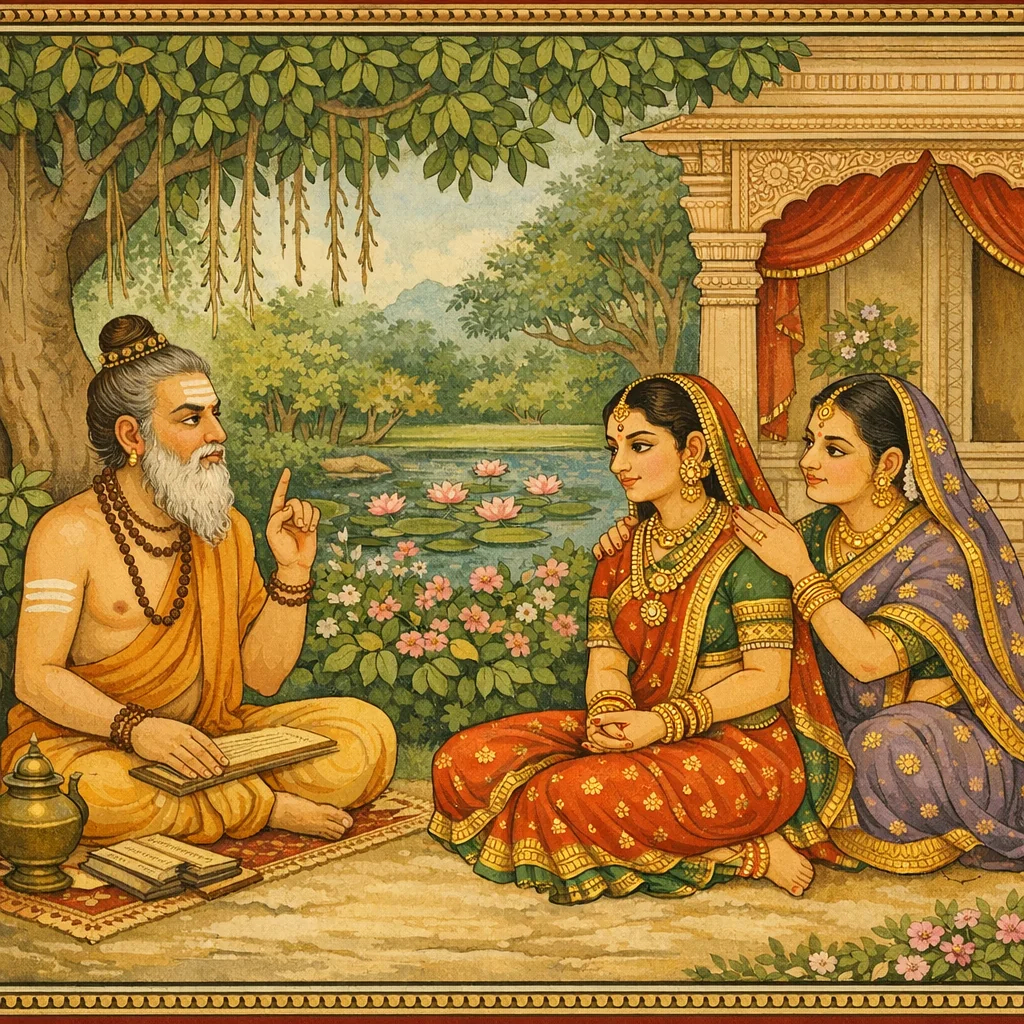
This adhyāya recounts a lineage-forming episode centered on the sage Ṛcīka and his marriage to a woman praised as “the beauty of the three worlds” (trailokya-sundarī). After the wedding, Ṛcīka grants a boon and performs the twofold caru rite (caru-dvaya) to distinguish brahminical spiritual potency (brāhmya tejas) from kṣatriya warrior potency (kṣātra tejas). Each consecrated portion is paired with an embodied symbol—embracing an aśvattha or a nyagrodha—so that ritual precision instructs the nature of the intended progeny. A breach then occurs: the mother urges that the caru portions and the associated tree-embrace acts be exchanged, placing personal desire above prescribed order. During pregnancy, dohada and garbha-lakṣaṇa—cravings and fetal signs—turn toward royal and martial interests, and Ṛcīka diagnoses that the rite has been inverted. A settlement follows: the immediate son will retain brahmin identity, while intensified kṣātra potency is transferred to the grandson. The chapter culminates in the birth of Jamadagni and the later emergence of Rāma (Paraśurāma), whose martial power is presented as the downstream fruit of ritual potency and ancestral concession, weaving ethical causality, ritual exactitude, and lineage destiny within the kṣetra discourse.
Shlokas
Verse 1
सूत उवाच । ऋचीकोऽपि समादाय पुरुषैराप्तकारिभिः । तानश्वान्प्रजगामाथ यत्र गाधिर्व्यवस्थितः
Sūta said: “Ṛcīka too, taking those horses with the help of capable attendants, then went to where Gādhi was staying.”
Verse 2
तस्मै निवेदयामास कन्यार्थं तान्हयोत्तमान् । गाधिस्तु तान्प्रगृह्याथ योग्यान्वाजिमखस्य च
For the sake of obtaining the maiden, he presented to him those excellent horses. Then King Gādhi accepted them, deeming them fit for the Aśvamedha (horse-sacrifice) as well.
Verse 3
एकैकं परमं तेषां स जगामाथ पार्थिवः । ततस्तां प्रददौ तस्मै कन्यां त्रैलोक्यसुन्दरीम्
The king examined them—each one, the finest among them. Then he gave to him that maiden, a beauty celebrated across the three worlds.
Verse 4
विप्राग्निसाक्षिसंभूतां गृह्योक्तविधिना न्वितः । ततो विवाहे निर्वृत्त ऋचीको मुनिसत्तमः
With Brahmins and the sacred fire as witnesses, and according to the procedures taught in the Gṛhya rites, the marriage was duly completed. Thereafter, Ṛcīka—the best of sages—was fulfilled in that wedding.
Verse 5
तस्याः संवेशने चैव निष्कामः समपद्यत । अथाब्रवीन्निजां भार्यां निष्कामः संस्थितो मुनिः
Even at the time of conjugal union, he remained free from desire. Then that sage—steadfast and desireless—spoke to his own wife.
Verse 6
अहं यास्यामि सुश्रोणि काननं तपसः कृते । त्वं प्रार्थय वरं कंचिद्येनाभीष्टं ददामि ते
“O fair-hipped one, I shall go to the forest for the sake of austerity. You may ask for some boon—by which I will grant you what you desire.”
Verse 7
सा श्रुत्वा तस्य तद्वाक्यं निष्कामस्य प्रजल्पितम् । वाष्पपूर्णेक्षणा दीना जगाम जननीं प्रति
Hearing those words spoken by her desireless husband, she—downcast and with eyes filled with tears—went to her mother.
Verse 8
प्रोवाच वचनं तस्य सा निष्कामपते स्तदा । वरदानं तथा तेन यथोक्तं द्विजसत्तमाः
Then she reported to her mother the words of her desireless husband, and also the boon he had promised exactly as he had spoken—O best of twice-born ones.
Verse 9
अथ श्रुत्वैव सा माता यथा तज्जल्पितं तया । सुतया ब्राह्मणश्रेष्ठास्ततो वचनमब्रवीत्
Then, having heard exactly what her daughter had spoken, the mother spoke these words—O foremost of Brahmins.
Verse 10
यद्ययं पुत्रि ते भर्ता वरं यच्छति वांछितम् । तत्प्रार्थय सुतं तस्माद्ब्राह्मण्येन समन्वितम्
“If your husband, my daughter, grants the boon you desire, then ask of him a son endowed with true Brahminical virtue.”
Verse 11
मदर्थं चैकपुत्रं च निःशेषक्षात्त्रतेजसा । संयुक्तं याचय शुभे विपुत्राऽहं यतः स्थिता
“And for my sake too, O auspicious one, ask for a single son endowed with the full splendour of kṣatriya power—for I remain without a son.”
Verse 12
सा श्रुत्वा जननीवाक्यमृचीकं प्राप्य सुव्रता । अब्रवीज्जननी वाक्यं सर्वं विस्तरतो द्विजाः
Hearing her mother’s words, that virtuous lady approached Ṛcīka and related to him—fully and in detail—everything her mother had said, O brāhmaṇas.
Verse 13
स तस्याश्च वचः श्रुत्वा चकाराथ चरुद्वयम् । पुत्रेष्टिं विधिवत्कृत्वा नमस्कृत्य स्वयंभुवम्
Hearing her words, he then prepared two portions of sacred oblation (caru). Having duly performed the putreṣṭi rite, he bowed to Svayaṃbhū, the Self-born Lord.
Verse 14
एकस्मिन्योजयामास ब्राह्म्यं तेजोऽखिलं च सः । क्षात्रं तेजस्तथान्यस्मिन्सकलं द्विजसत्तमाः
Into one portion he infused the full splendour of brāhmaṇa power; into the other he likewise infused, entirely, the splendour of kṣatriya power, O best of the twice-born.
Verse 15
भार्यायै प्रददौ पूर्वं ब्राह्म्यं च चरुमुत्त मम् । अब्रवीत्प्राशयित्वैनमश्वत्थालिंगनं कुरु
First he gave his wife the excellent caru, imbued with brāhmaṇa potency, and said: “After making her partake of it, embrace the aśvattha tree.”
Verse 16
ततः प्राप्स्यसि सत्पुत्रं ब्राह्म्यतेजःसमन्वितम् । द्वितीयश्चरुको यश्च तं त्वं मात्रे निवे दय
Then you will obtain a worthy son endowed with brāhmaṇa splendour. As for the second caru, you should give that to your mother.
Verse 17
अब्रवीच्च ततस्तां तु ऋचीको मुनिसत्तमः । त्वमेनं चरुकं प्राश्य न्यग्रोधालिंगनं कुरु
Then Ṛcīka, the best of sages, said to her: “You, after eating this caru, should embrace the nyagrodha (banyan) tree.”
Verse 18
ततः प्राप्स्यसि सत्पुत्रं संयुक्तं क्षात्रतेजसा । निःशेषेण महाभागे न मे स्याद्वचनं वृथा
Then you will obtain a worthy son united with kṣatriya splendour. Completely so, O fortunate lady—my word shall not prove vain.
Verse 19
एवमुक्त्वा ऋचीकस्तु स विसृज्य च तेजसी । सुहृष्टो ब्राह्मणश्रेष्ठः स्वयं च महितोऽभवत्
Having spoken thus, Ṛcīka released (bestowed) the two potencies; the foremost of brāhmaṇas rejoiced, and he himself became greatly honored.
Verse 20
ते चैव तु गृहे गत्वा प्रहृष्टेनांतरात्मना । ऊचतुश्च मिथस्ते च सत्यमेतद्भविष्यति
And they, returning home with hearts inwardly delighted, said to one another: “Truly, this shall come to pass as truth.”
Verse 21
ततो माता सुतां प्राह आत्मार्थे सकलो जनः । विशेषं कुरुते कृत्ये सामान्ये च व्यवस्थिते
Then the mother said to her daughter: “For one’s own advantage, all people make a special distinction in action—even when the matter is otherwise common and already settled.”
Verse 22
तत्तवार्थं कृतोऽनेन यश्चरुश्चारुलोचने । यस्तस्मिन्विहितोऽनेन मन्त्रग्रामो भविष्यति । विशेषेण महाभागे सत्यमेतन्मयोदितम्
O fair-eyed lady, this sacred oblation (caru) has been prepared to accomplish the true purpose; and the full set of mantras to be employed for it has been duly prescribed by him. O fortunate one, I declare to you in all particularity—this is truly what I say.
Verse 23
तस्माच्च चरुकं मह्यं त्वं गृहाण शुचिस्मिते । आत्मीयं मम यच्छस्व वृक्षाभ्यां च विपर्ययः । क्रियतां च महाभागे येन मे स्यात्सुतोत्तमः
Therefore, O lady of pure smile, take this caru for my sake. Give me what is yours, and let the required reversal—an exchange between the two trees—be carried out. O greatly fortunate one, let it be done so that I may obtain an excellent son.
Verse 24
राज्यकर्मणि दक्षश्च शूरः परबलार्दनः । त्वदीयो द्विजमात्रोऽपि तव तुष्टिं करिष्यति
He will be skilled in the duties of kingship, heroic, and a crusher of hostile forces. Though he be only a dvija (twice-born) by birth, he will still bring you satisfaction.
Verse 25
अथ सा विजने प्रोक्ता तया मात्रा यशस्विनी । अकरोद्व्यत्ययं वृक्षे चरौ च द्विजसत्तमाः
Then, instructed in private by her illustrious mother, she carried out the prescribed exchange—concerning the tree and the caru offering—together with the most excellent brāhmaṇas.
Verse 26
ततः पुंस वने स्नाते ते शुभे चारुलोचने । दधाते गर्भमेवाथ भर्तुः संयोगतः क्षणात्
Thereafter, O auspicious one of fair eyes, when the man had bathed in the forest, she at once conceived—through union with her husband, in that very moment.
Verse 27
ततस्तु गर्भमासाद्य सा च त्रैलोक्यसुन्दरी । क्षात्त्रेण तेजसा युक्ता तत्क्षणात्समपद्यत । मनो राज्ये ततश्चक्रे हस्त्यश्वारोहणोद्भवे
But once she had conceived, that beauty of the three worlds was immediately endowed with kṣatriya-like splendor. Then her mind turned to kingship, to pursuits arising from riding elephants and horses.
Verse 28
युद्धवार्त्तास्तथा चक्रे देवासुरगणोद्भवाः । शृणोति च तथा नित्यं विलासेषु मनो दधे । अनुष्ठानं ततश्चक्रे मनोराज्यसमुद्भवम्
She likewise engaged in talk of battles—arising from hosts of gods and demons—and constantly listened to such accounts, fixing her mind on royal pleasures. Thereafter she undertook observances born of these kingly fantasies.
Verse 29
पितुर्गृहात्समानीय जात्यानश्वांस्तथा गजान् । रक्तानि चैव वस्त्राणि काश्मीराद्यं विलेपनम्
Bringing from her father’s house fine-bred horses and also elephants, as well as red garments, along with adornment-unguents such as saffron and the like—
Verse 30
तद्दृष्ट्वा चेष्टितं तस्या राज्यार्हं बहुभोगधृक् । ब्राह्मणार्हैः परित्यक्तं समाचारैश्च कृत्स्नशः
Seeing her conduct—befitting sovereignty and laden with many enjoyments—he perceived it to be wholly forsaken of brāhmaṇa-appropriate customs and all proper norms of behavior.
Verse 31
अब्रवीच्च ततः क्रुद्धो धिक्पापे किमिदं कृतम् । व्यत्ययो विहितो नूनं चरुकस्य नगस्य च
Then, angered, he said: “Fie, sinful one! What is this you have done? Surely a reversal has been enacted—of the caru offering and of the ‘nāga’ (tree) as well.”
Verse 32
क्षत्रियार्हं द्विजाचारैः सकलैः परिवर्जितम्
“(Her mark/craving) is fit for a kṣatriya, yet it is wholly bereft of the conduct and observances of the twice-born (dvijas).”
Verse 33
चीरवल्कलसंत्यक्तं स्नानजाप्यविवर्जितम् । संयुक्तं विविधैर्गन्धैर्मृगनाभिपुरःसरैः
“(Her mark/craving) has cast off coarse garments and bark-cloth, yet it does not forsake bathing and japa (sacred recitation); it is attended by many fragrances, foremost among them musk (mṛganābhi).”
Verse 34
तव माता शमस्था सा जपहोमपरायणा । तीर्थयात्रापरा चैव वेदश्रवणलालसा
“Your mother is established in tranquillity (śama); she is devoted to japa and homa. She is intent on pilgrimage to the tīrthas, and eager to hear the Veda.”
Verse 35
तस्मात्ते क्षत्रियः पुत्रो भविष्यति न संशयः
Therefore, your son will indeed be a kṣatriya; of this there is no doubt.
Verse 36
मातुश्च ब्राह्मणश्रेष्ठो ब्रह्मचर्यकथापरः । भविष्यति सुतश्चिह्नैर्गर्भलक्षणसंभवैः
And for your mother too, a son will be born—an excellent brāhmaṇa, devoted to discourse on brahmacarya—made known by the signs that arise as marks of pregnancy.
Verse 37
यस्मादुदीरितः पूर्वं श्लोकोऽयं शास्त्रचिन्तकैः । यादृशा दोहदाः सन्ति सगर्भाणां च योषिताम्
For this verse was formerly uttered by those who ponder the śāstras, describing what kinds of cravings (dohadas) arise in women who are with child.
Verse 38
तादृगेव स्वभावेन तासां पुत्रोऽत्र जायते । सैवमुक्ता भयत्रस्ता वेपमाना कृतांजलिः
Just so, by that very nature, a son is born to them accordingly. Thus addressed, she—terrified with fear—trembling, stood with hands folded in reverence.
Verse 39
बाष्पपूर्णेक्षणा दीना वाक्यमेतदुवाच ह । सत्यमेतत्प्रभो वाक्यं यत्त्वया समुदाहृतम्
With eyes filled with tears, wretched, she spoke these words: “O lord, true indeed is the statement you have declared.”
Verse 40
अतीतानागतं वेत्ति विना लिंगैर्भवानिह । तस्मात्कुरु प्रसादं मे यथा स्याद्ब्राह्मणः सुतः । क्षत्रियस्य तु पुत्रस्य भवान्नार्हः कथंचन
Here you know the past and the future even without outward signs. Therefore show me your grace, so that my son may become a brāhmaṇa. But in no way are you fit to be connected with a kṣatriya son.
Verse 41
ऋचीक उवाच । यत्किंचिद्ब्रह्मतेजः स्यात्तन्न्यस्तं ते चरौ मया । क्षात्त्रं तेजश्च ते मातुर्व्यत्ययं च कथंचन । करोमि वाधमो लोके शास्त्र स्य च व्यतिक्रमम्
Ṛcīka said: “Whatever brāhmaṇic radiance there may be, I have placed it into your caru, the ritual oblation. And the kṣatriya splendor of your mother—I bring about a reversal of it. Thus I become blameworthy in the world and transgress the ordinance of śāstra.”
Verse 42
पत्न्युवाच । यद्येवं भृगुशार्दूल मम पौत्रोऽत्र यो भवेत् । क्षात्त्रं तेजोऽखिलं तस्य गात्रे भूया त्त्वयाऽहृतम्
The wife said: “If it is so, O tiger among the Bhṛgus, then may the grandson who will be born in my line have all his kṣatriya splendor drawn back from his body by you.”
Verse 43
पुत्रस्तु ब्राह्मणश्रेष्ठो भूयादभ्यधिकस्तव
“But may your son become the foremost of brāhmaṇas—indeed, superior to you.”
Verse 44
ऋचीक उवाच । एवं भवतु मद्वाक्यात्पुत्रस्ते ब्राह्मणः शुभे । पौत्रः सुदुर्द्धरः संख्ये संयुक्तः क्षात्त्रतेजसा
Ṛcīka said: “So be it, by my word, O auspicious one. Your son shall be a brāhmaṇa; and your grandson shall be irresistible in battle, endowed with kṣatriya splendor.”
Verse 45
ततः सत्यं वरं लब्ध्वा प्रसन्नवदना सती । मातुर्निवेदयामास तत्सर्वं कांत जल्पितम्
Then, having obtained that true boon, the virtuous lady—her face bright with joy—reported to her mother everything her beloved had spoken.
Verse 46
ततः सा दशमे मासि संप्राप्ते गुरुदैवते । नक्षत्रे जनयामास पुत्रं बालार्कसन्निभम्
Then, in the tenth month, when the asterism presided over by Guru (Bṛhaspati/Jupiter) arrived, she gave birth to a son who shone like the rising morning sun.
Verse 47
ब्राह्म्या लक्ष्म्या समोपेतं निधानं तपसां शुचि । जमदग्निरिति ख्यातो योऽसौ त्रैलोक्यविश्रुतः । तस्य पुत्रोभवत्ख्यातो रामोनाम महायशाः
Endowed with brāhmaṇic fortune, pure and a very treasury of austerity, he became renowned as Jamadagni, celebrated in the three worlds. His famed son was Rāma—of great glory.
Verse 48
एकविंशतिदा येन धरा निःक्षत्रिया कृता । क्षात्त्रतेजःप्रभावेन पितामहप्रसादतः
By him the earth was made ‘without kṣatriyas’ twenty-one times—through the force of kṣatriya splendor, and by the favor of his forefather.
Verse 166
इति श्रीस्कांदे महापुराण एकाशीतिसाहस्या संहितायां षष्ठे नागरखण्डे हाटकेश्वरक्षेत्रमाहात्म्ये परशुरामोत्पत्तिवर्णनंनाम षट्षष्ट्युत्तरशततमोऽध्यायः
Thus ends, in the holy Skanda Mahāpurāṇa—within the Ekāśītisāhasrī Saṃhitā—of the sixth, Nāgara Khaṇḍa, in the Māhātmya of Hāṭakeśvara Kṣetra, the chapter called “The Account of the Origin of Paraśurāma,” being Chapter 166.