Adhyaya 163
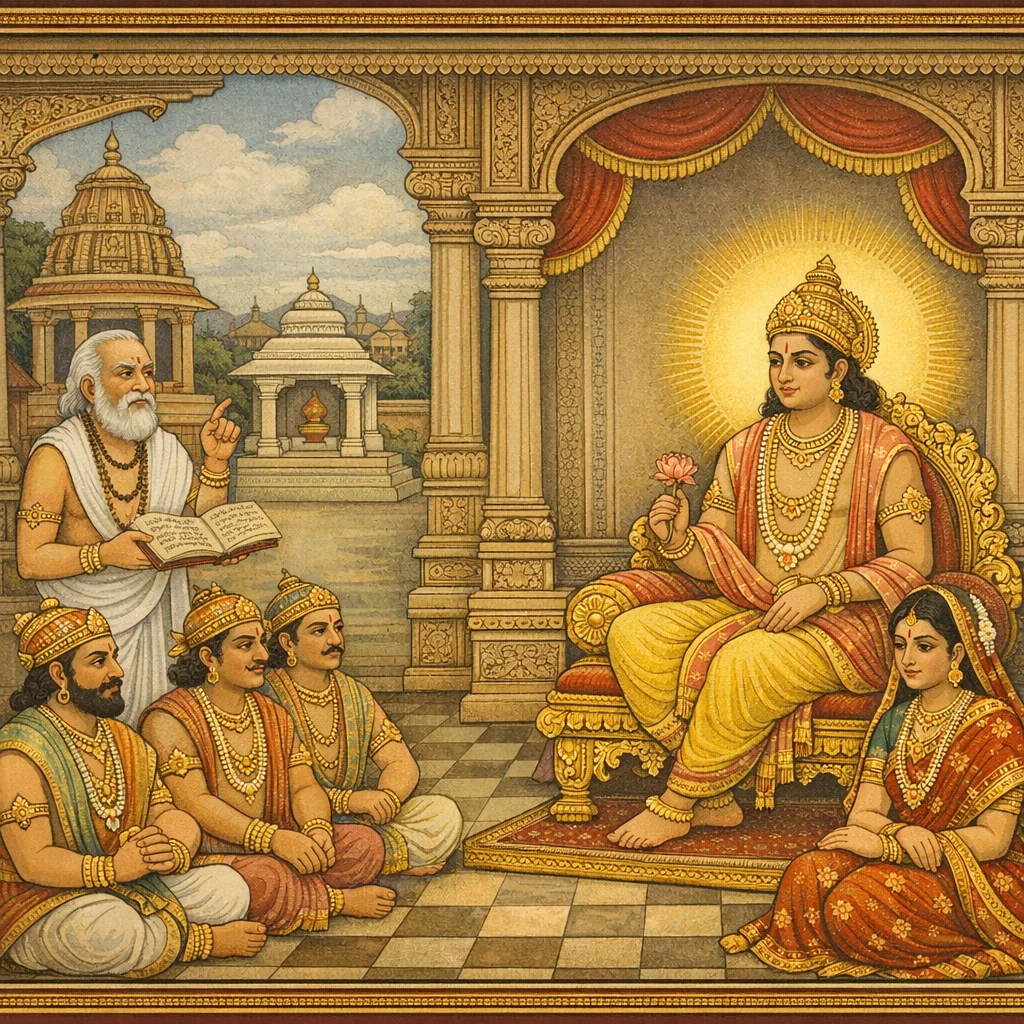
Chapter 163 recounts a community-legal and ritual-ethical episode at the sacred brahmasthāna. A group of Nāgara Brahmins discover a vessel of wealth and assemble to rule on improper appropriation born of greed, and on a procedural fault in administering prāyaścitta (expiatory purification). Caṇḍaśarmā is socially degraded and treated as bāhya (outside the community) because the prāyaścitta was imposed irregularly—by a single person rather than through the prescribed collective deliberation. Puṣpa seeks restitution by offering the wealth, but the assembly rejects the notion that their ruling is wealth-driven. They instead uphold the authority of smṛti and purāṇa and insist on correct institutional procedure: expiation must be granted with additional officiants and proper consultation. In anguish, Puṣpa undertakes a severe act of self-harm as an offering, until Sūrya (Bhāsvat) appears, forbids the rash act, and grants boons: Caṇḍaśarmā will be purified and renowned as a “Brāhma Nāgara,” his descendants and associates will gain honor, and Puṣpa’s body will be restored. The chapter thus teaches restraint from greed, respect for communal authority, and the procedural validity of expiation, culminating in divine ratification of restored legitimacy.
Shlokas
Verse 1
सूत उवाच । अथ ते नागराः सर्वे दृष्ट्वा तद्वित्तभाजनम् । न केनापि ग्रहीतव्यं सर्वान्कामान्निरस्य च
Sūta said: Then all those Nāgaras, seeing that receptacle of wealth, resolved, “Let none take it,” and, casting aside every personal desire, they restrained themselves.
Verse 2
ततस्ते समयं कृत्वा समानीय च मध्यगम् । तस्यास्येन ततः प्रोचुर्ब्रह्मस्थाने व्यवस्थि ताः
Then, having made an agreement among themselves and bringing him into their midst, they spoke to him, standing in the Brahmā-place—the sacred center of the assembly.
Verse 3
अनेन लोभयुक्तेन तिरस्कृत्य द्विजोत्तमान् । पुष्पवित्तमुपादाय प्रायश्चित्तं प्रकीर्तितम्
“By this man, driven by greed, the best of the twice-born have been insulted. Therefore, regarding Puṣpa’s wealth, an expiation (prāyaścitta) is hereby declared.”
Verse 4
तथा चैव तु षड्भागो गृहीतो विभवस्य च । तस्मादेष समस्तानां बाह्यभूतो भविष्यति
“Moreover, a sixth share of the wealth has indeed been taken. Therefore, he shall become an outcaste to the entire community—excluded from all.”
Verse 5
नागराणां द्विजेद्राणां यथान्यः प्राकृतस्तथा
Among the Nāgaras and the foremost of the twice-born, he shall be regarded as any ordinary man, no different from others.
Verse 6
अद्यप्रभृति चानेन यः संबंधं करिष्यति । सोऽपि बाह्यस्तु सर्वेषां नागराणां भविष्यति
From today onward, whoever forms any association with him shall likewise be excluded by all the Nāgaras.
Verse 7
भोजनं वाथ पानीयं योऽस्य सद्मनि कर्हिचित् । करिष्यति स चाऽप्येवं पतितः संभविष्यति
Whoever, at any time, provides him in his house with food or even drinking water shall likewise become fallen in the same manner.
Verse 8
एवमुक्त्वा ततस्तेन दत्तं तालत्रयं द्विजाः । ब्रह्मस्थाने द्विजश्रेष्ठाः कृत्वा पुष्पसमं च तम्
Having spoken thus, the brāhmaṇas accepted from him the three tāla-measures; and in the Brahmā-sanctuary, those best of the twice-born declared the matter “equal to Puṣpa,” that is, settled it in Puṣpa’s favor.
Verse 9
अथ ते ब्राह्मणाः सर्वे जग्मुः स्वंस्वं निवेशनम् । चंडशर्मा स चोद्विग्नः पुष्पपार्श्वं तदा गतः
Then all those brāhmaṇas returned to their respective dwellings; and Caṇḍaśarmā, anxious at heart, went at that time to Puṣpa’s side.
Verse 10
एतेषामेव सर्वेषां संमतेन मया तव । प्रायश्चित्तं तदा दत्तं तथा पि पतितः कृतः
With the consent of all these men, I prescribed your expiation; yet even so, you were declared fallen.
Verse 11
तस्मादहं पतिष्यामि सुसमिद्धे हुताशने । नैव जीवितुमिच्छामि स्वजनैः परिवर्जितः
Therefore, I shall throw myself into the well-kindled fire; cast out by my own people, I do not wish to live.
Verse 12
पुष्प उवाच । न विषादस्त्वया कार्यः कार्येऽस्मिद्विजसत्तम । वित्तार्थं दूषितस्त्वंहि यतो ब्राह्मणसत्तमैः
Puṣpa said: 'You should not grieve in this matter, O best of the twice-born. For you have been defiled by the Brahmins only for the sake of wealth.'
Verse 13
नागरांस्तोषयिष्यामि तानहं विविधैर्धनैः । याचयिष्यंति यन्मात्रं तव गात्रविशुद्धये
'I shall satisfy those townsmen with various riches. Whatever measure they ask for, that much I will provide—for the purification of your very person.'
Verse 14
तावन्मात्रं प्रदास्यामि तेभ्यो हि तव कारणात् । एवमुक्त्वा समागत्य ब्रह्मस्थानं त्वरान्वितः
'For your sake, I shall give them exactly that much.' Having said so, he quickly came and reached the Brahmasthāna.
Verse 15
चातुश्चरणमानीय मध्यगास्येन सोऽब्रवीत् । चंडशर्मा द्विजो यश्च मदर्थे पतितः कृतः
Bringing them together in the midst of the assembly, he spoke in a voice addressed to all: “That brāhmaṇa Caṇḍaśarmā, who was made fallen on my account…”
Verse 16
युष्माभिर्वित्तलोभेन तद्वित्तं वो ददाम्यहम् । समस्तं मद्गृहे यच्च क्रियतां वचनं द्विजैः
“Since it was through your greed for wealth, I now give you that very wealth. And whatever is in my house—all of it—let the brāhmaṇas dispose of it according to their word (take and arrange).”
Verse 17
अथ ते कुपिताः प्रोचुः सर्व एव द्विजोत्तमाः । सीत्कारान्विविधान्कृत्वा क्रोध संरक्तलोचनाः
Then all those foremost brāhmaṇas, enraged, spoke out; making various hissing sounds, their eyes reddened with anger.
Verse 18
धिग्धिक्पापसमाचार जिह्वा ते शतधा ततः । किं न याति यदेवं त्वं प्रजल्पसि विगर्हितम्
“Fie, fie on you—one whose conduct is sinful! May your tongue split into a hundred pieces at once. Why does it not fall away, when you speak such blameworthy words?”
Verse 19
पतितोऽयं कृतो ऽस्माभिर्नैव वित्तस्य कारणात् । प्रायश्चित्तं यतो दत्तमेकेनापि दुरात्मना
“This man has been made ‘fallen’ by us—not for the sake of wealth at all—but because the expiation (prāyaścitta) was accepted/given by a single wicked person alone.”
Verse 20
स्मृतयो दूषितास्तेन पुराणानि विशेषतः । स्थानं चैवास्म दीयं च कर्म चैतत्प्रकुर्वता
By him the Smṛtis have been sullied—and especially the Purāṇas; and our rightful standing, our due, and the very rite itself have been corrupted by one who acts in this way.
Verse 21
प्रायश्चित्तं प्रदातव्यं चतुर्भिरपरैः सह । संमन्त्र्य मनुना प्रोक्तमेतदेव द्विजोत्तमाः
The expiation (prāyaścitta) should be performed together with four others. Having deliberated, Manu has declared precisely this, O best of the twice-born.
Verse 22
त्वदीयं पातकं चास्य शरीरेऽद्य व्यवस्थितम् । एकाकिना यतो दत्तं तेनायं पतितः स्थितः
Your sin has today become fixed upon his body as well; because it was done by you alone, therefore he remains in a fallen state (patita).
Verse 23
सूत उवाच । एवमुक्त्वा द्विजाः सर्वे जग्मुः स्वंस्वं निकेतनम् । पुष्पोपि च समुद्विग्नो वैलक्ष्यं परमं गतः
Sūta said: Having spoken thus, all the Brāhmaṇas went to their respective homes; and Puṣpa too, deeply disturbed, fell into extreme embarrassment and dejection.
Verse 24
जगामाथ निजावासं निःश्वसन्नुरगो यथा
Then he went to his own dwelling, sighing like a serpent.
Verse 25
ततः स चिन्तयामास यावन्नो साहसं कृतम् । तावत्सिद्धिर्मनुष्याणां न कथंचित्प्रजायते
Then he reflected: “So long as our rash transgression is not set right, success for human beings does not arise in any way.”
Verse 26
तस्मादहं करिष्यामि चण्डशर्मकृते महत् । कृतघ्नता यथा न स्यात्प्रोक्तं चैव यतो बुधैः
Therefore I shall do something great for Caṇḍaśarman, so that I may not be guilty of ingratitude—just as the wise have indeed declared.
Verse 27
ब्रह्मघ्ने च सुरापे च चौरे भग्नव्रते तथा । निष्कृतिर्विहिता सद्भिः कृतघ्ने नास्ति निष्कृतिः
For a slayer of a brāhmaṇa, for a drinker of liquor, for a thief, and for one who has broken a sacred vow—wise and good people have prescribed means of expiation. But for the ungrateful person, there is no expiation at all.
Verse 28
एवं निश्चित्य मनसा सूर्यवारेण सप्तमी । यदाऽयाता द्विजश्रेष्ठास्तदा चाष्टोत्तरं शतम्
Having thus resolved in his mind, when the seventh lunar day (Saptamī) fell on a Sunday and the best of brāhmaṇas arrived, then the rite proceeded with the sacred count of one hundred and eight (108).
Verse 29
प्रदक्षिणाः कृतास्तेन पुष्पादित्यस्य धीमता । तीक्ष्णं शस्त्रं समादाय पूर्वोक्तविधिना ततः । छित्त्वाछित्त्वा निजांगानि जुहुयाज्जातवेदसि
That wise one performed pradakṣiṇā, reverent circumambulations, of Puṣpāditya. Then, taking up a sharp weapon and following the procedure stated earlier, he would cut his own limbs again and again and offer them into the fire of Jātavedas (Agni).
Verse 30
ततः पूर्णाहुतिं यावत्कायशेषेण यच्छति । तावत्प्रत्यक्षतां गत्वा स प्रोक्तो भास्वता स्वयम्
Then, as long as he continued up to the final oblation—offering with what remained of his body—so long did the Radiant One (the Sun) come into direct manifestation and speak to him personally.
Verse 31
पुष्प मा साहसं कार्षीः परितुष्टोऽस्मि तेऽनघ । भूय एव महाभाग ब्रूहि किं ते ददाम्यहम्
“Puṣpa, do not commit such rash severity. I am pleased with you, O sinless one. Now again, O fortunate one—tell me: what shall I grant you?”
Verse 32
पुष्प उवाच । चण्डशर्मा द्विजेन्द्रोऽयं मदर्थे पतितः कृतः । समस्तैर्नागरैर्देव तं तैर्नय समानताम्
Puṣpa said: “This brāhmaṇa-lord, Caṇḍaśarmā, has been made fallen on my account. O Deva, by all those Nāgaras—restore him, through them, to equal standing again.”
Verse 33
शास्त्रं दृष्ट्वा प्रदत्तं मे प्रायश्चित्तं महात्मना । तथापि दूषितः क्षुद्रैः समस्तैरसहिष्णुभिः
“Though the great-souled one prescribed expiation for me after consulting the scriptures, still I was maligned by all those petty and intolerant people.”
Verse 34
भगवानुवाच । एकस्यापि वचो नैव शक्यते कर्तुमन्यथा । नागरस्य द्विजश्रेष्ठ समस्तानां च किं पुनः
The Blessed One said: “Even the word of a single Nāgara cannot be made otherwise, O best of brāhmaṇas—how much more, then, the word of them all together?”
Verse 35
परमेष द्विजः पूतश्चंडशर्मा भविष्यति । ब्राह्मोऽयं नागरः ख्यातः समस्ते धरणीतले
O Supreme One, Caṇḍaśarmā shall indeed be purified and become a brāhmaṇa. This Nāgara shall be famed as “Brāhma” across the whole earth.
Verse 36
एतस्य ये सुताश्चैव भविष्यंति धरातले । विख्यातिं तेऽपि यास्यंति मान्याः पूज्या महीभृताम्
And whatever sons are born to him upon the earth—they too will attain fame, becoming honored and worthy of worship even by kings.
Verse 37
ये चापि बांधवा श्चास्य सुहृदश्च समागमम् । करिष्यंति समं तेऽपि भविष्यंति सुशोभनाः
And his kinsmen too, and his well-wishing friends—who will likewise assemble together—shall also become fair and radiant in form.
Verse 38
त्वं चापि मत्प्रसादेन संपूर्णांगो भविष्यसि
And you too, by my grace, shall become whole-limbed and complete in body.
Verse 39
एवमुक्त्वा सहस्रांशुस्ततश्चादर्शनं गतः । पुष्पोऽपि चाक्षतांगत्वं तत्क्षणात्समपद्यत
Having spoken thus, Sahasrāṃśu (the Sun) then vanished from sight. And Puṣpa too, in that very instant, attained an uninjured and complete-bodied state.
Verse 163
इति श्रीस्कांदे महापुराण एकाशीतिसाहस्र्यां संहितायां षष्ठे नागररखण्डे हाटकेश्वरक्षेत्रमाहात्म्ये ब्राह्मनागरोत्पत्तिवृत्तांतवर्णनंनाम त्रिषष्ट्युत्तरशततमोऽध्यायः
Thus ends the one-hundred-and-sixty-third chapter, called “The Account Describing the Origin Narrative of the Brāhmaṇa Nāgaras,” in the Hāṭakeśvara-kṣetra Māhātmya, within the sixth Nāgara-khaṇḍa of the Śrī Skanda Mahāpurāṇa, in the Ekāśītisāhasrī Saṃhitā.