Adhyaya 161
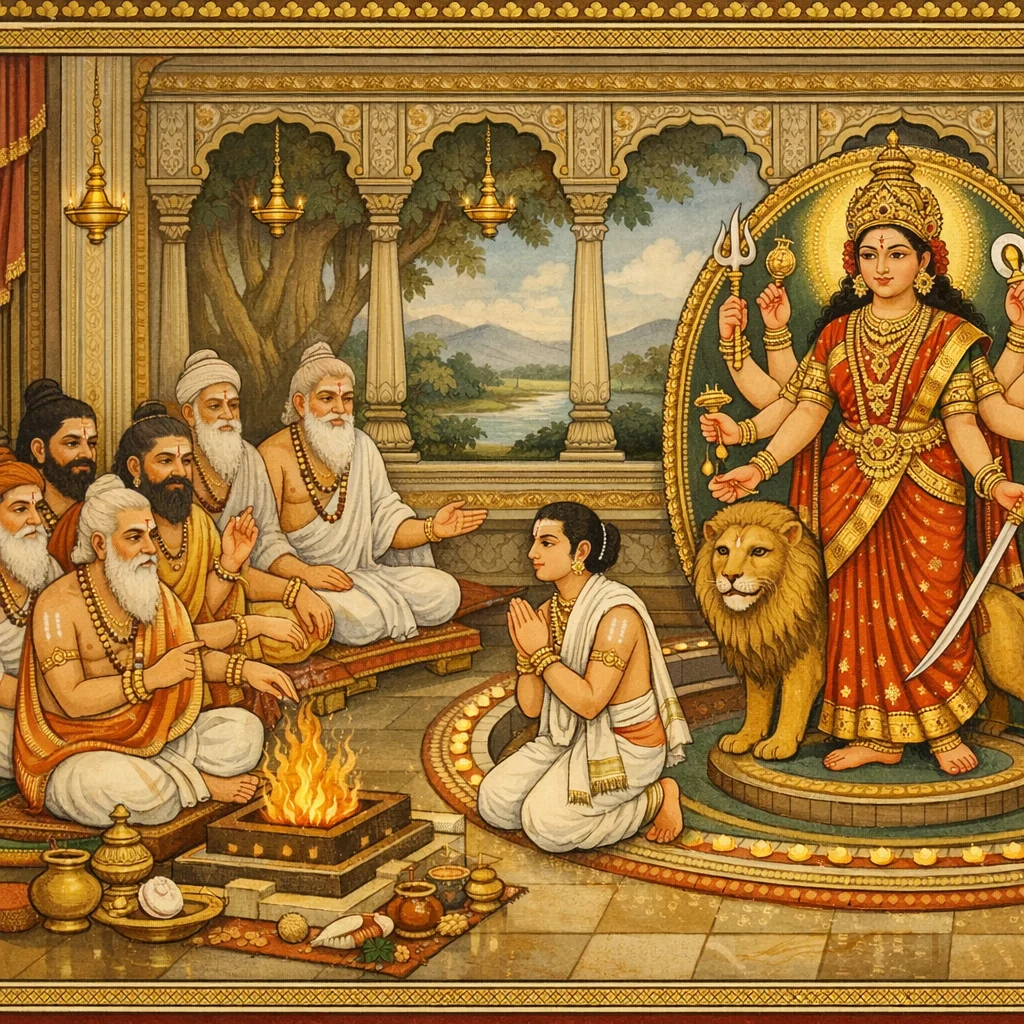
Chapter 161, as reported by Sūta, depicts a deliberation among brāhmaṇas concerning Puṣpa. Puṣpa, accompanied by his wife, approaches the dvija assembly with reverence and announces that he has built a temple for Bhāskara (the Solar Lord), proposing that it be publicly famed as “Puṣpāditya” across the three worlds. The brāhmaṇas voice concern for preserving earlier lines of renown and prescribe prāyaścitta (expiatory purification), including a large homa counted as a “lakṣa.” Puṣpa asks that the brāhmaṇas continually acclaim the deity by the chosen name and that his wife be honored through a goddess-name tied to the site. The negotiated decision is recorded: the deity is accepted as Puṣpāditya, and the goddess is named Māhikā/Māhī. The phalāśruti declares benefits for Kali-yuga: devotion to Puṣpāditya removes the sin of the solar day; on a Sunday that coincides with Saptamī, offering up to 108 fruits and performing pradakṣiṇā yields desired results. Regular darśana of Durgā as Māhikā averts hardships, and worship on Caitra Śukla Caturdaśī grants protection from misfortune for a full year.
Shlokas
Verse 1
सूत उवाच । अथ तेन द्विजाः सर्वे ब्रह्मस्थाने निवेशिताः । चातुश्चरणसंज्ञाश्च ततस्तस्य निवेशिताः
Sūta said: Then, by his direction, all the dvijas—the twice-born—were seated in the Brahmā-hall, the sacred enclosure; and those appointed for the observance called cātuścaraṇa were thereafter installed in their places for him.
Verse 2
सोऽपि केशान्परित्यज्य सर्वगात्रसमुद्भवान् । निजपत्न्या समोपेतः प्रणम्य च द्विजोत्तमान्
He too, having removed the hair that had grown upon all his limbs, approached together with his own wife and, bowing low, paid reverence to the foremost among the dvijas.
Verse 3
कृतांजलिपुटो भूत्वा वाक्यमेतदुवाच ह । भास्करस्यास्य विहितः प्रासादोयं मया द्विजाः
With hands folded in añjali, he spoke: “O twice-born ones, this temple has been raised by me for this Bhāskara—Sūrya, the Sun-god.”
Verse 4
पुष्पादित्य इति ख्यातिं प्रयातु भुवनत्रये । ब्राह्मणा ऊचुः । न वयं याज्ञवल्क्यस्य कीर्तिं नेष्यामहे क्षयम्
“May it gain renown in the three worlds as ‘Puṣpāditya’.” The brāhmaṇas replied: “We shall not allow Yājñavalkya’s fame to be diminished.”
Verse 5
प्रायश्चित्तं प्रदास्यामश्चित्तस्य हृदयंगमम् । अन्ये च ब्राह्मणाः प्रोचुः केचिन्मध्यस्थवृत्तयः
“We shall prescribe a prāyaścitta—an atonement that truly reaches the heart and reforms it.” Other brāhmaṇas also spoke, some keeping an impartial, balanced stance.
Verse 6
वृत्त्यर्थमस्य देवस्य लक्षं होमेऽत्र कल्प्यताम् । लक्षं तु सर्वविप्राणां प्रायश्चित्तविशुद्धये
“For the service and upkeep of this deity, let a homa be arranged here with a hundred thousand oblations. And let that same hundred thousand be offered for the purification of the prāyaścitta of all the vipras (brāhmaṇas).”
Verse 7
पुष्प उवाच । तस्मात्सर्वे द्विजश्रेष्ठा मन्नाम्ना कीर्तयंत्विमम् । पुष्पादित्यमिति ख्यातिं कीर्तयंतु तथानिशम्
Puṣpa said: “Therefore, O best of the twice-born, proclaim this by my name. Let its renown be celebrated as ‘Puṣpāditya’, and let it be spoken of unceasingly.”
Verse 8
अनया भार्यया मह्यं मान्या या स्थापिता पुरा । दुर्गाऽस्याश्चात्र नाम्ना वै भूयात्ख्याताऽत्र सत्पुरे
“And this revered goddess, whom this wife long ago established here for me—may she, in this noble city, indeed become renowned here by the name ‘Durgā’.”
Verse 9
ब्राह्मणा ऊचुः । दुःशीलेन पुराऽकारि प्रासादो हरसंभवः । दुर्वासःस्थापितस्यापि भवद्भिस्तुष्ट मानसैः
The brāhmaṇas said: “Formerly, a temple connected with Hara (Śiva) was built by a man of bad conduct. Yet even toward what was installed by Durvāsas, your hearts have become pleased in approval.”
Verse 10
तथाप्यस्य तु दीनस्य प्रासादः क्रियतां द्विजाः
“Even so, O brāhmaṇas, let a temple be constructed for this poor suppliant.”
Verse 11
नाममात्रेण देवस्य दुःशीलेन यया पुरा । अनेनाराधितः पूर्वं स्वमांसैरेष भास्करः
“Formerly, that ill-conducted man worshipped this deity only by uttering the Name. Earlier still, he propitiated this very Bhāskara (the Sun) with his own flesh.”
Verse 12
तस्मान्न क्षतिरस्याथ दत्ते नाम्नि यथा पुरा । नाम्ना माहिकया नाम माहीत्येव च सा भवेत्
“Therefore, there is no harm in bestowing the name as it was before. By the name ‘Māhikā’, she shall indeed become known as ‘Māhī’.”}]}
Verse 13
सूत उवाच । पुष्पेण दाने दत्तेऽथ संमतेनाग्रजन्मनाम् । मध्यमेन कृतं नाम पुष्पादित्य इति श्रुतम्
Sūta said: “Then, when Puṣpa gave the gift with the approval of the foremost brāhmaṇas, the name established by the mediator was heard to be ‘Puṣpāditya’.”
Verse 14
तत्पत्न्या चापि या तत्र दुर्गा देवी द्विजोत्तमाः । नाम्ना माहिकया नाम माहीत्येव च साऽभवत्
And that Durgā Devī who was there as his consort, O best of brāhmaṇas—by the name ‘Māhikā’ she indeed became known as ‘Māhī’.
Verse 15
सूत उवाच । एतद्वः सर्वमाख्यातं यत्पृष्टोस्मि द्विजोत्तमाः । पुष्पा दित्यो यथा जातो याज्ञवल्क्यप्रतिष्ठितः
Sūta said: O best of the twice-born, I have fully told you all that you asked—how Puṣpāditya came to be, and how he was consecrated and established by Yājñavalkya.
Verse 16
अद्यापि कलिकाले स दृष्टो भक्त्या सुरेश्वरः । नाशयेद्दिनजं पापं नराणां नात्र संशयः
Even now, in the age of Kali, that Lord of the gods is beheld through devotion; he destroys the sins that arise in the course of a day for humankind—of this there is no doubt.
Verse 17
तथा च सप्तमीयुक्ते रवेर्वारे द्विजोत्तमाः । अष्टोत्तरशतंयावत्फलहस्तः करोति यः । प्रदक्षिणां च सद्भक्त्या स लभेद्वांछितं फलम्
And further, O best of the twice-born: on a Sunday that falls on Saptamī, whoever performs pradakṣiṇā with true devotion, holding fruits in the hand up to one hundred and eight in number, attains the desired result.
Verse 18
माहीकामपि यो दुर्गां नित्यमेव प्रपश्यति । न स पश्यति कष्टानि तस्मिन्नहनि कर्हिचित्
Whoever continually beholds Durgā—she who abides upon the earth (Māhīkā)—does not encounter hardships on that day, at any time.
Verse 19
चैत्रशुक्लचतुर्दश्यां यस्तां पूजयते नरः । तस्य संवत्सरंयावन्नापत्संजायते क्वचित्
On the bright fourteenth day of Caitra, the man who worships her finds that for a full year no calamity arises for him, anywhere.
Verse 161
इति श्रीस्कांदेमहापुराणएकाशीतिसाहस्र्यां संहितायां षष्ठे नागरखण्डे हाटकेश्वरक्षेत्रमाहात्म्ये पुष्पादित्यमाहात्म्यवर्णनंनामैकषष्ट्युत्तरशततमोऽध्यायः
Thus ends the one-hundred-and-sixty-first chapter, called “The Description of the Greatness of Puṣpāditya,” in the Hāṭakeśvara-kṣetra Māhātmya, within the sixth Nāgarakhaṇḍa of the Śrī Skanda Mahāpurāṇa (the Saṃhitā of eighty-one thousand verses).