Adhyaya 160
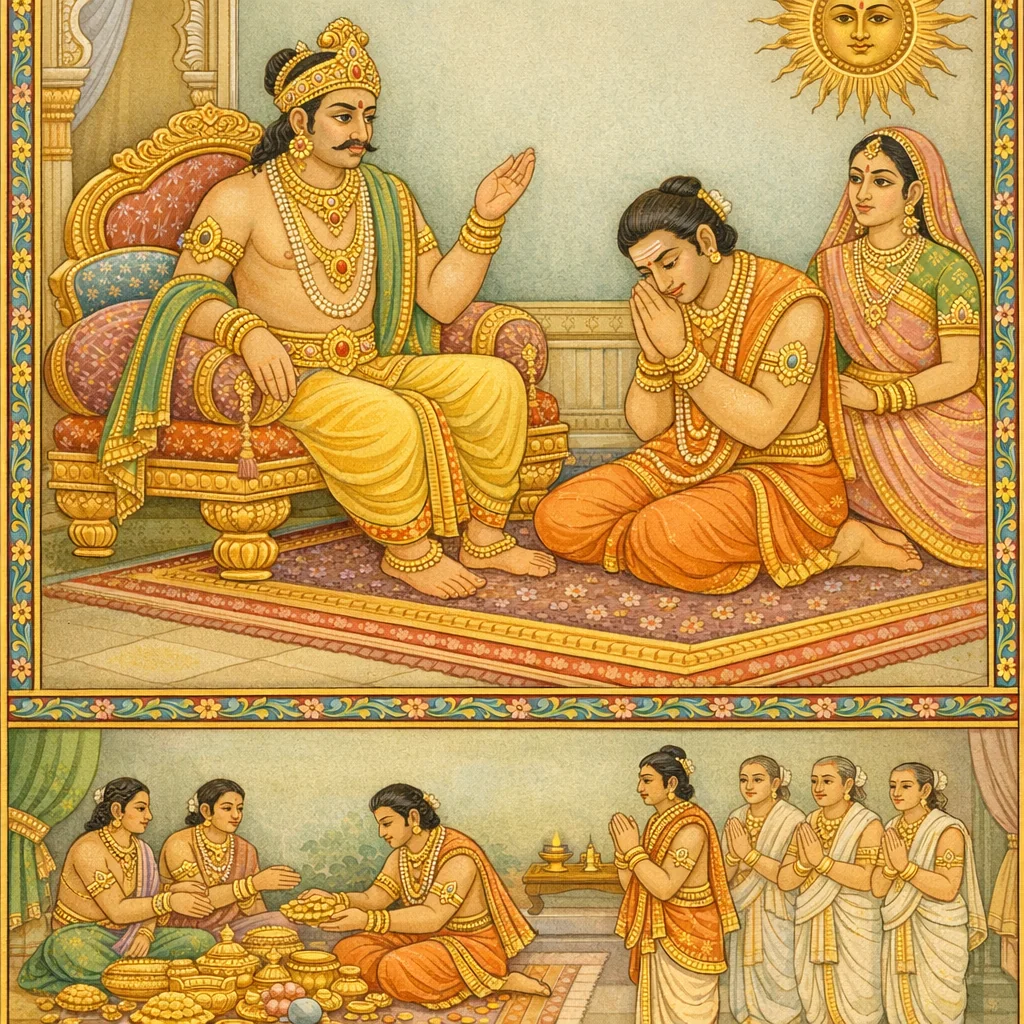
This chapter presents a moral cautionary tale within a tīrtha setting. Sūta recounts how a brāhmaṇa named Puṣpa, at Camatkārapura, gained a captivating form through a ritual context of propitiating the Sun. MĀhī questions the source of his altered appearance—whether it is magical contrivance, mantra-accomplishment, or divine favor. Puṣpa confesses both the transformation and his earlier deception involving Maṇibhadra: he wrongfully took Maṇibhadra’s wife and built a life upon false premises. Though the household continued with children and descendants, in old age he is seized by remorse, recognizes the weight of his pāpa, and seeks a remedy. He resolves to go to Hāṭakeśvara-kṣetra to undertake purifying discipline—puraścaraṇa and prāyaścitta. After distributing wealth to his sons, he builds a splendid structure connected with Sūrya at the place where he once attained siddhi, and formally invites brāhmaṇas to arrange a fourfold recitational-ritual observance (cātuścaraṇa) for the cleansing of sin. Thus the chapter binds confession, ethical reckoning, and the ritual institution of the kṣetra into a single sacred unit.
Shlokas
Verse 1
सूत उवाच । अन्यस्मिन्नहनि प्राप्ते रहस्युक्तः स भार्यया । रात्रौ प्रसुप्तः पार्श्वे च पादौ संस्पृश्य तत्क्षणात्
Sūta said: When another day had come, his wife spoke to him in private. At night, as he slept, she touched his feet at his side—and in that very moment she began to speak.
Verse 2
त्वं तावन्मम भर्त्तासि यावज्जीवमसंशयम् । तद्वदस्व विभोऽस्माकं त्वदर्थं स मयोज्झितः
“You indeed are my husband for as long as I live—without doubt. Therefore, O lord, tell me what should be done for our sake; for you, I have abandoned him.”
Verse 3
इन्द्रजालमिदं किं ते किं वा मंत्रप्रसाधनम् । देवानां वा प्रसादोऽयं यत्त्वं चैतादृशः स्थितः
“What is this—an illusion like Indra’s magic? Or is it power gained by mantra-practice? Or is it truly the favor of the gods, that you stand here in such an extraordinary state?”
Verse 4
मया त्वं हि तदा ज्ञातः प्रथमेऽपि दिने स्थिते । यदा संभूषिता वस्त्रैस्तथा वस्तुविभूषणैः
“Indeed, I recognized you even then—on the very first day you arrived—when you were adorned with garments and with various ornaments.”
Verse 5
यद्यहं तव वार्तां च सर्वां कपटसंभवाम् । कथयामि द्वितीयस्य तत्ते पादौ स्पृशाम्यहम्
“If I recount to you the whole story of your deception—everything that arose from trickery—then, in that very moment, I shall touch your feet.”
Verse 6
सूत उवाच । एवमुक्तो विहस्योच्चैः स तदा ब्राह्मणोत्तमाः । तामालिंग्य ततः प्राह वचनं मधुराक्षरम्
Sūta said: “Thus addressed, that excellent brāhmaṇa laughed aloud; then, embracing her, he spoke words of gentle sweetness.”
Verse 7
साधु प्रिये त्वया ज्ञातं सर्वं मम विचेष्टितम् । अहं स विप्रः सुभगे मणिभद्रेण यः पुरा
“Well done, beloved—by you all my doings have been understood. Fair one, I am that brāhmaṇa who, long ago, was (dealt with) by Maṇibhadra…”
Verse 8
विडंबितो मुखं पश्यंस्त्वदीयं चंद्रसन्निभम् । चमत्कारपुरं गत्वा मया चाराधितो रविः । तेन तुष्टेन मे दत्तं तद्रूपं ज्ञानमेव च
“Mocked as I was, gazing upon your moon-like face, I went to Camatkārapura and worshipped Ravi, the Sun. Pleased with me, he bestowed upon me that very form—and also true knowledge.”
Verse 9
माहिकोवाच । त्वदीयदर्शनेनाहं कामदेववशं गता
Māhikā said: “By the sight of you, I have fallen under the sway of Kāmadeva (desire).”
Verse 10
तस्मादाराधयिष्यामि तं गत्वा दिननायकम् । येन ते तादृशं भूयः प्रतुष्टो विदधाति सः
“Therefore I shall go and worship the Lord of the Day (the Sun), so that, being greatly pleased, he may grant you such a form again.”
Verse 11
किं मे चैतेन रूपेण तारुण्येनापि च प्रभो । यत्ते तथाविधं रूपं संभजामि दिवानिशम्
O Lord, what use to me is this beauty, even this youth, if I cannot partake of and cherish that very form of Yours, day and night?
Verse 12
सूत उवाच । तच्छ्रुत्वा गुटिकां पुष्प समादाय मुखान्ततः । दधार तादृशं रूपं यादृग्दृष्टं पुरा तया
Sūta said: Hearing that, he took a flower-like pellet and placed it into his mouth; then he assumed the very form that she had seen before.
Verse 13
ततः सा हर्षिता माही पुलकेन समन्विता । तमालिंग्याभजद्गाढं वाक्यमेतदुवाच ह
Then Māhī, filled with joy and thrilled with horripilation, embraced him and clung to him tightly; and she spoke these words.
Verse 14
अद्य मे सफलं जन्म यौवनं रूपमेव च । यत्त्वं हृद्वांछितः कांतः प्रलब्धो मदनोपमः
Today my birth has borne fruit—my youth and my beauty as well—because you, the beloved longed for in my heart, have been attained, O love, like unto Madana himself.
Verse 15
एतावंति दिनान्येव न मया कामजं सुखम् । अपि स्वल्पतरं लब्धं कथंचिद्वृद्धसेवया
For all these days, I never gained pleasure born of love—nor even the slightest—somehow, through service to an old man.
Verse 16
भजस्व स्वेच्छया विप्र दासी तेऽहं व्यवस्थिता
O brāhmaṇa, enjoy as you wish; I stand here, established as your handmaid.
Verse 17
पुष्प उवाच । प्रविशामि किमंगेषु भवन्तीं किं मिलाम्यहम् । प्रिये चिरेण लब्धासि न जाने कर वाणि किम्
Puṣpa said: “Shall I enter into your limbs, or shall I unite with you? O beloved, after a long time you have been obtained; I do not know—what shall I do?”
Verse 19
अथ रात्र्यां व्यतीतायामुदिते सूर्यमण्डले । वक्त्रे तां गुटिकां कृत्वा स पुष्पस्तादृशोऽभवत्
Then, when the night had passed and the orb of the sun had risen, having made her into a small pellet and placing it in his mouth, Puṣpa became as he was (in that altered state).
Verse 20
एवं तस्य स्थितस्यात्र महान्कालो व्यजायत । पुत्राः पौत्रास्तथा जाताः कन्यकाश्च तथैव च
Thus, as he remained there, a long time passed. Sons and grandsons were born, and daughters as well.
Verse 21
स वृद्धत्वं यदा प्राप्तो जराविप्लवतां गतः । तदा स चिन्तयामास मया पापं महत्कृतम्
When he reached old age and was overwhelmed by the turmoil of senility, then he began to reflect: “A great sin has been committed by me.”
Verse 22
मणिभद्रो वराकोऽसौ मिथ्याचारेण घातितः । तस्य भार्या हृता चैव प्रसूतिं च नियोजिता
That poor Maṇibhadra was killed through false conduct; and his wife was taken away, and she was compelled into childbearing.
Verse 23
हाटकेश्वरजं क्षेत्रं तस्माद्गत्वा करोम्य हम् । पुरश्चरणसंज्ञं च येन शुद्धिः प्रजायते
Therefore I shall go to the sacred region of Hāṭakeśvara, and I shall perform the rite known as puraścaraṇa, by which purification arises.
Verse 24
एवं स निश्चयं कृत्वा पुष्पश्चित्ते निजे तदा । असंख्यं वित्तमादाय चमत्कारपुरंगतः
Having thus formed a firm resolve within his heart, Puṣpa then took immeasurable wealth and set out for the city called Camatkārapura.
Verse 25
पुत्रेभ्योऽपि यथासंख्यं दत्त्वा चैव पृथक्पृथक् । प्रासादं कारयामास तस्य सूर्यस्य शोभनम्
After distributing to his sons also their due shares, each separately, he caused a splendid temple-palace to be built for that Sun (deity).
Verse 26
यस्मिन्सिद्धिं गतः सोऽत्र याज्ञवल्क्यप्रतिष्ठिते । ततो मध्यममाहूय प्रणिपत्याभिवाद्य च । सोऽब्रवीद्ब्राह्मणानां मे चातुश्चरणमानय
At that place—consecrated by Yājñavalkya—where he had attained success, he then summoned the chief (among his men), bowed down and respectfully saluted him, and said: “Bring me the group of brāhmaṇas known as the ‘cātuścaraṇa’.
Verse 27
येनाहमग्रतो भूत्वा प्रायश्चित्तं विशुद्धये । पुरश्चरणसंज्ञं तु प्रार्थयामि यथाविधि
So that, going before as the leader, I may perform prāyaścitta—expiation for purification—I request, according to the prescribed rule, the rite known as puraścaraṇa.
Verse 160
इति स्कान्दे महापुराण एकाशीतिसाहस्र्यां संहितायां षष्ठे नागरखंडे हाट केश्वरक्षेत्रमाहात्म्ये पुष्पस्य पापक्षालनार्थं हाटकेश्वरक्षेत्रगमनपुरश्चरणार्थब्राह्मणामन्त्रणवर्णनंनाम षष्ट्यधिकशततमोऽध्यायः
Thus, in the Skanda Mahāpurāṇa, in the eighty-one-thousand-verse Saṃhitā, in the sixth section—the Nāgara-khaṇḍa—within the Māhātmya of Hāṭakeśvara-kṣetra, ends the one-hundred-and-sixtieth chapter, entitled “The account of inviting brāhmaṇas for the puraścaraṇa and journeying to Hāṭakeśvara-kṣetra to wash away Puṣpa’s sins.”
Verse 198
एवमुक्त्वा ततस्तौ च मैथुनाय कृतक्षणौ । प्रवृत्तौ ब्राह्मणश्रेष्ठाः कामदेववशंगतौ
Having spoken thus, the two of them, finding the moment opportune, entered into sexual union—those eminent brāhmaṇas, having come under the sway of Kāmadeva, desire.