Adhyaya 158
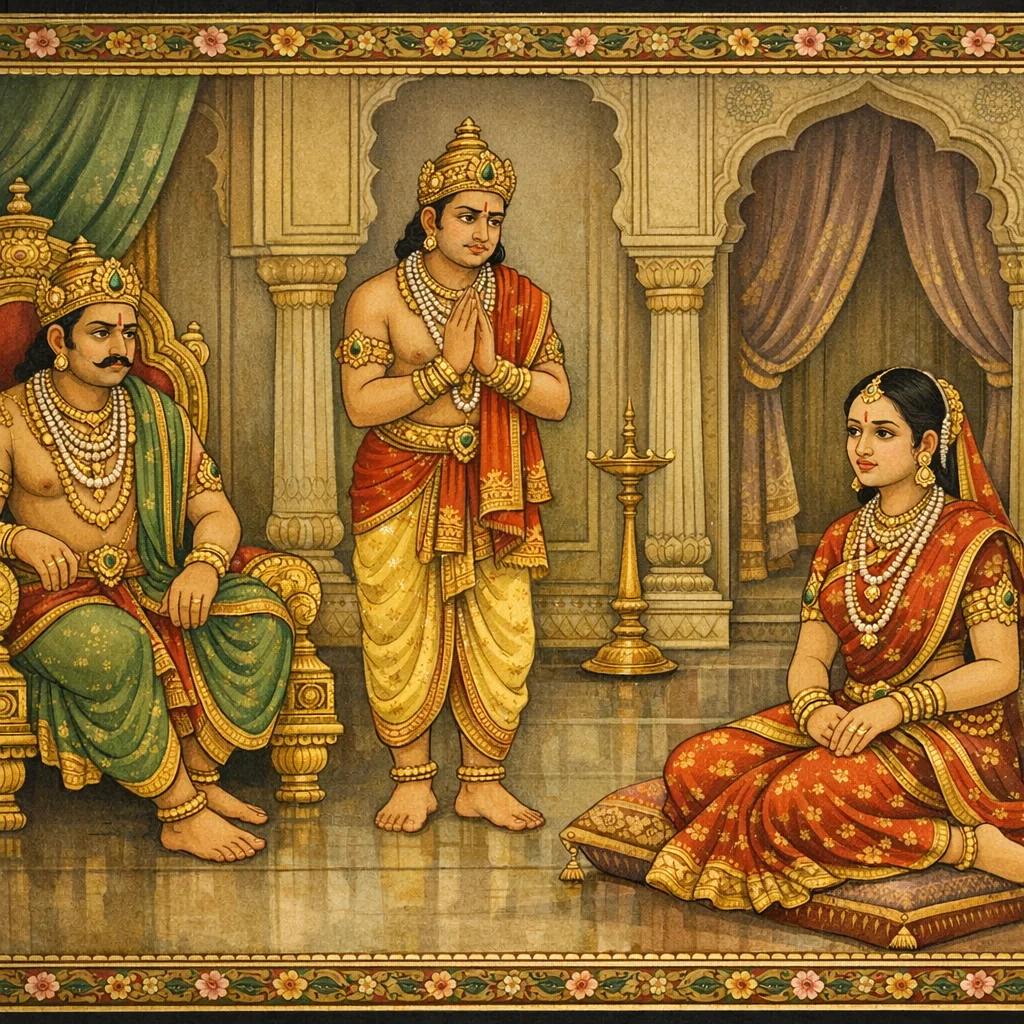
Sūta recounts a civic and ethical episode. Puṣpa obtains a wondrous transforming object (a guṭikā) and assumes a form like Maṇibhadra’s, using it to impersonate him and disturb social order. A gatekeeper (ṣaṇḍha) is told to bar the arriving impostor; yet when the real Maṇibhadra reaches the threshold, he is struck there, and the townspeople cry out in outrage. Puṣpa then appears again in Maṇibhadra’s very form, deepening the confusion of identity. The quarrel is taken to the royal court, where the king tests the matter by questioning and finally summons Maṇibhadra’s wife as a human witness. Her testimony clearly distinguishes the lawful husband from the disguised intruder. The ruler orders punishment for the deceiver. As the sentence is carried out, the condemned delivers extended moral reflections on the dangers of desire, the social harm of deceit, and a sustained critique of miserliness, declaring that wealth has three outcomes—giving, enjoyment, or loss—and that hoarding leads only to the barren third fate. The chapter closes by placing the story within the Hāṭakeśvara-kṣetra māhātmya, an ethical exemplar set in sacred geography.
Shlokas
Verse 1
सूत उवाच । पुष्पोऽपि गुटिके लब्ध्वा भास्कराद्वारितस्करात् । चिराद्भोजनमासाद्य प्रस्थितो वैदिशं प्रति
Sūta said: Puṣpa too, having obtained the guṭikā (pill) from Bhāskara, which warded off thieves, and after securing food at last, set out toward Vidiśā.
Verse 2
ततो वैदिशमासाद्य स पुष्पो हृष्टमानसः । शुक्ला तां गुटिकां वक्त्रे चकारद्विजसत्तमाः
Then, upon reaching Vidiśā, Puṣpa—his heart filled with joy—placed that bright white pill into his mouth, O best among the twice-born.
Verse 3
मणिभद्रसमो जातस्तत्क्षणादेव स द्विजः । हट्टमार्गं गते सोऽथ तस्मिन्गत्वाऽथ मंदिरे । प्रविष्टः सहसा मध्ये प्रहृष्टेनांतरात्मना
That brāhmaṇa instantly became like Maṇibhadra. Then he went along the market road; arriving there, he entered a mansion at once, straight into its midst, his inner heart exulting.
Verse 4
ततश्चाकारयामास तं षंढं द्वारमाश्रितम् । तस्य दत्त्वाथ वस्त्राणि पश्चात्षंढमुवाच सः
Then he stationed that eunuch at the doorway as a guard. After giving him garments, he spoke further to the eunuch.
Verse 5
षंढकश्चित्पुमानत्र सम्यग्वेषकरो हि सः । मम वेषं समाधाय भ्रमते सकले पुरे
Here there is a certain eunuch, a man skilled in the art of disguise. Assuming my very appearance, he roams throughout the entire city.
Verse 6
सांप्रतं मद्गृहे सोऽथ लोभनायागमिष्यति । स च कृत्रिम वेषेण निषेद्धव्यस्त्वया हि सः । स तथेति प्रतिज्ञाय द्वारदेशं समाश्रितः
Now he will come to my house intending to entice and deceive. And since he comes in a contrived disguise, you must surely stop him. Promising, “So be it,” he took his position near the doorway.
Verse 7
पुष्पोऽपि चाब्रवीद्भार्यां माहिकाख्यां ततः परम् । माहिकेद्य मया दृष्टः स्वतातः स्वपुरः स्थितः
Then Puṣpa spoke to his wife named Māhikā: “Māhikā, today I saw my own father standing in his own city.”
Verse 8
वीरभद्रः सुदुःखार्तो मलिनांबरसंवृतः । अब्रवीच्च ततः कोपान्मामेवं परुषाक्षरम्
Vīrabhadra, overwhelmed by intense sorrow and clad in soiled garments, then spoke to me in anger with harsh words.
Verse 9
धिग्धिक्पाप त्वया कन्यातीव रूपवती सदा । वंचयित्वा जनेतारमुदूढा सा सुमध्यमा
“Fie, fie upon you, sinner! That maiden—ever exceedingly beautiful—has been married off after her begetter, her father, was deceived; she, the slender-waisted one.”
Verse 10
न दत्तं तत्पितुः किंचिन्न तस्या अथ पुत्रक । विधवां यादृशीं तां च श्वेतांबरधरां सदा
“Nothing at all was given to her father—indeed nothing, my son. And that woman, as though a widow, is ever clad in white garments.”
Verse 11
संधारयसि पापात्मन्नेष्टं भोज्यं प्रयच्छसि । तस्मात्तस्याः पितुर्देहि त्वं सुवर्णायुतं ध्रुवम्
“You support her, O wicked-souled one, and provide her desired food. Therefore you must surely give her father ten thousand pieces of gold.”
Verse 12
भूषणं वांछितं तस्या यत्तद्वै रुचिपूर्वकम् । येन संधारयेद्भार्या साऽनंदं परमं गता
And the ornament she desires—give that indeed with goodwill—by which the wife may be cherished and sustained; thus she attains the highest joy.
Verse 13
निरानंदा यतो नारी न गर्भं धारयेत्स्फुटम् । निःसंतानो यतो वंशः स्वर्गादपि क्षितिं व्रजेत्
For when a woman is without joy, she does not clearly sustain a pregnancy; and when a lineage is without offspring, it falls down to the earth even from heaven.
Verse 14
स पतिष्यत्यसंदिग्धं कुलांगारेण च त्वया । सा त्वमानय वस्त्राणि गृहमध्याच्छुभानि च
He will certainly fall—without doubt—through you, the disgrace of the family. So you, bring the auspicious garments from within the house.
Verse 15
यानि दत्तानि भूपेन व्यवहारैस्तदा मम । पञ्चांगश्च प्रसादो यो मया प्राप्तश्च तैः सह
The things that were given to me then by the king as part of the legal settlements—and the fivefold appendage, and the favor that I received along with those—
Verse 16
त्वं संधारय गात्रैः स्वैः शीघ्रं रसवतीं कुरु । भोजनायैव शीघ्रं तु त्वया सार्धं करोम्यहम्
Compose yourself with your own limbs; quickly prepare the flavorful meal. For eating—quickly indeed—I shall do it together with you.
Verse 17
एकस्मिन्नपि पात्रे च तदादेशादसंशयम् । सापि सर्वं तथा चक्रे यदुक्तं तेन हर्षिता
Even in a single vessel—by his command, without doubt—she did everything exactly as he said, delighted by him.
Verse 18
भोजनाच्छादनं चैव निर्विकल्पेन चेतसा । ततः कामातुरः पुष्पो मैथुनायोपचक्रमे
With a mind free of hesitation she provided food and covering; then Puṣpa, tormented by lust, began to press toward sexual union.
Verse 19
एतस्मिन्नंतरे प्राप्तो मणिभद्रः समुत्सुकः । क्षुत्क्षामः स पिपासार्तो व्यवहारोत्थलिप्सया
Meanwhile Maṇibhadra arrived, eager—wasted by hunger, distressed by thirst, and driven by the greed arising from worldly dealings.
Verse 20
प्रवेशं कुरुते यावद्गृहमध्ये समुत्सुकः । निषिद्धस्तेन षण्ढेन भर्त्सयित्वा मुहुर्मुहुः
As he eagerly tried to enter the house, he was stopped by that eunuch, who repeatedly rebuked him.
Verse 21
हठाद्यावत्प्रवेशं स चकार निजमंदिरे । तावच्च दण्डकाष्ठेन मस्तके तेन ताडितः
But when, out of obstinacy, he forced his way into his own house, at that very moment he was struck on the head by him with a staff.
Verse 22
अथ संपतितो भूमौ मूर्छया संपरिप्लुतः । कर्तव्यं नैव जानाति तत्प्रहारप्रपीडितः
Then he fell to the ground, overwhelmed by faintness; crushed by that blow, he no longer knew what should be done.
Verse 23
ततः कोलाहलो जातस्तस्य द्वारे गृहस्य च । जनस्य संप्रयातस्य हाहाकारपरस्य च
Then an uproar arose at the door of that house, as people gathered there, crying out in distress.
Verse 24
पप्रच्छुस्तं जनाः केचि द्धिक्पाप किमिदं कृतम् । वृत्तिभंगः कृतोऽनेन अथ त्वं व्यंतरार्दितः
Some people questioned him: “Fie, you sinner—what is this you have done? By this act a man’s livelihood has been ruined. Or are you afflicted by some wandering spirit (vyantara)?”
Verse 25
इमामवस्थां यन्नीतः संप्राप्तोऽसि नृपाद्वधम्
“Because you have brought him to this condition, you have incurred execution by the king.”
Verse 26
षंढ उवाच । न वृत्तिर्गर्हिता तेन नाहं व्यंतरपीडितः । मणिभद्रो न चैष स्यादेष वेषकरः पुमान्
Ṣaṇḍha said: “That livelihood is not blameworthy, and I am not tormented by any spirit. Nor is this man Maṇibhadra—he is a mere masquerader, a man who puts on disguises.”
Verse 27
माणिभद्रं वपुः कृत्वा संप्राप्तो याचितुं धनम् । हठात्प्रविश्यमानस्तु स मया मूर्ध्नि ताडितः
Assuming the form of Maṇibhadra, he came to beg for money; but when he tried to force his way in, I struck him on the head.
Verse 28
मणिभद्रो गृहस्यांतर्भुक्त्वा शयनमाश्रितः । संतिष्ठते न जानाति वृत्तांतमिदमा स्थितम्
Meanwhile, Maṇibhadra, having eaten inside the house, had gone to rest upon his bed; he remained there, unaware of what had occurred.
Verse 29
ततः पुष्पोऽपि तच्छ्रुत्वा तं च कोलाहलं बहिः । मणिभद्रस्य रूपेण द्वारदेशं समागतः
Then Puṣpa too, hearing that uproar outside, came to the doorway, taking on the form of Maṇibhadra.
Verse 30
अब्रवीन्नित्यमभ्येति मम रूपेण चाधमः । एष वेषधरः कश्चिद्याचितुं धनमेव हि
He said: “This vile fellow keeps coming in my very form. He is some impostor in disguise, coming only to beg for money.”
Verse 31
एतेनापि च षंढेन न च भद्रमनुष्ठितम् । यत्कुब्जोऽयं हतो मूर्ध्नि याचितुं समु पस्थितः
“And by this Ṣaṇḍha too, nothing good has been done—since this hunchback, who had come to beg, has been struck on the head.”
Verse 32
एतस्मिन्नन्तरे सोऽपि चेतनां प्राप्य कृत्स्नशः । वीक्षते पुरतो यावत्तावदात्मसमः पुमान्
Just then, he too regained full consciousness; and as he looked ahead, he saw before him a man exactly like himself.
Verse 33
सर्वतः स तमालोक्य ततो वचनमब्रवीत्
Looking at him from every side, he then spoke these words.
Verse 34
क्व चोरः संप्रविष्टो मे मम रूपेण मंदिरे । भेदयित्वा तु षण्डाख्यमेवं दत्त्वा च वाससी
“Where is the thief who has entered my house in my very likeness? Having broken open the one called Ṣaṇḍa and thus taking and giving away the garments… he has committed this outrage.”
Verse 35
यावद्भूपगृहं गत्वा त्वां षंढेन समन्वितम् । वधाय योजयाम्येव तावद्द्रुततरं व्रज
“Before I go to the king’s palace and have you—along with Ṣaṇḍa—bound over for execution, go away at once, even more swiftly.”
Verse 36
पुष्प उवाच । मम रूपं समाधाय त्वमायातो गृहे मम । शून्यं मत्वा ततो ज्ञातस्त्वयाऽहं गृहसंस्थितः
Puṣpa said: “Assuming my appearance, you came into my house. Thinking it empty, you were then made to realize by me that I was present within the home.”
Verse 37
ततो नृपाय दास्यामि वधार्थं च न संशयः । नो चेद्गच्छ द्रुतं पाप यदि जीवितुमिच्छसि
Then I shall hand you over to the king for execution—of this there is no doubt. Otherwise, go quickly, you sinner, if you wish to live.
Verse 38
सूत उवाच । एवमुक्त्त्वा ततस्तौ च बाहुयुद्धेन वै मिथः । युध्यमानौ नरैरन्यैः कृच्छ्रेण तु निवारितौ
Sūta said: “Having spoken thus, the two then fought each other in a contest of arms. As they battled, other men with difficulty restrained them.”
Verse 39
ततस्ते स्वजना ये तु मणिभ द्रस्य चागताः । परिजानंति नो द्वाभ्यां विशेषं माणिभद्रकम्
Then his own people who had come there could not recognize any distinction between the two; they could not determine which one was truly Māṇibhadra.
Verse 40
वालिसुग्रीवयोर्युद्धं तारार्थे युध्यमानयोः । एवं विवदमानौ तु क्रोधताम्रा यतेक्षणौ
Like the battle of Vāli and Sugrīva, who fought over Tārā—so too these two, disputing thus, had eyes reddened with anger.
Verse 41
राजद्वारं समासाद्य स्थितौ स्वजनसंवृतौ । द्वाःस्थेन सूचितौ राज्ञे सभातलमुपस्थितौ
Reaching the king’s gate, the two stood surrounded by their own people. Announced by the doorkeeper to the king, they entered and appeared upon the floor of the royal assembly.
Verse 42
चौरचौरेति जल्पन्तौ पर स्परवधैषिणौ । भूभुजा वीक्षितौ तौ च द्विजौ तु द्विजसत्तमाः
Crying, “Thief! Thief!” and seeking each other’s death, the two were observed by the king—those two brāhmaṇas, eminent among the twice-born.
Verse 43
न विशेषोऽस्ति विश्लेषस्तयोरेकोपिकायतः । ततश्च व्यवहारेषु समती तेषु वै तदा
There was no distinguishing difference between the two—both appeared of a single, identical form. Therefore, in the proceedings then, the king remained in equipoise regarding them.
Verse 44
पृष्टौ गुह्येषु सर्वेषु प्रत्यक्षेषु विशेषतः । वदतस्तौ यथावृत्तं पृथक्पृथग्व्यवस्थितम्
When they were questioned about everything—about secret matters and, all the more, about what was directly evident—those two related the events exactly as they had occurred, each giving his own distinct account.
Verse 45
ततस्तु स्वजनैः सर्वैरेको नीत्व थ चान्यतः । पृष्टो गोत्रान्वयं सर्वं द्वितीयस्तु ततः परम्
Then, with all their kinsmen present, one man was taken aside and questioned—his lineage, clan (gotra), and family line in full; thereafter the second was questioned in the same way.
Verse 46
तेषामपि तथा सर्वं यथासम्यङ्निवेदितम् । अथ राजा बृहत्सेनः सर्वांस्तानि दमब्रवीत्
They too reported everything in the same manner, accurately and in due order. Then King Bṛhatsena spoke those measured words, marked by restraint and judgment.
Verse 47
पत्नी चानीयतां तस्य मणिभद्रस्य वै गृहात् । निजकान्तस्य विज्ञाने सा प्रमाणं भविष्यति
Bring his wife from the house of Maṇibhadra. In recognizing her true beloved, she shall be the decisive proof.
Verse 48
ततो गत्वा च सा प्रोक्ता पुरुषैर्नृपसंभवैः । आगच्छ कांतं जानीहि त्वं प्रमाणं भविष्यसि
Then the king’s men went and addressed her: “Come—recognize your beloved. You will be the proof in this matter.”
Verse 49
ततः सा व्रीडया युक्ता प्रच्छादितशिरास्ततः । नृपाग्रे संस्थिता प्रोचे विद्धिसम्यङ्निजं प्रियम्
Then she, overcome with modesty and with her head veiled, stood before the king and spoke: “Know rightly who my own beloved truly is.”
Verse 50
न वयं निश्चयं विद्मो न चैते स्वजनास्तव
“We do not know the certainty of the matter, nor are these people your own kinsmen.”
Verse 51
ततः सा चिन्तयामास निजचित्ते वरांगना । मणिभद्रेण दग्धाहमीर्ष्यावह्निगताऽनिशम्
Then that noble woman reflected within her heart: “I have been scorched by Maṇibhadra, consumed unceasingly by the fire of jealousy.”
Verse 52
वंचयित्वा तु पितरं गृहीतास्मि ततः परम् । न किंचित्पाप्मना दत्तं जल्पयित्वा धनं बहु
Having deceived my father, I was taken away thereafter. And though much wealth was promised in words, nothing at all was truly given, for it was tainted by sin.
Verse 53
द्वितीयेन तु मे पुंसा मर्त्यलोके सुखं कृतम् । दत्त्वा वस्त्राणि चित्राणि तथैवाभरणानि च
But by the second man, happiness was provided for me in the human world—he gave me fine garments and likewise ornaments.
Verse 54
प्रदास्यति च तातस्य सुवर्णं कथितं च यत् । यद्गृह्णामि स्वहस्तेन मणिभद्रं द्वितीयकम्
And the gold that was spoken of as being given by my father—what I myself accept with my own hand—is this second Maṇibhadra.
Verse 55
एवं निश्चित्य मनसा दृष्ट्वा रक्तपरिप्लुतम् । प्रथमं मणिभद्रं सा जगृहेऽथ द्वितीयकम्
Having thus resolved in her mind, and seeing the first Maṇibhadra drenched in blood, she then accepted the second one.
Verse 56
अब्रवीच्च ततो वाक्यं सर्वलोकस्य शृण्वतः । अहं तातेन दत्तास्य विवाहे अग्निसंनिधौ
Then she spoke these words while all the people listened: “In the marriage, in the presence of the sacred fire, my father gave me to him.”
Verse 57
द्वितीयोऽयं दुराचारो वेषकर्ता समा गतः । मां च प्रार्थयते गुप्तां नानाचारैः पृथग्विधैः
“This second one is a wicked man, a maker of disguises, who has come here; and he seeks me in secret by many different improper ways.”
Verse 58
ततस्तु पार्थिवः क्रुद्धस्तस्य शाखावलंबनम् । आदिदेश द्विजश्रेष्ठा मणिभद्रस्य दुर्मतेः
Then the king, enraged, ordered that the evil-minded Maṇibhadra be made to hang from a tree-branch—O best of the twice-born.
Verse 59
एतस्मिन्नंतरे सोऽथ वधकानां समर्पितः । तं वृक्षं नीयमानस्तु श्लोकानेतांस्तदापठत्
Meanwhile, he was handed over to the executioners; and as he was being led to that tree, he then recited these verses.
Verse 60
निर्दयत्वं तथा द्रोहं कुटिलत्वं विशेषतः । अशौचं निर्घृणत्वं च स्त्रीणां दोषाः स्वभावजाः
“Cruelty, treachery, and especially crookedness; impurity and lack of compassion—these are said to be women’s faults, born of nature.”
Verse 61
अन्तर्विषमया ह्येता बहिर्भागे मनोरमाः । गुञ्जाफलसमाकारा योषितः सर्व दैवहि
“For they are inwardly full of poison, though outwardly charming—women are like guñjā berries in appearance, O all you gods.”
Verse 62
उशना वेद यच्छास्त्रं यच्च वेद बृहस्पतिः । मन्वादयस्तथान्येऽपि स्त्रीबुद्धेस्तत्र किंच न
What Uśanā knows as śāstra, and what Bṛhaspati knows; and Manu and others as well—none of that can truly encompass the mind of a woman.
Verse 63
पीयूषमधरे वासं हृदि हालाहलं विषम् । आस्वाद्यतेऽधरस्तेन हृदयं च प्रपीड्यते
Nectar seems to dwell on the lips, but in the heart there is the poison Hālāhala: the lips are tasted, yet the heart is crushed.
Verse 64
अलक्तको यथा रक्तो नरः कामी तथैव च । हृतसारस्तथा सोऽपि पादमूले निपा त्यते
Just as a man appears red when smeared with lac-dye, so too the lust-driven man is “colored” by desire. His inner essence being stolen away, he falls down at the very feet of that passion, brought low.
Verse 65
संसारविषवृक्षस्य कुकर्मकुसुमस्य च । नरकार्तिफलस्योक्ता मूलमेषा नितंबिनी
She is declared to be the root of the poisonous tree of saṃsāra—whose blossoms are evil deeds and whose fruit is the torment of hell—this woman of enticing hips.
Verse 66
कस्य नो जायते त्रासो दृष्ट्वा दूरा दपि स्त्रियम्
Who does not feel fear on seeing a woman—even from afar?
Verse 67
संसारभ्रमणं नारी प्रथमेऽपि समागमे । वह्निप्रदक्षिणन्यायव्याजेनैव प्रदर्शयेत्
Even at the very first union, a woman makes a man display the circling of saṃsāra, under the pretext of the rule of circumambulating the sacred fire.
Verse 68
एतास्तु निर्घृणत्वेन निर्दय त्वेन नित्यशः । विशेषाज्जाड्यकृत्येन दूषयंति कुलत्रयम्
These women, through constant harshness and lack of compassion—especially through dull, degrading conduct—bring disgrace upon the threefold family-line.
Verse 69
कुलत्रयगृहं कीर्त्या निजया धवलीकृतम् । कृष्णं करोत्यकृ त्येन नारी दीपशिखेव तु
A woman can darken, by improper acts, the house of the three families that had been made bright by its own fame—like the flame of a lamp that suddenly smokes and blackens.
Verse 70
धर्मवृक्षस्य वाताली चित्तपद्मशशिप्रभा । सृष्टा कामार्णवग्राही केन मोक्षदृढार्गला
Who created her—she who is a storm to the tree of dharma, moonlight to the lotus of the mind, a crocodile in the ocean of desire, and a firm bolt upon liberation?
Verse 71
कारा संतानकूटस्य संसारवनवागुरा । स्वर्गमार्गमहागर्ता पुंसां स्त्री वेधसा कृता
By the Creator, woman was made for men as a prison of the heap of progeny, a snare in the forest of saṃsāra, and a great pit upon the path to heaven.
Verse 72
वेधसा बंधनं किंचिन्नृणामन्यदपश्यता । स्त्रीरूपेण ततः कोऽपि पाशोऽयं सुदृढः कृतः
Seeing no other bondage for men, the Creator (Vedhas) fashioned this exceedingly tight noose, taking the form of woman.
Verse 73
इत्येवं बहुधा सोऽपि विललाप सुदुःखितः । स्त्रीचिन्तां बहुधा कृत्वा आत्मानं चाप्यगर्हयत्
Thus, in many ways he lamented, deeply afflicted. Thinking again and again about the woman, he also reproached himself.
Verse 74
अहो कुबुद्धिना नैव लब्धं संसारजं फलम् । न कदाचिन्मया दत्तं तृष्णाव्याकुलचेतसा
Alas—through my foolish understanding I gained no true fruit from worldly life. With a mind agitated by craving, I never gave anything in charity, not even once.
Verse 75
ऐश्वर्येऽपि स्थिते भूरि न मया सुकृतं कृतम् । कदाचिन्नैव जप्तं च न हुतं च हुताशने
Even while I stood amid abundant prosperity, I performed no meritorious deeds. Never did I recite sacred prayers (japa), nor did I offer oblations into the consecrated fire.
Verse 76
अथवा सत्यमेवोक्तं केनापि च महात्मना । कृपणेन समो दाता न भूतो न भविष्यति । अस्पृष्ट्वापि च वित्तं स्वं यः परेभ्यः प्रयच्छति
Or indeed, a great soul has spoken the truth: no giver has ever been, nor will ever be, equal to a miser—who, without even enjoying his own wealth, hands it over to others (by leaving it unused and lost).
Verse 77
शरणं किं प्रपन्नानां विषवन्मारयंति किम् । न दीयते न भुज्यंते कृपणेन धनानि च
For those who come seeking shelter, what refuge is a miser—does he slay them like poison? For in a miser’s hands, wealth is neither given in charity nor even enjoyed.
Verse 78
दानं भोगो नाशस्तिस्रो गतयो भवंति वित्तस्य । यो न ददाति न भुंक्ते तस्य तृतीया गतिर्भवति
Wealth has three destinies: charity, enjoyment, and destruction. He who neither gives nor enjoys—his wealth attains the third destiny: ruin.
Verse 79
धनिनोप्यदानविभवा गण्यंते धुरि दरिद्राणाम् । नहि हंति यत्पिपासामतः समुद्रोऽपि मरुरेव
Even the wealthy who lack generosity are counted among the poor. For what does not quench thirst—therefore even an ocean can be like a desert.
Verse 80
अत्युपयुक्ताः सद्भिर्गतागतैरहरहः सुनिर्विण्णाः । कृपणजनसंनिकाशं संप्राप्यार्थाः स्वपंतीह
Wealth, greatly employed by the good in ceaseless coming and going—through service and generosity—grows weary day by day. But when it reaches the neighborhood of a miser, riches fall asleep here: lying idle and fruitless.
Verse 81
प्राप्तान्न लभंते ते भोगान्भोक्तुं स्वकर्मणा कृपणाः । मुखपाकः किल भवति द्राक्षापाके बलिभुजानाम्
Miserly people, by their own deeds, do not obtain the pleasures by which they might truly enjoy what they have gained. Indeed, even for those who eat offerings there can be “mouth-scorching” though grapes are being cooked—by fate, even sweetness turns to pain.
Verse 82
दातव्यं भोक्तव्यं सति विभवे संचयो न कर्तव्यः । पश्येह मधुकरीणां संचितमर्थं हरंत्यन्ये
When one has the means, one should give and also partake; one should not hoard. Behold: others carry away the wealth stored up by the honey-bees.
Verse 83
याचितं द्विजवरे न दीयते संचितं क्रतुवरे न योज्यते । तत्कदर्यपरिरक्षितं धनं चौरपार्थिवगृहेषु भुज्यते
What an excellent brāhmaṇa begs is not given; what is stored up is not employed in noble sacrifice. That wealth, guarded by miserliness, is enjoyed in the houses of thieves and kings.
Verse 84
त्यागो गुणो वित्तवतां वित्तं त्यागवतां गुणः । परस्परवियुक्तौ तु वित्त त्यागौ विडम्बनम्
For the wealthy, generosity is the true virtue; for the generous, wealth itself becomes a virtue. But when wealth and charity are separated, both riches and renunciation become mere mockery.
Verse 85
किं तया क्रियते लक्ष्म्या या वधूरिव केवला । या न वेश्येव सामान्या पथिकैरपि भुज्यते
What use is that ‘Lakṣmī’ (wealth) which remains merely like an untouched bride—kept, yet not lived with—nor is it shared like a common courtesan, even with passing travelers?
Verse 86
अर्थोष्मणा भवेत्प्राणो भवेद्भक्ष्यैर्विना नृणाम् । यतः संधार्यते भूमिः कृपणस्योष्मणा हि सा
It is said that a man’s life may endure by the ‘heat’ of wealth, even without food; for the earth itself is ‘held up’ by the miser’s heat, since he buries his riches within her.
Verse 87
कृपणानां प्रसादेन शेषो धारयते महीम् । यतस्ते भूगतं वित्तं कुर्वते तस्य चोष्मणा
By the ‘favor’ of misers, Śeṣa bears the earth—because they drive their wealth down into the ground, and the earth is warmed by the ‘heat’ of that buried treasure as well.
Verse 88
एवं बहुविधा वाचः प्रलपन्मणिभद्रकः । नीत्वा तैः पार्थिवोद्दिष्टैः पुरुषैः परुषाक्षरम् । बहुधा प्रलपं श्चैव कृतः शाखावलंबनः
Thus Maṇibhadra spoke in many ways. Then, by men appointed by the king, he was led away amid harsh words; and though he lamented in many fashions, he was made to hang, suspended from a branch.
Verse 158
इति श्रीस्कांदे महापुराण एकाशीतिसाहस्र्यां संहितायां षष्ठे नागरखण्डे हाटकेश्वरक्षेत्रमाहात्म्ये मणिभद्रोपाख्याने मणिभद्रनिधनवर्णनंनामाष्टपंचाशदुत्तरशततमोऽध्यायः
Thus ends, in the Śrī Skanda Mahāpurāṇa—within the collection of eighty-one thousand verses—in the Sixth, the Nāgara Khaṇḍa, in the Māhātmya of the Hāṭakeśvara sacred region, in the episode of Maṇibhadra, the chapter entitled “Description of Maṇibhadra’s Death,” being Chapter 158.