Adhyaya 154
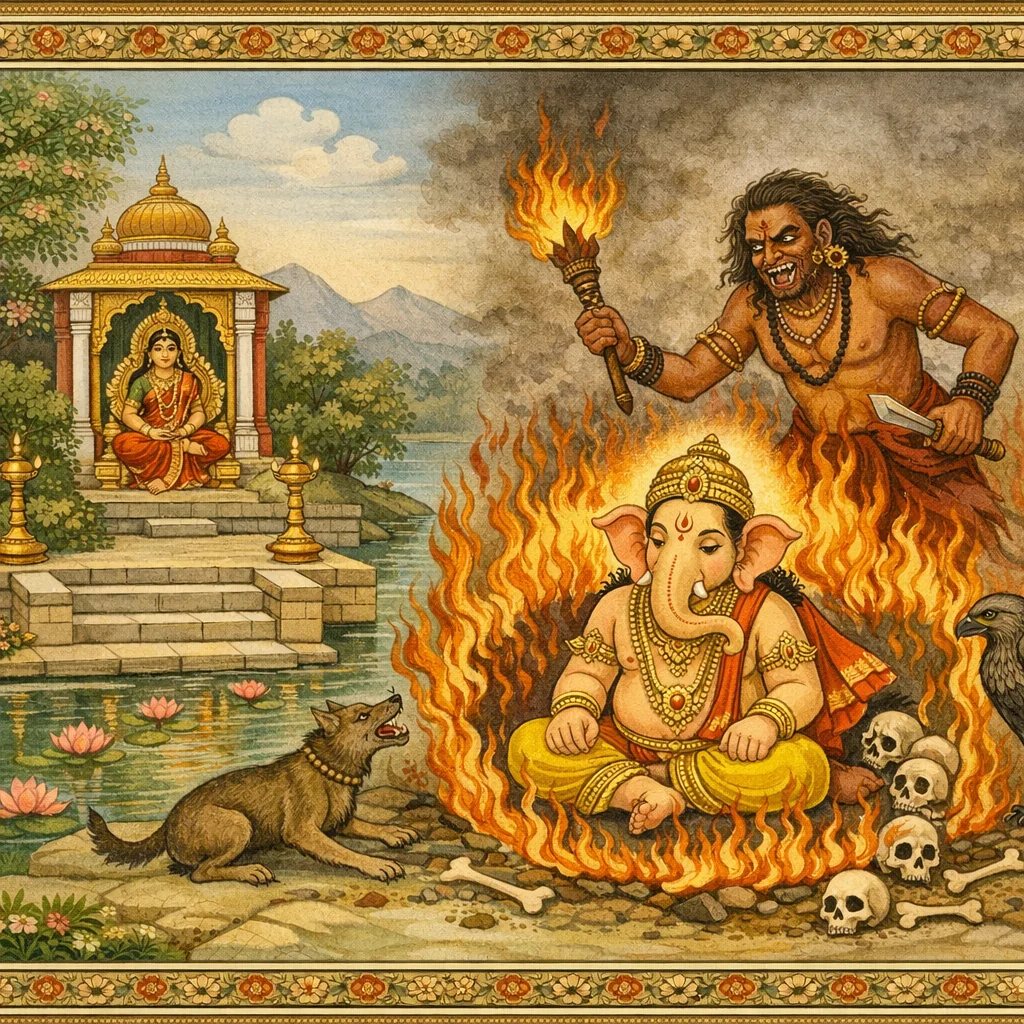
Chapter 154 gives Sūta’s account of the ritualized sacred landscape of Hāṭakeśvara-kṣetra. It begins with tīrtha prescriptions connected with Pārvatī: bathing in specified kuṇḍas near Gaurī-kuṇḍa and obtaining Pārvatī’s darśana are praised as means of purification and release from the afflictions of saṃsāra. The narrative then lists women-centered statements of merit: snāna on appointed days brings auspiciousness, marital well-being, and the blessing of progeny, extending even to situations described as infertility. When the ṛṣis ask how these tīrthas confer siddhi, Sūta describes a more esoteric path—worship amid a set of liṅgas, timed observance (especially on caturdaśī), and a dramatic ordeal in which Gaṇeśa appears in a fearsome form to test the practitioner’s resolve. In contrast, a sāttvika alternative aligned with Brahminical ideals is taught: bathing, śāstra-guided conduct, dawn offerings such as the donation of tila, and disciplined fasting and renunciation aimed at liberation. The chapter ends with a phalaśruti, declaring that hearing or reciting this account, honoring Vyāsa or one’s teacher, and receiving the Purāṇic teaching with attention brings broad purification and uplift.
Shlokas
Verse 1
सूत उवाच । या नारी तत्र सत्कुण्डे स्नात्वा तां पार्वतीं पुनः । दृष्ट्वा स्नाति ततस्तीर्थे तस्मिन्रूपमये शुभे
Sūta said: Any woman who, having bathed in that excellent pond, again beholds Pārvatī and then bathes at that holy tīrtha—auspicious and radiant with divine beauty—
Verse 2
पुनश्च पार्वतीं पश्येच्छ्रद्धया परया युता । सद्यः सा मुच्यते कृत्स्नैराजन्ममरणांतिकैः
And if she again beholds Pārvatī, endowed with supreme faith, she is instantly freed from all afflictions that endure from birth until death.
Verse 3
तत्रैवास्ति जयानाम पार्वत्याः किंकरी द्विजाः । तया तत्र कृतं कुण्डं गौरीकुण्डसमीपतः
There itself is a maiden named Jayā, a handmaid of Pārvatī—O twice-born. By her, a sacred pond was made there, near Gaurī-kuṇḍa.
Verse 4
या तत्र कुरुते स्नानं तृतीयादिवसेऽबला । सुतसौभाग्यसंपन्ना सा भवेत्पतिवल्लभा
Any woman who bathes there on the third lunar day and the like becomes endowed with children and good fortune, and she becomes beloved of her husband.
Verse 5
तथान्यदपि तत्रास्ति विजयाकुण्डमुत्तमम् । तत्र स्नाताऽपि वंध्या स्त्री जायते पुत्रसंयुता
Likewise, there is also another excellent pond called Vijayā-kuṇḍa. Even a barren woman, having bathed there, becomes blessed with a son.
Verse 6
न च पश्यति पुत्राणां कदाचिद्व्यसनं द्विजाः । न वियोगं न दुःखं च स्वप्नांते च कदाचन
O twice-born ones, one never beholds misfortune befalling one’s sons—neither separation nor sorrow, not even in the end of a dream.
Verse 7
काकवंध्याऽपि या नारी तत्र स्नानं समाचरेत् । सा पुत्रान्विविधांल्लब्ध्वा स्वर्गलोके महीयते
Even a woman deemed barren—if she performs bathing there—obtains sons of various kinds and is honored in the heavenly world.
Verse 8
ऋषय ऊचुः । एतेषां सूत तीर्थानां तीर्थमस्ति सुसिद्धिदम् । क्वचित्किंञ्चिद्भवेत्सिद्धिर्यत्र स्नानाच्छरीरजा
The sages said: O Sūta, among these sacred fords, is there a tīrtha that grants excellent accomplishment? Is there some place where, by bathing, even bodily-born attainments arise?
Verse 9
सूत उवाच । सप्तविंशतिलिंगानि यानि संति द्विजोत्तमाः । तेषां मध्येऽभवत्सिद्धिरेकस्मिन्निखिला द्विजाः
Sūta said: O best of the twice-born, there are twenty-seven liṅgas. Among them, complete accomplishment is attained through one alone, O brāhmaṇas.
Verse 10
एकस्य सत्त्वयुक्तस्य वीरव्रतयुतस्य च । आश्विनस्य चतुर्दश्यां कृष्णायां द्विजसत्तमाः
For that one liṅga, by a person endowed with purity and bearing the heroic vow—on the fourteenth day of the dark fortnight of Āśvina, O best of the twice-born—
Verse 11
अर्धरात्रे विधानेन तेषां पूजां करोति यः । प्रागुक्तं जपनं भक्त्या स क्रमात्साधकोत्तमः
Whoever, according to the prescribed rite, performs their worship at midnight and devotionally undertakes the previously stated japa—he gradually becomes the foremost of practitioners.
Verse 12
अंगन्यासं विधायोच्चैः क्षुरिकासूक्तमुच्चरत् । तेषामग्रे पुनः सम्यक्पूजयित्वा च शंकरम्
Having performed aṅga-nyāsa, and reciting aloud the Kṣurikā-sūkta, then again—after properly worshipping Śaṅkara in their presence—
Verse 13
पृथगेकैकशो भक्त्या पूजयेद्दिक्पतींश्च वै
Separately, one by one, one should also worship the Lords of the Directions with devotion.
Verse 14
अथाऽगत्य गणेशो वै विकरालो भयानकः । लंबोदरो वै नग्नश्च कृष्णदन्तसमुद्भवः
Then Gaṇeśa arrived—terrible in form and fearsome: pot-bellied, naked, and manifest with dark tusks.
Verse 15
खड्गहस्तोऽब्रवीद्युद्धं प्रकुरुष्व मया समम् । मुक्त्वैतत्कपटं भूमौ यदि वीरोऽसि सात्त्विकः
Sword in hand, he said: “Fight with me in equal combat. Cast away this deceit upon the ground—if you are a heroic man of sattva.”
Verse 16
ततस्तत्कर्षणाच्चापि यस्तेनाशु प्रताड्यते । स तेनैव शरीरेण नीयते तेन तत्पदम्
And further, by being dragged there, whoever is swiftly struck down by that power is led by that very agency—still in the same body—unto that supreme state.
Verse 17
यत्र स्थाने जरामृत्युर्न शोकश्च कदाचन । तथा चित्रेश्वरीपीठे सिद्धिरेकस्य कीर्तिता
At that place there is neither old age nor death, nor sorrow at any time. Thus, at the seat of Citreśvarī, the unique and unsurpassed attainment is proclaimed.
Verse 19
माघकृष्णचतुर्दश्यां यः पीठं तत्र पूजयेत् । आगमोक्तविधानेन सम्यक्छ्रद्धासमन्वितः
Whoever worships that sacred seat there on the fourteenth lunar day of the dark fortnight in Māgha—following the procedure taught in the Āgamas, and endowed with steady faith—
Verse 20
सिद्धिमूल्ये न गृह्णातु कश्चिच्चेदस्ति सात्त्विकः । ततश्च याचते यश्च प्रगृह्णाति च सद्द्विजाः
Let no one who is truly sāttvika accept a “price” for bestowing siddhi. And those venerable brāhmaṇas who then ask for such a price, and those who accept it—
Verse 21
स तमादाय निर्याति यत्र देवो महेश्वरः । हाटकेश्वरजं लिंगं चित्रशर्मप्रतिष्ठितम्
Taking him along, he departs to the place where the god Maheśvara abides—where the liṅga called Hāṭakeśvara stands, installed by Citraśarman.
Verse 22
तस्य स्थानस्य मध्यस्थो यस्तं पूजयते नरः । शिवरात्रौ निशीथे च पुष्पलक्षणभक्तितः । सुसिद्धिमाप्नुयात्तूर्णं स शरीरेण तत्क्षणात्
A man who, standing in the very midst of that sacred place, worships Him on Śivarātri—at midnight—offering flowers marked by true devotion, swiftly attains excellent siddhi in that very moment, even while still in the body.
Verse 23
सिद्धिस्थानानि सर्वाणि तस्मिन्क्षेत्रे स्थितानि वै । वीरव्रतप्रयुक्तानां मानवानां द्विजोत्तमाः
O best of the twice-born, indeed all the “places of siddhi” are situated in that kṣetra, serving those people who are engaged in the vīra-vrata, the heroic vows.
Verse 24
ऋषय ऊचुः । तामसो यस्त्वया प्रोक्तः सिद्धिमार्गो महामते । अनर्हो ब्राह्मणेन्द्राणां श्रोत्रियाणां विशेषतः
The sages said: “O great-minded one, the tāmasika path to siddhi that you have described is unfit for the foremost brāhmaṇas—especially for learned śrotriyas.”
Verse 25
शुद्धान्तः करणैः सूत भूतहिंसाविवर्जितैः । यथा संप्राप्यते मोक्षो ब्राह्मणैः सुचिरादपि
O Sūta, tell how brāhmaṇas attain liberation—though it may take long—by purifying the inner faculties and by abstaining from violence toward living beings.
Verse 26
तत्त्वं ब्रूहि महाभाग मोक्षोपायं द्विजन्मनाम्
O noble one, speak the truth plainly—declare the means to liberation for the twice-born.
Verse 27
सूत उवाच । रुद्रैर्दशभिः संयुक्तमानंदेश्वरकं तथा । स्नात्वा तदग्रतः कुण्डे शास्त्रदृष्टेन कर्मणा
Sūta said: Having approached Ānaṃdeśvaraka, joined with the ten Rudras, and then bathing in the pond before it according to the procedure enjoined in the scriptures.
Verse 28
संसिद्धिमाप्नुयान्मर्त्यो दुर्लभां त्रिदशैरपि । माघमासे नरः स्नात्वा विश्वामित्रह्रदे नरः
A mortal attains complete success—rare even for the gods—when, in the month of Māgha, he bathes in the lake of Viśvāmitra.
Verse 29
प्रत्यूषे तिलपात्रं च ब्राह्मणाय निवेदयेत् । सर्वपापविनिर्मुक्तो ब्रह्म लोके महीयते
At dawn, one should present a vessel of sesame to a brāhmaṇa. Freed from all sins, he is honoured in the world of Brahmā (Brahma-loka).
Verse 30
यद्यपि स्याद्दुराचारः सर्वाशी सर्वविक्रयी । सुपर्णाख्यस्य देवस्य पुरतः श्रद्धयाऽन्वितः
Even if a man is of wicked conduct—eating anything and selling anything—yet if he stands before the deity called Suparṇa, endowed with faith, he becomes fit for the promised purification (as the context declares).
Verse 31
प्रायोपवेशनं कृत्वा ह्युपवासपरो नरः । यस्त्यजेन्मानवः प्राणान्न स भूयोऽभिजायते
Having undertaken prāyopaveśana—the vow of fasting unto death—steadfast in fasting, if a man relinquishes his life-breaths, he is not born again.
Verse 32
एवं सिद्धित्रयं प्रोक्तं ब्राह्मणानां हितावहम् । सात्त्विकं ब्राह्मणश्रेष्ठाः शंसितं त्रिदशैरपि
Thus the threefold attainment has been declared, bringing welfare to the brāhmaṇas; O best of brāhmaṇas, it is sāttvika in nature and is praised even by the gods.
Verse 33
अन्यानि तत्र तीर्थानि देवतायतनानि च । तानि स्वर्गप्रदान्याहुर्मुनयः शंसितव्रताः
There too are other tīrthas and shrines of the gods. The sages, famed for their vows, declare them to be bestowers of heaven.
Verse 34
एतद्वः सर्वमाख्यातं क्षेत्रमाहात्म्यमुत्तमम् । हाटकेश्वरदेवस्य सर्वपातकनाशनम्
All this has been narrated to you—the supreme greatness of the sacred region of Lord Hāṭakeśvara, the destroyer of every sin.
Verse 35
योऽत्र सर्वेषु तीर्थेषु स्नात्वा पश्यति भक्तितः । सर्वाण्यायतनान्येव स पापोऽपि विमुच्यते
Whoever here bathes in all the tīrthas and, with devotion, visits all the shrines—he, even if sinful, is set free from sin.
Verse 36
एतत्खंडं पुराणस्य प्रथमं परिकीर्तितम् । कार्तिकेयप्रणीतस्य सर्वपापहरं शुभम्
This khaṇḍa of the Purāṇa has been proclaimed as the first—composed by Kārtikeya—auspicious and removing all sins.
Verse 37
यश्चैतत्कीर्तयेद्भक्त्या शृणुयाद्वा समाहितः । इह भुक्त्वा सुविपुलान्भोगान्याति त्रिविष्टपम्
Whoever recites this account with devotion, or listens to it with a collected mind—having enjoyed abundant prosperities here in this world, he goes to Triviṣṭapa (heaven).
Verse 38
सर्वतीर्थेषु यत्पुण्यं सर्वदानैश्च यत्फलम् । तत्फलं समवाप्नोति शृण्वञ्छ्रद्धासमन्वितः
The merit that arises from all pilgrimages, and the fruit that comes from all acts of charity—one who listens with faith attains that very fruit.
Verse 39
श्रुत्वा पुराणमेतद्धि जन्मकोटिसमुद्भवात् । पातकाद्विप्रमुच्येत कुलानामुद्धरेच्छतम्
Indeed, by hearing this Purāṇa, one is swiftly freed from sins accumulated through tens of millions of births, and he uplifts a hundred generations of his lineage.
Verse 40
ततो व्यासः पूजनीयो वस्त्रदानादिभूषणैः । गोभूहिरण्यनिर्वापैर्दानैश्च विविधैरपि
Therefore Vyāsa should be reverently honored—with adornments such as the gifting of garments, and with many kinds of offerings: cows, land, deposits of gold, and other diverse charities.
Verse 41
तेन संपूजितो व्यासः कृष्णद्वैपायनः मनुः । साक्षात्सत्यवतीपुत्रो येन व्यासः सुपूजितः
By that manner of worship, Vyāsa is duly honored—Kṛṣṇadvaipāyana himself, the sage; the very son of Satyavatī, who is thus worshipped with excellence.
Verse 42
एकमप्यक्षरं यस्तु गुरुः शिष्ये निवेदयेत् । पृथिव्यां नास्ति तद्द्रव्यं यद्दत्त्वा ह्यनृणी भवेत्
Even if a guru teaches a disciple but a single syllable, there is no wealth on earth which—if given—would make one truly free of that debt.
Verse 43
एतत्पवित्रमायुष्यं धन्यं स्व स्त्ययनं महत् । यच्छ्रुत्वा सर्वदुःखेभ्यो मुच्यते नात्र संशयः
This is purifying, life-promoting, auspicious, and a great blessing for one’s own well-being; by hearing it one is released from all sufferings—of this there is no doubt.
Verse 154
इति श्रीस्कांदे महापुराण एकाशीतिसाहस्र्यां संहितायां षष्ठे नागरखण्डे हाटकेश्वर क्षेत्रमाहात्म्ये चित्रेश्वरीपीठक्षेत्रमाहात्म्यवर्णनंनाम चतुःपंचाशदुत्तरशततमोऽध्यायः
Thus ends, in the revered Skanda Mahāpurāṇa, in the Saṃhitā of eighty-one thousand verses, in the sixth book, the Nāgarakhaṇḍa—within the Māhātmya of the sacred region of Hāṭakeśvara—the chapter entitled “Description of the Greatness of the Citreśvarīpīṭha Sacred Region,” being Chapter 154.