Adhyaya 150
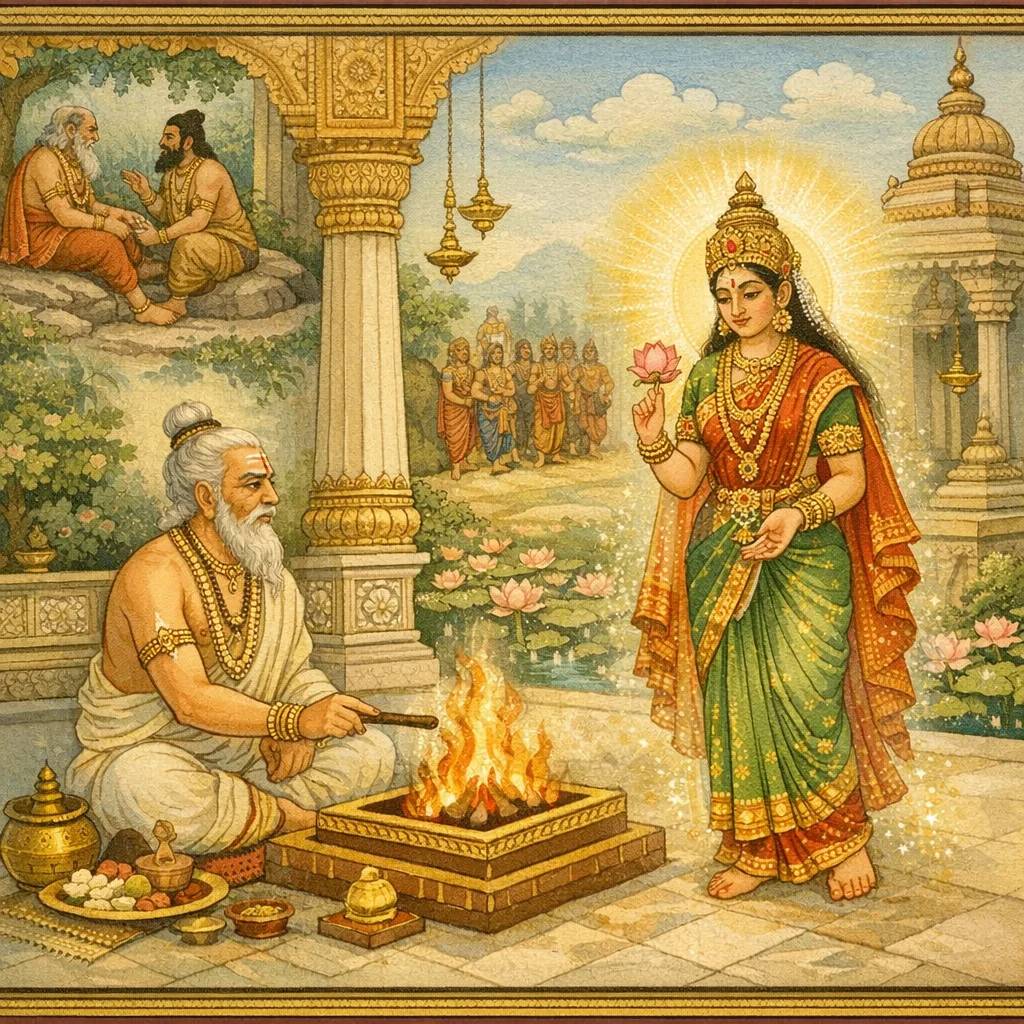
Chapter 150, narrated by Sūta, unfolds a tightly ordered theological account. Śukra, the daitya purohita, goes to the Hāṭakeśvara-linked kṣetra famed for granting siddhi, performs a homa with Atharvanic raudra mantras, and prepares a triangular fire-pit. Pleased by the rite, the Goddess Kelīśvarī appears, forbids self-destructive offerings, and turns the exchange toward a constructive boon. Śukra asks that the daityas slain in battle be restored to life. The Goddess agrees—even for those newly consumed by fire and those said to have entered yoginī-mouths—and grants a named knowledge-power, Amṛtavatī Vidyā, by which the dead live again. Śukra reports this to Andhaka and urges unbroken devotion, especially worship on aṣṭamī and caturdaśī, while the teaching stresses that the supreme power pervading the world is attained through bhakti, not force. Andhaka repents his former anger and requests that devotees who meditate on this form and establish her image receive heart-desired siddhi. The Goddess promises mokṣa to the establisher, svarga to those who worship on aṣṭamī/caturdaśī, and royal enjoyments to those who merely see or meditate upon her. After she vanishes, Śukra revives the fallen daityas and Andhaka regains dominion; later tradition adds that a Vyāsa-descended figure established her there. The phalaśruti concludes that reciting or hearing this chapter removes grave distress: a fallen king who hears it on aṣṭamī regains an unobstructed kingdom, and hearing it in wartime brings victory.
Shlokas
Verse 1
सूत उवाच । शुक्रस्तस्य वचः श्रुत्वा चित्ते कृत्वा दयां ततः । हाटकेश्वरजं क्षेत्रं गत्वा सिद्धिप्रदायकम्
Sūta said: Hearing his words, Śukra, stirred with compassion in his heart, then went to the sacred field of Hāṭakeśvara—the kṣetra that bestows siddhi, spiritual accomplishment.
Verse 2
चकार विधिवद्धोमं स्वमांसेन हुताशने । मंत्रैराथर्वणै रौद्रैः कुण्डं कृत्वा त्रिकोणकम्
There he performed a duly ordained fire-offering, feeding the blazing fire with his own flesh; and, using fierce Atharvanic mantras, he prepared a triangular fire-pit (trikoṇa-kuṇḍa).
Verse 3
एवं संजुह्वतस्तस्य तेन वै विधिना तदा । यथा रुद्रेण संतुष्टा देवी केलीश्वरी तदा
As he thus offered oblations by that very rite, the goddess Kelīśvarī became pleased then—just as she had once been satisfied by Rudra.
Verse 4
तं प्रोवाच समेत्याशु शुक्रं दैत्यपुरोहितम् । मा त्वं भार्गवशार्दूल कुरु मांसपरिक्षयम्
Approaching swiftly, she spoke to Śukra, the priest of the Daityas: “O tiger among the Bhārgavas, do not bring about the wasting away of your flesh.”
Verse 5
भाविताऽहं त्रिनेत्रेण तत्किं ब्रूहि करोमि ते
“I have been empowered by the Three-Eyed Lord; therefore speak—what shall I do for you?”
Verse 6
शुक्र उवाच । यथा रुद्रस्य साहाय्यं त्वयात्र विहितं शुभे । अंधकस्याऽपि कर्तव्यं तथैवैष वरो मम
Śukra said: “O auspicious one, just as you rendered aid to Rudra here, so too must you act for Andhaka. This indeed is my boon.”
Verse 7
ये केचिद्दानवा युद्धे भक्षिताश्च विनाशिताः । अस्य सैन्यस्य ते सर्वे पुनर्जीवंतु सत्वरम्
“May whatever Dānavas of this army were devoured or destroyed in battle—may all of them quickly come to life again.”
Verse 8
देव्युवाच । जीवयिष्यामि तान्सर्वान्दानवान्निहतान्रणे । नवसंभक्षितान्विप्र प्रविष्टान्योगिनीमुखे
The Goddess said: “O Brāhmaṇa, I shall restore to life all those Dānavas who were slain in battle—even those newly devoured, who have already entered the mouth of the Yoginī.”
Verse 9
एवमुक्त्वा ददौ तस्मै सा देवी हर्षितानना । नाम्नाऽमृतवतीं विद्यां यया जीवंति ते मृताः
Having spoken thus, the Goddess—her face radiant with joy—bestowed upon him the sacred lore called “Amṛtavatī”, by which even the dead come to live again.
Verse 10
ततः शुक्रः प्रहृष्टात्मा गत्वांधकमुवाच ह । सिद्धा केलीश्वरी देवी यथा शम्भोस्तथा मम
Then Śukra, joyful at heart, went to Andhaka and said: “The Goddess Kelīśvarī is accomplished and unfailing—just as she is to Śambhu (Śiva), so is she to me.”
Verse 11
तया दत्ता शुभा विद्या मम दैत्या मृताश्च ये । तान्सर्वांस्तत्प्रभावेन योजयिष्यामि जीविते
By the very power of the auspicious vidyā she has bestowed upon me, I shall restore to life all my Daityas who have died.
Verse 12
त्वयाऽस्याः सततं भक्तिः कार्या दानव सत्तम । अष्टम्यां च विशेषेण चतुर्दश्यां च सर्वदा
O best of Dānavas, you must keep unwavering devotion to her—especially on Aṣṭamī, the eighth lunar day, and also always on Caturdaśī, the fourteenth.
Verse 13
एषा सा परमा शक्तिर्यया व्याप्तमिदं जगत् । केवलं भक्तिसाध्या सा न दण्डेन कथंचन
She is that supreme Śakti by whom this entire world is pervaded. She is attained only through devotion—never by coercion or the force of punishment.
Verse 14
एवमुक्तस्तु शुक्रेण स तदा दानवाधिपः । तां देवीं पूजयामास भावभक्तिसमन्वितः
Thus instructed by Śukra, the lord of the Dānavas then worshipped that Goddess, endowed with heartfelt devotion.
Verse 15
स्तुत्वा च विविधैः स्तोत्रैस्ततः प्रोवाच सादरम् । तथान्या मातरः सर्वा यथाज्येष्ठं यथाक्रमम्
Having praised her with many kinds of hymns, he then spoke with reverence; and likewise he addressed all the other Mother-goddesses, in order of seniority and proper sequence.
Verse 16
अज्ञानाद्यन्मया देवि कृतः कोपस्तवोपरि । मर्षणीयस्तथा सोऽद्य दीनस्य प्रणतस्य च
O Goddess, the anger I showed toward you out of ignorance—may it be forgiven today, for I am wretched and I bow down in surrender.
Verse 17
श्रीदेव्युवाच । परितुष्टाऽस्मि ते वत्स प्रभावाद्भार्गवस्य च । वरं वरय तस्मात्त्वं न वृथा दर्शनं मम
The Blessed Goddess said: “Dear child, I am pleased with you—also because of the power and merit of Bhārgava (Śukra). Therefore, choose a boon; my appearance to you shall not be in vain.”
Verse 18
अन्धक उवाच । अनेनैव तु रूपेण ये त्वां ध्यायंति देहिनः । पूजयंति च सद्भक्त्या संस्थाप्य प्रतिमां तव । तेषां सिद्धिः प्रदातव्या त्वया हृदयवांछिता
Andhaka said: “Those embodied beings who meditate upon you in this very form, and who, establishing your image, worship you with true devotion—may you grant them the attainments they desire, cherished in their hearts.”
Verse 19
देव्युवाच । यो मामनेन रूपेण स्थापयिष्यति मानवः । तस्य मोक्षं प्रदास्यामि पापस्यापि न संशयः
The Goddess said: “Whoever installs me in this very form, to that one I shall grant liberation—even if he is sinful; of this there is no doubt.”
Verse 20
योऽष्टम्यां च चतुर्दश्यां मम पूजां करिष्यति । तस्मै स्वर्गं प्रदास्यामि पापस्यापि दनूत्तम
“O best among the Dānavas, whoever worships me on the eighth and on the fourteenth lunar days—to that one I shall grant heaven, even if he is sinful.”
Verse 21
केवलं दर्शनं यश्च ध्यानं वा मे करिष्यति । तस्य राज्यं प्रदास्यामि भोगान्मानुषसंभवान्
Whoever merely beholds me, or meditates upon me—to that one shall I grant sovereignty and enjoyments born in the human world.
Verse 22
एवमुक्त्वाऽथ सा देवी ततश्चादर्शनं गता । तैश्च मातृगणैः सार्धं पश्यतस्तस्य तत्क्षणात्
Having spoken thus, the Goddess vanished from sight at once—together with those hosts of Mothers—while he looked on, in that very moment.
Verse 23
शक्रोऽपि दानवान्सर्वांस्तया संसिद्धया ततः । मृतान्संजीवयामास दैतेयान्नवभक्षितान्
Then Śakra (Indra) too, by means of that perfected power, revived all the Dānava warriors who had died—the Daityas who had been newly devoured.
Verse 24
तैः समेत्य स दैत्येन्द्रः प्रहृष्टेनांतरात्मना । तां पुरीं प्राप्य शक्रस्य राज्यं चक्रे दिवानिशम्
Reunited with them, that lord of the Daityas—his inner being filled with joy—reached that city and seized Śakra’s sovereignty, day and night.
Verse 25
तां देवीं ध्यायमानस्तु पूजयानो दिवानिशम् । अष्टम्यां च चतुर्दश्यां विशेषेण महाबलः
That mighty one, meditating on the Goddess and worshipping her day and night, did so with special emphasis on the Aṣṭamī and Caturdaśī days.
Verse 26
अथ तस्याः प्रभावं तं ज्ञात्वा व्याससमुद्भवः । स्थानेऽत्र स्थापयामास संसिद्धिं प परां गतः
Then, understanding the greatness of her power, the one born from Vyāsa established her worship in this very place and attained supreme perfection.
Verse 27
सूत उवाच एवं केलीश्वर देवी संजाता परमेश्वरी । तस्मात्स्थाप्या च पूज्या च ध्येया चैव विशेषतः
Sūta said: “Thus Kelīśvara Devī became the Supreme Goddess. Therefore she should be installed, worshipped, and meditated upon—most especially.”
Verse 28
एवं देव्या नरो यश्च पठते वा शृणोति वा । वाच्यमानं स मुच्येत व्यसनेन गरीयसा
Thus, any man who recites or listens to this account of the Goddess—when it is read aloud—becomes released even from a very grievous calamity.
Verse 29
भ्रष्टराज्योऽथवा राजा यः शृणोत्यष्टमीदिने । स राज्यं लभते भूयो निखिलं हतकंटकम्
Even a king who has fallen from his kingdom—if he listens on the eighth lunar day (Aṣṭamī)—regains his sovereignty again, whole and free from thorns (troubles and obstacles).
Verse 30
युद्धकाले च संप्राप्ते यश्चैतच्छृणुयान्नरः । स हत्वा शत्रुसंघातं विजयं च समाप्नुयात्
And when the time of battle arrives, the man who listens to this will strike down the host of enemies and attain victory.