Adhyaya 147
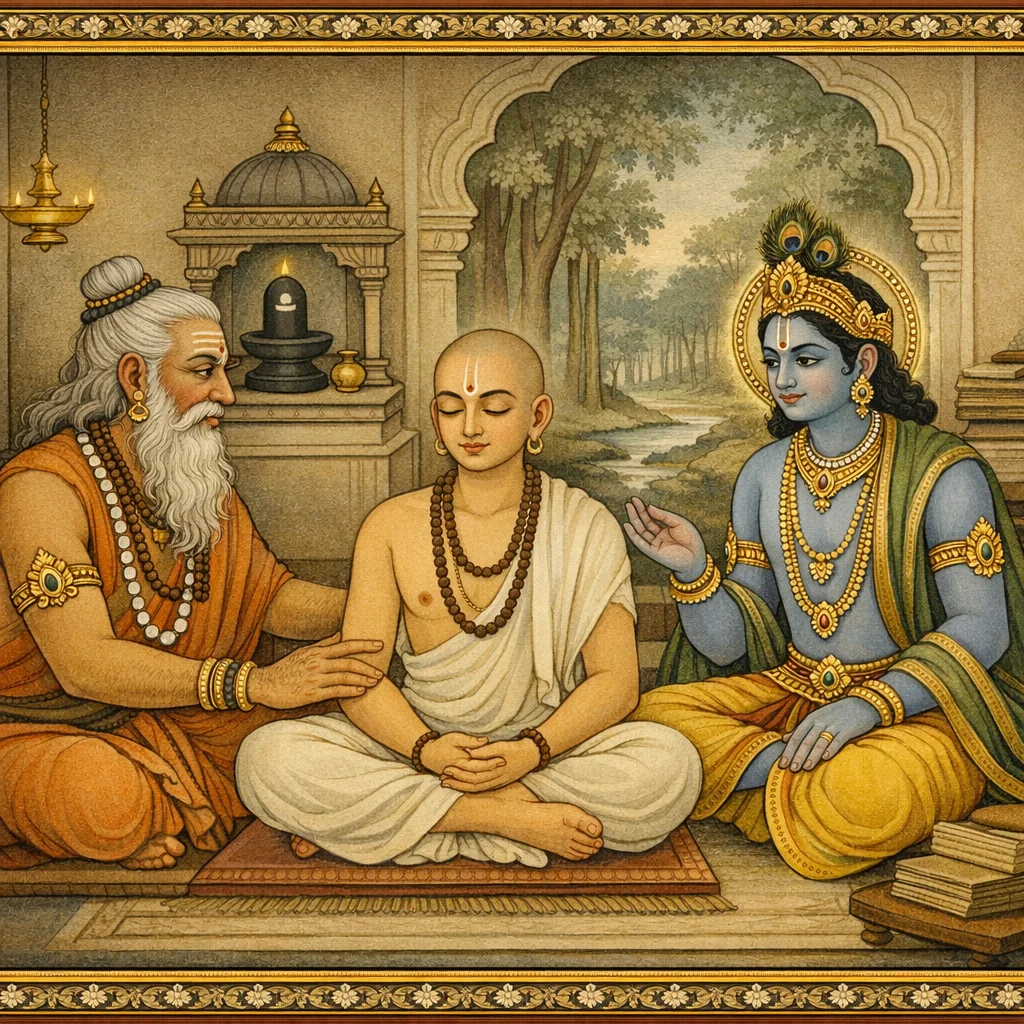
Chapter 147 opens with Sūta pointing out a local manifestation of Śiva, Vatikēśvara, praised as a bestower of sons and a remover of sins. The ṛṣis ask about “Vatikā” and how Vyāsa’s lineage comes to receive a son named Kapinjala/Śuka. Sūta explains that Vyāsa, though tranquil and all-knowing, turns to marriage for the sake of dharma and weds Vatikā, the daughter of Jābālī. An extraordinary pregnancy follows: the child remains in the womb for twelve years, mastering vast learning—the Vedas with their auxiliaries, smṛtis, Purāṇas, and mokṣa-śāstras—while causing the mother great distress. Vyāsa converses with the unborn son, who recalls a former birth, rejects māyā, and seeks immediate liberation, asking Vāsudeva to stand as guarantor. Vyāsa appeals to Kṛṣṇa, who accepts as pratibhū (surety) and commands the birth; the son emerges almost as a youth and at once inclines toward forest-renunciation. A sustained ethical and philosophical debate then unfolds between Vyāsa and Śuka on the worth of saṃskāras and the ordered āśrama path versus instant renunciation, touching on attachment, social duty, and the unreliability of worldly happiness. The chapter ends with Śuka departing for the forest, leaving Vyāsa and the mother in grief, highlighting the tension between lineage-duty and mokṣa-oriented detachment.
Shlokas
Verse 1
सूत उवाच । तथान्योऽपि च तत्रास्ति देवः पुत्रप्रदो नृणाम् । वटिकेश्वर नामा च सर्वपापहरो हरः
Sūta said: Moreover, there is another deity there who grants sons to men—named Vāṭikeśvara—Hara (Śiva) who removes all sins.
Verse 2
यस्मिन्वटिकया पूर्वं तपस्तप्तं द्विजोत्तमाः । प्राप्ता पुत्रं शुके याते वनं व्यासात्कपिंजलम्
In that Vāṭikā, the holy grove, the foremost of the twice-born once performed austerities and obtained a son; and when Śuka went to the forest, Kapiñjala came there from Vyāsa.
Verse 3
ऋषय ऊचुः । कस्यासौ वटिका तत्र कथं तप्तवती तपः । कस्माद्गृहं परित्यक्त्वा शुकोऽपि वनमाश्रितः
The sages said: “Whose is that Vāṭikā there, and how did she perform austerity? And for what reason did Śuka abandon home and take refuge in the forest?”
Verse 4
कथं कपिजलं पुत्रं व्यासाल्लेभे शुचिस्मिता
How did the pure, gently smiling lady obtain from Vyāsa a son named Kapijala?
Verse 5
सूत उवाच । आसीद्व्यासस्य विप्रेंद्राः कलत्रार्थं मतिः क्वचित् । निष्कामस्य प्रशांतस्य सर्वज्ञस्य महात्मनः
Sūta said: “O best of brāhmaṇas, at one time a thought of taking a wife arose in Vyāsa—though he was desireless, tranquil, omniscient, and a great-souled sage.”
Verse 6
ततः क्षयमनुप्राप्ते वंशे कुरुसमुद्भवे । विचित्रवीर्यमासाद्य पार्थिवं द्विजसत्तमाः
Then, O best of the twice-born, when the lineage sprung from Kuru had fallen into decline, (Vyāsa) approached King Vicitravīrya.
Verse 7
सत्यवत्याः समादेशात्तस्य क्षेत्रे ततः परम् । स पुत्राञ्जनयामास त्रीञ्छूरान्पांडुपूर्वकान्
Thereafter, by Satyavatī’s command, in that kṣetra he begot three heroic sons, beginning with Pāṇḍu.
Verse 8
वानप्रस्थव्रते तिष्ठन्सकृन्मैथुनतत्परः । क्षेत्रजैस्तनयैर्वंशे कुरोस्तस्मादुपस्थिते
Abiding in the vow of vānaprastha, he entered into union only once; thus, through sons born as kṣetraja, the Kuru line was restored from that decline.
Verse 9
ततः स चिंतयामास भार्यामद्य करोम्यहम् । गार्हस्थ्येनाथ धर्मेण साधयामि शुभां गतिम्
Then he reflected: “Today I shall take a wife, and by the dharma of the householder (gārhasthya) I shall attain an auspicious destiny.”
Verse 10
ततः स प्रार्थयामास जाबालिं तु सुतां शुभाम् । वटिकाख्यां शुभां कन्यां स ददौ तस्य सत्वरम्
Then he requested Jābāli’s auspicious daughter; and Jābāli promptly gave him the virtuous maiden named Vaṭikā.
Verse 11
ततस्तया समेतः स वनवासं समाश्रितः । वानप्रस्थाश्रमे तिष्ठन्कृतमैथुनतत्परः
Then, accompanied by her, he embraced forest-dwelling; abiding in the vānaprastha āśrama, he performed the act of union (for progeny).
Verse 12
ततो गर्भवती जज्ञे पिंजला तस्य पार्श्वतः । ऋतौ मोहनमासाद्य व्यासात्सत्यवतीसुतात्
Then Piṃjalā became pregnant at his side; in her season of fertility, overcome by enchantment, she conceived from the sage Vyāsa, the son of Satyavatī.
Verse 13
अथ याति परां वृद्धिं स गर्भस्तत्र संस्थितः । उदरे व्यासभार्यायाः शुक्लपक्षे यथा शशी
Thereupon the embryo, settled there, grew to full strength in the womb of Vyāsa’s wife—like the moon waxing in the bright fortnight.
Verse 14
एवं संगच्छतस्तस्य वृद्धिं गर्भस्य नित्यशः । द्वादशाब्दा अतिक्रांता न जन्म समवाप्नुयात्
Thus, as the foetus grew day by day in this manner, even when twelve years had passed, it still did not attain birth.
Verse 15
यत्किंचिच्छृणुते तत्र गर्भस्थोऽहि वचः क्वचित् । तत्सर्वं हृदिसंस्थं च चक्रे प्रज्ञासमन्वितः
Whatever words he happened to hear there while dwelling in the womb, he stored them all within his heart, being endowed with discernment.
Verse 16
वेदाः सांगाः समाधीता गर्भवासेऽपि तेन च । स्मृतयश्च पुराणानि मोक्षशास्त्राणि कृत्स्नशः
Even while residing in the womb, he had thoroughly mastered the Vedas with their auxiliaries, along with the Smṛtis, the Purāṇas, and the treatises that teach liberation—entirely.
Verse 17
तत्रस्थोऽपि दिवा नक्तं स्वाध्यायं प्रकरोति सः । न च जन्मोत्थजां बुद्धिं कथंचिदपि चिंतयेत्
Even while remaining there, he performed svādhyāya—sacred recitation and study—by day and by night; and in no way did he entertain a mind-set born of worldly birth.
Verse 18
सापि माता परा पीडां नित्यं याति तथाकुला । यथायथा स संयाति वृद्धिं जठरमाश्रितः
That mother too, distressed and agitated, suffered intense pain continually, as he—dwelling in her belly—grew more and more.
Verse 19
ततश्च विस्मयाविष्टो व्यासो वचनमब्रवीत् । कस्त्वं मद्गृहिणीकुक्षौ प्रविष्टो गर्भरूपधृक्
Then Vyāsa, overcome with astonishment, spoke these words: “Who are you, having entered the womb of my wife, assuming the form of a foetus?”
Verse 21
गजोऽहं तुरगश्चापि कुक्कुटश्छाग एव च । योनीनां चतुराशीतिसहस्राणि च संख्यया
“I have been an elephant, a horse, a rooster, and also a goat; and the wombs (birth-forms) are numbered as eighty-four thousand.”
Verse 22
भ्रांतोऽहं तेषु सर्वेषु तत्कोऽहं प्रब्रवीमि किम् । सांप्रतं मानुषो भूत्वा जठरं समुपाश्रितः
“I have wandered through all those (births); so what can I say—who am I? Now, having become human, I have taken refuge in this womb.”
Verse 23
मानुषं न करिष्यामि निष्कामं च कथंचन । निर्विष्टो भ्रममाणोऽत्र संसारे दारुणे ततः
“I will not make this human life desireless—not in any way; for I have grown weary and disgusted, having wandered in this dreadful saṃsāra.”
Verse 24
अत्रस्थो भवनिर्मुक्तो योगाभ्यासरतः सदा । मोक्षमार्गं प्रयास्यामि स्थानान्मोक्षमसंशयम्
“Staying right here, freed from worldly becoming, ever devoted to the practice of yoga, I shall proceed on the path of liberation—attaining release from this very place, without doubt.”
Verse 25
तावज्ज्ञानं च वैराग्यं पूर्वजातिस्मृतिर्यथा । यावद्गर्भस्थितो जन्तुः सर्वोऽपि द्विजसत्तम
So long as a living being remains within the womb, O best of the twice-born, there abide in him knowledge and dispassion, along with recollection of former births.
Verse 26
यदा गर्भाद्विनिष्क्रांतः स्पृश्यते विष्णुमायया । तदा नाशं व्रजत्याशु सत्यमेतदसंशयम्
But when he comes out from the womb and is touched by Viṣṇu’s māyā, then that (womb-born knowledge and detachment) quickly perishes—this is truth, without doubt.
Verse 27
तस्मान्नाहं द्विजश्रेष्ठ निष्क्रमिष्ये कथंचन । गर्भादस्मात्प्रयास्यामि स्थानान्मोक्षमसंशयम्
Therefore, O best of the twice-born, I shall not come out in any way. From this very womb-state I will depart to liberation from this station—without doubt.
Verse 28
व्यास उवाच । न भविष्यति ते माया वैष्णवी सा कथंचन । सुघोरान्नरकादस्मान्निष्क्रमस्व विगर्हितात्
Vyāsa said: That Vaiṣṇavī māyā will not arise in you in any way. Come forth from this most dreadful and blameworthy hell of confinement.
Verse 29
गर्भवासात्ततो योगं समाश्रित्य शिवं व्रज । तस्माद्दर्शय मे वक्त्रं स्वकीयं येन मे भवेत् । आनृण्यं पितृलोकस्य तव वक्त्रस्य दर्शनात्
Then, leaving the dwelling in the womb, take refuge in yoga and attain Śiva. Therefore show me your own face, so that by seeing your face I may be freed from my debt to the world of the ancestors.
Verse 30
गर्भ उवाच । वासुदेवं प्रतिभुवं यदि मे त्वं प्रयच्छसि । इदानीं यत्स्वयं तन्मे जन्म स्यान्नान्यथा द्विज
The Garbha said: If you grant me Vāsudeva Himself as my protector and pledged guarantor, then let my birth take place now by His own will—otherwise not, O twice-born.
Verse 31
सूत उवाच । ततो व्यासो द्रुतं गत्वा द्वारकां प्रति दुःखितः । कथयामास वृत्तांतं विस्तराच्चक्रपाणिने
Sūta said: Then Vyāsa, distressed, went swiftly toward Dvārakā and related the entire account in detail to the Discus-bearing Lord (Kṛṣṇa).
Verse 32
तेनैव सहितः पश्चात्स्वगृहं पुनरागतः । व्यासः प्रतिभुवं तस्मै दातुं विष्णुं निरंजनम्
Afterward, accompanied by Him, Vyāsa returned again to his own dwelling, to provide that being with Viṣṇu—the stainless Lord—as the pledged guarantor.
Verse 33
श्रीकृष्ण उवाच । प्रतिभूरस्मि नाशाय मायायास्तव निर्गमे । मद्वाक्यान्निष्क्रमं कृत्वा गच्छ मोक्षमनुत्तमम्
Śrī Kṛṣṇa said: “I am your surety, that māyā may be destroyed when you emerge. Act upon My word, come forth, and go to unsurpassed liberation.”
Verse 34
ततो द्रुतं विनिष्क्रांतो विष्णुवाक्येन स द्विजाः । द्वादशाब्दप्रमाणस्तु यौवनस्य समीपगः
Then, urged by Viṣṇu’s word, he came out swiftly, O twice-born; and though only twelve years of age, he stood near to youth, mature beyond his years.
Verse 35
ततः प्रणम्य दैत्यारिं व्यासं च जननीं तथा । प्रस्थितो वनवासाय तत्क्षणाद्व्यासनंदनः
Then, having bowed to the Slayer of demons (the Lord), to Vyāsa, and likewise to his mother, Vyāsa’s son set out at once for forest-dwelling, embracing the life of renunciation.
Verse 36
अथ तं स मुनिः प्राह तिष्ठ पुत्रात्ममंदिरे । संस्काराञ्जातकाद्यांश्च येन ते प्रकरोम्यहम्
Then the sage said to him: “Stay, my son, within the precinct of my hermitage-home, so that I may perform for you the saṃskāras—the rites of passage—beginning with the birth-rites.”
Verse 37
शिशुरुवाच । संस्काराः शतशो जाता मम जन्मनिजन्मनि । भवार्णवे परिक्षिप्तो यैरहं बन्धनात्मकैः
The child said: “Hundreds of saṃskāras have arisen for me, birth after birth; by those bondage-forming forces I have been cast into the ocean of bhava, worldly becoming.”
Verse 38
श्रीभगवानुवाच । शुकवज्जल्पते यस्मात्तवायं पुत्रको मुने । तस्माच्छुकोऽयं नाम्नास्तु योगविद्याविचक्षणः
The Blessed Lord said: “O sage, since this son of yours speaks like a parrot (śuka), let him therefore be known by the name ‘Śuka’—one discerning in the knowledge of Yoga.”
Verse 39
नायं स्थास्यति हर्म्ये स्वे मोहमायाविवर्जितः । तस्माद्गच्छतु मा स्नेहं त्वं कुरुष्वास्य संभवम्
“He will not remain in his own palace-home, for he is free from delusion and māyā. Therefore let him go; do not cling with attachment—rather, you should fulfill what is due concerning his coming into life.”
Verse 40
अहं गृहं प्रयास्यामि त्वं मुक्तः पैतृकादृणात् । दर्शनादेव पुत्रस्य सत्यमेतन्मयोदितम्
“I shall return to My abode. You are freed from the ancestral debt; merely by beholding your son this is accomplished—this is truth, as spoken by Me.”
Verse 41
एवमुक्त्वा हृषीकेशो व्यासमामंत्र्य सत्वरम् । विहगाधिपमारूढः प्रययौ द्वारकां प्रति
Having spoken thus, Hṛṣīkeśa swiftly took leave of Vyāsa; mounting the king of birds, He departed toward Dvārakā.
Verse 42
ततो गते हृषीकेशे व्यासः पुत्रमुवाच ह । प्रस्थितं वनवासाय निःस्पृहं स्वगृहं प्रति
After Hṛṣīkeśa had gone, Vyāsa spoke to his son—who had set out for forest-dwelling, indifferent and without desire even toward his own home.
Verse 43
व्यास उवाच । गृहस्थधर्मरिक्तानां पितृवाक्यं प्रणश्यति । पितृवाक्यं तु यो मोहान्नैव सम्यक्समाचरेत् । स याति नरकं तस्मान्मद्वाक्यात्पुत्र मा व्रज
Vyāsa said: “For those who are bereft of the dharma of the householder, a father’s injunction loses its force. But he who, out of delusion, does not properly carry out a father’s command goes to hell. Therefore, my son, do not depart against my word.”
Verse 44
शुक उवाच । यथाद्याहं त्वया जातो मया त्वं चान्यजन्मनि । संजातोऽसि मुनिश्रेष्ठ तथाहमपि ते पिता
Śuka said: “Just as today I am born from you, so too in another birth you were born from me, O best of sages. In that way, I also have been your father.”
Verse 45
तस्माद्वाक्यं त्वया कार्यं यद्येषा धर्मसंस्थितिः । नाहं निषेधनीयस्तु व्रजमानस्तपोवनम्
Therefore, if this is truly the established course of dharma, you should comply with my words. Do not attempt to restrain me, for I am setting out for the tapovana, the forest of austerities.
Verse 46
व्यास उवाच । ब्राह्मणस्य गृहे जन्म पुण्यैः संप्राप्यते नृभिः । संस्कारान्यत्र संप्राप्य वेदोक्तान्मुनिराप्यते
Vyāsa said: “By accumulated merit, people obtain birth in a brāhmaṇa household. There, having received the saṃskāras enjoined by the Veda, one attains the status of a sage.”
Verse 47
शुक उवाच । संस्कारैराप्यते मुक्तिर्यदि कर्म शुभं विना । पाखंडिनोऽपि यास्यंति तन्मुक्तिं व्रतधारिणः
Śuka said: “If liberation could be attained merely by sacraments, without righteous conduct, then even hypocrites would reach that liberation simply by adopting outward vows.”
Verse 48
व्यास उवाच । ब्रह्मचारी भवेत्पूर्वं गृहस्थश्च ततः परम् । वानप्रस्थो यतिश्चैव ततो मोक्षमवाप्नुयात्
Vyāsa said: One should first be a brahmacārin, a celibate student; then a gṛhastha, a householder; thereafter a vānaprastha, a forest-dweller, and a yati, a renunciant. By this ordered path one attains mokṣa, liberation.
Verse 49
शुक उवाच । ब्रह्मचर्येण चेन्मोक्षस्तत्षण्ढानां सदा भवेत् । गृहस्थाश्रमिणां चेत्स्यात्तत्सर्वं मुच्यते जगत्
Śuka said: If liberation were gained merely by brahmacarya, it would ever belong to the impotent. And if it were gained merely by the householder’s state, then the whole world would be liberated.
Verse 50
अथवा वनरक्तानां तन्मृगाणां प्रजायते
Or else, that liberation would be born for the deer and the beasts whose hearts are devoted to the forest.
Verse 51
अथवा यतिधर्माणां यदि मोक्षो भवेन्नृणाम् । दरिद्राणां च सर्वेषां तन्मुक्तिः प्रथमा भवेत्
Or again, if liberation for people arose merely from the discipline of the yati, then among all, the poor would attain that mukti, that freedom, first.
Verse 52
व्यास उवाच । गृहस्थधर्मरक्तानां नृणां सन्मार्गगामिनाम् । इह लोकः परश्चैव मनुना संप्रकीर्तितः
Vyāsa said: For those devoted to the householder’s dharma and walking the good path, Manu has proclaimed both this world and the next to be secured for them.
Verse 53
श्रीशुक उवाच । गृहगुप्तौ सुगुप्तानां बंधानां बंधुबंधनैः । मोहरागसमावेशात्सन्मार्ग गमनं कुतः
Śrī Śuka said: When one is well concealed within the guarded fortress of home, bound by the bonds of kin and attachment, how can one walk the good path, overwhelmed by delusion and passion?
Verse 54
व्यास उवाच । कष्टं वने निवसतोऽत्र सदा नरस्य नो केवलं निजतनुप्रभवं भवेच्च । दैवं च पित्र्यमखिलं न विभाति कृत्यं तस्माद्गृहे निवसतात्महितं प्रचिन्त्यम्
Vyāsa said: For a man who dwells continually in the forest, hardship arises—not only from what is born of his own body. Moreover, the full range of duties to the gods and to the ancestors (pitṛs) cannot be duly fulfilled. Therefore, while living at home, one should thoughtfully pursue what is truly beneficial for the self.
Verse 55
श्रीशुकदेव उवाच । भावेन भावितमहातपसां मुनीनां तिष्ठन्ति तावदखिलानि तपःफलानि । यत्ते निकाशशरणाः पुरुषा न जातु पश्यंत्यसज्जनमुखानि सुखं तदेव
Śrī Śukadeva said: So long as great ascetics and sages remain inwardly suffused with sacred intention (bhāva), all the fruits of their austerities stand firmly established. Indeed, this alone is your happiness—that those who take refuge in pure discernment never at any time must behold the faces of the wicked.
Verse 56
व्यास उवाच । गृहं परिग्रहः पुंसां गृहस्थाश्रमधर्मिणाम् । इहलोके परे चैव सुखं यच्छति शाश्वतम्
Vyāsa said: For men devoted to the dharma of the householder āśrama, a home and rightful possessions are proper supports; they grant enduring happiness both in this world and in the world beyond.
Verse 57
श्रीशुक उवाच । शीतं हुताशादपि दैवयोगात्सञ्जायते चन्द्रमसोऽपि तापः । परिग्रहात्सौख्यसमुद्भवोऽत्र भूतोऽभवद्भावि न मर्त्यलोके
Śrī Śuka said: By the turn of fate, even fire may feel cold, and even the moon may burn with heat. Likewise, in this mortal world, happiness born from possessions is never steady—whether past, present, or yet to come.
Verse 58
व्यास उवाच । सुपुण्यैर्लभ्यते कृच्छ्रान्मानुष्यं भुवि दुर्लभम् । तस्मिंल्लब्धे न किं लब्धं यदि स्याद्गृहधर्मवित्
Vyāsa said: Through great merit, and only with difficulty, one attains the rare human birth on earth. Having obtained it, what remains unobtained—if one truly understands the dharma of household life?
Verse 59
श्रीशुकदेव उवाच । यदि स्याज्ज्ञानसंयुक्तो जन्मकालेत्र मानवः । निजावस्थां समालोक्य तज्ज्ञानं हि विलीयते
Śrī Śukadeva said: Even if a man were endowed with knowledge at the very time of birth, upon beholding his own condition and limitations, that knowledge would indeed dissolve away.
Verse 60
व्यास उवाच । मुदितस्यापि पुत्रस्य गर्दभस्यार्भकस्य च । भस्मलोलस्य लोकस्य शब्दोऽपि रटतो मुदे
Vyāsa said: Even for a son—be he like an infant donkey—this ash-loving world raises a cry, shouting in joy.
Verse 61
श्रीशुक उवाच । रसता सर्पता धूलि लोके त्वशुचिना चिरम् । मुनेऽत्र शिशुना लोकस्तुष्टिं याति स बालिशः
Śrī Śuka said: Here in this world, for a long time there is impure dust—crying out and crawling about. Yet, O sage, people become pleased merely because of a baby; such are the childish ways of the world.
Verse 62
व्यास उवाच । पुंनामास्ति महारौद्रो नरको यममन्दिरे । पुत्रहीनो व्रजेत्तत्र तेन पुत्रः प्रशस्यते
Vyāsa said: In Yama’s realm there is a dreadfully fierce hell named Puṃnāma. One who is without a son is said to go there; therefore a son is praised.
Verse 63
श्रीशुक उवाच । यदि स्यात्पुत्रतः स्वर्गः सर्वेषां स्यान्महामुने । शूकराणां शुनां चैव शलभानां विशेषतः
Śrī Śuka said: “If heaven were gained merely by having sons, O great sage, then heaven would belong to all—especially to pigs, to dogs, and even to moths.”
Verse 64
व्यास उवाच । पितॄणामनृणो मर्त्यो जायते पुत्रदर्शनात् । पौत्रस्यापि च देवानां प्रपौत्रस्य दिवाश्रयः
Vyāsa said: “By beholding a son, a mortal becomes free from debt to the ancestors. Through a grandson, the gods too are satisfied; and through a great-grandson there is, as it were, a support in the heavenly realm.”
Verse 65
शुक उवाच । चिरायुर्ज्जायते गृध्रः संततिं पश्यते निजाम् । क्रमेण संततं किं न स मोक्षं प्रतिपद्यते
Śuka said: “A vulture is born long-lived and beholds its own lineage continuing. If, in due course, it can steadily witness an unbroken succession—why should it not, by that very gradual course, attain liberation (mokṣa) as well?”
Verse 66
सूत उवाच । एवमुक्त्वा परित्यज्य पितरं स वनं गतः । मातरं च सुदुःखार्तां प्रलपन्तीमनेकधा
Sūta said: “Having spoken thus, he abandoned his father and went to the forest—leaving behind his mother too, overwhelmed by intense sorrow, lamenting in many ways.”
Verse 67
तं दृष्ट्वा दुःखितो व्यासो निराशः पुत्रदर्शने । पुत्रशोकाभिसंतप्तो भार्यया सहितोऽभवत्
Seeing this, Vyāsa was stricken with sorrow, despairing of ever seeing his son again. Scorched by grief for his child, he remained with his wife, sharing the anguish.