Adhyaya 143
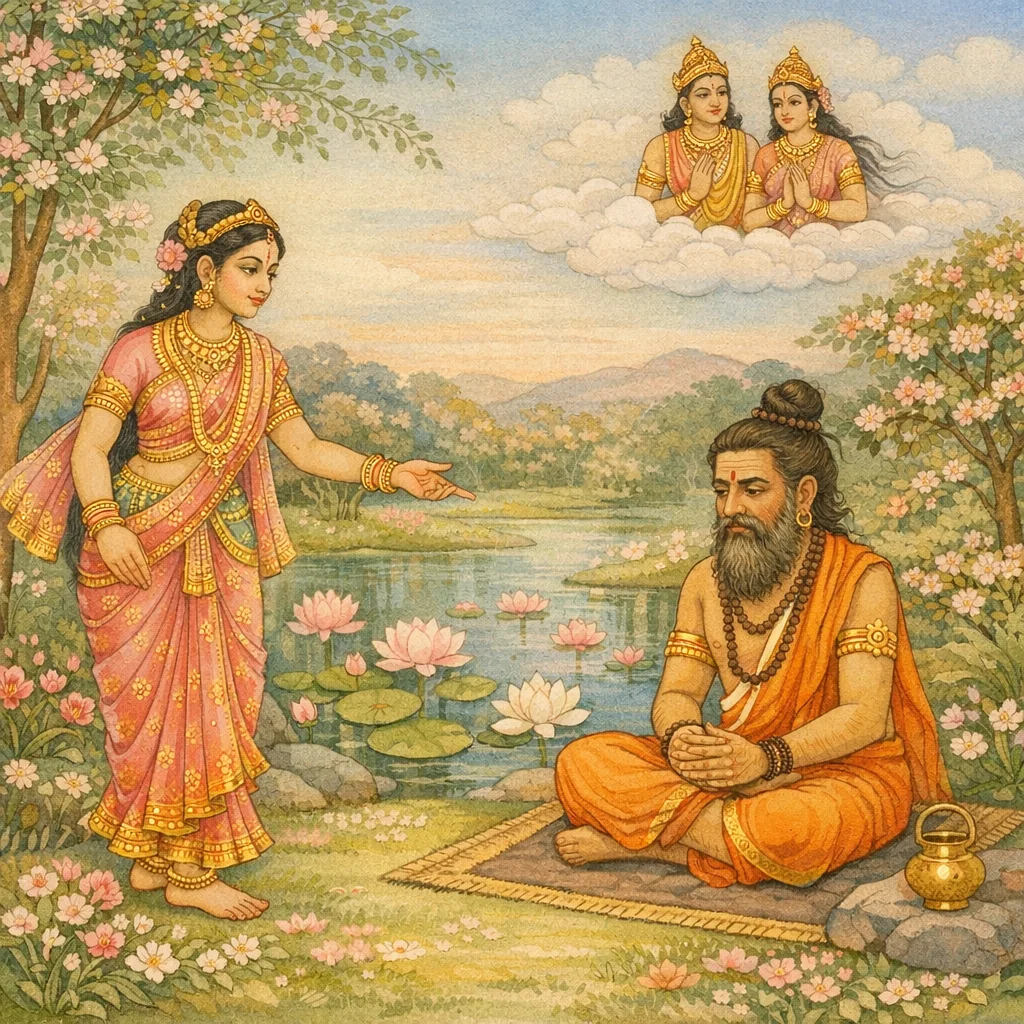
Sūta describes a deity named Cītreśvara, abiding at the heart of the Citra-pīṭha and praised as the giver of “citra-saukhya,” a distinct and auspicious well-being. The chapter declares that beholding, honoring, and ritually bathing at this deity serves as a sacred remedy for grave transgressions connected with illicit desire, with special emphasis on worship on Caitra-śukla-caturdaśī. A local tableau is then set forth: King Citrāṅgada, the sage Jābāli, and a maiden linked to the episode are said to remain present there in a striking, publicly visible form due to an earlier curse. When the ṛṣis ask for the backstory, Sūta recounts how Jābāli, a celibate ascetic, performed fierce austerities at Hāṭakeśvara-kṣetra, unsettling the devas. Indra sends Rambhā with Vasantā to disturb his brahmacarya; with their arrival come seasonal transformations. Rambhā enters the water to bathe, and Jābāli, seeing her, is inwardly shaken and abandons his mantra-concentration. Through persuasive speech she presents herself as available, and he slips into kāma-dharma for a single day. Thereafter Jābāli regains composure, performs purification, and Rambhā returns to the devas, having accomplished the intended disruption. Thus the chapter juxtaposes ascetic discipline, temptation, and ritual cleansing, while affirming the tīrtha’s authority and the ethical caution carried by the narrative.
Shlokas
Verse 1
सूत उवाच । तथान्योऽपि च तत्रास्ति देवश्चित्रेश्वरो द्विजाः । चित्रपीठस्य मध्यस्थश्चित्रसौख्यप्रदो नृणाम्
Sūta said: And there too, O twice-born ones, there is another deity—Lord Citreśvara—who stands at the center of the sacred Citrapīṭha and bestows wondrous happiness upon people.
Verse 2
यं दृष्ट्वा पूजयित्वा च स्नापयित्वाथवा नरः । मुच्यते परदारोत्थैः पातकैश्चोपपातकैः
A person who beholds him, worships him, and even bathes (the liṅga/sacred form) is freed from sins and secondary sins arising from illicit relations with another’s wife.
Verse 3
धर्षयित्वा गुरोः पत्नीं कन्यां वा निजवंशजाम् । नीचां वा व्रतयुक्तां वा कामासक्तेन चेतसा
Having violated one’s teacher’s wife, or a maiden of one’s own lineage, or even a low-born woman, or a woman devoted to vows—through a mind enslaved by lust—
Verse 4
चैत्रशुक्लचतुर्दश्यां यस्तं पूजयते नरः । स तत्पापं निहत्याशु स्वर्गलोकं ततो व्रजेत्
Whoever worships him on the bright-fortnight Caturdaśī of Caitra swiftly destroys that sin and thereafter attains the world of heaven.
Verse 5
तथा चित्रांगदस्तत्र जाबालिसहितो नृपः । कुमार्या सहितः सार्द्धं नग्नया तत्समुत्थया । सन्तिष्ठते तदग्रे तु शप्तो जाबालिना पुरा
Likewise, King Citrāṅgada is there, together with Jābāli; and along with a maiden—born of that circumstance—standing naked, he remains stationed before (the deity), for he was formerly cursed by Jābāli.
Verse 6
त्रयाणामपि यस्तेषां तस्मिन्नहनि निर्वपेत् । स इष्टां लभते नारीं सिद्धिं च मनसि स्थिताम्
Whoever makes an offering on that day to those three obtains a desired woman (spouse) and also the fulfillment he has held within his mind.
Verse 7
ऋषय ऊचुः । कस्माज्जाबालिना शप्तः पूर्वं चित्रांगदो युवा । सा च तत्तनया कस्मात्कुमारी वस्त्रवर्जिता
The sages said: Why was the young Citrāṅgada formerly cursed by Jābāli? And why is that maiden—his daughter—devoid of garments?
Verse 8
अद्यापि तिष्ठते तत्र विरुद्धं रूपमाश्रिता । जनहास्य करं नित्यं तस्मात्सूत वदस्व नः
Even today she remains there, having assumed a discordant form—ever a cause of people’s laughter. Therefore, O Sūta, tell us the reason.
Verse 9
सूत उवाच । आर्सोत्पूर्वं मुनिर्नाम्ना जाबालिरिति विश्रुतः । कौमारब्रह्मचर्येण येन चीर्णं तपः सदा
Sūta said: Formerly there was a sage renowned by the name Jābāli, who ever performed austerity, maintaining brahmacarya from boyhood.
Verse 10
हाटकेश्वरजं क्षेत्रं समासाद्य स सद्द्विजाः । बाल्येऽपि वयसि प्राप्ते समारेभे महत्तपः
Having reached the sacred region of Hāṭakeśvara, that righteous brāhmaṇa—though still young in years—undertook a great and arduous austerity.
Verse 11
कृच्छ्रचांद्रायणादीनि पाराकाणि शनैःशनैः । कुर्वता तेन ते देवाः संनीता भयगोचरम्
As he gradually performed severe vows such as the Kṛcchra and Cāndrāyaṇa, and other hard observances, the gods were driven into the range of fear.
Verse 12
ततः शक्रादयो देवाः संत्रस्ता मेरुमूर्धनि । मिलित्वा चक्रिरे मंत्रं तस्य विघ्नकृते मिथः
Then Indra (Śakra) and the other gods, alarmed upon the summit of Meru, assembled together and conferred among themselves on a plan to obstruct his austerity.
Verse 13
यद्यस्य तपसो वृद्धिरेवं यास्यति नित्यशः । च्यावयिष्यति तन्नूनं स्वर्गराज्याच्छतक्रतुम्
If the growth of his austerity continues thus day after day, he will surely dislodge Śatakratu (Indra) from the sovereignty of heaven.
Verse 14
तस्माद्गच्छतु रंभाख्या तत्पार्श्वे ऽप्सरसां वरा । ब्रह्मचर्यविघाताय तस्यर्षेर्भावितात्मनः
Therefore let Rambhā—best among the apsarases—go to his side, to disrupt the brahmacarya of that sage whose mind is firmly disciplined.
Verse 15
ब्रह्मचर्यं तपोमूलं यतः संकीर्तितं द्विजैः । तस्याभावात्परिक्लेशः केवलं न फलं व्रते
For brahmacarya is proclaimed by the learned as the very root of austerity. Without it, a vow yields only hardship, not its true fruit.
Verse 16
एवं ते निश्चयं कृत्वा समाहूय ततः परम् । रंभामूचुर्महेंद्रेण सर्वे देवास्तदादरात्
Having thus reached a decision, they then summoned Rambhā; and all the gods, together with Great Indra, addressed her with urgency.
Verse 17
गच्छ शीघ्रं महाभागे जाबालिर्यत्र तिष्ठति । हाटकेश्वरजे क्षेत्रे तपोविघ्नाय तस्य वै
Go quickly, fortunate one, to where Jābāli is staying—within the Hāṭakeśvara sacred region—indeed to obstruct his austerity.
Verse 18
ते ते भावाः प्रयोक्तव्याः कथास्तास्ता मनोहराः । वर्धयंती तथा चित्ते तस्य कामं निरर्गलम्
Employ those gestures and moods, and those enchanting conversations, so that in his mind you may increase desire without restraint.
Verse 19
रंभोवाच । स मुनिर्न विजानाति कामधर्मं सुरेश्वर । अरसज्ञं कथं देव करिष्यामि स्मरान्वितम्
Rambhā said: “O Lord of the gods, that sage does not understand the ways of desire. How, O god, shall I make one who is unacquainted with worldly relish become stirred by love?”
Verse 20
इन्द्र उवाच । एष यास्यति मद्वाक्याद्वसंतस्तस्य सन्निधौ । अस्य संदर्शनादेव भविष्यति स सस्मरः
Indra said: “At my command, Spring will go into his very presence. Merely by beholding Spring, he will become stirred with desire.”
Verse 21
तस्माद्गच्छ द्रुतं तत्र सहानेन वरानने । संसिद्धिर्जायते येन देवकृत्यं भवेद्द्रुतम्
Therefore go quickly there, O fair-faced one, along with him. By this, success will arise, and the gods’ purpose will be swiftly accomplished.
Verse 22
अथ सा तं प्रणम्योच्चैः प्रस्थिता धरणीतलम् । वसंतेन समायुक्ता जाबालिर्यत्र तिष्ठति
Then she bowed to him and set out upon the earth, accompanied by Spring, to the place where Jābāli dwelt.
Verse 23
अथाकस्मादशोकस्य संजातः पुष्पसंचयः । तिलकस्य च चूतस्य मंजर्यः समुपस्थिताः
All at once, clusters of blossoms arose upon the aśoka tree; and the flower-buds of the tilaka and the mango likewise came forth.
Verse 24
शिशिरे च सरोजानि विकासं प्रापुरेव हि । ववौ च सुरभिर्वायुर्दाक्षिणात्यः सुकामदः
Even in the cold season the lotuses opened into bloom; and a fragrant southern breeze blew, delighting the senses and awakening longing.
Verse 25
एतस्मिन्नंतरे प्राप्ता रंभा तत्र वराप्सराः । सलिलाशयतीरस्थो जाबालिर्यत्र तिष्ठति
Meanwhile, the excellent apsaras Rambhā arrived there—at the very spot where Jābāli dwelt on the bank of a water-reservoir.
Verse 26
अक्षमालाधृतकरो जपन्मंत्रमनेकधा । अभीष्टं श्रद्धया युक्तो विधाय पितृतर्पणम्
Holding a rosary (akṣamālā) in his hand, he repeated mantras in many ways; endowed with śraddhā, he performed the desired rites, having also offered tarpaṇa libations to the ancestors.
Verse 27
स्नानार्थं तज्जलं साऽथ प्रविवेश वराप्सराः
Then that excellent apsaras entered that water for bathing.
Verse 28
विवस्त्रां तां समालोक्य सोऽपि यौवनशालिनीम् । याम्यानिलेन च स्पृष्टः कामस्य वशगो ऽभवत्
Seeing her unclothed, youthful and radiant, he too—touched by the southern breeze—fell under the sway of desire.
Verse 29
ततस्तस्याभवत्कंपस्तत्क्षणादेव सन्मुने । अक्षमाला कराग्राच्च पपात धरणीतले
Then, at that very moment, O venerable sage, he began to tremble; and the rosary fell from the tip of his hand onto the ground.
Verse 30
पुलकः सर्वगात्रेषु संजज्ञेऽतीव दारुणः । अश्रुपाताः पतंति स्म कोष्णाः प्लावितभूतलाः
A fierce thrill of rapture rose over all his limbs; and warm streams of tears kept falling, soaking the very ground.
Verse 31
अथ तं क्षुभितं ज्ञात्वा चित्तज्ञा सा वराप्सराः । निर्गत्य सलिलात्तस्माच्चक्रे वस्त्रपरिग्रहम्
Then, understanding that he was inwardly shaken, that noble Apsarā—skilled in reading minds—came out of the water and took up her garments.
Verse 32
ततस्तस्यांतिके गत्वा प्रणिपत्य कृतादरा । प्रोवाच मधुरं वाक्यं वर्द्धंती तस्य तन्मतम्
Then she went near him, bowed down with due respect, and spoke sweet words—gently strengthening the mood that had arisen in him.
Verse 33
आश्रमे सकलं ब्रह्मन्कच्चित्ते कुशलं मुने । स्वाध्याये तपसि प्राज्ञ शिष्येषु मृगपक्षिषु
“O Brahmin sage, is all well in your hermitage? O muni, is your mind at peace? O wise one—do your svādhyāya (sacred study) and tapas (austerity) prosper, and are your disciples, the deer, and the birds also well?”
Verse 34
कुशलं मे वरारोहे सर्वत्रैवाधुना स्थितम् । विशेषेणात्र संप्राप्ता सर्वलक्षणलक्षिता
The sage said, “All is well with me, O fair-hipped one; everywhere at present my welfare stands secure. And above all, you have come here—adorned with every auspicious mark.”
Verse 35
का त्वं वद महाभागे मम मन्मथवर्धनी । किं देवी वासुरी वा किं पन्नगी किं तु मानुषी
“Who are you? Tell me, O fortunate lady—you who increase the stirring of desire within me. Are you a goddess, or an Asura-woman, or a serpent-maiden, or are you human?”
Verse 36
निवेदय शरीरे मे किं न पश्यसि वेपथुम् । निरर्गलश्च रोमांचो बाष्पपूरश्च नेत्रजः
“I declare it to you: do you not see the trembling in my body? Unchecked horripilation rises, and my eyes brim with floods of tears.”
Verse 37
रंभोवाच । किं ते गात्रस्वभावोऽयम् किं वान्यो व्याधिसंभवः । कच्चिदेव न ते स्वास्थ्यं प्रपश्यामि शरीरजम्
Rambhā said, “Is this condition natural to your body, or does it arise from some other illness? Surely I do not see bodily health in you.”
Verse 38
मुनिरुवाच । न मे गात्रस्वभावो न व्याधिभिश्च सुलोचने । शृणुष्व कारणं कृत्स्नं येनेदृक्संस्थितं वपुः
The sage said: “O fair‑eyed one, this is not the natural state of my body, nor has it arisen from disease. Listen to the full cause by which my form has come to be thus.”
Verse 40
तदहं मन्मथाविष्टो दर्शनात्तव शोभने । ब्रह्मचर्यपरोपीत्थं महाव्रतधरोऽपि च
“Therefore, O radiant one, at the very sight of you I have been seized by Manmatha (Desire)—though I am devoted to brahmacarya and bear the great vow.”
Verse 41
रंभोवाच यद्येवं ब्राह्मणश्रेष्ठ मां भजस्व यथासुखम् । नात्र कश्चिद्भवेद्दोषः पण्यनारी यतोऽस्म्यहम्
Rambhā said: “If it is so, O best of brāhmaṇas, then enjoy me as you please. In this there will be no fault at all, for by nature I am a courtesan.”
Verse 42
साधारणा वयं विप्र यतः सृष्टाः स्वयंभुवा । सर्वेषामेव लोकानां विशेषेण द्विजन्मनाम्
“O brāhmaṇa, we are common to all, for Svayambhū (Brahmā) created us for the enjoyment of every world—especially for the twice-born.”
Verse 43
अहं चापि समालोक्य त्वां मुने मन्मथोपमम् । हता कामशरैस्तीक्ष्णैर्न च गंतुं समुत्सहे
“And I too, O sage, seeing you—beautiful like Manmatha—have been struck by the sharp arrows of desire, and I no longer have the strength to go away.”
Verse 44
मया दृष्टाः सुराः पूर्वं यक्षा विद्याधरास्तथा । सिद्धाश्च किंनरा नागा गुह्यकाः किमु मानुषाः
In former times I have beheld the gods, the yakṣas, and the vidyādharas; likewise the siddhas, the kiṁnaras, the nāgas, and the guhyakas—what then need be said of human beings?
Verse 45
नेदृग्रूपं वपुस्तेषामेकस्यापि विलोकितम् । मध्ये ब्राह्मणशार्दूल तस्माद्भक्तां भजस्व माम्
Among them I have not beheld, not even in a single one, such beauty and such form. Therefore, O tiger among brāhmaṇas, accept me—devoted to you—and take your delight in me.
Verse 46
यो नारीं कामसंतप्तां स्वयं प्राप्तां परित्यजेत् । स मूर्खः पच्यते घोरे नरके शाश्वतीः समाः
Whoever rejects a woman aflame with desire, who has come of her own accord—he, a fool, is cooked in a dreadful hell for endless years.
Verse 47
एवमुक्त्वा तया सोऽथ परिष्वक्तो महामुनिः । अनिच्छन्नपि वाक्येन हृदयेन च सस्पृहः
When she had spoken thus, the great sage was embraced by her. Though he refused in words, in his heart he nonetheless felt longing.
Verse 48
ततो लतानि कुंजे तं समानीय मुनीश्वरम् । कामशास्त्रोदितैर्भावै रराम कृत्रिमैर्मुनिम्
Then, leading the lordly sage into a bower veiled with vines, she sported with the muni, assuming contrived moods as taught in the treatises of desire (kāmaśāstra).
Verse 49
एवं तया समं तत्र स्थितो यावद्दिनक्षयम् । कामधर्मसमासक्तः संत्यक्ताशेषकर्मकः
Thus he remained there with her until the day’s end—absorbed in the “dharma” of passion, having abandoned all other duties and acts.
Verse 50
ततो निष्कामतां प्राप्तो लज्जया परिवारितः । विससर्ज च तां रंभां शौचं चक्रे ततः परम्
Then he regained dispassion, surrounded by shame. He dismissed Rambhā and thereafter performed purification.
Verse 51
सापि तेन विनिर्मुक्ता कृतकृत्या विलासिनी । प्रहृष्टा प्रययौ तत्र यत्र देवाः सवासवाः
Freed by him, that graceful celestial maiden—her purpose accomplished—departed in delight to the place where the gods, together with Indra, were gathered.
Verse 143
इति श्रीस्कांदे महापुराण एकाशीतिसाहस्र्यां सहितायां षष्ठे नागरखण्डे हाटकेश्वरक्षेत्रमाहात्म्ये जाबालिक्षोभणोनाम त्रिचत्वारिंशदुत्तरशततमोऽध्यायः
Thus ends, in the Śrī Skanda Mahāpurāṇa—within the collection of eighty-one thousand verses—within the sixth division, the Nāgarakhaṇḍa, in the glorification of the sacred field of Hāṭakeśvara, the chapter entitled “The Disturbance of Jābāli,” being Chapter 143.