Adhyaya 142
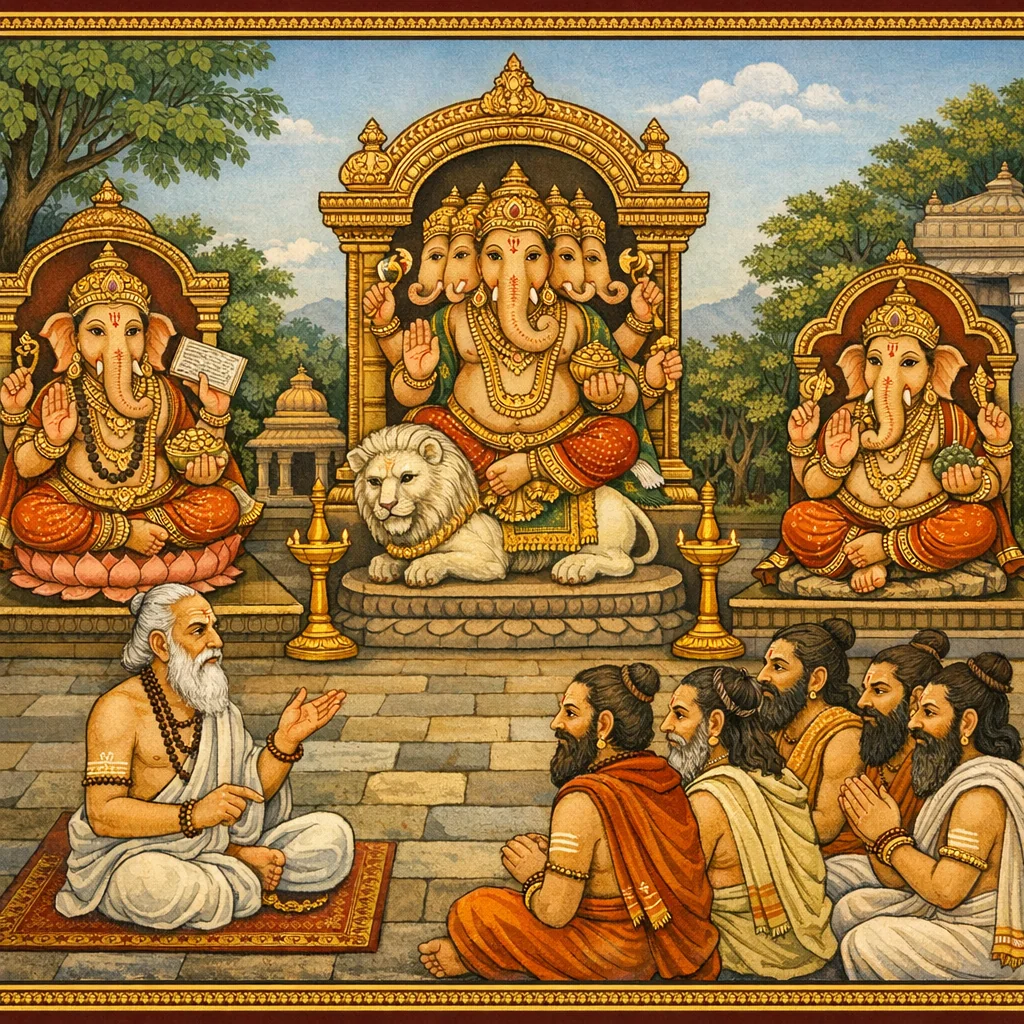
Chapter 142 unfolds as a dialogue in which the ṛṣis ask Sūta about a locally revered “threefold Gaṇapati,” praised in graded power: granting svarga, supporting mokṣa-oriented discipline, and safeguarding embodied life from harmful outcomes. The chapter opens by extolling Gaṇeśa as the remover of obstacles (vighna-hartṛ) and the giver of aims such as learning and fame. The ṛṣis then classify human aspirations as uttama (seeking mokṣa), madhyama (seeking svarga and refined enjoyments), and adhama (absorbed in sense-objects), and inquire why a “martyadā,” tied to mortal existence, is sought. Sūta recounts a heavenly crisis: the influx of tapas-accomplished humans into svarga burdens the devas, and Indra appeals to Śiva. Pārvatī fashions a Gaṇeśa-form—elephant-faced, four-armed, marked by distinctive traits—and appoints him to create obstacles for those pursuing svarga/mokṣa through ritual striving, thus redefining “obstruction” as a cosmic regulatory duty. A great host of gaṇas is placed under his command, and the gods bestow gifts—weapon, inexhaustible food-vessel, vehicle, and endowments of knowledge, intellect, fortune, splendor, and radiance—establishing his authority through multi-deity sanction. The chapter then describes three installations in the kṣetra: Mokṣada Gaṇeśa (linked with Īśāna, for Brahmavidyā practitioners intent on liberation), Svargadvāra-prada Heramba (for seekers of heaven), and Martyadā Gaṇeśa, who ensures that those fallen from svarga do not descend into lower births. The phalaśruti declares that worship on Śukla Māgha Caturthī averts obstacles for a year, and that hearing this account destroys impediments.
Shlokas
Verse 1
सूत उवाच । तथान्यदपि तत्रास्ति पुण्यं गणपतित्रयम् । स्वर्गदं मर्त्यदं पुण्यं तथान्यन्नरकापहम्
Sūta said: “Moreover, there also exists there a sacred triad of Gaṇapati shrines, holy and rich in merit—bestowing heaven, granting prosperity in human life, and also destroying the fall into hell.”
Verse 2
हंतृ वै सर्वविघ्नानां पूजितं सुरदानवैः । सर्वकामप्रदं चैव विद्याकीर्तिविवर्धनम्
He is indeed the destroyer of all obstacles, worshipped by both the gods and the Dānavas. He grants every desired aim and also increases learning and renown.
Verse 3
ऋषय ऊचुः । त्रिविधाः पुरुषाः सूत जायंतेत्र महीतले । उत्तमा मध्यमाश्चान्ये तथा चान्येऽधमाः स्थिताः
The sages said: “O Sūta, on this earth people are born of three kinds—some are excellent, others are middling, and others still remain base.”
Verse 4
उत्तमाः प्रार्थयंति स्म मोक्षमेव हि केवलम् । गता यत्र निवर्तंते न कथंचिद्धरातले
The excellent pray for liberation (mokṣa) alone. Having reached that state, they do not return in any way to the realm of earth.
Verse 5
मध्यमाः स्वर्गमार्गं च दिव्यान्भोगान्मनोरमान् । अप्सरोभिः समं क्रीडां यज्ञाद्यैः कर्मभिः कृताम्
The middling seek the path to heaven and delightful divine enjoyments—sporting in the company of the Apsarases—gained through rites such as sacrifices and other ritual actions.
Verse 6
अधमा मर्त्यलोकेत्र रमंते विषयात्मकाः । विषकीटकवत्तत्र रतिं कृत्वा गरीयसीम्
The base, absorbed in sense-objects, delight here in the mortal world. Like insects drawn to poison, they form an intense attachment there.
Verse 7
स्वर्गमोक्षौ परित्यज्य तत्कस्मान्मर्त्य इष्यते । येनासौ प्रार्थ्यते मर्त्यैर्मर्त्यदो गणनायकः
Setting aside heaven and liberation, why is the mortal state desired? For by that mortal condition Gaṇanāyaka—the lord of the gaṇas, giver of worldly boons—is entreated by mortals.
Verse 8
केन संस्थापितास्ते च तस्मिन्क्षेत्रे गजाननाः । कस्मिन्काले च द्रष्टव्याः सर्वं विस्तरतो वद
By whom were those elephant-faced deities established in that sacred field? And at what time should they be seen for darśana? Tell everything in detail.
Verse 9
सूत उवाच । पूर्वं तप्त्वा तपस्तीव्रं मर्त्यलोके द्विजोत्तमाः । ततो गच्छंति संहृष्टाः स्वेच्छया त्रिदिवं प्रति । मोक्षमार्गं तथैवान्ये ध्यानाविष्कृतमानसाः
Sūta said: “First, having performed intense austerity in the mortal world, the best among the twice-born then go joyfully—by their own choosing—toward Tridiva, heaven. Others likewise, their minds clarified and made manifest through meditation, proceed on the path of liberation (mokṣa).”
Verse 10
ततः स्वर्गे समाकीर्णे कदाचिन्मनुजोत्तमैः । देवेषु क्षिप्यमाणेषु समंतात्तत्प्रभावतः
Then, at one time, heaven became thronged with the best of men, and by the power of those arrivals the gods were pressed back on every side.
Verse 11
गत्वा स्वयं सहस्राक्षः सर्वैर्देवगणैः सह । प्रोवाच शंकरं गौर्या सार्धमेकासनस्थितम्
Then Sahasrākṣa (Indra) himself went, accompanied by all the hosts of gods, and addressed Śaṅkara, who sat upon a single seat together with Gaurī.
Verse 12
इन्द्र उवाच । तपःप्रभावसंसिद्धैर्मानवैः परमेश्वर । अस्माकं व्याप्यते सर्वं महिमानं गृहादिकम्
Indra said: O Supreme Lord, by men perfected through the power of austerity, all our glory—our abodes and the like—is being pervaded and overtaken.
Verse 13
तस्मात्कृत्वा प्रसादं नः कंचिच्चिंतय सांप्रतम् । उपायं येन तिष्ठामः सौख्येनात्र शिवालये
Therefore, showing us your favor, devise at once some means by which we may remain here in this Śiva-temple in comfort.
Verse 14
अथ श्रुत्वा विरूपाक्षस्तेषां तद्वचनं द्विजाः । पार्वत्याः पार्श्वसंस्थाया मुखचन्द्रं समैक्षयत्
Having heard their words, O brāhmaṇas, Virūpākṣa (Śiva) looked steadily upon the moonlike face of Pārvatī who was seated at his side.
Verse 15
निजगात्रं ततो देवी सुसंमर्द्य मुहुर्मुहुः । मलमाहृत्य तं कृत्स्नं चक्रे नागमुखं ततः
Then the Goddess, repeatedly rubbing her own body, gathered all the impurity (the scrapings) and from it fashioned a serpent-faced being.
Verse 16
चतुर्हस्तं महाकायं लंबोदरसमन्वितम् । सुकौतुककरं तेषां सर्वेषां च दिवौकसाम्
It was four-armed, of mighty body, endowed with a pendulous belly, and it stirred great wonder in all of them—the denizens of heaven.
Verse 17
ततः स विनयादाह देवीं शिखरवासिनीम् । यदर्थमंब सृष्टोऽहं तत्कार्यं वद मा चिरम्
Then, with humility, he spoke to the Goddess who dwells on the peak: “Mother, for what purpose was I created? Tell me the task—without delay.”
Verse 18
त्रैलोक्ये त्वत्प्रसादेन नासाध्यं विद्यते मम
In the three worlds, by your grace, nothing is impossible for me.
Verse 19
श्रीदेव्युवाच । मर्त्यलोके नरा ये च स्वर्गमोक्षपराः सदा । तेषां विघ्नं त्वया कार्यं शुभकृत्येषु चैव हि
The Blessed Goddess said: “In the human world, those men who are ever intent on heaven and liberation—upon their auspicious undertakings you must indeed create obstacles.”
Verse 20
सरितां पतयस्त्रिंशच्छंकवः सप्तसप्ततिः । महासरोजषष्टिश्च निखर्वाणां च विंशतिः
There were thirty lords of rivers; seventy-seven Śaṅkavas; sixty Mahāsarojas; and twenty Nikharvas.
Verse 21
अर्बुदायुतसंयुक्ताः कोट्यो नवतिपञ्च च । लक्षाश्च पंचपंचाशत्सहस्राः पंचविंशतिः । शतानि नवषष्टिश्च गणाश्चान्येऽत्र संस्थिताः
There were ninety-five koṭis, together with arbuda and ayuta; fifty-five lakṣas; twenty-five thousand; and sixty-nine hundreds—along with other gaṇas stationed here.
Verse 22
येषां नदी स्मृतः पूर्वो महाकालस्तथा परः । ते सर्वे वशगास्तुभ्यं प्रभवंतु गणोत्तमाः
May all those foremost Gaṇas—who remember the sacred river as their first refuge and Mahākāla as the supreme end—come forth and remain under your command, O best among Gaṇas.
Verse 23
आधिपत्यं मया दत्तं तव वत्स कुरुष्व तत् । सर्वेषां गणवृंदानामाधिपत्ये व्यवस्थितः
“I have granted you lordship, dear child—assume it. Be firmly established as the ruler over all the multitudes of Gaṇas.”
Verse 24
एवमुक्त्वाथ सा देवी समानीयौषधीभृतान् । हेमकुंभान्सुतीर्थांभः परिपूर्णान्महोदयान्
Having spoken thus, the Goddess then summoned bearers of healing herbs and brought golden pitchers—most auspicious and splendid—filled to the brim with water from an excellent sacred ford (tīrtha).
Verse 25
तस्याभिषेचनं चक्रे स्वयमेव सुरेश्वरी । गीतवाद्यविनोदेन नृत्यमंगलजैः स्वनैः
Sureśvarī herself performed his consecration, amid the delights of song and instruments, with auspicious sounds born of celebratory dance.
Verse 26
त्रयस्त्रिंशत्स्मृताः कोटयो देवानां याः स्थिता दिवि । ताः सर्वास्तत्र चागत्य तस्य चक्रुश्च मंगलम्
The thirty-three crores of gods who are spoken of as dwelling in heaven—all of them came there and performed auspicious rites and blessings for him.
Verse 27
अथ तस्य ददौ तुष्टो भगवान्वृषभध्वजः । कुठारं निशितं हस्ते सदा वै श्रेष्ठमायुधम्
Then the Blessed Lord, Vṛṣabhadhvaja (Śiva), being pleased, gave him a sharp axe to be held in his hand—ever a most excellent weapon.
Verse 28
पात्रं मोदकसंपूर्णमक्षयं चैव पार्वती । भोजनार्थे महाभागा मातृस्नेहपरायणा
Pārvatī—the greatly fortunate one, devoted to motherly affection—gave an inexhaustible vessel filled with modakas, for his nourishment.
Verse 29
मूषकं कार्तिकेयस्तु वाहनार्थं प्रहर्षितः । भ्रातरं मन्यमानस्तु बन्धुस्नेहेन संयुतः
Kārtikeya, delighted and bound by familial affection, gave a mouse as a mount—regarding him as his brother.
Verse 30
ज्ञानं दिव्यं ददौ ब्रह्मा तस्मै हृष्टेन चेतसा । अतीतानागतं चैव वर्तमानं च यद्भवेत्
Brahmā, with a joyful heart, bestowed upon him divine knowledge—of what has passed, what is yet to come, and whatever may be in the present.
Verse 31
प्रज्ञां विष्णुः सहस्राक्षः सौभाग्यं चोत्तमं महत् । सौभाग्यं कामदेवस्तु कुबेरो विभवादिकम्
Viṣṇu bestowed discerning wisdom; Sahasrākṣa (Indra) granted great and excellent fortune. Kāmadeva gave charm and auspicious allure, and Kubera bestowed prosperity, wealth, and the like.
Verse 32
प्रतापं भगवान्सूर्यः कांतिमग्र्यां निशाकरः
The blessed Sun bestowed splendour and majesty, and the Moon (Niśākara) granted the finest radiance.
Verse 33
तथान्ये विबुधाः सर्वे ददुरिष्टानि भूरिशः । आत्मीयानि प्रतुष्ट्यर्थं देव्या देवस्य च प्रभोः
So too, all the other gods bestowed in abundance their own cherished gifts, in order to please the Goddess and the Lord, their sovereign.
Verse 34
एवं लब्धवरः सोऽथ गणनाथो द्विजोत्तमाः । देवकृत्यपरो नित्यं चक्रे विघ्नानि भूतले
Thus endowed with boons, that Lord of the Gaṇas (Gaṇanātha)—O best of the twice-born—ever intent on the gods’ work, then brought forth obstacles upon the earth.
Verse 35
धर्मार्थं यतमानानां मोक्षाय सुकृताय च । ततो भूमितलेऽभ्येत्य गणेशस्तत्र यः स्मृतः
For those who strive for dharma, for mokṣa (liberation), and for meritorious deeds, Gaṇeśa descended upon the earth; there he is remembered and devoutly revered.
Verse 36
वैमानिकैः समभ्येत्य स्थापितस्तत्र स द्विजाः । येन स्वर्गार्थिनो लोकाः पूजां तस्य प्रचक्रिरे । प्रथमं सर्वकृत्येषु विघ्ननाशाय तत्पराः
Accompanied by the celestial beings, he was installed there, O brāhmaṇas. Therefore, those who sought heaven began to worship him, placing him first in every undertaking, intent on the destruction of obstacles.
Verse 37
एतस्मिन्नेव काले च चमत्कारपुरोद्भवैः । ब्राह्मणैर्ब्रह्मविज्ञानतत्परैर्मोक्षहेतुभिः । ईशानः स्थापितस्तत्र मोक्षदो य उदाहृतः
At that very time, brāhmaṇas born in Camatkārapura—devoted to the knowledge of Brahman and intent upon the cause of liberation—installed Īśāna there, who is proclaimed to be the giver of mokṣa.
Verse 38
स्वर्गं वाञ्छद्भिरेवान्यैः स्वर्गद्वारप्रदस्तथा । हेरंबः स्थापितस्तत्र सत्यनामा यथोदितः
Likewise, by others who longed for heaven, Heraṃba was installed there—the bestower of the gate to heaven—truly named so, as declared.
Verse 39
तथान्यैर्मर्त्यदो नाम गणैशस्तत्र यः स्थितः । येन स्वर्गाच्च्युता यांति न कदा नरकादिकम् । तिर्यक्त्वं वा कृमित्वं वा स्थावरत्वमथापि वा
Likewise, by others, Gaṇeśa was established there under the name “Martyada”. Through him, those who fall from heaven never go to hell or the like—nor to animal birth, wormhood, or even the state of an immovable being.
Verse 40
एतस्मात्कारणात्तत्र क्षेत्रे पुण्ये द्विजोत्तमाः । हेरम्बो मर्त्यदो जातः स्वर्गिणां मर्त्यदः सदा
For this reason, O best of brāhmaṇas, in that holy kṣetra Heraṃba manifested as “Martyada”—ever “Martyada” for those who have attained heaven.
Verse 41
एतद्वः सर्वमाख्यातं पुण्यं हेरंबसंभवम् । आख्यानं सर्वविघ्नानि यन्निहन्ति श्रुतं नृणाम्
All this has been told to you—the sacred account of Heraṃba’s manifestation. This story, when heard by people, destroys every obstacle.
Verse 42
एतन्माघचतुर्थां यः शुक्लायां पूजयेन्नरः । न तस्य वत्सरं यावद्विघ्नं सञ्जायते क्वचित्
Whoever worships on the bright-fortnight Caturthī of the month of Māgha—such a person encounters no obstacle at all for as long as a year.