Adhyaya 141
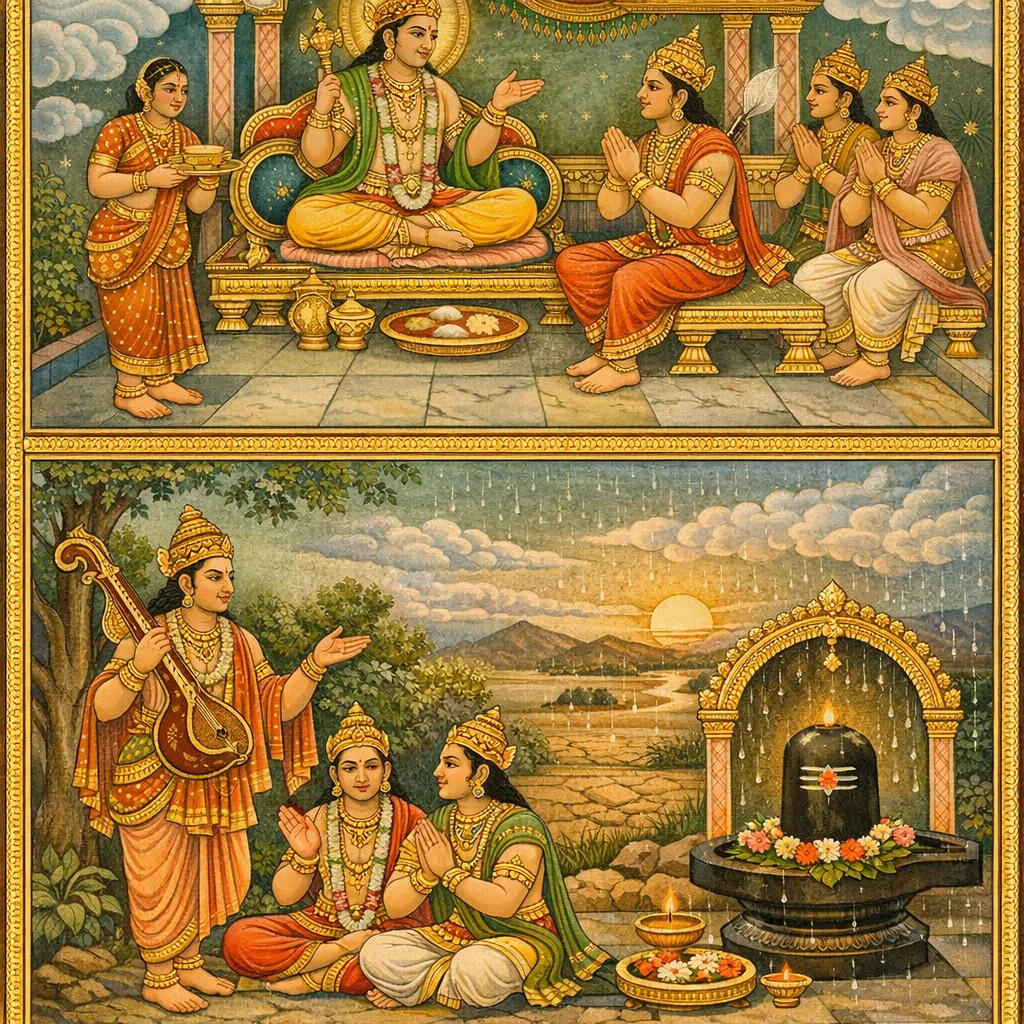
Sūta describes a deity in Hāṭakeśvara-kṣetra whose mere darśana is said to bestow miṣṭānna—sweet, nourishing food. King Vasusena of Ānarta is shown as lavish in charity of jewels, vehicles, and garments, especially at auspicious times such as saṅkrānti, vyatīpāta, and eclipses, yet he neglects the simplest and most necessary gifts: grain/food and water, deeming them too common. After death, though he attains a heavenly state through dāna, he suffers fierce hunger and thirst in heaven and feels his “svarga” to be hellish. He appeals to Indra, who explains the dharmic reckoning: lasting satisfaction in this world and the next requires steady gifts of water and food offered in a proper spirit; sheer quantity of other gifts cannot replace need-based charity. Indra says the king’s relief depends on his son’s continuing donations of water and grain in his name, but the son initially fails to do so. Nārada learns the matter and goes to earth to instruct the son, Satyasena, who begins feeding Brahmins with miṣṭānna and establishes water distribution, especially in summer. A severe twelve-year drought brings famine and obstructs giving; the father appears in a dream requesting offerings of food and water in his name. Satyasena then worships Śiva, installs a liṅga, and undertakes vows and restraints; Śiva grants abundant rain and food production, declaring that whoever beholds that liṅga at dawn will obtain ambrosial sweet food, while the desireless devotee attains Śiva’s abode. The chapter concludes that even in the Kali age, morning darśana with devotion yields miṣṭānna—or, for those who seek nothing, spiritual nearness to Śūlin (Śiva).
Shlokas
Verse 1
सूतौवाच । तथान्योऽपि हि तत्रास्ति देवो मिष्टान्नदायकः । यस्य संदर्शनादेव मिष्टान्नं लभते नरः
Sūta said: “There too is another deity, a giver of sweet food; by whose mere sight a person obtains sweet offerings.”
Verse 2
आसीत्पूर्वं नृपो नाम्ना वसुसेन इति स्मृतः । आनर्त्ताधिपतिः ख्यातो बृहत्कल्पे द्विजोत्तमाः
In former times there was a king remembered by the name Vasusena. O best of brāhmaṇas, he was famed as the ruler of Ānarta in the great aeon, the Bṛhatkalpa.
Verse 3
अत्यैश्वर्यसमायुक्तो गजवाजिरथान्वितः । जितारिपक्षस्तेजस्वी दाता भोगी जितेंद्रियः
He was endowed with vast prosperity, furnished with elephants, horses, and chariots; he had conquered hostile forces, shone with splendor, was generous in giving, able to enjoy in accordance with dharma, and master of his senses.
Verse 4
स संक्रांतौ व्यतीपाते ग्रहणे रवि सोमयोः । पर्वकालेषु चान्येषु विविधेषु सुभक्तितः
With deep devotion he performed meritorious rites at Saṅkrānti, at Vyatīpāta, during eclipses of the Sun and Moon, and likewise at other diverse festival times.
Verse 5
प्रयच्छति द्विजातिभ्यो रत्नानि विविधानि च । इंद्रनीलमहानीलविद्रुमस्फटिकादि च
He bestowed upon the twice-born (dvija) many kinds of jewels—indranīla sapphires, great blue gems, coral, crystal, and the like.
Verse 6
माणिक्यमौक्तिकान्येव विद्रुमाणि विशेषतः । हस्त्यश्वरथयानानि वस्त्राणि विविधानि च
He gave in charity rubies and pearls, and especially corals; also conveyances—elephants, horses, and chariots—and garments of many kinds.
Verse 7
न कस्यचित्प्रदद्यात्स सस्यं ब्राह्मणसत्तमाः । अतीव सुलभं मत्वा तथा तोयं विशेषतः
Yet he gave grain to no one, O best of Brahmins, deeming it exceedingly easy to obtain; and likewise water—water especially.
Verse 8
ततो राज्यं चिरं कृत्वा दृष्ट्वा पुत्रोद्भवान्सुतान् । कालधर्ममनुप्राप्तः कस्मिंश्चित्कालपर्यये
Then, having ruled the kingdom for a long time and having seen sons and grandsons born of his lineage, he came to the law of Kāla—death—when a certain cycle of time had arrived.
Verse 9
ततश्च मंत्रिभिस्तस्य सत्यसेन इति स्मृतः । अभिषिक्तः सुतो राज्ये वीर्योदार्यसमन्वितः
Thereafter, his son—remembered as Satyasena—was anointed to the throne by the ministers, endowed with valor and noble generosity.
Verse 10
वसुसेनोऽपि संप्राप्य स्वर्गं दानप्रभावतः । दिव्यांबरधरो भूत्वा दिव्यरत्नैर्विभूषितः
Vasusena too, by the power of his dāna (sacred giving), attained heaven—clad in celestial garments and adorned with divine jewels.
Verse 11
सेव्यमानोऽप्सरोभिश्च विमानवरमाश्रितः । बभ्राम सर्वलोकेषु स्वेच्छया क्षुत्समावृतः
Attended by apsarās and seated in an excellent vimāna, he wandered at will through all the worlds—yet he was still enveloped by hunger.
Verse 12
पिपासाकुलचित्तश्च मुखेन परिशुष्यता । न कंचिद्ददृशे तत्र भुंजानमपरं दिवि
His mind was distressed by thirst and his mouth was drying up; yet there in heaven he saw no one at all who was eating or drinking.
Verse 13
न च पानसमासक्तं न सस्यं सलिलं न च
No one was intent on drinking; there was neither food-grain nor even water.
Verse 14
ततो गत्वा सहस्राक्षमुवाच द्विजसत्तमाः । क्षुत्तृषावृतदेहस्तु लज्जयाऽधोमुखः स्थितः
Then he went to Sahasrākṣa (Indra) and spoke. Covered by hunger and thirst, he stood with his face lowered in shame.
Verse 15
नैवात्र दृश्यते कश्चित्क्षुत्तृषापरिपीडितः । मां मुक्त्वा विबुधश्रेष्ठ तत्किमेतद्वदस्वमे
“Here none is seen afflicted by hunger and thirst—except me. O best of the gods, tell me: what is the meaning of this?”
Verse 16
एष मे स्वर्गरूपेण नरकः समुपस्थितः । किमेतैर्भूषणैर्वस्त्रैर्विमानादिभिरेव च
“For me, this is hell appearing in the form of heaven. What use are these ornaments, these garments, and even these vimānas and the like?”
Verse 17
क्षुधा संपीड्यमानस्य स्वर्गमेतच्छचीपते । अग्नितुल्यं समुद्दिष्टं मम चित्तेऽपि वर्तते
“O Lord of Śacī, for one crushed by hunger, even this ‘heaven’ is spoken of as fire-like—and so it burns within my own mind as well.”
Verse 18
तस्मात्कुरु प्रसादं मे यथा क्षुन्न प्रबाधते । नोचेत्क्षिप सुरश्रेष्ठ रौरवे नरके द्रुतम्
Therefore, show me your grace, so that hunger may not torment me; otherwise, O best among the gods, cast me swiftly into the Raurava hell.
Verse 19
इंद्रौवाच । अनर्होसि महीपाल नरकस्य त्वमेव हि । त्वया दानानि दत्तानि संख्याहीनानि सर्वदा
Indra said: “O king, you are not fit for hell—indeed, you do not belong there. Yet the gifts you gave were always lacking in proper measure and completeness.”
Verse 21
तोयं सान्नं सदा दद्यादन्नं चैव सदक्षिणम् । य इच्छेच्छाश्वतीं तृप्तिमिह लोके परत्र च
Whoever longs for enduring satisfaction—here in this world and also in the next—should always give water, cooked food, and food-gifts accompanied by a proper dakṣiṇā (honorarium).
Verse 22
तस्मात्त्वं हि क्षुधाविष्टः स्वर्गे चैव महीपते । भूषितो भूषणैः श्रेष्ठैर्विमानवरमाश्रितः
Therefore, O lord of the earth, even in heaven you are seized by hunger—though adorned with the finest ornaments and seated in an excellent vimāna (celestial chariot).
Verse 23
राजोवाच । अस्ति कश्चिदुपायोऽत्र देवौ वा मानुषोऽपि वा । क्षुत्पिपासेऽतितीव्रे मे विनाशं येन गच्छतः
The King said: “Is there any means here—by a god or even by a human—through which my extremely intense hunger and thirst may be destroyed?”
Verse 24
इन्द्र उवाच । यदि कश्चित्सुतस्तुभ्यं विप्रेभ्यः सततं जलम् । ददाति च सदा सस्यं तत्ते तृप्तिः प्रजायते
Indra said: “If some son of yours continually gives water to the brāhmaṇas, and always gives grain and food as well, then satisfaction arises for you.”
Verse 25
नान्यथा पार्थिवश्रेष्ठ एकस्मिन्नपि वासरे । अदत्तस्य तव प्राप्तिः सत्यमेतन्मयोदितम्
O best of kings, it cannot be otherwise: even for a single day, if nothing has been given, there is no attainment for you. This is the truth as spoken by me.
Verse 26
सोऽपि भूमिपतेः पुत्रस्तव यच्छति नोदकम् । न च सस्यं द्विजातिभ्यस्त्वन्मार्गमनुसंचरन्
But even that son of yours, O lord of the earth, following your path, gives no water—nor grain and food—to the twice-born.
Verse 27
एतस्मिन्नंतरे प्राप्तो नारदो मुनिसत्तमः । ब्रह्मलोकात्स्थितौ यत्र तौ भूमिपसुरेश्वरौ
Just then arrived Nārada, the best of sages, from Brahmaloka—at the place where the two, the king and the lord of the gods, were staying.
Verse 28
ततः शक्रः समुत्थाय तस्मै तुष्टिसमन्वितः । अर्घं दत्त्वा विधानेन सादरं चेदमब्रवीत्
Then Śakra (Indra) rose up, filled with joy; and, after offering him arghya according to proper rite, he respectfully spoke these words.
Verse 29
कुतः प्राप्तोऽसि विप्रेंद्र प्रस्थितः क्व च सांप्रतम् । केन कार्येण चेद्गुह्यं न तेऽस्ति वद सांप्रतम्
“O best of brāhmaṇas, from where have you come, and where are you setting out now? And for what purpose? If it is not secret to you, tell me at once.”
Verse 30
नारद उवाच । ब्रह्मलोकादहं प्राप्तः प्रस्थितस्तु धरातले । तीर्थयात्राकृते शक्र नान्यदस्तीह कारणम्
Nārada said: “I have come from Brahmaloka, and I am setting out for the earth. O Śakra, it is for the sake of pilgrimage to the sacred tīrthas—there is no other reason here.”
Verse 31
सूत उवाच । तच्छ्रुत्वा स नृपो हृष्टस्तमुवाच मुनीश्वरम् । प्रसादः क्रियतां मह्यं दीनस्य मुनिपुंगव
Sūta said: Hearing this, the king was delighted and spoke to the lordly sage: “O bull among sages, be gracious to me—who am helpless and dependent.”
Verse 32
त्वया भूमितले वाच्यो मम पुत्रो महीपतिः । आनर्त्ताधिपतिः ख्यातः सत्यसेन इति प्रभो
“On the earth you should address my son, the king—renowned as the ruler of Ānarta—by the name ‘Satyasena,’ O lord.”
Verse 33
तव तातो मया दृष्टः शक्रस्य सदनं प्रति । क्षुत्पिपासापरीतांगो दीनात्मा देवमध्यगः
“Your father was seen by me, headed toward Śakra’s dwelling—his body afflicted by hunger and thirst, his spirit wretched, standing amidst the gods.”
Verse 34
तस्मात्पुत्रोऽसि चेन्मह्यं त्वं सत्यं परिरक्षसि । तन्मन्नाम्ना प्रयच्छोच्चैः सस्यानि सलिलानि च
Therefore, if you are truly my son and you uphold truth, then in my name give generously—both grains/food and water.
Verse 35
स तथेति प्रतिज्ञाय नारदो मुनिसत्तमः । अनुज्ञाप्य सहस्राक्षं प्रस्थितो भूतलं प्रति
Nārada, the best of sages, pledged, “So be it.” Taking leave of Sahasrākṣa (Indra), he set out toward the earth.
Verse 36
ततः क्रमेण तीर्थानि भ्रममाणः स सद्द्विजः । आनर्त्तविषयं प्राप्य सत्यसेनमुपाद्रवत्
Then, in due course, that noble brāhmaṇa-sage wandered through sacred tīrthas; reaching the land of Ānarta, he went to Satyasena.
Verse 37
अथ संपूजितस्तेन सम्यग्भूपतिना मुनिः । पितुः संदेशमाचख्यौ विजने तस्य सादरम्
Then, duly honored by that king, the sage respectfully conveyed to him—privately—the message from his father.
Verse 38
तच्छ्रुत्वा शोकसंतप्तः सत्यसेनो महीपतिः । तं विसृज्य मुनिश्रेष्ठं पूजयित्वा विधानतः
Hearing it, King Satyasena was scorched with grief. After honoring the best of sages according to proper rule, he respectfully took leave of him.
Verse 39
ततो जनकमुद्दिश्य मिष्टान्नेन सुभक्तितः । सहस्रं ब्राह्मणेंद्राणां भोजयामास नित्यशः
Then, dedicating it to his father, with deep devotion he fed—day after day—a thousand foremost brāhmaṇas with fine foods.
Verse 40
प्रपादानं तथा चक्रे ग्रीष्मकाले विशेषतः । त्यक्त्वान्याः सकला याश्च क्रिया धर्मसमुद्भवाः
He also established water-resting places (prapās), especially during the summer. Setting aside other religiously meritorious observances, he devoted himself to this service.
Verse 41
एवं तस्य महीपस्य वर्तमानस्य च द्विजाः । अनावृष्टिरभूद्रौद्रा सर्वसस्यक्षयावहा
Thus, O twice-born ones, during the reign of that king there arose a dreadful drought, bringing about the destruction of all crops.
Verse 42
यावद्द्वादशवर्षाणि न जलं त्रिदशाधिपः । मुमोच धरणीपृष्ठे सर्वे लोकाः क्षुधार्दिताः
For twelve years, the lord of the gods did not release water upon the surface of the earth; all people were tormented by hunger.
Verse 43
अत्राभावात्ततो भूयो न सस्यं संप्रयच्छति । ब्राह्मणेभ्यः समुद्दिश्य पितरं स्वं यथा पुरा
Because of the lack of rain here, the land no longer yielded crops. Therefore, as before, he dedicated offerings to brāhmaṇas, intending them for his own father among the Pitṛs.
Verse 44
ततः स क्षुत्परीतांगः पिता तस्य महीपतेः । स्वप्ने प्रोवाच तं पुत्रमतीव मलिनांबरः
Then the father of that king—his body overcome by hunger and his garments exceedingly soiled—spoke to his son in a dream.
Verse 45
त्वया पुत्रेण पुत्राहं क्षुत्पिपासासमाकुलः । स्वर्गस्थोऽपि हि तिष्ठामि तस्मादन्नं प्रयच्छ वै । मन्नाम्ना तोयसंयुक्तं यदि त्वं मत्समुद्भवः
“Because of you, my son, I—though your father—remain afflicted by hunger and thirst even while dwelling in heaven. Therefore offer food, accompanied by water and dedicated in my name, if indeed you are born of me.”
Verse 46
ततः शोकसमायुक्तः स नृपः स्वप्नदर्शनात् । अन्नाभावात्समं मंत्रं मंत्रिभिः स तदाकरोत्
Then that king, filled with sorrow because of the dream-vision, consulted with his ministers and took counsel, for there was no food available.
Verse 47
अहमाराधयिष्यामि सस्यार्थे वृषभध्वजम् । राज्ये रक्षा विधातव्या भवद्भिः सादरं सदा
“I shall worship Vṛṣabhadhvaja (Śiva, whose banner bears the bull) for the sake of the crops. You must always, with care, ensure the protection of the kingdom.”
Verse 48
ततोऽत्रैव समागत्य स्थापयित्वा महेश्वरम् । सम्यगाराधयामास व्रतैश्च नियमैस्तथा
Then, coming to this very place, he established Maheśvara (Śiva) and duly worshipped him with vows and disciplined observances.
Verse 49
अथ तस्य गतस्तुष्टिं वर्षांते भगवाञ्छिवः । अब्रवीद्वरदोऽस्मीति प्रार्थयस्व यथेप्सितम्
At the end of the year, Bhagavān Śiva was pleased with him and said, “I am the giver of boons—ask for whatever you desire.”
Verse 51
तथा संजायता वृष्टिः समस्ते धरणीतले । येन सस्यानि जायंते सलिलानि च सांप्रतम्
And so rain came to pass across the whole earth, by which crops now sprang forth and waters became abundant again.
Verse 52
जायतां मम तातस्य स्वर्गस्थस्य महात्मनः । प्रसादात्तव संतृप्तिरक्षया सुरसत्तम
May there be well-being for my father, that great soul who dwells in heaven. By your grace, O best of the gods, may your satisfaction become unfailing and inexhaustible.
Verse 53
श्रीभगवानुवाच । भविता न चिराद्वृष्टिः प्रभूता धरणीतले । भविष्यंति तथान्नानि यानि कानि महीतले
The Blessed Lord said: Soon there will be abundant rain upon the earth. Accordingly, all kinds of grains and foods will arise upon the ground.
Verse 54
तस्मात्त्वं गच्छ राजेंद्र स्वगृहं प्रति सांप्रतम् । मम वाक्यादसंदिग्धमेतदेव भविष्यति
Therefore, O lord of kings, go now to your own home. On the authority of my word, without doubt, this alone shall come to pass.
Verse 55
तच्चैतन्मामकं लिंगं यत्त्वया स्थापितं नृप । प्रातरुत्थाय यः कश्चित्सम्यक्तद्वीक्षयिष्यति
And this is My liṅga which you have established, O king—whoever, rising early in the morning, beholds it properly with reverent devotion—
Verse 56
मिष्टान्नममृतस्वादु स हि नूनमवाप्स्यति । मम वाक्यान्नृपश्रेष्ठ सदा जन्मनिजन्मनि
He shall surely obtain sweet food, nectar-like in taste. By My word, O best of kings, it shall be so always—again and again, in every birth.
Verse 57
स एवं भगवानुक्त्वा ततश्चादर्शनं गतः । सोऽपि राजा निजं स्थानं हर्षेण महतान्वितः । आजगाम चकाराथ राज्यं निहतकंटकम्
Having spoken thus, the Lord then vanished from sight. The king too, filled with great joy, returned to his own place and thereafter ruled his kingdom, its thorns—its troubles—removed.
Verse 58
सूत उवाच । अद्यापि कलिकालेऽत्र संप्राप्ते दारुणे युगे । यस्तं मिष्टान्नदं पश्येत्प्रातरुत्थाय भक्तितः
Sūta said: Even today, in this Kali age, when this dreadful era has arrived, whoever rises in the morning and, with devotion, beholds that Miṣṭānnada—the Giver of sweet food—
Verse 59
स मिष्टान्नमवाप्नोति यदि कामयते द्विजाः । निष्कामो वा समभ्येति स्थानं देवस्य शूलिनः
He obtains sweet food if he desires it, O twice-born ones. Or, if free from desire, he attains the abode of the trident-bearing Lord, Śūlin—Śiva.
Verse 141
इति श्रीस्कांदे महापुराण एकाशीतिसाहस्र्यां संहितायां षष्ठे नागरखण्डे हाटकेश्वरक्षेत्रमाहात्म्ये मिष्टान्नदेश्वरमाहात्म्यवर्णनंनामैकचत्वारिंशदुत्तरशततमोऽध्यायः
Thus ends, in the Śrī Skanda Mahāpurāṇa—within the Saṃhitā of eighty-one thousand ślokas—in the sixth book, the Nāgara-khaṇḍa, in the Māhātmya of Hāṭakeśvara-kṣetra, the chapter entitled “The Description of the Greatness of Miṣṭānnadeśvara,” being Chapter 141.