Adhyaya 139
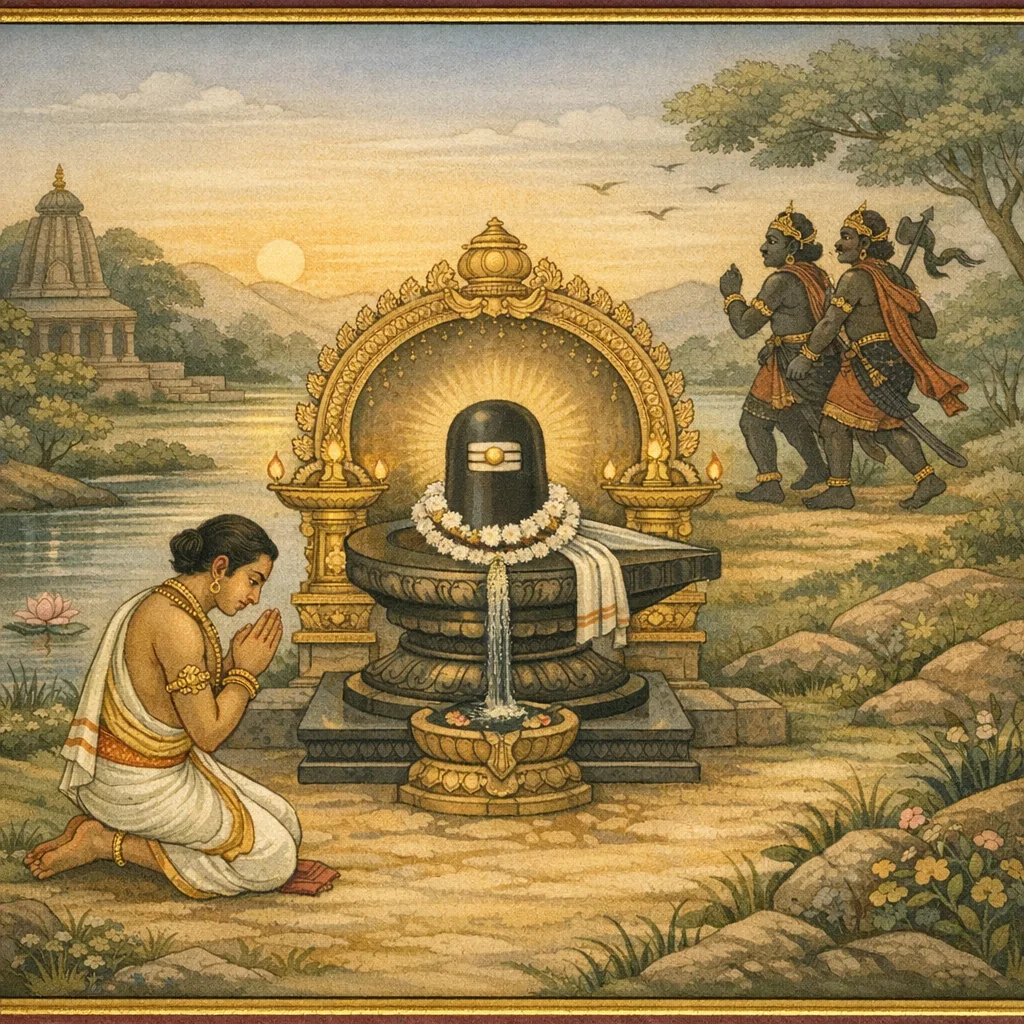
Sūta recounts a famed purifying narrative concerning Dharmarāja (Yama). A learned brāhmaṇa of the Kāśyapa lineage, renowned as an upādhyāya, loses his young son; grief turns to wrath against Yama. Reaching Dharmarāja’s abode, he utters a fierce curse: Yama will become “sonless,” lose public veneration, and even the utterance of Yama’s name in auspicious rites will produce obstacles. Though Yama performs his appointed dharma, he is shaken by fear of brahma-śāpa, recalling earlier vulnerability (as in the Māṇḍavya episode), and he petitions Brahmā. Indra argues that death comes at its ordained time and urges a remedy that preserves Yama’s function without drawing blame. Unable to revoke the curse, Brahmā institutes an administrative-theological arrangement: diseases (vyādhis) are manifested and charged with executing mortality at the proper time, so that public reproach does not attach to Yama. Yama then establishes a protective exception: an “uttama liṅga” at Hāṭakeśvara-kṣetra, praised as sarva-pātaka-nāśana; those who behold it with devotion in the morning are to be avoided by the agents of death. Yama restores the brāhmaṇa’s son, bringing him back in a brāhmaṇa guise, and reconciliation follows. The brāhmaṇa moderates his curse: Yama will have a divine-born son and a human-born son who will “deliver” him through great royal sacrifices; worship will continue, but through “human-origin” mantras rather than the earlier Vedic formulation. A phalaśruti promise is given: worship of Yama’s installed icon with the prescribed mantra—especially on pañcamī—protects from son-grief for a year; recitation on pañcamī prevents apamṛtyu and putra-śoka.
Shlokas
Verse 1
सूत उवाच । धर्मराजेश्वरोत्थं च माहात्म्यं द्विजसत्तमाः । यन्मया प्रश्रुतं पुण्यं सकाशात्स्वपितुः पुरा
Sūta said: O best of the twice-born, I shall relate the sacred greatness (māhātmya) that arose in connection with Dharmarājeśvara—truly meritorious—which long ago I heard from my own father.
Verse 2
तदहं कीर्तयिष्यामि शृणुध्वं सुसमाहिताः । त्रैलोक्येऽपि सुविख्यातं सर्व पातकनाशनम्
Therefore I shall proclaim it; listen with steady attention. It is renowned even across the three worlds, and it destroys every sin.
Verse 3
तत्र क्षेत्रे पुरा विप्रः कश्यपान्वयसंभवः । उपाध्याय इति ख्यातो वेदविद्यापरायणः
In that sacred region, long ago, there lived a brāhmaṇa born in the lineage of Kaśyapa, renowned by the name Upādhyāya, wholly devoted to Vedic learning.
Verse 4
पश्चिमे वयसि प्राप्ते तस्य पुत्रो बभूव ह । स्वाध्यायनियमस्थस्य प्रभूतविभवस्य च
When he had reached the latter stage of life, a son was born to him—one steadfast in svādhyāya (sacred self-study) and in disciplines, and endowed with abundant prosperity as well.
Verse 5
पञ्चवर्षकमात्रस्तु यदा जज्ञे च तत्सुतः । तदा मृत्युवशं प्राप्तः पितृमातृसुदुःखकृत्
But when that son had grown to only five years of age, he fell under the power of death, bringing intense sorrow to his father and mother.
Verse 6
ततः स ब्राह्मणः कोपं चक्रे वैवस्वतोपरि । धर्मराजगृहं प्राप्तं दृष्ट्वा निजकुमारकम्
Then that brāhmaṇa became enraged with Vaivasvata (Yama). Seeing his own little son brought to the house of Dharmarāja, he was overcome with wrath.
Verse 7
आदाय सलिलं हस्ते शुचिर्भूत्वासमाहितः । प्रददौ दारुणं शापं धर्मराजाय दुःखितः
Taking water in his hand, having purified himself yet with a mind unsettled, the grief-stricken one pronounced a terrible curse upon Dharmarāja.
Verse 8
अपुत्रोऽद्य कृतो यस्मादहं तेन दुरात्मना । अतः सोऽपि च दुष्टात्मा यमोऽपुत्रो भविष्यति
“Because that wicked one has made me childless today, therefore that evil-souled Yama too shall become childless.”
Verse 9
तथास्य भूतले लोको नैव पूजां विधास्यति । कीर्तयिष्यति नो नाम यथान्येषां दिवौकसाम्
So too among people on earth, none will offer him worship; nor will they extol his name as they do the names of other heavenly beings.
Verse 10
यः कश्चित्प्रातरुत्थाय नाम चास्य ग्रही ष्यति । मंगल्यकरणे चाथ विघ्नं तस्य भविष्यति
Whoever rises in the morning and utters his name—then, in auspicious undertakings, obstacles will arise for that person.
Verse 11
तं श्रुत्वा तस्य विप्रस्य यमः शापं सुदारुणम् । स्वधर्मे वर्तमानस्तु ततो दुःखा न्वितोऽभवत्
Hearing the exceedingly dreadful curse uttered by that brāhmaṇa, Yama—though established in his own ordained duty—was thereafter overcome with grief.
Verse 12
एतस्मिन्नंतरे गत्वा ब्रह्मणः सदनं प्रति । कृतांजलिपुटो भूत्वा यमः प्राह पितामहम्
In the meantime, Yama went to the abode of Brahmā; and, forming his hands into a reverent añjali, he addressed the Grandfather (Pitāmaha).
Verse 13
पश्य देवेश शप्तोऽहं निर्दोषोपि द्विजन्मना । स्वधर्मे वर्तमानस्तु यथान्यः प्राकृतो जनः
Behold, O Lord of gods—though I am without fault, I have been cursed by a twice-born. Even while abiding in my own duty, I have become like any other ordinary man.
Verse 14
तस्मादहं त्यजिष्यामि नियोगं ते पितामह । ब्रह्मशापभया द्भीतः सत्यमेतन्मयोदितम्
Therefore, O Pitāmaha, I shall abandon the commission entrusted by you—frightened by the fear of Brahmā’s curse. What I say is the truth.
Verse 15
पुरा मांडव्यशापेन शूद्रयोन्यवतारितः । सांप्रतं पुत्ररहितः कृतोऽपूज्यश्च सत्तम
Formerly, by the curse of Māṇḍavya, I was made to descend into a Śūdra womb. And now, O best of the virtuous, I have been made sonless and deprived of due honor.
Verse 16
सूत उवाच । तस्य तद्वचनं श्रुत्वा दीनं वैवस्वतस्य च । तत्कालोचितमाहेदं स्वयमेव शतक्रतुः
Sūta said: Hearing those words of Vaivasvata (Yama), spoken in distress, Śatakratu (Indra) himself replied with counsel befitting the moment.
Verse 17
युक्तमुक्तमनेनैतद्धर्मराजेन पद्मज । नियोगे वर्तमानेन तावकीये सुरेश्वर
O Padmaja (Brahmā), what has been said by this Dharmarāja is indeed proper—he acts within the commission that is yours, O lord of the gods.
Verse 18
अवश्यमेव मर्त्ये च मनुष्याः समये स्थिताः । बाल्ये वा यौवने वाथ वार्धक्ये वा पितामह । संहर्तव्या न संदेहो नाकाले च कथंचन
Indeed, in the mortal world, human beings stand under the law of their appointed time—whether in childhood, youth, or old age, O Pitāmaha. They must be gathered in (taken away) without doubt; but never at an untimely hour in any way.
Verse 19
एतदेव कृतं नाम धर्मराजाख्यमुत्तमम् । त्वया च सममित्रस्य समशस्त्रोर्महात्मनः
This very arrangement—known as the excellent office of “Dharmarāja”—was established by you for that great-souled one, whose friendship is impartial and whose rod of punishment is equal toward all.
Verse 20
तस्मादद्य समालोक्य कश्चिदेव विचिंत्यताम् । उपायो येन निर्दोषो नियोगं कुरुते तव
Therefore, today itself, let some means be considered and devised—so that, remaining blameless, he may carry out the commission that is yours.
Verse 21
ब्रह्मोवाच । ब्रह्मशापं न शक्तोऽह मन्यथाकर्तुमेवच । उपायं च करिष्यामि सांप्रतं त्रिदशाधिप
Brahmā said: “I am not able to make a Brahmin’s curse turn out otherwise. Yet, O lord of the thirty gods, I shall now devise a means.”
Verse 22
ततो ध्यानं प्रचक्रे स ब्रह्मा लोकपितामहः । तदर्थं सर्वदेवानां पुरतः सुस माहितः
Then Brahmā, the grandsire of the worlds, began deep meditation for that purpose, highly revered, in the presence of all the gods.
Verse 23
तस्यैवं ध्यानसक्तस्य प्रादुर्भूताः समंततः । मूर्ता रोगाः सुरौद्रास्ते वातगुल्मकफात्मकाः । अष्टोत्तरशतप्रायाः प्रोचुस्तं च कृतादराः
As he remained absorbed in meditation, embodied diseases manifested all around—fierce as the gods’ wrath—of the nature of vāta, gulma, and kapha. Nearly one hundred and eight in number, they addressed him with reverence.
Verse 24
रोगा ऊचुः । किमर्थं देवदेवेश त्वया सृष्टा वयं विभो । आदेशो दीयतां शीघ्रं प्रसादः क्रियतामिति
The diseases said: “For what purpose, O God of gods, Lord of lords, O Mighty One, have you created us? Grant us our command swiftly, and bestow your gracious favor.”
Verse 25
व्रह्मोवाच । व्रजध्वं भूतले शीघ्रं ममादेशादसंशयम् । यमादेशान्मनुष्येषु गन्तव्यमविकल्पितम्
Brahmā said: “Go swiftly to the earth—by my command, without doubt. Under Yama’s authority, you must enter among human beings, without hesitation.”
Verse 26
एवमुक्त्त्वा तु तान्रोगांस्ततः प्राह पितामहः । धर्मराजं समीपस्थं भृशं दीनमधोमुखम्
Having thus spoken to those diseases, the Grandsire then addressed Dharmarāja, who stood nearby—greatly dejected, with his face cast downward.
Verse 27
एते ते व्याधयः सर्वे मया यम नियोजिताः । साहाय्यं च करिष्यंति सर्वकृ त्येषु सर्वदा
“O Yama, all these ailments have been appointed by me for you. They will always render assistance in all your tasks.”
Verse 28
यः कश्चिदधुना मर्त्यो गतायुः संप्रपद्यते । वधाय तस्य यत्नेन त्वया प्रेष्याः सदैव तु
“Now, whenever any mortal whose lifespan has run out comes into view—toward his death, you must always dispatch them with effort.”
Verse 29
एतेषां जायते तेन जननाशसमुद्भवः । अपवादो धरापृष्ठे न च संजायते तव
Through these (agents), the destruction of people arises accordingly; and upon the face of the earth no blame or reproach shall come upon you.
Verse 31
ततस्तान्सकलान्व्याधीन्गृहीत्वा रविनंदनः । यमलोकं समासाद्य ततः प्रोवाच सादरम्
Then Yama, the son of Ravi, taking all those diseases with him, reached Yama’s realm; and thereupon he spoke respectfully.
Verse 32
पृष्ट्वापृष्ट्वा च गंतव्यं चित्रगुप्तं धरातले । गंतव्यं जननाशाय समये समुपस्थिते
Questioning again and again, one must proceed to Citragupta upon the earth. When the appointed time has arrived, one must go—so that the cycle of births may be brought to an end.
Verse 33
परमस्ति मया तत्र स्थापितं लिंगमुत्तमम् । हाटकेश्वरजेक्षेत्रे सर्वपातकनाशनम्
There, I have established a supreme and excellent Liṅga. In the sacred field of Hāṭakeśvara, it destroys all sins.
Verse 34
यस्तं पश्यति सद्भक्त्या प्रातरुत्थाय मानवः । स युष्माभिः सदा त्याज्यो दूरतो वचनान्मम
Whoever, rising early in the morning, beholds that Liṅga with true devotion—by my command, you must always keep far away from him and leave him untouched.
Verse 35
एवमुक्त्वा स तान्व्याधींस्ततो वैवस्वतः स्वयम् । तस्य विप्रस्य तं पुत्रं गृहीत्वा सत्वरं ययौ । तस्यैव मंदिरे रम्ये कृत्वा रूपं द्विजन्मनः
Having thus addressed those diseases, Vaivasvata (Yama) himself swiftly departed, taking that brāhmaṇa’s son. And in that very lovely house he assumed the form of a twice-born brāhmaṇa.
Verse 36
अथासौ ब्राह्मणो दृष्ट्वा स्वं पुत्रं गृहमागतम् । सहितं विप्ररूपेण धर्मराजेन धीमता
Then that brāhmaṇa saw his own son return home, accompanied by the wise Dharmarāja in the guise of a brāhmaṇa.
Verse 37
ततः प्रहृष्टचित्तेन सत्वरं सम्मुखो ययौ । पुत्रपुत्रेति जल्पन्स निजभार्यासमन्वितः
Then, his heart overflowing with joy, he hurried forward to meet him, crying, “My son, my son!”, together with his own wife.
Verse 38
परिष्वज्य ततो भूयो वाष्पपर्याकुलेक्षणः । आघ्राय च ततो मूर्ध्नि वाक्यमेतदुवाच ह
Embracing him again, his eyes clouded with tears, he smelled the top of his head and spoke these words.
Verse 39
ब्राह्मण उवाच । कथं पुत्र समायातस्त्वं तस्मा द्यममंदिरात् । न कश्चित्पुनरायाति यत्र गत्वाऽपि वीर्यवान्
The brāhmaṇa said: “How, my son, have you come back from the abode of Yama? No one returns from the place to which even the mighty go.”
Verse 41
कश्चायं ब्राह्मणः पार्श्वे तव संतिष्ठते सुत । दिव्येन तेजसा युक्तस्तं नमाम्यहमात्मज
“My son, who is this brāhmaṇa standing beside you, endowed with divine radiance? O child, I bow to him.”
Verse 42
पुत्र उवाच । एष ब्राह्मणरूपेण समायातो यमः स्वयम् । मामादाय कृपाविष्टो ज्ञात्वा त्वां दुःखसंयुतम्
The son said: “This is Yama himself, who has come in the form of a brāhmaṇa. Moved by compassion, he brought me, knowing you to be afflicted with sorrow.”
Verse 43
तस्मात्त्वं कुरु तातास्य शापानुग्रहमद्य वै । गृहप्राप्तस्य सुस्नेहाद्यद्यहं तव वल्लभः
Therefore, dear one, today you must indeed transform his curse into grace. Since I have come back home with deep affection—if truly I am beloved to you—do this for his sake.
Verse 44
ततस्तस्य प्रणामं स कृत्वा ब्राह्मणसत्तमः । व्रीडयाऽधोमुखो भूत्वा ततः प्रोवाच सादरम्
Then that best of brāhmaṇas bowed to him. Lowering his face in modest shame, he then spoke with reverence.
Verse 45
ब्राह्मण उवाच । अद्य मे सफलं जन्म जीवितं च सुजीवितम् । यत्पुत्रस्य मम प्राप्तिर्गतस्य यमसादनम्
The brāhmaṇa said: “Today my birth has borne fruit, and my life has been truly lived—since I have regained my son, who had gone to the abode of Yama.”
Verse 46
त्वं च पुत्रकृते तात सन्तोषं परमं गतः । तस्मात्पुत्रेण संयुक्तो यथायं स्यात्तथा कुरु
And you, dear father, have found supreme joy through your son. Therefore, united with your son, act so that this matter concludes righteously.
Verse 47
ब्राह्मण उवाच । न मे स्यादनृतं वाक्यं कदा चिदपि पुत्रक । अपि स्वैरेण यत्प्रोक्तं किं पुनर्दुःखितेन च
The Brāhmaṇa said: My words can never be false, O son. If even that which is spoken casually comes true, how much more so that which is spoken in sorrow?
Verse 48
तस्मात्तस्य भवेत्पुत्रो दैवयोनिसमुद्भवः । न कथंचिदपि प्राज्ञ मम शापवशाद्ध्रुवम्
Therefore, a son of divine origin shall be born to him. O wise one, due to the power of my curse, this is certain and cannot be otherwise.
Verse 49
भविष्यति सुतश्चान्यो मानुषीयोनिसंभवः । राजसूयाश्वमेधाभ्यां यश्चैनं तारयिष्यति
And another son shall be born from a human womb, who will deliver him through the Rājasūya and Aśvamedha sacrifices.
Verse 50
कोऽर्थः पुत्रेण जातेन यो न संतारणक्षमः । पितृपक्षं शुभं कर्म कृत्वा सर्वोत्तमं भुवि
What is the purpose of a son being born if he is unable to deliver his ancestors? By performing auspicious rites for the Pitṛs, he becomes supreme on earth.
Verse 51
तथा पूजाकृते योऽस्य शापो दत्तश्च वै पुरा । तत्रापि शृणु मे वाक्यं तस्य पुत्रक जल्पतः
Likewise, concerning the curse that was formerly bestowed in connection with his worship—listen also to my words about it, my son, as I explain.
Verse 52
वेदोक्तैर्विविधैर्मन्त्रैर्या पूजा चास्य संस्थिता । न भविष्यति सा लोके कथंचिदपि पुत्रक
The worship of him that was established with various Veda-prescribed mantras—such worship will not come to be in this world in any manner, my son.
Verse 53
अस्य मानुषसंभूतैर्मन्त्रैः पूजा भविष्यति । विशिष्टा सर्वदेवेभ्यः सत्यमेतन्मयोदितम्
“The worship of this deity shall be performed with mantras that have arisen among humans; and that worship will be superior to that offered to all other gods—this is the truth I declare.”
Verse 54
पुत्र उवाच । अहमेनं प्रतिष्ठाप्य द्रिजश्रेष्ठ महीतले । सम्यगाराधयिष्यामि किमन्यैर्विबुधैर्मम
The son said: “O best of the twice-born, having installed him here upon the earth, I shall worship him duly. What need have I of other gods?”
Verse 55
तस्मात्संकीर्तयिष्यामि मंत्रान्मानुषसंभवान् । तथा पूजाविधानं च त्वत्प्रसादेन पूर्वज
“Therefore I shall recite and proclaim the mantras that have arisen among humans, and also the procedure of worship—through your grace, O revered elder.”
Verse 56
ततः सुगं नः पन्थेति तस्य मंत्रं विधाय सः । समाचरत्प्रहृष्टात्मा धर्मराजस्य शृण्वतः
Then, having fashioned the mantra, “May our path be easy,” he performed the rite with a joyful heart, while Dharmarāja listened.
Verse 58
यम उवाच । कथंचिदपि विप्रेद्र न मे स्याद्दर्शनं वृथा । अन्येषामपि देवानां तस्मात्प्रार्थय वांछि तम्
Yama said: “O lord of brāhmaṇas, let not my appearing before you be in vain in any way. Therefore, ask also what you desire regarding the other gods.”
Verse 59
ब्राह्मण उवाच । तवार्चां मम पुत्रोऽयं स्थापयिष्यति यामिह । तामनेनैव मंत्रेण यः कश्चित्पूजयेद्द्विजः
The brāhmaṇa said: “O Yama, my son will establish your sacred image here. And any twice-born who worships that image with this very mantra…”
Verse 60
भवेत्संवत्सरं यावत्संप्राप्ते पंचमीदिने । मा तस्य पुत्रशोको हि इह लोके कथञ्चन
“…for a full year, up to the arrival of the fifth lunar day (pañcamī), may there never arise for him any grief over a son in this world.”
Verse 61
सूत उवाच । स तथेति प्रतिज्ञाय संप्रहृष्टमना यमः । यमलोकं जगामाथ स्वाधिकारपरोऽभवत्
Sūta said: “Yama, gladly assenting, ‘So be it,’ gave his promise. Then he went to Yamaloka and became intent upon his own divine office.”
Verse 62
सोऽपि ब्राह्मणदायादः कृत्वा प्रासादमुत्तमम् । यममाराधयामास मध्ये संस्थाप्य भक्तितः । पित्रा चोक्तेन मन्त्रेण तेनैव विधिपूर्वकम्
That brāhmaṇa’s heir too, having built an excellent shrine, installed Yama in its midst with devotion and worshipped him—using the very mantra spoken by his father, and following the rite in proper order.
Verse 63
ततश्च क्रमशः प्राप्य पुत्रपौत्राननेकशः । कालधर्ममनुप्राप्तश्चिरं स्थित्वा महीतले
Thereafter, in the course of time, he gained many sons and grandsons; and after dwelling long upon the earth, he at last came to the law of Time—death, the ordained end.
Verse 64
एतद्वः सर्वमाख्यातं पुराणेयत्पुरा श्रुतम् । यश्चैतत्कीर्तयेद्भक्त्या संप्राप्ते पंचमीदिने । नापमृत्युर्भवेत्तस्य न च शोकः सुतोद्भवः
Thus I have told you all that was formerly heard in the Purāṇa. Whoever, with devotion, recites or proclaims this account when the fifth lunar day, Pañcamī, arrives—untimely death will not befall him, nor will he suffer grief arising from his children.
Verse 97
तच्छ्रुत्वाथ यमः प्रोच्चैः सुप्रसन्नेन चेतसा । तं ब्राह्मण मुवाचेदं हर्षगद्गदयागिरा
Having heard that, Yama spoke aloud with a mind greatly pleased; and addressing that brāhmaṇa, he spoke these words in a voice choked with joy.