Adhyaya 136
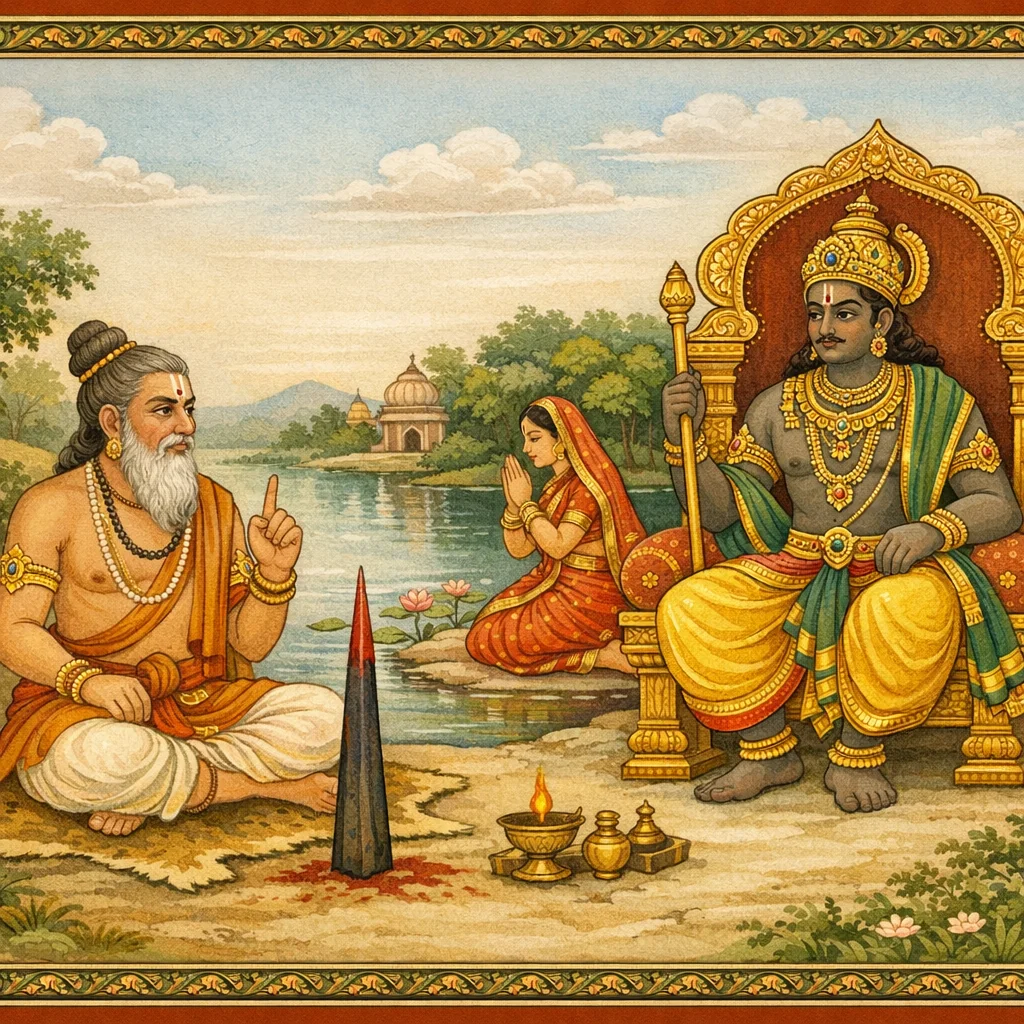
The chapter presents a juridical-theological discussion of karma and proportional justice. Māṇḍavya, enduring prolonged agony without dying, asks Dharmarāja to state the exact karmic cause. Dharmarāja explains that in a former birth, when Māṇḍavya was a child, he impaled a baka bird on a sharp stake, and that minor deed has ripened into the present pain. Māṇḍavya deems the punishment disproportionate and utters a curse: Dharmarāja will be born from a Śūdra womb and suffer social affliction; yet the curse is bounded—there will be no progeny in that birth, and Dharmarāja will regain his office thereafter. A remedy is also given: Dharmarāja should worship Trilocana (Śiva) in that very field to attain swift release (death). The devas secure further boons, transforming the stake (śūlikā) into a purifying contact-object: whoever touches it in the morning is freed from pāpa. A pativratā then requests that a dug pond/ditch become renowned as “Dīrghikā” throughout the three worlds; the devas grant this and proclaim that morning bathing there removes sins instantly. A calendrical note adds that bathing on the fifth day when the sun is in Kanyā-rāśi reverses childlessness and bestows offspring. The narrative ends with the pativratā’s later devotion to her own tīrtha and the phalaśruti that merely hearing the Dīrghikā legend liberates one from sin.
Shlokas
Verse 1
। मांडव्य उवाच । ग्रहीष्यामि सुरश्रेष्ठा वरं युष्मत्समुद्रवम् । परं मे निर्णयं चैकं धर्मराजः प्रचक्षतु
Māṇḍavya said: “O best of the gods, I shall accept the boon you offer. Yet let Dharma-rāja declare to me one final, decisive judgment.”
Verse 2
सर्वेषां प्राणिनां लोके कृतं कर्म शुभाशुभम् । उपतिष्ठति नान्यत्र सत्यमेतत्सुरोत्तमाः
“For all beings in the world, the deeds they have done—good or evil—stand before them unfailingly and nowhere else. This is the truth, O foremost of gods.”
Verse 3
मयाप्यत्र परे चापि किं कृतं पातकं च यत् । ईदृशीं वेदनां प्राप्तो न च मृत्युं कथचन
“What sin have I committed—here in this life or in another—that I have fallen into such agony, and yet death does not come to me in any way?”
Verse 4
धर्मराज उवाच । अन्यदेहे त्वया विप्र बालभावेन वर्तता । शूलाग्रेण सुतीक्ष्णेन काये विद्धो बकः क्षितौ
Dharmarāja said: “O brāhmaṇa, in another body (a former life), while you were acting with childish heedlessness, a crane was pierced in its body with the sharp point of a stake and fell upon the ground.”
Verse 5
नान्यत्कृतमपि स्वल्पं पातकं किंचिदेव हि । एतस्मात्कारणादेषा व्यथा संसेविता द्विज
“Indeed, you committed no other sin at all—not even a small one. O twice-born, it is for this very reason that this pain has come to be experienced by you.”
Verse 6
सूत उवाच । तस्य तद्वचनं श्रुत्वा भृशं क्रोधसमन्वितः । ततस्तं प्राह मांडव्यो धर्मराजं पुरः स्थितम्
Sūta said: “Hearing his words, Māṇḍavya was seized by fierce anger; then he spoke to Dharmarāja, who stood before him.”
Verse 7
अस्य स्वल्पापराधस्य यस्माद्भूयान्विनिग्रहः । कृतस्त्वया सुदुर्बुद्धे तस्माच्छापं गृहाण मे
“Because for this slight offense you imposed a punishment far beyond its measure—O evil-minded one—therefore accept my curse.”
Verse 8
त्वं प्राप्य मानुषं देहं शूद्रयोनौ व्यवस्थितः । जातिक्षयकृतं दुःखं प्रभूतं सेवयिष्यसि
“Having attained a human body, you will be placed in a Śūdra birth, and you will endure abundant suffering arising from the loss of status and caste.”
Verse 9
तथा कृता मयैषाद्य व्यवस्था सर्वदेहिनाम् । अष्टमाद्वत्सरादूर्ध्यं कर्मणा गर्हितेन च । प्रग्रहीष्यति वै जंतुः पुरुषो योषिदेव वा
“And thus, today, I have established this rule for all embodied beings: after the eighth year, a creature—whether male or female—shall indeed be held accountable for blameworthy actions.”
Verse 10
एवमुक्त्वा स मांडव्यो धर्मराजं ततः परम् । प्रस्थितो रोषनिर्मुक्तो वांछिताशां प्रति द्विजाः
Having spoken thus to Dharmarāja, the brāhmaṇa Māṇḍavya then departed, freed from anger, toward his desired destination.
Verse 11
अथ तं प्रस्थितं दृष्ट्वा प्रोचुः सर्वे दिवौकसः । धर्मराजकृते व्यग्राः श्रुत्वा शापं तथाविधम्
Then, seeing him depart, all the gods spoke—distressed on account of Dharmarāja—having heard such a curse pronounced.
Verse 12
देवा ऊचुः । भगवन्पापसक्तस्य धर्मराजस्य केवलम् । न त्वमर्हसि शापेन शूद्रं कर्तुं कथंचन
The gods said: “O venerable one, merely because Dharmarāja is devoted to punishing sin, you ought not by a curse make him a Śūdra in any way.”
Verse 13
प्रसादं कुरु तस्मात्त्वमस्य धर्मपतेर्द्विज । अस्माकं वचनात्सद्यः प्रार्थयस्व तथा वरम्
Therefore, O brāhmaṇa, show favor to this Lord of Dharma. At our request, immediately ask for a boon in the proper manner.
Verse 14
मांडव्य उवाच । नान्यथा जायते वाणी या मयोक्ता सुरोत्तमाः । अवश्यं धर्मराजोऽयं शूद्रयोनौ प्रयास्यति
Māṇḍavya said: O best of the gods, the utterance spoken by me cannot become otherwise. This Dharmarāja shall certainly enter a Śūdra womb.
Verse 15
परं नैवास्य संतानं तस्यां योनौ भविष्यति । संप्राप्स्यति च भूयोऽपि धर्मराजत्वमुत्तमम्
Yet he will have no offspring in that birth; and thereafter he will again attain the supreme station of Dharmarāja.
Verse 16
आराधयतु चाव्यग्रः क्षेत्रेऽत्रैव त्रिलोचनम् । प्रसादात्तस्य देवस्य शीघ्रं मृत्युमवाप्स्यति
Let him, with an undistracted mind, worship Trilocana (Śiva) in this very sacred field; by the grace of that God he will swiftly attain death (and thus be released from that condition).
Verse 17
तथा देयो वरो मह्यं भवद्भिर्यदि स्वर्गपाः । तदेषा शूलिकाऽस्माकं स्पर्शाद्भूयात्सुधर्मदा
If indeed, O guardians of heaven, a boon is to be granted to me by you, then let this stake (śūlikā) of ours, by mere touch, become a bestower of good dharma for people.
Verse 18
देवा ऊचुः । एनां यः प्रातरुत्थाय स्पर्शयिष्यति शूलिकाम् । पातकात्स विमुक्तो वा इह लोके भविष्यति
The gods said: Whoever rises at dawn and touches this śūlikā will, in this very world, become freed from sin.
Verse 19
एवमुक्त्वा मुनिं तं ते देवाः शक्रपुरोगमाः । ततस्तां सादरं प्राहुः सह भर्त्रा पतिव्रताम्
Having thus spoken to that sage, the gods—led by Śakra (Indra)—then addressed with respect that devoted wife (pativratā), together with her husband.
Verse 20
त्वमपि प्रार्थयाभीष्टमस्मत्तो वरवर्णिनि । यत्ते चित्ते स्थितं नित्यं नादेयं विद्यतेऽत्र नः
You too, O fair-complexioned lady, ask of us whatever you desire. Whatever remains ever set in your heart—here there is nothing that we cannot grant.
Verse 21
पतिव्रतोवाच । येयं मयाकृता गर्ता स्थानेऽत्र त्रिदशेश्वराः । मन्नाम्ना ख्यातिमायातु दीर्घिकेति जगत्त्रये
The devoted wife said: O lords of the gods, may this basin-pit that I have made here become renowned throughout the three worlds by my name, as “Dīrghikā”.
Verse 22
देवा ऊचुः । अद्यप्रभृति लोकेऽत्र गर्त्तेयं तव शोभने । दीर्घिकेति सुविख्याता भविष्यति जगत्त्रये
The gods said: From this day onward, O beautiful one, this pond-basin in the world shall be widely renowned throughout the three worlds as “Dīrghikā”.
Verse 23
येऽस्यां स्नानं करिष्यंति प्रातरुत्थाय मानवाः । सर्वपापविनिर्मुक्तास्ते भविष्यंति तत्क्षणात्
Whoever rises at dawn and bathes in this sacred water, O people, is instantly freed from every sin. Such is the purifying greatness of this tīrtha.
Verse 24
कन्याराशिगते सूर्ये संप्राप्ते पंचमीदिने । येऽत्र स्नानं करिष्यंति श्रद्धया सहिता नराः
When the Sun has entered Virgo (Kanyā-rāśi) and the fifth lunar day (pañcamī) arrives, those men who bathe here with faith obtain the promised sacred fruit of this place.
Verse 25
अपुत्रास्ते भविष्यंति सपुत्रा वंशवर्धनाः । एवमुक्त्वाऽथ तां देवा जग्मुः स्वर्गं द्विजोत्तमाः
Those who were without sons will be blessed with sons—enhancers of the family line. Having said thus, the gods then departed to heaven, O best of the twice-born.
Verse 26
पतिव्रतापि तेनैव सह कांतेन सुन्दरी । सेवयामास कल्याणी स्मरसौख्यमनुत्तमम्
That auspicious, beautiful wife—steadfast in the vow of fidelity—enjoyed unsurpassed conjugal bliss together with her beloved husband.
Verse 27
पर्वतेषु सुरम्येषु नदीनां पुलिनेषु च । उद्यानेषु विचित्रेषु वनेषूपवनेषु च
In lovely mountains, on the sandy banks of rivers, in delightful and varied gardens, and in forests and groves—
Verse 28
ततो वयसि संप्राप्ते पश्चिमे कालपर्ययात् । तदेवात्मीयसत्तीर्थं सेवयामास सादरम्
Then, as old age arrived in the course of time, she devotedly returned to that very sacred tīrtha—her own refuge and treasure—and served it with reverence.
Verse 29
ततो देहं परित्यक्त्वा स्वकांतं वीक्ष्य तं मृतम् । तत्र तोये जगामाथ ब्रह्मलोकं पतिव्रता
Then, seeing her beloved husband dead, that faithful wife relinquished her body and—through the waters of that very place—departed to Brahmaloka.
Verse 30
एतद्वः सर्वमाख्यातं दीर्घिकाख्यानमुत्तमम् । यस्य संश्रवणादेव नरः पापात्प्रमुच्यते
Thus I have told you in full this excellent account of Dīrghikā; by merely hearing it, a person is released from sin.
Verse 136
इति श्रीस्कांदे महापुराण एकाशीतिसाहस्र्यां संहितायां षष्ठे नागरखंडे हाटकेश्वर क्षेत्रमाहात्म्ये दीर्घिकोत्पत्तिमाहात्म्यवर्णनंनाम षट्त्रिंशदुत्तरशततमोऽध्यायः
Thus ends, in the revered Skanda Mahāpurāṇa—within the Ekāśītisāhasrī Saṃhitā, in the sixth book, the Nāgara Khaṇḍa, in the Māhātmya of Hāṭakeśvara Kṣetra—the chapter entitled “The Description of the Greatness of the Origin of Dīrghikā,” being Chapter 136.