Adhyaya 133
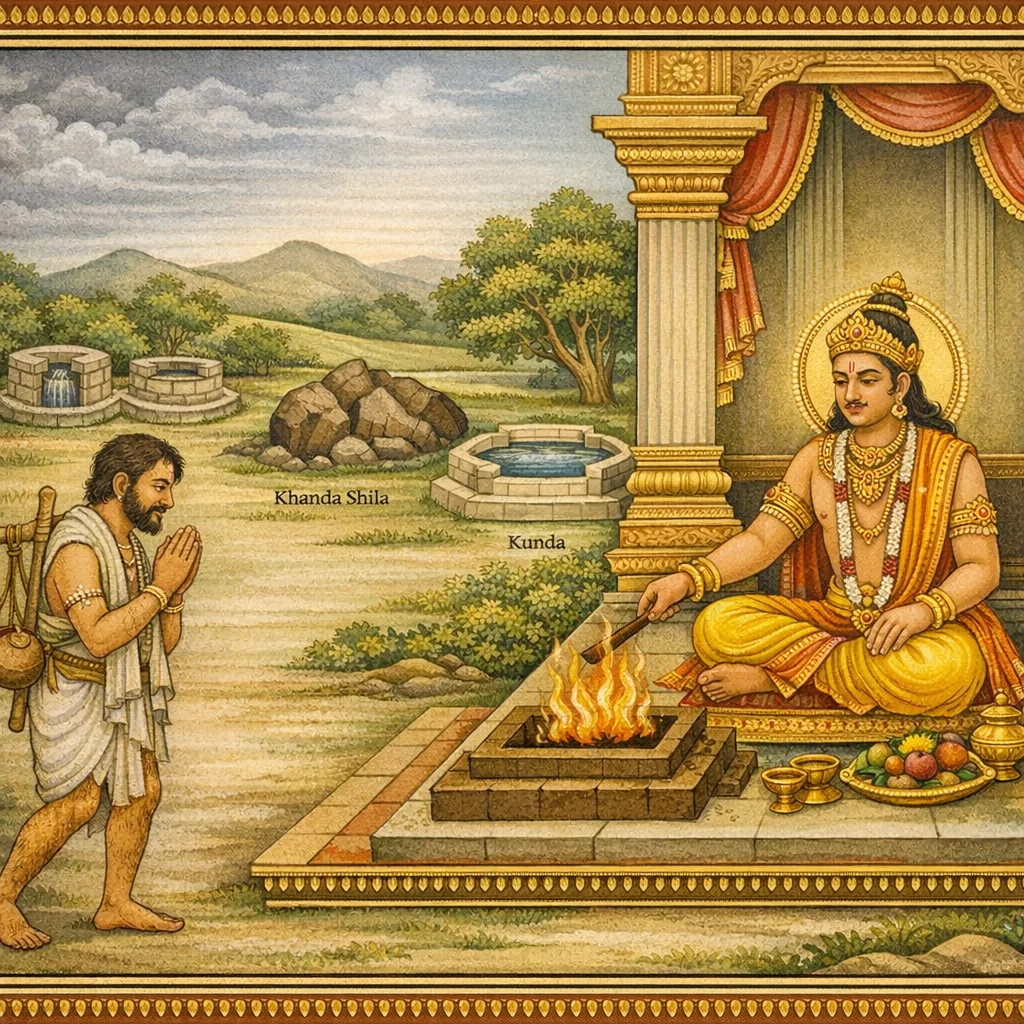
Chapter 133 gives the origin-story and ritual procedure of Ajāgṛhā within Hāṭakeśvara-kṣetra. Sūta tells the learned assembly that the deity Ajāgṛhā is famed for diminishing afflictions. A brāhmaṇa pilgrim arrives weary, rests near a herd of goats, and awakens stricken by three named diseases—rājayakṣmā, kuṣṭha, and pāmā. A radiant being appears as King Aja (Ajapāla) and explains that he protects people by governing afflictions symbolized in goat-form. The diseases declare that two are bound by a brahmaśāpa and resist ordinary cures, while the remaining one may be eased by mantra and medicine; they also warn that contact with the ground at that spot can convey similar suffering. The king performs sustained homa and devotional rites, including Atharva-oriented recitations and kṣetrapāla/vāstu hymns, drawing forth the kṣetradevatā from the earth. The deity proclaims the place purified of disease-defect and prescribes a remedy-sequence: worship Ajāgṛhā, bathe at Candrakūpikā and Saubhāgya-kūpikā, behold/approach Khaṇḍaśilā, and bathe at Apsarasāṃ Kuṇḍa on a Sunday to pacify pāmā. The brāhmaṇa follows the regimen, is gradually freed from the afflictions, and departs restored; the chapter closes by affirming Ajāgṛhā’s continuing efficacy for disciplined devotees who worship there.
Shlokas
Verse 1
सूत उवाच । तथाऽन्यापि च तत्रास्ति देवता द्विजसत्तमाः । अजागृहेति विख्याता सर्वरोगक्षयावहा
Sūta said: And there, O best of the twice-born, there is yet another deity, renowned as Ajāgṛhā, who brings about the destruction of all diseases.
Verse 2
अजापालो यदा राजा सर्वलोकहिते रतः । अजारूपाः प्रयांति स्म व्याधयः सकला द्विजाः । तदा रात्रौ समानीय तस्मिन्स्थाने दधाति सः
When King Ajāpāla was devoted to the welfare of all people, O twice-born, all diseases would come in the form of goats. Then, at night, gathering them, he would place (confine) them in that very spot.
Verse 3
ततस्तदाश्रयात्स्थानमजागृहमिति स्मृतम् । सर्वैर्जनैर्धरा पृष्ठेदर्शनाद्व्याधिनाशनम्
Therefore, because it became a place of refuge, that spot came to be remembered as “Ajāgṛha” (the Goats’ Shelter). For all people upon the earth, merely beholding it brings the destruction of disease.
Verse 4
तत्रैश्वर्यमभूत्पूर्वं यत्तद्ब्राह्मणसत्तमाः । अहं वः कीर्तयिष्यामि श्रोतव्यं सुसमाहितैः
O best of brāhmaṇas, in that place there once occurred a remarkable manifestation of divine power. I shall recount it to you—listen with steady, collected minds.
Verse 5
तत्रागतो द्विजः कश्चित्क्षेत्रे तापसरूपधृक् । तीर्थयात्राप्रसंगेन रात्रौ प्राप्तः श्रमान्वितः
There, a certain brāhmaṇa arrived in that sacred tract, bearing the appearance of an ascetic. While engaged in pilgrimage to the tīrthas, he reached the place at night, wearied by exhaustion.
Verse 6
अजावृंदमथालोक्य निविष्टं सुसुखान्वितम् । रोमंथ कर्मसंयुक्तं विश्वस्तमकुतोभयम्
Then, seeing a herd of goats seated there in great ease—chewing the cud—calm, trusting, and free from fear on every side,
Verse 7
स ज्ञात्वा मानुषेणात्र भवितव्यमसंशयम् । न शून्याः पशवो रात्रौ स्थास्यंति विजने वने
He understood, without doubt, that a human presence must be here; for animals do not remain at night, unattended, in a lonely forest.
Verse 8
ततः फूत्कृत्य फूकृत्य दिवं यावन्न संदधे । कश्चिद्वाचं प्रसुप्तश्च तावत्तत्रैव चिंतयन्
Then, after repeatedly making a loud snorting call, he could not settle his mind into sleep for a while; yet, as he pondered right there, his voice fell silent and he drifted into slumber.
Verse 9
अवश्यं मानुषेणात्र पशूनां रक्षणाय च । आगंतव्यं कुतोऽप्याशु तस्मात्तिष्ठामि निर्भयः
Surely, for the protection of these animals, some human must come here quickly from somewhere. Therefore, I shall remain here without fear.
Verse 10
एवं तस्य प्रसुप्तस्य गता सा रजनी ततः । ततस्त्वरितवत्तस्य सुश्रांतस्य द्विजोत्तमाः
Thus, while he slept, that night passed. Then—O best of brāhmaṇas—upon that greatly wearied one, events came swiftly thereafter.
Verse 11
अथ यावत्प्रभाते स प्रपश्यति निजां तनुम् । तावत्कुष्ठादिभी रोगैः समंतात्परिवारिताम्
Then, at dawn, when he beheld his own body, he found it hemmed in on every side by diseases such as leprosy.
Verse 12
अशक्तश्चलितुं स्थानादपि चैकं पदं क्वचित् । तेजो हीनोऽपि रौद्रेण चिन्तयामास वै ततः
Unable to move from that spot—even to take a single step—though his vigor had waned, he then pondered intensely, seized by a harsh, burning anguish.
Verse 13
किमिदं कारणं येन ममैषा संस्थिता तनुः । अकस्मादेव रोगोऽयं चलितुं नैव च क्षमः
“What is the cause by which my body has been brought to this condition? All of a sudden this illness has arisen, and I am not able to move at all.”
Verse 14
एवं चिन्तयमानस्य तस्य विप्रस्य तत्क्षणात् । द्वादशार्कप्रतीकाशः पुरुषः समुपागतः
As that brāhmaṇa was thinking in this manner, at that very moment a man, radiant like twelve suns, approached him.
Verse 15
तं यूथं कालयामास ततः संज्ञाभिराह्वयन् । पृथक्त्वेन समादाय यष्टिं सव्येन पाणिना
Then, signaling with gestures, he made that herd move aside; and, separating them, he took up a staff with his left hand.
Verse 16
अथापश्यत्स तं विप्रं व्याधिभिः सर्वतो वृतम् । अशक्तं चलितुं क्वापि ततः प्रोवाच सादरम्
Then he saw that brāhmaṇa, hemmed in on every side by ailments, unable to move anywhere; and he addressed him with reverence.
Verse 17
कस्त्वमेवंविधः प्राप्तः स्थाने चात्र द्विजोत्तम । नास्ति राज्ये मम व्याधिः कस्यचित्कुत्रचित्स्फुटम्
“Who are you, arrived here in such a condition, O best of the twice-born? In my kingdom no manifest disease afflicts anyone anywhere.”
Verse 18
अजोनाम नरेन्द्रोऽहं यदि ते श्रोत्रमागतः । व्याधींश्च च्छागरूपेण रक्षामि जनकारणात्
“I am the king named Ajo, if my name has reached your ears. For the people’s sake, I keep diseases in check, taking the form of a goat.”
Verse 19
तस्माद्ब्रूहि शरीरस्थो यस्ते व्याधिर्व्यवस्थितः । येनाऽहं निग्रहं तस्य करोमि द्विजसत्तम
“Therefore tell me which disease has settled in your body, so that I may restrain it, O foremost among brāhmaṇas.”
Verse 20
ब्राह्मण उवाच । तीर्थयात्रापरोऽहं च भ्रमामि क्षितिमंडले । क्रमेणाऽत्र समायातः क्षेत्रेऽस्मिन्हाटकेश्वरे
The brāhmaṇa said: “I am devoted to pilgrimage, wandering over the circle of the earth. In due course I have arrived here, in this sacred field of Hāṭakeśvara.”
Verse 21
निशावक्त्रे नृपश्रेष्ठ वासः संचिंतितो मया । दृष्ट्वाऽमूंश्च पशून्भूप मानुषं भाव्यमेव हि
At nightfall, O best of kings, I resolved to lodge here. Seeing these animals, O ruler of the earth, I deemed they were surely under human care.
Verse 22
ततश्चात्र प्रसुप्तोऽहं पशूनामंतिके नृप
Then I fell asleep here, O king, close beside the animals.
Verse 23
अथ यावत्प्रभातेऽहं प्रपश्यामि निजां तनुम् । तावत्कुष्ठादिरोगैश्च समंतात्परिवारिताम्
Then, at daybreak, the moment I beheld my own body, I found it hemmed in on every side by diseases—beginning with leprosy.
Verse 24
नान्यत्किंचिन्नृपश्रेष्ठ कारणं वेद्मि तत्त्वतः । किमेतेन नृपश्रेष्ठ भूयोभूयः प्रजल्पता । बहुत्वात्कुरु तस्मान्मे यथा स्यान्नीरुजा तनुः
O best of kings, in truth I know no other cause. What is the use of speaking again and again, O king? Therefore, by the abundance of your power, act so that my body may become free from illness.
Verse 25
ततस्ते व्याधयः प्रोक्ता अजापालेन भूभुजा । केनाज्ञा खंडिता मेऽद्य को वध्यः सांप्रतं मम
Then the goatherd spoke of those diseases to the king, protector of his people. The king said: “By whom has my command been violated today? Who is now to be punished by me?”
Verse 26
व्याधय ऊचुः । मा कोपं कुरु भूपाल कृत्येऽस्मिंस्त्वं कथंचन । यस्मादेष द्विजो विष्टः सांप्रतं व्याधिभिस्त्रिभिः
The diseases said: “O king, do not be angry in this matter at all. For this Brahmin has now been entered (possessed) by the three diseases.”
Verse 27
राजयक्ष्मा च कुष्ठं च पामा च द्विजसत्तम । एते संसर्गजा दोषास्त्रयोऽद्यापि प्रकीर्तिताः
Consumption (rājayakṣmā), leprosy, and scabies—O best of Brahmins—these three are even today spoken of as faults born of contact (contagion).
Verse 28
एतेषां प्रथमौ यौ द्वौ निवृत्तिरहितौ स्मृतौ । औषधैश्चैव मंत्रैश्च शेषा नाशं व्रजंति च
Of these, the first two are remembered as without cessation (hard to remove); but the remaining one can be destroyed by medicines and also by mantras.
Verse 29
आभ्यां च ब्रह्मशापोस्ति येन नास्ति निवर्तनम् । तस्मादत्र नृपश्रेष्ठ कुरु यत्ते क्षमं भवेत्
And upon those two there rests a Brahmin’s curse, by which there is no turning back. Therefore here, O best of kings, do what is proper and possible for you to do.
Verse 30
एतेन ब्राह्मणेनैते स्पृष्टा राजंस्त्रयोपि च । तस्मात्तावत्तनुं चास्याविशतां तावसंशयम्
O king, all three of these have been touched by this Brahmin; therefore, without doubt, to that extent they have entered into his body.
Verse 32
यत्र स्थानं चिरं तत्र मेदिन्यां विहितं नृप । पुरीषं च समाविद्धा तेनैषा मेदिनी द्रुतम्
O king, wherever a long stay was made upon the earth, there the ground was quickly tainted—fouled also by excrement; thus this soil was swiftly defiled.
Verse 33
कालांतरेपि ये मर्त्या भूम्यामस्यां समागताः । भूमेः स्पर्शं करिष्यंति ते भविष्यंति चेदृशाः
Even in later times, whatever mortals come to this ground and touch the earth here—they too will become like this (afflicted).
Verse 34
वयं शेषा महाराज व्याधयो ये व्यवस्थिताः । त्वया मुक्त्वा भविष्यामो मन्त्रौषधवशानुगाः
“O great king, we are the remaining diseases that still abide here. Once released by you, we shall become subject to mantras and medicines (and no longer act independently).”
Verse 35
नैतौ पुनस्तु दुर्ग्राह्यौ ब्रह्मशाप समुद्भवौ
“But these two, indeed, are hard to counteract, for they have arisen from the curse of Brahmā.”
Verse 36
तच्छ्रुत्वा पार्थिवः सोऽपि तस्मिन्स्थाने व्यवस्थितः । तं ब्राह्मणं पुनः प्राह न भेतव्यं त्वया द्विज
Hearing this, the king, remaining right there in that sacred place, again spoke to the brāhmaṇa: “O twice-born one, you should not be afraid.”
Verse 37
अहं त्वां रक्षयिष्यामि व्याधेरस्मात्सुदारुणात् । अत्र तस्मात्प्रतीक्षस्व कञ्चित्कालं ममाज्ञया
“I shall protect you from this most dreadful disease. Therefore, remain here and wait for some time, by my command.”
Verse 38
एवमुक्त्वा ततश्चक्रे तदर्थं सुमहत्तपः । आराधयन्प्रभक्त्या च सम्यक्तां क्षेत्रदेवताम्
Having spoken thus, he then undertook great austerity for that purpose, duly worshipping with deep devotion the deity presiding over that sacred field (kṣetra-devatā).
Verse 39
मुंडेनाथर्वशीर्षेण दिवारात्रमतंद्रितः । क्षेत्रपालोत्थसूक्तेन वास्तुसूक्तेन च द्विजाः
With the Muṇḍa and the Atharvaśīrṣa texts, untiringly day and night, and also with the hymn arising for Kṣetrapāla and with the Vāstu-sūkta—O brāhmaṇas—(he performed the rite).
Verse 41
अथ नक्तावसानेन तस्य होमस्य चोत्थिता । भित्त्वा धरातलं देवी मन्त्राकृष्टा विनिर्गता
Then, at the end of the night, as that fire-offering concluded, the Goddess—drawn forth by mantra—arose, breaking through the earth and emerging.
Verse 42
देवता तस्य क्षेत्रस्य ततः प्रोवाच तं नृपम्
Then the deity of that sacred place spoke to the king.
Verse 43
एकाहं तव भूपाल होमस्यास्य प्रभावतः । विनिर्गता धरापृष्ठात्क्षेत्रस्यास्याधिपा स्मृता
O King, in a single day, by the power of this homa, I have emerged from the surface of the earth, known as the sovereign presiding deity of this sacred kṣetra.
Verse 44
तस्माद्वद महाभाग यत्ते कृत्यं करोम्यहम् । परां तुष्टिमनुप्राप्ता तस्माद्ब्रूहि यदीप्सितम्
Therefore, O fortunate one, speak—what duty of yours shall I accomplish? I am supremely pleased; so tell me what you desire.
Verse 45
राजोवाच । अत्र स्थाने सदा स्थेयं त्वया देवि विशेषतः । व्याधिसंसर्गजो दोषो भूमेरस्या यथा व्रजेत्
The King said: “O Goddess, you should dwell here at this place—especially and always—so that the blemish arising from the contagion of disease may depart from this land.”
Verse 46
अद्यप्रभृति देवेशि तथा नीतिर्विधीयताम् । नो चेदस्याः प्रसंगेन प्रभविष्यंति मानवाः
From today onward, O Divine Lady, let such an ordinance be established; otherwise, through association with this taint, people will be harmed and overpowered.
Verse 47
व्याधिग्रस्ता यथा विप्रो योऽयं संदृश्यते पुरः । मयात्र व्याधयः कालं चिरं संस्थापिता यतः । भविष्यति च मे दोषो नो चेद्देवि न संशयः
Just as this brāhmaṇa, stricken by disease, is seen here before us—so too, since the diseases have long been lodged here by me, a fault will fall upon me if this is not remedied, O Goddess; of that there is no doubt.
Verse 48
तथायं ब्राह्मणो रोगात्त्वत्प्रसादात्सुरेश्वरि । मुक्तो भवतु मेदिन्यामत्र स्थेयं सदा त्वया
So too, O Sovereign Goddess, by your grace may this brāhmaṇa be freed from disease; and upon this earth, may you ever abide here.
Verse 49
क्षेत्रदेवतोवाच । एतत्स्थानं मया सर्वं व्याधिदोषविवर्जितम् । विहितं सर्वदैवात्र स्थास्येऽहमिह सर्वदा
The Kṣetra-deity said: “This entire place has been arranged by me, free from the fault of disease; and here indeed, at all times, I shall dwell forever.”
Verse 50
सांप्रतं योऽत्र मे स्थाने व्याधिग्रस्तः समेष्यति । पूजयिष्यति मां भक्त्या नीरोगः स भविष्यति
Henceforth, whoever comes here to my place afflicted by disease and worships me with devotion—he will become free from illness.
Verse 51
तस्मादद्य द्विजेंद्रोऽयं मां पूजयतु सादरम् । भक्त्या परमया युक्तः शुचिर्भूत्वा समाहितः
Therefore, let this foremost brāhmaṇa worship me today with reverence—endowed with supreme devotion, purified, and composed in mind.
Verse 52
अत्र क्षेत्रे पराऽन्यास्ति विख्याता चंद्रकूपिका तस्यां स्नातु यथान्यायं नित्यमेव महीपते
In this sacred region there is yet another renowned spot—the Candra-kūpikā (Moon-well). O King, one should bathe in it daily, according to proper rule.
Verse 53
दक्षशापप्रशप्तेन या चंद्रेण पुरा कृता । स्वस्नानार्थं क्षयव्याधिप्रग्रस्तेन महात्मना
Long ago it was made by Candra, the Moon, who had been cursed by Dakṣa—fashioned for his own bathing when that great being was afflicted by a wasting disease.
Verse 54
तथा खण्डशिलानाम देवता चात्र तिष्ठति । सौभाग्यकूपिकास्नानं कृत्वा तां च प्रपश्यतु
Likewise, a deity named Khaṇḍa-śilā abides here. Having bathed in the Saubhāgya-kūpikā, the Well of Good Fortune, one should also go and behold that deity.
Verse 55
या कृता कामदेवेन कुष्ठग्रस्तेन वै पुरा । स्नपनार्थं च कुष्ठस्य विनाशाय च सादरम्
This sacred well was formerly made by Kāmadeva when he was afflicted with leprosy—reverently, for bathing and for the complete destruction of that leprosy.
Verse 57
सूत उवाच । ततः स ब्राह्मणः प्राप्य सुपुण्यां चन्द्रकूपिकाम् । स्नानं कृत्वा च तां देवीं पूजयामास भक्तितः । यावन्मासं ततो मुक्तः सत्वरं राजयक्ष्मणा
Sūta said: Then that brāhmaṇa reached the exceedingly meritorious Candrakūpikā. Having bathed there and worshipped that Goddess with devotion, within a month he was swiftly freed from rājayakṣmā, consumption.
Verse 58
ततः सौभाग्यकूपीं तां दृष्ट्वा कामविनिर्मिताम् । तथा स्नानं विधायाथ पश्यन्खंडशिलां च ताम्
Then, seeing that Saubhāgyakūpī, fashioned by Kāma, he likewise performed the bathing rite there—and beheld Khaṇḍa-śilā as well.
Verse 59
तद्वन्मासेन निर्मुक्तः कुष्ठेन द्विजसत्तमाः । तस्या देव्याः प्रभावेन कूपिकायां विशेषतः
In the same way, within a month he was freed from leprosy, O best of the twice-born—especially by the power of that Goddess in that very well.
Verse 60
ततश्चाप्सरसां कुंडे स्नात्वैकं रविवासरम् । पामया संपरित्यक्तो बुद्ध्येव विषयात्मकः
Then, having bathed at the Apsarasāṃ Kuṇḍa on a single Sunday, he was wholly abandoned by pāma, a skin-disease—just as the mind, through right understanding, casts off sense-objects.
Verse 61
ततः स ब्राह्मणो जातो द्वादशार्कसमप्रभः । तोषेण महता युक्तो दत्ताशीस्तस्य भूपतेः
Then that brāhmaṇa became radiant like twelve suns. Filled with great satisfaction, he bestowed blessings upon that king.
Verse 62
प्रययौ वांछितं देशमनुज्ञातश्च भूभुजा । देवतायां प्रणामं च ताभ्यां कृत्वा पुनःपुनः
Granted leave by the king, he departed for the land he desired—having again and again made obeisance to the deity of that place.
Verse 63
सोपि राजा सदोषांस्तानजारूपान्विलोक्य च । स्वस्यैव ब्राह्मणं दृष्ट्वा तं तथा संप्रहर्षितः
That king too, seeing those goats with their blemishes, and then seeing his own brāhmaṇa restored thus, became greatly delighted.
Verse 64
स्वयं च प्रययौ तत्र यत्रस्थो हाटकेश्वरः । तेनैव च शरीरेण निजकांतासमन्वितः
And he himself went to that place where Hāṭakeśvara abides—still in the same body, and accompanied by his own beloved queen.
Verse 65
अजागृहे स्थिता यस्मात्सा देवी क्षेत्रदेवता । अजागृहा ततः ख्याता सर्वत्रैव द्विजोत्तमाः
Because that Goddess—the presiding deity of the holy precinct—dwells in the Goat-house (Ajāgṛha), the place came to be famed everywhere as Ajāgṛhā, O best of brāhmaṇas.
Verse 66
अद्यापि यक्ष्मणा ग्रस्तो यस्तां पूजयते नरः । तैनैव विधिना सम्यक्स नीरोगो द्रुतं भवेत्
Even today, a man afflicted with consumption (yakṣmā) who worships her, in that very prescribed manner and with due correctness, quickly becomes free from disease.
Verse 96
तथा चाप्सरसां कुण्डमत्रास्ति नृपसत्तम । तत्र स्नात्वा रवेरह्नि ततः पामा प्रशाम्यति
And here too, O best of kings, there is the Apsarās’ Pond. Bathing there on a day of the Sun, one’s skin-disease (pāmā) is thereafter pacified.
Verse 133
इति श्रीस्कांदे महापुराण एकाशीतिसाहस्र्यां संहितायां षष्ठे नागरखण्डे हाटकेश्वरक्षेत्रमाहात्म्येऽजागृहोत्पत्तिमाहात्म्यवर्णनंनाम त्रयस्त्रिंशदुत्तरशततमोऽध्यायः
Thus, in the revered Skanda Mahāpurāṇa, in the Ekāśīti-sāhasrī Saṃhitā, in the sixth book—the Nāgara-khaṇḍa—within the Māhātmya of the Hāṭakeśvara sacred region, ends the one-hundred-and-thirty-third chapter, entitled “The Description of the Greatness of the Origin of Ajāgṛha.”