Adhyaya 132
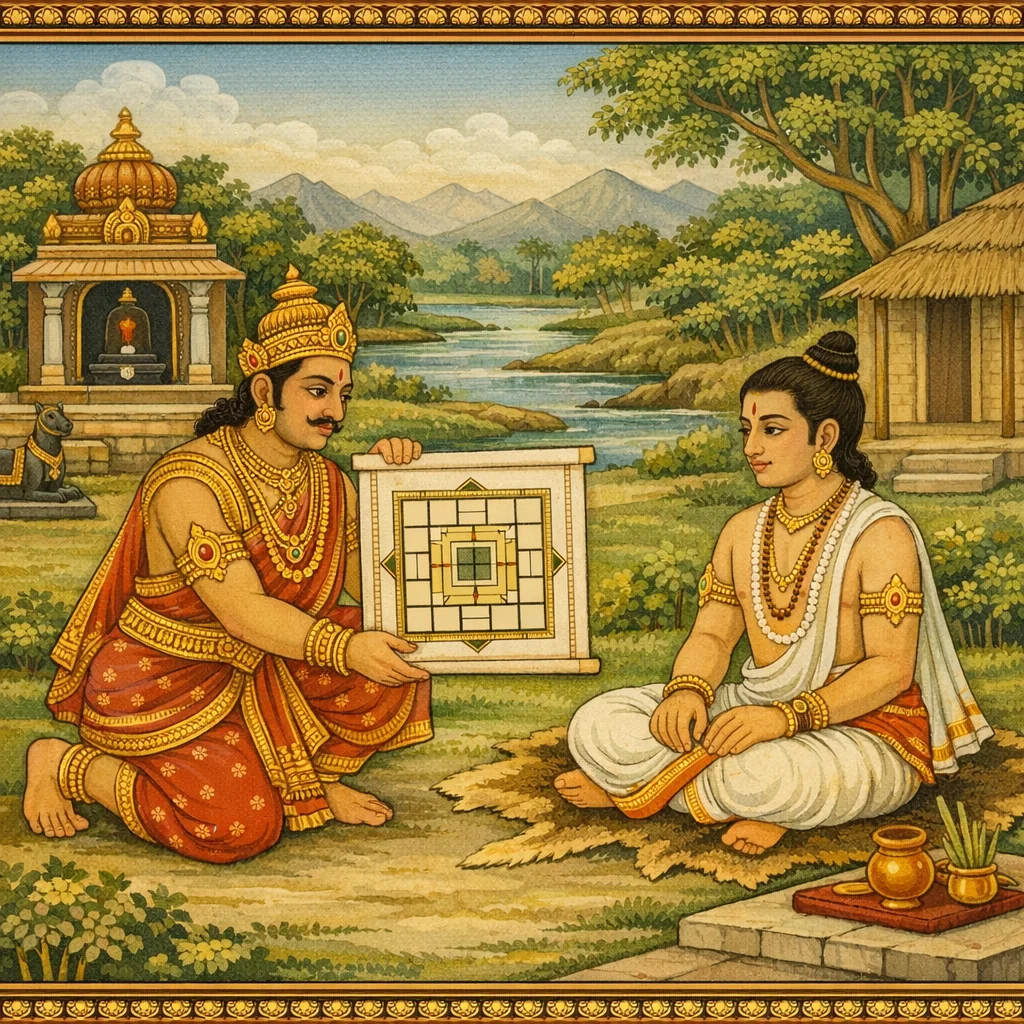
This chapter is framed as a theological dialogue. The ṛṣis ask Sūta why a tīrtha connected with Kātyāyana has not been described earlier, and request an account of any sacred foundation established by that mahātmā. Sūta replies that Kātyāyana founded the tīrtha called Vāstupada, said to grant all desired aims, where worship is offered to an ordered array of deities (forty-three plus five). An origin-myth follows: a terrifying being rises from the earth and becomes invulnerable through daityic mantra-power linked to Śukra’s instruction. The devas cannot harm it and are imperiled until Viṣṇu intervenes with a binding vow-framework: wherever a deity is stationed upon the being’s body, worship at that spot will satisfy it; neglect of such worship leaves humans exposed to harm. Once pacified, Brahmā names it “Vāstu,” and Viṣṇu commissions Viśvakarman to codify the rites of worship. Yājñavalkya’s son then asks Viśvakarman to establish an āśrama-site in Hāṭakeśvara-kṣetra according to this protocol. Viśvakarman performs the Vāstu-pūjā as instructed, and Kātyāyana spreads these observances for the welfare of the world. The chapter closes by declaring that contact with this kṣetra frees one from sin and neutralizes household and architectural defects (gṛha-doṣa, śilpa-doṣa, ku-pada, ku-vāstu), especially when worship is done on Vaiśākha śukla tṛtīyā under Rohiṇī, promising prosperity and sovereignty to those who worship correctly.
Shlokas
Verse 1
ऋषय ऊचुः त्वया सूतज तत्रस्थं याज्ञवल्क्यस्य कीर्तितम् । तीर्थं वररुचेश्चैव वैनायक्यं प्रविद्यते
The sages said: “O son of Sūta, you have described the tīrtha of Yājñavalkya situated there; and the tīrtha of Vararuci is also known—together with the sacred Vaināyaka, connected with Gaṇapati.”
Verse 2
कात्यायनस्य न प्रोक्तं किञ्चित्तत्र महामते । किं वा तेन कृतं नैव किं वा ते विस्मृतिं गतम्
“Nothing has been spoken there about Kātyāyana, O great-minded one. Did he do nothing there at all, or has it simply slipped from your memory?”
Verse 3
तस्मादाचक्ष्व नः शीघ्रं यदि किंचिन्महात्मना । क्षेत्रेत्र निर्मितं तीर्थं सर्वसिद्धिप्रदायकम्
“Therefore, tell us quickly—if that great soul established any tīrtha in this holy field—a tīrtha that bestows every attainment and every siddhi.”
Verse 4
सूत उवाच । तेन वास्तुपदंनाम तत्र तीर्थविनिर्मितम् । कात्यायनेन विप्रेण सर्वकामप्रदं नृणाम्
Sūta said: “By him, a tīrtha named Vāstupada was established there—by the brāhmaṇa Kātyāyana—granting all desired aims to people.”
Verse 5
चत्वारिंशत्त्रिभिर्युक्ता देवता यत्र पंच च । पूज्यंते पूजिताश्चापि सिद्धिं यच्छंति तत्क्षणात्
“There, forty-three deities—and five more—are worshipped; and when they are worshipped, they bestow success immediately.”
Verse 6
ऋषय ऊचुः । कस्मात्ता देवताः सूत पूज्यंते तत्र संस्थिताः । नामतश्च विभागेन कीर्तयस्व पृथक्पृथक्
The sages said: “O Sūta, for what reason are those deities, abiding there, worshipped? Declare them—by name and by classification—each one separately.”
Verse 7
सूत उवाच । पूर्वं किंचिन्महद्भूतं निर्गतं धरणीतलात् । अपूर्वं रौद्रमत्युग्रं कृष्ण दंतं भयानकम्
Sūta said: “Formerly, an enormous being emerged from the earth’s surface—unprecedented, wrathful, exceedingly fierce, black-toothed, and terrifying.”
Verse 9
शंकुकर्णं कृशास्यं च ऊर्ध्वकेशं भयानकम् । देवानां नाशनार्थाय मानुषाणां विशेषतः । आकृष्टं दानवेंद्रेण मंत्रैः शुक्रप्रदर्शितैः । अवध्यं सर्वशस्त्राणामस्त्राणां च विशेषतः
“It had spike-like ears, a gaunt face, and hair standing upright—terrifying—brought forth for the destruction of the gods, and especially of human beings. It was summoned by a lord of the Dānavas through mantras taught by Śukra, and it was invulnerable to all weapons—particularly to divine missiles.”
Verse 10
अथ देवाः समालोक्य तत्तादृक्सुभयावहम् । जघ्नुः शस्त्रैः शितैश्चित्रैः कोपेन महतान्विताः
“Then the gods, seeing it—so dread-inspiring—struck at it with sharp and wondrous weapons, filled with great wrath.”
Verse 11
नैव शेकुस्तदंगेषु प्रहर्तुं यत्नमास्थिताः । भक्ष्यंते केवलं तेन शतशोऽथ सहस्रशः
“Though they exerted themselves, they could not strike its limbs at all; instead, they were simply devoured by it—in hundreds and then in thousands.”
Verse 12
अथ ते यत्नमास्थाय सर्वे देवाः सवासवाः । ब्रह्माणमग्रतः कृत्वा तद्भूतमभिदुद्रुवुः
Then all the gods, together with Indra, roused their resolve; placing Brahmā at their forefront, they rushed against that being.
Verse 13
ततः संगृह्य यत्नेन सर्वगात्रेषु सर्वतः । तच्च पंचगुणैर्देवैः पातितं धरणीतले
Then, seizing it with effort on all sides and at all its limbs, the gods—fivefold in power—cast that being down upon the earth.
Verse 14
उपविष्टास्ततस्तस्य सर्वे भूत्वा समंततः । प्रहारान्संप्रयच्छंति न लगंति च तस्य ते
Then they all sat down around it on every side and began to strike it repeatedly; yet those blows did not take effect upon it.
Verse 15
आथर्वणेन सूक्तेन जातं चामृतबिंदुना । तद्भूतं प्रेषितं दैत्यैर्मुंडेन च तदंतिकम्
That fierce spirit-being, brought forth by an Atharvanic hymn and by a drop of nectar, was dispatched by the Daityas—by Muṇḍa—to that very spot.
Verse 16
एवं वर्षसहस्रांतं तत्तथैव व्यवस्थितम् । न मुंचंति भयात्ते तु न हंतुं शक्नुवंति च
Thus it remained in that very state for a thousand years. Out of fear they could neither release it nor were they able to slay it.
Verse 17
तस्योदरे स्थितो ब्रह्मा शक्राद्या अमराश्च ये । चतुर्दिक्षु स्थिताः क्रुद्धा महद्यत्नेन संस्थिताः । ततस्ते दानवाः सर्वे मंत्रं चक्रुः परस्परम्
Within its belly were Brahmā and the immortals beginning with Śakra. Standing in the four directions, enraged and braced with great effort, all those Dānavas then took counsel with one another.
Verse 18
अस्य भूतस्य रौद्रस्य शुक्रसृष्टस्य तत्क्षणात् । एक एवात्र निर्दिष्ट उपायो देवसंक्षयः
For this wrathful spirit, created by Śukra in an instant, only one remedy was proposed here—one that would bring about the destruction of the gods.
Verse 19
ततः शस्त्राणि तीक्ष्णानि दानवास्ते महाबलाः । मुंचंतो विविधान्नादान्समाजग्मुः सहस्रशः
Then those mighty Dānavas, hurling sharp weapons and raising many kinds of battle-cries, assembled by the thousands.
Verse 20
एतस्मिन्नंतरे विष्णुरागतस्तत्र तत्क्षणात् । आह भूतं तदा विष्णुर्वचसा ह्लादयन्निव
Just then Viṣṇu arrived there in an instant. At that time Viṣṇu addressed the spirit-being, as though soothing it with his words.
Verse 21
यो यस्मिन्संस्थितो गात्रे देवस्तव समुद्भवे । तत्र पूजां समादाय तस्मात्त्वां तर्पयिष्यति
‘Whichever god is stationed in whichever limb of yours, O being that has arisen—he will perform worship there, and by that worship he will satisfy you.’
Verse 22
नैवंविधा तु लोकेऽस्मिन्पूजा देवस्य संस्थिता । कस्यचिद्यादृशी तेऽद्य मया संप्रतिपादिता
In this world no worship of a deity is established like this—such as the one I have explained to you today.
Verse 23
ततस्तेन प्रतिज्ञातमविकल्पेन चेतसा । एवं तेऽहं करिष्यामि परं मे वचनं शृणु
Then, with an unwavering mind, he promised: “So I shall do for you. Now hear my further word.”
Verse 24
यदि कश्चिन्न मे पूजां करिष्यति कदाचन । कथंचिन्मानवः कश्चित्स मे भक्ष्यो भविष्यति
“If any person ever fails to offer worship to me, then—by some means or other—such a human shall become my food.”
Verse 25
सूत उवाच । बाढमित्येव च प्रोक्ते ततो देवेन चक्रिणा । तद्भूतं निश्चलं जातं हर्षेण महतान्वितम्
Sūta said: “When the discus-bearing Lord replied, ‘So be it,’ that being became motionless, filled with great rejoicing.”
Verse 26
ततो देवाः समुत्थाय तत्त्यक्त्वा शस्त्रपाणयः । जघ्नुश्च निशितैः शस्त्रैः पलायनसमुत्सुकान् । लज्जाहीनान्गतामर्षान्दीनवाक्यप्रजल्पकान्
Then the gods rose up; taking up their weapons, they struck down with sharp arms those eager to flee—shameless, their fury spent, babbling pitiful words.
Verse 27
ततः स्वस्थः स भूत्वा तु हरिर्दैत्यैर्निपातितैः । प्रोवाच पद्मजं नाम भूतस्यास्य कुरुष्व भोः
Then Hari (Viṣṇu), restored to calm after the Daityas had been felled, said to Padmaja (Brahmā): “O revered one, assign a name to this being.”
Verse 28
ब्रह्मोवाच । अनेन तव वाक्यस्य प्रोक्तं वाक्यं हरे यतः । वास्त्वेतदिति यस्माच्च तस्माद्वास्तु भविष्यति
Brahmā said: “O Hari, since by your utterance the saying has been declared—‘This is Vāstu’—therefore it shall indeed be called Vāstu.”
Verse 29
एवमुक्त्वा हृषीकेश आहूय विश्वकर्मणे । विधानं कथयामास पूजार्थं विस्तरान्वितम्
Having spoken thus, Hṛṣīkeśa (Hari) summoned Viśvakarman and explained, in full detail, the procedure to be followed for worship.
Verse 30
एतस्मिन्नंतरे प्राह याज्ञवल्क्यसुतः सुधीः । विश्वकर्माणमाहूय प्रथमं द्विजसत्तमाः
Meanwhile, the wise son of Yājñavalkya spoke; and the foremost among the twice-born first summoned Viśvakarman.
Verse 31
हाटकेश्वरजे क्षेत्रे ममाश्रमपदं कुरु । अनेनैव विधानेन प्रोक्तेन तु महामते
“In the sacred region of Hāṭakeśvara, build for me an āśrama-abode—according to this very procedure that has been laid down, O great-minded one.”
Verse 32
ततोहं सकलं बुद्ध्वा वृद्धिं नेष्यामि भूतले । बालावबोधनार्थाय तस्मादागच्छ सत्वरम्
Then, having understood all, I shall foster its growth upon the earth; therefore come swiftly, for the teaching and awakening of the unlearned.
Verse 33
ततः संप्रेषयामास तं ब्रह्मापि तदंतिकम् । विश्वकर्माणमाहूय स्वसुतस्य हिते स्थितः
Then Brahmā too dispatched him to that place; summoning Viśvakarman, he acted with his own son’s welfare in mind.
Verse 34
विश्वकर्मापि तत्रैत्य वास्तुपूजां यथोदिताम् । चकार ब्रह्मणा प्रोक्तां यादृशीं सकलां ततः
Then Viśvakarman too came to that place and performed the Vāstu-worship exactly as prescribed—complete in every detail, just as Brahmā had instructed.
Verse 35
कात्यायनोऽपि तां सर्वां दृष्ट्वा चक्रे सहस्रशः । तदा विश्वहितार्थाय शालाकर्मादि पूर्विकाम्
Kātyāyana too, seeing that entire rite, then performed it thousands of times for the welfare of the whole world, beginning with the preliminary acts such as the śālā-karman.
Verse 36
एवं वास्तुपदं जातं तस्मिन्क्षेत्रे द्विजोत्तमाः । अस्मिन्क्षेत्रे नरः पापात्स्पृष्टो मुच्येत कर्मणा
Thus the Vāstu-pada came into being in that sacred field, O best of the twice-born. In this very kṣetra, a man—though tainted by sin—becomes freed through the prescribed rite.
Verse 37
तथा न प्राप्नुयाद्दोषं गृहजातं कथंचन । शिल्पोत्थं कुपदोत्थं च कुवास्तुजमथापि च
Likewise, one would not incur any defect arising from a dwelling—whether caused by faulty workmanship, by an inauspicious ‘pada’ (layout), or even by improper vāstu itself.
Verse 38
वैशाखस्य तृतीयायां शुक्लायां रोहिणीषु च । तत्पदं निहितं तत्र वास्तोस्तेन महात्मना
On the third lunar day of bright Vaiśākha, when the Rohiṇī constellation prevailed, that sacred ‘pada’ of Vāstu was established there by that great-souled one.
Verse 39
तस्मिन्नपि च यः पूजां तेनैव विधिना नरः । तस्य यः कुरुते सम्यक्स भूपत्वमवाप्नुयात्
And even there, if a man performs worship by that very same method, then whoever carries it out properly attains sovereignty—becoming a king.
Verse 40
गृहं दोषान्वितं प्राप्य शिल्पादिभिरुपद्रुतम् । तस्योपसंगमं प्राप्य समृद्धिं याति तद्दिने
Even a house burdened with defects and afflicted by faults of construction and the like—upon coming into contact with that (sacred Vāstu-pada/rite)—attains prosperity on that very day.
Verse 132
इति श्रीस्कांदे महापुराण एकाशीतिसाहस्र्यां संहितायां षष्ठे नागर खण्डे हाटकेश्वरक्षेत्रमाहात्म्ये वास्तुपदोत्पत्तिमाहात्म्यवर्णनंनाम द्वात्रिंशदुत्तरशततमोऽध्यायः
Thus ends the one-hundred-and-thirty-second chapter, called “The Glorification and Description of the Greatness of the Origin of the Vāstu-pada,” in the Hāṭakeśvara-kṣetra Māhātmya of the Nāgara Khaṇḍa, within the Śrī Skanda Mahāpurāṇa of the eighty-one-thousand-verse Saṃhitā.