Adhyaya 13
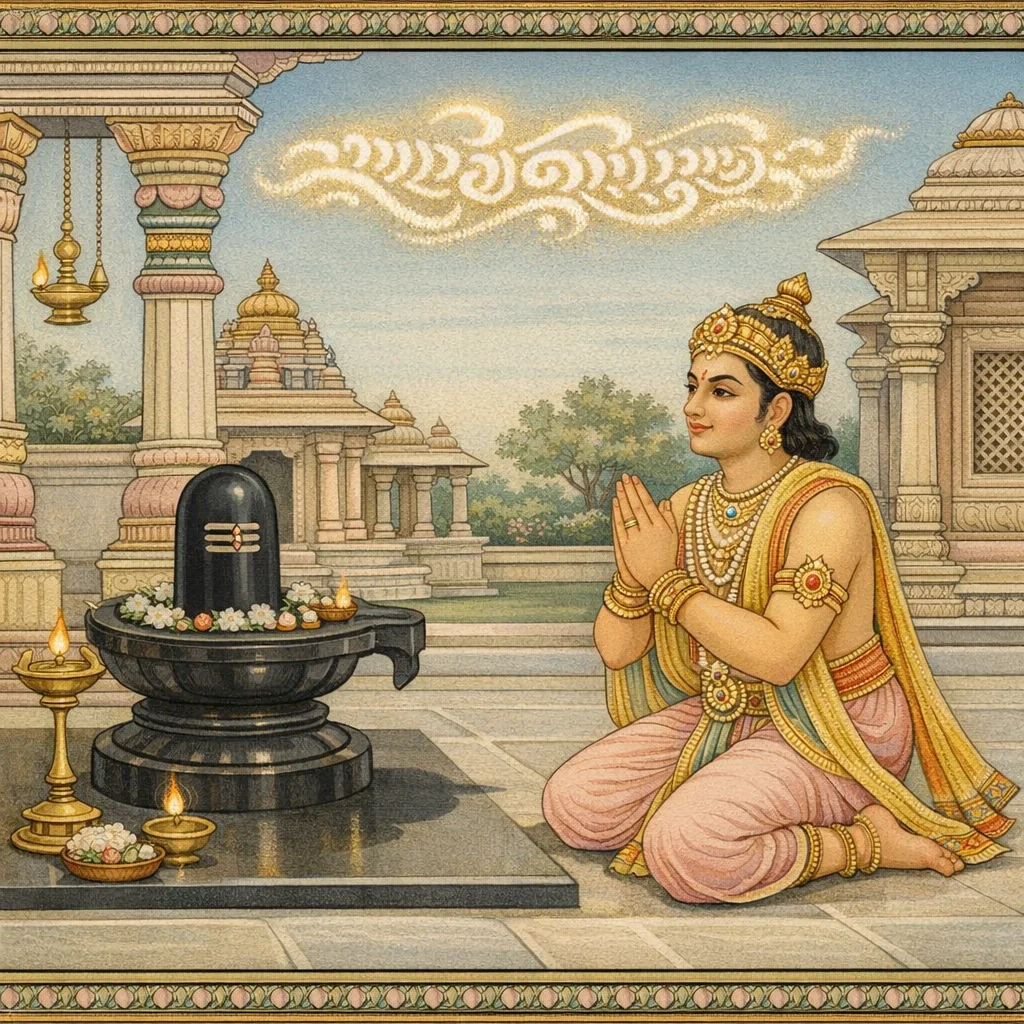
Sūta relates that a king, after entrusting his kingdom and city to his sons and gifting a settlement to the twice-born, undertakes severe tapas to propitiate Mahādeva. His austerity intensifies through successive dietary restraints—fruit only, then dried leaves, then water only, and finally air only—each maintained for long periods. Pleased, Maheśvara appears and offers a boon. The king asks that the already supremely meritorious holy field connected with Haṭakeśvara be further sanctified by the deity’s permanent residence. Mahādeva agrees to remain there immovable, becoming famed in the three worlds as “Acaleśvara,” and promises steady prosperity to devotees who behold him with bhakti. A special observance is taught: on the bright fourteenth of Māgha, one who offers a “ghṛta-kambala” (a ghee-made covering/offering) to the liṅga gains the destruction of sins from all stages of life. The king is instructed to establish the liṅga so the Lord may dwell there always. After the Lord vanishes, the king builds a beautiful temple. A celestial voice gives a verifying sign: the liṅga’s shadow will remain fixed, not aligning with directions in the ordinary way. The king witnesses this and feels fulfilled; the text says the wondrous shadow is still seen, and adds that one destined to die within six months cannot see it. The chapter concludes by affirming Mahādeva’s continual presence near Camatkārapura as Acaleśvara, the tīrtha’s power to fulfill wishes and grant liberation, and that even personified vices are ordered to hinder people from going there—underscoring the site’s exceptional efficacy.
Shlokas
Verse 1
। सूत उवाच । एवं निवेद्य पुत्राणां स राज्यं पृथिवीपतिः । पुरं च तद्द्विजातिभ्यः प्रदाय स्वयमेव हि
Sūta said: Having thus entrusted the kingdom to his sons, that lord of the earth personally bestowed the city upon the twice-born (the brāhmaṇas).
Verse 2
तत आराधयामास देवदेवं महेश्वरम् । कृत्वा तदाऽश्रमं तत्र श्रद्धया परया युतः
Thereafter, endowed with supreme faith, he established an āśrama there and worshipped Maheśvara, the God of gods.
Verse 3
स बभूव फलाहारो यावद्वर्षशतं नृपः । शीर्णपर्णाशनः पश्चात्तावत्कालं समाहितः
That king lived on fruits for a hundred years; afterwards, for the same length of time, remaining absorbed in concentration, he subsisted on fallen leaves.
Verse 4
ततः परं जलाहारो जातो वर्षशतं हि सः । वायुभक्षस्ततोऽभूत्स यावद्वर्षशतं परम्
After that, for a hundred years he lived on water alone; then he became one who “fed on air” for yet another hundred years.
Verse 5
ततस्तुष्टो महादेवस्तस्य वर्षशते गते । चतुर्थे वायुभक्षस्य दर्शने समुपस्थितः
Then Mahādeva, pleased with him, appeared in visible form when a hundred years had passed—during the fourth stage, when he was subsisting on air.
Verse 6
प्रोवाच परितुष्टोऽस्मि मत्तः प्रार्थय वांछितम् । अहं ते संप्रदास्यामि दुर्लभं त्रिदशैरपि
He (Śiva) said: “I am fully pleased. Ask of Me whatever you desire; I shall grant it to you—even that which is difficult to obtain even for the gods.”
Verse 7
राजोवाच । एतत्पुण्यतमं क्षेत्रं नानातीर्थसमाश्रयम् । हाटकेश्वरमाहात्म्यात्सर्वपापक्षयापहम्
The King said: “This is the most sacred region, the refuge of many tīrthas. By the very greatness of Hāṭakeśvara, it brings about the destruction of all sins.”
Verse 8
तस्मात्तव निवासेन भूयान्मेध्यतमं पुनः । एतन्मे वांछितं देव देहि तुष्टिं गतो यदि
“Therefore, by Your dwelling here, may it become yet more supremely pure. This is my desired boon, O Deva—grant it, if You are pleased.”
Verse 9
मयैतदग्र्यं निर्माय ब्राह्मणेभ्यो निवेदितम् । पुरं शर्वाऽमराधीश श्रद्धापूतेन चेतसा
O Śarva, Lord of the immortals, having fashioned this most excellent foundation, I have dedicated the city to the brāhmaṇas, with a mind purified by faith.
Verse 10
तस्मिंस्त्वया सदा वासः कर्तव्यो मम वाक्यतः । निश्चलत्वेन येन स्याद्गणैः सर्वैः समन्वितम्
Therefore, by my word, You should dwell there always, steadfast and unmoving, so that the place may ever be accompanied by all Your gaṇas.
Verse 11
भगवानुवाच । अचलोऽहं भविष्यामि स्थानेऽत्र तव भूमिप । अचलेश्वर इत्येव नाम्ना ख्यातो जगत्त्रये
The Blessed Lord said: “O king, in this very place of yours I shall abide as the Unmoving One. Indeed, by the name ‘Acaleśvara’ I shall be renowned throughout the three worlds.”
Verse 12
यो मामत्र स्थितं मर्त्यो वीक्षयिष्यति भक्तितः । भविष्यंत्यचलास्तस्य सर्वदैव विभूतयः
Any mortal who, with devotion, beholds Me abiding here—his prosperities and divine endowments shall ever remain unshakable.
Verse 13
माघशुक्लचतुर्दश्यां मम लिंगस्य यो नरः । श्रद्धया परया युक्तः कर्ता यो घृतकंबलम्
On the fourteenth lunar day of the bright fortnight of Māgha, any man who, filled with supreme faith, offers to My liṅga a ‘ghṛta-kambala’ (a ghee offering or covering of clarified butter)…”
Verse 14
बाल्ये वयसि यत्पापं वार्धके यौवनेऽपि वा । तद्यास्यति क्षयं तस्य तमः सूर्योदये यथा
Whatever sin he has committed in childhood, in youth, or even in old age—those sins will be destroyed, just as darkness is dispelled at sunrise.
Verse 15
तस्मात्स्थापय मे लिंगं त्वमत्रैव महीपते । अहं येन करोम्येव तत्र वासं सदाचलः
Therefore, O king, establish My liṅga right here. For by that very act I shall make My dwelling there—ever steadfast and unmoving.
Verse 16
सूत उवाच । एवमुक्त्वा स देवेशस्ततश्चादर्शनं गतः । सोऽपि राजा चकाराशु प्रासादं सुमनोहरम्
Sūta said: Having spoken thus, that Lord of the gods then vanished from sight. And the king, for his part, quickly caused a most beautiful temple to be built.
Verse 19
ततः संचिंतयामास भूपालः किं महेश्वरः । सांनिध्यं निश्चलो भूत्वा लिंगेऽत्रैव करिष्यति
Then the king pondered: “How indeed will Maheśvara—becoming unwavering—establish His abiding presence in this very liṅga here?”
Verse 20
एतस्मिन्नंतरे जाता वाणी गगनगोचरा । हर्षयन्ती महीपालं चमत्कारं सुनिस्वना
In the meantime, a voice moving through the sky arose—sweet-sounding and wondrous—filling the king with joy.
Verse 21
मा त्वं भूमिपशार्दूल कार्यचिन्तां करिष्यसि । अस्मिन्वासं सदात्रैव लिंगे कर्तास्मि नित्यशः
O tiger among kings, do not worry over this task. In this very liṅga here I shall ever make My dwelling—always, without fail.
Verse 22
तथान्यदपि ते वच्मि प्रत्ययार्थं वचो नृप । तच्छ्रुत्वा निर्वृतिं गच्छ वीक्षस्वैव च यत्नतः
Moreover, O king, I shall tell you further words for the sake of your certainty. Hearing them, go in peace—and observe carefully for yourself, with due effort.
Verse 23
सदा मे निश्चला छाया लिंगस्यास्य भविष्यति । एकैव पृष्ठदेशस्था न दिक्संस्था भविष्यति
The shadow of this liṅga of mine shall always remain unmoving. Fixed in one place behind it, it shall not shift according to the directions.
Verse 24
सूत उवाच । ततः स वीक्षयामास तां छायां लिंगसंभवाम् । तद्रूपां निश्चलां नित्यं तद्दिक्संस्थे दिवाकरे
Sūta said: Then he beheld that shadow born of the liṅga—ever motionless and of that same form—even while the sun stood in different quarters.
Verse 25
ततो हर्षं परं गत्वा प्रणिपत्य च तं भुवि । कृतकृत्यमिवात्मानं स मेने पार्थिवोत्तमः
Thereupon, filled with supreme joy, he bowed down to him upon the earth; and that best of kings deemed himself as though his life’s purpose had been fulfilled.
Verse 26
अद्यापि दृश्यते छाया तादृग्रूपा सदा हि सा । तस्य लिंगस्य विप्रेन्द्रा जाता विस्मयकारिणी
Even today that shadow is seen—ever exactly so. O best of brāhmaṇas, it has become a wondrous marvel of that liṅga.
Verse 27
षण्मासाभ्यंतरे मृत्युर्यस्य स्याद्भुवि भो द्विजाः । न स पश्यति तां छायामेषोऽन्यः प्रत्ययः परः
O twice-born ones, whoever is destined to die on earth within six months—he does not behold that shadow. This is another, higher proof.
Verse 28
सूत उवाच । एवं स भगवांस्तत्र सर्वदैव व्यवस्थितः । अचलेश्वररूपेण चमत्कारपुरांतिके
Sūta said: “Thus the Blessed Lord abides there at all times, in the form of Acaleśvara, near Camatkārapura.”
Verse 29
निश्चलत्वेन देवेशोह्यष्टषष्टिषु मध्यमः । क्षेत्राणां वसते तत्र तस्य वाक्यान्महेश्वरः
By virtue of being “unmoving”, the Lord of gods—counted as the “middle” among the sixty-eight sacred fields—dwells there, for Maheśvara so ordained by his word.
Verse 30
तेन तत्पावनं क्षेत्रं सर्वेषामिह कीर्तितम् । कामदं मुक्तिदं चैव जायते सर्वदेहिनाम्
Therefore that purifying sacred field is praised here for all. It becomes a bestower of desires and also a giver of liberation for all embodied beings.
Verse 31
तथान्यदपि यद्वृत्तं वृत्तांतं तत्प्रभावजम् । तदहं संप्रवक्ष्यामि श्रूयतां द्विजसत्तमाः
And further, whatever other event occurred—an account born of that power—I shall now relate. Listen, O best among the twice-born.
Verse 32
अचलेश्वरमाहात्म्यात्तस्मिन्क्षेत्रे नरा द्रुतम् । वांछितं मनसः सर्वे लभंते सकलं फलम्
Through the greatness of Acaleśvara, in that sacred field people swiftly obtain the complete fruit—whatever their minds desire.
Verse 33
स्वर्गमेके परे मोक्षं धनधान्यसुतांस्तथा । यो यं काममभिध्याय पूजयेदचलेश्वरम् । तंतं स लभते मर्त्यः स्वल्पायासेन च द्रुतम्
Some seek heaven, others liberation, and others wealth, grain, and children. Whatever desire a person holds in mind and worships Lord Acaleśvara for—those very aims the mortal attains, quickly and with little effort.
Verse 34
अथ दृष्ट्वा सहस्राक्षः सर्वे पापनरा भुवि । स्वर्गं यांति तथा मोक्षं प्राप्नुवन्ति च सम्मुखम्
Then, upon seeing Sahasrākṣa (Indra), all sinful men on earth go to heaven—and even attain liberation directly, face to face.
Verse 35
ततः क्रोधं च कामं च लोभं द्वेषं भयं रतिम् । मोहं च व्यसनं दुर्गं मत्सरं रागमेव च
Then (he summoned) anger and desire, greed, hatred, fear, and sensual attachment; delusion, ruinous vice, the hard-to-cross obstacle, envy, and passion as well.
Verse 36
सर्वान्मूर्तान्समाहूय ततः प्रोवाच सादरम् । स्वयमेव सहस्राक्षो रहस्ये द्विजसत्तमाः
Having summoned all those embodied forces, Sahasrākṣa himself then spoke to them respectfully, in secret—O best of the twice-born.
Verse 37
नरो वा यदि वा नारी चमत्कारपुरं प्रति । यो गच्छति धरापृष्ठे युष्माभिर्वार्य एव सः
Whether man or woman—whoever goes upon the earth toward Camatkārapura must indeed be prevented by you.
Verse 38
तत्रैव वसमानोऽपि यो गच्छेदचलेश्वरम् । मद्वाक्यात्स विशेषेण सर्वैर्वार्यः प्रयत्नतः
Even one who lives right there—if he goes to worship Acaleśvara—then, by my command, he must especially be stopped by all of you, with full effort.
Verse 39
ते तथेति प्रतिज्ञाय गत्वा शक्रस्य शासनात् । चक्रुस्ततः समुच्छिन्नं तन्माहात्म्यं गतं भुवि
They promised, saying ‘So be it,’ and, going forth under Śakra’s command, they then caused that māhātmya to be cut off—so that its fame disappeared on earth.
Verse 40
एतद्वः सर्वमाख्यातमाख्यानं पापनाशनम् । अचलेश्वरदेवस्य तस्मिन्क्षेत्रे निवासिनः
Thus I have told you this entire account, which destroys sin—concerning Lord Acaleśvara and those who dwell in that sacred field (kṣetra).