Adhyaya 129
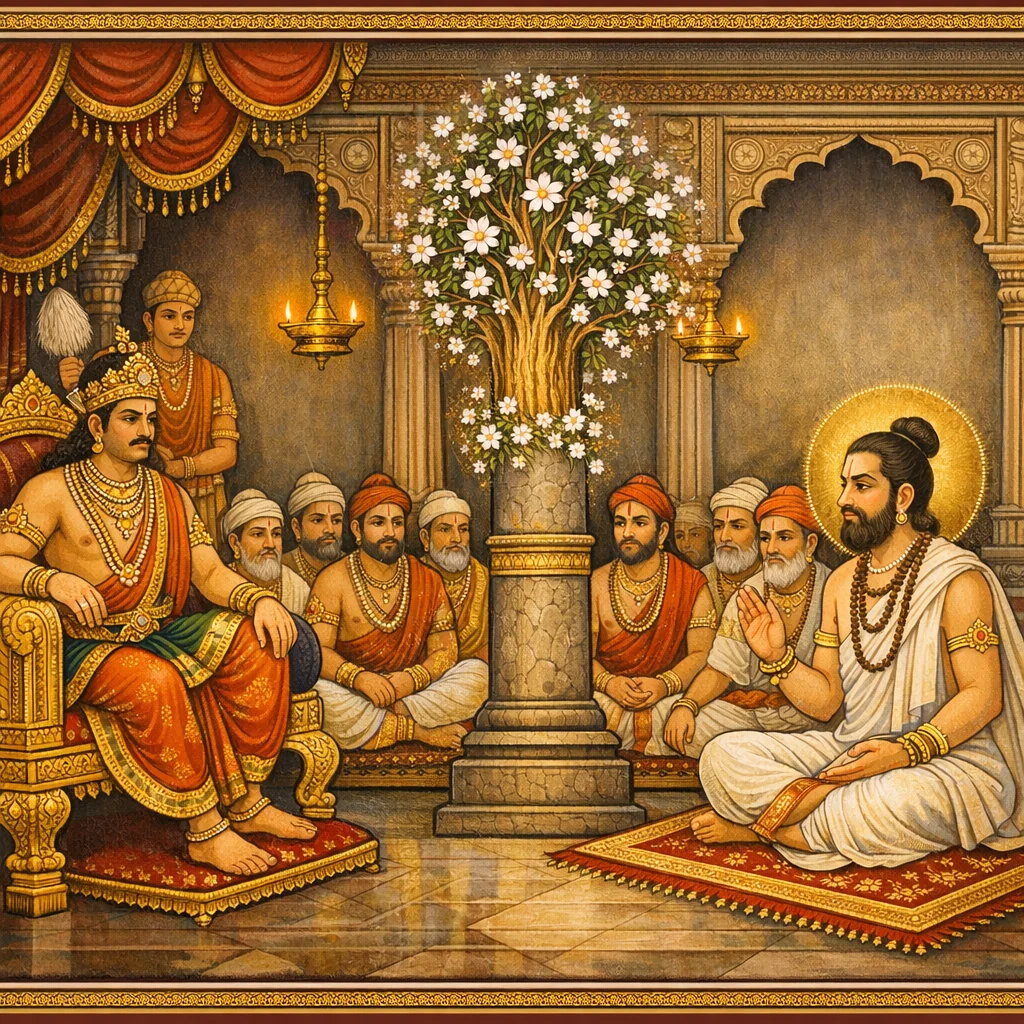
Sūta introduces a famed āśrama and sacred water-tīrtha connected with Yājñavalkya, praised as granting attainment even to those unlearned in the Vedas. The ṛṣis ask about Yājñavalkya’s former guru and how the Vedas were once taken away and later regained. Sūta recounts Śākalya, a learned Brāhmaṇa teacher and royal priest, and a court episode in which Yājñavalkya is sent to perform a royal appeasement rite. A social and ritual conflict follows: the king, seeing Yājñavalkya in an improper condition, refuses his blessing and orders sanctified water to be thrown on a wooden pillar. Yājñavalkya invokes a Vedic mantra and casts the water so that the pillar instantly sprouts leaves, flowers, and fruit—revealing mantra’s power and the king’s ritual ineptitude. When the king asks for abhiṣeka, Yājñavalkya refuses, declaring that mantra’s efficacy depends on proper homa and correct procedure. Pressed by Śākalya to return to the king, Yājñavalkya rejects the demand, citing dharma: an arrogant, duty-confused guru may be abandoned. Enraged, Śākalya uses Atharvanic mantras and water to force a symbolic renunciation of transmitted learning; Yājñavalkya expels what he had learned and proclaims independence. Seeking siddhi-kṣetras, he is guided to Hāṭakeśvara-kṣetra, where results accord with one’s inner disposition; there he undertakes disciplined tapas and worship of the Sun. Bhāskara grants boons: Sarasvatī-like mantras are placed in a kuṇḍa; bathing and recitation make Vedic knowledge immediately retained and tattvārtha clear by grace. Yājñavalkya asks to be free from ordinary obligation to a human guru; the Sun bestows laghimā-siddhi and instructs him to learn through the divine horse-form Vājikarṇa, receiving Vedic learning directly. The chapter ends with its phala: bathing at the tīrtha, beholding the Sun, and reciting the “nādabindu” formula leads to liberation-oriented attainment.
Shlokas
Verse 1
सूत उवाच । तथान्योऽपि च तत्रास्ति याज्ञवल्क्यसमुद्रवः । आश्रमो लोक विख्यातो मूर्खाणामपि सिद्धिदः
Sūta said: “Moreover, there is another holy place there—Yājñavalkya-samudrava—an āśrama renowned in the world, bestowing accomplishment even upon the dull-witted.”
Verse 2
यत्र तप्त्वा तपस्तीव्रं याज्ञवल्क्येन धीमता । संप्राप्ता निखिला वेदा गुरुणाऽपहृताश्च ये
At that holy place, the wise Yājñavalkya performed intense austerities; and there he regained in full all the Vedas that had previously been taken away by his teacher.
Verse 3
ऋषय ऊचुः । कोऽसौ गुरुरभूत्तस्य याज्ञवल्क्यस्य धीमतः । पाठयित्वा पुनर्येन हृता वेदा महात्मना
The sages said: “Who was that teacher of the wise Yājñavalkya—the great-souled one—by whom, after teaching him, the Vedas were later taken back?”
Verse 4
किमर्थं च समाचक्ष्व सूतपुत्रात्र विस्तरात् । कौतुकं परमं जातं सर्वेषां नो द्विजन्मनाम्
And for what reason did this happen? Explain it here in detail, O son of Sūta; a great curiosity has arisen in all of us twice-born.
Verse 5
सूत उवाच । आसीद्ब्राह्मणशार्दूलः शाकल्य इति विश्रुतः । भार्गवान्वयसंभूतो वेद वेदांगपारगः
Sūta said: There once was a foremost brāhmaṇa, a tiger among brāhmaṇas, famed as Śākalya—born in the Bhārgava line—learned in the Veda and perfected in the Vedāṅgas.
Verse 6
बृहत्कल्पे पुरा विप्रा वर्धमाने पुरोत्तमे । बहुशिष्यसमायुक्तो वेदाध्ययनतत्परः
In an age long past, O brāhmaṇas, in the excellent city called Vardhamāna, he dwelt amid many disciples, intent upon the study and teaching of the Veda.
Verse 7
स सदा प्रातरुत्थाय विद्यादानं प्रयच्छति । शिष्येभ्यश्चानुरूपेभ्यः प्रसादाद्विजसत्तमाः
Rising each morning, he ever bestowed the gift of learning; and, O best of the twice-born, by his gracious favor he taught fitting disciples according to their capacity.
Verse 8
चकार स तदा विप्राः पौरोहित्यं महीपतेः । सूर्यवंशप्रसूतस्य सुप्रियस्य महात्मनः
At that time, O brāhmaṇas, he served as purohita, the royal priest of the king—the great-souled Supriya, born of the Solar dynasty (Sūryavaṃśa).
Verse 9
स तस्य धर्मकृत्यानि सर्वाण्येव दिनेदिने । कृत्वा स्वगृहमभ्येति पूजितस्तेन भूभुजा
Day after day, having performed all the king’s prescribed duties of dharma, he returned to his own home, honored by that ruler.
Verse 10
एकं शिष्यं समारोप्य शांत्यर्थं तस्य भूपतेः । कथयित्वा प्रमाणं च विधानं होमसंभवम्
Appointing a single disciple for the king’s śānti rite of pacification, he explained the proper measures and the prescribed procedure for the homa, the fire-offering that brings appeasement and well-being.
Verse 11
शिष्योऽपि सकलं कृत्वा तत्कर्म सुसमाहितः । आशीर्वादं प्रदत्त्वा च भूपतेर्गृहमेति च
The disciple too, with steady concentration, completed that rite in full; and after bestowing blessings, he went to the king’s residence.
Verse 12
एवं प्रकुर्वतस्तस्य शाकल्यस्य महात्मनः । पौरोहित्यं गतः कालः कियन्मात्रो द्विजोत्तमाः
As the great-souled Śākalya continued to act in this way in the office of royal priest, how much time passed for him in that priestly service, O best of the twice-born?
Verse 13
तदा वैवाहिके काले शप्तो यः शंभुना स्वयम् । सुनिंद्यां विकृतिं दृष्ट्वा तस्य वेद्यां गतस्य च
At that time, during the wedding occasion, he—who had been cursed by Śambhu Himself—upon seeing a most blameworthy deformity, and as he drew near the sacrificial altar…
Verse 14
अथ तं योजयामास शांत्यर्थं नृपमंदिरे । याज्ञवल्क्यं स शाकल्यः प्रतिपद्यागतं तदा
Then, for the sake of śānti, Śākalya engaged him in the king’s palace—Yājñavalkya, who had arrived there at that time.
Verse 15
सोऽपि तारुण्यगर्वेण वेश्याकरजविक्षतः । सर्वांगेषु सुनिर्लज्जः प्रकटांगो जगाम वै
He too, swollen with the pride of youth and scratched by the nails of a courtesan, went about shamelessly, his body exposed and marked all over.
Verse 16
ततश्च शांतिकं कृत्वा जपांते भूपतिं च तम् । शांतोदकप्रदानाय हस्यमानो जनैर्ययौ
Then, having performed the pacificatory rite and concluded the japa for that king, he went to deliver the sanctified “peace-water”—while people laughed at him.
Verse 17
पार्थिवोऽपि च तं दृष्ट्वा तादृग्रूपं विटं द्विजम् । नाशीर्जग्राह तेनोक्तां वाक्यमेतदुवाच ह
The king too, seeing that brāhmaṇa in such a condition—like a debauched dandy—did not accept the blessing spoken by him, and said these words.
Verse 18
उच्छिष्टोऽहं द्विजश्रेष्ठ शय्यारूढो व्यवस्थितः । अत्र शालोद्भवे स्तंभे तस्मादेतज्जलं क्षिप
“O best of brāhmaṇas, I am in a state of impurity, lying settled upon my couch. Therefore, throw this water here upon this pillar that has sprung from a śāla tree.”
Verse 19
सोऽपि सावज्ञमाज्ञाय तं भूपं कुपिताननः । तं च स्तंभं समुद्दिश्य ध्यात्वा तद्ब्रह्म शाश्वतम्
He too, realizing the king’s contempt, his face angered; and directing his intention toward that pillar, he meditated upon that eternal Brahman.
Verse 20
द्यां त्वमालिख्य इत्येव प्रोक्त्वा मंत्रं च याजुषम् प्राक्षिपच्छांतिकं तोयं तस्य मूर्धनि सत्वरम्
Uttering the Yajurvedic mantra that begins, “You shall inscribe the sky…,” he swiftly cast the pacificatory water upon his head.
Verse 21
ततः स पतिते तोये स्तंभः पल्लवशोभितः । तत्क्षणादेव संजज्ञे फल पुष्पैर्विराजितः
Then, when that water had fallen, the pillar became adorned with fresh shoots; in that very instant it arose resplendent with fruits and flowers.
Verse 22
तं दृष्ट्वा पार्थिवः सोऽथ विस्मयोत्फुल्ललोचनः । पश्चात्तापं विधायाथ वाक्यमेतदुवाच ह
Seeing him, the king—his eyes widened in astonishment—was seized with remorse; and then he spoke these words.
Verse 23
अभिषेकं द्विजश्रेष्ठ ममापि त्वं प्रयच्छ भोः । अनेनैव तु मन्त्रेण शुचित्वं मे व्यवस्थितम्
O best of the twice-born, grant even me the consecratory rite (abhiṣeka), I pray. For by this very mantra, my purity shall be rightly established.
Verse 24
याज्ञवल्क्य उवाच । ममाभिषेकदानस्य त्वमनर्होऽसि पार्थिव । तस्माद्यास्याम्यहं सद्यो यत्रस्थः स गुरुर्मम
Yājñavalkya said: O king, you are not fit to receive the abhiṣeka bestowed by me. Therefore I shall depart at once to where my own guru resides.
Verse 25
राजोवाच । तव दास्यामि वस्त्राणि वाहनानि वसूनि च । तस्माद्यच्छाभिषेकं मे मन्त्रेणाऽनेन सांप्रतम्
The king said: I shall give you garments, vehicles, and wealth as well. Therefore, grant me the abhiṣeka at once with this mantra.
Verse 26
याज्ञवल्क्य उवाच । न होमांतं विना मन्त्रः स्फुरते पार्थिवोत्तम । अभिषेकविधौ प्रोक्तो यः पूर्वं पद्मयोनिना । तस्मान्नाहं करिष्यामि तव यद्वै हृदि स्थितम्
Yājñavalkya said: O best of kings, unless the rite is completed with homa, the mantra does not truly manifest its power. That mantra for the abhiṣeka procedure was formerly taught by the Lotus-born (Brahmā). Therefore I will not do what is merely fixed in your heart as a demand.
Verse 27
इत्युक्त्वा वचनं भूपं याज्ञवल्क्यः स वै द्विजः । जगाम स्वगृहं तूर्णं निस्पृहत्वं समाश्रितः
Having spoken thus to the king, the Brahmin Yājñavalkya swiftly went to his own dwelling, established in freedom from desire.
Verse 28
अपरेऽह्नि समायातं शाकल्यमथ भूपतिः । प्रोवाच प्रांजलिर्भूत्वा विनयावनतः स्थितः
On the next day, when Śākalya arrived, the king—standing with joined palms, bowed in humility—addressed him.
Verse 29
यस्त्वया प्रेषितः कल्य शिष्यो ब्राह्मणसत्तमः । शांत्यर्थं प्रेषणीयश्च भूयोऽप्येवं गृहे मम
O auspicious one, the excellent Brahmin disciple whom you sent should again be dispatched to my house for the sake of śānti—sacred peace.
Verse 30
बाढमित्येव स प्रोक्त्वा ततो गत्वा निजालयम् । याज्ञवल्क्यं समाहूय ततः प्रोवाच सादरम्
Saying, “So be it,” he went to his own residence; then, summoning Yājñavalkya, he addressed him with reverence.
Verse 31
अद्यापि त्वं नरेंद्रस्य शांत्यर्थं भवने व्रज । विशेषात्पार्थिवेंद्रेण समाहूतोऽसि पुत्रक
Even today, go to the king’s residence for the sake of śānti, the rite of pacification. In particular, you have been summoned by the lord of kings—my son.
Verse 32
याज्ञवल्क्य उवाच । नाहं तात गमिष्यामि शांत्यर्थं तस्य मंदिरे । अवलेपेन युक्तस्य शुद्ध्या विरहितस्य च
Yājñavalkya said: “Dear father, I will not go to his temple-house for śānti, for he is bound to arrogance and is devoid of purity.”
Verse 33
मया तस्याभिषेकार्थं सलिलं चोद्यतं च यत् । सलिलं तेन तत्काष्ठे समादिष्टं कुबुद्धिना
“And the water that I had prepared for his abhiṣeka, the consecratory bathing— that very water was, by that ill-minded man, ordered to be poured upon a piece of wood.”
Verse 34
ततो मयापि तत्रैव तत्क्षणात्सलिलं च यत् । तस्मिन्काष्ठे परिक्षिप्तं नीतं वृद्धिं च तत्क्षणात्
“Then, right there, at that very moment, I too cast that water upon that wood—and instantly it increased and grew at once.”
Verse 35
शाकल्य उवाच । अत एव विशेषेण समाहूतोऽसि पुत्रक । तस्मात्तत्र द्रुतं गच्छ नावज्ञेया महीभुजः
Śākalya said: “For this very reason, dear child, you have been summoned with special urgency. Therefore go there quickly; a king must not be disregarded.”
Verse 36
अपमानाद्भवेन्मानं पार्थिवानामसंशयम् । यः करोति पुनस्तत्र मानं न स भवेत्प्रियः
“From insult, a king’s sense of honor certainly arises. And whoever, even then, continues to show honor there—he does not become dear to the king.”
Verse 37
कोपप्रसाद वस्तूनि विचिन्वंतीह ये सदा । आरोहंति शनैर्भृत्या धुन्वंतमपि पार्थिवम्
“Those servants here who are always weighing matters of the king’s anger and favor gradually rise in position—even while the ruler is shaking with agitation.”
Verse 38
समौ मानापमानौ च चित्तज्ञः कालवित्तथा । सर्वंसहः क्षमी विज्ञः स भवेद्राजवल्लभः
“He for whom honor and insult are equal; who understands minds and knows the right time; who endures all, is forgiving and discerning—such a one becomes dear to the king.”
Verse 39
अपमानमनादृत्य तस्माद्गच्छ नृपालयम् । ममाज्ञापि न लंघ्या त एष धर्मः सनातनः
“Therefore, disregarding the insult, go to the king’s abode. My command too should not be transgressed—this is the eternal dharma.”
Verse 40
याज्ञवल्क्य उवाच । आज्ञाभंगो ध्रुवं भावी परिपाटीव्यतिक्रमात् । करोषि यदि शिष्याणां ये त्वया तत्र योजिताः
Yājñavalkya said: “A breach of command will surely arise from transgressing the proper order—if you make use of the disciples whom you have stationed there.”
Verse 41
तस्माद्यदि बलान्मां त्वं योजयिष्यसि तं प्रति । त्वां त्यक्त्वाऽन्यत्र यास्यामि यतः प्रोक्तं महर्षिभिः
“Therefore, if you forcefully press me into service toward him, I will leave you and go elsewhere—for such has been declared by the great seers.”
Verse 42
गुरोरप्यवलिप्तस्य कार्याकार्यमजानतः । उत्पथे वर्तमानस्य परित्यागो विधीयते
Even a teacher—if arrogant, unable to discern what should and should not be done, and proceeding on a wrongful path—may rightly be renounced; such abandonment is enjoined by dharma.
Verse 43
सूत उवाच । तस्य तद्वचनं श्रुत्वा शाकल्यः क्रोधमूर्छितः । ततः प्रोवाच तं भूयो भर्त्समानो मुहुर्मुहुः
Sūta said: Hearing those words, Śākalya—overwhelmed by anger—then spoke to him again and again, repeatedly rebuking him.
Verse 44
एकमप्यक्षरं यत्र गुरुः शिष्ये निवेदयेत् । पृथिव्यां नास्ति तद्द्रव्यं यद्दत्त्वा ह्यनृणी भवेत्
Even if a guru imparts but a single syllable to a disciple, there is no wealth on earth by giving which one could truly become free of that debt.
Verse 45
तस्माद्गच्छ द्रुतं दत्त्वा मदध्ययनमालयम् । त्यक्त्वा विद्यां मया दत्तां नो चेच्छप्स्याम्यहं तव
Therefore go at once, returning to me the entire course of instruction. Abandon the knowledge I have bestowed; otherwise I shall curse you.
Verse 46
एवमुक्त्वाभिमंत्र्याथ नादबिंदुसमुद्भवैः । मंत्रैराथर्वणैस्तोयं पानार्थं चार्पयत्ततः
Having spoken thus, he consecrated water with Atharvanic mantras born of nāda and bindu—sound and seed—and then offered that water to be drunk.
Verse 47
सोऽपिबत्तत्क्षणात्तोयं तत्पीत्वा व्याकुलेंद्रियः । उद्गिरद्वांतिधर्मेण तत्त्वविद्याविमिश्रितम्
He drank that water at once; and having drunk it, his senses were thrown into turmoil, and he began to vomit—mixed with it came forth tattva-vidyā, the knowledge of true principles.
Verse 48
ततः प्रोवाच तं भूयः शाकल्यं कुपिताननः । एकमप्यक्षरं नास्ति तावकीयं ममोदरे
Then, with an angered face, he spoke again to Śākalya: “Not even a single syllable of yours remains within me.”
Verse 49
तस्माच्छिष्योऽस्मि ते नाहं न च मे त्वं गुरुः स्थितः । सांप्रतं स्वेच्छयाऽन्यत्र प्रयास्यामि करोषि किम्
“Therefore I am not your disciple, nor do you stand to me as a guru. Now, of my own will, I shall go elsewhere—what can you do about it?”
Verse 50
एवमुक्त्वाऽथ निर्गत्य तस्मात्स्थानाच्चिरंतनात् । पप्रच्छ मानवान्भूयः सिद्धिक्षेत्राणि चासकृत्
Having spoken thus, he departed from that ancient place and again and again questioned people about the sacred fields that bestow siddhi (attainment).
Verse 51
ततस्तस्य समादिष्टं क्षेत्रमेतन्मनीषिभिः । सिद्धिदं सर्वजंतूनां न वृथा स्यात्कथंचन
Then the wise directed him to this very sacred place—bestower of siddhi for all beings; it can never be fruitless in any way.
Verse 52
आस्तां तावत्तपस्तप्त्वा व्रतं नियममेव वा । हाटकेश्वरजे क्षेत्रे सिद्धिः संवसतोऽपि च
Even without undertaking austerities, vows, or strict observances—merely by residing in the sacred field of Hāṭakeśvara, spiritual attainment is achieved.
Verse 53
येनयेन च भावेन तत्र क्षेत्रे वसेज्जनः । तस्यानुरूपिणी सिद्धिः शुभा स्याद्यदि वाऽशुभा
Whatever the inner disposition with which a person resides in that sacred region, an attainment corresponding to that disposition arises—auspicious, or even inauspicious.
Verse 54
तच्छ्रुत्वा च द्रुतं प्राप्य क्षेत्रमेतद्द्विजोत्तमाः । भानुमाराधयामास स्थापयित्वा ततः परम्
Hearing this, the foremost of the twice-born quickly reached this holy region; and thereafter, having established the seat/rite, he worshipped Bhānu (the Sun).
Verse 55
नियतो नियताहारो ब्रह्मचर्यपरायणः । गायत्रं न्यासमासाद्य निर्विकल्पेन चेतसा
Disciplined, regulated in diet, and devoted to brahmacarya, he performed the Gāyatrī-nyāsa and remained with a mind free from wavering, without inner doubt.
Verse 56
ततश्च भगवांस्तुष्टो वर्षांते तमुवाच सः । दर्शने तस्य संस्थित्वा तेजः संयम्य दारुणम्
Then the Blessed Lord, pleased, spoke to him at the end of a year; appearing before him, He restrained His fierce radiance.
Verse 57
याज्ञवल्क्य वरं ब्रूहि यत्ते मनसि रोचते । सर्वमेव प्रदास्यामि नादेयं विद्यते त्वयि
“Yājñavalkya, speak the boon that delights your heart. I shall grant everything—there is nothing to be withheld from you.”
Verse 58
याज्ञवल्क्य उवाच । यदि तुष्टः सुरश्रेष्ठ वेदाध्ययनसंभवे । गुरुर्भव ममाद्यैव ममैतद्वांछितं हृदि
Yājñavalkya said: “If You are pleased, O best among the gods, then for the awakening of Vedic learning—be my teacher this very day. This is what my heart longs for.”
Verse 59
भास्कर उवाच । अहं तव कृपाविष्टस्तेजः संहृत्य तत्परम् । ततश्चात्र समायातस्तेन नो दह्यसे द्विज
Bhāskara said: “Out of compassion for you, I have withdrawn and restrained my radiance. Therefore I have come here in this manner, O twice-born, so that you are not burned by it.”
Verse 60
तस्मादत्रैव कुंडे च मंत्रान्सारस्वताञ्छुभान् । वेदोक्तान्क्षेपयिष्यामि स्वयमेव द्विजोत्तम
Therefore, here itself in this kuṇḍa, I myself shall place within you the auspicious mantras born of Sarasvatī—those proclaimed in the Veda, O best of the twice-born.
Verse 61
तत्र स्नात्वा शुचिर्भूत्वा यत्किंचिद्वेदसंभवम् । पठिष्यसि सकृत्तत्ते कंठस्थं संभविष्यति
Bathing there and becoming pure, whatever portion born of the Veda you recite even once will become fixed in your throat—firmly committed to memory.
Verse 62
तत्त्वार्थं प्रकटं कृत्स्नं विदितं ते भविष्यति । मत्प्रसादान्न संदेहः सत्यमेतन्मयोदितम्
By my grace, the entire truth—made clear and manifest—will surely become known to you. Have no doubt: what I have spoken is true.
Verse 63
अद्यादि मानवः प्रातः स्नात्वा त्वत्र ह्रदे च यः । सावित्रेण च सूक्तेन मां दृष्ट्वा प्रपठिष्यति । तस्मै तत्स्यादसंदिग्धं यत्तवोक्तं मया द्विज
From today onward, whoever at dawn bathes in this lake and then, beholding me, recites the Sāvitrī hymn—unto that one, O twice-born, what I have spoken to you will come to pass without doubt.
Verse 64
याज्ञवल्क्य उवाच । एवं भवतु देवेश यत्त्वयोक्तं वचोऽखिलम् । परं मम वचोऽन्यच्च तच्छृणुष्व ब्रवीमि ते
Yājñavalkya said: “So be it, O Lord of the gods; may all that you have spoken be fulfilled. Yet now hear another word of mine; I shall speak it to you.”
Verse 65
नाहं मनुष्यधर्माणमुपाध्यायं कथंचन । करिष्यामि जगन्नाथ कृपां कुरु ममोपरि
Never, in any manner, will I accept as my teacher one bound merely by human conventions. O Jagannātha, Lord of the world, show compassion upon me.
Verse 66
ततस्तस्या ददौ सूर्यो लघिमा नाम शोभनाम् । विद्यां हि तत्प्रभावाय सुतुष्टेनांतरात्मना
Then Sūrya, inwardly well-pleased, bestowed upon him the splendid vidyā called Laghimā, so that its power might be made manifest.
Verse 67
ततस्तं प्राह कर्णांते ममाश्वानां प्रविश्य वै । अभ्यासं कुरु विद्यानां वेदाध्ययनमाचर
Then he spoke to him in private: “Enter, indeed, into the ear of my horses. Practice the disciplines of knowledge, and undertake the study of the Vedas.”
Verse 68
मन्मुखाद्ब्राह्मणश्रेष्ठ यद्येतत्तव वांछितम् । न ते स्याद्येन दोषोऽयं मम रश्मिसमुद्भवः
O best of brāhmaṇas, if this is what you desire—from my own mouth—then no fault shall accrue to you; this power arises from my rays.
Verse 69
एवमुक्तः स तेनाथ वाजिकर्णं समाश्रितः । लघुर्भूत्वाऽपठद्वेदान्भास्करस्य मुखात्ततः
Thus instructed by him, he then resorted to Vājikarṇa; becoming light, he thereafter studied the Vedas from Bhāskara’s own mouth.
Verse 70
एवं सिद्धिं समापन्नो याज्ञवल्क्यो द्विजोत्तमाः । कृत्वोपनिषदं चारु वेदार्थैः सकलैर्युतम्
Thus, having attained accomplishment, Yājñavalkya—foremost among the twice-born—composed a beautiful Upaniṣad, endowed with all the meanings of the Vedas.
Verse 71
जनकाय नरेंद्राय व्याख्याय च ततः परम् । कात्यायनं सुतं प्राप्य वेदसूत्रस्य कारकम्
Thereafter, having expounded it to King Janaka, the lord among men, he then met Kātyāyana, his son—the composer of the Veda-sūtras.
Verse 72
त्यक्त्वा कलेवरं तत्र ब्रह्मद्वारि विनिर्मिते । तत्तेजो ब्रह्मणो गात्रे योजयामास शक्तितः
Having cast off the body there, at the sacred “Gate of Brahman” that had been established, he, by the power of his spiritual capacity, united that radiance with the very body of Brahman.
Verse 73
तस्य तीर्थे नरः स्नात्वा दृष्ट्वा तं च दिवाकरम् । नादबिंदुं पठित्वा च तदग्रे मुक्तिमाप्नुयात्
A man who bathes at that sacred ford, beholds that Sun, and recites the Nādabindu there in its presence—attains liberation.