Adhyaya 128
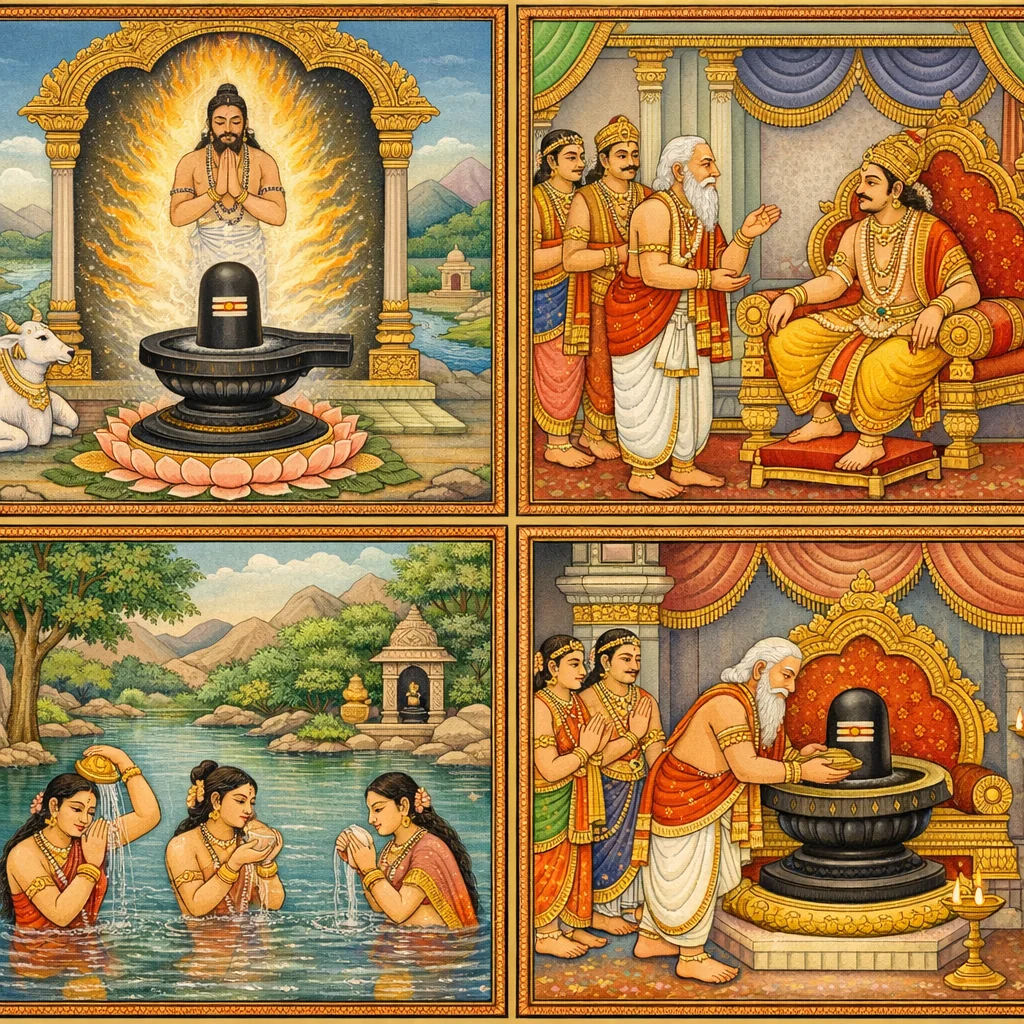
The chapter unfolds in two closely linked movements. (1) A miraculous closure surrounds Satysaṃdha: seated in yogic posture near the liṅga’s southern side, he withdraws his prāṇa and relinquishes life. Brāhmaṇas arrive to arrange funerary rites, yet the body vanishes, stirring awe and renewing careful attention to the liṅga’s worship and its prescribed observances. The shrine is praised as an unfailing source of boons and a purifier of devotees’ moral taints. (2) A dynastic and ethical crisis then arises: with the lineage weakened after conflict, ministers and brāhmaṇas warn that a kingless realm invites disorder under the “matsya-nyāya” (the strong devour the weak). Satysaṃdha refuses to re-enter kingship and proposes a ritual remedy grounded in precedent: after Paraśurāma’s destruction of kṣatriyas, kṣatriya wives sought brāhmaṇas for progeny, producing “field-born” rulers. The chapter introduces Vasiṣṭha’s kuṇḍa as a fertility tīrtha where bathing at the ritually appointed time is said to grant conception. It culminates in the birth of the famed ruler Aṭa (Aṭon), whose name is explained by a divine proclamation from the sky linked to movement along the royal road. Aṭa establishes the Aṭeśvara-liṅga; worship on Māgha-caturdaśī and bathing at the son-giving kuṇḍa are extolled as efficacious for progeny and well-being.
Shlokas
Verse 1
सूत उवाच । सत्यसन्धोपि हृष्टात्मा सतां दृष्ट्वा सुखान्विताम् । अभीष्टपतिना युक्तां कृतकृत्यो बभूव ह
Sūta said: Though steadfast in truth, he became joyful at heart; seeing the virtuous woman endowed with happiness and united with the husband she desired, he felt his purpose fulfilled.
Verse 2
ततस्तस्यैव लिंगस्य दक्षिणां मूर्तिमाश्रितः । दृढं पद्मासनं कृत्वा सम्यग्ध्यानपरायणः
Then, taking refuge at the southern aspect of that very liṅga, he assumed a steady lotus posture and became wholly devoted to proper meditation.
Verse 3
आत्मानमात्मनैवाथ ब्रह्मद्वारेण संस्थितः । ततो निःसारयामास पुलकेन समन्वितः
Then, established at the ‘Brahma-gate’, he—by his own inner power—caused his self to depart, and he did so filled with ecstatic thrill (gooseflesh).
Verse 4
अथ ते ब्राह्मणास्तस्य चमत्कारपुरोद्भवाः । देवता दर्शनार्थाय प्राप्ता दृष्ट्वा कलेवरम्
Then those brāhmaṇas—astonished by the wondrous event—arrived (there) in order to behold the divine presence; and they saw the body.
Verse 5
अप्रियं तेजसा हीनं मृतमस्पृश्यतां गतम् । लिंगस्य नातिदूरस्थं दाह्यार्थं यत्नमास्थिताः
Seeing the corpse—unpleasant, bereft of radiance, dead and deemed untouchable—they undertook efforts to cremate it not far from the liṅga.
Verse 6
यावद्गुर्वीं चितां कृत्वा तमन्वेष्टुं समुद्यताः । तावन्नष्टं शवं तच्च ज्ञायते नैव कुत्रचित्
But as soon as they had built a heavy, well-made funeral pyre and set out to search for him, the corpse had vanished—nor could it be found anywhere at all.
Verse 7
ततश्च विस्मयाविष्टास्तं प्रशंसासमन्वितैः । वचनैर्बहुशो भूयो विकथ्य च मुहुर्मुहुः
Thereupon, overcome with amazement, they spoke again and again—time after time—praising him with many words.
Verse 8
ततस्तस्योत्थलिंगस्य सर्वं पूजादिकं च यत् । सर्वे निरूपयामासुः सप्तविंशतिमध्यतः
Then they all carefully laid down the complete procedure of worship and the allied rites for that manifested (risen) Liṅga, setting everything in proper order and due sequence.
Verse 9
लिंगानां तद्भवेन्नित्यं सत्यसंधस्य भूपतेः । कामदं भक्तजंतूनां सर्वपातकनाशनम्
That Liṅga became the ever-abiding Liṅga of the truth-vowed king; for devoted beings it grants desired aims, and it destroys all sins.
Verse 10
ऋषय ऊचुः । चमत्कारनरेंद्रस्य वंशे क्षीणे महामते । आनर्त्ताधिपतिः कोऽन्यस्तत्र राजा बभूव ह
The sages said: “O wise one, when the lineage of King Cāmatkāra came to an end, who else became the ruler of Ānarta there?”
Verse 11
सूत उवाच । बृहद्बले हते भूपे संग्रामे द्विजसत्तमाः । पुत्रबंधुसमायुक्ताः सर्व लोकाः समाययुः
Sūta said: “When King Bṛhadbala was slain in battle, O best of Brahmins, people of every station gathered together, accompanied by their sons and kinsmen.”
Verse 12
यत्रस्थः स महीपालः सत्यसंधस्तपोन्वितः । शोकोद्विग्नास्ततः प्राहुस्तं भूपं रहसि स्थितम्
There, the protector of the earth—steadfast in truth and endowed with austerity—was staying. Distressed by grief, they then spoke to that king who was seated in seclusion.
Verse 13
क्षीणोऽयं तावको वंशो न कश्चिद्विद्यते यतः । दायादोऽपि कथं पृथ्वी संप्रतीयं भविष्यति
“Your dynasty has dwindled, for no one remains. Without even an heir, how will this earth-kingdom be governed from this time onward?”
Verse 14
अराजके नृपश्रेष्ठ मात्स्यो न्यायः प्रवर्तते । राष्ट्रे चैव पुरे चैव ग्रामे चैव विशेषतः
“O best of kings, when there is no ruler, the ‘law of the fish’ prevails—throughout the kingdom, in the cities, and especially in the villages.”
Verse 15
परदाररता ये च ये च तस्करवृत्तयः । सर्वे राजभयाद्राजन्मर्यादां पालयंति वै
“Those addicted to others’ wives, and those who live by theft—all of them, O king, keep within proper bounds only out of fear of royal punishment.”
Verse 16
तस्मात्त्वं तप उत्सृज्य राज्यं पूर्वक्रमागतम् । कुरु राज्यं तथा दारान्पुत्रार्थं प्राप्य मा चिरम्
Therefore, set aside this austerity and take up the ancestral kingdom that has come down in due succession. Rule, and also accept a wife for the sake of an heir—without delay.
Verse 17
राजोवाच । संन्यस्तोऽहं द्विजश्रेष्ठा न राज्यं कर्तुमुत्सहे । न सुतानां न दाराणां संग्रहं च कथंचन
The king said: “O best of Brahmins, I have renounced the world; I do not have the will to rule a kingdom—nor do I wish, in any way, to take up the responsibilities of sons or wife.”
Verse 18
तत्पुत्रार्थं प्रवक्ष्यामि युष्माकं स्वामिनः कृते । उपायं येन राजा स्यादानर्त्तो लोकपालकः
For the sake of obtaining a son for your lord, I shall explain a means by which the king—though presently without a protector—may become again a guardian of the people.
Verse 19
जामदग्न्येन रामेण यदा क्षत्रं निपातितम् । गर्भस्थमपि कार्त्स्न्येन कोपोपहतचेतसा
When Rāma Jāmadagnya (Paraśurāma), his mind struck by wrath, brought down the Kṣatriya order entirely—destroying even those still in the womb—
Verse 20
ततः क्षत्रियभार्याः प्रागृतुस्नानात्समाययुः । ब्राह्मणान्पुत्रजन्मार्थं न कामार्थं कथंचन
Then the wives of the Kṣatriyas, after first performing the bathing prescribed for the season, approached the Brāhmaṇas for the sake of begetting sons—never for sensual desire in any way.
Verse 21
ततः पुत्राः समुत्पन्नास्तेजोवीर्यसमन्विताः । क्षेत्रजा भूमिपालानां संजाताश्च महीक्षितः
Thereupon sons were born, endowed with radiance and valor—kṣetraja sons, born in the field of the earth’s protectors—and they became kings.
Verse 22
तस्माद्बृहद्बलस्यैता भार्यास्तिष्ठंति या जनाः । ब्राह्मणांस्ता उपागम्य ऋतुस्नाता यथोचितान्
Therefore, those wives of Bṛhadbala who remain here, having bathed in the proper season, should duly approach the Brāhmaṇas as is fitting.
Verse 23
लभिष्यंति च पुत्रांस्तास्तेभ्यः क्षत्रियपुंगवान् । ये भूमिं पालयिष्यंति पालयिष्यंति च प्रजाः
And they shall obtain sons from them—bulls among the Kṣatriyas—who will protect the earth and also safeguard the people.
Verse 24
तथाऽत्रास्ति शुभं कुण्डं वासिष्ठं पुत्रजन्मदम् । यत्र स्नाता ऋतौ नारी सद्यो गर्भवती भवेत् । अमोघरेताः कांता च स्नानादत्र प्रजायते
Moreover, here there is an auspicious pond—Vāsiṣṭha Kuṇḍa—bestowing the birth of sons. When a woman bathes here at the proper season, she becomes pregnant at once; and by bathing here, a beloved husband of unfailing seed is also obtained.
Verse 25
ये पूर्वं क्षत्रिया जाता ब्राह्मणैः क्षत्रिणीषु च । ते सर्वे तत्प्रभावेन संजाता नात्र संशयः
Those Kṣatriyas who were formerly born from Brāhmaṇas in Kṣatriya women—all of them arose through the power of that tīrtha; of this there is no doubt.
Verse 26
ययायया द्विजो यश्च क्षत्रिण्याऽभूद्वृतः पुरा । तया सह समागत्य स्नातं मन्त्रपुरस्कृतम्
And whatever Brāhmaṇa had formerly been chosen by a Kṣatriya woman—coming together with her, he bathed there with the mantras set foremost, that is, accompanied by mantra-recitation.
Verse 27
सकृन्मैधुनसंसर्गात्ततस्तीर्थप्रभावतः । सर्वासां यत्सुता जाता दुहिता न कथंचन
Then, by the power of that tīrtha, from a single act of conjugal union, sons were born to them all—never daughters in any manner.
Verse 28
ये केचित्पुत्रदा मंत्राश्चातुश्चरणासंभवाः । ते सर्वेऽत्र वसिष्ठेन प्रयुक्ताः क्षत्त्रमिच्छता
Whatever son-bestowing mantras there are—those arising from the fourfold sacred tradition—were all employed here by Vasiṣṭha, who desired the establishment of kṣatriya power.
Verse 29
दंपत्योः स्नानमात्रेण जातेऽत्र स्यात्सुपुत्रकः । तस्मात्सुपुत्रदंनाम कुण्डमेतन्निगद्यते
By the mere act of bathing here as a couple, a good son is said to be born. Therefore this pond is proclaimed by the name “Suputradā” (Bestower of a virtuous son).
Verse 30
तस्माद्भार्याः समस्तास्ता बृहद्बलसमुद्भवाः । अत्र स्नानं प्रकुर्वंतु यथोक्तविधिना जनाः
Therefore, O people, let all those wives—born of great strength and vitality—perform bathing here according to the prescribed rite.
Verse 31
नैव किंचिदसत्यं स्यान्न च निंदाकरं तथा । श्रूयते च यतः श्लोकः पूर्वाचार्यैरुदाहृतः
Here nothing is false, nor is anything in any way blameworthy; for a śloka is heard, proclaimed by the ancient teachers.
Verse 32
अद्भ्योऽग्निर्ब्रह्मतः क्षत्त्रमश्मनो लोहमुच्छ्रितम् । तेषां सर्वत्रगं तेजः स्वासु योनिषु शाम्यति
From waters arises fire; from Brahman arises kṣatriya power; from stone, iron is drawn forth. Yet the all-pervading tejas comes to rest in its own proper source.
Verse 33
तच्छ्रुत्वा जनाः सर्वे सचिवानां वचोखिलम् । तदाचख्युर्द्रुतं गत्वा सत्यसंधस्य भूपतेः
Hearing all the words of the ministers, the people all quickly went and reported it to the king, steadfast in truth.
Verse 34
ततस्ताः सर्वशो दारा ब्राह्मणानतिसुन्दरान् । ऋतुस्नाताः समाजग्मुर्नृपपत्न्यः सुहर्षिताः
Then those royal wives, adorned in every way and purified by bathing after their courses (ṛtu-snātāḥ), joyfully approached the exceedingly handsome brāhmaṇas.
Verse 35
यत्र तत्पुत्रदं तीर्थं वसिष्ठेन विनिर्मितम् । तत्र स्नात्वा सकृत्संगं समासाद्य द्विजोद्भवम्
To the place where that son-bestowing tīrtha was fashioned by Vasiṣṭha—having bathed there, and having once attained union with a twice-born man—
Verse 36
सर्वास्ताः पुत्रवत्यश्च संजाता द्विजसत्तमाः । आसीत्तस्य नरेंद्रस्य शतं पंचभिरन्वितम्
All of them became mothers of sons, O best of the twice-born; and that king came to have a hundred sons, together with five more.
Verse 37
तासां समभवद्विप्राः शतं पंचाधिकं तथा
From them, O brāhmaṇas, there likewise came to be a hundred and five (sons).
Verse 38
प्रत्येकं वरपुत्राणां वंशवृद्धिकरं परम् । आनंदजननं सम्यक्सर्वेषां राष्ट्रवासिनाम्
Each of those blessed sons became supremely conducive to the increase of the royal line, and truly a source of joy for all the people dwelling in the kingdom.
Verse 39
तत्र श्रेष्ठोऽभवत्पुत्रो य आनर्तपतिर्भुवि । अटोनाम सुविख्यातः सर्वशत्रुनिबर्हणः
Among them, the best son became a ruler of Ānarta upon the earth—renowned by the name Aṭa—who was a destroyer of all enemies.
Verse 40
अटेश्वरैति ख्यातो येन देवोऽत्र निर्मितः । सुभक्त्या येन दृष्टेन वंशोच्छित्तिर्न जायते
Here he established a deity, famed as Aṭeśvara; and by beholding it with sincere devotion, the cutting-off of one’s lineage does not arise.
Verse 41
ऋषय ऊचुः । कस्मात्तस्य कृतं नाम एतच्चाऽट इति स्मृतम् । अन्वयेन परित्यक्तं तस्मात्कीर्तय सूतज
The sages said: “For what reason was this name bestowed, and why is he remembered as ‘Aṭa’? Since it departs from the customary lineage-based naming, tell us, O son of Sūta.”
Verse 42
सचिवैर्ब्राह्मणैर्वापि तस्यैतन्नाम निर्मितम् । मात्रा वा तत्समाचक्ष्व परं कौतूहलं हि नः
“Was this name fashioned by ministers or by brāhmaṇas, or perhaps by his mother? Explain it to us—our curiosity is great.”
Verse 43
सूत उवाच । न मात्रा तत्कृतं नाम न विप्रैः सचिवैर्नृप । तत्कृतं देवदूतेन व्योमस्थेन द्विजोत्तमाः
Sūta said: “O king, that name was not given by the mother, nor by brāhmaṇas or ministers. It was bestowed by a divine messenger stationed in the sky, O best of the twice-born.”
Verse 45
सा रूपयौवनोपेता रूपाढ्यं प्राप्य सद्द्विजम् । प्रस्थिता स्नातुकामाथ पुत्रतीर्थे मृगेक्षणा
She—endowed with beauty and youth—having obtained a virtuous brāhmaṇa of splendid form, set out, longing to bathe at Putra-tīrtha; the doe-eyed woman.
Verse 46
सहिता तेन विप्रेण कंदर्पप्रतिमेन च । अथ ताभ्यां महान्रामो मिथः संदर्शनात्स्थितः
Accompanied by that brāhmaṇa—handsome like Kandarpa, the god of love—, a great delight arose in them both merely from seeing one another.
Verse 47
तादृङ्मात्रं सुकृच्छ्रेण प्राप्तं तीर्थं सुतप्रदम् । ततः स्नात्वा जले तस्मिन्निष्क्रांतौ तौ सुकामुकौ
With great difficulty they reached that sacred tīrtha which bestows sons. Bathing in its waters, the two—filled with longing—then came up out of the water.
Verse 48
व्रजमानौ च मार्गेऽपि कामधर्ममुपागतौ । अत्यौत्सुक्यात्सुसंहृष्टौ लज्जां त्यक्त्वा सुदूरतः
Even as they journeyed along the road, the two entered the ways of passion. Overwhelmed by eager excitement, they cast modesty far away.
Verse 49
यथा तथा प्रवक्ष्यामि श्रोतव्यं सुसमाहितैः । यया स भूपतिर्जातो दशार्णाधिपतेः सुता
“However it came to pass, I shall relate it—listen with minds steady and intent—how that king was born from the daughter of the lord of Daśārṇa.”
Verse 50
तावदाकाशगा वाणी सहसा देवनिर्मिता । अटताराजमार्गेण विप्रेणानेन वै यतः
“Just then a divine voice—suddenly fashioned by the gods and coursing through the sky—spoke, for this brāhmaṇa was wandering along the royal road.”
Verse 51
उत्पादितस्तु पुत्रोऽयमौत्सुक्याद्ब्राह्मणेन तु । अटाख्यो भूपतिस्तस्माल्लोके ख्यातो भविष्यति
“This son has been brought forth through the brāhmaṇa’s ardent longing; therefore that king shall be renowned in the world by the name ‘Aṭa.’”
Verse 52
दीर्घायुर्बहुपुत्रश्च शत्रुंपक्षक्षयावहः । एतस्मात्कारणाद्विप्रा अटाख्यः स बभूव ह
Long-lived, blessed with many sons, and a bringer of the destruction of the enemy’s forces—because of these reasons, O brāhmaṇas, he indeed came to be known as “Aṭa.”
Verse 53
स्ववंशोद्धरचंद्रोऽत्र वांछितार्थप्रदोऽर्थिनाम् । तेनैतत्क्षेत्रमासाद्य स्थापितं लिंगमुत्तमम् । स्वनाम्ना ब्राह्मणश्रेष्ठाः सर्वदेष्टप्रदं नृणाम्
Here he became like a moon that uplifted his own lineage, granting petitioners their desired aims. Having reached this sacred kṣetra, he established an excellent Śiva-liṅga, naming it after himself—O best of brāhmaṇas—one that grants to people all that they seek.
Verse 54
यस्तन्माघचतुर्दश्यां पूजयेच्छ्रद्धयान्वितः । न तस्य जायते किंचिद्दुःखं संतानसंभवम्
Whoever worships that (liṅga) on the fourteenth day of Māgha with faith—no sorrow arising from offspring will be born for him at all.
Verse 55
अपि वर्षशतानारी स्नात्वा कुण्डे सुतप्रदे । अटेश्वरं ततः पश्येच्छिवभक्तिपरायणा
Even a woman who has been (childless) for a hundred years—having bathed in the son-bestowing pond—should then behold Aṭeśvara, devoted wholly to Śiva-bhakti.
Verse 56
सद्यः पुत्रमवाप्नोति वंशवृद्धिकरं परम् तत्प्रसादान्न संदेहः कार्तिकेय वचो यथा
She gains a son at once—an excellent cause of the growth of the lineage. By his grace there is no doubt; so is the word of Kārtikeya.
Verse 128
इति श्रीस्कांदे महापुराण एकाशीतिसाहस्र्यां संहितायां षष्ठे नागरखण्डे हाटकेश्वरक्षेत्रमाहात्म्येऽटेश्वरोत्पत्तिमाहात्म्यवर्णनंनामाष्टाविंशत्युत्तरशततमोऽध्यायः
Thus, in the Śrī Skanda Mahāpurāṇa, in the Saṃhitā of eighty-one thousand ślokas, in the sixth book called the Nāgara-khaṇḍa, within the Māhātmya of the sacred field of Hāṭakeśvara, concludes the one-hundred-and-twenty-eighth chapter, entitled “The Description of the Glory of the Origin of Aṭeśvara.”