Adhyaya 127
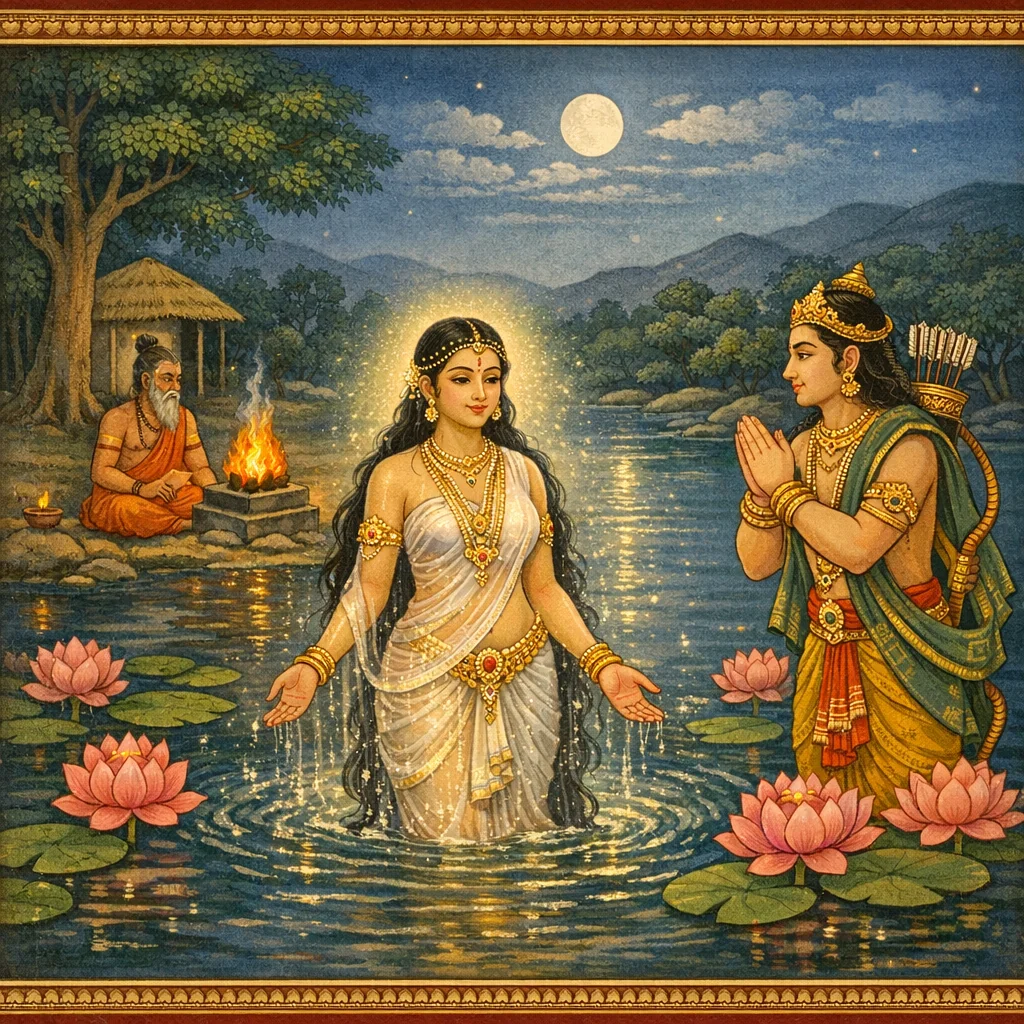
The Ṛṣis ask Sūta to recount fully the story of Karnotpalā, earlier mentioned as a woman performing tapas after reaching a sacred water-resort connected with Gaurī’s feet. Sūta relates that the goddess Girijā (Gaurī), pleased with her devotion and austerity, appears before her and invites her to ask a boon. Karnotpalā explains her family’s distress: her father has fallen from royal prosperity and lives in sorrowful detachment, while she has grown old yet remains unmarried. She prays for an exceptionally handsome husband and for restored youth, so that her ascetic father may regain happiness as well. The goddess prescribes an exact observance: in the month of Māgha, on tṛtīyā falling on a Saturday, under the nakṣatra associated with Vāsudeva, she should bathe in the holy water while meditating on beauty and youth; any woman bathing then gains similar beauty. When the appointed time comes, Karnotpalā enters the water at midnight and emerges with a divine, youthful body, astonishing all. Kāma (Manobhava), prompted by Gaurī, arrives to seek her as wife and explains her future name “Prīti,” since he came with affection. She asks him to approach her father formally; she goes first to tell her father that her renewed youth is the fruit of tapas and Gaurī’s grace, and requests marriage. Kāma then petitions, and the father gives his daughter with fire as witness and brāhmaṇas present; she becomes known as Prīti, and the tīrtha is famed by her name. The phalaśruti concludes: bathing throughout Māgha yields the merit of Prayāga; one becomes handsome and capable in successive births and does not suffer separation from one’s relatives.
Shlokas
Verse 1
ऋषय ऊचुः । या सा कर्णोत्पलानाम त्वयास्माकं प्रकीर्तिता । किञ्चिज्जलाश्रयं प्राप्य तपस्तपति संस्थिता । तस्याः सर्वं समाचक्ष्व यथा तपसि सा स्थिता
The sages said: “That woman named Kārṇotpalā, whom you have recounted to us—having reached a certain refuge by the waters, she stands engaged in tapas, performing penance. Tell us everything about her: how she remained established in tapas.”
Verse 2
सूत उवाच । गौरीपादकृतस्थाना श्रद्धया परया युता । तावत्तुष्टिं गता देवी गिरिजा शंकरप्रिया
Sūta said: Established at the place sanctified by the touch of Gaurī’s feet, and endowed with supreme faith, the Goddess Girijā—beloved of Śaṅkara—became pleased.
Verse 3
ततः प्रोवाच ते पुत्रि तुष्टाहं वांछितं वद । येन यच्छाम्यसंदिग्धं यद्यपि स्यात्सुदुर्लभम्
Then the Goddess said to her, “Daughter, I am pleased—tell me what you desire. By that request I shall grant it to you without doubt, even if it be exceedingly hard to obtain.”
Verse 4
कर्णोत्पलोवाच । मम पत्युः कृते देवि मम तातः सुदुःखितः । राज्याद्भ्रष्टः सुखाच्चापि कुटुंबेन विवर्जितः
Karṇotpalā said: “O Goddess, on account of my husband, my father has become deeply afflicted—fallen from his kingdom and from happiness as well, and separated from his family.”
Verse 5
ततश्चैव तपस्तेपे वैराग्यं परमं गतः । अहं वार्द्धक्यमापन्ना कौमार्येऽपि च संस्थिता
Then he undertook austerities and attained the highest dispassion. As for me, though still in maidenhood, I have fallen into old age.
Verse 6
तस्माद्भवतु मे भर्त्ता कश्चिद्रूपोत्कटः स्मृतः । सर्वेषां देवमर्त्यानां त्वत्प्रसादात्सुरेश्वरि
Therefore, O Sovereign Goddess, by your favor let me obtain a husband renowned for extraordinary beauty—surpassing that of all gods and mortals.
Verse 7
तथा स्यात्परमं रूपं तारुण्यं त्वत्प्रसादतः । यथास्य जायते सौख्यं तापसस्यापि मे पितुः
And by your grace may I also gain supreme beauty and youth—so that happiness may arise for my father as well, even though he is now an ascetic.
Verse 8
देव्युवाच । माघमासतृतीयायां शनैश्चरदिने शुभे । नक्षत्रे वसुदैवत्ये रूपं ध्यात्वाथ यौवनम्
The Goddess said: “On the auspicious third lunar day of the month of Māgha, on a Saturday, under a nakṣatra presided over by the Vasus—meditate upon beauty and youth.”
Verse 9
त्वया स्नानं प्रकर्तव्यं सुपुण्येऽत्र जलाशये । ततो दिव्य वपुर्भूत्वा यौवनेन समन्विता । भविष्यसि न संदेहः सत्यमेतन्मयोदितम्
“You should perform a ritual bath in this exceedingly meritorious reservoir here. Then, taking on a divine body and endowed with youth, you shall become so—without doubt. This is truth, as spoken by me.”
Verse 10
अन्यापि या महाभागे नारी स्नानं करिष्यति । तस्मिन्नहनि साप्येवं रूपयुक्ता भविष्यति
O most fortunate one, any other woman who bathes on that very day will likewise become endowed with such beauty.
Verse 11
सूत उवाच । एवमुक्त्वाथ सा देवी गता चादर्शनं ततः । सापि चान्वेषयामास तृतीयां शनिना सह
Sūta said: Having spoken thus, the Goddess then vanished from sight. And she (Karṇotpalā) began to seek the third lunar day (tithi), together with Saturday, as prescribed.
Verse 12
वसुदेवात्मकेनैव नक्षत्रेण प्रयत्नतः । ध्यायमाना च तां देवीं सर्वकामप्रदायिनीम्
With focused effort, under the auspicious constellation known as Vasudevātmaka, she meditated upon that Goddess—the granter of all desired aims.
Verse 13
ततः कतिपयाहस्य जाता सा योगसंयुता । तृतीया या यथोक्ता च तया देव्या पुरा द्विजाः
Then, after a few days, she became endowed with yogic power. That “third (tithi)”—as previously described—had in ancient times been declared by the Goddess to the twice-born.
Verse 14
ततः सा रूपसौभाग्यं यौवनं वांछितं पतिम् । ध्यायमाना जले तस्मिन्नर्द्धरात्रे विवेश च
Thereafter, meditating and seeking beauty and good fortune, youthfulness, and the husband she desired, she entered that water at midnight.
Verse 15
ततो दिव्यवपुर्भूत्वा यौवनेन समन्विता । निष्क्रांता सलिलात्तस्माज्जनविस्मयकारिणी
Then, assuming a radiant divine form and endowed with youth, she emerged from that water, astonishing all who beheld her.
Verse 16
एतस्मिन्नंतरे प्राप्तो गौरीवाक्यप्रबोधितः । तदर्थं भगवान्कामः पत्न्यर्थं प्रीतिसंयुतः । अब्रवीच्च महाभागे कामोहं स्वयमागतः
Just then the Lord of Love arrived, awakened by Gaurī’s words. Coming for that very purpose—seeking a wife and filled with affection—he said, “O fortunate one, I am Kāma, come here in person.”
Verse 17
पार्वत्यादेशिता भार्या तस्मान्मे भव मा चिरम्
“You have been appointed by Pārvatī as my wife; therefore become mine—without delay.”
Verse 18
यस्मात्प्रीत्या समायातस्तवांतिकमहं शुभे । तस्मात्प्रीतिरिति ख्याता मम भार्या भविष्यसि
“Because I have come to you out of affection, O auspicious one, therefore you will be known as ‘Prīti’—and you shall become my wife.”
Verse 19
कर्णोत्पलोवाच । यद्येवं स्मर मत्तातं तं गत्वा प्रार्थय स्वयम् । स्वच्छंदा स्याद्यतः कन्या न कथंचित्प्रवर्तिता
Karṇotpalā said: “If so, O Smara, then go yourself and request my father. For a maiden should be free in her choice and must not be compelled in any way.”
Verse 20
य एष दृश्यते रम्यः प्रासादो नाति दूरतः । अस्यांते तिष्ठतेऽस्माकं तातस्तपसि संस्थितः
That lovely palace you see, not far away—at its edge my father remains, established in austerity (tapas).
Verse 21
अत्राहं पूर्वतो गत्वा तस्य तिष्ठामि चांतिके । भवानागत्य पश्चाच्च प्रार्थयिष्यति मां ततः
I will go ahead and stand near him here. Then you may come afterward and make your request to me in his presence.
Verse 22
बाढमित्येव कामोक्ते गता सा तत्समीपतः । प्रणिपत्य ततः प्राह दिष्ट्या तात मया पुनः
When Kāma had spoken thus, she went near him. Bowing down, she then said, “By good fortune, dear father, I have met you again.”
Verse 23
संप्राप्तं यौवनं कांतं समाराध्य हरप्रियाम् । तस्मात्कुरु विवाहं मे हृत्स्थं सुखमवाप्नुहि
Beloved, youth has now come to me in its radiance. Having duly worshipped Gaurī, the beloved of Hara, therefore arrange my marriage, and attain the joy that abides within your heart.
Verse 24
मदर्थे प्रेषितो भर्त्ता तया देव्याऽतिसुन्दरः । पुष्प चापः स्वयं प्राप्तः सोऽपि तात तवांतिकम्
For my sake, the Goddess sent that exceedingly beautiful Lord. Puṣpacāpa (Kāma) himself has also come here of his own accord, O father, into your presence.
Verse 25
अथ तां स समालोक्य स्वां सुतां यौवनान्विताम् । हर्षेण महता युक्तां कांतयुक्तां विशेषतः । अब्रवीदद्य मे पुत्रि संजातं तपसः फलम्
Then, seeing his own daughter endowed with fresh youth—filled with great joy and especially radiant with beauty—he said: “Today, my daughter, the fruit of my austerities has come to fulfillment.”
Verse 26
जीवितस्य च कल्याणि यत्वं प्राप्ता नवं वयः । भर्तारं च तथाभीष्टं देव्या दत्तं मनोभवम्
“And, O auspicious one, since your life has reached a fresh youth, you have also obtained the husband you desired—Manobhava (Kāma), bestowed by the Goddess.”
Verse 27
एतस्मिन्नंतरे कामस्तस्यांतिकमुपाद्रवत् । अब्रवीद्देहि मे भूप स्वां कन्यां चारुहासिनीम्
Just then, Kāma rushed into his presence and said, “O king, give me your own daughter, she whose smile is so lovely.”
Verse 28
अस्या अर्थेऽहमादिष्टः स्वयं गौर्या नृपोत्तम । कामदेव इति ख्यातस्त्रैलोक्यं येन मोहितम्
“For her sake I have been commanded by Gaurī herself, O best of kings. I am famed as Kāmadeva—the one by whom the three worlds are enchanted.”
Verse 29
ततस्तामर्पयामास तां कन्यां स महीपतिः । कृत्वाग्निं साक्षिणं वाक्याद्ब्राह्मणानां द्विजोत्तमाः
Then that lord of the earth gave the maiden to him. Following the counsel of the foremost brāhmaṇas, they established Agni, the sacred Fire, as witness to the rite.
Verse 30
सा चास्य चाभवत्प्रीतिस्थानं यस्मात्सुलोचना । रतेरनंतरा तस्मात्प्रीतिनामाऽभवच्छुभा
And since that fair‑eyed maiden became the very abode of his affection, and was second only to Rati, she was therefore auspiciously known by the name Prīti.
Verse 31
एवं तया तपस्तप्तं तस्मात्तत्र जलाशये । तन्नाम्ना ख्यातिमायातं समस्तेऽत्र महीतले
Thus she performed austerities there at that sacred water‑reservoir; therefore that jalāśaya became renowned across the whole earth by her very name.
Verse 32
सकलं माघमासं च या स्त्री स्नानं समाचरेत् । पुमान्वा प्रातरुत्थाय स प्रयागफलं लभेत्
Any woman who performs the bathing observance for the entire month of Māgha—and likewise any man who rises early and bathes—obtains the same spiritual merit as that gained at Prayāga.
Verse 33
रूपवाञ्जायते दक्षः सदा जन्मनि जन्मनि । न वियोगमवाप्नोति कदात्रिद्बांधवैः सह
He is born handsome and capable—again and again in every birth—and he never suffers separation from his kinsfolk at any time.
Verse 127
इति श्रीस्कांदे महापुराण एकाशीतिसाहस्र्यां संहितायां षष्ठे नागरखण्डे हाटकेश्वरक्षेत्रमाहात्म्ये कर्णोत्पलातीर्थमाहात्म्यवर्णनं नाम सप्तविंशत्युत्तरशततमोऽध्यायः
Thus ends the one-hundred-and-twenty-seventh chapter—called “The Description of the Greatness of Karṇotpalā Tīrtha”—in the Hāṭakeśvara Sacred Region Māhātmya, within the sixth part of the Nāgara-khaṇḍa of the venerable Skanda Mahāpurāṇa, in the eighty-one-thousand-verse Saṃhitā.