Adhyaya 125
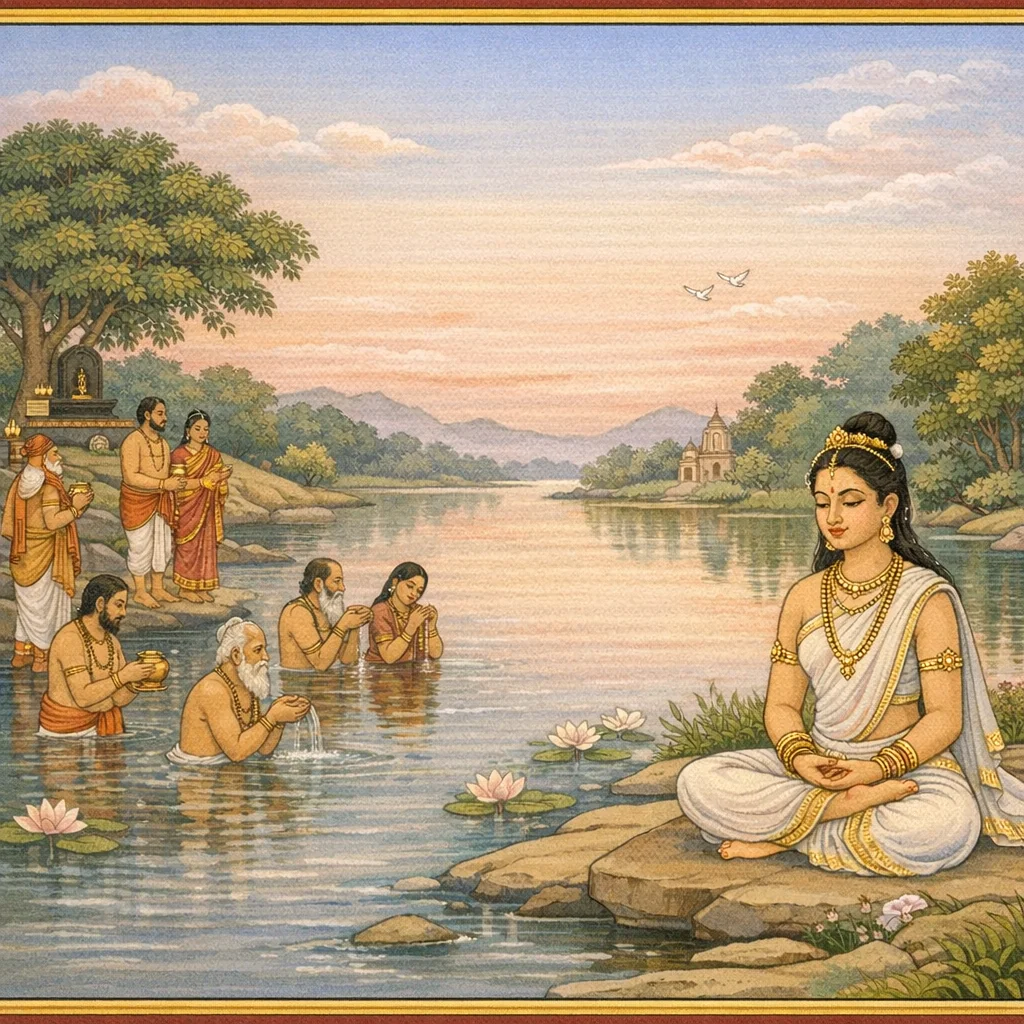
Sūta introduces Karṇotpalā-tīrtha as a famed sacred ford, where bathing is said to ward off “viyoga,” the pain of separation in human life. The narrative then turns to King Satyasaṃdha of the Ikṣvāku line and his extraordinary daughter Karṇotpalā. Finding no worthy human match, the king resolves to consult Brahmā and journeys to Brahmaloka. There he waits through Brahmā’s sandhyā-time and receives a dharmic reply: the daughter is no longer to be given in marriage, for immense cosmic time has passed; moreover, divine beings do not take human wives. On returning, king and daughter suffer a temporal dislocation—aging and social non-recognition—revealing Purāṇic time-scales and the fragility of worldly rank. They reach the Gartā-tīrtha/Prāptipura region, where locals and later King Bṛhadbala recognize the lineage through tradition. The account resolves into practice: Satyasaṃdha seeks to donate an elevated settlement/land to Brahmins to extend enduring religious fame, then goes to Hāṭakeśvara-kṣetra to worship a previously established liṅga (linked with Vṛṣabhanātha) and perform tapas; Karṇotpalā likewise undertakes austerities and establishes devotion to Gaurī. The chapter closes with communal concerns about livelihood from the donated settlement and the king’s renunciatory restraint, reinforcing ethical guidance on dāna, patronage, and ascetic duty.
Shlokas
Verse 1
।सूत उवाच । ततः कर्णोत्पलातीर्थं विख्यातं चास्ति शोभनम् । यत्र स्नातो नरः सम्यङ्न वियोगमवाप्नुयात्
Sūta said: Thereafter there is the renowned and splendid Karṇotpalā Tīrtha. One who bathes there properly does not fall into separation from what is dear, nor from auspicious prosperity.
Verse 2
कथंचिदपि चेष्टेन धनेनालिजनेन च । पराक्रमेण धर्मेण कलत्रेण विशेषतः
By any manner of effort, by wealth, by one’s people and connections, by valor, by dharma, and especially by a spouse—
Verse 3
सत्यसंध इति ख्यातः पुरासीत्पृथिवीपतिः । इक्ष्वाकुकुलसंभूतः सर्वरूपगुणैर्युतः
Formerly there was a king of the earth renowned as Satyasaṃdha. Born in the Ikṣvāku lineage, he was endowed with every noble form and virtue.
Verse 4
तस्य कर्णोत्पलानाम जाता कन्या सुशोभना । बहुपुत्रस्य चैका सा सर्वलक्षणलक्षिता
To him was born a radiant daughter named Karṇotpalā. Though he had many sons, she alone was his notable daughter, marked with every auspicious sign.
Verse 5
अथ तस्याः पिता नाम चक्रे द्वादशमे दिने । संमंत्र्य ब्राह्मणैः सार्धं भृत्यामात्यैर्मुहुर्मुहुः
Then her father performed the naming rite on the twelfth day, repeatedly consulting with the brāhmaṇas, and also with his servants and ministers.
Verse 6
यस्मात्कर्णोत्पला चेयं जाता मम कुमारिका । तस्मात्कर्णोत्पलानाम जाता कन्या सुशोभना
“Since this maiden of mine has been born as Karṇotpalā, therefore let the radiant girl be named ‘Karṇotpalā.’”
Verse 7
बहु पुत्रस्य चैका सा सर्वलक्षणलक्षिता । तस्मात्कर्णोत्पलानाम जायतां द्विजसत्तमाः
“Though I have many sons, she alone is my daughter, marked by every auspicious sign. Therefore, O best of the twice-born, let her name be ‘Karṇotpalā.’”
Verse 8
कृतनामाऽथ सा बाला वृद्धिं याति दिनेदिने । आह्लादकारिणी नित्यं कला चांद्रमसी यथा
Once she had been given a name, that young girl grew day by day, ever bringing delight—like the moon’s waxing digit.
Verse 9
अथ सा क्रमशः प्राप्ता यौवनं बंधुलालिता । हस्ताद्धस्तं प्रगच्छंती सर्वेषां द्विजसत्तमाः
Then, cherished by her kinsfolk, she gradually reached youth; and, O best of brāhmaṇas, her fame passed from hand to hand among all.
Verse 10
अथ तां यौवनोपेतां दृष्ट्वा स पृथिवीपतिः । चिंतयामास चित्तेन कस्येमां प्रददाम्यहम्
Seeing her now endowed with youth, the lord of the earth pondered in his heart: “To whom shall I give this maiden?”
Verse 11
न तस्याः सदृशः कश्चिद्वरोऽत्र धरणीतले । न स्वर्गे न च पाताले किं कृत्यं मेऽधुना भवेत्
On this earth there is no bridegroom equal to her—neither in heaven nor in Pātāla. What, then, should I do now?
Verse 12
स एवं बहुधा ध्यात्वा तदर्थं पृथिवीपतिः । निश्चयं प्राकरोच्चित्ते प्रष्टव्योऽत्र पितामहः
Having pondered the matter in many ways, the king formed a firm resolve in his heart: “In this affair, Pitāmaha (Brahmā) must be consulted.”
Verse 13
मयाद्य विषये चास्मिन्स देवः प्रेरयिष्यति । तस्मै पुत्रीं प्रदास्यामि नान्यस्मै वै कथंचन
“Today, within my own realm and in this very matter, the God will surely guide me. To the one He indicates I shall give my daughter—never to anyone else.”
Verse 14
स एवं निश्चयं कृत्वा तामादाय ततः परम् । ब्रह्मलोकं जगामाथ प्रष्टुं तस्याः कृते वरम्
Having thus made his resolve, he took her with him and then proceeded to Brahmaloka, to ask (Brahmā) about a suitable bridegroom for her.
Verse 15
अथ यावत्स संप्राप्तो ब्रह्मलोकं नरेश्वरः । तावत्संध्या समुत्पन्ना ब्राह्मी ब्राह्मणसत्तमाः
And as the king arrived at Brahmaloka, at that very time the Brāhmī Sandhyā—the twilight of Brahmā—arose, O best of brāhmaṇas.
Verse 16
एतस्मिन्नंतरे ब्रह्मा सायंतनक्रियोत्सुकः । उपविष्टः समाधिस्थस्तत्कालं समपद्यत
Meanwhile, Brahmā—eager to perform the evening rites—sat down and entered samādhi, settling into that appointed time.
Verse 17
सत्यसंधोऽपि तं दृष्ट्वा समाधिस्थं पितामहम् । समाध्यंतं प्रतीक्षन्स उपविष्टः समीपतः
Though true to his purpose, seeing Pitāmaha (Brahmā) absorbed in samādhi, he waited for the samādhi to conclude and sat down nearby.
Verse 18
ततो विलोक्य चात्मानमात्मनि प्रपितामहः । पद्मे प्रवर्तिते सम्यगष्टपत्रे हृदि स्थिते
Then the Grandsire (Brahmā), beholding his own Self within himself, perceived it established in the heart—within the well-formed lotus of eight petals that had come fully into manifestation.
Verse 19
कर्णिकामध्यगं दीप्तं बहुवर्णमतिस्थिरम् । आनंदाश्रुपरिक्लिन्नवदनः पुलकांकितः
In the very center of the lotus (its pericarp) he saw a radiant presence—many-hued and utterly steady. His face was drenched with tears of bliss, and his body marked with horripilation.
Verse 20
तत आचम्य प्रक्षाल्य चरणौ सर्वतोदिशम् । अपश्यत्प्रणतः सर्वैर्ब्रह्मलोकनिवासिभिः
Then, having sipped water for purification and washed his feet in every direction, he beheld all the dwellers of Brahmaloka bowed down in reverence.
Verse 21
एतस्मिन्नंतरे राजा तामादाय शुभाननाम् । नमस्कृत्य तया सार्धं ततः प्रोवाच सादरम्
Meanwhile, the king, taking with him that maiden of auspicious countenance, bowed down along with her and then spoke with respectful earnestness.
Verse 22
अहं देव समायातो मर्त्यलोकात्तवांतिकम् । सत्यसंधो महीपाल आनर्त भुवि विश्रुतः
“O Lord, I have come from the world of mortals into your presence. I am the earth-protecting king Satyasaṃdha, renowned in the land of Ānarta.”
Verse 23
इयं कर्णोत्पलानाम मम कन्या सुशोभना । अस्या भुवि मया लब्धो न समोऽत्र पतिः क्वचित्
“This is my beautifully radiant daughter named Karṇotpalā. For her, upon this earth I have found no husband anywhere who is her equal.”
Verse 24
सदृशस्तेन चायातस्तव पार्श्वे सुरोत्तम । तस्मान्मे ब्रूहि भर्त्तारमस्या येन ददाम्यहम्
“And now, O best of the gods, one fittingly equal has come into your presence. Therefore tell me who should be her husband, so that I may give her in marriage accordingly.”
Verse 25
सूत उवाच । तस्य तद्वचनं श्रुत्वा ततः प्रोवाच पद्मजः । विहस्य सर्वदेवानां समाजे द्विजसत्तमाः
Sūta said: Hearing those words of his, Padmaja (Brahmā) then replied—smiling—in the assembly of all the gods, O best of the twice-born.
Verse 26
यदि पृच्छसि मे भूप कन्याधर्मपतिं प्रति । तन्नैषा कस्यचिद्देया सांप्रतं शृणु कारणम्
O king, if you ask me about the rightful husband for your daughter, know this: at present she should not be given to anyone. Now hear the reason.
Verse 27
आत्मश्रेणिप्रसूताय वयोज्येष्ठाय भूपते । कन्या देया च धर्माय यशसे कुलवृद्धये
O king, a daughter should be given in marriage to one born of a fitting and honorable lineage, and to one mature in age—so that dharma is upheld, fame is attained, and the family line is increased.
Verse 28
सेयं तव सुता मर्त्ये ज्येष्ठभावं समाश्रिता । सर्वेषां भूमिपालानां यत्तत्त्वं कारणं शृणु
This daughter of yours has, in the mortal world, assumed the status of the eldest. Now listen to the true principle—the underlying cause—by which the destinies of all kings are determined.
Verse 29
ममांतिकं प्रपन्नस्य तव जातं युगत्रयम् । अतीता भूतले मर्त्या ये दृष्टाः प्राक्त्वया नृप
Since you came seeking refuge near me, three ages (yugas) have passed for you. The mortals you once saw earlier on the earth, O king, have already gone by (passed away).
Verse 30
अन्या सृष्टिः समुत्पन्ना सांप्रतं धरणीतले । न त्वं जानासि माहात्म्यान्मम लोकसमुद्भवात्
A different creation has now arisen upon the earth. You do not recognize it, because of the greatness of my world from which you have emerged.
Verse 31
न देवा मानुषीं भार्यां कुर्वन्ति च कथंचन । श्लेष्ममूत्रपुरीषाणां संस्थानं या विगर्हिता
The gods do not, in any manner, take a human woman as a wife—she whose bodily constitution is reproached as being made of phlegm, urine, and feces.
Verse 32
तस्मादत्रैव तिष्ठ त्वं सुतया सहितो नृप । हस्त्यश्वादि च यत्किंचित्तत्सर्वं ते क्षयं गतम्
Therefore stay right here, O king, together with your daughter. Whatever you had—elephants, horses, and the like—all of it has been exhausted and has come to ruin.
Verse 33
पुत्राः पौत्रास्तथा भृत्या ये चान्ये बांधवास्तव । ते सर्वे निधनं प्राप्ता ये चान्ये भवतेक्षिताः
Your sons and grandsons, your servants, and whatever other kinsmen you had—all of them have met with death; and so too have the others whom you formerly saw.
Verse 34
स तथेति प्रतिज्ञाय स्थितः पार्थिवसत्तमः । यावत्तावत्सुदुःखार्ता रुदतीसाऽब्रवीत्सुता
Saying “So be it,” the best of kings agreed and remained there. After a short while, his daughter—overwhelmed by intense sorrow—began to weep and spoke.
Verse 35
नाहं तात वसिष्यामि स्थानेस्मिन्ब्रह्मसंभवे । सखीजनपरित्यक्ता बंधुवर्गविनाकृता
Father, I will not live in this place—O one born of Brahmā—abandoned by my circle of friends and deprived of my band of relatives.
Verse 36
तस्माद्यास्यामि तत्रैव यत्र सा जननी मम । ताश्च सख्यः कृतानंदा याभिः संक्रीडितं मया
Therefore I shall go—indeed to that very place—where my mother abides. And there are those friends who once rejoiced with me, with whom I played.
Verse 37
भर्त्रा विनाकृता नाहं नयिष्ये कालसंस्थितिम् । तस्मात्तत्र द्रुतं गच्छ यत्र मे जननी स्थिता
Deprived of my husband, I shall not continue along life’s allotted course. Therefore go quickly to the place where my mother is staying.
Verse 38
तस्यास्तद्वचनं श्रुत्वा स्नेहार्द्रेण स चेतसा । तामादाय ततः प्राप्तः स्वं देशं पार्थिवोत्तमः
Hearing her words, his heart softened, drenched in affection. Taking her with him, that best of kings then returned to his own country.
Verse 39
यावत्पश्यति तावत्स स्थलस्थाने जलाशयान् । जलस्थानेषु संजाताः स्थलसंघाः सुदुर्गमाः
As far as he could see, there were reservoirs of water where dry land should have been; and in the very places of water, masses of land had arisen—difficult to cross.
Verse 40
अन्ये लोकास्तथा धर्मास्तेषां मध्ये व्यवस्थिताः । पृच्छन्नपि न जानाति संबंधं केनचित्सह
Other worlds and other codes of dharma were established there among them. Even when he asked, he could not understand any connection with anyone.
Verse 41
तथा मर्त्यानिलस्पृष्टन्द्यतत्त्कणात्स महीपतिः । सा च कन्या जराग्रस्ता संजाता श्वेतमूर्द्धजा
So too, the very moment the mortal wind touched him, that king was altered. And that maiden was seized by old age, her hair turning white.
Verse 42
वलिभिः पूर्णितांगी च शीर्णदंता कुचच्युता । अमनोज्ञा विरूपांगी चिपिटाक्षी द्विजोत्तमाः
Her limbs were filled with wrinkles; her teeth were broken, her breasts had fallen. She became unpleasant to behold, misshapen in body, and flat-eyed—O best of the twice-born.
Verse 43
सोपि राजा तथाभूतो वेपमानः पदेपदे । पप्रच्छ भूपतिः कोत्र देशः कोयं पुरं च किम्
That king too, thus transformed and trembling at every step, asked: “What country is this here? And what city is this?”
Verse 44
अथ प्रोचुर्जनास्तस्य देश आनर्त इत्ययम् । अयं भूपोत्र विख्यातः सुधर्मज्ञो बृहद्बलः
Then the people said to him: “This land is called Ānarta. And this is the famed grandson of a king—one who knows good dharma and possesses great strength.”
Verse 46
यत्रैते मुनयः शांता दांताश्चाष्टगुणे रताः । तपरता महाभागाः स्नानजप्ययपरायणाः
There, these sages are peaceful and self-controlled, devoted to the eightfold virtues; intent on austerity (tapas), greatly fortunate, and dedicated to bathing rites and the discipline of japa.
Verse 47
ततः स तु समाकर्ण्य रुरोद कृतनिःस्वनः । स्वसुतां तां समालिंग्य दुःखशोकसमन्वितः
Then, hearing this, he wept aloud. Embracing his own daughter, he was overwhelmed with grief and sorrow.
Verse 48
तौ च वृद्धतमौ दृष्ट्वा रुदतौ कृपयान्विताः । सर्वे लोकाः समाजग्मुः पप्रच्छुश्च सुदुःखिताः
Seeing the two—now exceedingly aged—both weeping, the people, moved by compassion, all gathered together and, deeply distressed, began to ask what had happened.
Verse 49
एतत्प्राप्तिपुरंनाम एषा साभ्रमती नदी । गर्तातीर्थमिदं पुण्यमेतस्याः परिकीर्तितम्
This place is called Prāptipura, and this is the river Sābhramatī. Here the holy ford named Gartātīrtha—full of merit—has been proclaimed in connection with her.
Verse 50
किं ते नष्टः प्रियः कश्चित्किं वा जातो धनक्षयः । पराभूतोसि वा किं त्वं केनापि वद मा चिरम्
Has some dear one of yours been lost? Or has there been a loss of wealth? Or have you been defeated by someone? Tell me—do not delay.
Verse 51
धर्मज्ञो दुष्टहंता च साधूनां पालने रतः । राजा बृहद्बलोस्माकं येन ते कुरुते सुखम्
Our king Bṛhadbala knows dharma, destroys the wicked, and delights in protecting the virtuous; through him, your welfare is secured.
Verse 54
ततो भूयः समायातो यावत्पश्यामि भूतलम् । तावद्विलोमतां प्राप्तं सर्वं नो वेद्मि किञ्चन
Then, when I returned and beheld the earth, everything had become reversed; I understood nothing at all.
Verse 55
तच्छ्रुत्वा ते जना गत्वा विस्मयोत्फुल्ललोचनाः । बृहद्बलाय तत्सर्वमाचख्युस्तुष्टिसंयुताः
Hearing that, those people went forth—eyes widened in amazement—and, filled with satisfaction, reported all of it to Bṛhadbala.
Verse 56
सोऽपि तत्सर्वमाकर्ण्य ततः शीघ्रतरं गतः । पद्भ्यामेव स्थितो यत्र सत्यसन्धो महीपतिः
He too, hearing everything, went there all the more quickly—where the earth-protecting king, Satyasaṃdha, was standing on foot.
Verse 57
ततस्तं प्रणिपत्योच्चैः कृतांजलिपुटः स्थितः । स्वागतं ते महीपाल भूयः सुस्वागतं च ते
Then, bowing to him, he stood with hands joined and said aloud: “Welcome, O king; again, a very warm welcome to you.”
Verse 58
इदं राज्यं निजं भूयो मया भृत्येन सादरम् । कुरुष्व स्वेच्छया देहि दानानि विविधानि च
This kingdom is yours again—offered respectfully by me, your servant. Rule as you wish, and bestow various gifts in charity as well.
Verse 59
ततस्तं च समालिंग्य शिरस्याधाय चासकृत् । उवाचाश्रुपरिक्लिन्नवदनो गद्गदाक्षरम्
Then, embracing him and repeatedly placing him upon his head, he spoke—his face wet with tears, his words faltering with emotion.
Verse 62
बृहद्बल उवाच । पारंपर्येण राजेंद्र मयैतत्सकलं श्रुतम् । सत्यसंधो महीपालः कन्यामादाय निर्गतः
Bṛhadbala said: “O king, I have heard all this through lineage-tradition. The king Satyasaṃdha, taking the maiden with him, set out.”
Verse 63
कुत्रचिन्न समायातः स भूयोऽपि पुरोत्तमे । ततस्तत्सचिवै राज्यं प्रतिपाल्य चिरं नृप । अभिषिक्तस्ततः पुत्रः सुहयोनाम विश्रुतः
But he did not return again to the best of cities. Then, O king, his ministers administered the kingdom for a long time; thereafter his son—renowned by the name Suhaya—was anointed as ruler.
Verse 64
तस्याहं क्रमशो जातः सप्तसप्ततिमो विभो । पुरुषस्तव वंशस्य समुद्भूतो महापतिः
From him, in due succession, I was born as the seventy-seventh, O mighty one—arising in your lineage as a great lord among men.
Verse 65
तस्मादत्रैव कल्याणे स्थानेऽस्मिन्मेध्यतां गते । गर्तातीर्थे कुरु विभो तपस्त्वमनया सह
Therefore, right here in this auspicious place—now become pure and fit for sacred rites—perform austerity, O mighty one, at Gartā-tīrtha, together with this lady.
Verse 66
येन ते चरणौ नित्यं प्रणिपत्य त्रिसंधिजम् । श्रेयः प्राप्नोम्यसंदिग्धं प्रसादः क्रियतामिति
So that, by daily bowing at your feet at the three junctures of the day, I may attain certain welfare without doubt—grant me your gracious favor, he said.
Verse 67
सत्यसंध उवाच । हाटकेश्वरजे क्षेत्रे मयासीत्स्थापितं पुरा । लिंगं वृषभनाथस्य तावदस्ति सुपुत्रक
Satyasaṃdha said: In the sacred field of Hāṭakeśvara, I formerly established a liṅga of Vṛṣabhanātha; it still remains there, dear son.
Verse 68
तत्तस्याराधनं नित्यं करिष्यामि दिवानिशम् । तस्मात्प्रापय मां तत्र अनया सुतया सह
I shall perform his worship constantly, day and night. Therefore, take me there, together with this daughter.
Verse 69
एवं तयोः प्रवदतोरन्योन्यं भूमिपालयोः । गर्त्तातीर्थात्समायाता ब्राह्मणाः कौतुकान्विताः । श्रुत्वा भूमिपतिं प्राप्तं चिरंतनगुरुं शुभम्
While those two kings were thus conversing with one another, brāhmaṇas—filled with curiosity—arrived from Gartā-tīrtha. Hearing that the king had come, and that the venerable and auspicious ancient teacher had arrived, they gathered there.
Verse 70
ततः स पार्थिवस्तेषां दत्त्वार्घं प्रांजलिः स्थितः । प्रोवाच स्वर्गवृत्तांतमास्यतामिति सादरम्
Then the king, offering them arghya and standing with folded hands, respectfully said: “Kindly be seated, and relate the account of the heavenly events.”
Verse 71
अथ ते ब्राह्मणाः सर्वे यथाज्येष्ठं यथासुखम् । उपविष्टा नरेंद्रस्य चतुर्दिक्षु सुविस्मिताः । पप्रच्छुस्तं च भूपालं वार्तां ब्रह्मगृहोद्भवाम्
Then all those brāhmaṇas sat down—according to seniority and comfort—around the king in the four directions, greatly astonished. And they questioned the ruler about the tidings that had arisen from Brahmā’s abode.
Verse 72
यथा स तत्र निर्यात आगतश्च यथा पुरा । आलापाः पद्मयोनेश्च यथा जातास्त्वनेकशः
They asked how he departed from there and how he returned as before, and how many conversations with the Lotus-born (Brahmā) took place in various ways.
Verse 73
ततः कथांतमासाद्य सत्यसंधो महीपतिः । किंचिदासाद्य तं प्राह समीपस्थं बृहद्बलम्
Then, as the account drew to a close, the truth-bound king approached and, coming a little closer, addressed Bṛhadbala who stood nearby.
Verse 74
मया इष्टं मखैश्चित्रैरनेकैर्भूरिदक्षिणैः । दानानि च विचित्राणि येषां संख्या न विद्यते
“I have performed many splendid sacrifices, each with abundant priestly fees (dakṣiṇā); and I have given many kinds of gifts—so many that their number cannot be counted.”
Verse 75
एकदाहं गतः पुत्र चमत्कारपुरोत्तमे । दृष्टं मया पुरं तच्च समंताद्ब्राह्मणैवृतम्
“Once, my son, I went to the excellent city called Camatkāra, and I saw that town surrounded on every side by brāhmaṇas.”
Verse 76
जपस्वाध्यायसंपन्नैरग्निहोत्रपरायणैः । गृहस्थधर्मसंपन्नैर्लोकद्वयफलान्वितैः
It was filled with those endowed with japa and sacred study, devoted to the Agnihotra, accomplished in the duties of the householder—bearing the fruits for both worlds.
Verse 77
ततश्च चिंतितं चित्ते स वन्यो मम पूर्वजः । येनैषोपार्जिता कीर्तिः शाश्वती क्षयवर्जिता
Then I reflected in my heart: “That forefather of mine was truly noble, by whom this fame was won—everlasting and free from decline.”
Verse 78
तस्मादहमपि स्थाप्य पुरमीदृक्समुच्छ्रितम् । ब्राह्मणेभ्यः प्रदास्यामि तत्कीर्तिपरिवृद्धये
Therefore I too, having established such a lofty city, will give it to the Brāhmaṇas, for the increase of that fame.
Verse 79
एवं चितयमानस्य मम नित्यं महीपते । अवांतरेण संजातं ब्रह्मलोकप्रयाणकम्
While I was continually thinking in this way, O king, in the meantime there arose for me the occasion of departing to Brahmaloka.
Verse 80
एतदेकं हि मे चित्ते पश्चात्तापकरं स्थितम् । नान्यत्किंचिन्महीपाल कृतकृत्यस्य सर्वतः
This alone remained in my heart as a cause of remorse. Apart from this, O protector of the earth, I had nothing at all left undone in any respect.
Verse 81
तस्मात्प्रार्थय विप्रेंद्रान्कांश्चिदेषां महात्मनाम् । येन यच्छामि सुस्थानं कृत्वा तेभ्यस्तवाज्ञया
Therefore, pray request some among these great-souled foremost Brāhmaṇas, so that—by your command—I may prepare a worthy abode and bestow it upon them.
Verse 82
ततः स प्रार्थयामास तदर्थं ब्राह्मणोत्तमान् । ममोपरि दयां कृत्वा क्रियतां भोः परिग्रहः
Then he entreated the foremost Brāhmaṇas for that purpose: “Show compassion to me, sirs—please accept this gift.”
Verse 83
अस्य भूपस्य सद्भक्त्या यच्छतः पुरमुत्तमम् । अहं वः पालयिष्यामि सर्वे मद्वंशजाश्च ते
“Because this king, with true devotion, is granting you an excellent city, I shall protect you; and all of you shall become descendants of my lineage.”
Verse 84
ततः कांश्चित्सुकृच्छ्रेण समानीय बृहद्बलः । राज्ञे निवेदयामास एतेभ्यो दीयतामिति
Then Bṛhadbala, gathering certain people with great difficulty, reported to the king, saying, “Let it be granted to these (men).”
Verse 85
ततः प्रक्षाल्य सर्वेषां पादान्स पृथिवीपतिः । सत्यसंधो ददौ तेभ्यः पुरार्थं भूमिमुत्तमाम्
Then the lord of the earth, Satyasaṃdha, washing the feet of them all, granted them excellent land for the purpose of establishing a city.
Verse 86
बृहद्बलस्य चादेशं ददौ संप्रस्थितः स्वयम् । त्वयैतद्योग्यतां नेयं पुरं परपुरंजय
And as he himself set forth, he gave Bṛhadbala this command: “By you must this city be guided into proper fitness and right order, O conqueror of enemy cities.”
Verse 87
गत्वा च स तया सार्धं तत्क्षेत्रं हाटकेश्वरम् । तल्लिंगं प्राप्य संहृष्टश्चिरं तेपे तपस्ततः
And he went, together with her, to the sacred field of Hāṭakeśvara. Reaching that liṅga and rejoicing, he then performed austerities there for a long time.
Verse 88
सापि कर्णोत्पला प्राप्य किंचित्पुण्यं जलाशयम् । तपस्तेपे प्रतिष्ठाप्य गौरीं श्रद्धासमन्विता
She too—Karṇotpalā—having reached a certain meritorious water-reservoir, established (an image of) Gaurī there and, endowed with faith, performed austerities.
Verse 89
एतस्मिन्नंतरे राजा कालधर्ममुपागतः । आनर्ताधिपतिर्युद्धे हतः पुत्रैः समन्वितः
Meanwhile, the king met the law of Time (death). The lord of Ānarta was slain in battle, together with his sons.
Verse 90
ततस्ते ब्राह्मणाः सर्वे गर्तातीर्थसमुद्भवाः । सत्यसंधं समभ्येत्य प्रोचुर्दुःखसमन्विताः
Then all those brāhmaṇas, connected with Gartā-tīrtha, approached Satyasaṃdha and spoke, filled with sorrow.
Verse 91
परिग्रहः कृतोऽस्माभिः केवलं पृथिवीपते । न च किंचित्फलं जातं वृत्तिजं नः पुरोद्भवम्
O lord of the earth, we accepted the grant only in outward form. Yet no fruit has arisen, and from that city-based provision no livelihood has come to us.
Verse 92
तस्मात्कुरु स्थितिं त्वं च स्वधर्मपरिवृद्धये । येन तद्वर्तनोपायो ह्यस्माकं नृपसत्तम
Therefore, O best of kings, establish a firm arrangement for the increase of your own dharma, by which a means of sustenance and rightful continuance may arise for us.
Verse 93
सत्यसंध उवाच । आनर्त्ताधिपतिश्चाहं सत्यसंध इति स्मृतः । मम कर्णोत्पलानाम सुतेयं दयिता सदा । सोहमस्याः प्रदानार्थं ब्रह्मलोकमितो गतः । प्रष्टुं पितामहं देवं स्थितस्तत्र मुहूर्तवत्
Satyasaṃdha said: “I am the lord of Ānarta, remembered by the name Satyasaṃdha. I have a beloved daughter named Karṇotpalā. For the sake of giving her in marriage, I went from here to Brahmaloka to inquire of the god Pitāmaha, Brahmā, and I remained there as though only for a moment.”
Verse 94
सत्यसन्ध उवाच । संन्यस्तोऽहं द्विजश्रेष्ठा वृत्तिं कर्तुं न च क्षमः । यदि मे स्यात्पुमान्कश्चिदन्वयेऽपि न संशयः
Satyasaṃdha said: “O best of the twice-born, I have renounced the world and am not able to pursue worldly livelihood. If only there were some male heir in my lineage—of that there is no doubt.”
Verse 95
तस्माद्व्रजथ हर्म्यं स्वं प्रसादः क्रियतां मम । अभाग्यैर्भवदीयैश्च हतो राजा बृहद्बलः
Therefore, return to your own mansion; grant me your favor. By misfortune—indeed, by the ill-luck bound up with your people—King Bṛhadbala has been slain.
Verse 96
एवमुक्ताश्च ते विप्रा मत्वा तथ्यं च तद्वचः । स्वस्थानं त्वरिता जग्मुः सोऽपि चक्रे तपश्चिरम्
Thus addressed, those brāhmaṇas, deeming his words to be true, hastened back to their own abode; and he too undertook austerities for a long time.
Verse 125
इति श्रीस्कांदे महापुराण एकाशीतिसाहस्र्यां संहितायां षष्ठे नागरखण्डे श्रीहाटकेश्वरक्षेत्रमाहात्म्ये सत्यसन्धनृपतिवृत्तान्तवर्णनंनाम पंचविंशत्यधिकशततमोऽध्यायः
Thus, in the holy Skanda Mahāpurāṇa, in the Saṃhitā of eighty-one thousand verses, in the sixth—Nāgara Khaṇḍa—within the Māhātmya of the sacred Śrīhāṭakeśvara-kṣetra, ends the one-hundred-and-twenty-fifth chapter, entitled “The Account of King Satyasaṃdha.”