Adhyaya 124
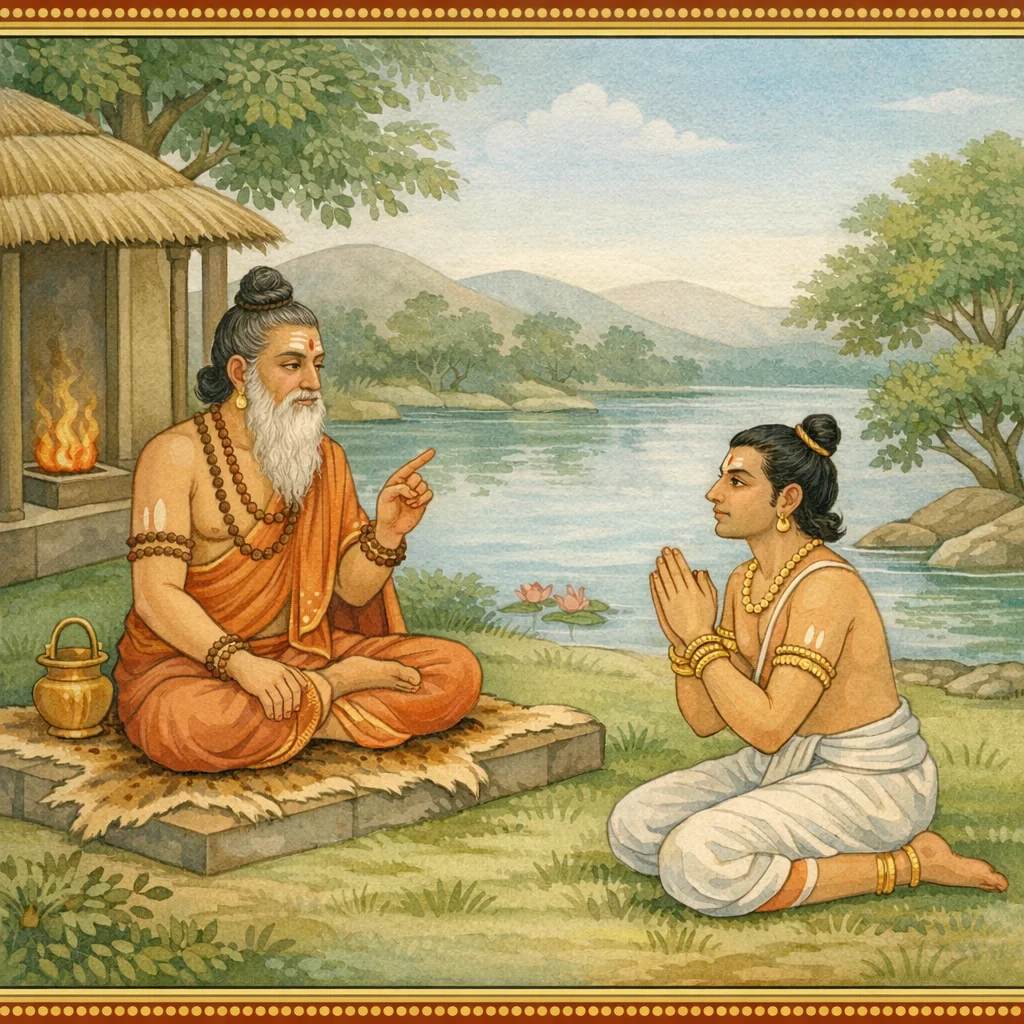
In this chapter of the Nāgara Khaṇḍa, Sūta narrates the origin of Mukharā-tīrtha while imparting ethical instruction. Mukharā is praised as an “excellent tīrtha,” sanctified by the memory of a robber whose later spiritual attainment becomes the site’s validating legend. Lohajaṅgha, a Brahmin of the Māṇḍavya lineage, devoted to his parents and wife, is driven by prolonged drought and famine into theft; the text distinguishes survival distress from deliberate vice, yet still condemns stealing as blameworthy karma. When the Seven Sages (Marīci and others) arrive on pilgrimage, Lohajaṅgha threatens them. They admonish him with compassion, stressing karmic responsibility and urging him to ask whether his family will share his demerit. After consulting father, mother, and wife, he learns that karmic fruits are borne individually; remorse arises and he seeks upadeśa. Sage Pulaha gives a simple mantra, “jāṭaghoṭeti,” and Lohajaṅgha performs unbroken japa, enters deep absorption, and becomes covered by an anthill (valmīka). When the sages return, they recognize his realization; through his association with the valmīka he is named Vālmīki, and the place becomes known as Mukharā-tīrtha. The concluding phalaśruti declares that those who bathe there with faith in the month of Śrāvaṇa cleanse sins born of theft, and that devotion to the resident sage-figure nurtures poetic power, especially on the lunar eighth day (aṣṭamī).
Shlokas
Verse 2
सूत उवाच । अथान्यदपि तत्रास्ति मुखारं तीर्थमुत्तमम् । यत्र ते मुनयः श्रेष्ठा विप्राश्चौरेण संगताः । यत्र सिद्धिं समापन्नः स चौरस्तत्प्रभावतः । वाल्मीकिरिति विख्यातो रामायणनिबंधकृत्
Sūta said: “There too is another supreme sacred place called Mukhāra Tīrtha—where those foremost sages and brāhmaṇas encountered a thief, and where that thief, by the power of the tīrtha, attained spiritual accomplishment, becoming renowned as Vālmīki, the composer of the Rāmāyaṇa.”
Verse 3
चमत्कारपुरे पूर्वं मांडव्यान्वय संभवः । लोहजंघो द्विजो ह्यासीत्पितृमातृपरायणः
Formerly, in Camatkārapura, there lived a brāhmaṇa named Lohajaṅgha, born in the line of Māṇḍavya, devoted to serving his father and mother.
Verse 4
तस्यैका चाभवत्पत्नी प्राणेभ्योऽपि गरीयसी । पतिव्रता पतिप्राणा पतिप्रियहिते रता
He had a single wife, dearer to him even than life—faithful in the wifely vow, whose very life was her husband, ever devoted to what was pleasing and beneficial to him.
Verse 5
अथ तस्य स्थितस्यात्र ब्रह्मवृत्त्याभिवर्ततः । जगाम सुमहान्कालः पितृमातृरतस्य च
Then, as he lived there maintaining a brāhmaṇa’s livelihood and conduct, a very long time passed for him—he who was devoted to his father and mother.
Verse 6
एकदा भगवाञ्छक्रो न ववर्ष धरातले । आनर्तविषये कृत्स्ने यावद्वादशवत्सराः
Once, the revered Śakra (Indra) sent no rain upon the earth throughout the whole Ānarta region—for twelve years.
Verse 7
ततः स कष्टमापन्नो लोहजंघो द्विजोत्तमाः । न प्राप्नोति क्वचिद्भिक्षां न च किंचित्प्रतिग्रहम्
Therefore Lohajaṅgha fell into hardship, O best of the twice-born: nowhere could he obtain alms, nor did he receive any gifts.
Verse 8
ततस्तौ पितरौ द्वौ तु दृष्ट्वा क्षुत्परिपीडितौ । भार्यां च चिंतयामास दुःखेन महतान्वितः
Then, seeing his two parents tormented by hunger, he was overwhelmed with great sorrow and began to worry about his wife as well.
Verse 9
किं करोमि क्व गच्छामि कथं स्याद्दर्शनं मम । एताभ्यामपि वृद्धाभ्यां पत्न्याश्चैव विशेषतः
“What shall I do? Where shall I go? How can I manage at all—especially for these two aged ones, and for my wife above all?”
Verse 10
ततः स दुःखसंयुक्तः फलार्थं प्रययौ वने । न च किंचिदवाप्नोति सर्वे शुष्का महीरुहाः
Then, burdened with grief, he went into the forest seeking fruits; but he found nothing at all—for all the trees were dried up.
Verse 12
अथापश्यत्स वृद्धां स्त्रीं स्तोकसस्यसमन्विताम् । गच्छमानां तथा तेन श्रमेण महतान्विताम् । ततस्तत्सस्यमादाय वस्त्राणि च स निर्दयः । जगाम स्वगृहं हृष्टः पितृभ्यां च न्यवेदयत्
Then he saw an elderly woman carrying a small store of grain, walking on, worn down by great fatigue. Mercilessly he seized that grain and her garments, went gladly to his own house, and reported it to his parents.
Verse 13
स एवं लब्धलक्षोऽपि दस्युकर्मणि नित्यशः । कृत्वा चौर्यं पुपोषाथ निजमेव कुटुम्बकम्
Even after he had found a “means” of gain, he engaged daily in the work of a robber; by committing theft, he maintained only his own household.
Verse 14
सुभिक्षे चापि संप्राप्ते नान्यत्कर्म करोति सः । ब्राह्मीं वृत्तिं परित्यक्त्वा चौर्यकर्म समाचरत्
Even when prosperity and plenty returned, he did no other work. Abandoning the brāhmaṇa’s rightful livelihood, he continued in the occupation of theft.
Verse 15
कस्यचित्त्वथ कालस्य तीर्थयात्राप्रसंगतः । तत्र सप्तर्षयः प्राप्ता मरीचिप्रमुखा द्विजाः
Then, at some time, in connection with a pilgrimage to the sacred tīrthas, the Seven Sages—brāhmaṇas headed by Marīci—arrived there.
Verse 16
ततस्तान्विजने दृष्ट्वा द्रोहकोपसमन्वितः । यष्टिमुद्यम्य वेगेन तिष्ठध्वमिति चाब्रवीत्
Then, seeing them alone in a secluded place, filled with malice and anger, he raised a staff and swiftly shouted, “Stand still!”
Verse 17
त्रिशिखां भृकुटीं कृत्वा सत्वरं समुपाद्रवत् । भर्त्समानः स परुषैर्वाक्यैस्तांस्ताडयन्निव
With his brow knit into a fierce frown, he rushed at them in haste, abusing them with harsh words as though striking them.
Verse 18
ततस्ते मुनयो दृष्ट्वा यमदूतोपमं च तम् । यज्ञोपवीतसंयुक्तं प्रोचुस्ते कृपयान्विताः
Then the sages, seeing him like a messenger of Yama—yet still wearing the sacred thread—spoke to him, moved by compassion.
Verse 19
ऋषय ऊचुः । अहो त्वं ब्राह्मणोऽसीति तत्कस्मादतिगर्हितम् । करोषि कर्म चैतद्धि म्लेच्छकृत्यं तु बालिश
The sages said: “Alas! You are indeed a brāhmaṇa—why, then, do you commit what is utterly blameworthy? Foolish one, you perform this very deed which is regarded as the conduct of mlecchas.”
Verse 20
वयं च मुनयः शांतास्त्यक्ताऽशेषपरिग्रहाः । नास्माकमपि पार्श्वस्थं किंचिद्गृह्णाति यद्भवनान्
We too are sages, peaceful in nature, having renounced all possessions. Even one who stands near us does not take anything at all from people’s houses.
Verse 21
लोहजंघ उवाच । एतानि शुभ्रचीराणि वल्कलान्यजिनानि च । उपानहसमेतानि शीघ्रं यच्छंतु मे द्विजाः
Lohajaṅgha said: “O twice-born ones, quickly give me these clean white garments—bark-cloths and deerskins as well—together with sandals.”
Verse 22
नो चेद्धत्वाप्रहारेण यष्ट्या वज्रोपमेन च । प्रापयिष्यस्यसंदिग्धं धर्मराजनिवेशनम्
If not, then—striking you down with a staff whose blow is like a thunderbolt—I shall surely send you, without any doubt, to the abode of Dharmarāja (Yama).
Verse 23
ऋषय ऊचुः । सर्वं दास्यामहे तुभ्यं वयं तावन्मलिम्लुच । किंवदन्तीं वदास्माकं यां पृच्छामः कुतूहलात्
The sages said: “O Malimluca, we shall give you everything—only tell us the legend, the report that is spoken among the people, which we ask about out of curiosity.”
Verse 24
किमर्थं कुरुषे चौर्यं त्वं विप्रोऽसि सुनिर्घृणः । किं जितो व्यसनै रौद्रैः किं वा व्याधद्विजो भवान्
“Why do you commit theft? You are a brāhmaṇa, yet utterly without compassion. Have you been conquered by fierce vices? Or have you become a ‘hunter-brāhmaṇa’—a brāhmaṇa who lives by the cruelty of a hunter?”
Verse 25
लोहजंघ उवाच । व्यसनार्थं न मे कृत्यमेतच्चौर्यसमुद्भवम् । कुटुम्बार्थं विजानीथ धर्ममेतन्न संशयः
Lohajaṃgha said: “This deed of mine, born of theft, is not undertaken for indulgence. Know it to be for the sake of my family; in this there is no doubt—this is what I take to be dharma.”
Verse 26
पितरौ मम वार्द्धक्ये वर्तमानौ व्यवस्थितौ । तथा पतिव्रता पत्नी गृहधर्मविचक्षणा
“My parents are now firmly settled in old age; and likewise my wife is devoted to her husband (pativratā), discerning and skilled in the duties of household dharma.”
Verse 27
उपार्ज्जयामि यत्किञ्चिदहमेतेन कर्मणा । तत्सर्वं तत्कृते नूनं सत्येनात्मानमालभे
Whatever I may gain by this work, I dedicate it all—surely—to that sacred purpose. In truth, by this vow of honesty, I offer up my very self in consecration.
Verse 28
तस्मान्मुंचथ प्राक्सर्वं विभवं किं वृथोक्तिभिः । कृताभिः स्फुरते हस्तो ममायं हन्तुमेव हि
Therefore, give up at once all worldly power and possessions—what use are futile words? My hand already quivers from deeds done; indeed, it is poised only to strike you down.
Verse 29
ऋषय ऊचुः । यद्येवं चौर तद्गत्वा त्वं पृच्छस्व कुटुम्बकम् । ममपापांशभागी त्वं किं भविष्यसि किं न वा
The sages said: “If it is so, O thief, then go and ask your own household. If you are to share a portion of my sin, what will become of you—will you accept it or not?”
Verse 30
यदि ते संविभागेन पापस्यांशोऽपि गच्छति । तत्कुरुष्वाथवा पाप दुर्वहं ते भविष्यति
“If, by apportionment, even a fraction of sin comes to you, then do it (only on that condition); otherwise, O sinner, it will become unbearable for you.”
Verse 31
सकलं रौरवे रौद्रे पतितस्य सुदुर्मते । वयं त्वा ब्राह्मणं मत्वा ब्रूम एतदसंशयम्
“For the one who has fallen into the dreadful Raurava (hell), O evil-minded man, the suffering is total. Yet, regarding you as a brāhmaṇa, we tell you this without doubt.”
Verse 32
कृपाविष्टाः सहास्माभिः सञ्जातेऽपि सुदर्शने । मुनीनां यतचित्तानां दर्शनाद्धि शुभं भवेत्
Moved by compassion, even if you have come within our gracious sight, the very beholding of sages whose minds are restrained indeed brings auspiciousness.
Verse 33
एकः पापानि कुरुते फलं भुंक्ते महाजनः । भोक्तारो विप्रमुच्यंते कर्ता दोषेण लिप्यते
One person commits sins, yet the great household consumes the fruit. Those who merely partake are released, but the doer is stained by the fault.
Verse 34
सूत उवाच । स तेषां तद्वचः श्रुत्वा चौरः किंचिद्भयान्वितः । सत्यमेतन्न संदेहो यदेतैर्व्याहृतं वचः
Sūta said: Hearing their words, the thief grew somewhat afraid. “This is true—there is no doubt that what these sages have spoken is correct.”
Verse 36
एतत्कर्म न गृह्णंति यदि वा संत्यजाम्यहम् । महद्भयं समुत्पन्नं मम चेतसि सांप्रतम्
If they do not accept this deed (and its consequence), then I will abandon it. A great fear has arisen in my heart just now.
Verse 37
यदि यूयं न चान्यत्र प्रयास्यथ मुनीश्वराः । पलायनपरा भूत्वा तद्गत्वा निजमंदिरम्
If you, O lords among sages, will not go elsewhere, then, intent on fleeing, I shall go from here to my own dwelling.
Verse 38
पृच्छामि पोष्यवर्गं च युष्मद्वाक्यं विशेषतः । यदि तत्पातकांशं मे ग्रहीष्यति कुटुम्बकम् । तद्युष्माकं ग्रहीष्यामि यत्किंचित्पार्श्वसंस्थितम्
I shall ask those who depend on me, and above all verify your words. If my household is to bear a share of my sin, then I will take whatever of yours lies nearby.
Verse 39
तस्मात्पृच्छामि तद्गत्वा निजमेव कुटुम्बकम् । यदि स्यात्संविभागो मे पापांशस्य करोमि वै
Therefore I shall go and question my own household. If there truly is a sharing of my portion of sin, then I will proceed with the act, indeed.
Verse 40
ततस्ते शपथान्कृत्वा तस्य प्रत्ययकारणात् । तस्योपरि दयां कृत्वा मुमुचुस्तं गृहं प्रति
Then, having made him swear oaths so that confidence might be established, they took compassion on him and released him to go back toward his home.
Verse 41
सोऽपि गत्वाऽथ पप्रच्छ प्रगत्वा पितरं निजम् । शृणु तात वचोऽस्माकं ततः प्रत्युत्तरं कुरु
He too went and, approaching his own father, asked: “Father, listen to my words, and then give your reply.”
Verse 42
यत्कृत्वाहमकृत्यानि चौर्यादीनि सहस्रशः । पुष्टिं करोमि ते नित्यस् तद्भागस्तेऽस्ति वा न वा
“By doing forbidden deeds—such as theft—thousands of times, I provide you daily with sustenance. Tell me: do you have any share in that karma, or not?”
Verse 43
पापस्य मम प्रब्रूहि पृच्छतोऽत्र यथातथम् । अत्र मे संशयो जातस्तस्माच्छीघ्रं प्रकीर्तय
Tell me truthfully, as I ask you here, about my sin. A doubt has arisen in me—therefore declare it quickly.
Verse 44
पितोवाच । बाल्ये पुत्र मया नीतस्त्वं पुष्टिं व्याकुलात्मना । शुभाऽशुभानि कृत्यानि कृत्वा स्निग्धेन चेतसा
The father said: “Son, in your childhood I brought you up with an anxious heart, performing deeds—both good and bad—with affectionate concern.”
Verse 45
एतदर्थं पुनर्येन वार्धक्ये समुपस्थिते । गां पालयसि भूयोऽपि कृत्वा कर्म शुभाऽशुभम्
“And for this very reason, when old age has now come upon me, you again maintain the household, performing actions—good and bad—once more.”
Verse 46
न तस्य विद्यते भागस्तव स्वल्पोऽपि पुत्रक । शुभस्य वाऽथ पापस्य सांप्रतं च तथा मम
“Dear son, you have no share in that—not even the slightest—whether in the good or in the sin; and likewise, at present, I have no share in yours.”
Verse 47
आत्मनैव कृतं कर्म स्वयमेवोपभुज्यते । शुभं वा यदि वा पापं भोक्तारोन्यजनाः स्मृताः
Action done by oneself is experienced by oneself alone in its fruit—whether good or evil. Others are not regarded as the enjoyers of its result.
Verse 48
साधुत्वेनाथ चौर्येण कृष्या वा वाणिजेन वा । त्वमुपानयसे भोज्यं न मे चिन्ता प्रजायते
Whether by honest conduct or by theft, whether by farming or by trade—you bring food for me; therefore no anxiety arises in my heart.
Verse 49
तस्मान्नैतद्धृदि स्थाप्यं कर्मनिंद्यं करिष्यसि । यत्तस्यांशं प्रभोक्ता त्वं वयं सर्वे प्रभुंजकाः
Therefore, do not lodge this thought in your heart and commit blameworthy deeds, thinking, “The Lord will partake of its share, and we all shall partake as well.”
Verse 50
सूत उवाच । स एतद्वचनं श्रुत्वा व्याकुलेनान्त्तरात्मना । पप्रच्छ मातरं गत्वा तमेवार्थं प्रयत्नतः
Sūta said: Hearing those words, he became inwardly distressed. He went to his mother and earnestly questioned her about that very matter.
Verse 51
ततस्तयापि तच्चोक्तं यत्पित्रा तस्य जल्पितम् । असामान्यं शुभे पापे कृत्ये तस्य द्विजोत्तमाः
Then she too told him what his father had spoken: “O best of the twice-born, his deed—whether in merit or in sin—was no ordinary matter.”
Verse 52
ततः पप्रच्छ तां भार्यां गत्वा दुःखसमन्वितः । साऽप्युवाच ततस्तादृक्पापं गुरुजनोद्भवम्
Then, filled with sorrow, he went and questioned his wife. She too replied: “Such a sin arises from wrongdoing toward one’s elders and superiors.”
Verse 53
ततः स शोकसंतप्तः पश्चात्तापेन संयुतः । गर्हयन्नेव चात्मानं ययौ ते यत्र तापसाः
Thereafter, scorched by grief and filled with remorse, reproaching himself, he went to the place where those ascetics were staying.
Verse 54
ततः प्रणम्य तान्सर्वान्कृतांजलिपुटः स्थितः । गम्यतां गम्यतां विप्राः क्षम्यतां क्षम्यतां मम
Then, bowing to them all, he stood with folded hands and said: “Proceed, proceed, O brāhmaṇas—and forgive, forgive me.”
Verse 55
यन्मया मौर्ख्यमास्थाय युष्मन्निर्भर्त्सना कृता । सुपाप्मना विमूढेन तस्मात्कार्या क्षमाद्य मे
“Because I, taking refuge in foolishness, reproached you—being deluded and deeply sinful—therefore you should grant me forgiveness.”
Verse 56
युष्मदीयं वचः कृत्स्नं मद्गुरुभ्यां प्रजल्पितम् । भार्यया च द्विजश्रेष्ठास्तेन मे दुःखमागतम्
“O best of brāhmaṇas, your entire statement was repeated by my elders and by my wife as well; because of that, sorrow has come upon me.”
Verse 57
तस्मात्कुर्वंतु मे सर्वे प्रसादं मुनिसत्तमाः । उपदेशप्रदानेन येन पापं क्षपाम्यहम्
“Therefore, O best of sages, may all of you show me grace—by granting instruction—so that through it I may destroy my sin.”
Verse 58
मया कर्म कृतं निंद्यं सदैव द्विजसत्तमाः । स्त्रियोऽपि च द्विजेंद्राश्च तापसाश्च विशेषतः
O best of the twice-born, I have committed a blameworthy deed—against women, against foremost brāhmaṇas, and especially against ascetics.
Verse 59
ये ये दीनतरा लोका न समर्थाः प्रयोधितुम् । ते मया मुषिताः सर्वे न समर्थाः कदाचन
All those who were poorer and unable to resist or retaliate—every one of them I robbed; they were never able to oppose me.
Verse 60
कुटुम्बार्थं विमूढेन साधुसंगविवर्जिना । यथैव पठता शास्त्रं तन्मेऽद्य पतितं हृदि
Deluded and bereft of the company of the holy, I pursued life merely for my family’s sake. Yet today, as though reading the scriptures, their truth has fallen into my heart.
Verse 61
यदि न स्याद्भवद्भिर्मे दर्शनं चाद्य सत्तमाः । तदन्यान्यपि पापानि कर्ताहं स्यां न संशयः
O best among the virtuous—had I not received your holy sight today, I would surely have gone on committing other sins as well, without doubt.
Verse 62
तेषां मध्यगतश्चासीत्पुलहो नाम सन्मुनिः । हास्यशीलः स तं प्राह विप्लवार्थं द्विजोत्तमम्
Among them was a true sage named Pulaha. Playful in manner, he spoke to that foremost brāhmaṇa, intending to introduce a twist in the affair.
Verse 63
अहं ते कीर्तयिष्यामि मन्त्रमेकं सुशोभनम् । यं ध्यायञ्जप्यमानस्त्वं सिद्धिं यास्यसि शाश्वतीम्
I shall declare to you a single mantra, most splendid. Meditating upon it and repeating it in japa, you will attain unfailing, enduring accomplishment.
Verse 64
जाटघोटेतिमन्त्रोऽयं सर्वसिद्धिप्रदायकः तमेनं जप विप्र त्वं दिवारात्रमतंद्रितः
This mantra—‘jāṭaghoṭe’—bestows every accomplishment. Therefore, O brāhmaṇa, repeat this very mantra day and night, without laziness.
Verse 65
ततो यास्यसि संसिद्धिं दुर्लभां त्रिदशैरपि
Then you will attain complete success—an attainment difficult to obtain even for the gods.
Verse 66
एवमुक्त्वाथ ते विप्रास्तीर्थयात्रां ततो ययुः । सोऽपि तत्रैव चौरस्तु स्थितो जपपरायणः
Having spoken thus, those brāhmaṇas then departed on their pilgrimage to the sacred tīrthas. But the thief remained right there, devoted wholly to mantra-repetition (japa).
Verse 67
अनन्यमनसा तेन प्रारब्धः स तदा जपः । यथाऽभवत्समाधिस्थो येनावस्थां परां गतः
With undivided mind he began that japa. In such a way did he enter samādhi, that by it he reached the highest state.
Verse 68
तस्यैवं स्मरमाणस्य तं मन्त्रं ब्राह्मणस्य च । निश्चलत्वं गतः कायः कार्ये च निश्चलः स्थितः
As he kept remembering that mantra taught by the brāhmaṇa, his body became motionless; and in the very practice he remained unwavering.
Verse 69
ततः कालेन महता वल्मीकेन समावृतः । समंताद्ब्राह्मणश्रेष्ठा ध्यानस्थस्य महात्मनः
Then, after a long passage of time—O best of brāhmaṇas—he became covered all around by an anthill, while that great-souled one remained absorbed in meditation.
Verse 70
तौ मातापितरौ तस्य सा च भार्या मनस्विनी । याता मृत्युवशं सर्वे तमन्वेष्य प्रयत्नतः
His parents, and his strong-willed wife as well, searched for him with all their effort; yet all of them fell under the power of death.
Verse 71
न विज्ञातश्च तत्रस्थः संन्यस्तः स महाव्रतः । संसारभावनिर्मुक्तस्तस्मान्मुनिसमागमात्
Remaining there, he was not recognized by anyone. Having taken up renunciation, that great-vowed man became free from worldly dispositions of saṃsāra through association with sages.
Verse 72
कस्यचित्त्वथ कालस्य तेन मार्गेण ते पुनः । तीर्थयात्राप्रसंगेन मुनयः समुपस्थिताः
After some time, the sages again arrived by that very route, in connection with their pilgrimage to the sacred tīrthas.
Verse 73
प्रोचुश्चैतद्द्विजाः स्थानं यत्र चौरेण संगमः । आसीद्वस्तेन रौद्रेण ब्राह्मणच्छद्मधारिणा
Those twice-born sages pointed out that very place where there had been an encounter with a robber—fierce and cruel, wearing the disguise of a brāhmaṇa.
Verse 74
ततो वल्मीकमध्यस्थं शुश्रुवुर्निस्वनं च ते । जाटघोटेतिमंत्रस्य तस्यैव च महात्मनः
Then they heard a sound coming from within an anthill—the very great-souled one was reciting a mantra beginning with the words ‘jāṭa-ghoṭa’.
Verse 75
अथ भूम्यां प्रहारास्ते सस्वनुः सर्वतोदिशम् । ते वल्मीकं ततो दृष्ट्वा तं चौरं तस्य मध्यगम्
Then their blows upon the ground resounded in every direction. After that, seeing the anthill, they beheld the robber seated within its midst.
Verse 76
जपमानं तु तं मन्त्रं पुलहेन निवेदितः । हास्यरूपेण यस्तस्य सिद्धिं च द्विजसत्तमाः
O best of the twice-born, he was repeating that mantra which had been imparted by Pulaha—given in a playful form—yet it brought him attainment as well.
Verse 77
यद्वा सत्यमिदं प्रोक्तमाचार्यैः शास्त्रदृष्टिभिः । स्तोकं सिद्धिकृते तस्य यस्मात्सिद्धिरुपस्थिता
Or else, what the teachers—those who see through the lens of the scriptures—have said is indeed true: even a small means can produce success for him, since attainment came to him.
Verse 78
मन्त्रे तीर्थे द्विजे देवे दैवज्ञे भेषजे गुरौ । यादृशी भावना यस्य सिद्धिर्भवति तादृशी
In mantra, in a tīrtha, in a brāhmaṇa, in a deity, in an astrologer, in medicine, and in a guru—whatever one’s inner disposition may be, attainment manifests accordingly.
Verse 79
अथ तं वीक्ष्य संसिद्धं कुमन्त्रेणापि तस्करम् । ते विप्रा विस्मयाविष्टाः कृपाविष्टा विशेषतः
Then, seeing that robber fully accomplished—even by a faulty mantra—the brāhmaṇas were filled with amazement, and especially moved with compassion.
Verse 80
समाध्यर्हैस्ततो द्रव्यैस्तैलैस्तद्भेषजैरपि
Then, with substances suitable for one in deep meditation—oils and those medicinal remedies as well—they proceeded to treat him.
Verse 81
ममर्दुस्तस्य तद्गात्रं समाधिस्थं चिरं द्विजाः । ततः स चेतनां लब्धा आलोक्य च मुहुर्मुहुः । प्रोवाच विस्मयाविष्टस्तान्मुनीन्प्रकृतानिति
The brāhmaṇas massaged his body, though he had long remained absorbed in samādhi. Then, regaining consciousness, he looked again and again, and—overcome with astonishment—addressed those sages, who appeared as if in their ordinary state.
Verse 82
लोहजंघ उवाच । किमर्थं न गता यूयं मया मुक्ता द्विजोत्तमाः । नाहं किंचिद्ग्रहीष्यामि युष्मदीयं कथंचन । कुटुंबार्थं यतस्तस्माद्व्रजध्वं स्वेच्छयाऽधुना
Lohajaṅgha said: “Why have you not departed, O best of brāhmaṇas, though you were released by me? I will not take anything of yours in any manner. Since it is for the sake of your households, go now as you please.”
Verse 83
मुनय ऊचुः । चिरकालाद्वयं प्राप्ताः पुनर्भ्रांत्वाऽत्र कानने । समाधिस्थेन न ज्ञातः कालोऽतीतस्त्वया बहु
The sages said: “After a very long time we have returned here, wandering once more in this forest. While you remained absorbed in samādhi, much time passed over you—unnoticed.”
Verse 84
तौ मातापितरौ वृद्धौ त्वया मुक्तौ क्षयं गतौ । त्वं च संसिद्धिमापन्नः परामस्मत्प्रसादतः
“Those two—your aged mother and father—having been released by you, have reached their end. And you, by our grace, have attained the highest accomplishment.”
Verse 85
वल्मीकांतः स्थितो यस्मात्संसिद्धिं परमां गतः । वल्मीकिर्नाम विख्यातस्तस्माल्लोके भविष्यसि
“Because you remained at the edge of an anthill and attained the supreme perfection, therefore you shall become renowned in the world by the name ‘Valmīki’.”
Verse 86
अत्रस्थेन यतो मुष्टास्त्वया लोकाः पुरा द्विज । मुखाराख्यं ततस्तीर्थमेतत्ख्यातिं गमिष्यति
“Since, while dwelling here, you formerly robbed people, O brāhmaṇa, therefore this sacred ford will become famous by the name ‘Mukhārā’.”
Verse 87
येऽत्र स्नानं करिष्यंति श्रावण्यां श्रद्धया द्विजाः । क्षालयिष्यंति ते पापं चौर्य कर्मसमुद्भवम्
“Those brāhmaṇas who will bathe here in the month of Śrāvaṇa with faith shall wash away the sin that arises from acts of theft.”
Verse 88
सूत उवाच । एवमुक्त्वाथ ते विप्रास्तमामंत्र्य मुनिं ततः । प्रणतास्तेन संजग्मुर्वांछिताशां ततः परम्
Sūta said: Having spoken thus, those brāhmaṇas then took leave of that sage; and, having bowed to him, they went on thereafter, their desired aims fulfilled.
Verse 89
तपःस्थः सोऽपि तत्रैव वाल्मीकिरिति यः स्मृतः
And he too remained there, established in austerity—he who is remembered by the name Vālmīki.
Verse 90
मुनीनां प्रवरः श्रेष्ठः संजातश्च ततः परम् । अद्यापि तिष्ठते मूर्तः स तत्रस्थो मुनीश्वरः
Thereafter there arose a foremost and most excellent sage among sages. Even today that lord of sages remains there in embodied form, abiding at that very place.
Verse 91
यस्तं प्रपूजयेद्भक्त्या स कविर्जायते भुवम् । अष्टम्यां च विशेषेण सम्यक्छ्रद्धासमन्वितः
Whoever worships him with devotion becomes a poet upon the earth. And especially on the eighth lunar day (Aṣṭamī), when endowed with proper faith, the result is assured.
Verse 124
इति श्रीस्कांदे महापुराण एकाशीतिसाहस्र्यां संहितायां षष्ठे नागरखण्डे हाटकेश्वरक्षेत्रमाहात्म्ये मुखारतीर्थोत्पत्तिवर्णनंनाम चतुर्विंशत्युत्तरशततमोऽध्यायः
Thus ends, in the holy Skanda Mahāpurāṇa—within the eighty-one-thousand-verse compendium—in the sixth division, the Nāgara Khaṇḍa, in the Māhātmya of Hāṭakeśvara-kṣetra, the chapter entitled “Description of the Origin of Mukhāra Tīrtha,” being Chapter 124.