Adhyaya 123
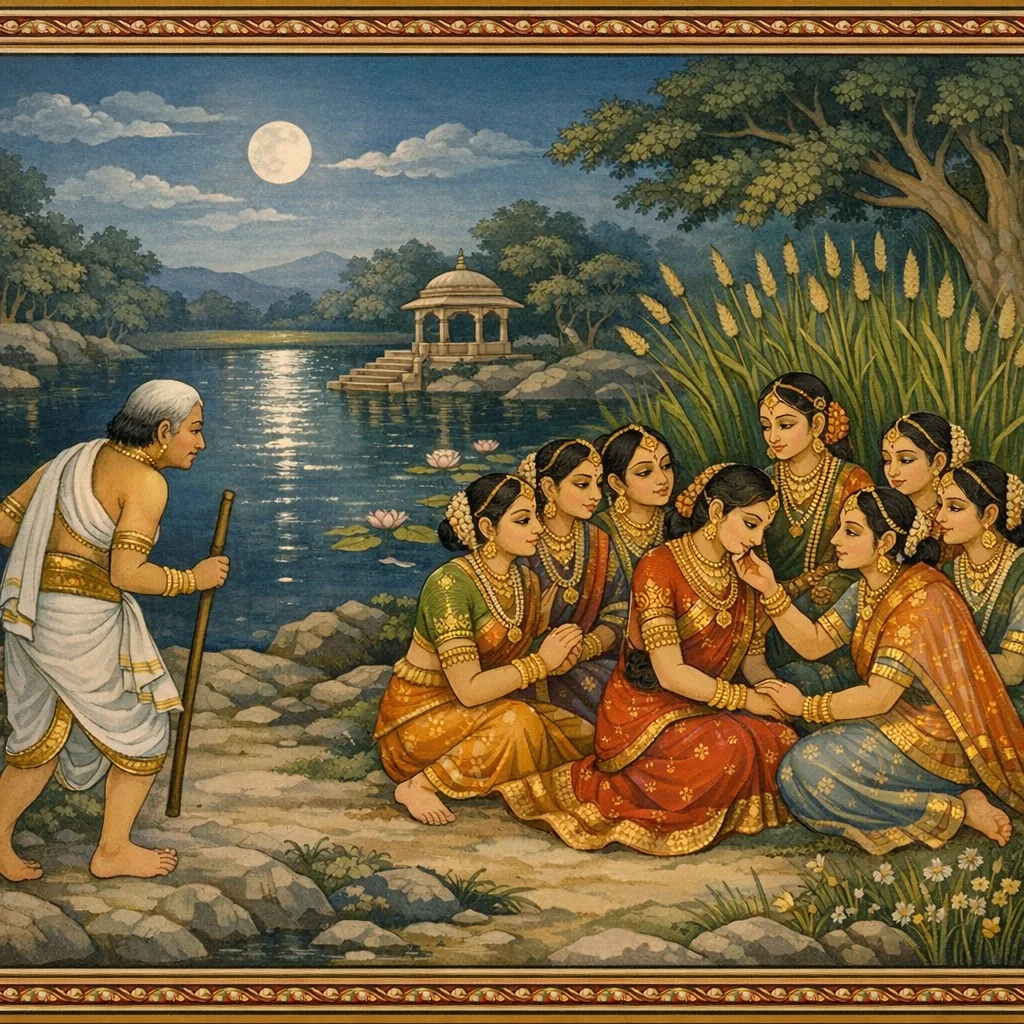
This chapter is framed as Sūta’s discourse praising the “unsurpassed” Śuklatīrtha, marked out by white darbha-grass signs. Near Cāmatkārapura, a washerman (rajaka) who serves leading brāhmaṇas mistakenly throws their valuable garments into a blue dye-pond (Nīlīkuṇḍī/Nīlī). Fearing punishment—bondage or death—he confides in his family and prepares to flee by night. His daughter seeks counsel from her friend, a fisher-community girl (dāśa-kanyā), who directs her to a nearby reservoir that is hard to enter. The washerman tests the water by washing the dyed clothes there; they instantly become crystal-white, and when he bathes, his own black hair turns white. He returns the restored garments to the brāhmaṇas, who investigate and confirm the tīrtha’s power: even dark substances and hair are whitened. Elders and youths bathe with faith and gain vigor and auspiciousness. A mythic origin is then given: devas, fearing human misuse, try to cover the tīrtha with dust, yet whatever grows there turns white by the water’s potency. Ritual directions follow—smearing the tīrtha’s earth (mṛd) on the body and bathing yields the merit of bathing in all tīrthas; tarpaṇa with darbha and forest sesame pleases the ancestors and is likened to the fruits of great sacrifices and eminent śrāddha. The chapter closes by explaining that Viṣṇu placed Śvetadvīpa here so its whiteness would not be lost even under Kali’s influence.
Shlokas
Verse 1
सूत उवाच । तथान्यदपि तत्रास्ति शुक्लतीर्थमनुत्तमम् । दर्भैः संसूचितं श्वेतैर्यदद्यापि द्विजोत्तमाः
Sūta said: “There too exists another unsurpassed holy ford called Śuklatīrtha. Even today, O best of the twice-born, it is marked out by white darbha-grass.”
Verse 2
चमत्कारपुरे पूर्वमासीत्कश्चित्सुशल्यवित् । रजकः शुद्धकोनाम पुत्रपौत्रसमन्वितः
Formerly, in Camatkārapura, there lived a certain washerman named Śuddhaka, skilled in his craft, and possessed of sons and grandsons.
Verse 3
स सर्वरजकानां च प्राधान्येन व्यवस्थितः । प्रधानब्राह्मणानां च करोत्यंबरशोधनम्
He was established as the chief among all washermen, and he also cleansed garments for the leading Brahmins.
Verse 4
कस्यचित्त्वथ कालस्य नीलीकुण्ड्यां समाहितः । प्राक्षिपद्ब्राह्मणेंद्राणां वासो विज्ञातवांश्चिरात्
Then, at a certain time, while intent upon his work at the Nīlīkuṇḍī, he cast into it the garments of eminent Brahmins—an act whose fault he realized only much later.
Verse 5
अथासौ मन्दचित्तश्च स्वामाहूयकुटुम्बिनीम् । पुत्रांश्च वचनं प्राह रहस्ये भयविह्वलः
Then, troubled in mind, he summoned his wife and his sons, and in private spoke these words, shaken with fear.
Verse 6
निर्मूल्यानि सुवस्त्राणि ब्राह्मणानां महात्मनाम् । नीलीमध्ये विमोहेन प्रक्षिप्तानि बहूनि च
“Many fine garments belonging to great-souled Brahmins—priceless to them—have, through my confusion, been thrown into the midst of the Nīlī.”
Verse 7
वधबन्धादिकं कर्म ते करिष्यंत्यसंशयम् । तस्मादन्यत्र गच्छामो गृहीत्वा रजनीमिमाम्
“Without doubt they will inflict acts such as beating and binding. Therefore let us go elsewhere, this very night (departing at once).”
Verse 8
एवं स निश्चयं कृत्वा सारमादाय मंदिरात् । प्रस्थितो भार्यया सार्द्धं कांदिशीको द्विजोत्तमाः
Thus, having made this decision and taking his valuables from the house, the man of Kāṃdiśī set out together with his wife, O best of the twice-born.
Verse 9
तावत्तस्य सुता गत्वा स्वां सखीं दाशसंभवाम् । उवाच क्षम्यतां भद्रे यन्मया कुकृतं कृतम्
Meanwhile, his daughter went to her own friend, born in a fisherfolk family, and said: “Forgive me, dear one, for the wrong I have done.”
Verse 10
अज्ञानाज्ज्ञानतो वापि प्रक्रीडंत्या त्वया सह । प्रणयाद्बाल्यभावाच्च क्रोधाद्वाथ महेर्ष्यया
“Whether through ignorance or even knowingly—while playing with you—whether out of affection, childishness, anger, or great envy…”
Verse 11
अथ सा सहसा श्रुत्वा बाष्पपर्याकुलेक्षणा । उवाच किमिदं भद्रे यन्मामित्थं प्रभाषसे
Hearing those words at once, she—her eyes troubled and brimming with tears—said: “O gentle one, what is this that you speak to me in such a manner?”
Verse 12
सख्युवाच । मम तातेन नीलायां प्रक्षिप्तान्यंबराणि च । ब्राह्मणानां महार्हाणि विभ्रमेण सुलोचने
The friend said: “O fair-eyed one, my father, in a moment of confusion, threw into the Nīlā some garments—costly garments belonging to Brāhmaṇas.”
Verse 13
तत्प्रभाते परिज्ञाय दंडं धास्यंति दारुणम् । एवं चित्ते समास्थाय तातः संप्रस्थितोऽधुना
“At dawn, when it becomes known, they will impose a dreadful punishment. With this fixed in his mind, my father has set out even now.”
Verse 14
अहं तवातिकं प्राप्ता दर्शनार्थमनिन्दिते । अनुज्ञाता प्रयास्यामि त्वया तस्मात्प्रमुच्यताम्
O blameless one, I have drawn near to you only to behold you. Having gained your permission, I shall depart; therefore, please release me from this delay.
Verse 15
अथ सा तद्वचः श्रुत्वा प्रसन्नवदनाऽब्रवीत् । यद्येवं मा सरोजाक्षि कुत्रचित्संप्रयास्यसि
Hearing those words, she spoke with a brightened face: “If it is so, O lotus-eyed one, do not go away anywhere.”
Verse 16
निवारय द्रुतं गत्वा तातं नो गम्यतामिति । अस्ति पूर्वोत्तरे भागे स्थानादस्माज्जलाशयः
“Go quickly and stop our father—let him not depart. For to the north-east of this place there is a reservoir of water.”
Verse 19
ततः स विस्मयाविष्टः स्वयं सस्नौ कुतूहलात् । यावच्छुक्लत्वमापन्नस्तादृक्कृष्णवपुर्धरः
Then, filled with wonder, he bathed there himself out of curiosity—until that very one who bore a dark complexion attained whiteness, a sign of purity and radiance.
Verse 20
तस्मात्तत्रैव वस्त्राणि प्रक्षालयतु सत्वरम् । तातः स तव यास्यंति विशुद्धिं परमां शुभे
“Therefore, let him quickly wash the garments right there. Then your father will attain supreme purification, O auspicious one.”
Verse 21
अथ सा सत्वरं गत्वा निजतातस्य तद्वचः । सत्वरं कथयामास प्रहृष्टवदना सती
Then she hurried to her own father and swiftly conveyed those words to him, her virtuous face radiant with joy.
Verse 22
मम सख्या समादिष्टं नातिदूरे जलाशयः । तत्र श्वेतत्वमायाति सर्वं क्षिप्तं सितेतरम्
She said: “My friend has pointed out a water-reservoir not far away. Whatever is cast into it—even if not white—there becomes white, pure and bright.”
Verse 23
तस्मात्प्रक्षालय प्रातस्तत्र गत्वा जलाशये । वस्त्राण्यमूनि शुक्लत्वं संप्रयास्यंत्यसंशयम्
Therefore, go there at dawn to that water-reservoir and wash them. Those garments will surely attain whiteness, without doubt.
Verse 24
रजक उवाच । नैतत्संपत्स्यते पुत्रि यन्नीलस्य परिक्षयः । वस्त्रलग्नस्य जायेत यतः प्रोक्तं पुरातनैः
The washerman said: “Daughter, this will not come to pass—that the indigo dye fixed in the cloth could be destroyed—for so it has been declared by the ancients.”
Verse 25
वज्रलेपस्य मूर्खस्य नारीणां कर्कटस्य च । एको ग्रहस्तु मीनानां नीलीमद्यपयोस्तथा
“For a hardened coating like vajra, for a fool, for women, and for a crab, it is said there is but one ‘grasp’—a fixed hold that does not let go; likewise for fish, and likewise for indigo, liquor, and milk as well.”
Verse 26
कन्योवाच । तत्र ह्यागम्यतां तावद्वस्त्रणयादाय यत्नतः । तोयाच्छुद्धिं प्रयास्यंति तदाऽगंतव्यमेव हि
The maiden said: “Then let us go there first, carefully taking the garments with us. From that water they will attain purity—therefore one must surely go and behold it.”
Verse 27
भूयोऽपि मंदिरे वाऽथ तस्मात्स्थानाद्दिगंतरम् । गंतव्यं सकलैरेव ममैतद्धृदि संस्थितम्
Moreover—whether to a temple or even far away from that place—everyone must proceed; this resolve is firmly settled in my heart.
Verse 28
तस्यास्तद्वचनं श्रुत्वा साधुसाध्विति तेऽसकृत् । प्रोच्य बांधवभृत्याश्च रात्रावेव प्रजग्मिरे
Hearing her words, they repeatedly exclaimed, “Well said, well said!” Then, after informing their relatives and attendants, they departed that very night.
Verse 29
दाशकन्यां पुरः कृत्वा संशयं परमं गताः । विभवेन समायुक्ता निजेन द्विजसत्तमाः
Placing the fisher-girl in front, the best of the twice-born went on, seized by great doubt, yet furnished with their own resources and means.
Verse 30
ततः सा दर्शयामास दाशकन्या जलाशयम् । बहुवीरुधसंछन्नं दुष्प्रवेशं च देहिनाम्
Then that fisher-girl showed them the water-reservoir—covered with many creepers and difficult for embodied beings to enter.
Verse 31
ततः स रजकस्तत्र वस्त्राण्यादाय सर्वशः । प्रविष्टः सलिले तस्मिन्क्षालयामास वै द्विजाः
Then the washerman, taking all the garments there, entered that water and indeed began washing them, O twice-born.
Verse 32
अथ तानि सुवस्त्राणि मेचकाभानि तत्क्षणात् । जातानि स्फटिकाभानि तत्क्षणादेव कृत्स्नशः
Then those fine garments—dark-blue in appearance—at that very moment became crystal-like in brightness, instantly and entirely.
Verse 33
ततस्तुष्टिसमायुक्तः साधुसाध्विति चाऽब्रवीत् । समालिंग्य सुतां प्राह दाशकन्यां च सादरम्
Then, filled with satisfaction, he exclaimed, “Well done! Well done!” Embracing his daughter, he respectfully addressed the fisherman’s daughter as well.
Verse 34
सुवस्त्राणि द्विजेंद्राणामर्पयामो यथाक्रमम्
“Let us offer fine garments to the best of the twice-born, in due order.”
Verse 35
ततः स स्वगृहं गत्वा तानि वस्त्राणि कृत्स्नशः । यथाक्रमेण संहृष्टः प्रददौ द्विजसत्तमाः
Then he went to his own house and, taking all those garments, joyfully distributed them in proper order to the most excellent Brāhmaṇas.
Verse 36
अथ ते ब्राह्मणा दृष्ट्वा तां शुद्धिं वस्त्रसंभवाम् । तं च श्वेतीकृतं चेदृग्रजकं विस्मयान्विताः
Then those Brāhmaṇas, seeing that purity manifested through the garments—and seeing the washerman himself become white in such a manner—were filled with amazement.
Verse 37
पप्रच्छुः किमिदं चित्रं वस्त्रमूर्धजसंभवम् । अनौपम्यं च संजातं वदस्व यदि मन्यसे
They asked, “What is this astonishing matter—garments arising from hair? An incomparable marvel has occurred. Tell us, if you deem it fit.”
Verse 38
रजक उवाच । एतानि विप्रा वस्त्राणि मया क्षिप्तानि मोहतः । नीलीमध्ये सुवस्त्राणि विनष्टानि च कृत्स्नशः
The washerman said: “O Brāhmaṇas, in delusion I threw these garments into the indigo dye-vat. The fine clothes were completely ruined.”
Verse 39
ततो भयं महद्भूतं कुटुम्बेन समन्वितः । चलितो रजनीवक्त्रे दिगंते ब्राह्मणोत्तमाः
Then great fear arose; accompanied by his family, he set out in the night’s darkness toward the far quarter—O best of Brāhmaṇas.
Verse 40
अथैषा तनयाऽस्माकं गता निजसखीं प्रति । दाशात्मजां सुदुःखार्ता पुनर्दर्शनलालसा
Then our daughter, afflicted with great sorrow and longing to see her again, went to her own friend—the fisherman’s daughter.
Verse 41
तया सर्वमभिप्रायं ज्ञात्वा मे दुःखहेतुकम् । ततः संदर्शयामास स्थिताग्रे स्वजलाशयम्
Knowing my whole intent and the cause of my sorrow, she then showed her own water-reservoir, situated nearby in front.
Verse 42
तस्मिन्प्रक्षिप्तमात्राणि वस्त्राणीमानि तत्क्षणात् । ईदृग्वर्णानि जातानि विस्मयस्य हि कारणम्
The moment these garments were merely cast into that water, they instantly took on such pure coloration—indeed, a cause for amazement.
Verse 43
तथा मे मूर्धजाः कृष्णास्तत्र स्नातस्य तत्क्षणात् । परं शुक्लत्वमापन्ना एतत्प्रोक्तं मया स्फुटम्
In the same way, my hair—though black—became completely white at that very moment when I bathed there. This I have clearly told you.
Verse 44
एवं ते ब्राह्मणाः श्रुत्वा कौतूहलसमन्विताः । तत्र जग्मुः परीक्षार्थं विक्षिप्य तदनंतरम्
Hearing this, those brāhmaṇas, filled with curiosity, went there to test it for themselves, setting out immediately thereafter.
Verse 45
कृष्णद्रव्याणि भूरीणि केशादीनि सहस्रशः । सर्वं तच्छुक्लतां याति त्यक्त्वा वर्णं मलीमसम्
Countless black substances—hair and the like, by the thousands—became white there; everything turned to whiteness, casting off its dark and tainted color.
Verse 46
ततो वृद्धतया ये च विशेषाच्छ्वेतमूर्धजाः । ते सस्नुः श्रद्धया युक्तास्तरुणाश्चापि धर्मिणः
Then those whose hair had turned white with old age, especially, bathed there with faith; and the righteous young men, established in dharma, also bathed.
Verse 47
ततः शुक्लत्वमापन्नास्तेजोवीर्यसमन्विताः । भवंति तत्प्रभावेन प्रयांति च परां गतिम्
Thereupon they attained whiteness and became endowed with radiance and vigor; by the power of that sacred place, they also proceed to the supreme state.
Verse 48
अथ तद्वासवो दृष्ट्वा शुक्लतीर्थं प्रमुक्तिदम् । पूरयामास रजसा मानुषोत्थभयेन च
Then Vāsava (Indra), seeing Śuklatīrtha—the giver of liberation—filled it up with dust, out of fear arising from humans (gaining its power).
Verse 49
अद्यापि तत्र यत्किंचिज्जायतेऽथ तृणादिकम् । तत्सर्वं शुक्लतामेति तत्तोयस्य प्रभावतः
Even today, whatever arises there—even grass and the like—turns white; such is the potency of that water.
Verse 50
श्वैतैस्तैस्तारयेत्सर्वान्पितॄन्नरकगानपि
By those white offerings, one can deliver all the ancestors—even those who have gone to hell.
Verse 51
तत्तीर्थोत्थां मृदं गात्रे योजयित्वा नरोत्तमः । स्नानं करोति तीर्थानां सर्वेषां लभते फलम्
Smearing upon his limbs the sacred clay that arises from that tīrtha, the noble man bathes and thereby gains the fruit of bathing in all tīrthas.
Verse 52
यस्तैर्दर्भैर्नरो भक्त्या तिलैश्चारण्यसंभवैः । करोति तर्पणं विप्राः स प्रीणाति पितामहान्
O brāhmaṇas, he who with devotion performs tarpaṇa using those darbha grasses and the sesame seeds that arise in that forest, truly satisfies his forefathers.
Verse 53
अथाश्वमेधात्संप्राप्यं गयाश्राद्धेन यत्फलम् । नीलसंज्ञगवोत्सर्गे तथात्रापि द्विजोत्तमाः
O best of the twice-born, the very merit gained from the Aśvamedha sacrifice and from performing śrāddha at Gayā is likewise attained here through the sacred gift—the release—of a cow known as “Nīlā.”
Verse 54
ऋषय ऊचुः । शुक्लतीर्थं कथं जातं तत्र त्वं सूतनंदन । विस्तरेण समाचक्ष्व परं कौतूहलं हि नः
The sages said: “O son of Sūta, how did Śuklatīrtha come into being there? Tell us in full detail, for we are filled with great curiosity.”
Verse 55
सूत उवाच । श्वेतद्वीपः समानीतो विष्णुना प्रभविष्णुना । तत्क्षेत्रे कलिभीतेन यथा शौक्ल्यं न संत्यजेत्
Sūta said: “Śvetadvīpa was brought here by Viṣṇu, the all-powerful Lord, so that in that sacred region—out of fear of Kali—it would not abandon its whiteness (purity).”}]}}json_end สามสิบเอ็ดassistant to=verse_translations  ̄奇米json_end {
Verse 56
कलिकालेन संस्पृष्टः श्वेतद्वीपोऽपि श्यामताम् । न प्रयाति द्विजश्रेष्ठास्ततस्तत्र निवेशितः
O best of brāhmaṇas, though touched by the age of Kali, Śvetadvīpa does not turn dark; therefore it was established there.