Adhyaya 120
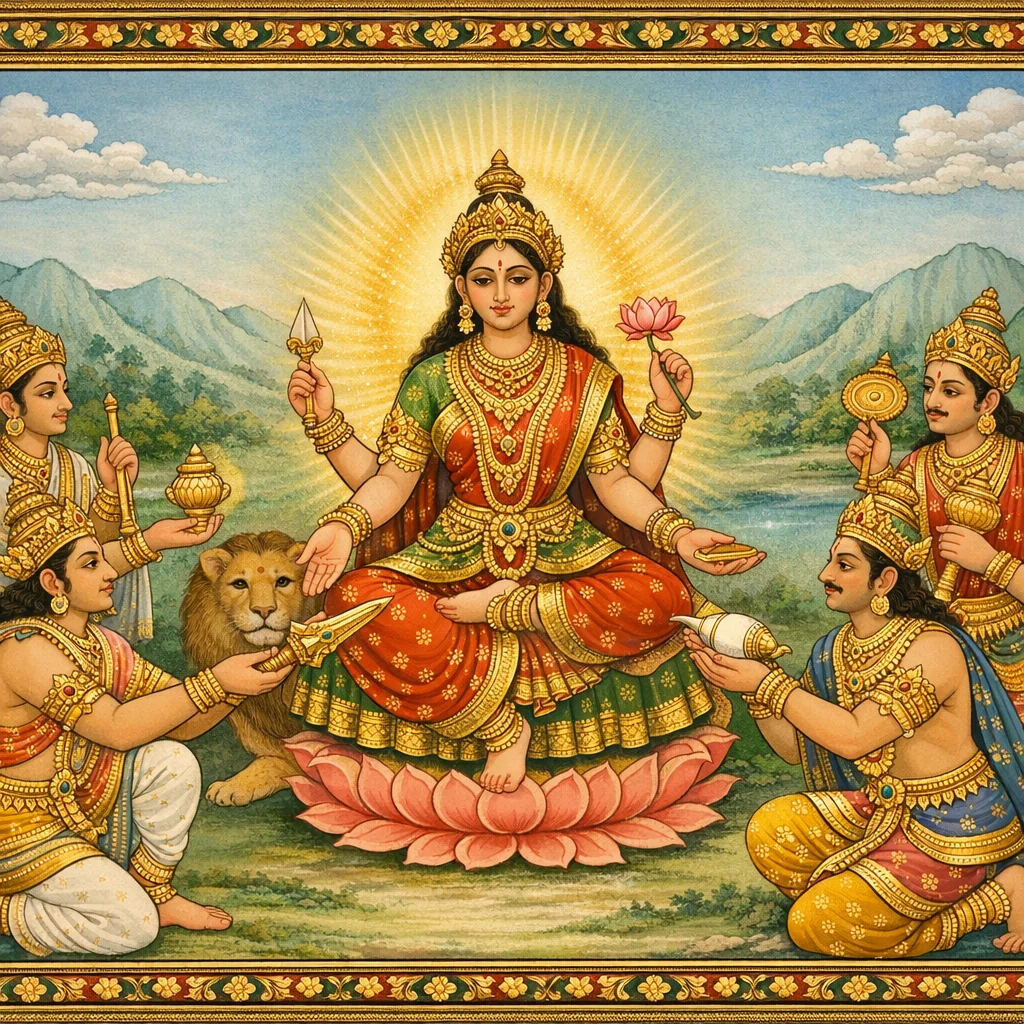
Sūta recounts a grave crisis: the devas, led by Śakra (Indra), are defeated in battle, and the asura Mahiṣa establishes dominion over the three worlds. Seizing all that is deemed excellent—vehicles, wealth, and prized possessions—he deepens cosmic disorder. The devas assemble to deliberate his destruction; Nārada arrives and details the asura’s oppressive deeds, inflaming their righteous indignation. Their anger becomes a scorching effulgence that darkens the directions, a sign of a morally potent force with cosmic consequence. Kārttikeya (Skanda) appears and asks the cause; Nārada explains the asuras’ unrestrained arrogance and their plundering of others’ valuables. From the combined culmination of this wrath—especially of Skanda and the devas—arises a radiant maiden marked with auspicious signs, who is named Kātyāyanī. The devas then bestow upon her a complete array of weapons and protections—vajra, śakti, bow, trident, noose, arrows, armor, sword, and more. She manifests twelve arms to bear them and assures the devas she will accomplish their aim. The devas disclose the constraint: Mahiṣa is invulnerable to beings, particularly men, except to a single woman; therefore they have generated her as the necessary counter-agent. They send her to Mount Vindhya to perform severe tapas and augment her tejas, after which she will be placed at the forefront to destroy the asura and restore divine sovereignty.
Shlokas
Verse 1
सूत उवाच । एवं शक्रादयो देवा जितास्ते तु रणाजिरे । महिषेण ततो राज्यं त्रैलोक्येऽपि चकार सः
Sūta said: Thus were Indra and the other gods defeated on the battlefield; thereafter Mahiṣa established his dominion even over the three worlds.
Verse 2
यत्किञ्चित्त्रिषु लोकेषु सारभूतं प्रपश्यति । गजवाजिरथाश्वादि सर्वं गृह्णाति सोऽसुरः
Whatever he saw in the three worlds that was excellent and valuable—elephants, horses, chariots, and the like—that Asura seized it all.
Verse 3
एवं प्रवर्तमानस्य तस्य देवाः सवासवाः । वधार्थं मिलिताश्चक्रुः कथा दुःखसम न्विताः
As he continued in this manner, the gods—together with Indra—assembled with the aim of his slaying, and their counsel was filled with sorrow.
Verse 4
एतस्मिन्नंतरे प्राप्तो नारदो मुनिसत्तमः । दृष्ट्वा तं माहिषं सर्वं व्यवहारं महोत्कटम्
At that very moment Nārada, the foremost of sages, arrived; and seeing Mahiṣa and the whole of his fierce conduct, he took note of it all.
Verse 5
ततश्च कथयामास सर्वं तेषां सविस्त रम् । तस्य संचेष्टितं भूरि लोकत्रयप्रपीडनम्
Then he narrated everything to them in full detail—Mahiṣa’s many deeds and his grievous oppression of the three worlds.
Verse 6
अथ तेषां महाकोपो भूय एवाभ्यवर्धत । नारदस्य वचः श्रुत्वा तादृग्लोककथोद्भवम्
Then their great wrath increased all the more, upon hearing Nārada’s words—news that had arisen from such accounts of what was happening in the worlds.
Verse 7
तेषां कोपोद्भवो घर्मो वक्त्रद्वारेण निर्ययौ । येन दिङ्मंडलं सर्वं तत्क्षणात्कलुषीकृतम्
From their anger there issued a scorching heat through the doorway of their mouths, by which the entire circle of directions was instantly darkened and defiled.
Verse 9
एतस्मिन्नंतरे तत्र कार्तिकेयः समभ्ययात् । पप्रच्छ च किमेतद्धि देवानां कोपकारणम् । येन कालुष्यतां प्राप्तं दिक्चक्रं सकलं मुने च । नारद उवाच । एतेषां सांप्रतं स्कन्द मया वार्ता निवेदिता । त्रैलोक्यं दानवैः सर्वैर्यथा नीतं मदोत्कटैः
Just then Kārttikeya arrived there and asked: “O sage, what is the cause of the gods’ anger, by which the entire wheel of directions has become polluted?” Nārada said: “Skanda, I have just now reported to them the matter—how all the Dānavas, swollen with intoxicated pride, have brought the three worlds under their domination.”
Verse 10
स्त्रीरत्नमश्वरत्नं वा न किंचित्कस्यचिद्गृहे । ते दृष्ट्वा मोक्षयंति स्म दुर्निवार्या मदोत्कटाः
In no one’s house was there left any jewel—neither a jewel-like woman nor a jewel-like horse—nothing at all; for those uncontrollable ones, drunk on pride, would seize whatever they saw and carry it off.
Verse 11
तच्छ्रुत्वा कार्तिकेयस्य विशेषात्संप्रजायत । वक्त्रद्वारेण देवानां यथा कोपः समागतः
Hearing that, Kārttikeya’s wrath arose with special intensity—just as the gods’ anger had manifested through the gateway of their mouths.
Verse 12
एतस्मिन्नंतरे जाता तत्कोपांते कुमारिका । सर्वलक्षणसंपन्ना दिव्यतेजोऽन्विता शुभा
At that very moment, at the culmination of that wrath, a maiden was born—endowed with every auspicious mark, radiant with divine splendor, and wholly auspicious.
Verse 13
कार्तिकेयस्य कोपेन कोपे मिश्रे दिवौकसाम् । यस्माज्जातात्र सा कन्या तस्मात्कात्यायनी स्मृता
From Kārttikeya’s wrath—mingled with the wrath of the gods—since that maiden was born therefrom, she is therefore remembered as Kātyāyanī.
Verse 14
ततस्तस्या ददौ वज्रमायुधं त्रिदशाधिपः । शक्तिं स्कन्दः सुतीक्ष्णाग्रां चापं देवो जनार्दनः
Then the lord of the Thirty (Indra) gave her the thunderbolt (vajra) as a weapon; Skanda gave her a śakti-spear with a razor-sharp point; and the god Janārdana gave her a bow.
Verse 15
त्रिशूलं च महादेवः पाशं च वरुणः स्वयम् । आदित्यश्च सितान्बाणांश्चंद्रमाश्चर्म चोत्तमम्
Mahādeva bestowed upon her a trident; Varuṇa himself gave her a noose; Āditya granted her white arrows; and Candramā gave her a splendid shield.
Verse 16
निस्त्रिंशं निरृतिस्तुष्ट उल्मुकं च हुताशनः । वायुश्च च्छुरिकां तीक्ष्णां धनदः परिघं तथा
The pleased Nirṛti gave her a sword; Hutāśana (Agni) bestowed a blazing firebrand; Vāyu granted a keen dagger; and Dhanada (Kubera) likewise gave an iron club.
Verse 17
दण्डं प्रेताधिपो रौद्रं वधाय सुरविद्विषाम् । द्वादशैवं समालोक्य साऽयुधानि द्विजोत्तमाः
The Lord of departed spirits (Yama) gave a fierce staff for the destruction of the gods’ enemies. Thus, O best of the twice-born, when those twelve divine weapons were beheld together, they stood ready to slay the foes of the devas.
Verse 18
कात्यायनी ततश्चक्रे भुजद्वादशकं तदा । जग्राह च द्रुतं तानि सुरास्त्राणि दिवौकसाम्
Then Kātyāyanī manifested twelve arms, and swiftly took up those celestial weapons belonging to the devas, the dwellers of heaven.
Verse 19
ततः प्रोवाच तान्सर्वान्संप्रहृष्टतनूरुहा । यदर्थं विबुधश्रेष्ठाः सृष्टा तद्ब्रूत मा चिरम्
Then she addressed them all—her body’s hairs thrilled with joy—saying, “O best among the celestials, tell me without delay the purpose for which I have been brought forth.”
Verse 20
सर्वं कार्यं करिष्यामि युष्माकं नात्र संशयः । देवा ऊचुः । महिषो दानवो रौद्रः समुत्पन्नोऽत्र सांप्रतम्
“I shall accomplish all that must be done for you—of this there is no doubt.” The devas said: “Here and now a fierce dānava named Mahiṣa has arisen.”
Verse 21
अवध्यः सर्वभूतानां मानुषाणां विशेषतः । मुक्त्वैकां योषितं तेन त्वमस्माभिर्विनिर्मिता
“He is invincible to all beings—especially to men. Excepting only a single woman, he cannot be slain; therefore you have been fashioned by us.”
Verse 22
तस्मात्त्वं सांप्रतं गच्छ विंध्याख्यं पर्वतोत्तमम् । तपस्तत्र कुरुष्वोग्र तेजो येनाभिवर्धते
“Therefore go now to the excellent mountain called Vindhya. Perform intense austerity there, by which your divine radiance will increase.”
Verse 23
ततस्तु तेजःसंयुक्तां त्वां ज्ञात्वा वयमेव हि । अग्रे धृत्वा करिष्यामो युद्धं तेन दुरात्मना
“Then, knowing you to be endowed with that gathered radiance, we ourselves shall place you at the fore and wage war against that wicked-souled one.”
Verse 24
ततस्त्वच्छस्त्रनिर्दग्धः पंचत्वं स प्रयास्यति । वयं च त्रिदशैश्वर्यं लभिष्यामो हतद्विषः
“Then, scorched by your weapons, he will meet his end; and we—our enemies slain—shall regain the sovereignty of the thirty gods.”