Adhyaya 119
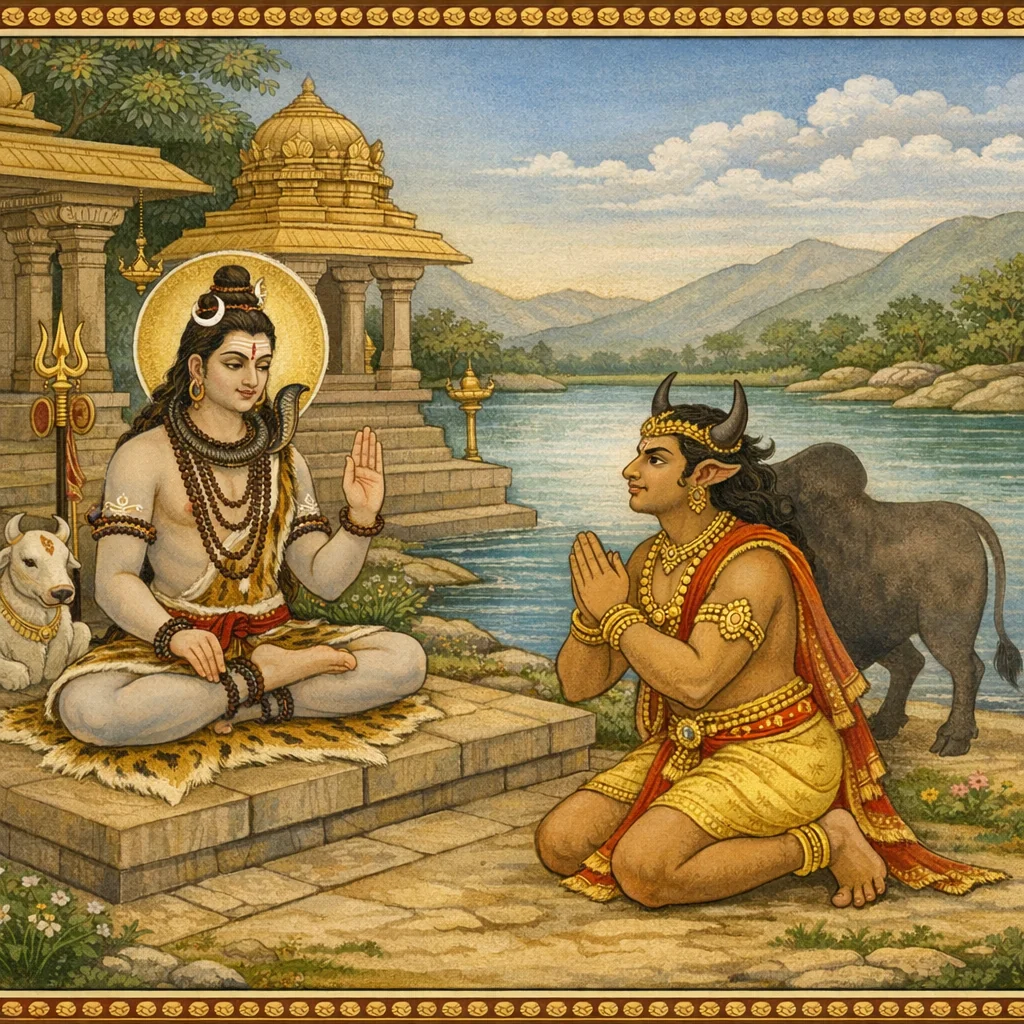
The chapter begins with the Ṛṣis asking Sūta about the theological basis of Devī Kātyāyanī’s slaying of Mahīṣa: why the asura came to dwell in a buffalo form and why the Goddess killed him. Sūta explains the origin: a daitya named “Citra-sama,” once handsome and heroic, becomes obsessed with riding buffaloes and abandons other conveyances. Near the bank of the Jahnāvī, his buffalo tramples a sage absorbed in meditation, shattering the sage’s samādhi; angered by the disrespect and the disruption of contemplation, the sage curses him to live as a buffalo (mahīṣa) for the rest of his life. Seeking relief, the cursed one approaches Śukra, who advises exclusive devotion to Maheśvara at the Hāṭakeśvara kṣetra, praised as a giver of siddhi even in adverse ages. After long austerities, Śiva appears and grants a limited boon: the curse cannot be revoked, yet Śiva provides a “sukhopāya,” by which diverse enjoyments and beings converge upon his body. When the daitya asks for invulnerability, Śiva refuses the absolute; at last he requests to be killable only by a woman. Śiva also teaches the fruits of tīrtha practice: those who bathe with faith and gain darśana attain their aims, remove obstacles, and increase spiritual potency; ailments such as disorders and fevers are said to subside. The narrative then turns to the daitya’s political and military rise: he rallies the dānavas, attacks the devas, and after a prolonged celestial war Indra’s forces weaken and withdraw, leaving Amarāvatī temporarily empty. The daityas enter, celebrate, and seize sacrificial shares. The text finally notes the स्थापना of a great liṅga and a temple-like structure comparable to Kailāsa, reinforcing the chapter’s tīrtha-centered sacralization of the sacred site.
Shlokas
Verse 2
ऋषय ऊचुः । यत्वया सूतज प्रोक्तं देवी कात्यायनी च सा । महिषांतकरी जाता कथं सा मे प्रकीर्तय । कीदृग्दानववर्यः स माहिषं रूपमाश्रितः । कस्मात्स सूदितो देव्या तन्मे विस्तरतो वद
The sages said: “O son of Sūta, you have declared that the Goddess is Kātyāyanī and that she became the destroyer of Mahiṣa. Tell us how this came to be. What kind of foremost demon was he who assumed the form of a buffalo? And for what reason was he slain by the Goddess? Explain this to us in detail.”
Verse 3
सूत उवाच । अत्र वः कीर्तयिष्यामि देव्या माहात्म्यमुत्तमम् । श्रुतमात्रेऽपि मर्त्यानां येन शत्रुक्षयो भवेत्
Sūta said: “Here I shall recount to you the supreme greatness of the Goddess—by merely hearing it, mortals gain the destruction of enemies.”
Verse 4
हिरण्याक्षसुतः पूर्वं महिषोनाम दानवः । आसीन्महिषरूपेण येन भुक्तं जगत्त्रयम्
Formerly there was a demon named Mahiṣa, the son of Hiraṇyākṣa. Taking the form of a buffalo, he overran and oppressed the three worlds.
Verse 5
ऋषय ऊचुः । माहिषेण स्वरूपेण किंजातः सूतनंदन । अथवा शापदोषेण सञ्जातः केनचिद्वद
The sages said: “O son of Sūta, why was he born in the form of a buffalo? Or did he become so through the fault of some curse? Tell us.”
Verse 6
सूत उवाच । संजातो हि सुरूपाढ्यः शतपत्रनिभाननः । दीर्घबाहुः पृथुग्रीवः सर्वलक्षणलक्षितः । नाम्ना चित्रसमः प्रोक्तस्तेजोवीर्यसमन्वितः
Sūta said: “He was indeed born exceedingly handsome, his face like a hundred-petaled lotus; long-armed, broad-necked, marked with every auspicious sign. He was called Citrasama, endowed with splendor and valor.”
Verse 7
सबाल्यात्प्रभृति प्रायो महिषाणां प्रबोधनम् । करोति संपरित्यज्य सर्वमश्वादिवाहनम्
From childhood onward, he mostly devoted himself to rousing and driving buffaloes, having completely abandoned every other mount such as horses and the like.
Verse 9
कदाचिन्महिषारूढः स प्रतस्थे दनोः सुतः । जाह्नवीतीरमासाद्य विनिघ्नञ्जलपक्षिणः
Once, mounted upon a buffalo, that son of Danu set out; reaching the bank of the Jahnavī, he began striking down the water-birds there.
Verse 10
विहंगासक्तचित्तेन शून्येन स मुनीश्वरः । दृष्टो न महिषक्षुण्णः खुरैर्वेगवशाद्द्विजः
The lordly sage, his mind vacant and wholly absorbed in the birds, did not notice the twice-born one being trampled by the buffalo’s hooves in the rush of its speed.
Verse 12
ततः क्षतजदिग्धांगः स दृष्ट्वा दानवं पुरः । अथ दृष्ट्वा प्रणामेन रहितं कोपमाविशत् । ततः प्रोवाच तं क्रुद्धस्तोयमादाय पाणिना । यस्मात्पाप मम क्षुण्णं गात्रं महिषजैः खुरैः
Then, his limbs smeared with blood, and seeing the Dānava standing before him, the sage—observing him bereft of reverent salutation—was seized by anger. Taking water in his hand, he spoke to him in wrath: “Because, O sinner, my body has been crushed by the hooves of your buffalo…”
Verse 13
समाधेश्च कृतो भंगस्तस्मात्त्वं महिषो भव । यावज्जीवसि दुर्बुद्धे सम्यग्ज्ञानसमन्वितः
“You have shattered my samādhi; therefore become a buffalo. So long as you live, O evil-minded one, you shall remain endowed with clear awareness.”
Verse 14
अथाऽसौ महिषो जातः कृष्णगात्रधरो महान् । अतिदीर्घविषाणश्च अंजनाद्रिरिवापरः
Thereupon he became a mighty buffalo, black-bodied, with exceedingly long horns—like another Anjanādri mountain.
Verse 15
ततः प्रसादयामास तं मुनिं विनयान्वितः । शापातं कुरु मे विप्र बाल्यभावादजानतः
Then, with humility, he sought to appease that sage: “O Brāhmaṇa, please soften the curse upon me—for through childishness I did not understand.”
Verse 16
अथ तं स मुनिः प्राह न मे स्याद्वचनं वृथा । तस्माद्यावत्स्थिताः प्राणास्तावदित्थं भविष्यति
Then the sage said to him: “My word cannot become futile. Therefore, as long as your life-breath endures, it shall remain thus.”
Verse 17
महिषस्य स्वरूपेण निन्दितस्य सुदुर्मते । एवं स तं परित्यज्य गंगातीरं मुनीश्वरः । जगामाऽन्यत्र सोऽप्याशु गत्वा शुक्रमुवाच ह
Thus that utterly wicked one—disgraced in the form of a buffalo—was left behind, and the lordly sage departed from the bank of the Gaṅgā to another place. He too quickly went and spoke to Śukra.
Verse 18
अहं दुर्वाससा शप्तः कस्मिंश्चित्कारणांतरे । महिषत्वं समानीतस्तस्मात्त्वं मे गतिर्भव
“I have been cursed by Durvāsas for some reason and brought into the state of a buffalo; therefore, you must become my refuge.”
Verse 19
यथा स्यात्पूर्वजं देहं तिर्यक्त्वं नश्यते यथा । प्रसादात्तव विप्रेंद्र तथा नीतिर्विधीयताम्
“O best of brāhmaṇas, by your grace please ordain the proper course, that I may regain my former body and that this animal-state may be destroyed.”
Verse 20
शुक्र उवाच । तस्य शापोऽन्यथा कर्तुं नैव शक्यः कथंचन । केनापि संपरित्यज्य देवमेकं महेश्वरम्
Śukra said: “In no way whatsoever can that curse be made otherwise. Therefore, without abandoning the one God—Maheśvara—take refuge in Him alone.”
Verse 21
तस्मादाराधयाऽशु त्वं गत्वा लिंगमनुत्तमम् । हाटकेश्वरजे क्षेत्रे सर्वसिद्धिप्रदायके
“Therefore, go quickly and worship the unsurpassed Liṅga in the sacred region of Hāṭakeśvara, the giver of every attainment.”
Verse 22
तत्र सञ्जायते सिद्धिः शीघ्रं दानवसत्तम । अपि पापयुगे प्राप्ते किं पुनः प्रथमे युगे
There, accomplishment (siddhi) arises swiftly, O best of the Dānavas—even when the sinful age has arrived; how much more, then, in the first and purest age!
Verse 23
एवमुक्तः स शुक्रेण दानवः सत्वरं ययौ । हाटकेश्वरजं क्षेत्रं तपस्तेपे ततः परम्
Thus instructed by Śukra, the Dānava departed at once for the holy region of Hāṭakeśvara, and thereafter undertook austerities (tapas).
Verse 25
तस्यैवं वर्तमानस्य तपःस्थस्य महात्मनः । जगाम सुमहान्कालः कृच्छ्रे तपसि वर्ततः
As that great-souled one remained thus, steadfast in austerity, a very long time passed while he persisted in difficult penance.
Verse 26
ततस्तुष्टो महादेवो गत्वा तद्दृष्टिगोचरम् । प्रोवाच परितुष्टोऽस्मि वरं वरय दानव
Then Mahādeva, pleased, came within his sight and said: “I am fully satisfied. O Dānava, choose a boon.”
Verse 27
महिष उवाच । अहं दुर्वाससा शप्तो महिषत्वे नियोजितः । तिर्यक्त्वं नाशमायातु तस्मान्मे त्वत्प्रसादतः
The Buffalo-being said: “I was cursed by Durvāsas and assigned to buffalohood. Therefore, by your grace, let this animal-state come to an end for me.”
Verse 28
श्रीभगवानुवाच । नान्यथा शक्यते कर्तुं तस्य वाक्यं कथंचन । तस्मात्तव करिष्यामि सुखोपायं शृणुष्व तम्
The Blessed Lord said: “His word cannot be altered in any way. Therefore I shall grant you an easy means—listen to it.”
Verse 29
ये केचिन्मानवा भोगा दैविका ये तथाऽसुराः । ते सर्वे तव गात्रेऽत्र सम्प्रयास्यंति संश्रयम्
“Whatever enjoyments exist among humans, among the gods, and likewise among the asuras—all of them shall here converge, taking refuge within your very body.”
Verse 31
महिष उवाच । यद्येवं देवदेवेश भोगप्राप्तिर्भवेन्मम । तस्मादवध्यमेवास्तु गात्रमेतन्मम प्रभो
Mahiṣa said: “If this is so, O Lord of the gods, and enjoyment is indeed to come to me, then, O Master, let this body of mine be truly invulnerable—incapable of being slain.”
Verse 32
दशानां देवयोनीनां मनुष्याणां विशेषतः । तिर्यञ्चानां च नागानां पक्षिणां सुरसत्तम
“Among the ten classes of divine birth, and especially among human beings—among animals as well, among Nāgas, and among birds, O best of the gods—”
Verse 33
श्रीभगवानुवाच । नावध्योऽस्ति धरापृष्ठे कश्चिद्देही च दानव । तस्मादेकं परित्यक्त्वा शेषान्प्रार्थय दैत्यप
The Blessed Lord said: “Upon the face of the earth there is no embodied being who is truly unslayable, O Dānava. Therefore, relinquish that single demand and ask for the remaining boons, O lord of the Daityas.”
Verse 34
ततः स सुचिरं ध्यात्वा प्रोवाच वृषभध्वजम् । स्त्रियमेकां परित्यक्त्वा नान्येभ्यस्तु वधो मम
Then, after pondering for a long time, he spoke to Vṛṣabhadhvaja (Śiva): “Setting aside one woman alone, let my death not come from any others.”
Verse 35
तथात्र मामके तीर्थे यः कश्चिच्छ्रद्धया नरः । करोति स्नानमव्यग्रस्त्वां पश्यति ततः परम्
“Likewise, here at this sacred tīrtha of mine, whatever man, with faith and without distraction, performs the bathing—thereafter he beholds You, the Lord.”
Verse 36
तस्य स्यात्त्वत्प्रसादेन संसिद्धिः सार्वकामिकी । सर्वोपद्रवनाशश्च तेजोवृद्धिश्च शंकर
“By Your grace, O Śaṅkara, he attains complete fulfillment of all desires; all calamities are destroyed, and his spiritual radiance increases.”
Verse 37
भोगार्थमिष्यते कायं यतो मर्त्यं सुरासुरैः । समवाप्स्यसि तान्सर्वांस्तस्मात्तव कलेवरम्
“For the sake of enjoyment, even gods and asuras desire a mortal body; so you too will obtain all those enjoyments. Therefore, as for your bodily frame—”
Verse 38
भूतप्रेतपिशाचादि संभवास्तस्य तत्क्षणात् । दोषा नाशं प्रयास्यंति तथा रोगा ज्वरादयः
“From that very moment, afflictions arising from bhūtas, pretas, piśācas, and the like are removed; likewise ailments—fevers and other diseases—go to destruction.”
Verse 39
एवमुक्त्वाऽथ देवेशस्ततश्चादर्शनं गतः । महिषोऽपि निजं स्थानं प्रजगाम ततः परम्
Having spoken thus, the Lord of the gods vanished from sight. Mahiṣa too thereafter returned to his own abode.
Verse 40
स गत्वा दानवान्सर्वान्समाहूय ततः परम् । प्रोवाचामर्षसंयुक्तः सभामध्ये व्यवस्थितः
Going forth, he summoned all the Dānavas; then, standing in the midst of the assembly, he spoke—filled with resentment and wrath.
Verse 41
पिता मम पितृव्यश्च ये चान्ये मम पूर्वजाः । दानवा निहता देवैर्वासुदेवपुरोगमैः
“My father, my paternal uncle, and all my other ancestors—those Dānavas were slain by the Devas, with Vāsudeva at their head.”
Verse 42
तस्मात्तान्नाशयिष्यामि देवानपि महाहवे । अहं त्रैलोक्यराज्यं हि ग्रहीष्यामि ततः परम्
“Therefore I shall destroy those Devas in the great battle; and thereafter I shall seize the sovereignty of the three worlds.”
Verse 43
अथ ते दानवाः प्रोचुर्युक्तमेतदनुत्तमम् । अस्मदीयमिदं राज्यं यच्छक्रः कुरुते दिवि
Then those Dānavas said, “This is right—indeed, unsurpassed. For that sovereignty which Śakra enjoys in heaven truly belongs to us.”
Verse 44
तस्मादद्यैव गत्वाऽशु हत्वेन्द्रं रणमूर्धनि । दिव्यान्भोगान्प्रभुञ्जानाः स्थास्यामः सुखिनो दिवि
Therefore, going this very day—swiftly—we shall slay Indra at the very height of battle; then, enjoying celestial delights, we shall dwell happily in heaven.
Verse 45
एवं ते दानवाः सर्वे कृत्वा मंत्रविनिश्चयम् । मेरुशृंगं ततो जग्मुः सभृत्यबलवाहनः
Thus all those Dānavas, having reached a firm decision in counsel, then set out for the peak of Meru—together with their attendants, armies, and mounts.
Verse 46
अथ शक्रादयो देवा दृष्ट्वा तद्दानवोद्भवम् । अकस्मादेव संप्राप्तं बलं शस्त्रास्त्रसंयुतम् । युद्धार्थं स्वपुरद्वारि निर्ययुस्तदनंतरम्
Then Śakra and the other Devas, seeing that Dānava host which had suddenly arrived—equipped with weapons and missiles—came out at once to the gate of their own city, intent on battle.
Verse 47
आदित्या वसवो रुद्रा नासत्यौ च भिषग्वरौ । विश्वेदेवास्तथा साध्याः सिद्धा विद्याधराश्च ये
The Ādityas, the Vasus, the Rudras, the two Nāsatyas—foremost among physicians—the Viśvedevas, the Sādhyas, the Siddhas, and all the Vidyādharas as well (gathered for the conflict).
Verse 48
ततः समभवद्युद्धं देवानां सह दानवैः । मिथः प्रभर्त्स्यमानानां मृत्युं कृत्वा निवर्तनम्
Then a war arose between the Devas and the Dānavas; as they assailed one another, their ‘withdrawal’ was only after making death their end.
Verse 49
एवं समभवद्युद्धं यावद्वर्षत्रयं दिवि । रक्तनद्योतिविपुलास्तत्रातीव प्रसुस्रुवुः
Thus the war in heaven continued for three years; there, vast torrents poured forth, like rivers of blood.
Verse 50
अन्यस्मिन्दिवसे शक्रं दृष्टैवारावणसंस्थितम् । तं शुक्लेनातपत्रेण ध्रियमाणेन मूर्धनि । देवैः परिवृतं दिव्यशस्त्रपाणिभिरेव च
On another day they beheld Śakra (Indra) seated upon Airāvata, his head shaded by a white royal parasol, and surrounded by Devas bearing celestial weapons.
Verse 51
ततः कोपपरीतात्मा महिषो दानवाधिपः । महावेगं समासाद्य तस्यैवाभिमुखो ययौ
Then Mahiṣa, lord of the Dānavas, his mind overwhelmed by wrath, gathered tremendous speed and rushed straight toward him.
Verse 52
शृंगाभ्यां च सुतीक्ष्णाभ्यां ततश्चैरावणं गजम् । विव्याध हृदये सोऽथ चक्रे रावं सुदारुणम्
Then, with his exceedingly sharp horns, he pierced Airāvata the elephant in the heart; and Airāvata uttered a most dreadful cry.
Verse 53
ततः पराङ्मुखो भूत्वा पलायनपरायणः । अभिदुद्राव वेगेन पुरी यत्रामरावती
Then, turning away and intent only on escape, he ran swiftly toward the city where Amarāvatī lies.
Verse 54
अंकुशोत्थप्रहारैश्च क्षतकुंभोऽपि भूरिशः । महामात्रनिरुद्धोऽपि न स तस्थौ कथंचन
Though his temples were grievously wounded by repeated blows of the elephant-goad, and though restrained by the great attendants, he could not in any manner be made to stand still.
Verse 55
अथाब्रवीत्सहस्राक्षो महिषं वीक्ष्य गर्वितम् । गर्जमानांस्तथा दैत्यान्क्ष्वेडनास्फोटनादिभिः
Then Sahasrākṣa (Indra), seeing Mahiṣa swollen with pride—and the Daityas roaring with jeers, claps, and other outcries—spoke.
Verse 56
मा दैत्य प्रविजानीहि यन्नष्टस्त्रिदशाधिपः । एष नागो रणं हित्वा विवशो याति मे बलात्
“O Daitya, do not imagine that the lord of the gods has been destroyed. This elephant, abandoning the battlefield, is being driven away helplessly by my power.”
Verse 57
तस्मात्तिष्ठ मुहूर्तं त्वं यावदास्थाय सद्रथम् । नाशयामि च ते दर्पं निहत्य निशितैः शरैः
“Therefore, stand for a moment, until I mount my noble chariot. I shall destroy your arrogance, striking you down with sharpened arrows.”
Verse 58
एतस्मिन्नंतरे प्राप्तो मातलिः शक्रसारथिः । सहस्रैदर्शभिर्युक्तं वाजिनां वातरंहसाम्
Just then Mātali, Śakra’s charioteer, arrived—bringing a chariot harnessed with a thousand swift horses, fast as the wind.
Verse 59
ते ऽथ मातलिना अश्वाः प्रतोदेन समाहताः । उत्पतंत इवाकाशे सत्वं संप्रदुद्रुवुः
Then those horses, struck by Mātali with the whip, surged forward with mighty force, as though they would leap up into the sky.
Verse 60
अथ चापं समारोप्य सत्वरं पाकशासनः । शरैराशीविषाकारैश्छादयामास दानवम्
Then Pākaśāsana (Indra), swiftly fitting his bow, covered the Dānava with arrows like venomous serpents.
Verse 61
ततः स वेगमास्थाय भूयोऽपि क्रोधमूर्छितः । अभिदुद्राव वेगेन स यत्र त्रिदशाधिपः
Then, gathering speed once more and overcome by a swoon of anger, he rushed with great force toward the place where the lord of the Thirty Gods (Indra) stood.
Verse 62
ततस्तान्सुहयांस्तस्य शृंगाभ्यां वेगमाश्रितः । दारयामास संक्रुद्ध आविध्याविध्य चासकृत्
Then, relying on his momentum and enraged, he tore at those excellent horses with his horns, again and again striking and tossing them about.
Verse 63
ततस्ते वाजिनस्त्रस्ताः संजग्मुः क्षतवक्षसः । रक्तप्लावितसर्वांगा मार्गमैरावणस्य च
Then those horses, terrified and wounded in the chest, fled— their bodies drenched in blood—along the path of Airāvata as well.
Verse 64
ततः शक्ररथं दृष्ट्वा विमुखं सुरसत्तमाः । सर्वे प्रदुद्रुवुर्भीतास्तस्य मार्गमुपाश्रिताः
Then, seeing Śakra’s chariot turn away, the foremost of the gods—stricken with fear—fled at once, taking to that very path.
Verse 65
ततस्तु दानवाः सर्वे भग्नान्दृष्ट्वा रणे सुरान् । शस्त्रवृष्टिं प्रमुंचंतो गर्जमाना यथा घनाः
But then, seeing the gods shattered in battle, all the Dānavas unleashed a rain of weapons, roaring like thunderclouds.
Verse 66
एतस्मिन्नंतरे प्राप्ता रजनी तमसावृता । न किंचित्तत्र संयाति कस्यचिद्दृष्टिगोचरे
In the meantime, night arrived, shrouded in darkness; there, nothing at all came within anyone’s range of sight.
Verse 67
ततस्तु दानवाः सर्वे युद्धान्निर्वृत्य सर्वतः । मेरुशृंगं समाश्रित्य रम्यं वासं प्रचक्रमुः
Then all the Dānavas, ceasing the battle on every side, took refuge on a peak of Meru and set about making a pleasant encampment.
Verse 68
विजयेन समायुक्तास्तुष्टिं च परमां गताः । कथाश्चक्रुश्च युद्धोत्था युद्धं तस्य यथा भवत्
Filled with victory and having attained supreme satisfaction, they spoke among themselves of the battle—how that conflict had unfolded.
Verse 69
देवाश्चापि हतोत्साहाः प्रहारैः क्षतविक्षताः । मंत्रं चक्रुर्मिथो भूत्वा बृहस्पतिपुरःसराः
The gods too, their ardor broken and their bodies wounded by blows, gathered together and took counsel among themselves, with Bṛhaspati at their head.
Verse 70
सांप्रतं दानवैः सैन्यमस्माकं विमुखं कृतम् । विध्वस्तं सुनिरुत्साहमक्षमं युद्धकर्मणि
At present the Dānavas have driven our army back; it is shattered, utterly dispirited, and incapable of the work of war.
Verse 72
एवं ते निश्चयं कृत्वा ब्रह्मलोकं ततो गताः । शून्यां शक्रपुरीं कृत्वा सर्वे देवाः सवासवाः
Having thus formed their resolve, all the gods—together with Indra—departed for Brahmā’s world, leaving Śakra’s city (Amarāvatī) empty.
Verse 73
ततः प्रातः समुत्थाय दानवास्ते प्रहर्षिताः । शून्यां शक्रपुरीं दृष्ट्वा विविशुस्तदनंतरम्
Then, rising at dawn, those Dānavas—delighted—saw Śakra’s city lying deserted and immediately entered it.
Verse 74
अथ शाक्रे पदे दैत्यं महिषं संनिधाय च । प्रणेमुस्तुष्टिसंयुक्ताश्चक्रुश्चैव महोत्सवम्
Then, placing the Daitya Mahiṣa upon Śakra’s throne, they bowed down in satisfaction and celebrated a grand festival.
Verse 76
जगृहुर्यज्ञभागांश्च सर्वेषां त्रिदिवौकसाम् । देवस्थानेषु सर्वेषु देवताऽभिमताश्च ये
They seized the sacrificial shares belonging to all the dwellers of the three heavens, and in every divine sanctuary they took over what was dear and rightful to the deities.
Verse 94
स्थापयित्वा महल्लिगं भक्त्या देवस्य शूलिनः । प्रासादं च ततश्चक्रे कैलासशिखरोपमम्
Having installed a great Liṅga with devotion to the trident-bearing Lord (Śiva), he then built a temple-palace resembling the peak of Kailāsa.