Adhyaya 118
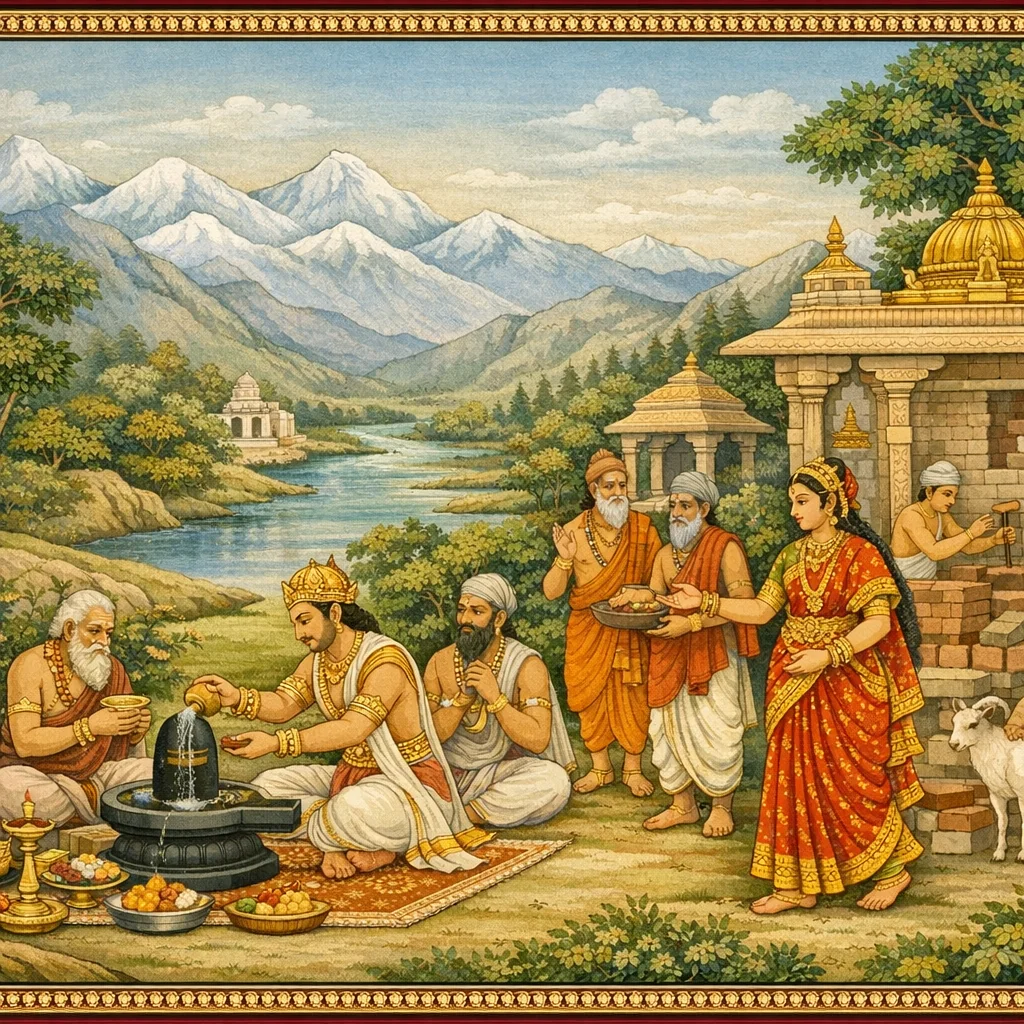
The sages ask Sūta about the origin of a royal tale tied to Saurāṣṭra/Ānarta and about the rise of Kedāra-like sanctity within a Himālaya setting. Sūta recounts the birth and naming of Kṣemaṅkarī, explaining her name through “kṣema” (welfare and security) said to have arisen in the kingdom amid conflict and exile. The narrative then turns to King Raivata and Kṣemaṅkarī’s married life—prosperous, yet without an heir, causing deep dynastic anxiety. Entrusting rule to their ministers, they undertake austerities and establish worship of the goddess Kātyāyanī (Mahīṣāsuramardinī), who grants them a son, Kṣemajit, praised as one who strengthens the lineage and subdues enemies. After installing their son in sovereignty, Raivata goes to Hāṭakeśvara-kṣetra, renounces remaining attachments, and consecrates a Śiva-liṅga, founding a temple complex. The liṅga becomes famed as Raivateśvara, lauded as “sarva-pātaka-nāśana,” destroying all sins by mere darśana. Kṣemaṅkarī also builds a shrine for the already-present Durgā there, and the goddess is celebrated under Kṣemaṅkarī’s name; seeing her on the bright-fortnight eighth of Caitra is said to bestow desired success, closing the chapter as a tīrtha-mahātmya and a guide for devotion.
Shlokas
Verse 1
ऋषय ऊचुः । यत्त्वया सूतज प्रोक्तं तक्षकः संभविष्यति । सौराष्ट्रविषये राजा रैवताख्यो महाबलः
The sages said: “O son of Sūta, as you have spoken, there will arise (one named) Takṣaka; and in the region of Saurāṣṭra there will be a mighty king named Raivata.”
Verse 2
तथा तस्य प्रिया भार्यो नाम्ना क्षेमंकरीति या । आनर्ताधिपतेर्हर्म्ये संभविष्यति भामिनी
And likewise his beloved wife—she who is named Kṣemaṃkarī—will be born as a radiant lady in the palace of the lord of Ānarta.
Verse 3
ताभ्यां सर्वं समाचक्ष्व वृत्तांतं सूतनंदन । अत्र नः कौतुकं जातं विचित्रं जल्पतस्तव
O son of Sūta, tell us fully the entire account concerning those two. Here our curiosity has arisen, for your narration is wondrous and varied.
Verse 4
केदारश्च श्रुतोऽस्माभिः सूतपुत्र हिमाचले । स कथं तत्र संजातः सर्वं विस्तरतो वद
O Sūta’s son, we have heard of Kedāra in the Himālaya. How did it come to be established there? Tell us everything in full detail.
Verse 5
दिने त्रयोदशे प्राप्ते नाम तस्या यथोचितम् । विहितं भूभुजा तेन विप्राणां पुरतो द्विजाः
When the thirteenth day arrived, the king duly arranged her naming ceremony in the presence of the brāhmaṇas, O twice-born ones.
Verse 6
सूत उवाच । अत्र वः कीर्तयिष्यामि सर्वं ब्राह्मणसत्तमाः । यथा मया श्रुतं पूर्वं निजतातमुखाद्द्विजाः
Sūta said: Here I shall recount everything to you, O best of brāhmaṇas, exactly as I formerly heard it from my own father’s mouth, O twice-born.
Verse 7
आनर्त्ताधिपतेश्चापि संजाता तनया गृहे । तस्याश्चापि सुविख्यातं नाम जातं धरातले
In the house of the lord of Ānarta, a daughter was born; and upon the earth her name too became widely renowned.
Verse 8
क्षेमंकरीति विप्रेन्द्राः कर्मणा प्रकटीकृतम् । आनर्ताधिपतिः पूर्वमासीद्राजा प्रभंजनः
“Kṣemaṃkarī”—so, O foremost of brāhmaṇas, her name was revealed by her deeds. Formerly the ruler of Ānarta was King Prabhaṃjana.
Verse 9
तस्य वैरं समुत्पन्नं बहुभिः सह भूमिपैः । ततो निर्वास्यते देशो नीयते पशवो बलात् । शत्रुभिर्जायते युद्धं दिवा नक्तं द्विजोत्तमाः
Enmity arose against him with many other kings. Then his land was driven into exile, and his cattle were forcibly carried off. Battle with enemies raged by day and by night, O best of the twice-born.
Verse 10
ततः कतिपयाहस्य तस्य भार्या प्रियंवदा । ऋतुस्नाता दधाराथ गर्भं पुण्यं निजोदरे
After some days, his wife Priyaṃvadā—having bathed at the proper season—conceived and bore within her womb a holy, merit-filled pregnancy.
Verse 12
यतः प्रभृति तस्याः स गर्भोऽभूदुदराश्रयः । ततः प्रभृति राष्ट्रस्य क्षेमं जातं तथा पुरे । एके संख्ये जिता स्तेन शत्रवोऽपि सुदुर्जयाः । निहताश्च तथैवान्ये मित्रभावं समाश्रिताः
From the moment that embryo took refuge in her womb, from that very time the kingdom and the city entered into well-being. Some enemies—though hard to conquer—were defeated in battle; others were slain, and still others adopted the attitude of friendship.
Verse 18
ततस्तां यौवनोपेतां रैवताय महीपतिः । ददौ सौराष्ट्रनाथाय काले वैवाहिके शुभे
Then, when she had come to the bloom of youth, the king gave her in marriage to Raivata, lord of Saurāṣṭra, at the auspicious wedding time.
Verse 20
या तूढा रामरूपेण नागराजेन धीमता । पुत्रपौत्रवती जाता सौभाग्यमदगर्विता
She whom the wise king of the nāgas married in the form of Rāma became blessed with sons and grandsons—yet she grew proud, intoxicated by her good fortune.
Verse 21
न च ताभ्यां सुतो जातः कथंचिदपि वंशजः । वयसोंऽतेऽपि विप्रेंद्रास्ततो दुःखं व्यजायत
Yet no son—no heir of their lineage—was born to them in any way. Even at the end of their lives, O foremost of brāhmaṇas, sorrow arose from that.
Verse 22
अथ तौ मंत्रिवर्गस्य राज्यं सर्वमशेषतः । अर्पयित्वा तु पुत्रार्थं तपोऽर्थमिह चागतौ
Then the two of them handed over the entire kingdom, without remainder, to the circle of ministers; and, seeking a son, they came here for the sake of austerity.
Verse 23
ततः स्वमाश्रमं गत्वा स्थितौ तत्र समाहितौ । देवीं कात्यायनीं स्थाप्य तदाराधनतत्परौ
Thereafter, going to their own hermitage, they stayed there with focused minds. Installing the Goddess Kātyāyanī, they became wholly devoted to her worship.
Verse 24
यया विनिहतो रौद्रो महिषाख्यो महासुरः । कौमारव्रतधारिण्या तस्मिन्विन्ध्ये महाचले
She—the Goddess who observed the maiden’s vow—slew the fierce great demon named Mahiṣa upon that mighty Vindhya mountain; it was that very Goddess whom they worshipped.
Verse 25
ततस्ताभ्यां ददौ तुष्टा सा पुत्रं वंशवर्धनम् । नाम्ना क्षेमजितं ख्यातं परपक्षक्षया वहम्
Then, pleased with them, she granted them a son to increase their lineage—renowned as Kṣemajit, the bringer of destruction upon hostile forces.
Verse 26
ततः स्वं राज्यमासाद्य भूयोऽपि स महीपतिः । स्वपुत्रं वर्धयामास हर्षेण महतान्वितः
Thereafter, regaining his own kingdom, that lord of the earth once again raised his son, filled with great joy.
Verse 27
यदा स यौवनोपेतः सञ्जातः क्षेमजित्सुतः । तं च राज्ये नियोज्याऽथ स्वस्थानं स पुनर्ययौ
When Kṣemajit’s son had come of age, he appointed him to the kingship; then he returned again to his own abode.
Verse 28
हाटकेश्वरजं क्षेत्रं तदेतद्द्विजसत्तमाः । भार्यया सहितस्त्यक्त्वा शेषमन्यं परिच्छदम्
This, O best of brāhmaṇas, is that sacred field connected with Hāṭakeśvara. Accompanied by his wife, he renounced all the rest of his possessions and equipment.
Verse 29
तत्र संस्थापयामास लिंगं देवस्य शूलिनः । प्रासादं च मनोहारि ततश्चक्रे समाहितः
There he installed a liṅga of the Lord who bears the trident (Śiva); then, with a composed mind, he also built a charming temple.
Verse 30
रैवतेश्वरमित्युक्तं सर्वपातक नाशनम् । दर्शनादेव सर्वेषां देहिनां द्विजसत्तमाः
It is called Raivateśvara, the destroyer of all sins. By its very darśana (sacred sight), O best of brāhmaṇas, the faults of all embodied beings are removed.
Verse 31
या पूर्वं स्थापिता दुर्गा तस्मिन्क्षेत्रे महीभुजा । तस्याः क्षेमंकरी चक्रे प्रासादं श्रद्ध यान्विता
In that sacred region, the king had formerly installed the Goddess Durgā. Then, with faith and devotion, he caused a temple to be built for her, establishing her as Kṣemaṃkarī, bestower of welfare and protection.
Verse 32
सापि क्षेमंकरीनाम ततः प्रभृति कीर्त्यते । कात्यायन्यपि या प्रोक्ता महिषासुरमर्दिनी
From that time onward, she too is celebrated by the name Kṣemaṃkarī. She is also proclaimed as Kātyāyanī, the slayer of the demon Mahiṣāsura.
Verse 33
यस्तां चैत्रसिते पक्षे संप श्येदष्टमीदिने । तस्याभीष्टा भवेत्सिद्धिः सर्वदैव द्विजोत्तमाः
O best of the twice-born, whoever beholds her on the eighth lunar day (aṣṭamī) in the dark fortnight of Caitra attains the siddhi of desired aims; success surely comes to him.
Verse 34
एतद्वः सर्वमाख्यातं रैवतेश्वरवर्णनम् । क्षेमंकर्याः प्रभावं च सर्वपातकनाशनम्
Thus have I fully narrated to you the account of Raivateśvara, and also the power of Kṣemaṃkarī, by which all sins are destroyed.
Verse 118
इति श्रीस्कांदे महापुराण एकाशीतिसाहस्र्यां संहिताया षष्ठे नागरखण्डे हाटकेश्वरक्षेत्रमाहात्म्ये क्षेमंकरीरैवतेश्वरोत्पत्तितीर्थ माहात्म्यवर्णननामाष्टादशोत्तरशततमोऽध्यायः
Thus ends, in the Śrī Skanda Mahāpurāṇa—within the Ekāśītisāhasrī Saṃhitā, in the sixth book, the Nāgara Khaṇḍa—within the Hāṭakeśvara-kṣetra Māhātmya, the one-hundred-and-eighteenth chapter entitled “The Account of the Māhātmya of the Tīrtha of the Origin of Kṣemaṃkarī and Raivateśvara.”