Adhyaya 117
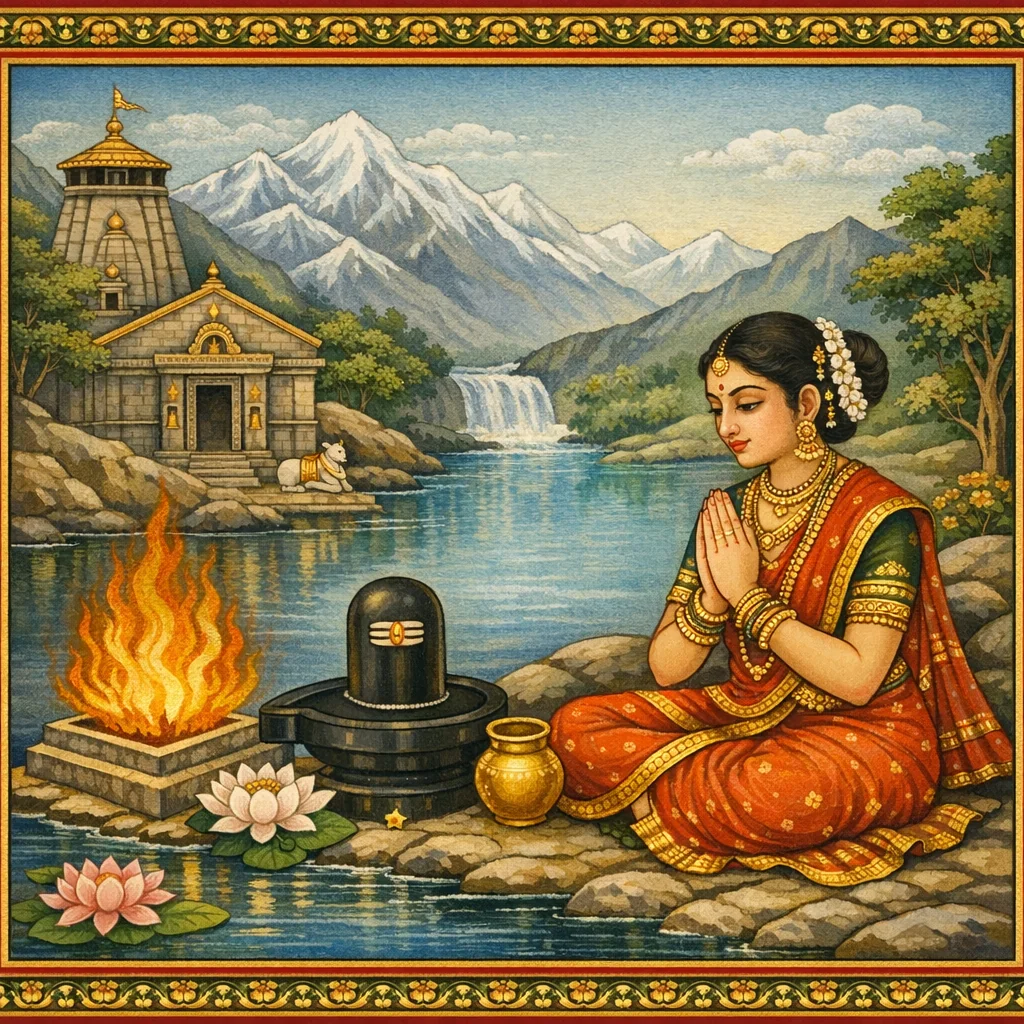
Chapter 117 is framed as a theological Q&A. The ṛṣis ask Sūta why venomous serpent fangs were shed from Bhaṭṭikā’s body and whether the cause was tapas (austerity) or mantra. Sūta recounts her early widowhood and steadfast bhakti at Kedāra, where she sang daily before the deity. Drawn by the beauty and devotion of her song, Takṣaka and Vāsuki arrive in brāhmaṇa guise; later Takṣaka reveals a fearsome nāga-form and abducts her to Pātāla. Bhaṭṭikā resists coercion through firm dharma and utters a conditional curse that forces Takṣaka toward reconciliation. Jealous nāga-wives then provoke conflict; a protective vidyā is invoked, and a nāginī’s bite leads to the loss of fangs—explaining the opening question. Bhaṭṭikā further curses the aggressor into humanhood and foretells future births: Takṣaka will be born a king in Saurāṣṭra, and Bhaṭṭikā will later be reborn as Kṣemaṃkarī to reunite with him. Returned to Kedāra, she faces communal doubts about her purity and voluntarily enters a fire-ordeal; the fire turns to water, flowers rain down, and a divine messenger proclaims her spotless. The chapter ends with the founding of a tīrtha named for her, promising high spiritual attainment to those who bathe there on Viṣṇu’s śayana/bodhana observances, and with her continued ascetic worship—installing a Trivikrama image and later a Maheśvara liṅga with a temple.
Shlokas
Verse 1
ऋषय ऊचुः । भट्टिकाख्या पुरा प्रोक्ता या त्वया सूतनन्दन । कस्मात्तस्याः शरीरान्ताद्दंष्ट्रा नागसमुद्भवाः
The sages said: “O son of Sūta, you earlier spoke of one named Bhaṭṭikā. For what reason did serpent-born fangs arise from the end of her body?”
Verse 2
विशीर्णाः किं प्रभावश्च तपसः सूतनन्दन । किं वा मंत्रप्रभावश्च एतन्नः कौतुकं परम्
O son of Sūta, by what power were they shattered—by the potency of austerity (tapas), or by the potency of mantra? This is our highest curiosity; explain it to us.
Verse 3
यन्मानुषशरीरेऽपि विशीर्णास्ता विषोल्बणाः । नागानां तु विशेषेण तस्मात्सर्वं प्रकीर्तय
Those things, fierce with venom, can shatter even a human body—how much more so in the case of nāgas. Therefore, recount the entire matter in detail.
Verse 4
।सूत उवाच । सा पुरा ब्राह्मणी बाल्ये वर्तमाना पितुर्गृहे । वैधव्येन समायुक्ता जाता कर्मविपाकतः
Sūta said: Long ago, a brāhmaṇa woman, while still in her girlhood living in her father’s house, became a widow—this arising as the fruition of past karma.
Verse 5
ततो बाल्येऽपि शुश्राव शास्त्राणि विविधानि च । देवयात्रां प्रचक्रेऽथ तीर्थे स्नाति समाहिता
Then, even in her youth, she listened to many kinds of śāstras; thereafter she set forth on pilgrimage to the Devas, and—her mind gathered in concentration—bathed at the sacred tīrtha.
Verse 6
तत्र केदारदेवं च गत्वा नित्यं समाहिता । प्रातरुत्थाय गीतं च भक्त्या चक्रे तदग्रतः
There she would daily go to Lord Kedāra, steadfast in mind; rising at dawn, she sang songs of bhakti before Him with faith.
Verse 7
ततस्तद्गीतलौल्येन पातालात्समुपेत्य च । तक्षको वासुकिश्चैव द्विज रूपधरावुभौ
Then, drawn by longing for her singing, Takṣaka and Vāsuki rose up from Pātāla; both assumed the form of brāhmaṇas.
Verse 8
साऽपि तत्र महद्गीतं तानैः सर्वैरलंकृतम् । मूर्च्छनाभिः समोपेतं सप्तस्वरविराजितम्
She too sang there a great song, adorned with every melodic inflection, enriched with mūrcchanā modulations, resplendent with the seven notes.
Verse 9
यतिभिश्च तथा ग्रामैर्वर्णग्रामैः पृथ ग्विधैः । ततं च विततं चैव घनं सुषिरमेव च
With measured beats (yati) and musical modes (grāma), with varied groupings of notes and syllables; and with instruments—stringed (tata), stretched-membrane (vitata), solid percussion (ghana), and wind (suṣira)—her performance was complete.
Verse 10
तालकालक्रियामानवर्धमानादिकं च यत् । अविदग्धापि सा तेषां गीतांगानां द्विजांगना । केवलं कंठसंशुद्ध्या ताभ्यां तोषं समादधे
Whatever pertained to rhythm, timing, the procedure of performance, measure, and ornament—though she was not formally trained—that brāhmaṇa woman pleased those two solely by the purity of her voice.
Verse 12
ततस्तद्गीतलोभेन सर्वे तत्पुरवासिनः । प्रातरुत्थाय केदारं समागच्छंति कौतुकात् । कस्य चित्त्वथ कालस्य नागौ तौ स्वपुरं प्रति । निन्युर्बलात्समुद्यम्य सर्वलोकस्य पश्यतः
Then, longing for that singing, all the townspeople rose at dawn and came to Kedāra in eager wonder. But after some time, before the eyes of everyone, those two nāgas forcibly lifted her up and carried her toward their own city.
Verse 13
नागरूपं समाधाय रौद्रं जनविभीषणम् । भोगाग्र्येण च संवेष्ट्य पातालतलमभ्ययुः
Assuming a fierce serpent-form that terrified the people, and coiling her within the foremost folds of his body, he descended to the levels of Pātāla, the netherworld.
Verse 14
अथ तां स्वगृहं नीत्वा प्रोचतुः कामपीडितौ । भवावाभ्यां विशालाक्षि भार्या धर्मपरायणा । एतदर्थं समानीता त्वं पाताले महीतलात्
Then, taking her to his own dwelling, the desire-tormented one said: “O large-eyed lady, you shall be the righteous, dharma-devoted wife of us two. For this very purpose you have been brought down to Pātāla from the earth.”
Verse 15
भट्टिकोवाच । यत्त्वं तक्षक मां शांतामनपेक्षां रतोत्सवे । आनैषीरपहृत्याशु ब्राह्मणान्वय संभवाम्
Bhaṭṭikā said: “Because you, O Takṣaka, in the frenzy of lust, swiftly abducted me—peaceful and unwilling—though I was born in a brāhmaṇa lineage.”
Verse 16
मानुषं रूपमास्थाय पुरा मां त्वं समाश्रितः । कामोपहृतचित्तात्मा तस्मान्मर्त्यो भविष्यसि
Formerly, assuming a human form, you approached me; your mind and self were carried away by desire. Therefore you shall become mortal.
Verse 17
यदि मां त्वं दुराचार धर्षयिष्यसि वीर्यतः । शतधा तव मूर्धाऽयं सद्य एव भविष्यति
If you, O wicked one, attempt to violate me by force, this very head of yours will instantly be split into a hundred pieces.
Verse 18
तं श्रुत्वा सुमहाशापं तस्याः स भयविह्वलः । ततः प्रसादयामास कृतांजलिपुटः स्थितः
Hearing that exceedingly great curse from her, he was shaken with fear; then, standing with folded hands, he sought to appease her.
Verse 19
मया त्वं कामसक्तेन समानीता सुमोहतः । तस्मात्कुरु प्रसादं मे शापस्यांतो यथा भवेत्
I, enslaved by desire and utterly deluded, brought you here. Therefore show me favor, so that the curse may come to an end.
Verse 20
सूत उवाच । एवं प्रसादिता तेन तक्षकेण द्विजात्मजा । ततः प्रोवाच तं नागं बाष्पव्याकुललोचना
Sūta said: Thus entreated by Takṣaka, the brāhmaṇa’s daughter—her eyes troubled with tears—then spoke to that nāga.
Verse 21
यदि मां मर्त्यलोके त्वं भूयो न यसि तक्षक । तत्र शापस्य पर्यंतं करिष्यामि न संशयः
“If, for my sake, you do not go again to the world of mortals, O Takṣaka, then I shall bring the curse to its end—of this there is no doubt.”
Verse 22
एतस्मिन्नंतरे ज्ञात्वा मानुषीं स्वगृहागताम् । तक्षकेण समानीतां कामोपहतचे तसा
Meanwhile, learning that a human woman had come into his home—brought there by Takṣaka whose mind was struck down by desire—(the others reacted accordingly).
Verse 23
ततस्तस्य कलत्राणि महेर्ष्यासंश्रितानि च । तस्या नाशार्थमाजग्मुः कोपरक्तेक्षणानि च
Then his wives—who had taken refuge with the great sage out of jealousy—came with anger-reddened eyes, intent on bringing about her ruin.
Verse 24
अथ तासां परिज्ञाय तक्षकः स विचेष्टितम् । वाञ्छञ्छापस्य पर्यंतं तत्पार्श्वाद्भयसंयुतः
Realizing their intent and agitation, Takṣaka—struck with fear—sought the limit (ending) of the curse and withdrew to her side for protection.
Verse 25
वज्रां नामास्मरद्विद्यां तस्या गात्रं ततस्तया । योजयामास रक्षार्थं प्राप्ता चाथ भुजंगमी
She remembered the mantra-power called ‘Vajrā’ and, by it, protected her body; then the serpentess approached.
Verse 26
अदशत्तां ततः क्रुद्धा ब्राह्मणस्य सुतां सतीम् । सपत्नीं मन्यमानोच्चैः शीर्णदंष्ट्रा व्यजायत
Then, enraged, she bit the virtuous Brahmin’s daughter, imagining her to be a rival wife; and her fangs were broken and ruined.
Verse 27
अथ तामपि सा क्रुद्धा शशाप द्विजसंभवा । दृष्ट्वा सापत्न्यजैर्भावैर्वर्तमानां सहेर्ष्यया
Then the Brahmin-born woman, angered, cursed her as well—having seen her behaving with the jealous emotions of a rival wife.
Verse 28
यस्मात्त्वं दोषहीनां मां सदोषामिव मन्यसे । तस्माद्भव द्रुतं पापे मानुषी दुःखभागिनी
“Since you consider me—though faultless—as if I were guilty, therefore, O sinful one, become quickly a human woman, a sharer in suffering.”
Verse 29
अथ तां संगृहीत्वा स तक्षको नागसत्तमः । केदारायतने तस्मिन्नर्धरात्रे मुमोच ह
Then Takṣaka, the foremost of nāgas, took her up and released her at that Kedārāyatana, at midnight.
Verse 30
ततः प्रोवाच तां देवीं कृतां जलिपुटः स्थितः । शापांतं कुरु मे साध्वि स्वगृहं येन याम्यहम्
Then, standing with folded hands, he addressed that noble lady: “O virtuous one, bring my curse to an end, so that I may return to my own abode.”
Verse 31
भट्टिकोवाच । सौराष्ट्रविषये राजा त्वं भविष्यसि पन्नग । भूमौ रैवतको नाम भोगानां भाजनं सदा
Bhaṭṭikā said: “O serpent, you shall become a king in the land of Saurāṣṭra. Upon the earth, the place called Raivataka shall ever be a vessel of enjoyments and prosperity.”
Verse 32
ततश्चैव तनुं त्यक्त्वा क्षेत्रेष्वाश्रममध्यतः । संप्राप्स्यसि निजं स्थानं तत्क्षेत्रस्य प्रभावतः
Then, casting off that body within the sacred kṣetra, in the midst of the hermitage, you will attain your own true station—by the power of that holy place.
Verse 33
तक्षक उवाच । एषा मम प्रिया कांता त्वया शापेन योजिता । या सा भवतु मे भार्या मानुषत्वेऽपि वर्तिते
Takṣaka said: “This is my beloved wife, bound by your curse. Let her—though abiding in human state—still become my wife.”
Verse 34
एत त्कुरु प्रसादं मे दीनस्य परियाचतः । माऽस्या भवतु चान्येन पुरुषेण समागमः
“Grant me this favor—I who am afflicted and pleading: let her have no union with any other man.”
Verse 35
भट्टिकोवाच । आनर्ताधिपतेरेषा भवित्री दुहिता शुभा । ततः पाणिग्रहं प्राप्य भार्या तव भविष्यति
Bhaṭṭikā said: “She will be born as the auspicious daughter of the lord of Ānarta. Thereafter, upon attaining marriage—the taking of the hand—she will become your wife.”
Verse 36
क्षेमंकरीति विख्याता रूपयौवनशालिनी । त्वया सार्धं बहून्भोगान्भुक्त्वाऽथ पृथिवीतले । परलोके पुनस्त्वां वै चानुयास्यति शोभना
Known as Kṣemaṃkarī, adorned with beauty and youth, she will enjoy many worldly delights with you upon the earth; and again, in the next world, that radiant one will follow you.
Verse 37
सूत उवाच । एवं च स तया प्रोक्तः क्षम्यतामिति सादरम् । प्रणिपत्य जगामाऽथ निजं स्थानं प्रहर्षितः
Sūta said: Thus addressed by her, he respectfully said, “May I be forgiven.” Then, bowing down, he went to his own abode, filled with joy.
Verse 38
साऽपि प्राप्ते निशाशेषे केदारस्य पुरः स्थिता । पुनश्चक्रे च तद्गीतं श्रुतिसौख्यकरं परम्
And when the night had fully ended, she too stood before Kedāra and again performed that song—supremely delightful to the ear.
Verse 39
अथ तस्य समायाताः केदारस्य दिदृक्षवः । पुनः केदारभक्त्याढ्या ब्राह्मणाः शतशः परम्
Then there arrived—eager to behold Kedāra—hundreds upon hundreds of brāhmaṇas, richly endowed with devotion to Kedāra.
Verse 40
ते तां दृष्ट्वा समायातां भट्टिंकां तां द्विजोद्भवाम् । विस्मयेन समायुक्ताः पप्रच्छुस्तदनंत रम्
Seeing Bhaṭṭiṃkā, a brāhmaṇa-born woman, who had come there, they were filled with wonder and questioned her immediately thereafter.
Verse 42
कस्मात्पुनः प्रमुक्ताऽसि सर्वं वद यथातथम् । अत्र नः कौतुकं जातं सुमहत्तव कारणात्
“Why have you been released again? Tell everything exactly as it happened. Here among us a great curiosity has arisen because of your extraordinary circumstance.”
Verse 43
सूत उवाच । ततः सा कथयामास सर्वं तक्षकसंभवम् । वृत्तांतं नागसंभूतं शापानुग्रहजं तथा
Sūta said: Then she recounted everything that had arisen because of Takṣaka—the episode born of the nāga, and likewise the chain of events brought forth by curse and grace.
Verse 44
एतस्मिन्नंतरे प्राप्तं सर्वं तस्याः कुटुम्बकम् । रोरूयमाणं दुःखार्तं श्रुत्वा तां तत्र चागताम्
Just then, all her family arrived there. Hearing that she had come—while they themselves were wailing, stricken with grief—they rushed to that place.
Verse 45
अथ सा जननी तस्या वाष्प पर्याकुलेक्षणा । सस्वजे तां तथा चान्याः सख्यः स्निग्धेन चेतसा
Then her mother, her eyes clouded with tears, embraced her; and so too did the other women—her friends—embrace her with hearts full of affection.
Verse 46
ततो निन्युर्गृहं स्वं च शृण्वंतश्च मुहुर्मुहुः । नागलोकोद्भवां वार्तां विस्य याविष्टचेतसः
Then they led her to their own house, again and again listening to the account that had arisen from the Nāga-world—astonished, their minds wholly absorbed by it.
Verse 47
अथ तत्र पुरे पौराः सर्वे प्रोचुः परस्परम् । अयुक्तं कृतमेतेन ब्राह्मणेन दुरात्मना
Then, in that city, all the townspeople said to one another: “An improper deed has been done by this wicked-minded brāhmaṇa.”
Verse 48
यदानीता सुतरुणी परहर्म्योषिता तया । अन्येषामपि विप्राणां संति नार्यो ह्यनेकशः
“For she has brought back a very young maiden—one who had become the wife of another man. And for other brāhmaṇas too, there are many women (in similar circumstances).”
Verse 49
तरुण्यो रूपवत्यश्च वैधव्येन समन्विताः । तासामपि च सर्वासामेष न्यायो भविष्यति । योनिसंकरजो नूनं तस्मान्निर्वास्यतामिति
“There are young and beautiful women who are widowed as well. For all of them too, this same ‘precedent’ will come to be the rule. Surely he is born of mixed and impure lineage; therefore let him be banished”—so they said.
Verse 50
एकीभूय ततः सर्वे ब्राह्मणं तं द्विजोत्तमाः । सामपूर्वमिदं वाक्यं प्रोचुः शास्त्र समुद्भवम्
Then all those foremost twice-born, uniting together, addressed that brāhmaṇa—first with conciliatory words—speaking this statement grounded in śāstra.
Verse 51
एषा तव सुता विप्र तरुणी रूपसंयुता । सानुरागेण नागेण पाताले च समाहृता
“This is your daughter, O brāhmaṇa—young and endowed with beauty. She was taken to Pātāla by a Nāga who was filled with desire.”
Verse 52
तद्वक्ष्यति प्रमुक्ताहं निर्दोषा तेन रागिणा । न श्रद्धां याति लोकोऽयं शुद्धैषा समुदाहृता
She will say: “I have been released; I am blameless—though by that one driven by passion.” Yet this world does not place faith in her, even though she is proclaimed to be pure.
Verse 53
तस्माच्छुद्धिं द्विजेद्राणां प्रयच्छतु द्विजोत्तम । येनान्येषामपि प्राज्ञ विनश्यंति न योषितः
Therefore, O best of the twice-born, grant a means of purification for the chiefs among the twice-born, so that—O wise one—other women too may not be ruined by suspicion and scandal.
Verse 54
बाढमित्येव स प्रोक्त्वा ततस्तां विजने सुताम् । पप्रच्छ यदि ते दोषः कश्चिदस्ति प्रकीर्तय
Saying, “So be it,” he then questioned his daughter in private: “If there is any fault in you, declare it openly.”
Verse 55
नो चेत्प्रयच्छ संशुद्धिं ब्राह्मणानां प्रतुष्टये
Otherwise, bestow full purification, for the complete satisfaction of the brāhmaṇas.
Verse 56
भट्टिकोवाच । युक्तमुक्तं त्वया तात तथान्यैरपि च द्विजैः । युक्ता स्याद्योषितः शुद्धिर्द्वारातिक्रमणादपि
Bhaṭṭikā said: “What you have spoken, dear one, is reasonable—just as the other brāhmaṇas have also said. Indeed, a woman’s purification may rightly be required even for merely crossing the threshold.”
Verse 57
किं पुनः परदेशं च गताया रागिणा सह । तस्मादहं न संदेहः प्रातः स्नाता हुताशनम्
“How much more so,” she continued, “in the case of one who has gone to a foreign land in the company of a man driven by passion. Therefore I have no doubt: having bathed at dawn, I shall approach the sacred fire (Agni).”
Verse 58
प्रविश्य सर्वविप्राणां शुद्धिं दास्याम्य संशयम् । अहमत्र च पानं च यच्चान्यदपि किंचन । प्राशयिष्यामि संप्राप्य शुद्धिं चैव हुताशनात्
“Entering the place of rite, I shall, without doubt, bestow purification upon all the brāhmaṇas. And here I shall offer drink and whatever else there may be; having obtained purification from the sacred fire (Agni), I shall feed them as well.”
Verse 59
एवमुक्तस्तया सोऽथ हर्षेण महतान्वितः । प्रातरुत्थाय दारूणि पुरबाह्ये न्ययोजयत्
Thus addressed by her, he became filled with great joy; rising early, he arranged the firewood outside the town.
Verse 60
भट्टिकाऽपि ततः स्नात्वा शुक्लांबरधरा शुचिः । सर्वैः परिजनैः सार्धं तथा निज कुटुंबकैः
Then Bhaṭṭikā too, having bathed and become pure, wearing white garments, went together with all her attendants and with her own family members.
Verse 61
प्रसन्नवदना हृष्टा विष्णुध्यानपरायणा । जगाम तत्र यत्रास्ते सुमहान्दारुपर्वतः
With a serene face and joyful heart, devoted to meditation on Viṣṇu, she went to the place where a vast heap of firewood stood like a mountain.
Verse 62
ततो वह्निं समाधाय स्वयं तत्र द्विजोत्तमाः । प्रदक्षिणात्रयं कृत्वा प्राह चैव कृतांजलिः
Then the foremost among the twice-born kindled the sacred fire there himself; having circumambulated it three times, he spoke with hands folded in reverence.
Verse 63
यदि मेऽस्ति क्वचिद्दोषः कामजोऽल्पोऽपि गात्रके । कृतो वाऽपि बलात्तेन तक्षकेण दुरात्मना
“If there exists in me any fault anywhere—born of desire, even the slightest upon this body—or even if it was forced upon me by that wicked Takṣaka…,”
Verse 64
अन्येनापि च केनापि भविष्यत्यथवा परः । तस्मात्प्रदहतु क्षिप्रं समिद्धोऽयं हुताशनः
“If it is to happen by someone else, or by some other means, let it be so. Therefore, let this well-kindled sacred fire quickly consume (this body).”
Verse 65
एवमुक्त्वाऽथ सा साध्वी प्रविष्टा निजहर्म्यवत् । सुसमिद्धो हुतो वह्निर्जातो जलमयः क्षणात्
Having spoken thus, that virtuous woman entered her own dwelling. The fire—though well-kindled and offered into—at once, in a moment, became transformed into water.
Verse 66
पपाताऽथ महावृष्टिः कुसुमानां नभस्तलात्
Then, from the sky, there fell a great shower of flowers.
Verse 67
देवदूतो विमानस्थ इदं वाक्यमुवाच ह । शुद्धासि त्वं महाभागे चारित्रै र्निजगात्रजैः
A divine messenger, seated in a celestial chariot, spoke these words: “O greatly fortunate one, you are pure—by the virtues born of your own conduct.”
Verse 68
न त्वया सदृशी चान्या काचिन्नारी भविष्यति । तिस्रः कोट्योर्धकोटी च यानि लोमानि मानुषे । प्रभवंति महाभागे सर्वगात्रेषु सर्वदा
“No other woman will be your equal. O greatly fortunate one—within a human being, the hairs that arise throughout all the limbs at all times are three crores and a half.”
Verse 69
तेषां मध्ये न ते साध्वि पापमेकमपि क्वचित् । तस्माच्छीघ्रं ग्रहं गच्छ निजं बांधवसंयुता
“Among them, O chaste lady, not even a single sin of yours exists anywhere. Therefore, go quickly to your own home, together with your kinsfolk.”
Verse 70
कुरु कृत्यानि पुण्यानि समाराधय केशवम् । एतच्चैव चितेः स्थानं त्वदीयं जलपूरितम्
“Perform meritorious duties and worship Keśava well. And this very place of the funeral pyre has become yours—filled with water.”
Verse 71
तव नाम्ना सुविख्यातं तीर्थं लोके भविष्यति । येऽत्र स्नानं करिष्यंति शयने बोधने हरेः
“A tīrtha, renowned in the world by your name, shall come to be. Those who bathe here at the time of Hari’s reclining and awakening rites…”
Verse 72
ते यास्यंति परां सिद्धिं दुष्प्राप्या याऽमरैरपि । उक्त्वैवं विरता वाणी देवदूतसमुद्भवा
“…they shall attain the supreme siddhi, hard to obtain even for the gods. Having spoken thus, the voice that arose from the divine messenger fell silent.”
Verse 73
भट्टिका तु ततो हृष्टा प्रणम्य जनकं निजम् । नाहं गृहं गमिष्यामि किं करिष्याम्यहं गृहे
Then Bhaṭṭikā, rejoicing, bowed to her own father and said: “I will not go home. What would I do in a household?”
Verse 74
अत्रैवाराधयिष्यामि निजतीर्थे सदाऽच्यु तम् । तथा तपः करिष्यामि भिक्षान्नकृतभोजना
“Here itself, at my own sacred tīrtha, I shall continually worship Acyuta (Viṣṇu). And here I shall practice tapas, living on alms—taking as food only what is obtained by begging.”
Verse 75
तस्मात्तात गृहं गच्छ स्थिताऽहं चाग्र संश्रये
“Therefore, dear father, go back home. I shall remain here, taking refuge in this foremost sanctuary.”
Verse 76
ततः स जनकस्तस्यास्ते वाऽपि पुरवासिनः । संप्रहृष्टा गृहं जग्मुः शंसतस्तां पृथक्पृथक्
Then her father, and the townspeople as well, delighted at heart, returned to their homes—each of them separately praising her resolve and conduct.
Verse 77
तया त्रैविक्रमी तत्र प्रतिमा प्राग्विनिर्मिता । पश्चान्माहेश्वरं लिंगं कृत्वा प्रासादमुत्तमम्
By her, a sacred image of Trivikrama was first fashioned there. Thereafter, having established a Māheśvara liṅga, she built an excellent temple-shrine.
Verse 78
ततः परं तपश्चक्रे भिक्षान्नकृतभोजना । शस्यमाना जनैः सर्वैश्चमत्कारपुरोद्भवैः
After that, she undertook austerities, sustaining herself on alms-food; and all the people—astonished by the wondrous events—praised her greatly.
Verse 79
सूत उवाच । एतद्वः सर्वमाख्यातं यत्पृष्टोऽस्मि द्विजोत्तमाः । यथा तस्या दृढं कायमभेद्यं संस्थितं सदा
Sūta said: “O best of Brahmins, I have told you everything that you asked me—how her body remained firm, unbroken and unassailable, ever established (in that state).”
Verse 80
सा च पश्यति चात्मानं जलमध्यगतां शुभा
And that auspicious lady beheld herself—abiding in the midst of the waters.