Adhyaya 116
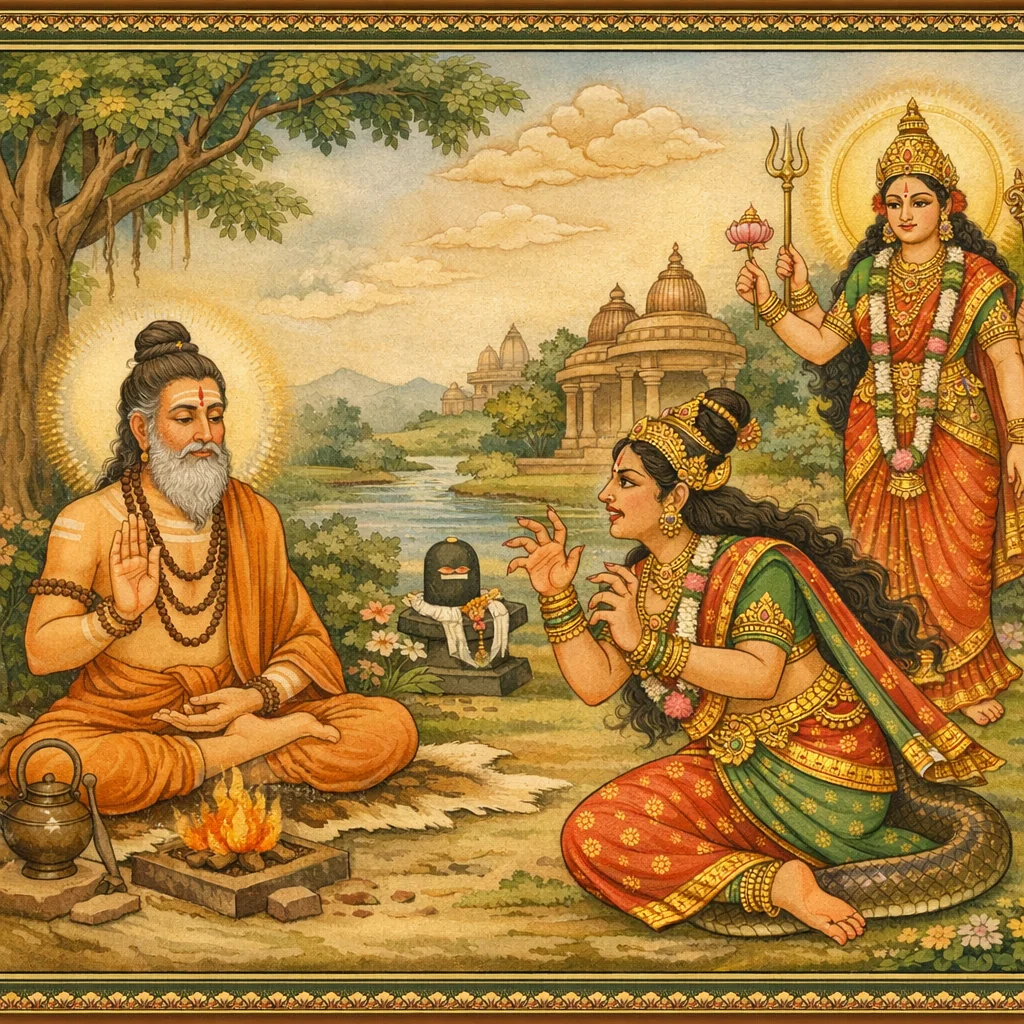
Chapter 116 unfolds as a dialogue: the ṛṣis ask Sūta about the origin, nature, and power of the famed Goddess Ambarevatī. Sūta recounts a crisis in which nāgas are urged toward the city’s destruction, and the grief of Revatī (beloved of Śeṣa). Seeking vengeance for her son’s death, Revatī consumes a brāhmaṇa household; the family’s ascetic sister, Bhāṭṭikā, pronounces a curse that Revatī must take a censured human birth, gain a husband, and suffer sorrow tied to lineage. Revatī tries to harm the ascetic, but her venomous fangs cannot pierce, revealing the ascetic’s tapas-power; other nāgas also fail and retreat in fear. Distressed at human gestation and the loss of nāga-form, Revatī chooses to remain in the kṣetra and worship Ambikā/Ambarevatī with offerings, music, and bhakti. The Goddess grants boons: Revatī’s human birth will serve a divine purpose; she will again become the wife of Śeṣa in his Rāma-form; her fangs will return; and worship in her name will bestow welfare. Revatī asks for enduring presence there under her name and vows periodic nāga-linked worship, especially on Mahānavamī (Āśvina, bright fortnight). The phalaśruti concludes that faithful, pure worship of Ambarevatī on the prescribed tithi prevents family-born calamity for a year and removes afflictions from graha-, bhūta-, and piśāca-related disturbances.
Shlokas
Verse 1
सूतौवाच । तथान्यापि च तत्रास्ति सुविख्याताम्बरेवती । देवी कामप्रदा पुंसां बालकानां सुखप्रदा
Sūta said: “Moreover, there too is another deity, the well-renowned Ambarevatī. She grants men their desired aims and bestows happiness upon children.”
Verse 2
यां दृष्ट्वा पूजयित्वाऽथ चैत्राष्टम्यां विशेषतः । शुक्लायां नाप्नुयान्मर्त्यः कुटुम्बव्यसनं क्वचित्
Having beheld her and worshipped her—especially on the eighth day (Aṣṭamī) of the bright fortnight in the month of Caitra—a mortal does not encounter family calamity at any time.
Verse 3
ऋषय ऊचुः । केन वा स्थापिता तत्र सा देवी चाम्बरेवती । किंप्रभावा किंस्वरूपा सूतपुत्र वदस्व नः
The sages said: “By whom was the goddess Ambarevatī established there? What is her power, and what is her nature? O son of Sūta, tell us.”
Verse 4
सूत उवाच । यदा शेषेण संदिष्टा नानानागा विषोल्बणाः । पुरस्यास्य विनाशाय क्रोधसंरक्तलोचनाः । तदा तस्य प्रिया सा च पुत्रशोकेनपीडिता
Sūta said: “When, at the command of Śeṣa, many serpents—terrible with poison and with eyes reddened by wrath—were dispatched to destroy this city, then his beloved consort too was tormented by grief for her son.”
Verse 5
स्वयमेवाग्रतो गत्वा भक्षयामास तं द्विजम् । कुटुम्बेन समायुक्तं येन पुत्रो निपातितः
Going forth in person, she devoured that brahmin together with his household—the very one by whom her son had been struck down.
Verse 6
अथ तस्य द्विजेन्द्रस्य बालवैधव्यसंयुता । अनुजाऽसीत्तपोयुक्ता ब्रह्मचर्यकृतक्षणा
Then that eminent brahmin had a younger sister—widowed while still young—who was devoted to austerity and steadfast in the discipline of brahmacarya.
Verse 7
सा दृष्ट्वा भक्षितं सर्वं भट्टिकाख्या कुटुम्बकम् । नाग पत्न्या ततः प्राह जलमादाय पाणिना
Seeing that the entire household called ‘Bhaṭṭikā’ had been devoured, she then spoke to the serpent’s wife, taking water in her hand.
Verse 8
यस्मात्त्वया कुटुम्बं मे नाशं नीतं द्विजिह्वके । दर्शितं च महद्दुःखं मम बन्धुजनोद्भवम्
“Since you, O two-tongued serpent, have brought my family to ruin and have made me behold great sorrow arising from my own kinsmen,”
Verse 9
तथा त्वमपि संप्राप्य मानुषत्वं सुगर्हितम् । मानुषं पतिमासाद्य पुत्रपौत्रानवाप्य च
“So too, you shall attain a greatly blameworthy human birth; you shall take a human husband and obtain sons and grandsons,”
Verse 10
तेषां विनाशजं दुःखं मा नुषे त्वमवाप्स्यसि । नागत्वे वर्तमानायाः शापं तेऽमुं ददाम्यहम्
“In human life you shall experience the sorrow born of their destruction. While you are presently a nāgī, I lay this very curse upon you.”
Verse 11
साऽपि श्रुत्वाऽथ तं शापं रेवती भट्टिकोद्भवम् । क्रोधेन महताविष्टा ह्यदशत्तां द्रुतं ततः
Hearing that curse, Revatī—born of the Bhaṭṭika lineage—overcome by fierce wrath, swiftly bit her at once.
Verse 12
अथ तस्यास्तनुं प्राप्य नागीदंष्ट्रा विषोल्बणा । जगाम शतधा नाशं बिभिदे न त्वचं क्वचित्
But when her serpent-fangs, laden with potent venom, reached that woman’s body, they shattered into a hundred pieces—yet did not pierce her skin at all.
Verse 13
ततः सा लज्जयाविष्टा स्वरक्तप्लावितानना । विषण्णा निषसादाथ संनिविष्टा धरातले
Then, seized by shame, her face flooded with her own blood, she grew despondent and sat down upon the ground.
Verse 14
एतस्मिन्नंतरे नागास्तथान्ये ये समागताः । रेवतीं ते समालोक्य तथारूपां भयान्विताम् । प्रोचुश्च किमिदं देवि तव वक्त्रे रुजास्पदम्
Meanwhile, other nāgas gathered there, seeing Revatī in such a state and filled with fear, said: “Goddess, what is this painful affliction upon your face?”
Verse 15
अथवा किं प्रभावोऽयं कस्यचिद्रक्तसंपदः
“Or what is this influence—some strange manifestation connected with blood?”
Verse 16
रेवत्युवाच । येयं दुष्टतमा काचिद्दृश्यते दुष्टतापसी । अस्या जातो विकारोऽयं ममास्ये नागसत्तमाः
Revatī said: “A certain most wicked ascetic woman is seen here. Because of her, this disorder has arisen upon my face, O best of nāgas.”
Verse 17
तस्मादेनां महा दुष्टां भगिनीं तस्य दुर्मतेः । येन मे निहतः पुत्रो द्विजपुत्रेण सांप्रतम्
“Therefore, seize this utterly wicked woman—she is the sister of that evil-minded one—by whom my son has just now been slain through a brahmin’s son.”
Verse 18
भक्ष्यतां भक्ष्यतां शीघ्रं मम नाशाय संस्थिताम् । सांप्रतं मन्मुखे तेनं रुधिरं पन्नगोत्तमाः
"Eat (me), eat (me) quickly—she has come here intent on my destruction! Now, O best of serpents, because of her, blood stands in my mouth."
Verse 19
अथ ते पन्नगाः क्रुद्धा ददंशुस्तां तपस्विनीम् । समं सर्वेषु गात्रेषु यथान्या प्राकृता स्त्रियम्
Then those serpents, enraged, bit that ascetic woman—biting evenly over all her limbs, as though she were merely an ordinary woman.
Verse 20
ततस्तेषामपि तथा मुखाद्दंष्ट्रा विनिर्गताः । रुधिरं च ततो जज्ञे शेषपत्न्या यथा तथा
Thereupon, from their mouths as well, the fangs protruded (painfully); and then blood arose—just as it had in the case of Śeṣa’s wife.
Verse 21
अथ तस्याः प्रभावं तं दृष्ट्वा ते नागसत्तमाः । शेषा भय परित्रस्ताः प्रजग्मुश्च दिशो दश
Beholding her extraordinary power, those foremost among the Nāgas—stricken with fear—fled away into the ten directions.
Verse 22
भट्टिकापि जगामाशु स्वाश्रमं प्रति दुःखिता । भयत्रस्तैः समंताच्च वीक्ष्यमाणा महोरगैः
Bhaṭṭikā too hastened back toward her own hermitage, sorrowful, while the great serpents—frightened—watched her from every side.
Verse 23
ततः सर्वं समालोक्य ताप्यमानं महोरगैः । तत्स्थानं स्वजनैर्मुक्तं दुःखेन महतान्वितैः
Then, seeing everything tormented by the great serpents, the people of that place abandoned it, overwhelmed by profound sorrow.
Verse 24
जगामान्यत्र सा साध्वी सम्यग्व्रतपरायणा । तीर्थ यात्रां प्रकुर्वाणा परिबभ्राम मेदिनीम्
That virtuous lady, devoted to flawless vows, went elsewhere; undertaking pilgrimage to the sacred tīrthas, she wandered over the earth.
Verse 25
एवमुद्वासिते स्थाने तस्मिन्सा रेवती तदा । स्मृत्वा तं भट्टिकाशापं दुःखेन महताऽन्विता
Thus, when that place had been deserted, Revatī remembered Bhaṭṭikā’s curse and was filled with great sorrow.
Verse 26
कथं मे मानुषीगर्भे शापाद्वासो भविष्यति । मानुष्येण च कांतेन प्रभविष्यति संगमः
“How, because of the curse, shall I come to dwell in a human womb? And how shall union with a human beloved come to pass?”
Verse 27
नैतत्पुत्रोद्भवं दुःखं तथा मां बाधते ह्रदि । यथेदं मानुषे गर्भे संवासो मानुषं प्रति
“It is not the sorrow of bearing a son that afflicts my heart so much, as does this—dwelling in a human womb and being bound to a human condition.”
Verse 28
तथा दशनसंत्यक्ता कथं भर्तुः स्वमाननम् । दर्शयिष्यामि भूयोऽपि क्षते क्षारोऽत्र मे स्थितः
“Now that I have been deprived of my teeth, how can I again show my face—my very honor—to my husband? For this wound still burns within me like caustic alkali.”
Verse 29
तस्मात्परिचरिष्यामि क्षेत्रेऽत्रैव व्यवस्थिता । किं करिष्यामि संप्राप्य गृहं पुत्रं विनाकृता
“Therefore I shall stay established right here in this sacred kṣetra and serve (the Goddess). What would I do by returning home, when I have been made bereft of my son?”
Verse 30
ततश्चाराधयामास सम्यक्छ्रद्धासमन्विता । अंबिकां सा तदा देवीं स्थापयित्वा सुरेश्वरीम्
Then, endowed with firm faith, she worshipped properly—having installed the Goddess Ambikā, the sovereign Lady of the gods, there in that sacred place.
Verse 31
गन्धपुष्पोपहारेण नैवेद्यैर्विविधैरपि । गीतनृत्यैस्तथा वाद्यैर्मनोहारिभिरेव च
With offerings of fragrance and flowers, with various naivedya—food-offerings—and also with captivating song, dance, and instrumental music, thus did she worship.
Verse 32
ततः कतिपयाहस्य तस्तास्तुष्टा सुरेश्वरी । प्रोवाच वरदाऽस्मीति प्रार्थयस्व हृदि स्थितम्
After some days, the Lady of the gods, pleased with her austerity and worship, said: “I am a giver of boons—ask for what is held in your heart.”
Verse 33
रेवत्युवाच । अहं शप्ता पुरा देवि ब्राह्मण्या कारणांतरे । यत्त्वं मानुषमासाद्य स्वयं भूत्वा च मानुषी
Revatī said: “O Goddess, long ago I was cursed by a brāhmaṇa woman for another reason: that you would attain the human state, becoming human yourself.”
Verse 34
ततः संप्राप्स्यसि फलं तेषां नाशसमुद्रवम् । महद्दुःखं स्वपुत्रोत्थं मम शापेन पीडिता
“Then you would obtain the fruit of that curse: for them, a surge of destruction, and for you, great sorrow arising from your own son—afflicted by my curse.”
Verse 35
तथा मम मुखाद्दंष्ट्रा संनीताश्च सुरेश्वरि । तेषां च संभवस्तावत्कथं स्यात्त्वत्प्रभावतः
“And, O Sureśvarī, the fangs—sharp teeth—were taken away from my mouth. How, by your power, could their restoration, or their coming into being again, happen?”
Verse 36
भवंतु तनया नश्च तथा वंशविवर्धनाः । एतन्मे वांछितं देवि नान्यत्संप्रार्थयाम्यहम्
May sons be granted to us, and may they increase our lineage. This alone is my cherished wish, O Goddess; I ask for nothing else.
Verse 37
देव्युवाच । नात्र वासस्त्वया कार्यः कथंचिदपि शोभने । मनुष्यगर्भसंवासो भर्त्ता च भविता नरः
The Goddess said: “O fair one, you should not remain here any longer in any way. You will enter a human womb (be born among humans), and your husband too will be a man.”
Verse 38
तस्माच्छृणुष्व मे वाक्यं यत्त्वां वक्ष्यामि सांप्रतम् । दुःखनाशकरं तुभ्यं सत्यं च वरवर्णिनि
Therefore, listen to my words—what I am about to tell you now. It will dispel your sorrow, and it is true, O fair-complexioned lady.
Verse 39
उत्पत्स्यति न संदेहो देवकार्यप्रसिद्धये । तव भर्त्ता त्रिलोकेऽस्मिन्कृत्वा मानुषविग्रहम्
Without doubt, your husband will be born in this triple world, taking a human form, for the successful fulfillment of the gods’ purpose.
Verse 42
तस्या गर्भं समासाद्य त्वं जन्म समवाप्स्यसि । रामरूपस्य शेषस्य पुनर्भार्या भविष्यसि
Entering her womb, you will attain birth; and you will again become the wife of Śeṣa, who bears the form of Rāma.
Verse 43
तस्मात्त्वं देवि मा शोकं कार्येऽस्मिन्कुरु शोभने । तेन मानुषजे गर्भे संभूतिः संभविष्यति
Therefore, O Goddess, do not grieve in this matter, O auspicious one. Through that, a birth will indeed take place in a human womb.
Verse 44
तत्र पश्यसि यन्नाशं स्वकुटुम्बसमुद्भवम् । हिताय तदवस्थायास्तद्भविष्यत्यसंशयम्
And what destruction you see there arising within your own family—know that it will, without doubt, turn out for the good of that situation.
Verse 45
ततः परं युगं पापं यतो भीरु भविष्यति । तदूर्ध्वं मर्त्यधर्माणो म्लेच्छाः स्थास्यंति सर्वतः
After that, a sinful age will arise, making people fearful; and thereafter, mlecchas, following merely mortal ways, will stand everywhere.
Verse 46
ततः स्वर्गनिवासार्थं भगवान्देवकीसुतः । संहर्ता स्वकुलं सर्वं स्वयमेव न संशयः
Then, for the sake of his return to the heavenly abode, the Blessed Lord—the son of Devakī—will himself destroy his entire clan; of this there is no doubt.
Verse 47
भविष्यंति पुनर्दंष्ट्रास्तव वक्त्रे मनोरमाः । तस्मात्त्वं गच्छ पातालं स्वभर्त्ता यत्र तिष्ठति
Once again, lovely tusks will appear in your mouth. Therefore go to Pātāla, where your husband dwells.
Verse 48
अन्यच्चापि यदिष्टं ते किंचिच्चित्ते व्यवस्थितम् । तत्कीर्तयस्व कल्याणि महांस्तोषो मम स्थितः
And if there is anything else you desire—anything settled in your heart—declare it, O auspicious one; my satisfaction is great.
Verse 49
रेवत्यु वाच । स्थाने स्थेयं सदाऽत्रैव मम नाम्ना सुरेश्वरि । येन मे जायते कीर्तिस्त्रैलोक्ये सचराचरे
Revatī said: O Lady of the gods, let me always remain here, in this very place, under my own name—so that my fame may arise throughout the three worlds, among all that moves and does not move.
Verse 50
तथाऽहं नागलोकाच्च चतुर्दश्यष्टमीषु च । सदा त्वां पूजयिष्यामि विशेषान्नवमीदिने
So too, I—coming even from the realm of the Nāgas—will always worship you on the fourteenth and the eighth lunar days; and with special devotion, on the ninth day as well.
Verse 51
आश्विनस्य सिते पक्षे सर्वैर्नागैः समन्विता । प्रपूजां ते विधास्यामि श्रद्धया परया युता
In the bright fortnight of Āśvina, accompanied by all the Nāgas, I shall perform your full worship, endowed with supreme faith.
Verse 52
तस्मिन्नहनि येऽन्येऽपि पूजां दास्यंति ते नराः । मा पश्यंतु प्रसादात्ते नरास्ते वल्लभक्षयम्
And may those people who, on that very day, also offer worship—by your grace—not behold the ruin or loss of what is dear to them.
Verse 53
देव्युवाच । एवं भद्रे करिष्यामि वासो मेऽत्र भविष्यति । त्वन्नाम्ना पूजकानां च श्रेयो दास्यामि ते सदा । महानवमिजे चाह्नि विशेषेण शुचिस्मिते
The Goddess said: “So be it, O auspicious one; thus shall I do. My abode shall indeed be here. And in your name I shall ever bestow welfare upon those who worship—especially on the sacred day of Mahānavamī, O you of pure smile.”
Verse 54
सूत उवाच । एवमुक्ता तया साऽथ रेवती शेषवल्लभा । जगाम स्वगृहं पश्चाद्धर्षेण महतान्विता
Sūta said: “Thus addressed by the Goddess, Revatī—beloved of Śeṣa—then returned afterward to her own dwelling, filled with great joy.”
Verse 55
ततःप्रभृति सा देवी तस्मिन्क्षेत्रे व्यवस्थिता । तन्नाम्ना कामदा नृणां सर्वव्यसननाशिनी
From that time onward, the Goddess remained established in that sacred field; and by that very name she became known among people as “Kāmadā”—the destroyer of all misfortunes.
Verse 56
अंबा सा कीर्त्यते दुर्गा रेवती सोरगप्रिया । ततः संकीर्त्यते लोके भूतले चांबरेवती
That Mother is celebrated as Durgā; as Revatī, she is beloved of the serpent-race. Therefore in the world—upon the earth—she is acclaimed as Ambā-Revatī.
Verse 57
यस्तां श्रद्धासमोपेतः शुचिर्भूत्वा प्रपूजयेत् । नवम्यामाश्विने मासि शुक्लपक्षे समाहितः । न स संवत्सरं यावद्व्यसनं स्वकुलो द्भवम्
Whoever, endowed with faith, becoming pure and with a focused mind, worships her on Navamī in the month of Āśvina during the bright fortnight—he will not, for as long as a year, suffer calamity arising within his own family-line.
Verse 58
दृष्ट्वाग्रे छिद्रकं व्यालयुक्तं दोषैर्विमुच्यते । ग्रहभूतपिशाचोत्थैस्तथान्यैरपि चापदैः
By beholding before oneself the “Chidraka” marked with serpents, one is freed from faults, and from afflictions arising from seizing spirits—grahas, bhūtas, and piśācas—as well as from other dangers too.