Adhyaya 107
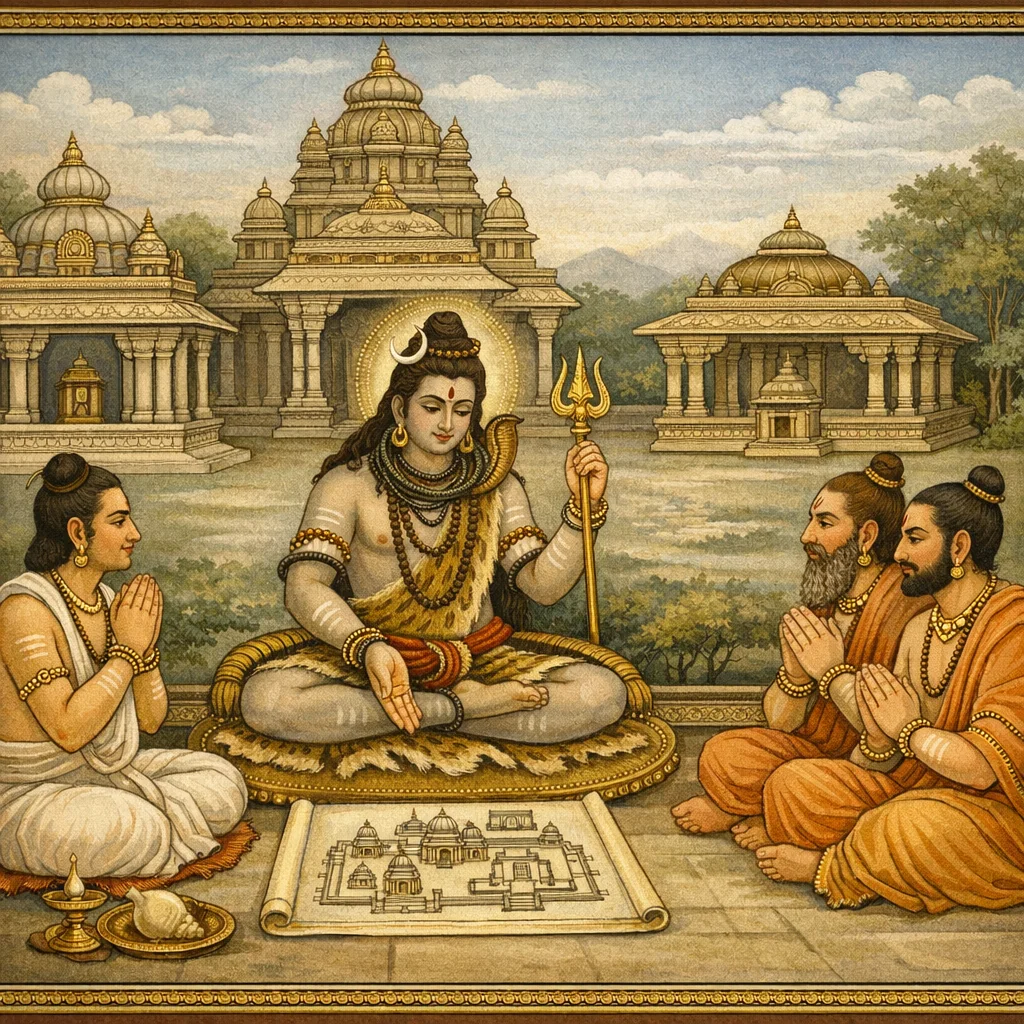
The chapter begins with the ṛṣis asking Sūta about the famed “sixty-eight” sacred fields (aṣṭaṣaṣṭi) of Śiva and how they can be found gathered in one place. Sūta recounts the former life of the brāhmaṇa Citraśarman of the Vatsa lineage in Camatkārapura. Moved by devotion, he undertakes prolonged tapas to bring forth the Hāṭakeśvara-liṅga, said to be established in Pātāla. Śiva appears, grants a boon, and commands him to install the liṅga; Citraśarman builds a splendid prāsāda and performs daily worship according to śāstric rule, making the liṅga renowned and drawing pilgrims. Other brāhmaṇas, seeing his sudden honor, grow jealous and perform severe austerities to match his status, reaching a crisis where they prepare to enter fire in despair. Śiva intervenes and invites their request; they ask that the full assembly of sacred kṣetras and liṅgas be made present there to end their resentment. Citraśarman objects, but Śiva mediates, explaining a larger purpose: in Kali-yuga the tīrthas will be threatened, so the sacred fields will take refuge in this place, and both parties will be honored. Citraśarman is granted lasting recognition of his lineage in ritual practice, especially in śrāddha/tarpaṇa naming protocols. The other brāhmaṇas are instructed to build prāsādas and install liṅgas gotra by gotra, resulting in sixty-eight divine shrines. Śiva declares his satisfaction, and the chapter concludes by praising the site as a stable refuge for kṣetras and a source of “imperishable” śrāddha efficacy.
Shlokas
Verse 1
ऋषय ऊचुः । अष्टषष्टिरियं प्रोक्ता या त्वया सूतनन्दन । क्षेत्राणां देवदेवस्य कथं सा तत्र संस्थिता । एतत्सर्वं समाचक्ष्व परं कौतूहलं हि नः
The sages said: “O son of Sūta, you have spoken of this ‘sixty-six’—the sacred fields of the God of gods. How were they established there? Tell us all of it, for great indeed is our curiosity.”
Verse 2
सूत उवाच । प्रश्नभारो महानेष यो भवद्भिः प्रकीर्तितः । तथापि कीर्तयिष्यामि नमस्कृत्वा पिनाकिनम्
Sūta said: “Truly great is the burden of questions you have raised. Even so, I shall recount it—having bowed in reverence to Pinākin (Śiva), the wielder of the bow.”
Verse 3
चमत्कारपुरेऽवासीत्पूर्वं ब्राह्मणसत्तमः । वत्सस्यान्वयसंभूतश्चित्रशर्मा महायशाः
Formerly, in the city called Cāmatkāra, there lived a most excellent brāhmaṇa—the illustrious Citraśarman, born in the lineage of Vatsa.
Verse 4
तस्य बुद्धिरियं जाता पाताले हाटकेश्वरम् । अत्रानीय ततो भक्त्या पूजयामि दिवानिशम्
Then this resolve arose in him: “Bringing Hāṭakeśvara from Pātāla, the netherworld, to this place, I shall worship Him with devotion day and night.”
Verse 5
एवं स निश्चयं कृत्वा तपश्चके ततः परम् । नियतो नियताहारः परां निष्ठां समाश्रितः
Having thus made his firm determination, he then undertook austerities. Disciplined and regulated in diet, he took refuge in the highest steadfastness.
Verse 6
तस्यापि भगवाञ्छंभुः कालेन महता ततः । संतुष्टो ब्राह्मण श्रेष्ठास्ततः प्रोवाच सादरम्
After a long time, Bhagavān Śambhu too became pleased with him. Then, addressing that best of brāhmaṇas, He spoke with gracious regard.
Verse 7
वरं प्रार्थय विप्रेन्द्र यत्ते मनसि वर्तते । अपि त्रैलोक्यराज्यं ते तुष्टो दास्याम्यसंशयम्
Ask for a boon, O best of brāhmaṇas—whatever abides in your mind. If you wished, I would grant you even sovereignty over the three worlds, without doubt, for I am pleased.
Verse 8
तस्मात्प्रार्थय ते नित्यं यत्र चित्ते व्यवस्थितम् । दुर्लभं सर्वदेवानां मनुष्याणां विशेषतः
Therefore, ask continually for that which is firmly settled in your heart—something rare even among all the gods, and all the more so among human beings.
Verse 9
चित्रशर्मोवाच । यदि तुष्टोसि मे देव वरं चेन्मे प्रयच्छसि । तदत्रागच्छ पातालाल्लिंगरूपी सुरेश्वर
Citraśarman said: “If you are pleased with me, O Lord, and if you will grant me a boon—then come here from Pātāla in the form of a liṅga, O Lord of the gods.”
Verse 10
यत्पाताले स्थितं लिंगं ब्रह्मणा संप्रतिष्ठितम् । हाटकेश्वरसंज्ञं तु तदिहायातु सत्व रम्
May that liṅga which stands in Pātāla—installed by Brahmā, and known as Hāṭakeśvara—come here swiftly.
Verse 11
श्रीभगवानुवाच । अचलं सर्वलिंगं स्यात्सर्वत्रापि द्विजोत्तम । कि पुनः प्रथमं यच्च ब्रह्मणा निर्मितं स्वयम्
The Blessed Lord said: “Every liṅga is immovable, O best of brāhmaṇas, everywhere. How much more so that primal one which was fashioned by Brahmā himself!”
Verse 12
तस्मात्थापय लिंगं तद्धाटकेन द्विजोत्तम । हाटकेश्वरसंज्ञं तु लोके ख्यातं भविष्यति
Therefore, O best of brāhmaṇas, establish that Liṅga with hāṭaka (gold). Indeed, it shall become renowned in the world by the name Hāṭakeśvara.
Verse 15
चित्रशर्माऽपि कृत्वाथ प्रासादं सुमनोहरम् । तत्र हेममयं लिंगं स्थापयामास भक्तितः
Citraśarman too then built a most delightful temple, and there he installed a golden Liṅga with devotion.
Verse 16
शास्त्रोक्तेन विधानेन पूजां चक्रे च नित्यशः । ततस्त्रैलोक्य विख्यातं तल्लिंगं तत्र वै द्विजाः
Performing worship each day according to the injunctions of the scriptures, he served that Liṅga. Thereupon, O brāhmaṇas, that very Liṅga became renowned throughout the three worlds.
Verse 17
दूरादभ्येत्य लोकाश्च पूजयंति ततः परम् । अथ तत्र द्विजा येऽन्ये संस्थिता गुणवत्तराः
People came even from far away and worshipped it all the more. Then, there were other brāhmaṇas dwelling there—men of greater accomplishments.
Verse 18
तेषां स्पर्धा ततो जाता दृष्ट्वा तस्य विचेष्टितम् । एकस्थानप्रसूतानां सर्वेषां गुणशालिनाम्
Seeing his conduct, rivalry then arose among them—all of them virtuous men, born from the same place and lineage-community.
Verse 19
अयं गुणविहीनोऽपि प्रख्यातो भुवनत्रये । हराराधनमासाद्य यस्मात्तस्माद्वयं हरम् । तदर्थे तोषयिष्यामः साम्यं येन प्रजायते
“Though he is devoid of merits, he has become renowned in the three worlds—because he attained the worship of Hara. Therefore we too shall propitiate Hara for that very purpose, so that equality of spiritual standing may arise.”
Verse 20
अष्टषष्टिः स्मृता लोके क्षेत्राणां शूलपाणिनः । यत्र सान्निध्यमभ्येति त्रिकालं परमेश्वरः
“In the world, sixty-eight sacred fields of the Trident-bearer are remembered—places where the Supreme Lord draws near in presence at the three times of day.”
Verse 22
अष्टषष्टिश्च गोत्राणामस्माकं चात्र संस्थिता । एतेन मूढमनसा सार्धं सामान्यलक्षणा
“And sixty-eight clans (gotras) of ours are established here; together with this man of deluded mind, they share the same outward marks of the community.”
Verse 23
तथा सर्वैश्च सर्वाणि क्षेत्रलिंगानि कृत्स्नशः । आनेतव्यानि चाराध्य तपःशक्त्या महेश्वरम्
“Therefore, by all of them, all the kṣetra-liṅgas in their entirety were to be brought together; and, by the power of austerity, Mahēśvara was to be worshipped.”
Verse 24
एतेषां सर्वगोत्राणामानेष्यति च शंकरः । यद्गोत्रं क्षेत्रसंयुक्तं यच्चान्यद्वा भविष्यति
“And Śaṅkara will bring together the gotras of all these—whatever gotra is joined to a kṣetra, and whatever other may come to be.”
Verse 25
ततस्ते शर्मसंयुक्ताः सर्व एव द्विजोत्तमाः । चक्रुस्तपःक्रियां सर्वे दुष्करां सर्वजन्तुभिः
Then those foremost of brāhmaṇas, filled with steadfast resolve and auspicious faith, all undertook the practice of tapas—an austerity difficult for any being to perform.
Verse 26
जपैर्होमोपवासैश्च नियमैश्च पृथग्विधैः । बलिपूजोपहारैश्च स्नानदानादिभिस्तथा
By japa (sacred recitation), homa (fire-offerings), upavāsa (fasts), and various niyamas (disciplines); by bali, pūjā, and upahāra (offerings, worship, and gifts); and likewise by snāna (ritual bathing), dāna (charity), and the rest—thus they carried out their observances.
Verse 27
लिंगं संस्थाप्य देवस्य नाम्ना ख्यातं द्विजेश्वरम् । मनोहरतरे प्रोच्चे प्रासादे पर्वतोपमे
Having installed a liṅga of the Lord, renowned by the divine name Dvijeśvara, they enshrined it in a most charming, lofty temple, mountain-like in grandeur.
Verse 28
त्यक्त्वा गृहक्रियाः सर्वास्तथा यज्ञसमुद्भवाः । अन्याश्च लोकयात्रोत्थास्तोषयंति महेश्वरम्
Abandoning all household duties, as well as rites arising from sacrifices, and even other acts connected with worldly livelihood, they sought to please Maheśvara alone.
Verse 29
एवमाराध्यमानोऽपि सन्तोषं परमेश्वरः । नाभ्यगच्छत्परां तुष्टिं कथंचिदपि स द्विजाः
Even though he was thus worshiped, Parameśvara did not attain complete satisfaction; in no way did he reach supreme delight, O twice-born ones.
Verse 30
ततो वर्षसहस्रांते समाराध्य महेश्वरम् । न च किञ्चित्फलं प्राप्ता यावत्क्रुद्धास्ततोऽखिलाः
Then, even after a thousand years of duly worshiping Maheśvara, they obtained no fruit whatsoever—until, as a result, all of them became enraged.
Verse 31
अस्य मूर्खतमस्याऽपि त्वं शूलिंश्चित्रशर्मणः । सुस्तोकेनाऽपि कालेन सन्तोषं परमं गतः
“Even for this most foolish man, O Śūlin, you became supremely satisfied with Citraśarman in but a very short time!”
Verse 32
वयं वार्धक्यमापन्ना बाल्यात्प्रभृति शंकरम् । पूजयन्तोऽपि नो दृष्टस्तथाऽपि परमेश्वर
“We have reached old age, worshiping Śaṅkara from our very childhood; yet even so, O Parameśvara, we have not beheld you.”
Verse 33
तस्मात्सर्वे प्रकर्तव्यं हव्यवाहप्रवेशनम् । अस्माभिर्निश्चयो ह्येष तवाग्रे सांप्रतं कृतः
“Therefore, let us all enter the fire. This indeed is our decision, made just now in your very presence.”
Verse 34
ततश्चाहृत्य काष्ठानि सर्वे ते द्विजसत्तमाः । ईश्वरं मनसि ध्यात्वा चिताश्चक्रुः पृथग्विधाः
Then those best of the twice-born brought firewood; meditating on the Lord within their minds, they prepared separate funeral pyres of various kinds.
Verse 35
तथा सर्वं क्रियाकल्पं स्नानदानादिकं च यत् । कृत्वा ते ब्राह्मणाः सर्वे सुसमिद्धहुताशनम्
Likewise, having performed the full set of prescribed rites—bathing, gifting, and the like—those brāhmaṇas all kindled the sacrificial fire well, with blazing flame.
Verse 36
यावत्कृत्वा सुतैः सार्धं प्रविशंति समाहिताः । तावत्स भगवांस्तुष्टस्तेषां संदर्शनं ययौ
And just as—having done so—they were about to enter (the fire) together with their sons, composed and concentrated, at that very moment the Blessed Lord, pleased, came into their sight.
Verse 37
अब्रवीच्च विहस्योच्चैर्मेघगम्भीरया गिरा । सर्वांस्तान्ब्राह्मणश्रेष्ठान्मृतान्संजीवयन्निव
Then he spoke, laughing aloud in a voice deep as thunderclouds—so stirring that it seemed as though he were reviving to life all those excellent brāhmaṇas who had fallen as if dead.
Verse 38
भो भो ब्राह्मणशार्दूला मा मैवं साहसं महत् । यूयं कुरुत मद्वाक्यात्संतुष्टस्य विशेषतः
“O tiger-like brāhmaṇas, do not commit so great a rash act in this way. Rather, do as I say—especially now, when I am well-pleased.”
Verse 39
तस्माद्वदत यच्चित्ते युष्माकं चैव संस्थितम् । येन दत्त्वा प्रगच्छामि स्वमेव भुवनं पुनः
“Therefore, tell me what is settled in your hearts; granting that, I shall depart again to my own abode.”
Verse 40
ब्राह्मणा ऊचुः । अस्मिन्क्षेत्रे सुरश्रेष्ठ पुरस्यास्य च संनिधौ । क्षेत्राणामष्टषष्टिर्या धन्या संकीर्त्यते जनैः
The brāhmaṇas said: “O best of the gods, in this sacred kṣetra, near this city, there are sixty-eight blessed holy precincts that people praise and recount.”
Verse 41
सदाभ्यैतु समं लिंगैस्तैराद्यैः सुरसत्तम । येनामर्षप्रशांतिर्नः सर्वेषामिह जायते
“O best among the gods, may those primordial liṅgas ever abide here together, so that the anger and rivalry of all of us may be pacified in this place.”
Verse 42
एष संस्पर्धतेऽस्माभिः सर्वैर्गुणविवर्जितः । त्वल्लिंगस्य प्रभावेन तस्मादेतत्समाचर
“This man, though devoid of virtues, contends with all of us; therefore, by the power of your liṅga, please bring about this remedy that pacifies our dispute.”
Verse 43
सूत उवाच । एतस्मिन्नंतरे विप्रो ज्ञात्वा तं वरदं हरम् । उवाच स्पर्धया युक्तश्चित्रशर्मा महेश्वरम्
Sūta said: Meanwhile, the brāhmaṇa Citraśarmā—knowing Hara as the granter of boons—addressed Maheśvara, filled with rivalry.
Verse 44
चित्रशर्मोवाच । एतैः प्राणपरित्यागमारभ्य तदनतरम् । तुष्टिं नीतोऽसि देवश कृत्वा च सुमहत्तपः
Citraśarmā said: “From the moment these men began to renounce their lives, immediately thereafter, O Lord of the gods, you were pleased through the performance of exceedingly great tapas (austerity).”
Verse 46
मया स्पर्द्धमानैश्च केवलं गुणगर्वितैः । तस्मादेषो न दातव्यत्वं त्वया किंचित्सुरेश्वर
“Since they vie with me, merely puffed up with pride in their own qualities, therefore, O Lord of the gods, you should grant them nothing at all.”
Verse 47
सूत उवाच । तस्य तद्वचनं श्रुत्वा भगवाञ्छशिशेखरः । चिन्तयामास चित्तेन किमत्र सुकृतं भवेत्
Sūta said: Hearing those words, the Blessed One—Śaśiśekhara—pondered in his heart: “What course here would be truly meritorious and righteous?”
Verse 48
एते ब्राह्मणशार्दूला विनाशं यांति मत्कृते । एषोऽपि सर्वसंसिद्धो गणतुल्यो द्विजोत्तमः
“These tiger-like Brāhmaṇas are going to ruin on account of me. And this excellent Brāhmaṇa too—fully accomplished—has become comparable to a (Śiva-)gaṇa.”
Verse 49
तस्माद्द्वाभ्यां मया कार्यं क्षेत्रे सौख्यं यथा भवेत् । ब्राह्मणानां विशेषेण तथा चात्र निवासिनाम्
“Therefore, by means of the two of you, I must bring it about that well-being prevails in this sacred field—especially for the Brāhmaṇas, and also for those who dwell here.”
Verse 50
ममापि सर्वदा चित्ते कृत्यमेतद्धि वर्तते । एक स्थाने करोम्येव सर्वक्षेत्राणि यानि मे
“This very task is always present in my mind: I shall indeed gather into one place all the sacred fields that are mine.”
Verse 51
भविष्यति तथा कालो रौद्रः कलिसमुद्भवः । तत्र क्षेत्राणि तीर्थानि नाशं यास्यंति भूतले
A fierce time will arise, born of the Kali age; then upon the earth the sacred kṣetras and the holy tīrthas will sink into decline and destruction.
Verse 52
सत्तीर्थैस्तद्भयात्सर्वैः क्षेत्रमेतत्समाश्रितम् । आनयिष्याम्यहमपि स्वानि क्षेत्राणि कृत्स्नशः
Therefore all the true tīrthas, fearing that Kali-born peril, have taken refuge in this kṣetra. I too shall bring here, in full, my own sacred fields.
Verse 53
ततस्तं चित्रशर्माणं प्राह चेदं महेश्वरः । शृणु मद्वचनं कृत्स्नं कुरुष्व तदनंतरम्
Then Maheśvara spoke to Citraśarman: “Hear my instruction in its entirety, and carry it out immediately thereafter.”
Verse 54
अत्र क्षेत्राणि सर्वाणि मदीयानि द्विजोत्तम । समागच्छंतु विप्राश्च प्रभवंतु प्रहर्षिताः
“O best of the twice-born, let all my sacred kṣetras assemble here; and let the Brāhmaṇas also gather and flourish in gladness.”
Verse 55
तवापि योग्यतां श्रेष्ठां करिष्यामि महामते । यदि मे वर्तसे वाक्ये मुक्त्वा स्पर्द्धां द्विजोद्भवाम्
“O great-minded one, I shall grant you the highest fitness and authority as well—if you abide by my word, having abandoned the rivalry born of Brāhmaṇic pride.”
Verse 56
तुरीयमपि ते गोत्रं वेदोक्तेन क्रमेण च । आद्यतां चापि ते सर्वे कीर्तयिष्यंति ते द्विजाः
Even a fourth gotra shall be established for you, in the sequence enjoined by the Vedas; and all those Brāhmaṇas shall likewise proclaim your primacy.
Verse 57
तथान्यदपि सन्मानं तव यच्छामि च द्विज । आचन्द्रार्कमसंदिग्धं पुत्रपौत्रादिकं च यत्
And, O Brāhmaṇa, I grant you further honor as well—unfailing, beyond doubt, so long as the moon and sun endure—together with sure blessings of descendants, beginning with sons and grandsons.
Verse 58
त्वदन्वये भविष्यंति पुत्रपौत्रास्तथा परे । कृत्ये श्राद्धे तर्पणे वा क्रियमाणे विधानतः
In your lineage there shall indeed be sons, grandsons, and further descendants. When the prescribed rites—whether śrāddha or tarpaṇa—are performed according to proper rule, they will be carried out duly and in correct form.
Verse 59
आद्यस्य वत्ससंज्ञस्य नाम उच्चार्य गोत्रजम् । ततो नामानि चाप्येवं कीर्तयिष्यंति भक्तितः
First they will utter the name of the earliest ancestor—designated as “Vatsa”—together with the gotra-name. Thereafter, in the same manner, they will recite the other names as well, with devotion.
Verse 60
ततः संतर्पयिष्यंति पितॄनथ पितामहान् । तथान्यानपि बंधूंश्च सुहृत्संबंधिबांधवान्
Then they shall offer tarpaṇa to the fathers and the grandfathers; and likewise to other relatives too—friends, relations, and kin.
Verse 61
त्वदन्वये विना नाम्ना त्वदीयेन विमोहिताः । ये पितॄंस्तर्पयिष्यंति तेषां व्यर्थं भविष्यति
But those in your lineage who, deluded, perform tarpaṇa to the ancestors without uttering your name—tarpaṇa so done will become fruitless for them.
Verse 62
श्राद्धं वा यदि वा दानं तर्पणं वा त्वदुद्भवम् । तस्मादहंकृतिं मुक्त्वा मामाराधय केवलम्
Whether it is śrāddha, or charity, or tarpaṇa—whatever arises through you—therefore abandon egoism and worship Me alone.
Verse 63
येन सिद्धोऽपि संसिद्धिं परामाप्नोषि शाश्वतीम् । एवं संबोध्य तं विप्रं कृत्वाद्यमपि पश्चिमम्
By this, even though already accomplished, you attain the supreme and everlasting perfection. Having thus instructed that brāhmaṇa, he made the first become the last as well, that is, he brought the matter to its close.
Verse 64
ततस्तान्ब्राह्मणानाह प्रासादः क्रियतामिति । गोत्रंगोत्रं पुरस्कृत्य स्थाप्यं लिंगमनुत्तमम् । येन संक्रमणं तेषु मम संजायतेद्विजाः
Then he spoke to those brāhmaṇas: “Let a temple be built.” Honoring each gotra in due order, an unsurpassed liṅga should be installed—so that, O twice-born, My saving ‘passage’ and gracious connection may arise among them.
Verse 65
अथ ते ब्राह्मणास्तत्र भूमिभागान्मनोहरान् । दृष्ट्वादृष्ट्वा प्रचक्रुश्च प्रासादान्हर्षसंयुताः
Then those brāhmaṇas, seeing the delightful portions of land there again and again, joyfully set about constructing the temples.
Verse 66
अष्टषष्टिमितान्दिव्यान्कैलासशिखरोपमान् । तेषु संस्थापयामासु लिङ्गानि विविधानि च । क्षेत्रेक्षत्रे च यन्नाम तत्तत्संज्ञां प्रचक्रिरे
They built sixty-eight divine temples, like the peaks of Kailāsa. In them they installed liṅgas of many kinds; and in each sacred field and locality, whatever name was current there, they bestowed that very name upon the liṅga and shrine.
Verse 67
अथ तेषां पुनर्दृष्टिं गत्वा देवस्त्रिलोचनः । प्रोवाच मधुरं वाक्यं कस्मिंश्चित्कालपर्यये । आराधितस्तपःशक्त्या लिंगसंस्थापनादनु
Then, after some time had passed, the three-eyed Lord came again into their sight and spoke sweet words—propitiated by the power of their austerities, after the liṅgas had been स्थापित and installed.
Verse 68
श्रीभगवानुवाच । परितुष्टोऽस्मि विप्रेंद्रा युष्माकमहमद्य वै । एतन्मम कृतं कृत्यं भवद्भिरखिलं ततः
The Blessed Lord said: “O best among Brāhmaṇas, today I am wholly pleased with you. Through you, everything that was to be accomplished by Me has been completely fulfilled.”
Verse 69
अस्मदीयानि लिंगानि क्षेत्राणि च कलेर्भयात् । ततो मान्याश्च मे यूयं नान्यैरेतद्भविष्यति
“Because of fear of the Kali age, My liṅgas and My sacred sites will depend upon you. Therefore you shall be honored by Me—this rank will not be bestowed by others.”
Verse 70
तस्माच्चित्तस्थितं शीघ्रं प्रार्थयंतु द्विजोत्तमाः । संप्रयच्छामि येनाशु यद्यपि स्यात्सुदुर्लभम्
“Therefore, O best of the twice-born, quickly ask for what is held within your hearts. I shall grant it at once—even if it would otherwise be exceedingly difficult to obtain.”
Verse 71
ब्राह्मणा ऊचुः । यदि देव प्रसन्नस्त्वमस्माकं च सुरेश्वर । पश्चिमश्चित्रशर्मा च यथाद्यो भवता कृतः
The Brāhmaṇas said: “O Deva, if you are pleased with us, O Lord of the gods, then make us too like the former one, even as Citraśarman was made by you.”
Verse 72
अस्मदीयं सदा नाम कीर्तनीयमसंशयम् । श्राद्धकृत्येषु सर्वेषु यथा तेन समा वयम् । भवामस्त्वत्प्रसादेन सांप्रतं चित्रशर्मणा
“May our name too always be recited, without doubt. And in all śrāddha rites, by your grace, may we now become equal to Citraśarman.”
Verse 73
श्रीभगवानुवाच । युष्माकमपि ये केचिद्वशं यास्यंति मानवाः । युवानः शास्त्रसंयुक्ता वेदविद्याविशारदाः
The Blessed Lord said: “Among you too, whichever men shall come under your discipline—youthful, trained in the śāstras, and highly skilled in Vedic learning—”
Verse 74
आनयिष्यथ तान्यूयमामुष्यायणसंज्ञितान् । नित्यं स्थिताश्च ते क्षेत्रे श्राद्धस्याक्षय्यकारकाः
“You shall bring them—known by the designation ‘Āmuṣyāyaṇa’. Ever abiding in that sacred field, they will make the fruits of śrāddha inexhaustible.”
Verse 75
एवमुक्त्वाथ देवेशस्ततश्चादर्शनं गतः । तेऽपि विप्राः सुसंतुष्टास्तत्र स्थाने व्यवस्थिताः
Having spoken thus, the Lord of the gods then disappeared from sight. Those brāhmaṇas too, greatly satisfied, remained established in that very place.
Verse 76
एवं तत्र समस्तानि क्षेत्राण्यायतनानि च । कलिभीतानि विप्रेंद्रा निवसंति सदैव हि
Thus, there all sacred kṣetras and shrines—afraid of Kali—indeed abide forever, O best of brāhmaṇas.
Verse 77
एवं ते ब्राह्मणाः प्राप्य सिद्धिं चेश्वरपूजनात् । ख्याताः सर्वत्र भुवने श्राद्धस्याक्षय्यकारकाः
Thus those brāhmaṇas, having attained siddhi through the worship of the Lord, became renowned throughout the world as those who make the fruits of śrāddha inexhaustible.
Verse 107
इति श्रीस्कांदे महापुराण एकाशीतिसाहस्र्यां संहितायां षष्ठे नागरखण्डे हाटकेश्वरक्षेत्र माहात्म्ये ब्राह्मणचित्रशर्मलिंगस्थापनवृत्तांतवर्णनंनाम सप्तोत्तरशततमोऽध्यायः
Thus ends the one-hundred-and-seventh chapter of the Śrī Skanda Mahāpurāṇa, in the Ekāśītisāhasrī Saṃhitā, within the sixth division called the Nāgara Khaṇḍa—within the Tīrtha-māhātmya praising the glory of the sacred region of Hāṭakeśvara—entitled “The Account of the Brāhmaṇa Citraśarmā’s establishment (sthāpana) of a Śiva-liṅga.”