Adhyaya 106
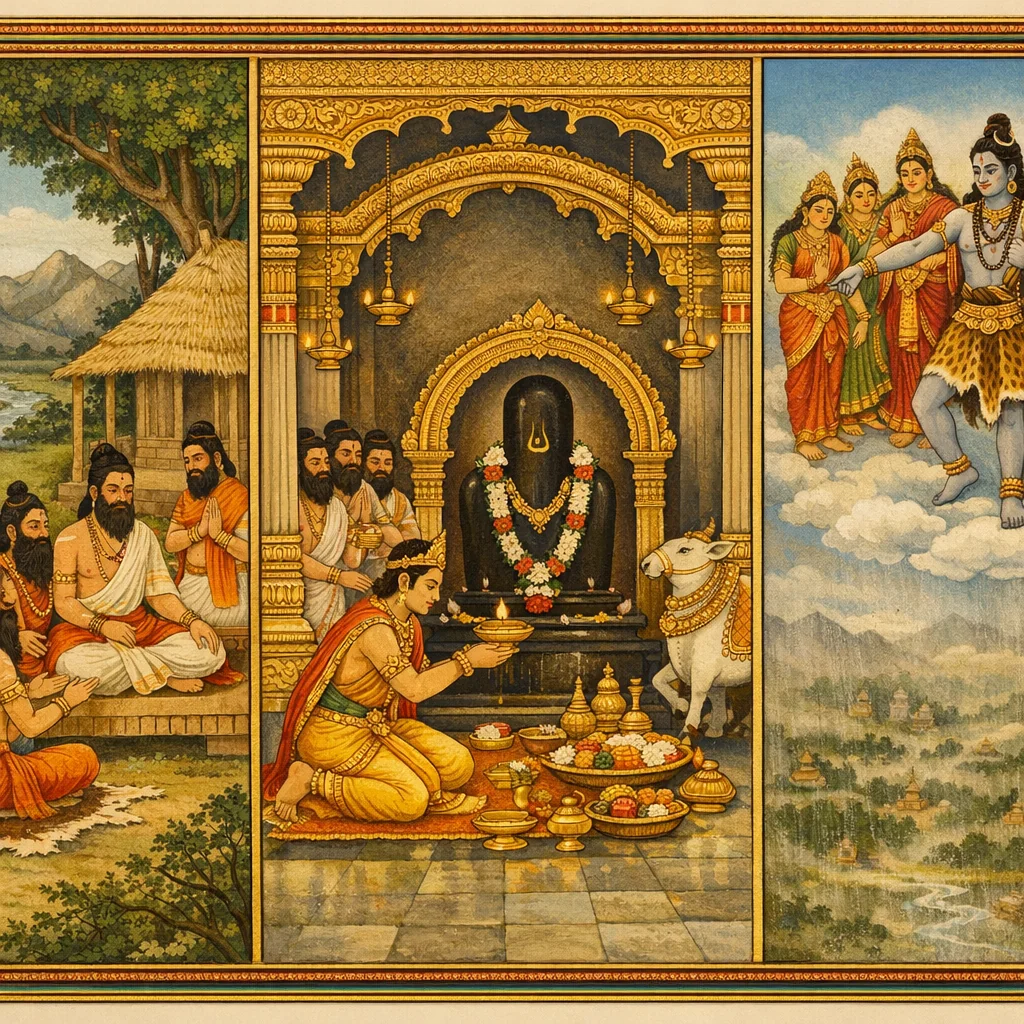
The ṛṣis ask about tīrthas and liṅgas that have become “lupta” (concealed or lost) because the earth is choked with dust and pretas. Sūta replies that countless sacred sites were obscured, and he points to chief examples: Cakratīrtha, where Viṣṇu set down the discus, and Mātṛtīrtha, where Kārttikeya established the Divine Mothers, along with mentions of renowned royal and sage lineages whose āśramas or liṅgas are said to have slipped into concealment. The account then turns to a crisis of the land: pretas try to fill the region with dust-rain, but a mighty wind—linked to the Mothers’ protective presence—scatters the dust so the ground cannot be filled. The pretas appeal to King Kuśa, who propitiates Rudra. Rudra explains that the place is guarded by the Mothers, that certain liṅgas were installed with rākṣasa-mantras and are perilous to touch or even behold (implying restricted zones), and that icons should not be uprooted, since śāstric rule and the fixed nature of liṅgas forbid it. To prevent harm to ascetics and brahmins, Rudra instructs the Mothers to leave their present station. They consent but request an equivalent sacred abode within the same kṣetra, since Skanda himself installed them. Rudra grants distinct residences by distributing them across sixty-eight (aṣṭaṣaṣṭi) Rudra-kṣetras, where they will receive elevated worship. Once the Mothers relocate, the pretas succeed in continually filling the terrain with dust, and Rudra withdraws from sight. The colophon identifies this as Nāgara Khaṇḍa, Hāṭakeśvara-kṣetra-māhātmya, adhyāya 106, on the discourse of lost tīrthas.
Shlokas
Verse 1
ऋषय ऊचुः । भूपृष्ठे पांसुभिस्तस्मिन्प्रेतैस्तैः परिपूरिते । यानि तीर्थानि लुप्तानि लिङ्गानि च वदस्व नः
The sages said: “When the face of the earth there was filled with dust and thronged with those preta-spirits, tell us which tīrthas—sacred bathing-places—and which liṅgas were lost.”
Verse 2
सूत उवाच । असंख्यातानि तीर्थानि तथा लिंगानि च द्विजाः । लोपं गतानि वक्ष्यामि प्राधान्येन प्रबोधत
Sūta said: “O twice-born ones, the tīrthas and the liṅgas are countless. I shall speak of those that have slipped into obscurity—chiefly the most important among them; listen with care.”
Verse 3
तत्र लोपं गतं तीर्थं चक्रतीर्थमिति स्मृतम् । यत्र चक्रं पुरा न्यस्तं विष्णुना प्रभविष्णुना
Among them, a tīrtha that passed into obscurity is remembered as Cakra-tīrtha—where, long ago, mighty Viṣṇu set down his discus (cakra).
Verse 4
मातृतीर्थं तथैवान्यत्सर्वकामप्रदं नृणाम् । यत्र ता मातरो दिव्याः कार्तिकेयप्रतिष्ठिताः
Another is Mātṛ-tīrtha, granting people every desired aim—where the divine Mothers (Mātṛs) were established by Kārtikeya.
Verse 5
मुचुकुन्दस्य राजर्षेस्तथान्यल्लिंग मुत्तमम् । तत्र लोपं गतं विप्राः सगरस्य तु भूपतेः
Also, the excellent liṅga of the royal sage Mucukunda—and likewise that of King Sagara—there, O brāhmaṇas, passed into concealment.
Verse 6
इक्ष्वाकोर्वसुषेणस्य ककुत्स्थस्य महात्मनः । ऐलस्य चन्द्रदेवस्य काशिराजस्य सन्मतेः
Likewise, the sacred foundations of Ikṣvāku, of Vasuṣeṇa, of the great-souled Kakutstha; of Aila; of Candradeva; and of the wise King of Kāśī also became obscured there.
Verse 7
अग्निवेशस्य रैभ्यस्य च्यवनस्य भृगोस्तथा । आश्रमो याज्ञवल्क्यस्य तत्र लोपं समाययौ
So too, the sacred places of Agniveśa, of Raibhya, of Cyavana, and of Bhṛgu; and the āśrama of Yājñavalkya—there, all of these came to be lost from view.
Verse 8
हारीतस्य महर्षेश्च हर्यश्वस्य महात्मनः । कुत्सस्य च वसिष्ठस्य नारदस्य त्रितस्य च
Here are the liṅgas of the great sage Hārīta, of the noble Haryaśva, and also of Kutsa, Vasiṣṭha, Nārada, and Trita.
Verse 9
तथैव ऋषिपत्नीनां तत्र लिंगानि भूरिशः । कात्यायन्याश्च शांडिल्या मैत्रेय्याश्च तथा पुरा
Likewise, there are many liṅgas there belonging to the wives of sages—of Kātyāyanī, of Śāṇḍilyā, and formerly also of Maitreyī.
Verse 10
अन्यासां मुनिपत्नीनां यासां संख्या न विद्यते । तत्राश्चर्यमभूदन्यत्पूर्यमाणे महीतले
And of other sages’ wives—whose number cannot even be reckoned—another marvel occurred there, as the ground was being filled in.
Verse 11
दृष्ट्वा पांसुमयीं वृष्टिं मुक्तां प्रेतैः समंततः । मातृवर्गेण तेनाथ प्रमुक्तः प्रचुरोऽनिलः
Seeing a rain of dust released by the spirits on every side, the host of the Mothers then unleashed a mighty wind.
Verse 13
तेन पांसुकृता वृष्टिः समंतान्मथिता बहिः । तस्या भूमेः पतत्येव न किंचित्तत्र पूर्यते
By that wind, the dust-made shower was churned and driven outward on every side. Though it kept falling upon that ground, nothing there could be filled up.
Verse 14
ततस्ते व्यंतराः खिन्ना निराशास्तस्य पूरणे । भूतास्तस्य पुरो गत्वा चुक्रुशुः कुशभूपतेः
Then those Vyaṃtaras, weary and despairing of filling it, went before King Kuśa and cried out their complaint.
Verse 16
स त्वं तासां विघातार्थमुपायं भूप चिंतय । येन तां पांसुभिर्भूमिं पूरयामः समंततः
“Therefore, O King, devise a means to thwart those Mothers, by which we may fill that ground with dust on every side.”
Verse 17
तेषां तद्वचनं श्रुत्वा ततः कुशमहीपतिः । रुद्रमाराधयामास तत्क्षेत्रं प्राप्य सद्द्विजाः
Hearing their words, King Kuśa then went to that sacred field and began to worship Rudra—O excellent brāhmaṇas.
Verse 19
अस्माभिर्विहिता तत्र पांसुवृष्टिर्महीपते । नीयते शतधाऽन्यत्र मातृमुक्तेन वायुना
O King, the dust-shower we set in motion there is borne away elsewhere in a hundred directions by the wind released by the Divine Mothers.
Verse 20
मया प्रेतगणादेव निर्दिष्टास्तस्य पूरणे । मातृसंरक्ष्यमाणं तच्छक्यं चैतन्न पूरितुम्
Indeed, I myself appointed the host of pretas for the task of filling it; yet, since that place is protected by the Divine Mothers, it cannot be filled.
Verse 21
तत्र राक्षसजैर्मंत्रैः संति लिंगानि च प्रभो । प्रतिष्ठितानि तत्स्पर्शाद्दर्शनात्स्याज्जनक्षयः
O Lord, in that place there are liṅgas installed with rākṣasa mantras. By merely touching them—or even by seeing them—destruction would arise among the people.
Verse 22
अचलत्वात्तथा देव लिंगानां शास्त्रसद्भयात् । अन्यदुत्पाटनाद्यं च नैव कुर्मः कथंचन
And because those liṅgas are immovable, O Deva, and out of righteous fear of the śāstras concerning liṅgas, we do not in any way undertake other measures such as uprooting them.
Verse 23
तस्माल्लिंगकृतो नाशो ब्राह्मणानां तपस्विनाम् । यथा न स्यात्सुरश्रेष्ठ तथा नीतिर्विधीयताम्
Therefore, O best of the gods, ordain a proper course of action, so that the ruin caused by those liṅgas may not befall the brāhmaṇas and the ascetics.
Verse 24
ततश्च भगवान्रुद्रस्ताः समाहूय मातरः । प्रोवाच त्यज्यतां स्थानं भवत्यो यत्र संस्थिताः
Then the Blessed Rudra summoned those Mothers and said: “Leave the place where you are stationed.”
Verse 25
तत्र पांसुभिरव्यग्राः करिष्यंति दिवानिशम् । प्रेताः कुशसमादेशाद्वृष्टिं लोकहिताय च
There, without distraction, the spirits will work day and night with dust; and by the instruction given through kuśa-grass they will bring rainfall for the welfare of the world.
Verse 26
मातर ऊचुः । त्यक्ष्यामश्च तवादेशात्तत्स्थानं वृषभध्वज । परं दर्शय चास्माकं किंचिदन्यत्तथाविधम्
The Mothers said: “By your command we shall leave that place, O Bull-bannered One. But show us some other place of a similar kind.”
Verse 27
क्षेत्रेऽत्रैव निवत्स्यामो येन स्कन्दकृते वयम् । तेन संस्थापिताश्चात्र प्रोक्ताः स्थेयं सदा ततः
“We will dwell in this very sacred region, since we are connected with Skanda’s work. Having been established here by him, we were told to remain here always.”
Verse 28
ततः प्रोवाच भगवांस्तस्मात्स्थानान्महत्तरम् । स्थानं दास्यामि सर्वासां पृथक्त्वेन शुभावहम्
Then the Blessed Lord said: “Greater than that place, I shall grant to all of you abodes separately—each one bestowing auspiciousness.”
Verse 29
अष्टषष्टिस्तु क्षेत्राणां मदीयानां समंततः । संस्थितास्ति महाभागा येषु मत्संस्थितिः सदा
Truly, there are sixty-eight sacred regions that are mine, spread on every side—O blessed ones—in which my presence ever abides.
Verse 30
अष्टषष्टिविभागेन भूत्वा सर्वाः पृथक्पृथक् । तेषु तिष्ठथ मद्वाक्यात्पूजामग्र्यामवाप्स्यथ
Dividing into sixty-eight portions, you all become separate, each in her own place. Abide in those kṣetras by my word, and you shall attain the highest worship.
Verse 31
तस्य देवस्य तच्छ्रुत्वा वाक्यं ता मातरस्तदा । प्रहृष्टास्तत्परित्यज्य स्थानं स्कन्दविनिर्मितम्
Hearing the words of that god, the Mother-goddesses rejoiced. Then, leaving that place fashioned by Skanda, they departed.
Verse 32
अष्टषष्टिविभागेन भूत्वा रूपैः पृथग्विधैः । अष्टषष्टिषु क्षेत्रेषु तस्य ताः संस्थिताः सदा
Dividing themselves into sixty-six portions and assuming distinct forms, those Mothers remain ever established in the sixty-six sacred fields belonging to him.
Verse 33
ततस्ताभिर्विनिर्मुक्तं तत्सर्वं भूमिमण्डलम् । पांसुभिः पूरितं प्रेतैर्दिवारात्रमतंद्रितैः
Thereafter, the whole region of the earth that they left behind was filled with dust by restless preta-spirits, who labored day and night without fatigue.
Verse 34
एवं तस्य वरं दत्त्वा भगवान्वृषवाहनः । जगामादर्शनं पश्चात्सार्धं सवर्गैणैर्द्विजाः
Thus, having granted him the boon, the Blessed Lord—he whose mount is the bull—afterwards vanished from sight, together with the hosts of the gods, O twice-born ones.
Verse 35
कुतोऽपि ब्राह्मणैः सर्वेस्तापसैश्च प्रशंसितः । लब्धाशी प्रययौ तस्मादयोध्यानगरीं प्रति
Praised from every side by brāhmaṇas and ascetics, and having obtained his sustenance, he set out from there toward the city of Ayodhyā.
Verse 106
इति श्रीस्कांदे महापुराण एकाशीतिसाहस्र्यां संहितायां षष्ठे नागरखण्डे हाटकेश्वरक्षेत्रमाहात्म्ये लुप्ततीर्थमाहात्म्यकथनंनाम षडुत्तरशततमोऽध्यायः
Thus ends the one-hundred-and-sixth chapter, entitled “The Account of the Greatness of the Hidden Tīrtha,” in the Hāṭakeśvara-kṣetra-māhātmya of the sixth Nāgara-khaṇḍa, within the Skanda Mahāpurāṇa, in the Ekāśīti-sāhasrī Saṃhitā.
Verse 198
ततस्तस्य गतस्तुष्टिं वर्षांते भगवान्हरः । प्रोवाच प्रार्थयाभीष्टं यत्ते मनसि वांछितम्
Then, at the end of the rains, the Blessed Lord Hara became pleased with him and said: “Ask for the boon you desire—whatever your mind longs for.”