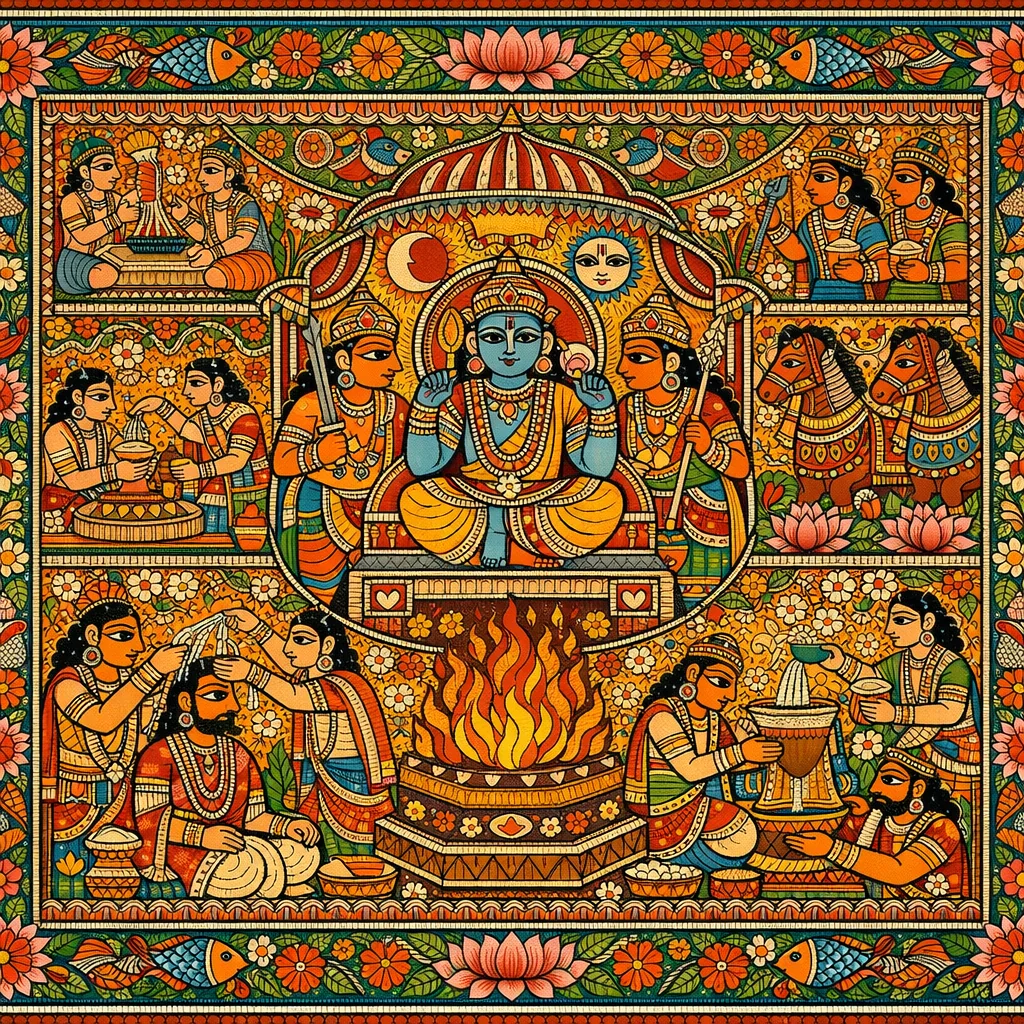
Adhyaya 20
Royal consecration (Rajasuya) mantras.
Mantras
Mantra 1
क्ष॒त्रस्य॒ योनि॑रसि क्ष॒त्रस्य॒ नाभि॑रसि । मा त्वा॑ हिᳪसी॒न्मा मा॑ हिᳪसीः
Thou art the womb of dominion; thou art the navel of dominion. Injure thou not; injure me not.
Mantra 2
नि ष॑साद घृ॒तव्र॑तो॒ वरु॑णः प॒स्त्यास्वा । साम्रा॑ज्याय सु॒क्रतु॑: । मृ॒त्योः पा॑हि वि॒द्योत्पा॑हि
Varuṇa, whose vow is ghee, hath sat him down within the abodes, of good resolve, for universal sovereignty. From death protect thou; from the lightning-flash protect thou.
Mantra 3
दे॒वस्य॑ त्वा सवि॒तुः प्र॑स॒वेऽश्विनो॑र्बा॒हुभ्यां॑ पू॒ष्णो हस्ता॑भ्याम् । अ॒श्विनोर्भैष॑ज्येन॒ तेज॑से ब्रह्मवर्च॒साया॒भि षि॑ञ्चामि॒ सर॑स्वत्यै॒ भैष॑ज्येन वी॒र्या॒या॒न्नाद्या॑या॒भि षि॑ञ्चा॒मीन्द्र॑स्येन्द्रि॒येण॒ बला॑य श्रियै॒ यश॑से॒ऽभि षि॑ञ्चामि
At the god Savitṛ’s impulsion I sprinkle thee, with the arms of the Aśvins, with the hands of Pūṣan: with the Aśvins’ healing power for splendour and for brahmanical lustre I sprinkle thee; with Sarasvatī’s healing power for manly vigour and for food-winning I sprinkle thee; with Indra’s lordly power for strength, for fortune, and for renown I sprinkle thee.
Mantra 4
को॑ऽसि कत॒मो॒ऽसि॒ कस्मै॑ त्वा॒ काय॑ त्वा । सुश्लो॑क॒ सुम॑ङ्गल॒ सत्य॑राजन्
Who art thou? which one art thou? for whom art thou (set apart)? for what end art thou (set apart)?—O of good fame, of good auspice, O true king!
Mantra 5
शिरो॑ मे॒ श्रीर्यशो॒ मुखं॒ त्विषि॒: केशा॑श्च॒ श्मश्रू॑णि । राजा॑ मे प्रा॒णो अ॒मृत॑ᳪ स॒म्राट् चक्षु॑र्वि॒राट् श्रोत्र॑म्
My head is Fortune; my fame is the mouth; brilliance is (in) the hair and the beard. Kingship is my breath; deathlessness is the universal sovereignty; the eye is the wide-ruling power; the ear (is mine).
Mantra 6
जि॒ह्वा मे॑ भ॒द्रं वाङ्महो॒ मनो॑ म॒न्युः स्व॒राड् भाम॑: । मोदा॑: प्रमो॒दा अ॒ङ्गुली॒रङ्गा॑नि मि॒त्रं मे॒ सह॑:
My tongue is auspicious good; Speech is greatness; Mind is spirited ardour, self-ruling; splendour (is mine). Joys and great joys are the fingers and the limbs; Mitra is my force.
Mantra 7
बा॒हू मे॒ बल॑मिन्द्रि॒यᳪ हस्तौ॑ मे॒ कर्म॑ वी॒र्य॒म् । आ॒त्मा क्ष॒त्रमुरो॒ मम॑
My arms are strength and Indra-power; my hands are work and heroic vigour; my very self is dominion; my breast is mine (as its seat).
Mantra 8
पृ॒ष्ठीर्मे॑ रा॒ष्ट्रमु॒दर॒मᳪसौ॑ ग्री॒वाश्च॒ श्रोणी॑ । ऊ॒रू अ॑र॒त्नी जानु॑नी॒ विशो॒ मेऽङ्गा॑नि स॒र्वत॑ः ।
My back is the Realm; my belly the mid-space; my shoulders and my neck, and my hips. My thighs, my forearms, my knees—my peoples are my limbs on every side.
Mantra 9
नाभि॑र्मे चि॒त्तं वि॒ज्ञानं॑ पा॒युर्मेऽप॑चितिर्भ॒सत् । आ॒न॒न्द॒न॒न्दावा॒ण्डौ मे॒ भग॒: सौभा॑ग्यं॒ पस॑: । जङ्घा॑भ्यां प॒द्भ्यां धर्मो॑ऽस्मि वि॒शि राजा॒ प्रति॑ष्ठितः ।
My navel is mind and understanding; my vent is the wasting-off, the burning cleanser. My twin organs are Delight and Joy; Bhaga is my fortune, and thriving strength. By shanks and feet I am the Law: among the people the King stands firmly founded.
Mantra 11
प्रति॑ क्ष॒त्रे प्रति॑ तिष्ठामि रा॒ष्ट्रे प्रत्यश्वे॑षु॒ प्रति॑ तिष्ठामि॒ गोषु॑ । प्रत्यङ्गे॑षु॒ प्रति॑ तिष्ठाम्या॒त्मन् प्रति॑ प्रा॒णेषु॒ प्रति॑ तिष्ठामि पु॒ष्टे प्रति॒ द्यावा॑पृथि॒व्योः प्रति॑ तिष्ठामि य॒ज्ञे।। १ ०।। त्र॒या दे॒वा एका॑दश त्रयस्त्रि॒ᳪशाः सु॒राध॑सः । बृह॒स्पति॑पुरोहिता दे॒वस्य॑ सवि॒तुः स॒वे । दे॒वा दे॒वैर॑वन्तु मा ।
In royal power I take my stand; in the realm I take my stand; among horses I take my stand, among cattle I take my stand. In my limbs I take my stand, in the Self I take my stand; in the breaths I take my stand, in prosperity I take my stand; in Heaven and Earth I take my stand; in the Sacrifice I take my stand. The three gods, the eleven, the thirty-three, rich in good gifts, with Bṛhaspati as their household-priest, at the impulsion of the god Savitṛ—may the gods with the gods protect me.
Mantra 12
प्र॒थ॒मा द्वि॒तीयै॑र्द्वि॒तीया॑स्तृ॒तीयै॑स्तृ॒तीया॑: स॒त्येन॑ स॒त्यं य॒ज्ञेन॑ य॒ज्ञो यजु॑र्भि॒र्यजू॑ᳪषि॒ साम॑भि॒: सामा॑न्यृ॒ग्भिरृच॑: पुरोऽनुवा॒क्या॒भिः पुरोऽनुवा॒क्या॒ या॒ज्या॒भिर्या॒ज्या॒ वषट्का॒रैर्व॑षट्का॒रा आहु॑तिभि॒राहु॑तयो मे॒ कामा॒न्त्सम॑र्धयन्तु॒ भूः स्वाहा॑ ।
The first by the second, the second by the third, the third by the third: by Truth may Truth be established; by Sacrifice may Sacrifice be perfected; by Yajus-formulas the Yajus-acts, by Sāmans the chants, by Ṛks the verses; by the fore-invitations the fore-invitations, by the offering-verses the offering-verses; by Vaṣaṭ-calls the Vaṣaṭ-calls; by oblations the oblations—may they accomplish in full my desires. Bhūḥ, svāhā!
Mantra 13
लोमा॑नि॒ प्रय॑ति॒र्मम॒ त्वङ्म॒ आन॑ति॒राग॑तिः । मा॒ᳪसं म॒ उप॑नति॒र्वस्वस्थि॑ म॒ज्जा म॒ आन॑तिः ।
My hairs are disciplined effort; my skin is reverent bending and approach. My flesh is near-attendance; my fat, my bone, my marrow are reverent inclination.
Mantra 14
यद्दे॑वा देव॒हेड॑नं॒ देवा॑सश्चकृ॒मा व॒यम् । अ॒ग्निर्मा॒ तस्मा॒देन॑सो॒ विश्वा॑न्मुञ्च॒त्वᳪह॑सः
What offence against the Gods, O Gods, we have committed,—from all that guilt, from all that evil, may Agni release me.
Mantra 15
यदि॒ दिवा॒ यदि॒ नक्त॒मेना॑ᳪसि चकृ॒मा व॒यम् । वा॒युर्मा॒ तस्मा॒देन॑सो॒ विश्वा॑न्मुञ्च॒त्वᳪह॑सः
If by day, if by night, we have committed sins,—from all that guilt, from all that evil, may Vāyu release me.
Mantra 16
यदि॒ जाग्र॒द्यदि॒ स्वप्न॒ एना॑ᳪसि चकृ॒मा व॒यम् । सूर्यो॑ मा॒ तस्मा॒देन॑सो॒ विश्वा॑न्मुञ्च॒त्वᳪह॑सः
If waking, if in sleep, we have committed sins,—from all that guilt, from all that evil, may Sūrya release me.
Mantra 17
यद्ग्रामे॒ यदर॑ण्ये॒ यत्स॒भायां॒ यदि॑न्द्रि॒ये । यच्छू॒द्रे यदर्ये॒ यदेन॑श्चकृ॒मा व॒यं यदेक॒स्याधि॒ धर्म॑णि॒ तस्या॑व॒यज॑नमसि
What (sin) in village, what in forest, what in the assembly, what through the senses; what with Śūdra, what with Ārya,—what guilt we have incurred; and what (wrong) against the ordinance of any one,—thou art the expiation thereof.
Mantra 18
यदापो॑ अ॒घ्न्या इति॒ वरु॒णेति॒ शपा॑महे॒ ततो॑ वरुण नो मुञ्च । अव॑भृथ निचुम्पुण निचे॒रुर॑सि निचुम्पु॒णः । अव॑ दे॒वैर्दे॒वकृ॑त॒मेनो॑ऽय॒क्ष्यव॒ मर्त्यै॒र्मर्त्य॑कृतं पुरु॒राव्णो॑ देव रि॒षस्पा॑हि
If we have reviled the inviolable Waters, saying ‘(thou art) Varuṇa,’—from that, O Varuṇa, release us. Thou art the Avabhṛtha, the cleanser, the down-sweeper; cleanse thou away: what guilt is wrought by Gods, that hast thou sacrificed away; what guilt is wrought by mortals, that (too) sacrifice away. O god Pururāva, from injury protect us.
Mantra 19
स॑मु॒द्रे ते॒ हृद॑यम॒प्स्वन्तः सं त्वा॑ विश॒न्त्वोष॑धीरु॒ताप॑: । सु॒मि॒त्रि॒या न॒ आप॒ ओष॑धयः सन्तु दुर्मित्रि॒यास्तस्मै॑ सन्तु॒ योऽस्मान्द्वेष्टि॒ यं च॑ व॒यं द्वि॒ष्मः
In the ocean is thy heart, within the waters: may the plants and the waters enter into thee together. Friendly to us be the waters, friendly be the plants; but hostile be they unto him who hateth us, and whom we in turn do hate.
Mantra 20
द्रु॒प॒दादि॑व मुमुचा॒नः स्वि॒न्नः स्ना॒तो मला॑दिव । पू॒तं प॒वित्रे॑णे॒वाज्य॒माप॑: शुन्धन्तु मैन॑सः
Loosed, as it were, from a wooden shackle; bathed, as one sweating is bathed from filth: as clarified butter is purified by the strainer, so may the waters cleanse me from defilement.
Mantra 21
उद्व॒यं तम॑स॒स्परि॒ स्व: पश्य॑न्त॒ उत्त॑रम् । दे॒वं दे॑व॒त्रा सूर्य॒मग॑न्म॒ ज्योति॑रुत्त॒मम्
Up have we risen beyond the darkness, beholding the higher heaven: god-ward have we gone unto the Sun, unto the highest light.
Mantra 22
अ॒पो अ॒द्यान्व॑चारिष॒ᳪ रसे॑न॒ सम॑सृक्ष्महि । पय॑स्वानग्न॒ आऽग॑मं॒ तं मा॒ सᳪ सृ॑ज॒ वर्च॑सा प्र॒जया॑ च॒ धने॑न च
The waters have I this day followed, and with their sap have we been joined. To Agni, rich in nourishment, have I come: do thou unite me with lustre, with offspring, and with wealth.
Mantra 23
एधो॑ऽस्येधिषी॒महि॑ स॒मिद॑सि॒ तेजो॑ऽसि॒ तेजो॒ मयि॑ धेहि । स॒माव॑वर्ति पृथि॒वी समु॒षाः समु॒ सूर्य॑: । समु॒ विश्व॑मि॒दं जग॑त् । वै॒श्वा॒न॒रज्यो॑तिर्भूयासं वि॒भून् कामा॒न् व्य॒श्नवै॒ भूः स्वाहा॑
Thou art fuel: may we kindle thee; thou art a kindling-stick; thou art splendour: place splendour in me. In concord have rolled on the earth, in concord the dawns, in concord the sun; in concord all this moving world. O Vaiśvānara, may I become light; may I obtain abundant desires: Bhūḥ, svāhā.
Mantra 24
अ॒भ्या द॑धामि स॒मिध॒मग्ने॑ व्रतपते॒ त्वयि॑ । व्र॒तं च॑ श्र॒द्धां चोपै॑मी॒न्धे त्वा॑ दीक्षि॒तो अ॒हम्
I lay the kindling on thee, O Agni, Lord of the vow, upon thee. I enter upon the vow and upon faith: I kindle thee, I, the consecrated.
Mantra 25
यत्र॒ ब्रह्म॑ च क्ष॒त्रं च॑ स॒म्यञ्चो॒ चर॑तः स॒ह । तँल्लो॒कं पुण्यं॒ प्रज्ञे॑षं॒ यत्र॑ दे॒वाः स॒हाग्निना॑
Where priestly power and royal power move together in concord,—that blessed world, that world to be rightly known, where the gods are, together with Agni.
Mantra 26
यत्रेन्द्र॑श्च वा॒युश्च॑ स॒म्यञ्चो॒ चर॑तः स॒ह । तँल्लो॒कं पुण्यं॒ प्रज्ञे॑षं॒ यत्र॑ से॒दिर्न वि॒द्यते॑
Where Indra and Vāyu move together in concord,—that blessed world, that world to be rightly known, where no settling-down (no stagnation) is found.
Mantra 27
अ॒ᳪशुना॑ ते अ॒ᳪशुः पृ॑च्यतां॒ परु॑षा॒ परु॑: । ग॒न्धस्ते॒ सोम॑मवतु॒ मदा॑य॒ रसो॒ अच्यु॑तः
With stalk let thy stalk be mingled, joint with joint. May thy fragrance favour Soma for exhilaration—thy sap, unfailing.
Mantra 28
सि॒ञ्चन्ति॒ परि॑ षिञ्च॒न्त्युत्सि॑ञ्चन्ति पु॒नन्ति॑ च । सुरा॑यै ब॒भ्र्वै॒ मदे॑ कि॒न्त्वो व॑दति कि॒न्त्वः
They pour, they pour around, they pour out, and they purify. For the brown surā, in intoxication—‘but what, forsooth, saith he unto you, what indeed?’
Mantra 29
धा॒नाव॑न्तं कर॒म्भिण॑मपू॒पव॑न्तमु॒क्थिन॑म् । इन्द्र॑ प्रा॒तर्जु॑षस्व नः
Him that is furnished with parched grain, with karambha, with cake, with hymn,—O Indra, at the morning accept thou him for us with favour.
Mantra 30
बृ॒हदिन्द्रा॑य गायत॒ मरु॑तो वृत्र॒हन्त॑मम् । येन॒ ज्योति॒रज॑नयन्नृता॒वृधो॑ दे॒वं दे॒वाय॒ जागृ॑वि
Sing ye the Great (chant) unto Indra; (sing), O Maruts, to the most Vṛtra-slaying,—he by whom the Ṛta-thriving (powers) generated light, (sing) to the wakeful god for the god.
Mantra 31
अध्व॑र्यो॒ अद्रि॑भिः सु॒तᳪ सोमं॑ प॒वित्र॒ आ न॑य । पु॒ना॒हीन्द्रा॑य॒ पात॑वे
O Adhvaryu, bring hither unto the strainer the Soma pressed with stones; purify it for Indra to drink.
Mantra 32
यो भू॒ताना॒मधि॑पति॒र्यस्मिँ॑ल्लो॒का अधि॑ श्रि॒ताः । य ईशे॑ मह॒तो म॒हाँस्तेन॑ गृह्णामि॒ त्वाम॒हं मयि॑ गृह्णामि॒ त्वाम॒हम्
He who is the lord of beings, in whom the worlds are established, who ruleth, great among the great,—therewith do I take thee; in me do I take thee, even I.
Mantra 33
उ॒प॒या॒मगृ॑हीतोऽस्य॒श्विभ्यां॑ त्वा॒ सर॑स्वत्यै॒ त्वेन्द्रा॑य त्वा सु॒त्राम्ण॑ ए॒ष ते॒ योनि॑र॒श्विभ्यां॑ त्वा॒ सर॑स्वत्यै॒ त्वेन्द्रा॑य त्वा सु॒त्राम्णे॑
Thou art taken with the Upayāma: for the Aśvins thee! for Sarasvatī thee! for Indra thee, the good protector! This is thy womb: for the Aśvins thee! for Sarasvatī thee! for Indra thee, the good protector!
Mantra 34
प्रा॒ण॒पा मे॑ अपान॒पाश्च॑क्षु॒ष्पाः श्रो॑त्र॒पाश्च॑ मे । वाचो॑ मे वि॒श्वभे॑षजो॒ मन॑सोऽसि वि॒लाय॑कः
Thou art the guardian of my breath and the guardian of my out-breath; the guardian of mine eye-sight and the guardian, moreover, of mine hearing. Thou art for my speech a universal medicine; for my mind thou art a loosener (of bonds).
Mantra 35
अ॒श्विन॑कृतस्य ते॒ सर॑स्वतिकृत॒स्येन्द्रे॑ण सु॒त्राम्णा॑ कृ॒तस्य॑ । उप॑हूत॒ उप॑हूतस्य भक्षयामि
Of that which the Aśvins have prepared for thee, of that which Sarasvatī hath prepared, of that which Indra the well-protecting hath prepared,—being duly invited, of the duly invited I partake.
Mantra 36
समि॑द्ध॒ इन्द्र॑ उ॒षसा॒मनी॑के पुरो॒रुचा॑ पूर्व॒कृद्वा॑वृधा॒नः । त्रि॒भिर्दे॒वैस्त्रि॒ᳪशता॒ वज्र॑बाहुर्ज॒घान॑ वृ॒त्रं वि दुरो॑ ववार
Kindled is Indra in the forefront of the Dawns, shining before, the primeval doer, waxing in strength. With three gods, with thirty, the thunder-armed, he smote Vṛtra; he flung wide the doors.
Mantra 37
नरा॒शᳪस॒: प्रति॒ शूरो॒ मिमा॑न॒स्तनू॒नपा॒त्प्रति॑ य॒ज्ञस्य॒ धाम॑ । गोभि॑र्व॒पावा॒न् मधु॑ना सम॒ञ्जन् हिर॑ण्यैश्च॒न्द्री य॑जति॒ प्रचे॑ताः
Narāśaṃsa, the hero, measuring out, Tanūnapāt, (setteth) in front the station of the sacrifice. With kine (and) with fatness, with honey anointing, with gold, lustrous, the wise one performeth worship.
Mantra 38
ई॒डि॒तो दे॒वैर्हरि॑वाँ२ अभि॒ष्टिरा॒जुह्वा॑नो ह॒विषा॒ शर्ध॑मानः । पु॒र॒न्द॒रो गो॑त॒भिद्वज्र॑बाहु॒रा या॑तु य॒ज्ञमुप॑ नो जुषा॒णः
Praised by the gods, the bay-steeded, our succour, offering with oblation, waxing in might,—the fort-destroyer, the splitter of the cow-stall, the thunder-armed,—let him come unto the sacrifice, taking pleasure therein, unto us.
Mantra 39
जु॒षा॒णो ब॒र्हिर्हरि॑वान् न॒ इन्द्र॑ः प्रा॒चीन॑ᳪ सीदत् प्र॒दिशा॑ पृथि॒व्याः । उ॒रु॒प्रथा॒ः प्रथ॑मानᳪ स्यो॒नमा॑दि॒त्यैर॒क्तं वसु॑भिः स॒जोषा॑ः
May Indra, the lord of bay steeds, graciously accepting the Barhis, sit down facing the east, in the fore-quarter of the earth;—(sit) on the wide-spreading, foremost, kindly seat, anointed in concert with the Ādityas, in concord with the Vasus.
Mantra 40
इन्द्रं॒ दुर॑ः कव॒ष्यो धाव॑माना॒ वृषा॑णं यन्तु॒ जन॑यः सु॒पत्नी॑ः । द्वारो॑ दे॒वीर॒भितो॒ वि श्र॑यन्ताᳪ सु॒वीरा॑ वी॒रं प्रथ॑माना॒ महो॑भिः
To Indra let the doors—hastening forth—go, to the vigorous Bull; let the Mothers, the good spouses, (go) unto him. Let the divine Doors on every side spread open; rich in heroes, advancing the hero by their mighty powers.
Mantra 41
उ॒षासा॒नक्ता॑ बृह॒ती बृ॒हन्तं॒ पय॑स्वती सु॒दुघे॒ शूर॒मिन्द्र॑म् । तन्तुं॑ त॒तं पेश॑सा सं॒वय॑न्ती दे॒वानां॑ दे॒वं य॑जतः सुरु॒क्मे
Dawn and Night, the Great Ones, rich in milk, good-milking, (come) unto the mighty hero Indra; weaving with fair skill the stretched thread,—the adorable god of gods, brightly adorned.
Mantra 42
दैव्या॒ मिमा॑ना॒ मनु॑षः पुरु॒त्रा होता॑रा॒विन्द्रं॑ प्रथ॒मा सु॒वाचा॑ । मू॒र्धन् य॒ज्ञस्य॒ मधु॑ना॒ दधा॑ना प्रा॒चीनं॒ ज्योति॑र्ह॒विषा॑ वृधातः
The two divine Hotṛs, measuring out for man in many places, first (invoke) Indra, fair of speech; placing sweetness upon the head of the sacrifice, may they increase the eastward light by the oblation.
Mantra 43
ति॒स्रो दे॒वीर्ह॒विषा॒ वर्ध॑माना॒ इन्द्रं॑ जुषा॒णा जन॑यो॒ न पत्नी॑ः । अच्छि॑न्नं॒ तन्तुं॒ पय॑सा॒ सर॑स्व॒तीडा॑ दे॒वी भार॑ती वि॒श्वतू॑र्तिः
The three goddesses, increasing by the oblation, graciously accepting Indra—like mothers, like wives—(maintain) the unbroken thread with nourishment: Sarasvatī, the goddess Idā, and Bhāratī, the all-conquering.
Mantra 44
त्वष्टा॒ दध॒च्छुष्म॒मिन्द्रा॑य॒ वृष्णेऽपा॒कोऽचि॑ष्टुर्य॒शसे॑ पु॒रूणि॑ । वृषा॒ यज॒न्वृष॑णं॒ भूरि॑रेता मू॒र्धन् य॒ज्ञस्य॒ सम॑नक्तु दे॒वान्
Tvaṣṭṛ, bestowing vigour upon Indra the Bull, the unspent one, hath fashioned many things for glory. May the Bull, sacrificing, the richly-seeding one, at the head of the sacrifice anoint the Gods.
Mantra 45
वन॒स्पति॒रव॑सृष्टो॒ न पाशै॒स्त्मन्या॑ सम॒ञ्जञ्छ॑मि॒ता न दे॒वः । इन्द्र॑स्य ह॒व्यैर्ज॒ठरं॑ पृणा॒नः स्वदा॑ति य॒ज्ञं मधु॑ना घृ॒तेन॑
The Lord of the Wood, released as it were from bonds, of himself anointing—like a divine Śamitṛ—filling Indra’s belly with oblations, maketh the sacrifice savoury with sweetness and with ghee.
Mantra 46
स्तो॒काना॒मिन्दुं॒ प्रति॒ शूर॒ इन्द्रो॑ वृषा॒यमा॑णो वृष॒भस्तु॑रा॒षाट् । घृ॒त॒प्रुषा॒ मन॑सा॒ मोद॑माना॒: स्वाहा॑ दे॒वा अ॒मृता॑ मादयन्ताम्
Against the Soma-drops the hero Indra—bull-like, the conquering Bull—advanceth. Sprinkled with ghee, rejoicing in mind: Svāhā! may the immortal Gods be exhilarated.
Mantra 47
आ या॒त्विन्द्रोऽव॑स॒ उप॑ न इ॒ह स्तु॒तः स॑ध॒मद॑स्तु॒ शूर॑: । वा॒वृ॒धा॒नस्तवि॑षी॒र्यस्य॑ पू॒र्वीर्द्यौर्न क्ष॒त्रम॒भिभू॑ति॒ पुष्या॑त्
Let Indra come for our aid, hither unto us—praised here—hero, companion in the common exhilaration. Increasing, whose many powers are of old: may his dominion, like heaven, thrive in overpowering might.
Mantra 48
आ न॒ इन्द्रो॑ दू॒रादा न॑ आ॒साद॑भिष्टि॒कृदव॑से यासदु॒ग्रः । ओजि॑ष्ठेभिर्नृ॒पति॒र्वज्र॑बाहुः स॒ङ्गे स॒मत्सु॑ तु॒र्वणि॑: पृत॒न्यून्
May Indra from afar come hither unto us; may the helper, the mighty one, come for our aid and take his seat. With strongest powers, the Lord of men, whose arm is the thunderbolt—impetuous in encounters, in battles—(may he smite) the hostile combatants.
Mantra 49
आ न॒ इन्द्रो॒ हरि॑भिर्या॒त्वच्छा॑र्वाची॒नोऽव॑से॒ राध॑से च । तिष्ठा॑ति व॒ज्री म॒घवा॑ विर॒प्शीमं य॒ज्ञमनु॑ नो॒ वाज॑सातौ
Let Indra come unto us with his tawny steeds, turned hitherward, for our succour and for our bounty. The bolt-armed, the bounteous one, of far-reaching grasp, standeth by this sacrifice of ours, in the winning of strength and prize.
Mantra 50
त्रा॒तार॒मिन्द्र॑मवि॒तार॒मिन्द्र॒ᳪ हवे॑ – हवे सु॒हव॒ᳪ शूर॒मिन्द्र॑म् । ह्वया॑मि श॒क्रं पु॑रुहू॒तमिन्द्र॑ᳪ स्व॒स्ति नो॑ म॒घवा॑ धा॒त्विन्द्र॑:
Indra the deliverer, Indra the protector, I call—I call Indra, the hero, easy to invoke. I invoke the mighty Indra, much-invoked; may Indra the bounteous establish welfare for us.
Mantra 51
इन्द्र॑: सु॒त्रामा॒ स्ववाँ॒२ अवो॑भिः सुमृडी॒को भ॑वतु वि॒श्ववे॑दाः । बाध॑तां॒ द्वेषो॒ अभ॑यं कृणोतु सु॒वीर्य॑स्य॒ पत॑यः स्याम
May Indra, of good protection, rich in his own strength, with his aids, become gracious, the all-knowing. Let him repel hatred, let him make fearlessness; may we be lords of good heroism.
Mantra 52
तस्य॑ व॒यᳪ सु॑म॒तौ य॒ज्ञिय॒स्यापि॑ भ॒द्रे सौ॑मन॒से स्या॑म । स सु॒त्रामा॒ स्ववाँ॒२ इन्द्रो॑ अ॒स्मे आ॒राच्चि॒द् द्वेष॑: सनु॒तर्यु॑योतु
In the good favour of that worshipful one may we abide, yea, in auspicious good-mindedness. May that Indra, of good protection, rich in strength, keep hatred far away from us, even at a distance, utterly.
Mantra 53
आ म॒न्द्रैरि॑न्द्र॒ हरि॑भिर्या॒हि म॒यूर॑रोमभिः । मा त्वा॒ के चि॒न्नि य॑म॒न् विं ना पा॒शिनोऽति॒ धन्वे॑व॒ ताँ२ इ॑हि
Come, O Indra, with thy gladdening tawny steeds, with harness bright as peacock-feathers. Let none restrain thee; pass beyond the noosers—over them go thou, as over a wide expanse, and come.
Mantra 54
ए॒वेदिन्द्रं॒ वृष॑णं॒ वज्र॑बाहुं॒ वसि॑ष्ठासो अ॒भ्य॒र्चन्त्य॒र्कैः । स न॑ स्तु॒तो वी॒रव॑द्धातु॒ गोम॑द्यू॒यं पा॑त स्व॒स्तिभि॒: सदा॑ नः
Thus indeed do the Vasiṣṭhas with their hymns magnify Indra, the vigorous, the thunderbolt-armed. May he, being praised, bestow on us wealth with heroes, wealth with kine; and do ye ever guard us with blessings of welfare.
Mantra 55
समि॑द्धो अ॒ग्निर॑श्विना त॒प्तो घ॒र्मो वि॒राट् सु॒तः । दु॒हे धे॒नुः सर॑स्वती॒ सोम॑ᳪ शु॒क्रमि॒हेन्द्रि॒यम्
Kindled is Agni; heated is the Gharma; wide-ruling is the pressed (Soma). Sarasvatī, the milch-cow, doth milk forth here the bright Soma, even Indra’s vigour.
Mantra 56
त॒नू॒पा भि॒षजा॑ सु॒तेऽश्विनो॒भा सर॑स्वती । मध्वा॒ रजा॑ᳪसीन्द्रि॒यमिन्द्रा॑य प॒थिभि॑र्वहान्
Body-guarding, with healing, when Soma is pressed—both Aśvins and Sarasvatī: with sweetness, bearing through the regions, by paths, the Indra-power unto Indra.
Mantra 57
इन्द्रा॒येन्दु॒ᳪ सर॑स्वती॒ नरा॒शᳪसे॑न न॒ग्नहु॑म् । अधा॑ताम॒श्विना॒ मधु॑ भेष॒जं भि॒षजा॑ सु॒ते
For Indra the Soma-drop—Sarasvatī, with Narāśaṃsa, (set forth) the nagnahu; and may the Aśvins, at the pressing, place the honeyed remedy with healing power.
Mantra 58
आ॒जुह्वा॑ना॒ सर॑स्व॒तीन्द्रा॑येन्द्रि॒याणि॑ वी॒र्य॒म् । इडा॑भिर॒श्विना॒विष॒ᳪ समूर्ज॒ᳪ सᳪ र॒यिं द॑धुः
Invoking (him), Sarasvatī for Indra (set) the Indra-powers, even valour; and the Aśvins, with the Iḍā-offerings, have established the pervading essence, the sap, and wealth together.
Mantra 59
अ॒श्विना॒ नमु॑चेः सु॒तᳪ सोम॑ᳪ शु॒क्रं प॑रि॒स्रुता॑ । सर॑स्वती॒ तमा ऽभ॑रद्ब॒र्हिषेन्द्रा॑य॒ पात॑वे
The Aśvins—(from) Namuci—(won) the pressed Soma, bright and well-strained; Sarasvatī brought it hither unto the Barhis, for Indra to drink.
Mantra 60
क॒व॒ष्यो न॒ व्यच॑स्वतीर॒श्विभ्यां॒ न दुरो॒ दिश॑: । इन्द्रो॒ न रोद॑सी उ॒भे दु॒हे का॒मान्त्सर॑स्वती
Like wide-spreading (streams), like doors unto the quarters for the Aśvins, like Indra (who upholds) the two worlds—Sarasvatī milks forth desires (boons).
Mantra 61
उ॒षासा॒नक्त॑मश्विना॒ दिवेन्द्र॑ सा॒यमि॑न्द्रियैः । स॒ञ्जा॒ना॒ने सु॒पेश॑सा॒ सम॑ञ्जाते॒ सर॑स्वत्या
At dawn and at night, O Aśvins; by day and at evening, O Indra—by (your) powers; in concord, of fair aspect, ye are conjointly brought to birth with Sarasvatī.
Mantra 62
पा॒तं नो॑ अश्विना॒ दिवा॑ पा॒हि नक्त॑ᳪ सरस्वति । दैव्या॑ होतारा भिषजा पा॒तमिन्द्र॒ᳪ सचा॑ सु॒ते
Protect us, O Aśvins, by day; protect (us) by night, O Sarasvatī. Ye divine Hotṛs, ye physicians, protect Indra, in company with the pressed (Soma).
Mantra 63
ति॒स्रस्त्रे॒धा सर॑स्वत्य॒श्विना॒ भार॒तीडा॑ । ती॒व्रं प॑रि॒स्रुता॒ सोम॒मिन्द्रा॑य सुषुवु॒र्मद॑म्
Three (are they), threefold—Sarasvatī, the Aśvins, Bhāratī, Iḍā: the strong, well-strained Soma have they pressed for Indra, for exhilaration.
Mantra 64
अ॒श्विना॑ भेष॒जं मधु॑ भेष॒जं न॒: सर॑स्वती । इन्द्रे॒ त्वष्टा॒ यश॒: श्रिय॑ᳪ रू॒पᳪ-रू॑पमधुः सु॒ते
The Aśvins are a medicine, honey is a medicine for us; Sarasvatī (too is) a medicine. For Indra, Tvaṣṭṛ hath bestowed renown and prosperity, form upon form, in the pressed (Soma).
Mantra 65
ऋ॒तु॒थेन्द्रो॒ वन॒स्पति॑: शशमा॒नः प॑रि॒स्रुता॑ । की॒लाल॑म॒श्विभ्यां॒ मधु॑ दु॒हे धे॒नुः सर॑स्वती
In due season Indra, the Lord of the forest, waxing strong, (drinks) the filtered streams. Sarasvatī, the milch-cow, milketh forth sweet kīlāla, honey, for the Aśvins.
Mantra 66
गोभि॒र्न सोम॑मश्विना॒ मास॑रेण परि॒स्रुता॑ । सम॑धात॒ᳪ सर॑स्वत्या॒ स्वाहेन्द्रे॑ सु॒तं मधु॑
With cow-like streams for us, O Aśvins, the Soma—filtered, with māṣara—have ye duly compounded with Sarasvatī. Svāhā! for Indra (be) the pressed sweet (draught).
Mantra 67
अ॒श्विना॑ ह॒विरि॑न्द्रि॒यं नमु॑चेर्धि॒या सर॑स्वती । आ शु॒क्रमा॑सु॒राद्वसु॑ म॒घमिन्द्रा॑य जभ्रिरे
O Aśvins, (this) oblation that strengtheneth Indra—Sarasvatī by insight (hath won it): the bright treasure, the bounty, from the Asura (she/they) have brought for Indra.
Mantra 68
यम॒श्विना॒ सर॑स्वती ह॒विषेन्द्र॒मव॑र्धयन् । स बि॑भेद व॒लं म॒घं नमु॑चावासु॒रे सचा॑
Him—Indra—whom the Aśvins and Sarasvatī strengthened with oblation, he clave Vala and (won) the bounty, (even) with Namuci, in the Asuric (sphere), in company (with them).
Mantra 69
तमिन्द्रं॑ प॒शव॒: सचा॒श्विनो॒भा सर॑स्वती । दधा॑ना अ॒भ्य॒नूषत ह॒विषा॑ य॒ज्ञ इ॑न्द्रि॒यैः
Him, Indra, the cattle (and all creatures), together with both the Aśvins and Sarasvatī, bearing (their gifts), have lauded in approach with oblation—(even) the Sacrifice (itself) with Indra’s powers.
Mantra 70
य इन्द्र॑ इन्द्रि॒यं द॒धुः स॑वि॒ता वरु॑णो॒ भग॑: । स सु॒त्रामा॑ ह॒विष्प॑ति॒र्यज॑मानाय सश्चत
He—Indra—unto whom Savitar, Varuṇa, and Bhaga have established lordly power: may that well-protecting Lord of the Oblation attend upon the sacrificer.
Mantra 71
स॒वि॒ता वरु॑णो दध॒द्यज॑मानाय दा॒शुषे॑ । आद॑त्त॒ नमु॑चे॒र्वसु॑ सु॒त्रामा॒ बल॑मिन्द्रि॒यम्
Savitar and Varuṇa, bestowing (it) upon the sacrificer, the giver, (Indra) took away the wealth of Namuci—(even) the well-protecting (Indra took) strength, lordly power.
Mantra 72
वरु॑णः क्ष॒त्रमि॑न्द्रि॒यं भगे॑न सवि॒ता श्रिय॑म् । सु॒त्रामा॒ यश॑सा॒ बलं॒ दधा॑ना य॒ज्ञमा॑शत
Varuṇa (bestows) ruling power, even lordly might; Savitar, with Bhaga, (bestows) splendour: the well-protecting (powers), bearing strength with glory, have attained the Sacrifice.
Mantra 73
अ॒श्विना॒ गोभि॑रिन्द्रि॒यमश्वे॑भिर्वी॒र्यं बल॑म् । ह॒विषेन्द्र॒ᳪ सर॑स्वती॒ यज॑मानमवर्धयन्
The Aśvins, with cows, (increase) lordly power; with horses, heroic might and strength: with oblation (they magnified) Indra; Sarasvatī increased the sacrificer.
Mantra 74
ता नास॑त्या सु॒पेश॑सा॒ हिर॑ण्यवर्तनी॒ नरा॑ । सर॑स्वती ह॒विष्म॒तीन्द्र॒ कर्म॑सु नोऽवत
Those Nāsatyas, fair of form, the two heroic ones of golden course; and Sarasvatī, rich in oblation—O Indra—may they aid us in our ritual works.
Mantra 75
ता भि॒षजा॑ सु॒कर्म॑णा॒ सा सु॒दुघा॒ सर॑स्वती । स वृ॑त्र॒हा श॒तक्र॑तु॒रिन्द्रा॑य दधुरिन्द्रि॒यम्
Those two, as healers with skilful work, and she, Sarasvatī of good milking—he, the Vṛtra-slayer, the hundred-powered—have bestowed Indra’s might upon Indra.
Mantra 76
यु॒वᳪ सु॒राम॑मश्विना॒ नमु॑चावासु॒रे सचा॑ । वि॒पि॒पा॒नाः सर॑स्व॒तीन्द्रं॒ कर्म॑स्वावत
Ye two Aśvins drank the surā with Namuci in the Asura’s fashion; having drunk deeply—(and) Sarasvatī—aid Indra in the ritual works.
Mantra 77
पु॒त्रमि॑व पि॒तरा॑व॒श्विनो॒भेन्द्रा॒वथु॒: काव्यै॑र्द॒ᳪसना॑भिः ।यत्सु॒रामं॒ व्यपि॑ब॒: शची॑भि॒: सर॑स्वती त्वा मघवन्नभिष्णक्
As two parents (help) a son, so, O Indra, the two Aśvins aided thee with Kāvya-craft and wondrous deeds; when thou didst drink the surā with thy powers: Sarasvatī, O bountiful one, hath supported thee.
Mantra 78
यस्मि॒न्नश्वा॑स ऋष॒भास॑ उ॒क्षणो॑ व॒शा मे॒षा अ॑वसृ॒ष्टास॒ आहु॑ताः । की॒ला॒ल॒पे सोम॑पृष्ठाय वे॒धसे॑ हृ॒दा म॒तिं ज॑नय॒ चारु॑म॒ग्नये॑
Wherein horses, bulls, oxen, vaśā-cows, and rams, let loose, are offered: in the Kīlāla-mixture—unto Agni, Soma-backed, the wise disposer—do thou with thy heart beget a fair intent.
Mantra 79
अहा॑व्यग्ने ह॒विरा॒स्ये॒ ते स्रु॒ची॒व घृ॒तं च॒म्वी॒व॒ सोम॑: । वा॒ज॒सनि॑ᳪ र॒यिम॒स्मे सु॒वीरं॑ प्रश॒स्तं धे॑हि य॒शसं॑ बृ॒हन्त॑म्
O Agni, meet for the day’s invocation, whose mouth is the oblation,—as with a ladle ghee, as with a cup Soma,—do thou bestow upon us prize-winning wealth, rich in heroes, worthy of praise, glorious and great.
Mantra 80
अ॒श्विना॒ तेज॑सा॒ चक्षु॑: प्रा॒णेन॒ सर॑स्वती वी॒र्य॒म् । वा॒चेन्द्रो॒ बले॒नेन्द्रा॑य दधुरिन्द्रि॒यम्
The Aśvins, by their splendour, established the eye; Sarasvatī, by the breath, established vigour; Indra, by speech and by strength, established for Indra the Indra-power (lordly might).
Mantra 81
गोम॑दू॒ षु णा॑सत्या॒श्वा॑वद्यातमश्विना । व॒र्ती रु॑द्रा नृ॒पाय्य॑म्
Come hither, O Nāsatyas, ye Aśvins, bringing cattle and bringing horses; (grant) a guarding protection, O Rudras, that is meet for the safeguarding of men.
Mantra 82
न यत्परो॒ नान्त॑र आद॒धर्ष॑द्वृषण्वसू । दु॒:शᳪसो॒ मर्त्यो॑ रि॒पुः
No evil-speaking mortal foe hath overpowered you, neither from without nor from within, O ye of manly wealth.
Mantra 83
ता न॒ आ वो॑ढमश्विना र॒यिं पि॒शङ्ग॑संदृशम् । धिष्ण्या॑ वरिवो॒विद॑म्
Bring ye unto us, O Aśvins, that wealth of bright (tawny) aspect,—steadfast, and finding for us wide room and favour.
Mantra 84
पा॒व॒का न॒: सर॑स्वती॒ वाजे॑भिर्वा॒जिनी॑वती । य॒ज्ञं व॑ष्टु धि॒याव॑सुः
May Sarasvatī, the Purifier, ours, rich in winning-powers and possessed of strength, further the sacrifice—she whose treasure is inspired thought.
Mantra 85
चो॒द॒यि॒त्री सू॒नृता॑नां॒ चेत॑न्ती सुमती॒नाम् । य॒ज्ञं द॑धे॒ सर॑स्वती
Sarasvatī, the Impeller of gracious truths, the Awakener of good intentions, hath established the sacrifice.
Mantra 86
म॒हो अर्ण॒: सर॑स्वती॒ प्र चे॑तयति के॒तुना॑ । धियो॒ विश्वा॒ वि रा॑जति
Sarasvatī, the great flood, by her sign maketh men clearly attentive; all inspirations she maketh to shine forth in splendour.
Mantra 87
इन्द्रा या॑हि चित्रभानो सु॒ता इ॒मे त्वा॒यव॑: । अण्वी॑भि॒स्तना॑ पू॒तास॑:
O Indra, come thou hither, O bright of splendour: these pressed draughts, yearning for thee, are purified in due course by the fine strainers.
Mantra 88
इन्द्रा या॑हि धि॒येषि॒तो विप्र॑जूतः सु॒ताव॑तः । उप॒ ब्रह्मा॑णि वा॒घत॑:
O Indra, come thou hither, urged by inspired thought, impelled by the seers, unto the sacred prayers of the praising priest who hath the pressed Soma.
Mantra 89
इन्द्रा या॑हि॒ तूतु॑जान॒ उप॒ ब्रह्मा॑णि हरिवः । सु॒ते द॑धिष्व न॒श्चन॑ः ॥
O Indra, come hither, swiftly speeding; draw near unto the sacred formulas, O thou of the bay steeds. In the pressed Soma establish for thyself our favour and prosperity.
Mantra 90
अ॒श्विना॑ पिबतां॒ मधु॒ सर॑स्वत्या स॒जोष॑सा । इन्द्र॑ः सु॒त्रामा॑ वृत्र॒हा जु॒षन्ता॑ᳪ सो॒म्यं मधु॑ ॥
Let the Aśvins drink the sweet draught, in concord with Sarasvatī; and let Indra, the good protector, the slayer of Vṛtra, take pleasure in the Soma-sweetness.
Frequently Asked Questions
Varuṇa’s enthronement ritualizes ṛta as the seat of power: when the lord of cosmic order is installed in the sacrificial abodes, the sacrificer’s sāmrājya is framed as lawful, stabilizing, and protective rather than coercive.
They align bodily organs and inner faculties—speech, breath, senses, arms, and self—with sacrificial energy and kṣatra, making the ruler/sacrificer internally steady and ritually fit to wield power without disorder.
By consecrating Soma at pressing, reuniting it ‘like with like,’ straining it through the pavitra, and allocating portions through upayāma formulas, the rite produces a purified, correctly apportioned offering that functions as a vehicle of strength, restoration, and divine safeguarding.