दक्षस्य रुद्रनिन्दा-निमित्तकथनम् / The Cause of Dakṣa’s Censure of Rudra
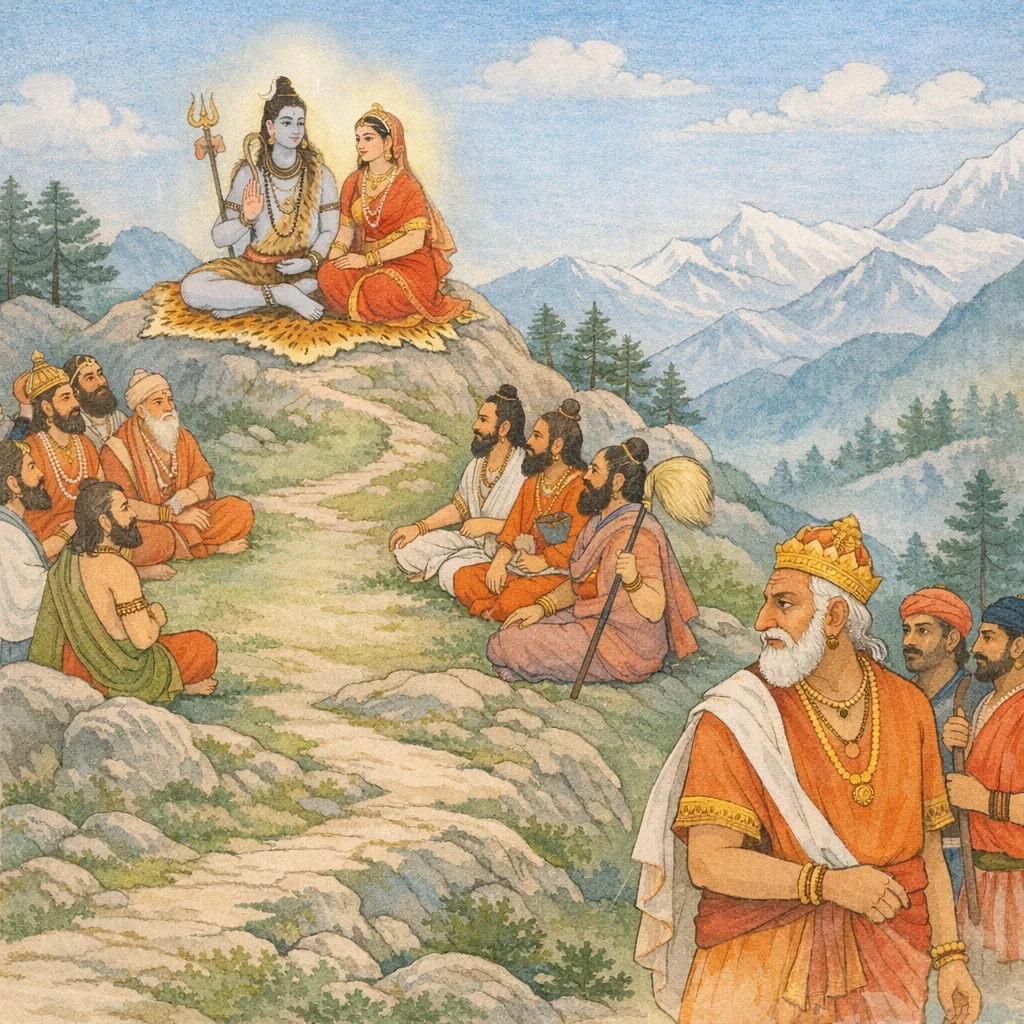
Adhyāya 18 begins with the ṛṣis asking how the Dakṣa–Rudra conflict unfolds: how Satī, born as Dakṣa’s daughter (Dākṣāyaṇī), later becomes Himavat’s daughter through Menā; why the great-souled Dakṣa censured Rudra; and how Dakṣa’s birth is tied to Bhava’s curse in the Cākṣuṣa Manvantara. Vāyu replies by describing Dakṣa’s loss of discernment (a light, shallow mind) and the moral-ritual fault that “pollutes” the community of gods. The scene is set on Himavān’s peak, where devas, asuras, siddhas, and great ṛṣis gather for darśana of Īśāna together with the Devī. Dakṣa also arrives, intending to see his daughter Satī and his son-in-law Hara. The decisive hinge is Dakṣa’s failure to recognize the Devī’s transcendent status beyond mere daughterhood; this ignorance hardens into enmity and, joined with ordinance (vidhi), drives him to withhold proper honor from Bhava even while undergoing dīkṣā and performing consecrated rites. The chapter thus lays the causal ground for the later rupture of sacrifice: Śiva’s theological primacy, the peril of ego in ritual, and the karmic logic by which offense disturbs the cosmos.
Shlokas
Verse 1
ऋषय ऊचुः । देवी दक्षस्य तनया त्यक्त्वा दाक्षायणी तनुम् । कथं हिमवतः पुत्री मेनायामभवत्पुरा
The sages said: “After the Goddess—Dakṣa’s daughter—abandoned her body as Dākṣāyaṇī, how did she formerly become the daughter of Himavat, born of Menā?”
Verse 2
कथं च निन्दितो रुद्रो दक्षेण च महात्मना । निमित्तमपि किं तत्र येन स्यान्निंदितो भवः
How, indeed, was Rudra reviled by the great-souled Dakṣa? And what was the cause there, by which Bhava (Śiva) came to be censured?
Verse 3
उत्पन्नश्च कथं दक्षो अभिशापाद्भवस्य तु । चाक्षुषस्यांतरे पूर्वं मनोः प्रब्रूहि मारुत
O Māruta (Vāyu), tell me: how was Dakṣa born again because of the curse connected with Bhava (Lord Śiva)? Explain it in the age of Cākṣuṣa Manu, before the time of Vaivasvata Manu.
Verse 4
वायुरुवाव । शृण्वंतु कथयिष्यामि दक्षस्य लघुचेतसः । वृत्तं पापात्प्रमादाच्च विश्वामरविदूषणम्
Vāyu said: “Listen. I shall relate the episode concerning Dakṣa, whose mind was petty—an incident born of sin and heedlessness, which brought disgrace upon the gods and disturbed the order of the world.”
Verse 5
पुरा सुरासुराः सर्वे सिद्धाश्च परमर्षयः । कदाचिद्द्रष्टुमीशानं हिमवच्छिखरं ययुः
In former times, all the devas and asuras, together with the perfected siddhas and the supreme seers, once went to the summit of the Himālaya to behold Īśāna—Lord Śiva, the sovereign Master.
Verse 6
तदा देवश्च देवी च दिव्यासनगतावुभौ । दर्शनं ददतुस्तेषां देवादीनां द्विजोत्तमाः
Then the Lord and the Goddess, both seated upon a divine throne, granted their sacred vision to them—to the gods and the others, O best of the twice-born.
Verse 7
तदानीमेव दक्षो ऽपि गतस्तत्र सहामरैः । जामातरं हरं द्रष्टुं द्रष्टुं चात्मसुतां सतीम्
Just then Dakṣa too went there, accompanied by the gods, intending to see his son-in-law Hara (Śiva) and also to see his own daughter Satī.
Verse 8
तदात्मगौरवाद्देवो देव्या दक्षे समागते । देवादिभ्यो विशेषेण न कदाचिदभूत्स्मृतिः
Out of regard for the dignity of His own essential nature, when the Goddess came to Dakṣa’s sacrificial assembly, the Lord never—especially before the gods and others—showed any outward sign of recognition or familiarity.
Verse 9
तस्य तस्याः परं भावमज्ञातुश्चापि केवलम् । पुत्रीत्येवं विमूढस्य तस्यां वैरमजायत
Unable to recognize her supreme inner nature, he knew her only in the limited sense of “(my) daughter.” Thus, in his delusion, hostility toward her arose.
Verse 10
ततस्तेनैव वैरेण विधिना च प्रचोदितः । नाजुवाह भवं दक्षो दीक्षितस्तामपि द्विषन्
Thereafter, urged on by that very enmity and impelled by destiny, Dakṣa—though consecrated for the sacrifice—did not invite Bhava (Lord Śiva), and, hating Her, he did not invite even her (Satī) either.
Verse 11
अन्याञ्१ आमातरस्सर्वानाहूय स यथाक्रमम् । शतशः पुष्कलामर्चाञ्चकार च पृथक्पृथक्
Then, having summoned all the other ministers in due order, he arranged abundant acts of worship—each one separately—hundreds of times.
Verse 12
तथा तान्संगताञ्छ्रुत्वा नारदस्य मुखात्तदा । ययौ रुद्राय रुद्राणी विज्ञाप्य भवनं पितुः
Hearing from Nārada’s own mouth the events exactly as they had occurred, Rudrāṇī then went to Lord Rudra; and, after informing her father’s household, she reported the matter.
Verse 13
अथ संनिहितं दिव्यं विमानं विश्वतोमुखम् । लक्षणाढ्यं सुखारोहमतिमात्रमनोहरम्
Then, close at hand, there appeared a divine vimāna—facing in all directions—endowed with auspicious marks, easy to mount, and exceedingly enchanting to the mind.
Verse 14
तप्तजांबूनदप्रख्यं चित्ररत्नपरिष्कृतम् । मुक्तामयवितानाग्न्यं स्रग्दामसमलंकृतम्
It shone like heated Jāmbūnada-gold, exquisitely adorned with many kinds of gems; it was made splendid by a canopy of pearls and beautifully decorated with garlands and festoons—an auspicious, radiant setting fit for the Lord’s sacred presence.
Verse 15
तप्तकंचननिर्व्यूहं रत्नस्तंभशतावृतम् । वज्रकल्पितसोपानं विद्रुमस्तंभतोरणम्
It was a splendid structure wrought of heated gold, encircled by hundreds of jewel-pillars; its stairways were fashioned like adamant (vajra), and its gateways were adorned with coral-pillars.
Verse 16
पुष्पपट्टपरिस्तीर्णं चित्ररत्नमहासनम् । वज्रजालकिरच्छिद्रमच्छिद्रमणिकुट्टिमम्
That great throne, radiant with variegated jewels, was spread with a floral covering. It was guarded by a net-like lattice of adamantine splendor, and it stood upon a flawless pavement inlaid with unbroken gems.
Verse 17
मणिदंडमनोज्ञेन महावृषभलक्ष्मणा । अलंकृतपुरोभागमब्भ्रशुब्भ्रेण केतुना
Its foremost part was exquisitely adorned: a pleasing gem-set staff, bearing the emblem of the Great Bull (Vṛṣabha), and crowned with a banner white and radiant as a cloud.
Verse 18
रत्नकंचुकगुप्तांगैश्चित्रवेत्रकपाणिभिः । अधिष्ठितमहाद्वारमप्रधृष्यैर्गुणेश्वरैः
The great gateway was held in guard by invincible chiefs of Śiva’s attendants—the Gaṇeśvaras—whose limbs were covered with jewel-studded cuirasses, and who bore wondrous, variegated staffs in their hands.
Verse 19
मृदंगतालगीतादिवेणुवीणाविशारदैः । विदग्धवेषभाषैश्च बहुभिः स्त्रीजनैर्वृतम्
It was surrounded by many women—skilled in the mṛdaṅga drum, in rhythmic time, in singing, and in the arts of flute and vīṇā—refined in attire and adept in cultured speech.
Verse 20
आरुरोह महादेवी सह प्रियसखीजनैः । चामारव्यञ्जनं तस्या वज्रदंडमनोहरे
The Great Goddess mounted the palanquin/vehicle together with her beloved circle of friends. For her, lovely yak-tail fans (chāmaras) were waved, their handles charming like thunderbolts (vajra).
Verse 21
गृहीत्वा रुद्रकन्ये द्वे विवीजतुरुभे शुभे । तदाचामरयोर्मध्ये देव्या वदनमाबभौ
Then the two auspicious daughters of Rudra took up the chāmaras and gently fanned. At that moment, between the two fly-whisks, the Goddess’s radiant face shone forth in splendor.
Verse 22
अन्योन्यं युध्यतोर्मध्ये हंसयोरिव पंकजम् । छत्रं शशिनिभं तस्याश्चूडोपरि सुमालिनी
As the two seemed to contend with one another, in the very midst of their contest—like a lotus between two swans—there appeared above her topknot a splendid parasol, radiant like the moon and garlanded with beauty.
Verse 23
धृतमुक्तापरिक्षिप्तं बभार प्रेमनिर्भरा । तच्छत्रमुज्ज्वलं देव्या रुरुचे वदनोपरि
Overflowing with love, the Goddess bore that radiant parasol, adorned with strung pearls; and the shining umbrella looked splendid above her face.
Verse 24
उपर्यमृतभांडस्य मंडलं शशिनो यथा । अथ चाग्रे समासीना सुस्मितास्या शुभावती
Like the moon’s disk appearing above a vessel of nectar, she then sat in front—auspicious, her face radiant with a gentle smile.
Verse 25
अक्षद्यूतविनोदेन रमयामास वै सतीम् । सुयशाः पादुके देव्याश्शुभे रत्नपरिष्कृते
With the playful delight of dice and sport, the illustrious one amused Satī. The Goddess’s auspicious pair of sandals, beautifully adorned with gems, was renowned for its excellence.
Verse 26
स्तनयोरंतरे कृत्वा तदा देवीमसेवतः । अन्या कांचनचार्वंगी दीप्तं जग्राह दर्पणम्
Then, placing it between the Goddess’s breasts, he attended upon her with reverent service. Meanwhile, another maiden—golden-hued and lovely-limbed—took up a shining mirror.
Verse 27
अपरा तालवृन्तं च परा तांबूलपेटिकाम् । काचित्क्रीडाशुकं चारु करे ऽकुरुत भामिनी
One noble lady held a palm-leaf fan; another carried a betel casket; and yet another charming woman took into her hand a lovely pet parrot meant for play—each attending with graceful service.
Verse 28
काचित्तु सुमनोज्ञानि पुष्पाणि सुरभीणि च । काचिदाभरणाधारं बभार कमलेक्षणा
One lotus-eyed lady carried delightful, fragrant flowers; another bore a tray-stand meant for ornaments.
Verse 29
काचिच्च पुनरालेपं सुप्रसूतं शुभांजनम् । अन्याश्च सदृशास्तास्ता यथास्वमुचितक्रियाः
Some again prepared fragrant anointing pastes and auspicious collyrium for the eyes; and other women likewise, each performing the rites and services appropriate to her own role.
Verse 30
आवृत्त्या तां महादेवीमसेवंत समंततः । अतीव शुशुभे तासामंतरे परमेश्वरी
Encircling that Mahādevī, they attended upon her from all sides; and the Supreme Goddess, standing in their midst, shone with surpassing splendor.
Verse 31
तारापरिषदो मध्ये चंद्रलेखेव शारदी । ततः शंखसमुत्थस्य नादस्य समनंतरम्
In the midst of that assembly of stars, she shone like a clear autumnal crescent moon. Then, immediately thereafter, the resonant sound arising from the conch was heard.
Verse 32
प्रास्थानिको महानादः पटहः समताड्यत । ततो मधुरवाद्यानि सह तालोद्यतैस्स्वनैः
At the time of departure, the great-sounding kettledrum was struck. Then sweet musical instruments resounded, along with the ringing tones of cymbals raised and played in rhythm.
Verse 33
अनाहतानि सन्नेदुः काहलानां शतानि च । सायुधानां गणेशानां महेशसमतेजसाम्
Though none struck them, hundreds of war-trumpets resounded of their own accord, as the armed hosts of Gaṇeśas—radiant with a splendor equal to Mahēśa—assembled in might.
Verse 34
सहस्राणि शतान्यष्टौ तदानीं पुरतो ययुः । तेषां मध्ये वृषारूढो गजारूढो यथा गुरुः
At that time, eight hundred thousand went forth in front. In their midst was the one mounted upon the bull—like a venerable preceptor, as though seated upon an elephant, towering in majesty over all.
Verse 35
जगाम गणपः श्रीमान् सोमनंदीश्वरार्चितः । देवदुंदुभयो नेदुर्दिवि दिव्यसुखा घनाः
Thus the illustrious Gaṇapa (Gaṇeśa) departed, having been duly worshipped by Soma, Nandī, and Īśvara. In heaven the divine kettledrums resounded, and the clouds poured forth celestial, joy-bestowing showers.
Verse 36
ननृतुर्मुनयस्सर्वे मुमुदुः सिद्धयोगिनः । ससृजुः पुष्पवृष्टिं च वितानोपरि वारिदाः
All the sages danced, and the perfected yogins (siddhas) rejoiced. Even the rain-bearing clouds showered a rain of flowers upon the canopy above—an auspicious sign proclaiming the Lord’s grace and the soul’s upliftment in His presence.
Verse 37
तदा देवगणैश्चान्यैः पथि सर्वत्र संगता । क्षणादिव पितुर्गेहं प्रविवेश महेश्वरी
Then Maheśvarī, joined everywhere along the way by other hosts of gods, entered her father’s house as though in a single moment.
Verse 38
तां दृष्ट्वा कुपितो दक्षश्चात्मनः क्षयकारणात् । तस्या यवीयसीभ्यो ऽपि चक्रे पूजाम सत्कृताम्
Seeing her, Dakṣa became enraged, for he regarded her as the cause of his own decline. Yet he arranged a formal, honor-laden worship even for her younger sisters.
Verse 39
तदा शशिमुखी देवी पितरं सदसि स्थितम् । अंबिका युक्तमव्यग्रमुवाचाकृपणं वचः
Then the moon-faced Goddess Ambikā addressed her father seated in the assembly, and spoke words that were fitting, composed, and dignified, free from pettiness.
Verse 40
देव्युवाच । ब्रह्मादयः पिशाचांता यस्याज्ञावशवर्तिनः । स देवस्सांप्रतं तात विधिना नार्चितः किल
The Goddess said: “O dear one, from Brahmā and the other gods down to the piśācas, all are governed by His command. Yet that very Lord, it seems, is not worshipped at present according to the proper rule and rite.”
Verse 41
तदास्तां मम ज्यायस्याः पुत्र्याः पूजां किमीदृशीम् । असत्कृतामवज्ञाय कृतवानसि गर्हितम्
“Let alone what kind of worship you offered to the daughter of my elder sister. By dishonouring her and treating her with contempt, you have committed a blameworthy act.”
Verse 42
एवमुक्तो ऽब्रवीदेनां दक्षः क्रोधादमर्षितः । त्वत्तः श्रेष्ठा विशिष्टाश्च पूज्या बालाः सुता मम
Thus addressed, Dakṣa—stirred by anger and unable to bear it—spoke to her: “My young daughters are superior to you, more distinguished, and worthy of honor.”
Verse 43
तासां तु ये च भर्तारस्ते मे बहुमता मुदा । गुनैश्चाप्यधिकास्सर्वैर्भर्तुस्ते त्र्यंबकादपि
But those husbands of theirs are greatly esteemed by me with joy; indeed, in all virtues they are even superior to their own husband—Tryambaka (Lord Śiva).
Verse 44
स्तब्धात्मा तामसश्शर्वस्त्वमिमं समुपाश्रिता । तेन त्वामवमन्ये ऽहं प्रतिकूलो हि मे भवः
You have taken refuge in this Śarva who is dull-minded and tamasic. Therefore I disregard you, for Bhava is indeed hostile to me.
Verse 45
तथोक्ता पितरं दक्षं क्रुद्धा देवी तमब्रवीत् । शृण्वतामेव सर्वेषां ये यज्ञसदसि स्थिताः
Thus addressed, the Goddess, angered, spoke to her father Dakṣa, while all who stood in the sacrificial assembly listened.
Verse 46
अकस्मान्मम भर्तारमजाताशेषदूषणम् । वाचा दूषयसे दक्ष साक्षाल्लोकमहेश्वरम्
O Dakṣa, without cause you revile with your words my Lord and husband—He in whom no fault has ever arisen—indeed Mahādeva himself, the great Lord of the worlds, present before all.
Verse 47
विद्याचौरो गुरुद्रोही वेदेश्वरविदूषकः । त एते बहुपाप्मानस्सर्वे दंड्या इति श्रुतिः
A thief of sacred knowledge, a betrayer of the Guru, and one who maligns the Lord of the Vedas—such people are heavy with many sins. The Śruti declares that all of them are fit to be punished.
Verse 48
तस्मादत्युत्कटस्यास्य पापस्य सदृशो भृशम् । सहसा दारुणो दंडस्तव दैवाद्भविष्यति
Therefore, for this exceedingly dreadful sin of yours, a punishment equally severe shall, by the ordinance of fate, suddenly befall you.
Verse 49
त्वया न पूजितो यस्माद्देवदेवस्त्रियंबकः । तस्मात्तव कुलं दुष्टं नष्टमित्यवधारय
Because you did not worship Tryambaka—the God of gods—therefore know with certainty: your lineage has become corrupt and is destined for ruin.
Verse 50
इत्युक्त्वा पितरं रुष्टा सती संत्यक्तसाध्वसा । तदीयां च तनुं त्यक्त्वा हिमवंतं ययौ गिरिम्
Thus having spoken, Satī—angered with her father and freed from all fear—cast off that body of his lineage and departed for the mountain Himavān.
Verse 51
स पर्वतपरः श्रीमांल्लब्धपुण्यफलोदयः । तदर्थमेव कृतवान् सुचिरं दुश्चरं तपः
He, intent upon the mountain as his chosen sacred seat, radiant with auspicious fortune and the fresh arising of merit born of former virtue, undertook for that very purpose severe austerities—hard to perform—and continued them for a long time.
Verse 52
तस्मात्तमनुगृह्णाति भूधरेश्वरमीश्वरी । स्वेच्छया पितरं चक्रे स्वात्मनो योगमायया
Therefore the Goddess (Īśvarī) bestowed her grace upon Bhūdhareśvara; and by her own free will—through the Yogamāyā that is her very Self—she made him her father.
Verse 53
यदा गता सती दक्षं विनिंद्य भयविह्वला । तदा तिरोहिता मंत्रा विहतश्च ततो ऽध्वरः
When Satī, trembling with fear, departed after censuring Dakṣa, the mantras became obscured; and from that moment the sacrificial rite (adhvara) was thwarted and brought to ruin.
Verse 54
तदुपश्रुत्य गमनं देव्यास्त्रिपुरुमर्दनः । दक्षाय च ऋषिभ्यश्च चुकोप च शशाप तान्
Hearing of the Goddess’s departure, Tripuramardana (Lord Śiva), angered, became wrathful toward Dakṣa and the sages as well, and pronounced a curse upon them.
Verse 55
यस्मादवमता दक्षमत्कृते ऽनागसा सती । पूजिताश्चेतराः सर्वाः स्वसुता भर्तृभिः सह
Because the blameless Satī was slighted there by Dakṣa’s will, all his other daughters, together with their husbands, were duly honoured (instead).
Verse 56
वैवस्वते ऽंतरे तस्मात्तव जामातरस्त्वमी । उत्पत्स्यंते समं सर्वे ब्रह्मयज्ञेष्वयोनिजाः
Therefore, in the Vaivasvata Manvantara, these sons-in-law of yours will all arise together—birthless (not born from a womb)—in the sacred Brahma-yajñas. Through such divine manifestation, the Lord’s ordinance unfolds for the maintenance of dharma and the ripening of souls toward liberation.
Verse 57
भविता मानुषो राजा चाक्षुषस्य त्वमन्वये । प्राचीनबर्हिषः पौत्रः पुत्रश्चापि प्रचेतसः
“You will be born as a human king in the lineage of Cākṣuṣa. You will be the grandson of Prācīnabarhis and also the son of Pracetas.”
Verse 58
अहं तत्रापि ते विघ्नमाचरिष्यामि दुर्मते । धर्मार्थकामयुक्तेषु कर्मस्वपि पुनः पुनः
Even there, O evil-minded one, I shall again and again create obstacles for you—even in those deeds undertaken in pursuit of dharma, artha, and kāma.
Verse 59
तेनैवं व्याहृतो दक्षो रुद्रेणामिततेजसा । स्वायंभुवीं तनुं त्यक्त्वा पपात भुवि दुःखितः
Thus addressed in this manner by Rudra of immeasurable splendor, Dakṣa—abandoning his Svāyambhuva (self-born, Prajāpati) bodily state—fell upon the earth, overcome with sorrow.
Verse 60
ततः प्राचेतसो दक्षो जज्ञे वै चाक्षुषे ऽन्तरे । प्राचीनबर्हिषः पौत्रः पुत्रश्चैव प्रचेतसाम्
Then, in the Manvantara of Cākṣuṣa, Dakṣa—born of the Pracetas—indeed came into being: the grandson of Prācīnabarhis and also the son of the Pracetas.
Verse 61
भृग्वादयो ऽपि जाता वै मनोर्वैवस्वतस्य तु । अंतरे ब्रह्मणो यज्ञे वारुणीं बिभ्रतस्तनुम्
Indeed, Bhṛgu and the other sages too were born in the age of Vaivasvata Manu—during the interval of Brahmā’s sacrifice—when the divine being bore the form of Vāruṇī.
Verse 62
तदा दक्षस्य धर्मार्थं यज्ञे तस्य दुरात्मनः । महेशः कृतवान्विघ्नं मना ववस्वते सति
Then, intent on upholding true dharma, Mahesha created an obstruction in the sacrifice of that evil-minded Daksha—by His mere will—while Vivasvat (the Sun) looked on.
Frequently Asked Questions
It sets the narrative cause for the Dakṣa–Rudra rupture: Dakṣa’s failure to recognize Devī’s supreme status and his consequent enmity toward Bhava/Hara, forming the groundwork for later sacrificial conflict.
It symbolizes avidyā (limited cognition) that reduces the transcendent Śakti to a social identity, producing theological misrecognition; this misrecognition becomes aparādha, which then destabilizes ritual and cosmic harmony.
Śiva is referenced through multiple epithets—Rudra, Hara, Bhava, and Īśāna—underscoring his multi-aspect sovereignty and the doctrinal point that disrespect to any form is disrespect to the Supreme.
Read Shiva Purana in the Vedapath app
Scan the QR code to open this directly in the app, with audio, word-by-word meanings, and more.