मनु-शतरूपा-प्रसूतिः तथा दक्षकन्याविवाहाः (Manu–Śatarūpā, Prasūti, and the Marriages of Dakṣa’s Daughters)
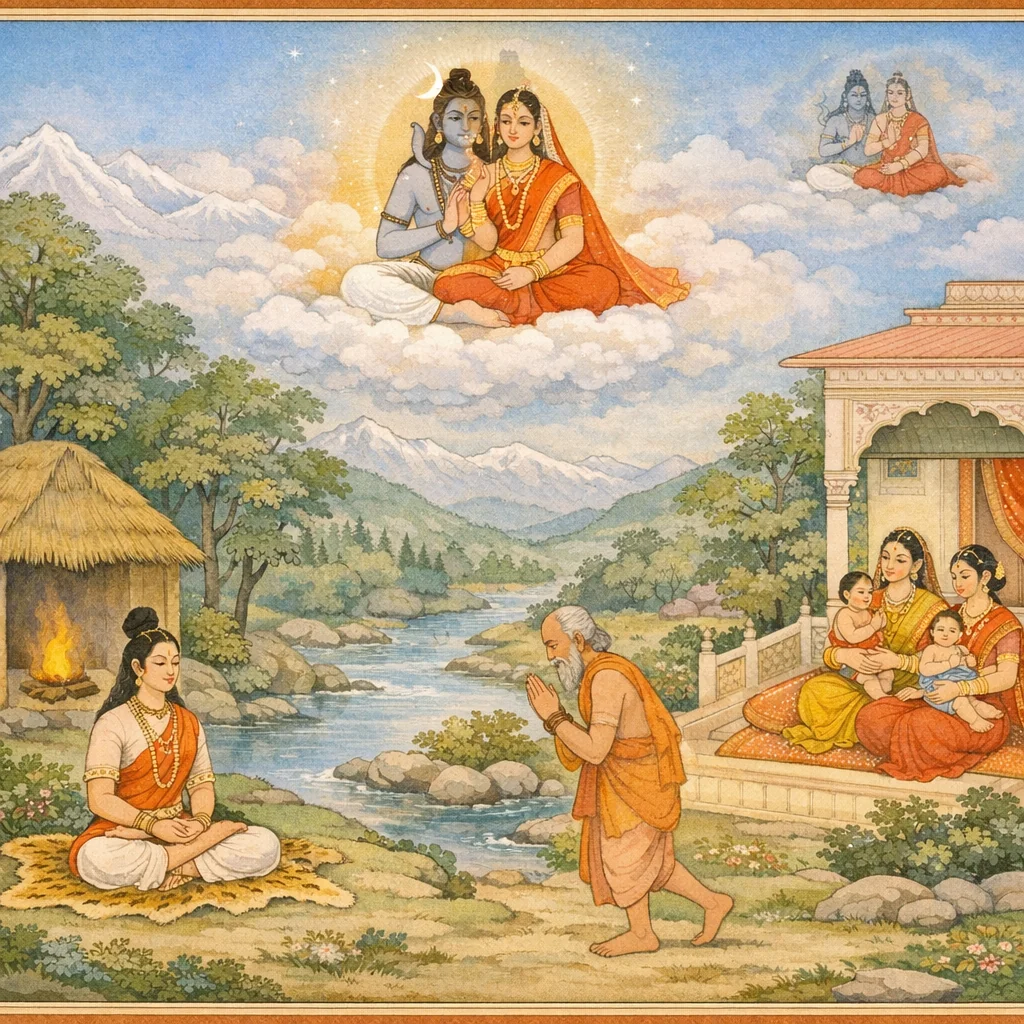
This chapter continues the creation-genealogy. Vāyu tells how Prajāpati receives from Īśvara an enduring supreme divine power (śāśvatī parā śakti) and intends to bring forth a paired, sexual creation (maithunaprabhavā sṛṣṭi). The creator manifests in two halves, male and female, the female half appearing as Śatarūpā. Brahmā produces Virāj; the male principle is Svāyaṃbhuva Manu. Śatarūpā performs severe tapas and accepts Manu as her husband, bearing two sons—Priyavrata and Uttānapāda—and two daughters—Ākūti and Prasūti. Manu gives Prasūti to Dakṣa and Ākūti to Ruci; from Ākūti are born Yajña and Dakṣiṇā, through whom the world-order is upheld. Dakṣa begets twenty-four daughters, including Śraddhā, Lakṣmī, Dhṛti, Puṣṭi, Tuṣṭi, Medhā, Kriyā, Buddhi, Lajjā, Vapuḥ, Śānti, Siddhi, and Kīrti; Dharma takes the Dākṣāyaṇīs as wives, and further daughters such as Khyāti, Smṛti, Prīti, Kṣamā, Anasūyā, Ūrjā, Svāhā, and Svadhā are also listed. Great sages and cosmic functionaries (Bhṛgu, Marīci, Aṅgiras, Pulaha, Kratu, Pulastya, Atri, Vasiṣṭha, Pāvaka, the Pitṛs) marry these daughters, generating many lines of descendants. The chapter contrasts dharmic progeny that yields sukha with adharma-linked progeny that yields duḥkha and hiṃsā, presenting genealogy as moral-cosmic causality.
Shlokas
Verse 1
स्वायंभुवसुतायां तु प्रसूत्यां लोकमातरः
From Prasūti, the daughter of Svāyambhuva Manu, were born the Mothers of the worlds.
Verse 3
विराजमसृजद्ब्रह्मा सो ऽर्धन पुरुषो ऽभवत् । स वै स्वायंभुवः पूर्वं पुरुषो मनुरुच्यते । सा देवी शतरूपा तु तपः कृत्वा सुदुश्चरम् । भर्तारं दीप्तयशसं मनुमेवान्वपद्यत
Brahmā created Virāj, and that being became the primordial Man, the first Puruṣa. He is indeed called Svāyambhuva Manu, the earliest of men. That Goddess Śatarūpā, having performed very difficult austerities, accepted Manu himself—of radiant fame—as her husband.
Verse 5
तस्मात्तु शतरूपा सा पुत्रद्वयमसूयत । प्रियव्रतोत्तानपादौ पुत्रौ पुत्रवतां वरौ । कन्ये द्वे च महाभागे याभ्यां जातास्त्विमाः प्रजाः । आकूतिरेका विज्ञेया प्रसूतिरपरा स्मृता
Thereafter, Śatarūpā bore two sons—Priyavrata and Uttānapāda—both foremost among those blessed with sons. She also bore two noble daughters, through whom these lines of beings were propagated: one is known as Ākūti, and the other is remembered as Prasūti.
Verse 7
स्वायंभुवः प्रसूतिं च ददौ दक्षाय तां प्रभुः । रुचेः प्रजापतिश्चैव चाकूतिं समपादयत् । आकूत्यां मिथुनं जज्ञे मानसस्य रुचेः शुभम् । यज्ञश्च दक्षिणा चैव याभ्यां संवर्तितं जगत्
The Lord Svāyaṃbhuva (Manu) gave Prasūti to Dakṣa in marriage. And the Prajāpati Ruci likewise accepted Ākūti. From Ākūti, by the mind-born Ruci, there were born an auspicious pair—Yajña and Dakṣiṇā—through whom the world’s order and continuance were set in motion.
Verse 9
चतस्रो विंशतिः कन्या दक्षस्त्वजनयत्प्रभुः । श्रद्धा लक्ष्मीर्धृतिः पुष्टिस्तुष्टिर्मेधा क्रिया तथा । बुद्धिर्लज्जा वपुः शांतिस्सिद्धिः कीर्तिस्त्रयोदशी
The lord Dakṣa begot twenty-four daughters—Śraddhā (faith), Lakṣmī (fortune), Dhṛti (steadfastness), Puṣṭi (nourishment), Tuṣṭi (contentment), Medhā (intelligence), and Kriyā (right action); also Buddhi (discernment), Lajjā (modesty), Vapuḥ (comeliness), Śānti (peace), Siddhi (attainment), and Kīrti (good fame)—these being thirteen named here.
Verse 11
पत्न्यर्थं प्रतिजग्राह धर्मो दाक्षायणीः प्रभुः । ताभ्यः शिष्टा यवीयस्य एकादश सुलोचनाः । ख्यातिः सत्यर्थसंभूतिः स्मृतिः प्रीतिः क्षमा तथा । सन्नतिश्चानसूया च ऊर्जा स्वाहा स्वधा तथा
For the sake of taking wives, the Lord Dharma accepted the daughters of Dakṣa. From those (wives) were born to the younger one eleven fair‑eyed daughters: Khyāti, Satyārtha‑Saṃbhūti, Smṛti, Prīti, Kṣamā, Sannati, Anasūyā, Ūrjā, Svāhā, and Svadhā.
Verse 13
भृगुश्शर्वो मरीचिश्च अंगिराः पुलहः क्रतुः । पुलस्त्यो ऽत्रिर्विशिष्ठश्च पावकः पितरस्तथा । ख्यात्याद्या जगृहुः कन्यामुनयो मुनिसत्तमाः । कामाद्यास्तु यशोंता ये ते त्रयोदश सूनवः
Bhṛgu, Śarva, Marīci, Aṅgiras, Pulaha, Kratu, Pulastya, Atri, Vasiṣṭha, and Pāvaka—along with the Pitṛs—these best of sages took maidens such as Khyāti as their wives. From them were born thirteen sons, beginning with Kāma and ending with Yaśas.
Verse 15
धर्मस्य जज्ञिरे तास्तु श्रद्धाद्यास्सुसुखोत्तराः । दुःखोत्तराश्च हिंसायामधर्मस्य च संततौ । निकृत्यादय उत्पन्नाःपुत्राश्च धर्मलक्षणाः । नैषां भार्याश्च पुत्रा वा सर्वे त्वनियमाः स्मृताः
From Dharma were born those beings beginning with Śraddhā (Faith), whose issue was marked by auspicious happiness. But in the lineage of Adharma—through Hiṃsā (Violence)—there arose progeny whose outcome was suffering, such as Nikṛti (Deceit) and others. Their sons too bore the signs of that unrighteous nature. Of these, neither wives nor sons are regarded as regulated or well-ordered; all are remembered as living without rule or restraint.
Verse 17
स एष तामसस्सर्गो जज्ञे धर्मनियामकः । या सा दक्षस्य दुहिता रुद्रस्य दयिता सती । भर्तृनिन्दाप्रसंगेन त्यक्त्वा दाक्षायिणीं तनुम् । दक्षं च दक्षभार्यां च विनिंद्य सह बन्धुभिः
Thus was born this tāmasa creation, the regulator of dharma. She—Satī, Dakṣa’s daughter and Rudra’s beloved—when her husband was reviled, abandoned her body as Dakṣāyaṇī; and, censuring Dakṣa and Dakṣa’s wife along with their kinsmen, she gave it up.
Verse 19
सा मेनायामाविरभूत्पुत्री हिमवतो गिरेः । रुद्रस्तु तां सतीं दृष्ट्वा रुद्रांस्त्वात्मसमप्रभान् । यथासृजदसंख्यातांस्तथा कथितमेव च । भृगोः ख्यात्यां समुत्पन्ना लक्ष्मीर्नारायणप्रिया
She manifested as the daughter of Menā and of Himavat, the king of mountains. When Rudra beheld that Satī, he brought forth countless Rudras, radiant and equal to his own splendor—just as has already been described. Likewise, Lakṣmī, beloved of Nārāyaṇa, was born from Bhṛgu and Khyāti.
Verse 21
देवौ धातृविधातारौ मन्वंतरविधारिणौ । तयोर्वै पुत्रपौत्राद्याश्शतशो ऽथ सहस्रशः । स्वायंभुवे ऽंतरे नीताः सर्वे ते भार्गवा मताः । मरीचेरपि संभूतिः पौर्णमासमसूयत
There are two divine powers—Dhātṛ and Vidhātṛ—who uphold and regulate the Manvantaras. From them indeed arose sons, grandsons, and further descendants, by the hundreds and even by the thousands. In the Svāyambhuva Manvantara, all of them are regarded as belonging to the Bhārgava lineage. From Marīci as well, a progeny was born; Paurṇamāsī gave birth.
Verse 23
कन्याचतुष्टयं चैव महीयांसस्तदन्वयाः । येषां वंशे समुत्पन्नो बहुपुत्रस्य कश्यपः । स्मृतिश्चांगिरसः पत्नी जनयामास वै सुतौ । आग्नीध्रं शरभञ्चैव तथा कन्याचतुष्टयम्
From that lineage arose eminent descendants; and in their line was born Kaśyapa, famed as the father of many sons. Smṛti, the wife of the sage Aṅgirā, indeed gave birth to two sons—Āgnīdhra and Śarabha—and also to four daughters.
Verse 25
तदीयाः पुत्रपौत्राश्च येतीतास्ते सहस्रशः । प्रीत्यां पुलस्त्यभार्यायां दन्तोग्निरभवत्सुतः । पूर्वजन्मनि योगस्त्यस्स्मृतः स्वायंभुवे ऽंतरे । तत्संततीया बहवः पौलस्त्या इति विश्रुताः । क्षमा तु सुषुवे पुत्रान्पुलहस्य प्रजापतेः
Their sons and grandsons who have passed on were in their thousands. From Prīti, the wife of Pulastya, a son named Dantogni was born. In a former birth he is remembered as Yogastya during the Svāyambhuva Manvantara. Many descended from him became well known as the Paulastyas. And Kṣamā gave birth to sons of Pulaha, the Prajāpati.
Verse 27
कर्दमश्च सुरिश्चैव सहिष्णुश्चेति ते त्रयः । त्रेताग्निवर्चसस्सर्वे येषां वंशः प्रतिष्ठितः । क्रतोः क्रतुसमान्भार्या सन्नतिस्सुषुवे सुतान् । नैषां भार्याश्च पुत्राश्च सर्वे ते ह्यूर्ध्वरेतसः
Kardama, Suri, and Sahiṣṇu—these three were all radiant like the sacred fires of the Tretā age, and through them their lineage became firmly established. From Kratu, his wife Sannati—worthy of Kratu himself—gave birth to sons. Yet for these sons, neither wives nor offspring arose, for all of them were ūrdhva-retas, conserving their generative power through celibate spiritual discipline.
Verse 29
षष्टिस्तानि सहस्राणि वालखिल्या इति स्मृताः । अनूरोरग्रतो यांति परिवार्य दिवाकरम् । अत्रेर्भार्यानुसूया च पञ्चात्रेयानसूयत । कन्यकां च श्रुतिं नाम माता शंखपदस्य च
They are remembered as the Vālakhilyas—sixty thousand in number—who, surrounding the Sun, move before him, in front of his thigh. And Anasūyā, the wife of Atri, gave birth to five sons known as the Ātreyas; she also bore a maiden named Śruti, who became the mother of Śaṅkhapada.
Verse 31
सत्यनेत्रश्च हव्यश्च आपोमूर्तिश्शनैश्चरः । सोमश्च पञ्चमस्त्वेते पञ्चात्रेयाः प्रकीर्तिताः । तेषां पुत्राश्च पौत्राश्च ह्यात्रेयाणां महात्मनाम् । स्वायंभुवे ऽंतरे ऽतीताः शतशो ऽथ सहस्रशः
Satyanetra and Havya, Āpomūrti and Śanaiścara, and Soma as the fifth—these are proclaimed as the five Ātreyas. The sons and grandsons of those great-souled Ātreyas passed away in the Svāyambhuva Manvantara—by hundreds and indeed by thousands.
Verse 33
ऊर्जायां तु वसिष्ठस्य पुत्रा वै सप्त जज्ञिरे । ज्यायसी च स्वसा तेषां पुंडरीका सुमध्यमा । रजो गात्रोर्ध्वबाहू च सवनश्चानयश्च यः । सुतपाश्शुक्र इत्येते सप्त सप्तर्षयः स्मृताः
From Ūrjā, indeed, seven sons were born to Vasiṣṭha. Their elder sister was Jyāyasī, and Puṇḍarīkā, slender-waisted, was also born. Rajo, Gātra, Ūrdhvabāhu, Savana, Anaya, Sutapā, and Śukra—these are remembered as the seven Saptarṣis.
Verse 35
गोत्राणि नामभिस्तेषां वासिष्ठानां महात्मनाम् । स्वायंभुवे ऽंतरे ऽतीतान्यर्बुदानि शतानि च । इत्येष ऋषिसर्गस्तु सानुबंधः प्रकीर्तितः । समासाद्विस्तराद्वक्तुमशक्यो ऽयमिति द्विजाः
Thus the gotras and names of those great-souled descendants of Vasiṣṭha have been proclaimed, together with their connections and succession. In the Svāyambhuva Manvantara, countless koṭis—indeed even hundreds of koṭis—have already passed. Therefore, O twice-born ones, this creation and propagation of sages can only be stated in brief; its full detail is impossible to narrate.
Verse 37
यो ऽसौ रुद्रात्मको बह्निब्रह्मणो मानसस्सुतः । स्वाहा तस्य प्रिया लेभे पुत्रांस्त्रीनमितौजसः । पावकः पवमानश्च शुचिरित्येष ते त्रयः । निर्मंथ्यः पवमानस्स्याद्वैद्युतः पावकस्स्मृतः
That Fire who is of Rudra’s very nature—the mind-born son of Brahmā—took Svāhā as his beloved. From him were born three sons of immeasurable power: Pāvaka, Pavamāna, and Śuci—these are the three. Of these, the fire produced by churning is called Pavamāna, and the lightning-born fire is remembered as Pāvaka.
Verse 39
सूर्ये तपति यश्चासौ शुचिः सौर उदाहृतः । हव्यवाहः कव्यवाहः सहरक्षा इति त्रयः । त्रयाणां क्रमशः पुत्रा देवपितृसुराश्च ते । एतेषां पुत्रपौत्राश्च चत्वारिंशन्नवैव ते
That radiant one who blazes within the Sun is called Śuci, also known as Saura. From him arose three—Havyavāha, Kavyavāha, and Saharakṣā. In due order, the sons of these three became the Devas, the Pitṛs (ancestral manes), and the Suras. The sons and grandsons of these lineages are said to be forty-nine in number.
Verse 41
काम्यनैमित्तिकाजस्रकर्मसु त्रिषु संस्थिताः । सर्वे तपस्विनो ज्ञेयाः सर्वे व्रतभृतस्तथा । सर्वे रुद्रात्मकश्चैव सर्वे रुद्रपरायणाः । तस्मादग्निमुखे यत्तद्धुतं स्यादेव केनचित्
Established in the three kinds of rites—those done for a desired result, those prompted by an occasion, and those performed regularly—they are all to be known as ascetics and as observers of vows. All are indeed of the nature of Rudra, and all are devoted solely to Rudra. Therefore, whatever is offered into the fire, into Agni’s mouth, by anyone truly becomes an offering to Him—Rudra.
Verse 43
तत्सर्वं रुद्रमुद्दिश्य दत्तं स्यान्नात्र संशयः । इत्येवं निश्चयोग्नीनामनुक्रांतो यथातथम् । नातिविस्तरतो विप्राः पितॄन्वक्ष्याम्यतः परम् । यस्मात्षडृतवस्तेषां स्थानं स्थानाभिमानिनाम्
All of that is to be offered with Rudra in view; of this there is no doubt. Thus, the settled order concerning the sacred fires has been stated as it truly is. Now, O brāhmaṇas, without expanding at length, I shall speak далее of the Pitṛs (ancestral beings), for the six seasons are their appointed abodes—each presided over by those who identify themselves with their respective stations.
Verse 45
ऋतवः पितरस्तस्मादित्येषा वैदिकी श्रुतिः । युष्मादृतुषु सर्वे हि जायंते स्थास्नुजंगमा । तस्मादेते पितर आर्तवा इति च श्रुतम् । एवं पितॄणामेतेषामृतुकालाभिमानिनाम्
Therefore the Vedic revelation declares: “The seasons are the Pitṛs.” For from you, as the seasons, all beings—both the immovable and the moving—are indeed born. Hence it is also heard that these Pitṛs are called “Ārtava,” belonging to the seasons. Thus are these Pitṛs understood as presiding over the times and cycles of the seasons.
Verse 47
आत्मैश्वर्या महात्मानस्तिष्ठंतीहाब्भ्रसंगमात् । आग्निष्वात्ता बर्हिषदः पितरो द्विविधाः स्मृताः । अयज्वानश्च यज्वानः क्रमात्ते मृहमेधिनः । स्वधासूत पितृभ्यश्च द्वे कन्ये लोकविश्रुते
Here dwell the great-souled Pitṛs, possessed of their own lordly powers, at the meeting-place of the clouds. The Pitṛs are remembered as of two kinds—Āgniṣvāttas and Barhiṣads. In due order they are also spoken of as the non-sacrificers and the sacrificers among householders. And from the Pitṛs was born Svadhā, along with two daughters famed in the worlds.
Verse 49
मेनां च धरणीं चैव याभ्यां विश्वमिदं धृतम् । अग्निष्वात्तसुता मेना धरणी बर्हिषत्सुता । मेना हिमवतः पत्नी मैनाकं क्रौंचमेव च । गौरीं गंगां च सुषुवे भवांगाश्लेषपावनीम्
Menā and Dharaṇī indeed—by whom this whole universe is upheld. Menā was the daughter of the Āgniṣvāttas, and Dharaṇī the daughter of the Barhiṣads. Menā became the wife of Himavat and gave birth to Maināka and also Krauñca; and she bore Gaurī and Gaṅgā—Gaṅgā, the purifier through her contact with the body of Bhava (Lord Śiva).
Verse 51
मेरोस्तु धरणी पत्नी दिव्यौषधिसमन्वितम् । मंदरं सुषुवे पुत्रं चित्रिसुन्दरकन्धरम् । स एव मंदरः श्रीमान्मेरुपुत्रस्तपोबलात् । साक्षाच्छ्रीकंठनाथस्य शिवस्यावसथं गतः
Dharaṇī, the wife of Meru, bore a son named Mandara, endowed with divine healing herbs and graced with wondrous beauty of form. That illustrious Mandara—Meru’s son—by the power of his austerities went straight to the very abode of Śiva, the blue-throated Lord (Śrīkaṇṭha).
Verse 53
सासूता धरणी भूयस्त्रिंशत्कन्याश्च विश्रुताः । वेलां च नियतिं चैव तृतीयामपि चायतिम् । आयतिर्नियतिश्चैव पत्न्यौ द्वे भृगुपुत्रयोः । स्वायंभुवे ऽंतरे पूर्वं कथितस्ते तदन्वयः
Dharaṇī, the Earth-goddess, also became a mother and was famed for her thirty daughters. Among them were Velā and Niyati, and as the third, Āyati. Āyati and Niyati became the two wives of the sons of Bhṛgu. Their lineage had already been told to you earlier, in the Svāyambhuva Manvantara.
Verse 55
सुषुवे सागराद्वेला कन्यामेकामनिंदिताम् । सवर्णां नाम सामुद्रीं पत्नीं प्राचीनबर्हिषः । सामुद्री सुषुवे पुत्रान्दश प्राचीनबर्हिषः । सर्वे प्राचेतसा नाम धनुर्वेदस्य पारगाः
From the Ocean, Velā gave birth to a single blameless maiden. She was named Savarṇā, also called Sāmudrī, and she became the wife of Prācīnabarhiṣ. Thereafter Sāmudrī bore to him ten sons; all were known as the Prācetas, each a master of Dhanurveda, the sacred science of archery.
Verse 57
येषां स्वायंभुवे दक्षः पुत्रत्वमगमत्पुरा । त्रियम्बकस्य शापेन चाक्षुषस्यांतरे मनोः । इत्येते ब्रह्मपुत्राणां धर्मादीनाम्महात्मनाम् । नातिसंक्षेपतो विप्रा नाति विस्तरतः क्रमात्
Those great-souled ones—Dharma and the rest—are known as the sons of Brahmā. Among them, Dakṣa formerly attained sonship in the Svāyambhuva Manvantara; and, by the curse of Tryambaka (Śiva), he attained it again in the interval of the Cākṣuṣa Manu. Thus, O brāhmaṇas, I have recounted in due order the tale of these sons of Brahmā—neither too brief nor overly long.
Verse 59
वर्णिता वै मया वंशा दिव्या देवगणान्विताः । क्रियावंतः प्रजावंतो महर्धिभिरलंकृताः । प्रजानां संनिवेशो ऽयं प्रजापतिसमुद्भवः । न हि शक्यः प्रसंख्यातुं वर्षकोटिशतैरपि
I have indeed described the divine lineages, attended by hosts of gods—active in sacred rites, abundant in progeny, and adorned with great powers. This vast ordering of beings has arisen from the Prajāpatis, and it cannot truly be counted even across hundreds of crores of years.
Verse 61
राज्ञामपि च यो वंशो द्विधा सो ऽपि प्रवर्तते । सूर्यवंशस्सोमवंश इति पुण्यतमः क्षितौ । इक्ष्वाकुरम्बरीषश्च ययातिर्नाहुषादयः । पुण्यश्लोकाः श्रुता ये ऽत्र ते पि तद्वंशसंभवाः
Even the royal lineage proceeds in a twofold stream. On earth it is revered as most meritorious as the Solar Dynasty and the Lunar Dynasty. Ikṣvāku, Ambarīṣa, Yayāti, Nahuṣa and others—those of sacred renown heard of here—were likewise born from those very dynasties.
Verse 63
अन्ये च राजऋषयो नानावीर्यसमन्विता । किं तैः फलमनुत्क्रांतैरुक्तपूर्वैः पुरातनैः । किं चेश्वरकथा वृत्ता यत्र तत्रान्यकीर्तनम् । न सद्भिः संमतं मत्वा नोत्सहे बहुभाषितुम्
“There were also other royal seers endowed with many kinds of prowess. But what fruit is there in repeating ancient matters already told, which do not lead one beyond bondage? And what is gained by telling the Lord’s (Īśvara’s) story only to digress into praising others here and there? Knowing that such talk is not approved by the wise, I do not wish to speak at length.”
Verse 65
प्रसंगादीश्वरस्यैव प्रभावद्योतनादपि । सर्गादयो ऽपि कथिता इत्यत्र तत्प्रविस्तरैः
Here, even the accounts of creation and the rest have been spoken only incidentally—merely to illuminate the Lord’s own majesty; therefore, they are to be understood in that context, along with their appropriate elaborations.
Frequently Asked Questions
The paired manifestation leading to Manu and Śatarūpā, their children (Priyavrata, Uttānapāda, Ākūti, Prasūti), and the subsequent marital-genealogical distribution through Dakṣa and Ruci that stabilizes cosmic order (including Yajña and Dakṣiṇā).
Genealogy encodes metaphysics: śakti enables differentiation into complementary principles, and the resulting marriages assign cosmic functions (virtues, ritual powers, sages) to maintain ṛta/dharma—turning lineage into a symbolic ontology.
Śatarūpā as the feminine manifestation from the creator’s half; Manu as the primordial human/progenitor; and Dakṣa’s daughters as personified qualities and ritual agencies (e.g., Śraddhā, Lakṣmī, Svāhā, Svadhā) distributed among dharmic and ṛṣi lineages.
Read Shiva Purana in the Vedapath app
Scan the QR code to open this directly in the app, with audio, word-by-word meanings, and more.