Adhyaya 64
The Glory of Cāturmāsya (Four-Month Observance)
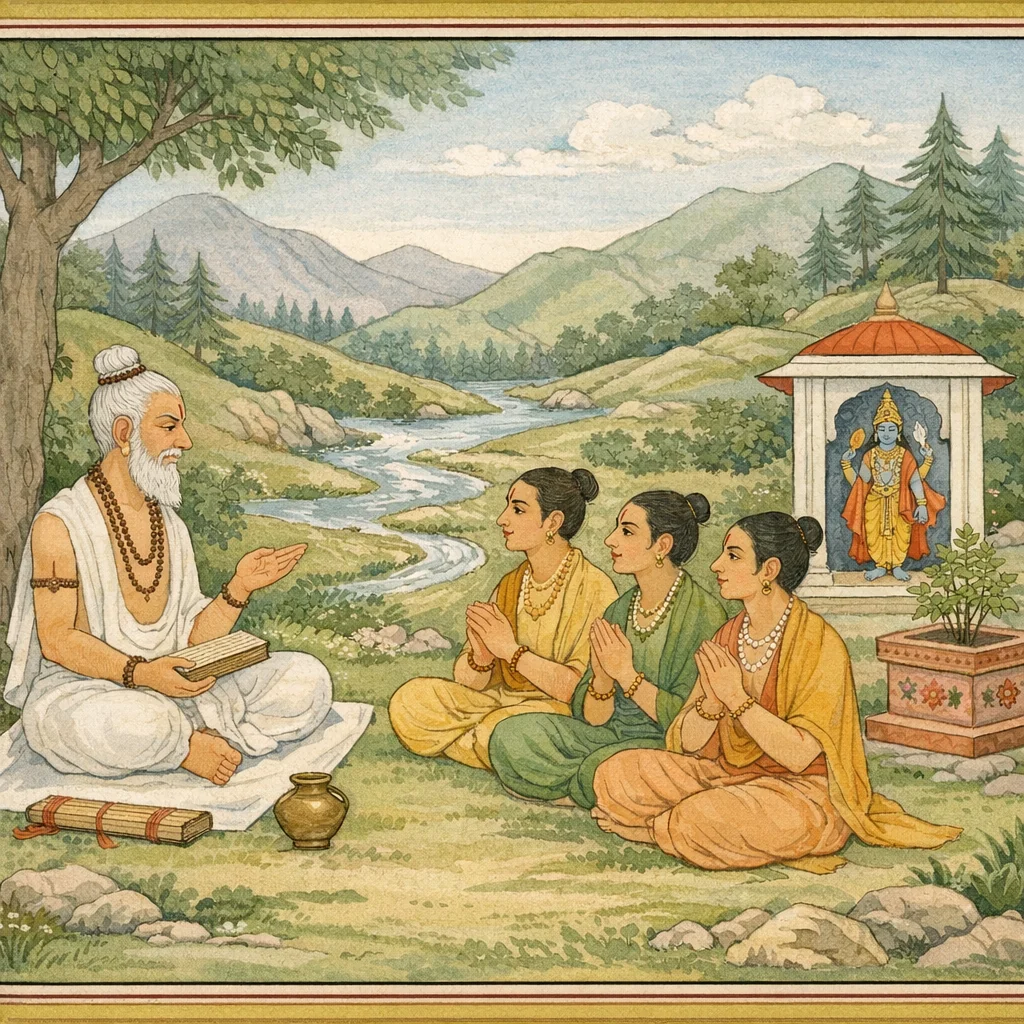
Nārada asks Mahādeva (Śiva) to explain the famed Cāturmāsya observances, practiced when Hari (Viṣṇu) is said to abide in yogic sleep. The chapter defines the sacred season as beginning on Āṣāḍha śukla Ekādaśī: Viṣṇu is “laid to rest” when the Sun is in Mithuna (Gemini) and “awakened” when it is in Tulā (Libra), and certain auspicious rites are to be deferred during this interval. It prescribes devotional disciplines—sleeping on the ground, dietary renunciations (including the six tastes), silence, and purity rules—together with intensified Viṣṇu-worship through installation, offerings, tulasī, nāma-japa, and hearing the Purāṇas. A lengthy phala catalogue proclaims that Cāturmāsya merit rivals great sacrifices (such as a thousand Aśvamedhas) and links particular abstentions to particular rewards: beauty, progeny, heavenly realms, and ultimately Vaikuṇṭha. The chapter also gives social and ethical admonitions—ahiṃsā, charity, compassion, and self-restraint—and warns against slander, impurity, and transgressive associations in Kali-yuga. It concludes that even hearing of this observance bestows sanctifying, purifying merit.
Shlokas
No shlokas available for this adhyaya yet.