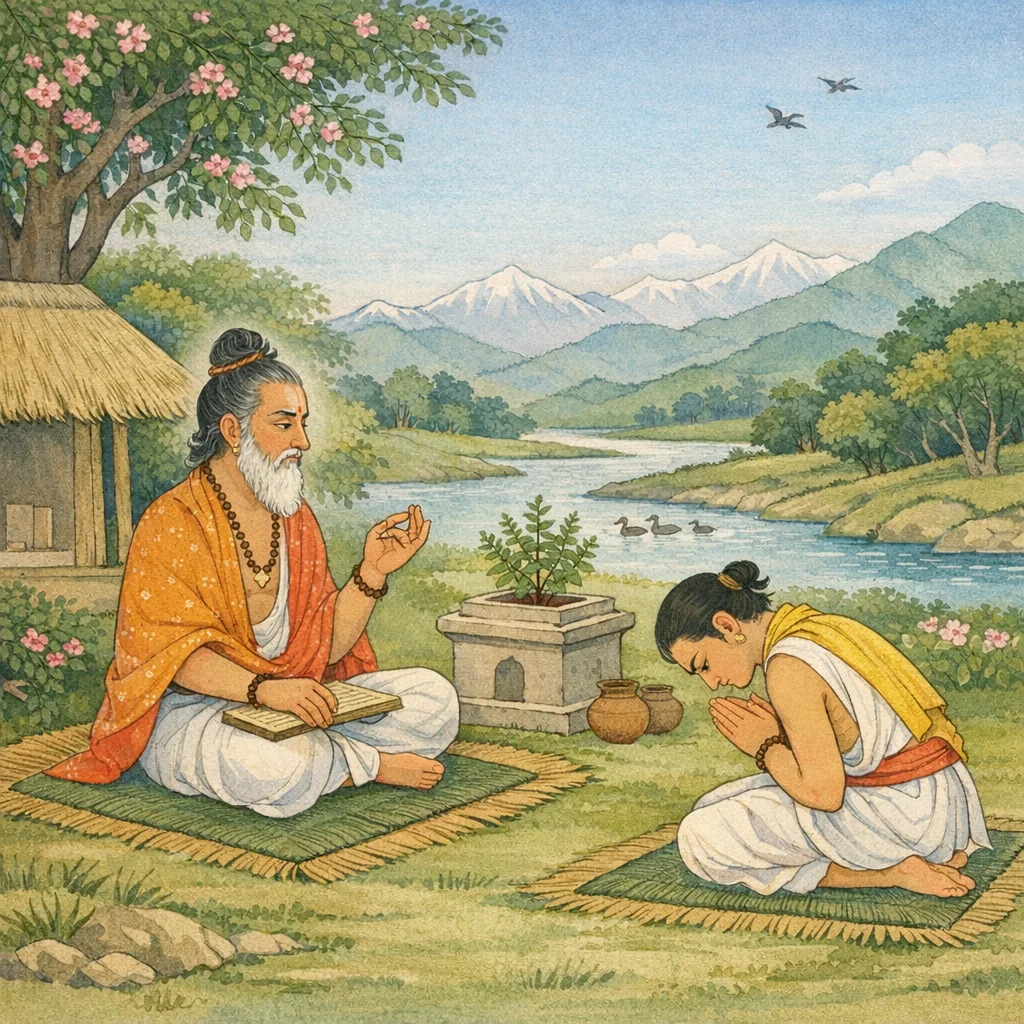
Adhyaya 227
Description of the Threefold Divine Opulence (Tripād-vibhūti) and Viṣṇu’s Supreme Abode
Prompted by Umā/Pārvatī’s request to explain mantra-meaning and the nature of Īśvara, Maheśvara teaches that Hari/Nārāyaṇa is the Supreme Self—all-pervading, yet willingly assuming an auspicious form to delight with Śrī. Thus the Lord is affirmed as the inner Self of all, graciously approachable to devotees. Lakṣmī is then praised as Viṣṇu’s inseparable śakti: pervading as He does, known by many names such as Śrī, Bhū, Nīlā, and others. Recitable names and invocations are given, promising prosperity and auspiciousness. A doctrinal bridge follows with the teaching of tripād-vibhūti: the world is only a one-quarter manifestation, while the eternal three-quarters lie beyond Prakṛti/Pradhāna and the Virajā river. Time, guṇa-māyā, creation, and pralaya are outlined, culminating in a radiant portrayal of Vaikuṇṭha—the supreme abode beyond sun and fire—attainable through knowledge and devotion, identified as mokṣa, the liberation of non-return.
Shlokas
No shlokas available for this adhyaya yet.