Adhyaya 196
Greatness of the Seven-Day Sacred Narration (Saptāha): The Beginning of the Ātmadeva–Dhuṃdhulī–Gokarṇa Narrative
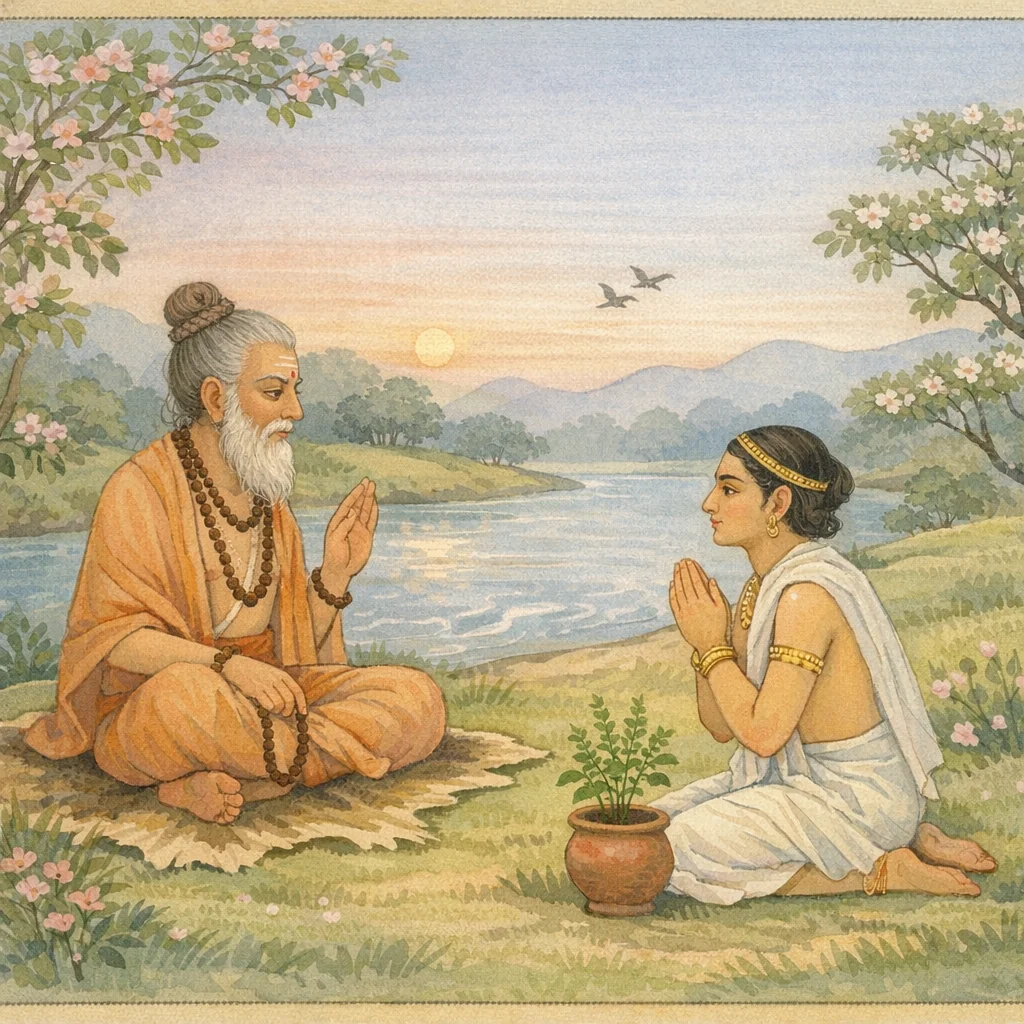
The chapter opens with Hari descending in response to Vaiṣṇava devotion, filling the scene with celebration and dispelling the inauspiciousness of Kali-yuga. Seeing the world’s forgetfulness, Nārada asks the Four Kumāras about purification in the Kali age and about the seven-day sacrificial rite of sacred narration (saptāha-yajña). The Kumāras praise the saptāha as universally purifying—even for grievous sinners—and begin an ancient legend on the banks of the Tuṅgabhadrā. There lives the childless brāhmaṇa Ātmadeva with his quarrelsome wife Dhuṃdhulī. A Siddha foretells that he will remain without a son for seven lifetimes, yet gives him a fruit to be taken with vows. Through Dhuṃdhulī’s deception to avoid pregnancy, the wicked Dhundhukārī is born, and also the divine calf/son Gokarṇa. As Dhundhukārī brings ruin upon the household, Gokarṇa teaches renunciation and devotion; Ātmadeva departs for the forest and attains Hari’s abode.
Shlokas
No shlokas available for this adhyaya yet.