Adhyaya 128
The Greatness of Māgha Bathing; The Piśāca-Deliverance Episode; the Yogasāra Hymn to Viṣṇu
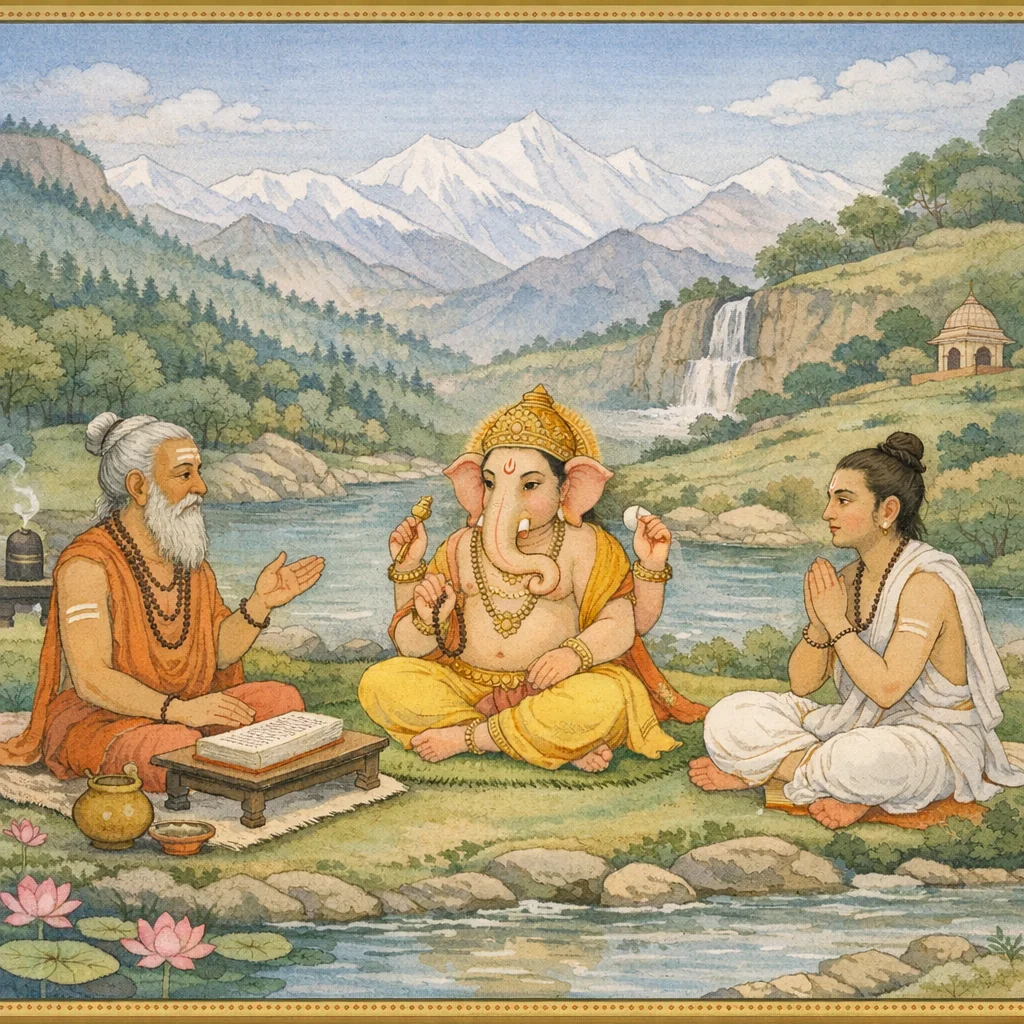
Chapter 128 rises to a doctrinal climax on Māgha-snāna (bathing in the month of Māgha), declaring it superior to sacrifices, vows, and austerities, and an immediate destroyer even of ripened sin—especially when joined with worship of Hari (Viṣṇu) and dāna (charitable giving). Māgha bathing, performed with devotion and generosity, is thus praised as swift purification and great merit. The narrative then presents the “Deliverance from Piśācas”: five celestial maidens, inflamed by desire, harass a vow-bound brahmacārin at Acchoda-tīrtha; mutual curses follow, and all become piśāca-like. Lomaśa prescribes Māgha bathing as the sole expiation. The chapter expands into a catalog of rivers and holy sites where Māgha-snāna bears fruit, culminating in the supremacy of Prayāga. A second exemplum introduces the Vaiṣṇava ascetic Devadyuti, whose austerity and the Yogasāra hymn draw Viṣṇu’s direct vision. The hymn’s phalaśruti promises protection, purification, and liberation, and the chapter closes by returning to the theme of piśāca-release as the next subject.
Shlokas
No shlokas available for this adhyaya yet.