Adhyaya 59
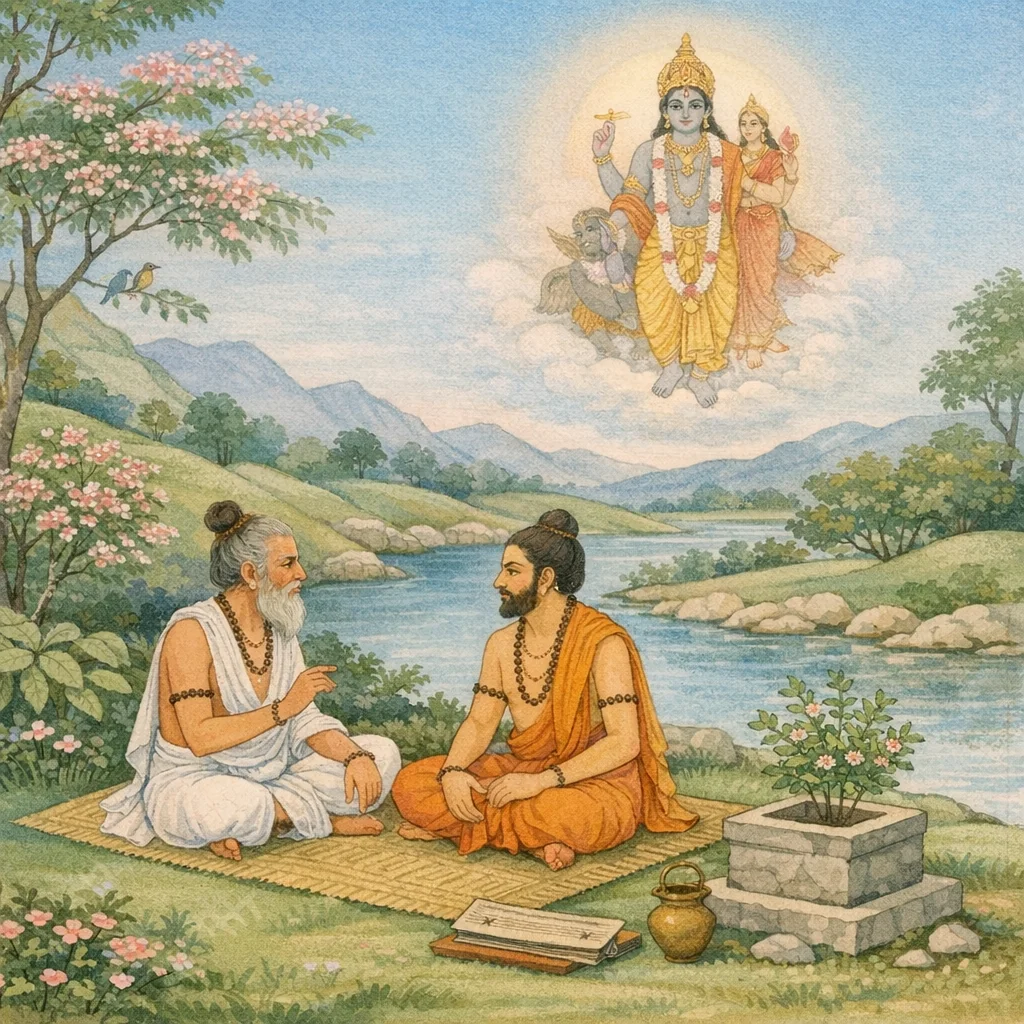
Exposition of the Duties of Ascetics (Saṃnyāsa-Dharma)
This chapter establishes saṃnyāsa as the fourth āśrama after vānaprastha, insisting that true renunciation must arise from genuine dispassion (vairāgya). It notes preparatory rites such as Prajāpatya and Agneya before one enters the renunciant path. Renunciants are then classified into three: the jñāna-saṃnyāsin grounded in knowledge, the veda-saṃnyāsin who “renounces” through exclusive Vedic study, and the karma-saṃnyāsin who renounces ritual action. Above all stands the knower of truth, beyond external marks and obligatory duties. The chapter prescribes mendicant discipline—fearlessness, non-possessiveness, equanimity, celibacy, ahiṃsā, truthfulness, careful walking, filtered water, not residing in one place for a year, and regulated alms—together with daily svādhyāya, twilight Gāyatrī, meditation on the praṇava, and a Vedānta orientation, culminating in fitness for Brahman-realization.
Shlokas
Verse 1
व्यास उवाच । एवं वनाश्रमे स्थित्वा तृतीयं भागमायुषः । चतुर्थं चायुषो भागं संन्यासेन नयेत्क्रमात्
Vyāsa said: “Thus, having lived in the forest-dweller’s stage for the third portion of one’s life, one should then, in due order, pass the fourth portion of life in renunciation (saṃnyāsa).”
Verse 2
अग्नीनात्मनि संस्थाप्य द्विजः प्रव्रजितो भवेत् । योगाभ्यासरतः शांतो ब्रह्मविद्यापरायणः
Having established the sacred fires within himself, the twice-born should become a renunciant—devoted to the practice of yoga, tranquil in mind, and wholly dedicated to the knowledge of Brahman.
Verse 3
यदा मनसि संपन्नं वैराग्यं सर्ववस्तुषु । तदा संन्यासमिच्छेच्च पतितः स्याद्विपर्यये
When dispassion toward all objects has truly arisen in the mind, then one may rightly wish for renunciation; but if it is otherwise, one becomes fallen.
Verse 4
प्राजापत्यां निरूप्येष्टिमाग्नेयीमथवा पुनः । दांतः शुक्लकषायोसौ ब्रह्माश्रममुपाश्रयेत्
Having duly arranged the Prajāpatya sacrifice—or again, the Agneya rite—he, self-controlled and wearing white garments tinged with ochre, should take refuge in the Brahma-āśrama (the brahmacarya stage of life).
Verse 5
ज्ञानसंन्यासिनः केचिद्वेदसंन्यासिनोऽपरे । कर्मसंन्यासिनस्त्वन्ये त्रिविधाः परिकीर्तिताः
Some are renunciants devoted to spiritual knowledge; others are renunciants who set aside worldly engagement with the Vedas; and still others are renunciants who abandon ritual action. Thus, three kinds are described.
Verse 6
यः सर्वत्र विनिर्मुक्तो निर्द्वंद्वश्चैव निर्भयः । प्रोच्यते ज्ञानसंन्यासी आत्मन्येव व्यवस्थितः
One who is free from attachment everywhere, beyond the pairs of opposites and indeed fearless—such a person is called a renunciant through wisdom, established in the Self alone.
Verse 7
वेदमेवाभ्यसेन्नित्यं निराशीर्निष्परिग्रहः । प्रोच्यते वेदसंन्यासी मुमुक्षुर्विजितेंद्रियः
Let him study the Veda alone each day, free from craving and without possessions. Such a one is called a “Veda-renunciant”—a seeker of liberation who has conquered the senses.
Verse 8
यस्त्वग्निमात्मसाकृत्वा ब्रह्मार्पणपरो द्विजः । ज्ञेयः स कर्मसंन्यासी महायज्ञपरायणः
That twice-born who makes the sacred fire his very self and is devoted to offering everything to Brahman—know him as a renouncer of actions, wholly dedicated to the great sacrifice.
Verse 9
त्रयाणामपि चैतेषां ज्ञानी त्वभ्यधिको मतः । न तस्य विद्यते कार्यं न लिंगं वा विपश्चितः
Among these three as well, the knower of truth—the jñānī—is regarded as superior. For that wise one there is no obligatory duty, nor any external mark by which he must be identified.
Verse 10
निर्ममो निर्भयः शांतो निर्द्वंद्वः पर्णभोजनः । जीर्णकौपीनवासाः स्यान्नग्नो वा ध्यानतत्परः
Let him be free from possessiveness, fearless, peaceful, and beyond the pairs of opposites; living on leaves for food, wearing only a worn loincloth—or even naked—intent on meditation.
Verse 11
ब्रह्मचारी जिताहारो ग्रामादन्नं समाहरेत् । अध्यात्मरतिरासीत निरपेक्षो निराशिषः
Let him be a brahmacārī, restrained in diet, and gather his food from the village. Let him remain devoted to inner spiritual contemplation, free from dependence and without expectations.
Verse 12
आत्मनैव सहायेन सुखार्थं विचरेदिह । नाभिनंदेत मरणं नाभिनंदेत जीवनम्
Here one should live seeking well-being, with the Self alone as one’s helper; one should neither welcome death nor welcome life.
Verse 13
कालमेव प्रतीक्षेत निर्देशं भृतको यथा । नाध्येतव्यं न वर्तव्यं श्रोतव्यं न कदाचन
One should wait only for the proper time, like a hired servant awaiting instructions; one should never study, act, or even listen to it at all when it is not to be engaged in.
Verse 14
एवं ज्ञानपरो योगी ब्रह्मभूयाय कल्पते । एकवासाथ वा विद्वान्कौपीनाच्छादनोपि वा
Thus, the yogin devoted to true knowledge becomes fit for Brahman-realization—whether the wise man wears but a single garment, or even if he is clad only in a loincloth.
Verse 15
मुंडी शिखी वाथ भवेत्त्रिदंडी निष्परिग्रहः । काषायवासाः सततं ध्यानयोगपरायणः
Let him be shaven-headed, or with a topknot, or else a bearer of the triple staff; let him be free from possessions, clad in ochre robes, and always devoted to the yoga of meditation.
Verse 16
ग्रामांते वृक्षमूले वा वसेद्देवालयेपि वा । समः शत्रौ तथा मित्रे तथा मानापमानयोः
Let him dwell at the edge of a village, or at the foot of a tree, or even in a temple—remaining even-minded toward an enemy and a friend alike, and likewise toward honor and dishonor.
Verse 17
भैक्ष्येण वर्तयेन्नित्यं नैकान्नादी भवेत्क्वच्चित् । यस्तु मोहेन वान्यस्मादेकान्नादी भवेद्यतिः
A renunciant should always sustain himself by alms and should never become one who eats from only a single household. But the ascetic who, out of delusion—or for any other reason—becomes a ‘single-household eater’ (ekānnādī) is at fault.
Verse 18
न तस्य निष्कृतिः काचिद्धर्मशास्त्रेषु दृश्यते । रागद्वेषवियुक्तात्मा समलोष्टाश्मकांचनः
For him, no expiation is seen in the Dharmaśāstras. His inner self is free from attachment and aversion; to him, a clod of earth, a stone, and gold are all the same.
Verse 19
प्राणिहिंसानिवृत्तश्च मौनी स्यात्सर्वनिस्पृहः । दृष्टिपूतं न्यसेत्पादं वस्त्रपूतं जलं पिबेत्
He should abstain from harming living beings, remain restrained in speech, and be free from all craving. He should place his foot only after looking (so that the ground is ‘purified’ by sight), and he should drink water filtered through cloth.
Verse 20
सत्यपूतां वदेद्वाणीं मनःपूतं समाचरेत् । नैकत्र निवसेद्देशे वर्षाभ्योन्यत्र भिक्षुकः
Let one speak words purified by truth, and act with a mind purified of impurity. A mendicant should not dwell in one place for a full year; after the rains, he should live elsewhere.
Verse 21
स्नात्वा शौचयुतो नित्यं कमंडलुकरः शुचिः । ब्रह्मचर्यरतो नित्यं वनवासरतो भवेत्
Having bathed, one should always remain endowed with purity, clean, and carrying a water-pot (kamaṇḍalu). One should always be devoted to brahmacarya (celibacy) and become inclined toward dwelling in the forest, a life of renunciation.
Verse 22
मोक्षशास्त्रेषु निरतो ब्रह्मसूत्री जितेंद्रियः । दंभाहंकारनिर्मुक्तो निंदापैशुन्यवर्जितः
He is devoted to the śāstras of liberation, grounded in the Brahma-sūtras, and self-controlled. Free from hypocrisy and ego, he is devoid of slander and malicious backbiting.
Verse 23
आत्मज्ञानगुणोपेतो यदि मोक्षमवाप्नुयात् । अभ्यसेत्सततं देवं प्रणवाख्यं सनातनम्
If one, endowed with the virtue of Self-knowledge, wishes to attain liberation, one should constantly practice and meditate upon the eternal Deity known as the Praṇava, Oṃ.
Verse 24
स्नात्वाचम्य विधानेन शुचिर्देवालयादिषु । यज्ञोपवीती शांतात्मा कुशपाणिः समाहितः
Having bathed and performed ācamana according to the prescribed rule, remaining pure in temples and other sacred places, wearing the sacred thread, calm-minded, holding kuśa grass in his hand, he should stay composed and attentive.
Verse 25
धौतकाषायवसनो तस्मिञ्छन्नतनूरुहः । अधियज्ञं ब्रह्मजपेदाधिदैविकमेव च
Wearing washed ochre robes, with the hair on his body subdued (or covered), he should recite the Brahman-mantra with regard to the adhiyajña, the sacrificial rite, and also with regard to the adhidaivika, the divine sphere.
Verse 26
आध्यात्मिकं च सततं वेदान्ताभिहितं च यत् । पुत्रेषु चाथ निवसन्ब्रह्मचारी यतिर्मुनिः
And that teaching which is ever spiritual and is declared in Vedānta—then, dwelling among his sons, the sage, a brahmacārin and renunciant yati, remained there.
Verse 27
वेदमेवाभ्यसेन्नित्यं स याति परमां गतिम् । अहिंसासत्यमस्तेयं ब्रह्मचर्यं तपः परम्
One should study the Veda alone each day; such a person attains the highest state. Non-violence, truthfulness, non-stealing, and brahmacarya are the supreme austerity.
Verse 28
क्षमादया च संतोषो व्रतान्यस्य विशेषतः । वेदांतज्ञाननिष्ठो वा पंचयज्ञान्समाहितः
For him, especially, there are the vows of forgiveness, compassion, and contentment; or else, firmly established in Vedānta-knowledge, he remains composed while performing the five great sacrifices.
Verse 29
कुर्य्यादहरहः स्नात्वा भिक्षार्थे नैव तेन हि । होममंत्रान्जपेन्नित्यं कालेकाले समाहितः
Having bathed each day, he should go forth to seek alms, yet not become preoccupied with it. At the proper times, with a collected mind, he should continually recite the mantras of the homa, the fire-offering.
Verse 30
स्वाध्यायं चान्वहं कुर्य्यात्सावित्रीं संध्ययोर्जपेत् । ध्यायीत सततं देवमेकांतं परमेश्वरम्
One should practice daily svādhyāya (self-study), and at the two sandhyās recite the Sāvitrī (Gāyatrī). One should constantly meditate upon God—the solitary One, the Supreme, the Lord of all.
Verse 31
एकान्नं वर्जयेन्नित्यं कामं क्रोधं परिग्रहम् । एकवासा द्विवासा वा शिखी यज्ञोपवीतवान् । कमंडलुकरो विद्वांस्त्रिदंडो याति तत्परम्
One should always avoid subsisting on only a single kind of food, and should renounce lust, anger, and possessiveness. Wearing one garment or two, keeping the śikhā and bearing the sacred thread, carrying a kamaṇḍalu, learned and holding the tridaṇḍa, he proceeds with single-minded dedication toward that supreme goal.
Verse 59
इति श्रीपाद्मे महापुराणे स्वर्गखंडे यतिधर्मनिरूपणं । नामैकोनषष्टितमोऽध्यायः
Thus, in the revered Padma Mahāpurāṇa, within the Svarga-khaṇḍa, concludes the chapter entitled “Exposition of the Duties of Ascetics (Yatis)”—the fifty-ninth chapter.