Adhyaya 40
Praise of Pilgrimage (Tīrtha) and Prelude to the Greatness of Prayāga
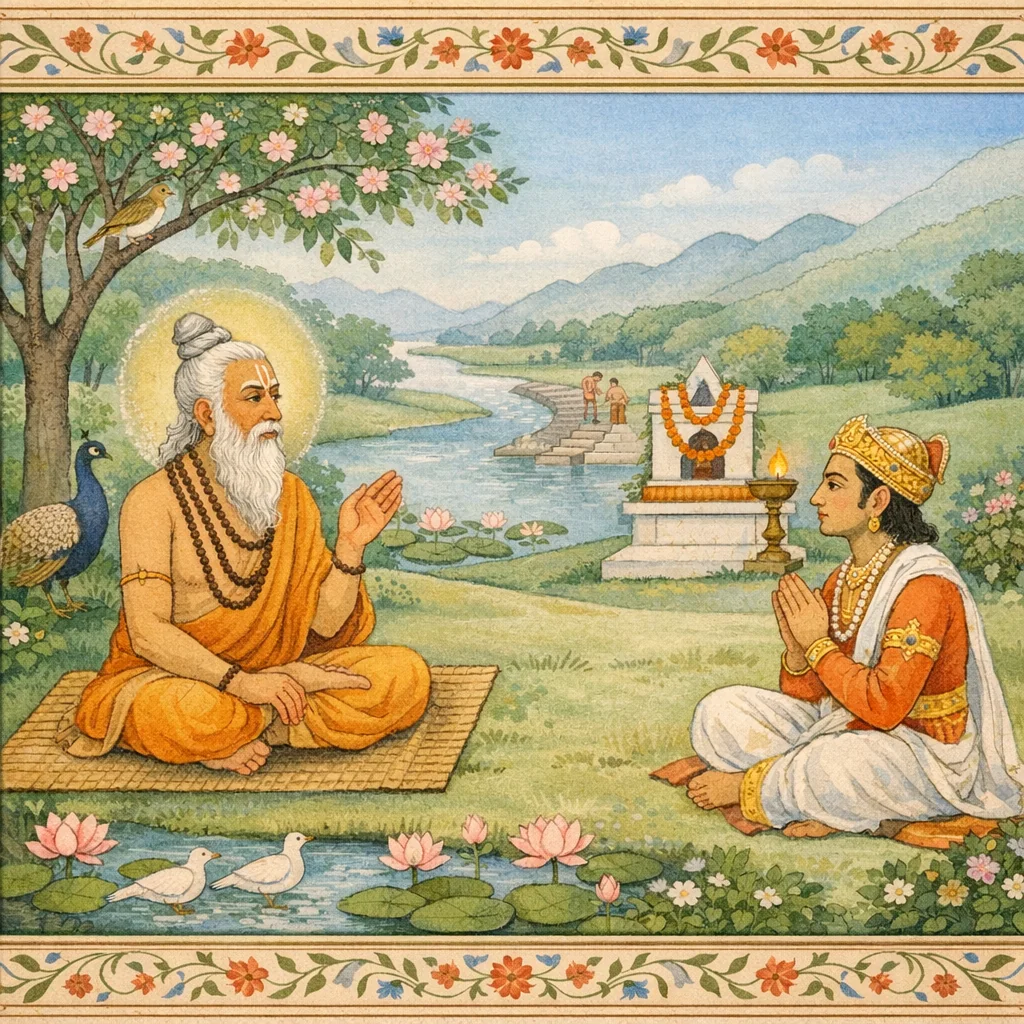
The chapter concludes the earlier catalogue of tīrthas by declaring that sacred places are “bodies of Viṣṇu,” and that even association with a single tīrtha can lead to liberation. In Kali-yuga, hearing of tīrthas and serving them is praised as the foremost means of destroying sin; yet Brāhmaṇa-sevā is proclaimed higher still, surpassing even bathing at all tīrthas. Daily worship of the “dvija-pada” (the Brāhmaṇa-foot/Brāhmaṇa as sacred locus) is enjoined, and reverent circumambulation of the aśvattha, tulasī, and cows is said to yield the merit of all tīrthas. The sages then ask for a detailed account of Prayāga, and Sūta introduces an ancient discourse: after the Bhārata war, grief-stricken Yudhiṣṭhira receives Mārkaṇḍeya, seeks expiation and higher insight, and is directed toward Sāṅkhya, Yoga, and above all Prayāga—praised as the supreme pilgrimage for the meritorious.
Shlokas
Verse 1
सूत उवाच । एवमुक्तानि तीर्थानि विष्णुदेहानि सुव्रताः । एषामन्यतमा संगान्मुक्तो भवति मानवः
Sūta said: “Thus have these sacred tīrthas been declared—they are the very bodies of Viṣṇu, O you of excellent vows. By association with even any one of them, a human being becomes liberated.”
Verse 2
तीर्थानुश्रवणं धन्यं धन्यं तीर्थनिषेवणम् । पापराशिनिपाताय नान्योपायः कलौयुगे
Blessed is the hearing about the sacred tīrthas, and blessed is the devoted resort to them. For the destruction of heaps of sin, there is no other means in the Kali age.
Verse 3
वासं कुर्यामहं तीर्थे तीर्थस्पर्शमहं तथा । एवं योऽनुदिनं ब्रूते स याति परमं महत्
“May I dwell at a sacred tīrtha; may I also touch and bathe at the tīrtha.” One who speaks thus every day attains the supreme, exalted state.
Verse 4
पापानि तस्य नश्यंति तीर्थालापनमात्रतः । तीर्थानि खलु धन्यानि धन्यसेव्यानि सुव्रताः
By merely uttering the name of a sacred tīrtha, a person’s sins are destroyed. Indeed, tīrthas are truly blessed—and they are to be visited and served by the blessed, O you of noble vows.
Verse 5
तीर्थानां सेवनादेव सेवितो भवति प्रभुः । नारायणो जगत्कर्ता नास्ति तीर्थात्परं पदम्
By the very act of serving the sacred tīrthas, the Lord is served. Nārāyaṇa, the Creator of the world—there is no higher state than that gained through the tīrtha.
Verse 6
ब्राह्मणस्तुलसी चैव अश्वत्थस्तीर्थसंचयः । विष्णुश्च परमेशानः सेव्य एव सदा नृभिः
A Brāhmaṇa, the sacred Tulasī, the Aśvattha tree—an assemblage of tīrthas—and Viṣṇu, the Supreme Lord: these are ever to be revered and served by people.
Verse 7
ब्राह्मणानां विशेषेण सेवनं मुनिपुंगवाः । सर्वतीर्थावगाहादेरधिकं विदुरग्रजाः
O best of sages, service rendered especially to Brāhmaṇas is regarded, O elder brother of Vidura, as superior even to bathing and the like in all sacred tīrthas.
Verse 8
तस्माद्द्विजपदं साक्षात्सर्वतीर्थमयं शुभम् । भजेतानुदिनं विद्वांस्तत्र तीर्थाधिकं भवेत्
Therefore the wise should worship the sacred “Dvi-ja-pada” each day, for it is directly auspicious and embodies all tīrthas; by this one gains merit superior to mere pilgrimage.
Verse 9
अश्वत्थस्य तुलस्याश्च गवां कुर्यात्प्रदक्षिणम् । सर्वतीर्थफलंप्राप्य विष्णुलोके महीयते
One who circumambulates the aśvattha tree, the tulasī plant, and cows attains the fruit of all tīrthas and is honored in Viṣṇu’s abode.
Verse 10
तस्माद्दुष्कृतकर्माणि नाशयेत्तीर्थसेवनात् । अन्यथा नरकं याति कर्म्मभोगाद्धि शाम्यति
Therefore one should destroy sinful deeds by resorting to service of the sacred tīrthas; otherwise one goes to hell, for karma is exhausted only by being experienced.
Verse 11
पापिनां नरके वासः सुकृती स्वर्गमश्नुते । तस्मात्पुण्यं निषेवेत तीर्थं खलु विचक्षणः
Sinners dwell in hell, while the doer of good attains heaven. Therefore, the discerning should cultivate merit and indeed resort to the sacred tīrthas, the holy places of pilgrimage.
Verse 12
ऋषय ऊचुः । श्रुतानि किल तीर्थानि समाहात्म्यानि सुव्रत । इदानीं श्रोतुमिच्छामः प्रयागस्य विशेषकम्
The sages said: “O you of excellent vow, we have indeed heard of the tīrthas together with their gathered glories. Now we wish to hear the special greatness of Prayāga.”
Verse 13
प्रयागं तु पुरा प्रोक्तं संक्षेपात्सूत यत्त्वया । विशेषाच्छ्रोतुमिच्छामः सूत नः कथ्यतामिति
“O Sūta, you previously spoke of Prayāga in brief. Now we wish to hear it in detail; therefore, O Sūta, please tell us.”
Verse 14
सूत उवाच । साधु पृष्टं महाभागाः प्रयागं प्रति सुव्रताः । हंताहं तत्प्रवक्ष्यामि प्रयागस्योपवर्णनम्
Sūta said: “You have asked well, O fortunate ones of excellent vows, concerning Prayāga. Come—now I shall describe Prayāga in detail.”
Verse 15
मार्कंडेयेन कथितं यत्पुरा पांडुसूनवे । भारते तु यदा वृत्ते प्राप्तराज्ये पृथासुते
This was formerly narrated by Mārkaṇḍeya to the son of Pāṇḍu, when the events of the Bhārata had occurred and the son of Pṛthā had attained the kingdom.
Verse 16
एतस्मिन्नंतरे राजा कुंतीपुत्रो युधिष्ठिरः । भ्रातृशोकेन संतप्तः चिंतयंस्तु पुनः पुनः
Meanwhile, King Yudhiṣṭhira, the son of Kuntī, scorched by grief for his brothers, kept reflecting again and again.
Verse 17
आसीद्दुर्योधनो राजा एकादशचमूपतिः । अस्मान्संतप्य बहुशः सर्वे ते निधनं गताः
Duryodhana was king, commanding eleven divisions of the army. After repeatedly tormenting us, all of them met their end.
Verse 18
वासुदेवं समाश्रित्य पंचशेषास्तु पांडवाः । कथं द्रोणं च भीष्मं च कर्णं चैव महाबलम्
Taking refuge in Vāsudeva, the five remaining Pāṇḍavas—how could they (ever) overcome Droṇa, Bhīṣma, and the mighty Karṇa as well?
Verse 19
दुर्योधनं च राजानं भ्रातृपुत्रसमन्वितम् । राजानो निहताः सर्वे ये चान्ये शूरमानिनः
King Duryodhana too—together with his brothers and sons—was slain; and all those kings, and others besides who fancied themselves heroes, were killed.
Verse 20
विना राज्येन कर्तव्यं किं भोगैर्जीवितेनवा । धिक्कष्टमिति संचिंत्य राजा विह्वलतां गतः
“Without the kingdom, what is there to be done—what use are pleasures, or even life itself?” Thinking, “Fie, how miserable!”, the king fell into utter distress.
Verse 21
निश्चेष्टोऽथ निरुत्साहः किं चित्तिष्ठत्यधोमुखः । लब्धसंज्ञो यदा राजा चिंतयानः पुनः पुनः
Then, motionless and bereft of resolve, he remained for a while with his face cast down. When the king regained consciousness, he kept thinking again and again.
Verse 22
कं चरे विधिना योगं नियमं तीर्थमेव वा । येनाहं शीघ्रमामुच्ये महापातककिल्बिषात्
What discipline should I properly undertake—yoga, sacred observances, or pilgrimage to a tīrtha—by which I may quickly be released from the defilement of great sins?
Verse 23
यत्र स्नात्वा नरो याति विष्णुलोकमनुत्तमम् । कथं पृच्छामि वै कृष्णं येनेदं कारितं महत्
After bathing there, a man attains the unsurpassed realm of Viṣṇu. How, indeed, shall I ask Kṛṣṇa—by whom this great sacred work has been brought about?
Verse 24
धृतराष्ट्रं कथं पृच्छे यस्य पुत्रशतं हतम् । व्यासं कथमहं पृच्छे यस्य गोत्रक्षयः कृतः
How can I question Dhṛtarāṣṭra, whose hundred sons have been slain? How can I question Vyāsa, by whom the destruction of the lineage has been brought about?
Verse 25
एवं वैक्लव्यमापन्नो धर्मपुत्रो युधिष्ठिरः । रुदंतः पांडवाः सर्वे भ्रातृशोकपरिप्लुताः
Thus, Dharmaputra Yudhiṣṭhira fell into helpless distress; and all the Pāṇḍavas, weeping, were overwhelmed by sorrow for their brother.
Verse 26
ये च तत्र महात्मानः समेताः पांडवाश्रिताः । कुंती च द्रौपदी चैव ये च तत्र समागताः
And those great-souled ones who had assembled there, devoted to the Pāṇḍavas—Kuntī and Draupadī as well—and all others who had gathered there.
Verse 27
भूमौ निपतिताः सर्वे रोदमानाः समंततः । वाराणस्यां तु मार्कंडस्तेन ज्ञातो युधिष्ठरः
All of them fell to the ground, weeping on every side. In Vārāṇasī, however, there was Mārkaṇḍa; through him, Yudhiṣṭhira came to be recognized.
Verse 28
यथाविक्लवमापन्नो रोदमानः सुदुःखितः । अचिरेणैव कालेन मार्कंडस्तु महातपाः
Thus, having fallen into utter helplessness—crying and deeply distressed—before long, the great ascetic Mārkaṇḍa appeared.
Verse 29
हस्तिनापुर संप्राप्तो राजद्वारे स तिष्ठति । द्वारपालोऽपि तं दृष्ट्वा राज्ञः कथितवान्द्रुतम्
Having arrived at Hastināpura, he stood at the king’s gate. Seeing him, the gatekeeper quickly informed the king.
Verse 30
त्वां द्रष्टुकामो मार्कंडो द्वारे तिष्ठत्यसौ मुनिः । त्वरितो धर्मपुत्रस्तु द्वारमेत्याह तत्परः
Desiring to see you, the sage Mārkaṇḍeya is standing at the gate. Then Dharmaputra, hurrying, came to the doorway and spoke, intent on the matter.
Verse 31
युधिष्ठिर उवाच । स्वागतं ते महाप्राज्ञ स्वागतं ते महामुने । अद्य मे सफलं जन्म अद्य मे पावितं कुलम्
Yudhiṣṭhira said: “Welcome to you, O greatly wise one; welcome to you, O great sage. Today my birth has borne fruit; today my lineage has been purified.”
Verse 32
अद्य मे पितरस्तृप्तास्त्वयि दृष्टे महामुने । सिंहासन उपस्थाप्य पादशौचार्चनादिभिः
“Today my forefathers are satisfied, O great sage, because I have seen you. Having set out a throne for you, I shall honor you with acts such as washing your feet and offering worship.”
Verse 33
युधिष्ठिरो महात्मा वै पूजयामास तं मुनिम् । ततस्तमूचे मार्कण्डः पूजितोऽहं त्वया विभो
The great-souled Yudhiṣṭhira indeed honored that sage. Then Mārkaṇḍeya spoke to him: “O mighty one, I have been honored by you.”
Verse 34
आख्याहि त्वरितो राजन्किमर्थं त्वरितं त्वया । केन वा विक्लवीभूतः कथयस्व ममाग्रतः
Tell me quickly, O King—why are you in such haste? By what cause have you become so distressed? Speak before me.
Verse 35
युधिष्ठिर उवाच । अस्माकं चैव यद्वृत्तं राज्यस्यार्थे महामुने । एतत्सर्वं विदित्वा तु भगवानिह चागतः
Yudhiṣṭhira said: O great sage, having fully known everything that has happened to us concerning the matter of the kingdom, the Blessed Lord has come here.
Verse 36
मार्कंडेय उवाच । शृणु राजन्महाबाहो यत्र धर्मो व्यवस्थितः । नैव दृष्टं रणे पापं युध्यमानस्य धीमतः
Mārkaṇḍeya said: Listen, O king of mighty arms—where Dharma is firmly established, no sin is seen in battle for the wise man who fights for a righteous cause.
Verse 37
किं पुना राजधर्मेण क्षत्रियस्य विशेषतः । तदेवं हृदये कृत्वा तस्मात्पापं न चिंतयेत्
How much more, then, in the royal duty—especially for a Kṣatriya! Holding this firmly in the heart, one should not brood over sin on that account.
Verse 38
ततो युधिष्ठिरो राजा प्रणम्य शिरसा मुनिम् । पृच्छामि त्वां मुनिश्रेष्ठ सदा त्रैकाल्यदर्शनम् । कथयस्व समासेन मुच्येऽहं येन किल्बिषात्
Then King Yudhiṣṭhira, bowing his head in reverence to the sage, said: “O best of sages, I ask you about the practice by which one gains, at all times, the vision of the three times—past, present, and future. Tell it to me briefly, by which I may be freed from sin.”
Verse 39
मार्कंडेय उवाच । शृणु राजन्महाभाग यन्मां पृच्छसि भारत । एवं सांख्यं च योगं च तीर्थं चैव युधिष्ठिर
Mārkaṇḍeya said: O great and fortunate king, O Bhārata, listen to what you ask of me. Thus I shall explain Sāṅkhya and Yoga, and also the sacred tīrtha, O Yudhiṣṭhira.
Verse 40
इति श्रीपाद्मे महापुराणे स्वर्गखंडे चत्वारिंशोऽध्यायः
Thus ends the fortieth chapter in the Svarga-khaṇḍa of the Śrī Padma Mahāpurāṇa.