Adhyaya 35
Glorification of Vārāṇasī: Kapardīśvara Liṅga and the Piśācamocana Tīrtha
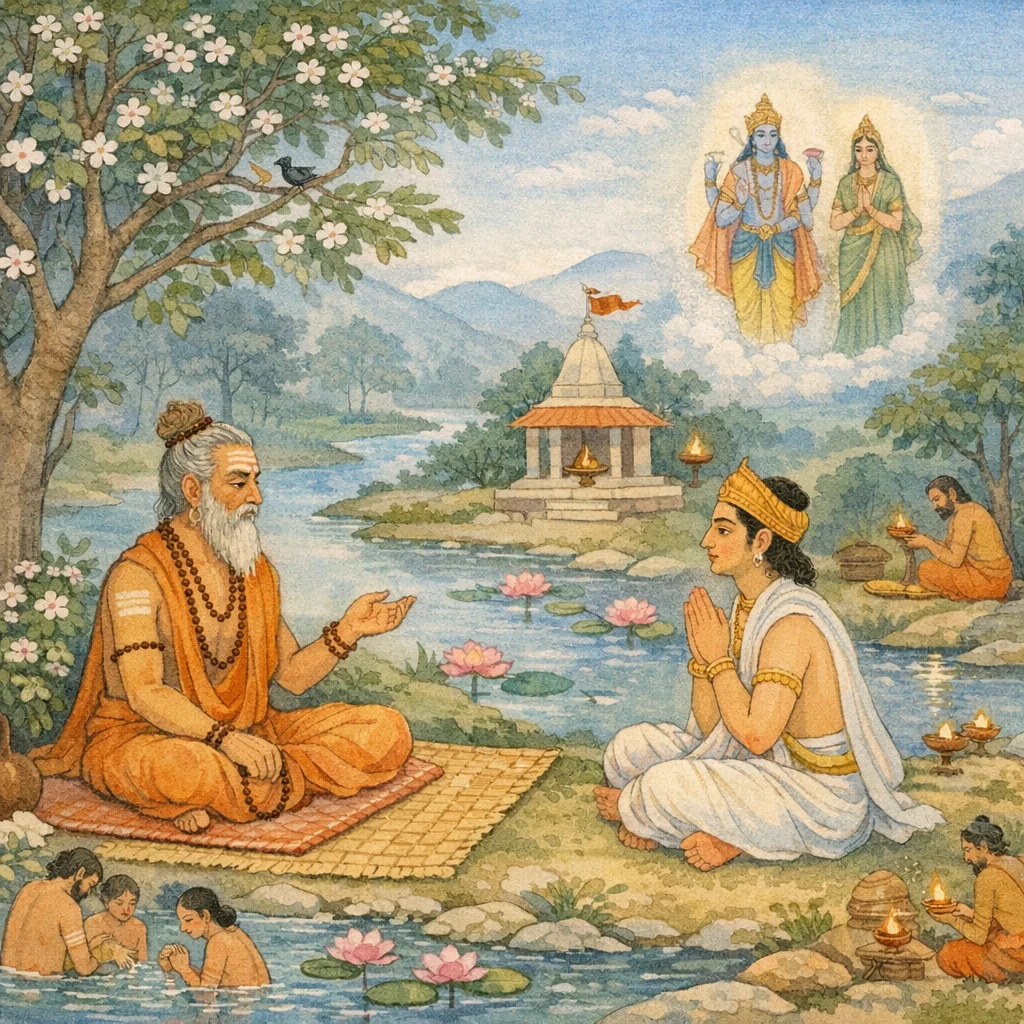
This chapter extols Kapardīśvara, a supremely meritorious liṅga in Vārāṇasī, and the nearby Piśācamocana tīrtha. It declares that bathing there and offering ancestral libations destroy sins and grant both worldly welfare and liberation. An exemplifying tale follows: a doe, pursued by a tiger-like daitya, repeatedly circumambulates Kapardīśvara, and a divine epiphany occurs—taken as proof of the site’s saving power. The narrative then turns to the ascetic Śaṅkukarṇa, who meets a starving piśāca, formerly a negligent brāhmaṇa; instructed to bathe in the Piśācamocana pond while remembering Kapardīśvara, the spirit is released and ascends in celestial splendor. Śaṅkukarṇa offers a lofty hymn to Rudra; the radiant liṅga manifests and the sage merges into it, and the chapter concludes with the merits of hearing and reciting this account.
Shlokas
Verse 1
नारद उवाच । अथान्यत्तत्र वै लिंगं कपर्दीश्वरमुत्तमम् । स्नात्वा तत्र विधानेन तर्पयित्वा पितॄन्नृप
Nārada said: “Then, in that very place, there is another most excellent liṅga, known as Kapardīśvara. Having bathed there according to the prescribed rite, O king, and having offered tarpaṇa (libations) to the ancestors…”
Verse 2
मुच्यते सर्वपापेभ्यो मुक्तिं भुक्तिं च विंदति । पिशाचमोचनं नाम तीर्थमन्यत्ततः स्थितम्
One is freed from all sins and attains both liberation (mokṣa) and worldly enjoyment. Another sacred tīrtha is situated there, known as Piśācamocana—“Deliverance from the Piśācas.”
Verse 3
तत्राश्चर्यमयो देवो मुक्तिदः सर्वदोषहः । कश्चिद्दैत्यो जगामेदं शार्दूलो घोररूपधृक्
There was a wondrous divine being—bestower of liberation and destroyer of every fault. Then a certain Daitya arrived at that place, tiger-like and bearing a terrifying form.
Verse 4
मृगीमेकां भक्षयितुं कपर्दीश्वरमुत्तमम् । तत्र सा भीतहृदया कृत्वा कृत्वा प्रदक्षिणम्
To devour a certain doe, she approached the excellent Lord Kapardīśvara; there, with a frightened heart, she circumambulated him again and again in pradakṣiṇā.
Verse 5
धावमाना सुसंभ्रांता व्याघ्रस्य वशमागता । तां विदार्य नखैस्तीक्ष्णैः शार्दूलः स महाबलः
Running in great confusion, she fell under the tiger’s power. Then that mighty leopard tore her with its sharp claws and attacked.
Verse 6
जगाम चान्यं विजनं देशं दृष्ट्वा मुनीश्वरान् । मृतमात्रा च सा बाला कपर्दीशाग्रतो मृगी
Seeing the lordly sages, she went to another lonely place; and that young doe, as if just dead, lay before Kapardīśa (Śiva).
Verse 7
अदृश्यत महाज्वाला व्योम्नि सूर्यसमप्रभा । त्रिनेत्रा नीलकंठा च शशांकांकित मूर्द्धजा
Then there appeared in the sky a great blazing radiance, shining like the sun—three-eyed, blue-throated, and with the crescent moon marked upon her crown.
Verse 8
वृषाधिरूढा पुरुषैस्तादृशैरेव संवृता । पुष्पवृष्टिं विमुंचंति खेचरास्तत्समंततः
Mounted upon a bull and surrounded by men of the same kind, the sky-dwellers all around began to shower down a rain of flowers.
Verse 9
गणेश्वरी स्वयं भूत्वा न दृष्टा तत्क्षणात्ततः । दृष्ट्वा तदाश्चर्यवरं प्रशशंसुः सुरादयः
Having herself become Gaṇeśvarī, she disappeared from sight that very instant. Seeing that supremely wondrous marvel, the gods and others praised it.
Verse 10
तन्महेशस्य वै लिंगं कपर्दीश्वरमुत्तमम् । स्मृत्वैवाशेषपापौघात्क्षिप्रमस्य विमुंचति
By merely remembering the supreme liṅga of Mahādeva—Kapardīśvara—one is swiftly released from the entire flood of sins.
Verse 11
कामक्रोधादयो दोषा वाराणसी निवासिनाम् । विघ्नाः सर्वे विनश्यंति कपर्दीश्वरपूजनात्
For the residents of Vārāṇasī, faults such as lust and anger—and all obstacles—are destroyed through the worship of Kapardīśvara.
Verse 12
तस्मात्सदैव द्रष्टव्यं कपर्दीश्वरमुत्तमम् । पूजितव्यं प्रयत्नेन स्तोतव्यं वैदिकैस्तवैः
Therefore the supreme Lord Kapardīśvara should always be sought for darśana; he should be worshipped with effort and praised with Vedic hymns.
Verse 13
ध्यायतां चात्र नियतं योगिनां शांतचेतसाम् । जायते योगसिद्धिः स्यात्षण्मासेन न संशयः
For yogins of tranquil mind who meditate here with steady discipline, yogic attainment arises; within six months it is achieved—of this there is no doubt.
Verse 14
ब्रह्महत्यादयः पापा विनश्यंत्यस्य पूजनात् । पिशाचमोचने कुंडे स्नातः स्यात्प्रशमो यतः
Sins such as brahmin-slaying and the like are destroyed by worship of this (tīrtha/deity). And by bathing in the Piśāca-mocana pond, one attains tranquility, for it is a place that brings pacification.
Verse 15
तस्मिन्क्षेत्रे पुरा विप्रस्तपस्वी संशितव्रतः । शंकुकर्ण इति ख्यातः पूजयामास शंकरम्
Long ago, in that sacred region, there lived a brahmin ascetic, steadfast in his vows, renowned by the name Śaṅkukarṇa; he worshipped Śaṅkara, Lord Śiva.
Verse 16
जजाप रुद्रमनिशं प्रणवं ब्रह्मरूपिणम् । पुष्पधूपादिभिस्तोत्रैः नमस्कारैः प्रदक्षिणैः
He continually recited Rudra, the Lord, together with the Praṇava (Oṁ), whose very form is Brahman, worshipping with flowers, incense and the like, with hymns, with prostrations, and with circumambulations.
Verse 17
उपासीतात्र योगात्मा कृत्वा दीक्षां तु नैष्ठिकीम् । कदाचिदागतं प्रेतं पश्यति स्म क्षुधान्वितम्
There, the yogic-minded one practiced devoutly, having undertaken a steadfast initiation (dīkṣā). Once, he saw a hungry preta, a departed spirit, that had come there.
Verse 18
अस्थिचर्म पिनद्धांगं निश्वसंतं मुहुर्मुहुः । तं दृष्ट्वा स मुनिश्रेष्ठः कृपया परया युतः
His limbs were wrapped only in bone and skin, and he was breathing with difficulty again and again. Seeing him thus, that foremost of sages was filled with profound compassion.
Verse 19
प्रोवाच को भवान्कस्माद्देशाद्देशमिमं श्रितः । तस्मै पिशाचः क्षुधया पीड्यमानोऽब्रवीद्वचः
He asked, “Who are you, and from what land have you come to seek refuge in this country?” To him, the piśāca, tormented by hunger, replied with these words.
Verse 20
पूर्वजन्मन्यहं विप्रो धनधान्यसमन्वितः । पुत्रपौत्रादिभिर्युक्तः कुटुंबभरणोत्सुकः
In a former birth I was a brāhmaṇa, endowed with wealth and abundant grain; surrounded by sons, grandsons, and the like, I was eager to sustain and support my household.
Verse 21
न पूजिता महादेवा गावोऽप्यतिथयस्तथा । न कदाचित्कृतं पुण्यमल्पं वानल्पमेव च
Mahādeva was not worshipped; nor were cows or guests honored. No meritorious deed was ever performed—whether small or great.
Verse 22
एकदा भगवान्देवो वृषभेश्वरवाहनः । विश्वेश्वरो वाराणस्यां दृष्टः स्पृष्टो नमस्कृतः
Once, the Blessed Lord—riding the bull, the Lord of Vṛṣabha—Viśveśvara, was seen in Vārāṇasī, touched in reverence, and saluted.
Verse 23
तदाचिरेण कालेन पंचत्वमहमागतः । न दृष्टं तन्महाघोरं यमस्य सदनं मुने
After no long time had passed, I met with death. Yet, O sage, I did not behold that most dreadful abode of Yama.
Verse 24
पिपासयाधुनाक्रांतो न जानामि हिताहितम् । यदि कंचित्समुद्धर्तुमुपायं पश्यसि प्रभो
Overcome at present by thirst, I cannot discern what is beneficial and what is harmful. O Lord, if you see any means to rescue me, please tell it.
Verse 25
कुरुष्व तं नमस्तुभ्यं त्वामहं शरणं गतः । इत्युक्तः शंकुकर्णोऽथ पिशाचमिदमब्रवीत्
“Do so; salutations to you. In you I have taken refuge.” Thus addressed, Śaṅkukarṇa then spoke these words to the piśāca.
Verse 26
तादृशो नहि लोकेस्मिन्विद्यते पुण्यकृत्तमः । यत्त्वया भगवान्पूर्वं दृष्टो विश्वेश्वरः शिवः
In this world there is no doer of merit greater than one like you, for you have formerly beheld the Blessed Lord Śiva—Viśveśvara, Sovereign of the universe.
Verse 27
संस्पृष्टो वंदितो भूयः कोऽन्यस्त्वत्सदृशो भुवि । तेन कर्मविपाकेन देशमेतं समागतः
Having been touched and honored again and again—who else on earth is like you? By the ripening of that karma’s fruit, (I) have come to this place.
Verse 28
स्नानं कुरुष्व शीघ्रं त्वमस्मिन्कुंडे समाहितः । येनेमां कुत्सितां योनिं क्षिप्रमेव प्रहास्यसि
“Bathe quickly in this pond, with your mind well-collected; by this you will very soon cast off this disgraceful condition of birth.”
Verse 29
स एवमुक्तो मुनिना पिशाचो दयालुना देववरं त्रिनेत्रम् । स्मृत्वा कपर्दीश्वरमीशितारं चक्रे समाधाय मनोवगाहम्
Thus addressed by the compassionate sage, the piśāca—remembering the supreme Lord Kapardīśvara, best of the gods, the three-eyed ruler—composed his mind and entered deep samādhi, plunging inward in meditation.
Verse 30
तदावगाढो मुनिसन्निधाने ममार दिव्याभरणोपपन्नः । अदृश्यतार्कप्रतिमो विमाने शशांकचिह्नीकृतचारुमौलि
Thus, having plunged into the sacred waters in the presence of the sages, he cast off his life, adorned with divine ornaments. Then he was seen in a vimāna, radiant like the sun, his lovely head marked with the emblem of the moon.
Verse 31
विभाति रुद्रैः सहितो दिविष्ठैः समाभृतो योगिरिभरप्रमेयैः । स वालखिल्यादिभिरेष देवो यथोदये भानुरशेषदेवः
He shines, accompanied by the Rudras who dwell in heaven, and surrounded by immeasurable multitudes of rishis and hosts of yogins. This very deity, attended by the Vālakhilyas and others, appears like the Sun at his rising, outshining all the devas.
Verse 32
स्तुवंति सिद्धादि विदेवसंघा नृत्यंति दिव्याप्सरसोऽभिरामाः । मुंचंति वृष्टिं कुसुमांबुमिश्रां गंधर्वविद्याधरकिन्नराद्याः
Hosts of Siddhas and other divine beings sing praises; lovely celestial Apsarās dance. Gandharvas, Vidyādharas, Kinnaras, and the rest shower down a rain mingled with flowers and water.
Verse 33
संस्तूयमानोऽथ मुनींद्रसंघैरवाप्य बोधं भगवत्प्रसादात् । समाविशन्मंडलमेतदग्र्यं त्रयीमयं यत्र विभाति रुद्रः
Then, praised by assemblies of great sages, and attaining awakening through the Lord’s grace, he entered that supreme sphere—formed of the three Vedas—where Rudra shines forth.
Verse 34
दृष्ट्वा विमुक्तं स पिशाचभूतं मुनिः प्रहृष्टो मनसा महेशम् । विचिंत्य रुद्रं कविमेकमग्निं प्रणम्य तुष्टाव कपर्दिनं तम्
Seeing that the being who had become a piśāca was freed, the sage rejoiced in his heart and contemplated Maheśa—Rudra, the seer-poet, the One, the Fire. Bowing down, he praised that Kapardin, Śiva.
Verse 35
इति श्रीपाद्मे महापुराणे स्वर्गखंडे वाराणसीमाहात्म्ये पंचत्रिंशोऽध्यायः
Thus ends the thirty-fifth chapter, “The Glorification of Vārāṇasī,” in the Svarga-khaṇḍa of the revered Padma Mahāpurāṇa.
Verse 36
त्वां ब्रह्मसारं हृदि संनिविष्टं हिरण्मयं योगिनमादिमं तम् । व्रजामि रुद्रं शरणं दिविष्ठं महामुनिं ब्रह्ममयं पवित्रम्
I take refuge in You, O Rudra—essence of Brahman, enthroned within the heart; the primordial Yogin, golden in radiance; dwelling in heaven, the great muni, filled with Brahman and supremely pure.
Verse 37
सहस्रपादाक्षिशिरोभियुक्तं सहस्ररूपं तमसः परस्तात् । तं ब्रह्मपारं प्रणमामि शंभुं हिरण्यगर्भाधिपतिं त्रिनेत्रम्
I bow to Śambhu—endowed with a thousand feet, eyes, and heads, of a thousand forms, beyond the darkness; the far shore of Brahman; the Lord of Hiraṇyagarbha; the Three-eyed One.
Verse 38
यत्र प्रसूतिर्जगतो विनाशो येनावृतं सर्वमिदं शिवेन । तं ब्रह्मपारं भगवंतमीशं प्रणम्य नित्यं शरणं प्रपद्ये
In Him abide the birth and dissolution of the universe; by Him—who is Śiva—this whole world is pervaded and encompassed. Ever bowing to that Lord, the Blessed One beyond Brahman, I continually take refuge in Him.
Verse 39
अलिंगमालोकविहीनरूपं स्वयंप्रभुं चित्पतिमेकरूपम् । तं ब्रह्मपारं परमेश्वरं त्वां नमस्करिष्ये न यतोऽन्यदस्ति
I bow to You, the Supreme Lord—without any outward mark, whose form is beyond the senses; self-effulgent, sovereign of Consciousness, of one undivided nature. You are beyond even Brahman, and there is nothing apart from You.
Verse 40
यं योगिनस्त्यक्तसबीजयोगा लब्ध्वा समाधिं परमात्मभूताः । पश्यंति देवं प्रणतोऽस्मि नित्यं तं ब्रह्मपारं परमस्वरूपम्
I ever bow to that Divine Lord whom yogins—having abandoned “seeded” (object-supported) yoga and attained samādhi—behold as the Supreme Self: the One beyond Brahman, of the highest and ultimate nature.
Verse 41
न यत्र नामादिविशेष कॢप्तिर्न संदृशे तिष्ठति यत्स्वरूपम् । तं ब्रह्मपारं प्रणतोऽस्मि नित्यं स्वयंभुवं त्वां शरणं प्रपद्ये
Where no distinctions such as “name” and the rest are constructed, and whose true nature cannot be grasped as any particular form—unto that Supreme Brahman beyond all I bow eternally. O Self-born One, in You I take refuge.
Verse 42
यद्वेदवादाभिरता विदेहं सब्रह्मविज्ञानमभेदमेकम् । पश्यंत्यनेकं भवतः स्वरूपं तं ब्रह्मपारं प्रणतोऽस्मि नित्यम्
I ever bow to that Supreme Brahman beyond all, whom those devoted to the Vedic teachings perceive as the one, indivisible, bodiless Reality—yet they also behold Your form as manifold.
Verse 43
यतः प्रधानं पुरुषः पुराणो बिभर्ति तेजः प्रणमंति देवाः । नमामि तं ज्योतिषि सन्निविष्टं कालं बृहंतं भवतः स्वरूपम्
I bow to that Ancient Puruṣa who upholds Pradhāna and bears the divine splendor before which even the gods prostrate—who is established in the Light, who is mighty Time itself: this is Your very form.
Verse 44
व्रजामि नित्यं शरणं गुहेशं स्थाणुं प्रपद्ये गिरिशं पुराणम् । शिवं प्रपद्ये हरिमिंदुमौलिं पिनाकिनं त्वां शरणं व्रजामि
I ever go for refuge to You, O Guheśa, Lord of the cave. I take shelter in Sthāṇu, the ancient Giriśa, Lord of the mountains. I take refuge in Śiva—Hara, the moon-crested one (Indumauli). O bearer of the Pināka bow, to You I go for shelter.
Verse 45
स्तुत्वैवं शंकुकर्णोऽपि भगवंतं कपर्दिनम् । पपात दंडवद्भूमौ प्रोच्चरन्प्रणवं परम्
Thus, having praised the Blessed Lord Kapardin (Śiva), Śaṅkukarṇa too fell upon the ground like a staff, loudly uttering the supreme Praṇava (Oṁ).
Verse 46
तत्क्षणात्परमं लिंगं प्रादुर्भूतं शिवात्मकम् । ज्ञानमानंदमत्यंतं कोटिज्वालाग्निसन्निभम्
At that very instant, the supreme Liṅga—of the very essence of Śiva—manifested, supremely radiant, of the nature of knowledge and bliss, resembling the blazing fire of millions of flames.
Verse 47
शंकुकर्णोऽथ मुक्तात्मा तदात्मा सर्वगोऽमलः । निलिल्ये विमले लिंगे तदद्भुतमिवाभवत्
Then Śaṅkukarṇa—liberated in spirit, identified with That (Supreme Reality), all-pervading and stainless—merged into the pure liṅga; and it appeared as something wondrous.
Verse 48
एतद्रहस्यमाख्यातं माहात्म्यं ते कपर्द्दिनः । न कश्चिद्वेत्ति तमसा विद्वानप्यत्र मुह्यति
This secret teaching—your greatness, O Kaparddin (Śiva)—has been declared. Yet, shrouded by darkness, no one truly knows it; even the learned become bewildered here.
Verse 49
य इमां शृणुयान्नित्यं कथां पापप्रणाशिनीम् । त्यक्तपापविशुद्धात्मा रुद्रसामीप्यमाप्नुयात्
Whoever regularly listens to this sin-destroying narrative—having cast off sins and become pure in spirit—attains closeness to Rudra (Śiva).
Verse 50
पठेच्च सततं शुद्धो ब्रह्मपारं महास्तवम् । प्रातर्मध्याह्नसमये स योगं प्राप्नुयात्परम्
If, being pure, one continually recites the great hymn called “Brahmapāra,” then at the times of morning and midday one attains the supreme Yoga.