Adhyaya 82
Description of the Worship of the Planets
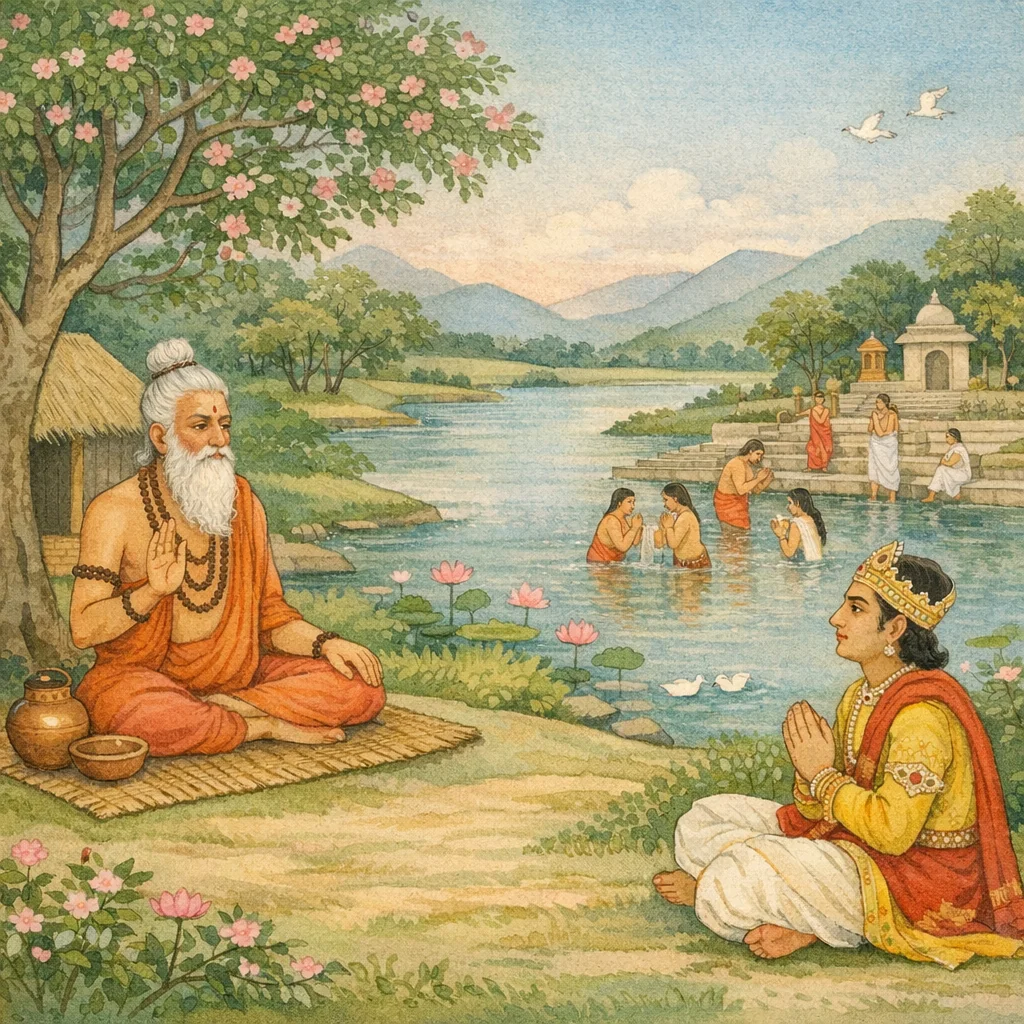
At Bhīṣma’s request, Pulastya teaches the rites for propitiating the grahas, giving special attention to Budha (Mercury) and then applying the same ritual pattern to Guru (Bṛhaspati), Bhārgava/Śukra, Śani, Rāhu, and Ketu. The chapter details mandala designs (arrow, pentagon, human-figure, circular/banner), prescribed colored powders, fragrances, flowers, garments, and other offerings suited to each graha. It also assigns specific gifts (dāna)—gems, metals, grains, and even animals—especially for times of adverse astrological influence. Brief stuti-style invocations to Budha, Bṛhaspati, Śukra, Śani, and Rāhu are provided, followed by the opening words of mantras for the grahas. The conclusion declares the teaching merit-bestowing and consonant with a Vaiṣṇava spirit, and stresses that in Kali-yuga dāna—above all the gift of fearlessness (abhaya)—is the highest duty.
Shlokas
Verse 1
भीष्म उवाच । श्रुतं सूर्यस्य चंद्रस्य भौमस्यापि प्रपूजनं । बुधस्य सोमसूनोश्च पूजनं कथयाधुना
Bhīṣma said: I have heard of the proper worship of the Sun, the Moon, and also Bhauma (Mars); now, please tell me of the worship of Budha (Mercury), the son of Soma (the Moon).
Verse 2
पुलस्त्य उवाच । तारागर्भसमुद्भूतो बुधश्चंद्रकुमारकः । सौम्यः क्रूरो ग्रहो ज्ञेयः शुभाशुभप्रदो नृणां
Pulastya said: Budha (Mercury) was born from the womb of Tārā and is the son of the Moon. He is known as a graha that may be gentle or harsh, granting human beings both auspicious and inauspicious results.
Verse 3
शराकारं मंडलं तु बुधस्य परिकीर्तितं । हरिन्मणिसमैर्वर्णैश्चूर्णैः कुर्यात्तु मंडलं
The maṇḍala of Budha (Mercury) is described as being in the form of an arrow. One should fashion that maṇḍala with powdered colors resembling the hue of a green gem, like an emerald.
Verse 4
पूजयेत्तत्र गंधाद्यैः पुष्पैर्धूपैस्सुशोभनैः । दानं च विधिवत्कुर्याद्दशारिष्टे च गोचरे
There one should worship with fragrances and the like, with flowers and beautifully prepared incense; and one should also give gifts in due ritual manner, especially when the ten afflictive influences are active in one’s astrological transit.
Verse 5
कर्पूराश्चैव मुद्गाश्च हरिद्वस्त्रं हरिन्मणिः । सुवर्णं च यथाशक्ति दद्याद्बोधनतुष्टये
One should offer camphor and mung beans, yellow garments and a green gem, and also gold according to one’s capacity, for the satisfaction of the enlightening rite or teacher.
Verse 6
सोमपुत्र महाप्राज्ञ वेदवेदांगपारग । नमस्ते ग्रहमध्यस्थ प्रसन्नो भव मे सदा
O son of Soma, greatly wise, well-versed in the Vedas and their auxiliaries—salutations to you who dwell among the planets; be ever gracious to me.
Verse 7
इति स्तुत्वा महाराज बुधं भक्त्या समाहितः । प्राप्नुयान्निखिलान्कामान्सोमसूनुप्रसादतः
Thus, O great king, having praised Budha (Mercury) with devotion and a focused mind, one attains all desired aims through the grace of Soma’s son.
Verse 8
गुरोश्च पूजनं प्रोक्तं पट्टसाकारमंडले । पीतवर्णैः सुनिष्पन्नैश्चूर्णैराजन्सुशोभनैः
The worship of the guru has been prescribed on a cloth (paṭṭa) altar arranged as a maṇḍala, using well-prepared yellow-colored powders—O King—beautiful and auspicious in appearance.
Verse 9
पीतैर्गंधयुतैः पुष्पैर्वस्त्रैर्हेम्ना च पूजयेत् । दशागोचरयोर्दौष्ट्ये दानं दद्याच्च शक्तितः
One should worship with yellow, fragrant flowers, with garments, and with gold. And when the two unfavourable periods within the tenfold cycle are corrupt or adverse, one should give charity according to one’s capacity.
Verse 10
चणकद्विदलं चैव पीतवस्त्रं सुवर्णकं । पुष्यरागं तु विप्राय दद्याच्चारिष्टशांतये
For the pacification of misfortunes, one should give to a brāhmaṇa split chickpeas, a yellow garment, gold, and a puṣyarāga (yellow sapphire).
Verse 11
बृहस्पते सुराचार्य सर्वशास्त्रविशारद । दानेनानेन संतुष्टो भव सौम्यो ममाधुना
O Bṛhaspati, teacher of the gods, master of all the scriptures—be pleased with this gift; be gracious to me now.
Verse 12
एवं कृते तु राजेंद्र स्वानुकूलो भवेद्गुरुः । सर्वान्कामानवाप्नोति नरो गुरुसमर्चनात्
When this is done, O best of kings, the guru becomes favorably disposed. By duly worshiping the guru, a person attains all desired aims.
Verse 13
भार्गवस्यापि वक्ष्यामि पूजनं नृपतेधुना । यत्कृत्वा सर्वकामाप्तिः सम्यक्पुंसां प्रजायते
O King, I shall now describe the worship of Bhārgava as well; by performing it properly, the complete attainment of all desired aims arises for people.
Verse 14
पंचकोणं समुद्दिष्टं मंडलं भार्गवस्य तु । चूर्णकैः श्वेतवर्णैश्च विधिना सुधिया कृतं
The pentagonal maṇḍala prescribed for Bhārgava (Paraśurāma) was duly prepared by the wise according to proper rite, using white-colored powders.
Verse 15
श्वेतगंधैश्च पुष्पैश्च वस्त्रैश्चापि सितैस्तथा । पूजयेद्भार्गवं भक्त्या नरः श्रद्धासमन्वितः
With white-scented fragrances, flowers, and likewise white garments, a man endowed with faith should worship Bhārgava with devotion.
Verse 16
रौप्यं च दक्षिणादानं यथाशक्ति प्रकीर्तितं । दशाद्यरिष्टे चोत्पन्ने सितमश्वं प्रदापयेत्
The giving of silver as dakṣiṇā has been prescribed according to one’s means; and when an ominous affliction beginning with a daśā (inauspicious period) arises, one should bestow a white horse as a gift.
Verse 17
तंडुलाः श्वेतवस्त्रं च रौप्यं चंदनमेव च । कर्पूरं च सुगंधाढ्यं देयं दानं द्विजातये
Rice, white cloth, silver, sandalwood, and fragrant camphor—these should be given as gifts in charity (dāna) to a twice-born (brāhmaṇa).
Verse 18
भृगुपुत्र महाभाग दानवानां पुरोहित । दानेनानेन संतुष्टो भव सर्वासुरार्चित
O noble son of Bhṛgu, priest of the Dānavas—be pleased with this gift, O you who are honored by all the Asuras.
Verse 19
इति मंत्रं समुच्चार्य दद्याद्दानं यथोदितं । तस्य तुष्टो भवत्याशु भार्गवः कुरुनंदन
Thus, having recited the mantra, one should give the donation as prescribed. Pleased by this, Bhārgava (Paraśurāma) is quickly satisfied—O delight of the Kurus.
Verse 20
शनैश्चरस्य पूजार्थं मंडलं च नराकृति । कृत्वा चूर्णैः कृष्णवर्णैः पूजयेत्तत्र भक्तितः
For the worship of Śanaiścara (Saturn), one should make a maṇḍala in the form of a human figure, and, using black-colored powders, worship there with devotion.
Verse 21
कृष्णैर्गन्धैश्च पुष्पैश्च वस्त्रैश्चापि तथाविधैः । लोहं च दक्षिणादानं पिण्याकं च तिलस्य च
With dark-hued perfumes, flowers, and garments of the same kind, one should also offer iron as a dakṣiṇā (priestly fee), along with sesame-cake and sesame.
Verse 22
दानं शनैश्चरारिष्टे कृष्णां गां कृष्णवस्त्रकं । सुवर्णं च यथाशक्ति दद्यान्नीलमणिं तथा
When afflicted by the misfortune caused by Śanaiścara (Saturn), one should give in charity a black cow, a black garment, and also gold according to one’s capacity—likewise a blue gem as well.
Verse 23
सूर्यसूनो महाभाग छायापुत्र महाबल । अधोदृष्टे भव शने प्रसन्नोऽस्मात्प्रदानतः
O noble son of the Sun, mighty son of Chāyā, O powerful Śani—cast your gaze downward; be gracious to us because of this offering.
Verse 24
एवं स्तुत्वा शनिं भक्त्या यश्च दद्याद्द्विजातये । स्वानुकूलो भवेत्तस्य शनिः पापे च गोचरे
Thus, having praised Śani with devotion, whoever gives a gift to a twice-born (brāhmaṇa)—for him Śani becomes favorable, even when Śani moves through an inauspicious transit (gochara).
Verse 25
राहोर्वर्णादिकं सर्वं शनिवन्मंडलं तथा । सूर्याकारं समुद्दिष्टं तत्र पूजार्कसूनुवत्
All the features of Rāhu—beginning with color and the rest—should be fashioned like Śani’s maṇḍala; it is also described as having the form of the Sun. There, one should worship it in the manner prescribed for the Sun’s son, Śani.
Verse 26
गोमेदं सर्षपाश्चैव तिला माषाश्च कृष्णकाः । महिषी च तथा च्छागो दानं राहोः प्रकीर्तितम्
Gomedaka (hessonite), mustard seeds, sesame seeds, black māṣa (black gram), and small black seeds—along with a she-buffalo and a goat—are proclaimed as the prescribed gifts for propitiating Rāhu.
Verse 27
सिंहिकासुत दैत्येंद्र राहो चंद्रार्कमर्दन । भव तुष्टो महाभाग दानेनानेन सुव्रत
O Rāhu, son of Siṃhikā—lord of the Dānavas, crusher of the Moon and the Sun—be pleased, O fortunate one of noble vows, with this gift.
Verse 28
केतोर्मंडलकं कुर्याद्ध्वजाकृतिसुशोभनम् । शनिवत्सकलं ज्ञेयं पूजावर्णादिकं नृप
Let one fashion the circular emblem of Ketu, beautifully adorned in the form of a banner. O king, understand that everything—its worship rites, colors, and related details—should be performed in the same manner as for Śani (Saturn).
Verse 29
सप्तधान्यं समुद्दिष्टं सस्वर्णं केतुदानकम् । एवं कृते स्वानुकूलौ भवेतां च नृणां नृप
The gift of the seven kinds of grain is enjoined, together with gold and the donation of a banner (ketu). When this is done, O king, they become favorable to men.
Verse 30
प्रदद्यातां धनं पुत्रान्सुखं सौभाग्यमेव च । आकृष्णेति रवेर्मंत्र इमं देवास्तथा विधोः
May they grant wealth, sons, happiness, and indeed good fortune. This is the mantra of Ravi (the Sun) beginning with “ākṛṣṇe…”, and likewise there is one for Vidhu (the Moon).
Verse 31
अग्निर्मूर्धेति भौमस्य मंत्रो जप्येर्हणे तथा । उद्बुध्यस्वेतींदुसूनोर्बृहस्पते गुरोस्तथा
For Bhauma (Mars), the mantra beginning with “agnir mūrdhā …” should likewise be recited at the proper time; and for the son of the Moon, Budha (Mercury), the mantra beginning with “udbudhyasva …”; and similarly for Bṛhaspati (Jupiter), the Guru.
Verse 32
अन्नात्परीति शुक्रस्य शन्नोदेवीरयं शनेः । कया न इति राहोश्च केतोः केतुमिति स्मृतः
“Annāt-parīti” is remembered as (the mantra) of Śukra; “Śanno devīḥ” is that of Śani. For Rāhu it is “Kayā naḥ”, and for Ketu it is remembered as “Ketum”.
Verse 33
एते मंत्रास्समुद्दिष्टा ग्रहणां पूजने जपे । एवं कृते नृपश्रेष्ठानुकूला अखिला ग्रहाः
These mantras have been set forth for the worship and repetition (japa) of the grahas (planetary powers). When this is done, O best of kings, all the grahas become wholly favorable.
Verse 34
भवंति पुंसां सततं यच्छंति च सुसंपदः । एतन्महाराज मया समस्तं तुभ्यं समुद्दिष्टमिहक्रमेण
They ever arise for people, and they also bestow excellent prosperity. Thus, O great king, I have here explained all of this to you in due order.
Verse 35
श्रुत्वा नरः सर्वश्रुतार्थसारमेतीश्वरस्यैव च सन्निधानम् । इदं पवित्रं यशसो निधानमिदं पितॄणामतिवल्लभं स्यात्
Hearing this, a man attains the very presence of the Lord—the essence of the meaning of all that is heard. This is purifying, a treasure-house of fame, and exceedingly dear to the ancestors (pitṛs).
Verse 36
इदं च देवेष्वमृताय कल्पते पुण्यावहं पातकिनां च पुंसाम् । इति पठति यशस्यं यः शृणोतीह भक्त्या मधुमुरनकारेरर्चनं वाथ पश्येत्
This becomes nectar among the gods, and it brings merit even to sinful men. Whoever, with devotion, recites this praise, or listens to it here, or even beholds the worship of Madhumura’s slayer (Viṣṇu), attains renown and auspicious benefit.
Verse 37
मतिमपि च जनानां यो ददातींद्रलोके विधिशिवविबुधेन्द्रैः पूज्यते कल्पमेकम् । य इदं शृणुयान्नित्यमृषीणां चरितं शुभम्
And whoever grants wisdom to people is honored in Indra’s world for an entire aeon, revered by Brahmā, Śiva, and the lords of the gods. Whoever constantly listens to this auspicious account of the sages’ deeds attains such merit.
Verse 38
विमुक्तस्सर्वपापेभ्यः स्वर्गलोके महीयते । तपः कृते प्रशंसंति त्रेतायां ज्ञानमेव च
Freed from all sins, one is honored in the world of heaven. In the Kṛta Yuga they praise austerity, and in the Tretā Yuga, knowledge alone is praised.
Verse 39
द्वापरे यज्ञमित्याहुर्दानमेकं कलौ युगे । सर्वेषामेव दानानामिदमेवैकमुत्तमम्
They declare that in the Dvāpara age the foremost religious act is yajña (sacrifice); but in the Kali age there is one chief duty—dāna, charity. Of all kinds of giving, this alone is the highest.
Verse 40
अभयं सर्वभूतानां नास्ति दानमतः परम् । दानं प्रधानं शूद्रस्य त्वित्याह भगवान्प्रभुः
To grant fearlessness to all beings—there is no gift higher than that. Therefore the Lord, the Supreme Master, declares that for a Śūdra, giving (dāna) is the foremost duty.
Verse 41
दानेन सर्वकामाप्तिस्तस्य संजायते तपः । पुण्यं पवित्रमायुष्यं सर्वपापविनाशनम्
Through dāna one attains the fulfillment of all desires; from it arises tapas, ascetic merit. It brings virtue, purity, longevity, and the destruction of all sins.
Verse 42
पुराणमेतत्कथितं तीर्थश्राद्धानुवर्णनम् । शृणोति यः पठेद्वापि श्रीमान्संजायते नरः
Thus this Purāṇa has been taught, describing the śrāddha rites connected with sacred tīrthas. The man who listens to it, or even recites it, becomes endowed with prosperity and auspicious fortune.
Verse 43
सर्वपापविनिर्मुक्तः सलक्ष्मीकं हरिं लभेत् । इदं महाराज अगादि तुभ्यं पुण्यं महापातकनाशनं च
Freed from all sins, one attains Hari together with Lakṣmī. This, O great king, has been spoken to you—holy in itself and a destroyer of the gravest sins.
Verse 44
ब्रह्मार्करुद्रैश्च सुपूजितं च श्रोतव्यमेतत्प्रवदंति तज्ज्ञाः । सृष्टिखंडमिदं राजन्मया तुभ्यं प्रकीर्तितम्
This teaching is supremely revered—indeed, it is honored by Brahmā, the Sun, and Rudra. The wise declare that it should be listened to. O King, thus have I expounded to you this Sṛṣṭi-khaṇḍa.
Verse 45
पुराणस्यादिभूतं च नवधा सृष्टि पौष्करम् । द्विजेभ्यः श्रावयेद्विद्वान्यश्च वै शृणुयात्पठेत् । कल्पकोटिशतं साग्रं ब्रह्मलोके स मोदते
This Puṣkara account of the ninefold creation, foundational to the Purāṇa—whoever, being learned, recites it for the twice-born, and whoever listens to it or reads it, rejoices in the world of Brahmā for a full hundred crores of kalpas.
Verse 82
इति श्रीपाद्मपुराणे सृष्टिखंडे पुराणावतारे ग्रहार्चनवर्णनंनाम द्व्यशीतितमोऽध्यायः
Thus, in the revered Padma Purāṇa, in the Sṛṣṭi-khaṇḍa, within the section on the Purāṇa’s descent, ends the eighty-second chapter, entitled “Description of the Worship of the Planets.”