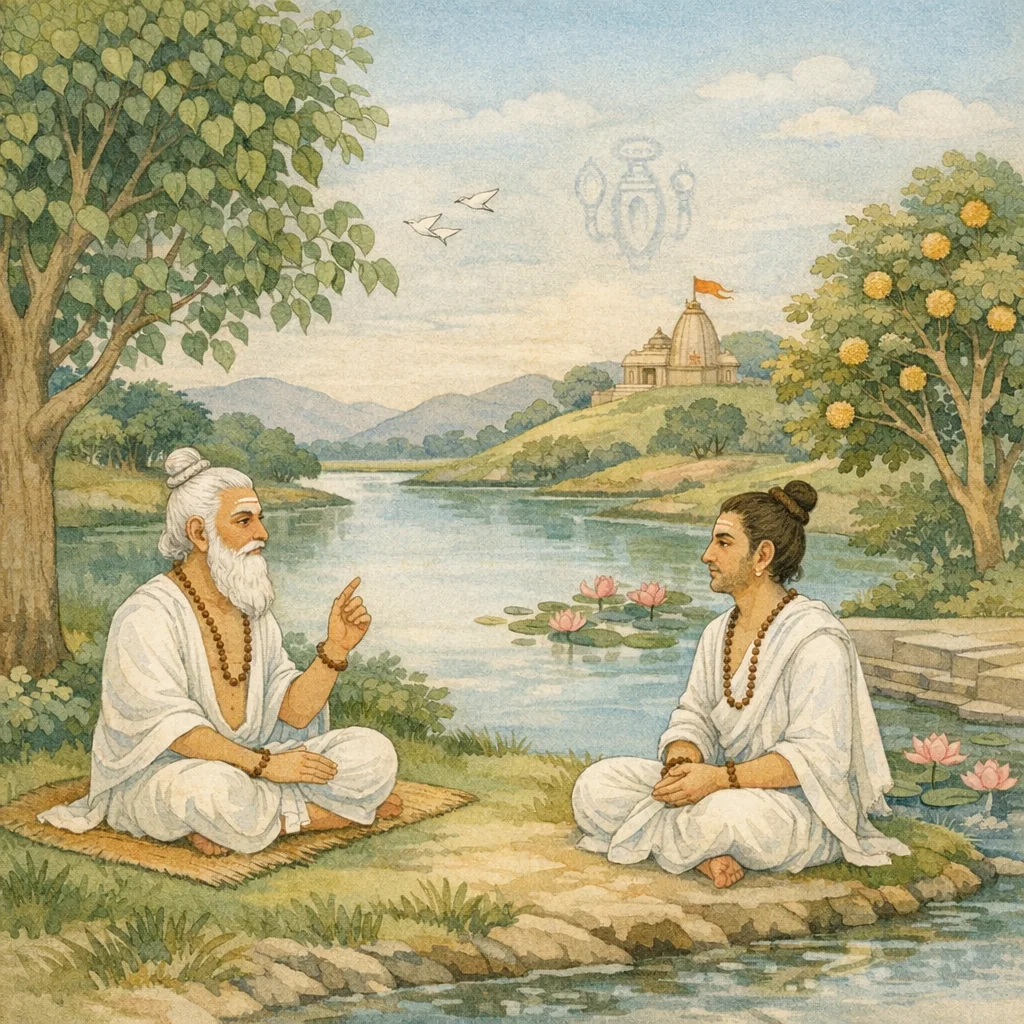
Adhyaya 79
The Account of King Bhadreśvara (Sun-worship, healing, and heavenly ascent)
King Bhadreśvara, an independent ruler of Madhyadeśa famed for austerity and vows, is suddenly afflicted with leprosy and a white mark upon his palm. After consulting physicians, he summons brāhmaṇas and ministers, seeking the most holy means to cast off sin and suffering. The brāhmaṇas prescribe devoted worship of Bhāskara/Sūrya: daily arghya offerings, mantra-recitation, and the Arka-aṅga observance with specified flowers, grains, fruits, and unguents, using an udumbara vessel, with the queens and palace women participating. In time the disease ends; Sūrya appears, grants a boon, and bestows heavenly abode and lasting welfare upon the king, extending that grace to his brāhmaṇa-ministers and the community. The chapter concludes by proclaiming the merit of hearing or reciting this secret teaching of Bhāskara, said to have been transmitted to Yama and proclaimed on earth by Vyāsa.
Shlokas
Verse 1
व्यास उवाच । मध्यदेशे स्वराट् सम्राट् भद्रेश्वर इति श्रुतः । तपोभिर्बहुभिः पूतो व्रतैर्नानाविधैरपि
Vyāsa said: In Madhyadeśa there was a sovereign king, renowned by the name Bhadreśvara. He was purified by many austerities and also by vows of various kinds.
Verse 2
देवांस्तु पूजयेन्नित्यं सुभावेन सदा खलु । तस्य सव्येऽभवत्कुष्ठं करे श्वेतमजायत
Indeed, one should worship the devas each day with a pure and benevolent heart. Yet leprosy appeared on his left hand, and a white mark arose upon his palm.
Verse 3
ततो भिषक्प्रयोगाच्च लक्षणं दृश्यते पुरा । आहूय द्विजमुख्यांश्च मंत्रिणः सोब्रवीद्वचः
Then, through the physician’s treatment, the symptoms that had appeared earlier became plainly visible. Summoning the foremost of the twice-born (brāhmaṇas) along with his ministers, he spoke these words.
Verse 4
राजोवाच । किल्बिषं मे करे विप्रा दुःसहं लोकगर्हितं । तस्मात्पुण्यं महाक्षेत्रं यत्र त्यक्ष्यामि विग्रहं
The king said: “O brāhmaṇas, in my hands there is a sin—unbearable and condemned by the world. Therefore, tell me of a supremely holy, great sacred region (kṣetra) where I may cast off this body.”
Verse 5
आज्ञापयत धर्मज्ञाः परलोकहिताय वै । वंशहीनस्य मे वीराः प्रेत्यामुत्र हितं च यत्
Command, O knowers of dharma, for the welfare of the hereafter. O heroes, since I am without lineage, decree what will be beneficial for me after death and in the world beyond.
Verse 6
तद्ब्रूत सुप्रसन्ना म उद्दिष्टं यत्करोम्यहं । द्विजा ऊचुः । परित्यक्ते त्वया राष्ट्रे धर्मशीलेन धीमता
“Tell me then, with full goodwill, what you have appointed for me to do.” The twice-born said: “When you—virtuous in dharma and wise—abandoned the kingdom…”
Verse 7
नष्टं जगदिदं राजंस्तस्मान्नो वक्तुमर्हसि । अयमस्य प्रतीकारो ह्यस्माभिरवगम्यते
O King, this world has been brought to ruin; therefore you should tell us. For we have understood the remedy for it.
Verse 8
सूरं मंत्रैर्महादेवं यत्नादाराधय प्रभो । राजोवाच । केनोपायेन विप्रेंद्रास्तोषयिष्यामि भास्करं
“O Lord, diligently worship the Sun—Mahādeva—with mantras.” The king said: “O best of brāhmaṇas, by what means shall I satisfy Bhāskara, the Sun?”
Verse 9
अमेध्येनाथ कुष्ठेन लोकानां गर्हितेन च । अदृश्यः सर्वभूतानां गर्हितोस्मि द्विजातयः
Now, afflicted with foul leprosy, despised and reviled by the people, I have become invisible to all beings; O twice-born ones, I stand condemned.
Verse 10
किं करिष्यामि राज्यं च किं स्यादाराधनेन तु । द्विजा ऊचुः । अत्र स्थित्वा स्वराज्ये तु समुपास्य विरोचनं
“What shall I do with a kingdom? And what would even be gained by worship?” The brāhmaṇas said: “Remaining here, in your own realm, duly worship Virocana.”
Verse 11
प्रमुच्य किल्विषाद्घोरात्स्वर्गं मोक्षं च लप्स्यसे । एतच्छ्रुत्वा तु राजेंद्रः प्रणिपत्य द्विजोत्तमान्
“Freed from dreadful sin, you will attain heaven and also liberation (mokṣa).” Hearing this, O best of kings, the king bowed down before the foremost of the twice-born (brāhmaṇas).
Verse 12
आकार्षीत्तस्य सूर्यस्य परमाराधनं च यत् । नित्यपूजां तथा मंत्रैरुपहारैर्विलेपनैः
He performed for the Sun-god the highest worship—daily pūjā, accompanied by mantras, offerings, and fragrant unguents.
Verse 13
फलैर्नानाविधैरर्घैरक्षतातप तंडुलैः । जपापुष्पार्कपर्णैश्च करवीरकरंजकैः
With many kinds of fruits; with arghya offerings; with unbroken grains and sun-dried rice; with hibiscus flowers and sun-plant leaves; and with oleander and karañja blossoms/leaves—thus the worship is performed.
Verse 14
रक्तकुंकुमसिन्दूरैस्तथा वासंतिकादिभिः । सुगंधकदलीपत्रैस्तत्फलैः सुमनोहरैः
With red powders such as saffron, vermilion, and sindūra, and likewise with springtime blossoms and the like; with fragrant banana leaves and their fruits—most delightful to the mind.
Verse 15
अर्घ्यमौदुंबरे कृत्वा सदा सूर्याय पार्थिवः । आदित्यसंमुखो दत्ते सदा मंत्रिपुरोहितैः
Having prepared the arghya offering in a vessel of udumbara wood, the king always presents it to the Sun, facing Āditya, in the presence of his ministers and priests.
Verse 16
महिषीभिस्तथा चार्घो भोगिनीभिः समंततः । सर्वैरंतःपुरस्थैश्च सपत्नीकैश्च रक्षिभिः
And Argha—the ceremonial offering of reverence—was presented by the queens and the noble ladies all around, and also by all the women of the inner palace and by the guards together with their wives.
Verse 17
चेटवर्गैस्तथान्यैश्च दीयतेऽर्घो दिनेदिने । अर्कशांतिभिरत्युग्रैः स्तोत्रमंत्रादिभिः परैः
Day after day, bands of attendants and others presented the arghya, accompanied by exceedingly intense rites to pacify the Sun’s influence, with excellent hymns, mantras, and the like.
Verse 18
मूलमंत्रान्यमंत्रैश्च यजंति स्म दिवाकरं । तथार्कांगव्रतं चान्यत्कृतं तैः सुसमाहितैः
They worshipped Divākara, the Sun, with the principal mantras as well as with other mantras; and, with minds well-composed, they also performed another observance known as the Arka-aṅga vow.
Verse 19
क्रमात्समांसमासाद्य रोगस्यांतं गतो नृपः । बाधिते चामये घोरे स राजा निखिलं जगत्
In due course, as the months passed, the king reached the end of his illness. Yet, while afflicted by that dreadful disease, he seemed to rule the entire world.
Verse 20
नियम्य कारयामास कल्ये च याजनव्रतम् । एवमेव जपापुष्पं सुगंधं कदलीफलम्
Having observed restraint, he had the sacrificial vow performed at dawn; likewise he offered hibiscus flowers, fragrant substances, and bananas as fruit offerings.
Verse 21
बाणैर्जायाभिरालभ्यमर्कपर्णान्यपुष्पकं । एवमेव महापुण्यं कृत्वा सर्वजनप्रियं
By means of arrows, and with the help of his wives, he obtained arka-leaves and a sacred offering without flowers. In this same way, having performed a deed of great merit, he became beloved of all people.
Verse 22
हविष्यान्नो निराहारो जनो यजति भास्करम् । एवमेव त्रिभिर्वर्गैरर्चितस्तैर्विभाकरः
A person worships Bhāskara (the Sun) either by living on haviṣyānna, the sacrificial fare, or by fasting; likewise, the Radiant One, Vibhākara, is honored by those three classes of worshippers.
Verse 23
संतुष्टो भूपमागम्य कृपया चाब्रवीद्वचः । वरं वरय चाभीष्टं यस्ते मनसि वर्तते
Pleased, he approached the king and, out of compassion, spoke: “Choose a boon—whatever wish you desire that rests in your mind.”
Verse 24
सर्वेषां वो हितार्थाय सानुगः पुरवासिनाम् । राजोवाच । यदीच्छसि वरं दातुं सर्वलोचनमत्प्रियम्
“For the welfare of all of you—the residents of the city—together with your followers,” the king said, “if you wish to grant a boon, grant what is dear to the eyes and minds of all.”
Verse 25
सर्वेषां नः परं स्वर्गं त्वत्सकाशे भवत्विति । सूर्य उवाच । अमात्यास्ते द्विजा विप्राः सदारास्सपरिच्छदाः
“May the highest heaven for all of us be in your presence.” Sūrya said: “Those ministers of yours are twice-born (dvija) Brahmins—learned priests—together with their wives and all their belongings.”
Verse 26
नवीनयौवनाः शुद्धा यावदाभूतसंप्लवम् । तिष्ठंतु मत्पुरे रम्ये सर्वभोगैर्निरामयाः
May they remain in my delightful abode, ever youthful and pure, until the cosmic dissolution, enjoying every comfort and free from illness.
Verse 27
सुरद्रुमैः सुसंपूर्णैः प्रासादैर्द्रुमकल्पकैः । प्रमदाभिर्महाभाग नृत्यगीतादिभिः परैः
It is wholly filled with divine trees and with palaces like wish-fulfilling trees; and, O greatly fortunate one, with exquisite maidens skilled in dance, song, and other arts.
Verse 28
पंचकल्पांतरे राजा मन्वादौ त्वं भविष्यसि । अमी ते मनुजा भूप पुरस्थाश्च पुरोधसः
After the passing of five kalpas, O king, you will become a ruler at the beginning of a Manvantara. These men here, O sovereign, will be your attendants, and these present ones will be your priests.
Verse 29
तथा जनपदस्थाश्च विद्वांसो धनिनो नराः । तत्र मत्तो वरं लब्ध्वा सुखं स्वर्गमवाप्स्यथ
Likewise, the learned and wealthy men dwelling in the provinces—having there obtained a boon from me—will attain heaven in happiness.
Verse 30
एवमुक्त्वा जगच्चक्षुस्तत्रैवांतरधीयत । ततो भद्रेश्वरो राजा सपुरो दिवि मोदते
Having spoken thus, the All-seeing One, the Eye of the world, vanished right there. Thereafter King Bhadreśvara, together with his city and people, rejoices in heaven.
Verse 31
तत्र कीटादयो ये च ते पीताः ससुतादयः । स्वर्गे देवद्रुमे भोग्यं कुर्वंति महदद्भुतम्
There, even those who were insects and the like—having drunk (in that sacred context), together with their offspring and companions—enjoy wondrous and abundant delights in heaven, upon the celestial wish-granting tree.
Verse 32
एवमेव नृपा विप्रा मुनयश्शंसितव्रताः । ये च क्षत्रादयो वर्णास्सूर स्वर्गं ययुर्द्रुतम्
Even so, O kings, brāhmaṇas, and sages of praised vows—those of the social orders beginning with the kṣatriyas, being valiant, swiftly went to heaven.
Verse 33
कैश्चिदभ्यर्थितं वित्तं पुत्रदारास्तथापरैः । सुखं स्वर्गं तथारोग्यं भास्करस्य प्रसादतः
By the grace of Bhāskara (the Sun), some obtain the wealth they have prayed for; others gain sons and wives; and still others attain happiness, heaven, and freedom from disease.
Verse 34
पुण्यकूटमिदं भद्रं यः पठेन्मानवः शुचिः । सर्वपापक्षयस्तस्य रुद्रवत्पूजितो भुवि
O noble one, this auspicious ‘heap of merit’—whoever, being pure, recites it, all his sins are destroyed, and he is honored on earth like Rudra.
Verse 35
सर्वसाक्षी भवेत्स्वर्गे वरदो भास्करप्रियः । शृणोति संयतो मर्त्यः सोभीष्टं फलमाप्नुयात्
In heaven he becomes a witness of all—bestowing boons and dear to Bhāskara. The disciplined mortal who listens attains the desired fruit.
Verse 36
पारगः सर्वपापानां भास्करस्यैव संसदि । वावदूको भवेन्नित्यं श्रवणात्पुण्यवान्धनी
By merely hearing this, one crosses beyond all sins; and in the very assembly of Bhāskara, one becomes ever eloquent—becoming meritorious and wealthy.
Verse 37
इदं गुह्यातिगुह्यं च भास्करेण प्रचारितं । इदं यमाय कथितं क्षितौ व्यासेन कीर्तितम्
This teaching—most secret among secrets—was propagated by Bhāskara. It was told to Yama, and on earth it was proclaimed by Vyāsa.
Verse 79
इति श्रीपाद्मपुराणे प्रथमे सृष्टिखंडे भद्रेश्वराख्यानं नामैकोनाशीतितमोऽध्यायः
Thus ends the seventy-ninth chapter, called “The Account of Bhadreśvara,” in the first book of the Śrī Padma Purāṇa, within the Sṛṣṭi-khaṇḍa.